Search results
Search for "spatial distribution" in Full Text gives 123 result(s) in Beilstein Journal of Nanotechnology.
Dielectric properties of a bisimidazolium salt with dodecyl sulfate anion doped with carbon nanotubes
Beilstein J. Nanotechnol. 2018, 9, 164–174, doi:10.3762/bjnano.9.19
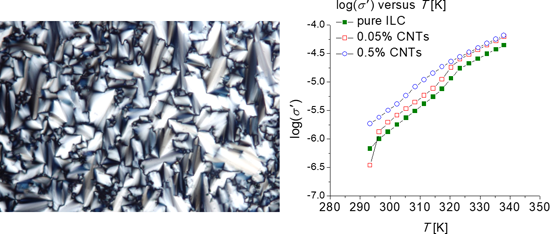
- imposed on the CNTs in such a way that the alignment axis of the CNTs is driven by the LC reorientation controlled by an electric field [37]. The concentration and the spatial distribution of charges in the LC matrix will be affected by the presence of CNTs and, hence, the conductivity will be changed [38


Hyperthermic intracavitary nanoaerosol therapy (HINAT) as an improved approach for pressurised intraperitoneal aerosol chemotherapy (PIPAC): Technical description, experimental validation and first proof of concept
Beilstein J. Nanotechnol. 2017, 8, 2729–2740, doi:10.3762/bjnano.8.272
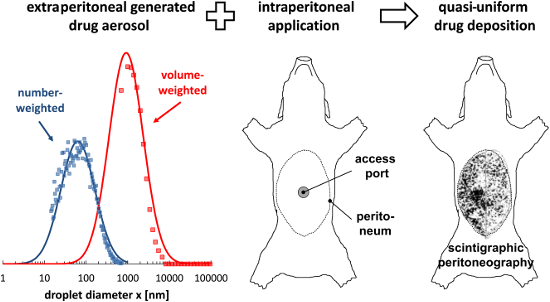
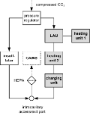
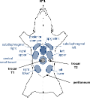
- -LAU = 3.32·109 #/s was determined for HINAT-LAU, which was 25 times higher than that of nt,CPC,PIPAC-MIP = 1.35·108 #/s as determined for PIPAC-MIP. Spatial distribution of drug deposition Peritoneal drug deposition efficiency for drug dose determination In contrast to conventional PIPAC, the




Refractive index sensing and surface-enhanced Raman spectroscopy using silver–gold layered bimetallic plasmonic crystals
Beilstein J. Nanotechnol. 2017, 8, 2492–2503, doi:10.3762/bjnano.8.249
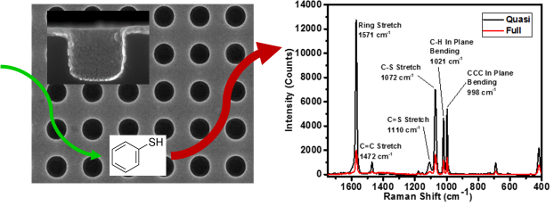
- material. Here we examine a bilayer/multi-metallic Ag/Au plasmonic crystal (PC) motif that is characterized by higher analytical sensitivity and more strongly enhanced electric fields than our previously reported monometallic PC systems. Manipulating the composition of the thin metal films, their spatial
- distribution, and the design rules of the PC optical elements (in terms of the lattice parameter and the size of the features of the nanoholes) is found to be an effective approach to optimizing the response in multispectral and SERS-based sensing. To illustrate the properties of these devices, the optical


Synthesis of metal-fluoride nanoparticles supported on thermally reduced graphite oxide
Beilstein J. Nanotechnol. 2017, 8, 2474–2483, doi:10.3762/bjnano.8.247
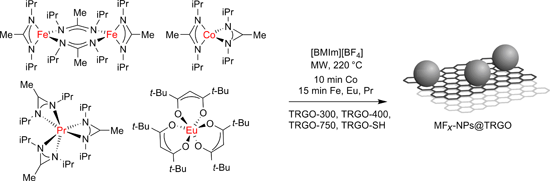
- Fe0 to Fe2+ (at a potential lower than 3.5 V) and Fe2+ to Fe3+ (at a potential higher than 3.5 V) [88]. The large voltage hysteresis between discharging and charging process can be attributed to sluggish process kinetics, including, for example, phase evolution and the spatial distribution of


Electron beam induced deposition of silacyclohexane and dichlorosilacyclohexane: the role of dissociative ionization and dissociative electron attachment in the deposition process
Beilstein J. Nanotechnol. 2017, 8, 2376–2388, doi:10.3762/bjnano.8.237
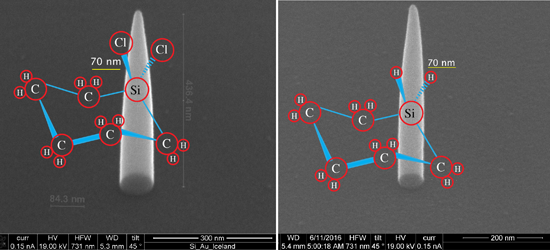
- electrons [3]. On a flat surface the spatial distribution of these secondary electrons will be defined by the angular distribution of the back-scattered primary electrons [5][6][7]. During the growth of structures with aspect ratios greater than zero, however, the forward component will also play a role





Stick–slip boundary friction mode as a second-order phase transition with an inhomogeneous distribution of elastic stress in the contact area
Beilstein J. Nanotechnol. 2017, 8, 1889–1896, doi:10.3762/bjnano.8.189
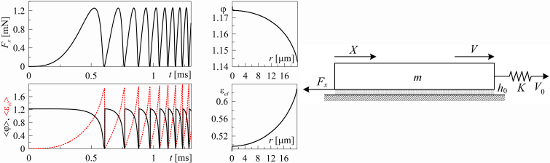
- the friction force, elastic stress and order parameter, while the frequency of phase transitions increases due to the presence of the spring. It is worth mentioning that the spatial distribution of elastic stress considered in the presented study will always occur in tribological systems with
- , γ = 10 (Pa·s)−1, a0 = 2·10−5 m, G* = 109 Pa, K = 500 N/m, m = 0.1 kg, V0 = 1 m/s. (b) Spatial distribution of the order parameter φ(r) in the moment of time t = 1.3 ms, related to final point of the dependence shown in Figure 2a. (c) Time dependence of the mean values of the order parameter <φ
- > (solid line) and elastic strain <εel> (dashed line). (d) Spatial distribution of the elastic strain εel(r) at t = 1.3 ms. (a) Time dependence of the order parameter φ(t), calculated using the same parameters as in Figure 2 and corresponding to the melting process (arrow 1) before the first dashed line


![[Graphic 15]](/bjnano/content/inline/2190-4286-8-189-i33.png?max-width=637&scale=1.18182) = 1.0, ...
= 1.0, ...


Process-specific mechanisms of vertically oriented graphene growth in plasmas
Beilstein J. Nanotechnol. 2017, 8, 1658–1670, doi:10.3762/bjnano.8.166
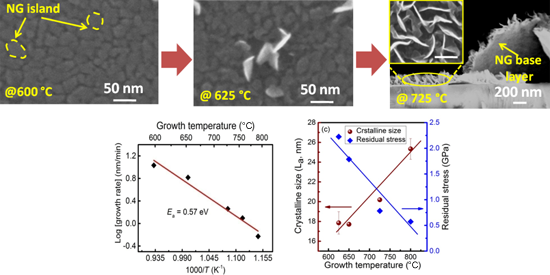
- rate and larger crystallite sizes. Case III: Effect of microwave power Figure 7a–f shows the spatial distribution of vertical sheets as obtained by FESEM. Figure 7g is the plot of the growth rate and intersheet spacing as a function of the MW power. These observations suggest that the growth rates and


Adsorption and electronic properties of pentacene on thin dielectric decoupling layers
Beilstein J. Nanotechnol. 2017, 8, 1388–1395, doi:10.3762/bjnano.8.140
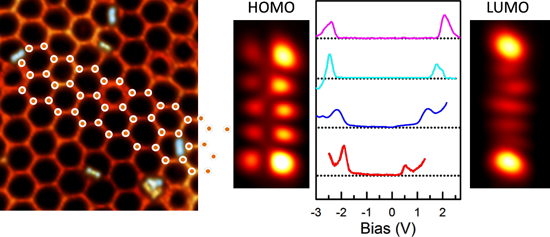
- statistical evaluations of the measured molecules. Spatial imaging at the energies of the orbitals observed in STS yields the spatial distribution of the frontier orbitals of pentacene [2][3][4]. For +1.2 V, two prominent lobes connected by a series of dimmer lobes are observed (Figure 3a). This structure can


Near-field surface plasmon field enhancement induced by rippled surfaces
Beilstein J. Nanotechnol. 2017, 8, 956–967, doi:10.3762/bjnano.8.97
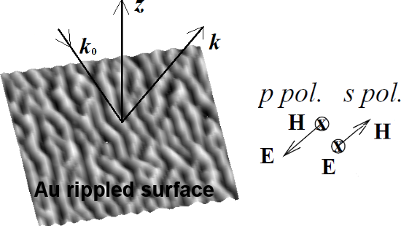
- accurate knowledge of the spatial distribution of large field enhancements requires an accurate knowledge of the nanostructure morphology. This is particularly true for the spatial distribution of a random pattern composed of a texture of hills and valleys. Rippled surfaces represent a special case of
- wavelength λ = 785 nm under p-polarization conditions. Figure 2B and Figure 2D ultimately represent the distribution of the hot spots. Both reconstructed surfaces have a 2.5 × 2.5 μm area. Due to the highly localized nature of the hot spots, this area is representative of their spatial distribution. In the
- −γ > 0, the amplitude of field increases with time. In addition, the plasmon enhancement can be amplified if they are in-phase at a nanogap (hot spots), while the subsequent nanogaps could be out-of-phase, showing a type of dark spot. The spatial distribution of a hot spot surrounded by dark spots is


Analysis and modification of defective surface aggregates on PCDTBT:PCBM solar cell blends using combined Kelvin probe, conductive and bimodal atomic force microscopy
Beilstein J. Nanotechnol. 2017, 8, 579–589, doi:10.3762/bjnano.8.62
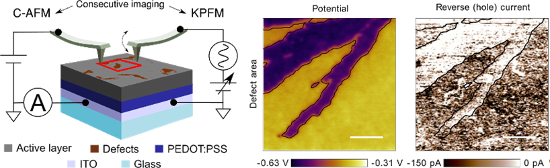
- consider their spatial distribution. In real BHJ devices, both the macroscopic morphology and the microscopic conformation of donors and acceptors have a very strong influence on the overall mobility of charge carriers. Therefore, overlapping of HOMO and LUMO and charge hopping between molecules need to be


Multimodal cantilevers with novel piezoelectric layer topology for sensitivity enhancement
Beilstein J. Nanotechnol. 2017, 8, 358–371, doi:10.3762/bjnano.8.38
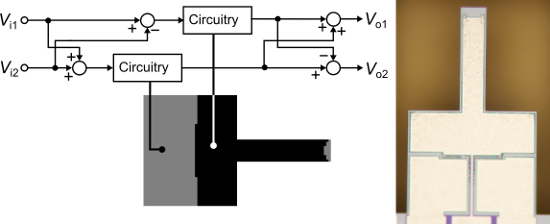
- given mode with respect to the spatial distribution of the strain. On a prototype cantilever design, significant increases in actuator and sensor sensitivities were achieved for the first four modes without any substantial increase in sensor noise. The transduction mechanism is specifically targeted at
- deflection mode shapes. Here, the overall deflection is the linear combination of mode shapes which have a fixed spatial distribution. Moreover, there exists a linear mapping from the deflection of the structure to the charge developed on the piezoelectric layer and hence the charge response is related to
- the spatial distribution of each mode shape. If the mode shapes are orthogonal, an analytical approach can be used to shape the piezoelectric layer. Otherwise optimization is used to shape the piezoelectric layer to minimize response to the undesired modes. This work formulates the design of the


Photocatalysis applications of some hybrid polymeric composites incorporating TiO2 nanoparticles and their combinations with SiO2/Fe2O3
Beilstein J. Nanotechnol. 2017, 8, 272–286, doi:10.3762/bjnano.8.30
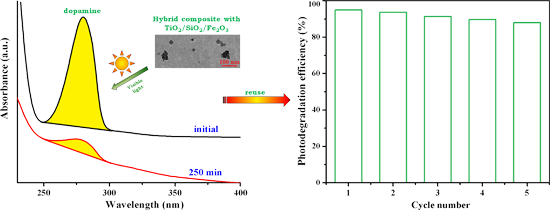
- ) of all hybrid nanocomposites containing TiO2 NPs and also to investigate the spatial distribution of the elements through the X-ray elemental mapping images. In the EDX patterns (Figure 3), the Ti, Si and Fe signals confirmed the existence of inorganic nanoparticles, while the organic matrix is


Sub-nanosecond light-pulse generation with waveguide-coupled carbon nanotube transducers
Beilstein J. Nanotechnol. 2017, 8, 38–44, doi:10.3762/bjnano.8.5
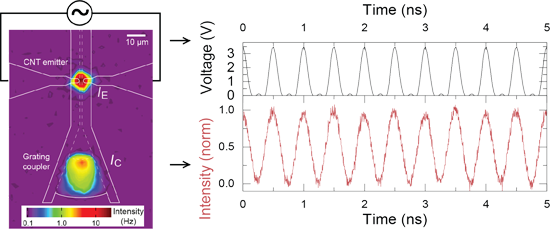
- Acton SpectraPro 2360 spectrometer. The latter consists of a switchable mirror and grating, and is equipped with a PIXIS 256E CCD camera (Princeton Instruments) [15]. The spectrum of the light, emitted at the position of the CNT, is shown in Figure 1b, while the spatial distribution of the emission is


A new approach to grain boundary engineering for nanocrystalline materials
Beilstein J. Nanotechnol. 2016, 7, 1829–1849, doi:10.3762/bjnano.7.176
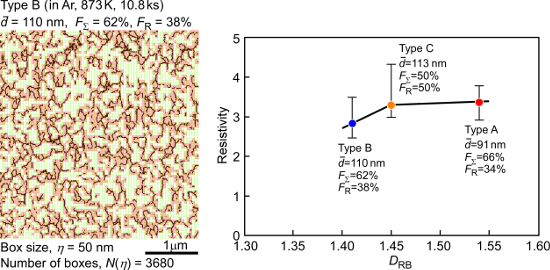
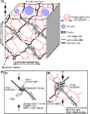
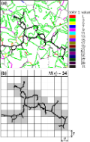
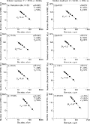
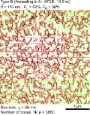
- mentioned. Figure 19 shows the experimental results on the electrical resistivity ρ as a function of the fractal dimension, associated with the spatial distribution of random boundaries as the primary scattering center of electrons in a polycrystal. Again it is evident that the electrical resistivity tends







Nano- and microstructured materials for in vitro studies of the physiology of vascular cells
Beilstein J. Nanotechnol. 2016, 7, 1620–1641, doi:10.3762/bjnano.7.155
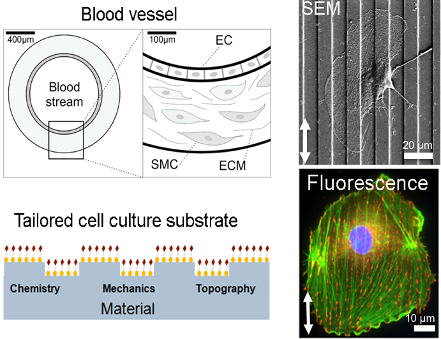
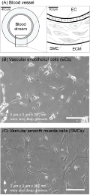
- defined coating over longer time periods. Control of the spatial distribution and density of molecules is for many biological investigations an interesting option. Such patterning with adhesive molecules can be realized by several techniques. Commonly used are microcontact printing [53][155] dry lift-off



Nanostructured germanium deposited on heated substrates with enhanced photoelectric properties
Beilstein J. Nanotechnol. 2016, 7, 1492–1500, doi:10.3762/bjnano.7.142
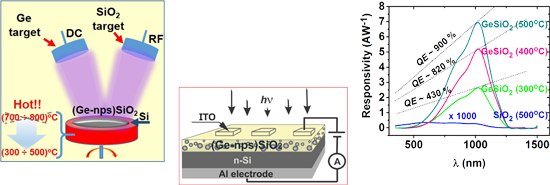
- significant improvement of the spatial distribution of the Ge nanoparticles and by avoiding multi-step fabrication processes or Ge loss. The influence of the preparation conditions on structural, electrical and optical properties of the fabricated nanostructures was studied by X-ray diffraction, transmission
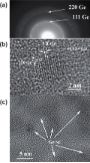
- 500 °C: (a) corresponding SAED pattern; (b) close-up of a Ge-np within the SiO2 thin film; (c) spatial distribution of Ge-nps in the oxide matrix. Schematic of sample structure and electrical measurement. Current density versus voltage characteristics in dark (empty squares) or under integral light
- transmission electron microscopy (HRTEM) investigations of the Ge:SiO2 thin films deposited on Si substrates at 500 °C are presented. Selected area electron diffraction (SAED) (Figure 2a) and HRTEM (Figure 2b) demonstrate the <112> orientation of Ge-nps. The HRTEM image in Figure 2c shows the spatial




Deformation-driven catalysis of nanocrystallization in amorphous Al alloys
Beilstein J. Nanotechnol. 2016, 7, 1428–1433, doi:10.3762/bjnano.7.134
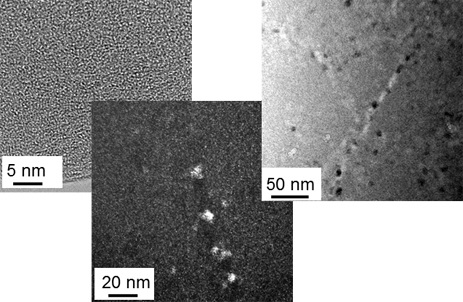
- bands has to be related to localized deformation rather than thermal effects. A much less debated issue has been the spatial distribution of deformation in the amorphous alloys during intense deformation. The current work examines the hypothesis that intense deformation affects the regions outside shear


The self-similarity theory of high pressure torsion
Beilstein J. Nanotechnol. 2016, 7, 1267–1277, doi:10.3762/bjnano.7.117
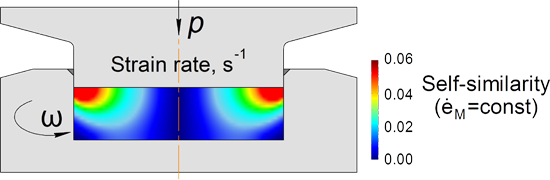
- -similar solution of the rigid plastic flow problem for HPT Let y = f(x,t) describe the spatial distribution of a quantity y as a function of time t, where x is the spatial coordinate. The process is called self-similar, if the spatial distribution of y at any time t can be obtained from a reference
- solution at time t0 by a simple similarity transformation: where T(t) is time-dependent. Thus, the spatial distribution of y varies with time while remaining always geometrically similar to itself. This definition generalizes the concept of similarity in geometry where two figures are called similar if one


Reasons and remedies for the agglomeration of multilayered graphene and carbon nanotubes in polymers
Beilstein J. Nanotechnol. 2016, 7, 1174–1196, doi:10.3762/bjnano.7.109
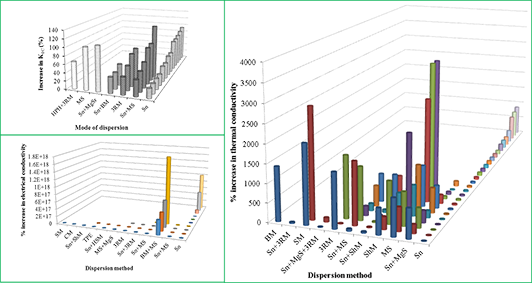
- and CNT, surface modifications have been applied to tailor spatial distribution and/or to obtain a homogeneous dispersion in host materials [55]. Whether or not the addition MLG and CNTs improves the properties of nanocomposites is still under debate. Some studies have revealed improvements in


Rigid multipodal platforms for metal surfaces
Beilstein J. Nanotechnol. 2016, 7, 374–405, doi:10.3762/bjnano.7.34

- measurements confirmed the characteristic molecular resonance states (HOMO−1, HOMO and LUMO) originating from the ferrocene group when spectrum was measured at ferrocenyl adamantane 19. The STS mapping succeeded in imaging the spatial distribution of the HOMO state of ferrocenyl adamantane 19, which is










Time-dependent growth of crystalline Au0-nanoparticles in cyanobacteria as self-reproducing bioreactors: 2. Anabaena cylindrica
Beilstein J. Nanotechnol. 2016, 7, 312–327, doi:10.3762/bjnano.7.30
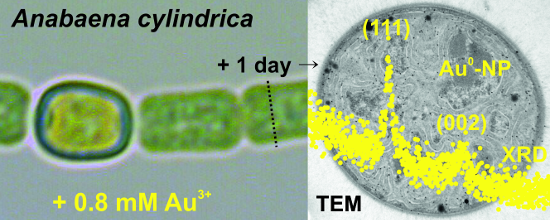
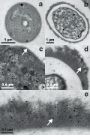
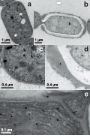
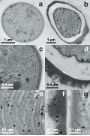
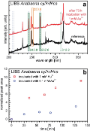
- electron microscope. These images reveal the spatial distribution of the nanoparticles inside the cells as it was in the moment when their biosynthesis was stopped. Laser-induced breakdown spectroscopy In recent years UV–vis spectroscopy has often been used for the in situ observation of nanoparticle or
- taken up by the cells, see below, for example. Image processing TEM images show the spatial distribution of the formed nanoparticles within the cells. Since the magnification for each image is known the number of pixels could be covered easily in areas of nm2. The challenging problem is how many pixels
- . TEM was used to determine the spatial distribution of the nanoparticles as well as their sizes. Although the importance of heterocysts for the biosynthesis is discussed widely in the literature, we have shown in a preceding study a contrary relation for Anabaena sp. [29], where vegetative cells have


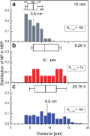

Counterion effects on nano-confined metal–drug–DNA complexes
Beilstein J. Nanotechnol. 2016, 7, 62–67, doi:10.3762/bjnano.7.7
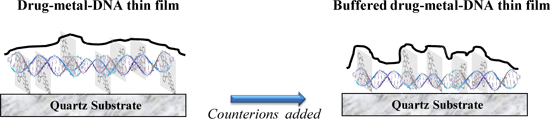
- size 5 mdeg at the Indian Beamline (BL-18B) at Photon Factory, High Energy Accelerator Research Organization (KEK), Japan. Both anomalous and normal X-ray reflectivity data was collected to check the spatial distribution of Cu along the film depth. Cu has two absorption edges in X-ray regime which are


Green and energy-efficient methods for the production of metallic nanoparticles
Beilstein J. Nanotechnol. 2015, 6, 2354–2376, doi:10.3762/bjnano.6.243
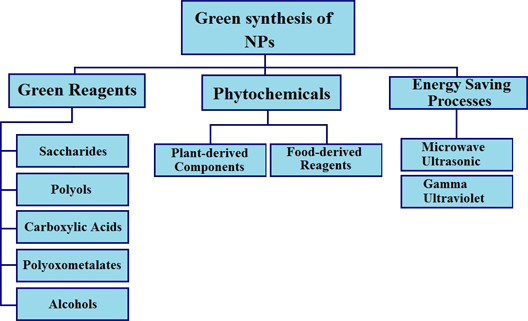
- . For example, Wang et al. produced biocompatible chitosan–ninhydrin (CHIT-NH) bio-conjugates for the use as reducing agent of Au precursors at 37 °C. They claimed that this new reducing agent can overcome the non-uniform spatial distribution of stabilizers to form organized one-dimensional assemblies


Plasma fluorination of vertically aligned carbon nanotubes: functionalization and thermal stability
Beilstein J. Nanotechnol. 2015, 6, 2263–2271, doi:10.3762/bjnano.6.232
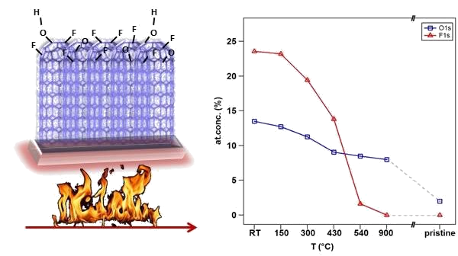
- for the evaluation of the spatial distribution of fluorine atoms, while X-ray photoelectron spectromicroscopy measurements indicated that the grafting occurred mainly up to a few µm under the tips of the nanotubes without damaging the carbon structure [20]. In that case, the Ar/F2 mixture


The role of low-energy electrons in focused electron beam induced deposition: four case studies of representative precursors
Beilstein J. Nanotechnol. 2015, 6, 1904–1926, doi:10.3762/bjnano.6.194
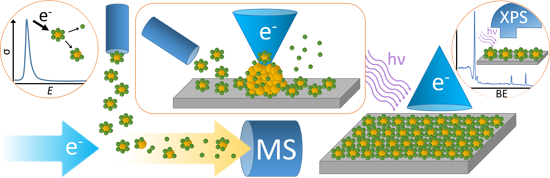
- ). While elastic scattering will influence the spatial distribution of the secondary electrons and vibrational scattering will contribute to heating of the precursor molecules and substrate, electronic excitations may lead to direct ND, and therefore potentially play a significant role in the initial step