Search results
Search for "step" in Full Text gives 1538 result(s) in Beilstein Journal of Nanotechnology. Showing first 200.
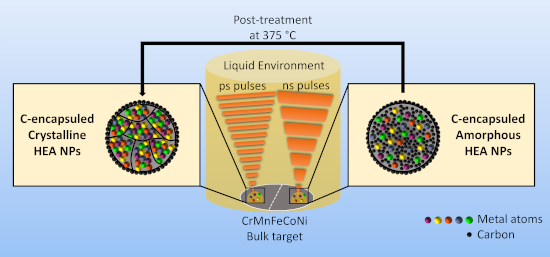
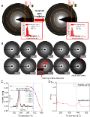
Crystalline and amorphous structure selectivity of ignoble high-entropy alloy nanoparticles during laser ablation in organic liquids is set by pulse duration
Beilstein J. Nanotechnol. 2025, 16, 1141–1159, doi:10.3762/bjnano.16.84




Fabrication of metal complex phthalocyanine and porphyrin nanoparticle aqueous colloids by pulsed laser fragmentation in liquid and their potential application to a photosensitizer for photodynamic therapy
Beilstein J. Nanotechnol. 2025, 16, 1088–1096, doi:10.3762/bjnano.16.80
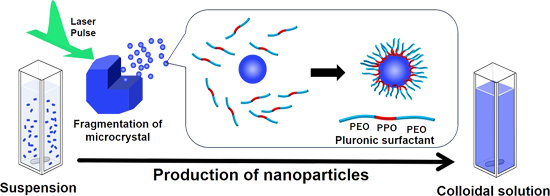
- suspended in a poor solvent is fragmented into nanoparticles by intense pulsed laser irradiation, and the sample suspension is directly converted in to a colloidal dispersion without any chemical additives in one step. It has been demonstrated that several hydrophobic dyes such as metal complex Pcs (MPcs


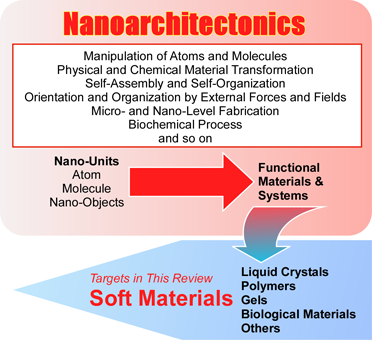
Soft materials nanoarchitectonics: liquid crystals, polymers, gels, biomaterials, and others
Beilstein J. Nanotechnol. 2025, 16, 1025–1067, doi:10.3762/bjnano.16.77






Multifunctional properties of bio-poly(butylene succinate) reinforced with multiwalled carbon nanotubes
Beilstein J. Nanotechnol. 2025, 16, 1014–1024, doi:10.3762/bjnano.16.76
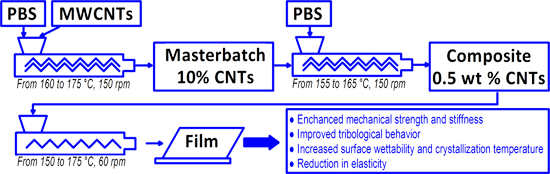
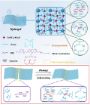
- the structure, crystallization behavior, and rheological, tribological, physical, and mechanical properties of PBS-based nanocomposites prepared via a two-step melt compounding–dilution approach using a masterbatch. While previous studies generally report trends similar to those observed here, such as



A calix[4]arene-based supramolecular nanoassembly targeting cancer cells and triggering the release of nitric oxide with green light
Beilstein J. Nanotechnol. 2025, 16, 1003–1013, doi:10.3762/bjnano.16.75
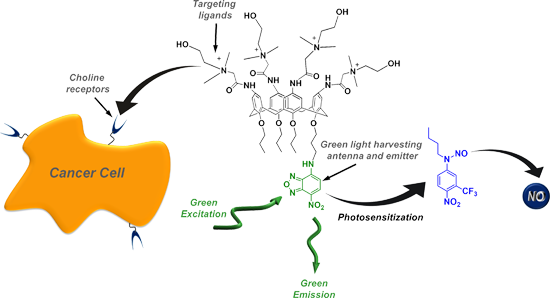
- antenna to trigger the NO release from the hydrophobic NOPD 2. Compound 1 was prepared by a two-step synthesis according to Scheme 2 (see Supporting Information File 1 for details) starting from the known calix[4]arene derivative 1a [60]. In brief, compound 1a treated with chloroacetic acid provided
- encourage a better fit of this NOPD into the calixarene nanocontainer without affecting the already known photochemical NO release properties [61]. Compound 2 was prepared by a two-step synthesis according to Scheme 3 (see Supporting Information File 1 for details). Briefly, the direct coupling of


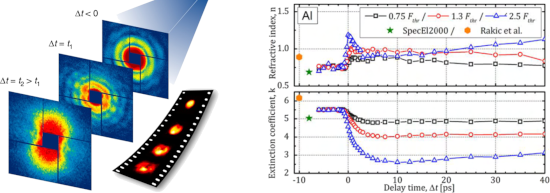
Time-resolved probing of laser-induced nanostructuring processes in liquids
Beilstein J. Nanotechnol. 2025, 16, 968–1002, doi:10.3762/bjnano.16.74


Tendency in tip polarity changes in non-contact atomic force microscopy imaging on a fluorite surface
Beilstein J. Nanotechnol. 2025, 16, 944–950, doi:10.3762/bjnano.16.72
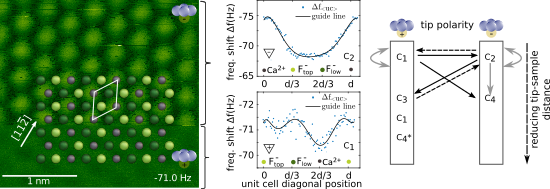
- tip changes to eventually arrive in contrast mode C4 is shown in Figure 4. Images in Figure 4a–c and Figure 4g–i represent image data acquired while step-wise decreasing the frequency shift setpoint. Such a reduction of the tip–surface distance eventually triggers tip changes. Contrast profiles for
- to a successively stabilizing negative tip termination. (a–c) and (g–i) Δf data acquired while step-wise decreasing the tip–sample distance (Δfset = −60.2 Hz to −78.0 Hz). (d–f) and (j–l) Line profiles extracted along the direction of the unit-cell averaged data. represents the distance between


Structural and magnetic properties of microwave-synthesized reduced graphene oxide/VO2/Fe2O3 nanocomposite
Beilstein J. Nanotechnol. 2025, 16, 921–932, doi:10.3762/bjnano.16.70
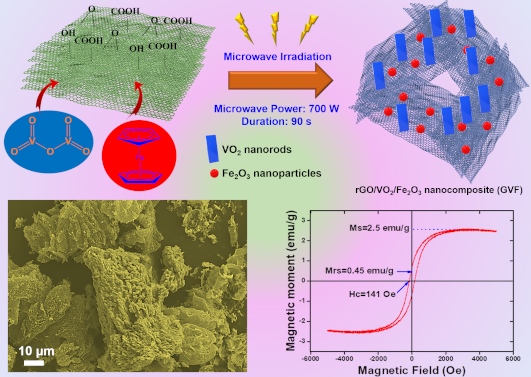
- irradiation [16]. In the next step, 200 mg of the graphite oxide was MW irradiated at 700 W for 90 s in a MW oven. It is important to note that the MW process happened in the solid phase. The reduction and exfoliation of graphite oxide to form the rGO occurred through the removal of oxygen functionalities in
- graphite oxide (100 mg) was mixed with V2O5 powder (100 mg) in a mortar pestle. In the next step, the mixed powder was MW irradiated at a power of 700 W for 90 s to obtain the GV NC. Microwave synthesis of rGO/VO2/Fe2O3 nanocomposite The ternary NC was synthesized following a similar solid-state MW
- to synthesize the ternary GVF. Results and Discussion The NC based on rGO, VO2, and Fe2O3 was synthesized through a cost-effective, ultrafast MW route. As shown in Figure 1, the graphite powder was initially oxidized through a chemical synthetic route to form graphite oxide. In the next step, the MW



Focused ion beam-induced platinum deposition with a low-temperature cesium ion source
Beilstein J. Nanotechnol. 2025, 16, 910–920, doi:10.3762/bjnano.16.69
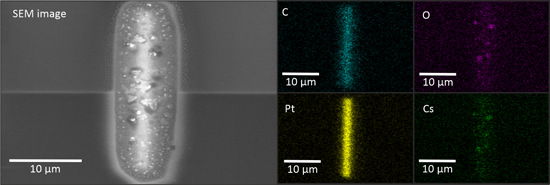
- nozzle kept about 100 μm above the sample surface. The chamber pressure of the Cs+ and the Ga+ FIB was about 5 × 10⁻⁷ mbar before deposition and 8 × 10⁻⁶ mbar during deposition. For Pt deposition, a beam step size of −150% of the beam diameter was used with an upper limit of 200 nm for the Cs FIBID to


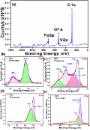
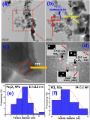
Insights into the electronic and atomic structures of cerium oxide-based ultrathin films and nanostructures using high-brilliance light sources
Beilstein J. Nanotechnol. 2025, 16, 860–871, doi:10.3762/bjnano.16.65

- . It is important to emphasize that the significantly higher brilliance of synchrotron radiation beams, compared with laboratory sources, provides much higher sensitivity towards diluted elements, such as low-concentration dopants and low-density metal NPs. A significant step forward in the


Synchrotron X-ray photoelectron spectroscopy study of sodium adsorption on vertically arranged MoS2 layers coated with pyrolytic carbon
Beilstein J. Nanotechnol. 2025, 16, 847–859, doi:10.3762/bjnano.16.64
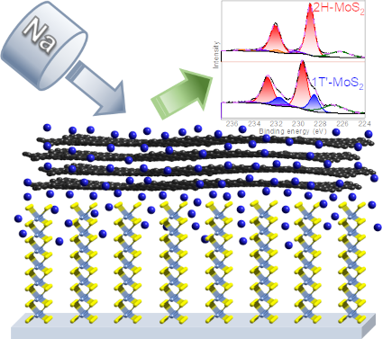
- temperature of 873 K for 30 min. Heating the raw film in a hydrogen atmosphere at 1073 K removes excess sulfur and other contaminations from the film surface. In the final step, a thin PyC film synthesized by chemical vapor deposition (CVD) technique is placed on the surface of the cleaned MoS2 film using the
- with the p orbitals of sulfur [44]. Figure 3 shows the sequence of a three-step sodiation/desodiation experiment performed with samples in the UHV chamber of the spectrometer. Sodium vapor was deposited simultaneously on three studied samples for 10 min. The second step included additional deposition
- of sodium for 20 min. The thickness of the sodium layer was measured using a quartz microbalance; it was 2.5 Å after the 10 min experiment and 7.6 Å after the 30 min experiment. In the third step, the samples with deposited sodium were annealed at 773 K for 30 min. The XPS spectra were measured


Facile one-step radio frequency magnetron sputtering of Ni/NiO on stainless steel for an efficient electrode for hydrogen evolution reaction
Beilstein J. Nanotechnol. 2025, 16, 837–846, doi:10.3762/bjnano.16.63
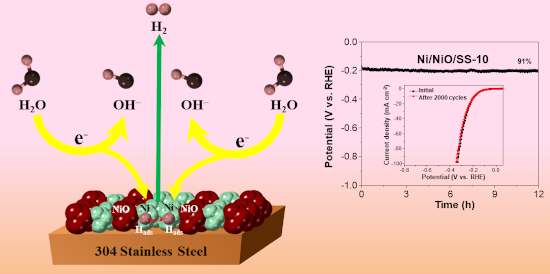
- . In this study, Ni/NiO nanolayers were prepared on stainless steel (SS) via a facile one-step radio frequency magnetron sputtering with various O2 flow rates. The O2 flow rate not only changed the crystal phase but also affected the morphology and atomic ratio of materials, leading to optimized HER
- electrocatalytic applications [30]. For instance, Wang et al. deposited nickel–iron on SS, which was used as a high-performance electrode for water oxidation [31]. Hence, in this study, we utilized commercial 304 SS and coated it with the Ni/NiO catalyst through a one-step radio frequency (RF) magnetron sputtering
- NiO phases, metallic Ni, and high conductivity of SS, which is advantageous for the Volmer step in alkaline solution, the combination of adsorbed H atoms, and electron transport in the catalytic process. These conclusions guide the fabrication of binder-free, robust, affordable electrocatalysts using


Synthesis and magnetic transitions of rare-earth-free Fe–Mn–Ni–Si-based compositionally complex alloys at bulk and nanoscale
Beilstein J. Nanotechnol. 2025, 16, 823–836, doi:10.3762/bjnano.16.62
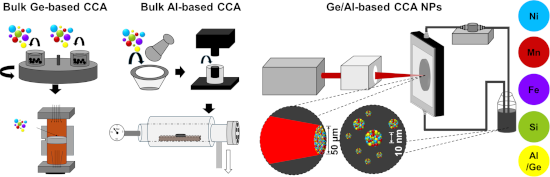
- with costly elements and rare earth materials, providing a pathway for developing bulk and nanometric functional magnetic materials that meet the demands of modern technological applications. Materials and Methods Preparation of bulk Ge-based CCAs The bulk Ge-based CCA was synthesized by a two-step
- weight ratio of 20:1 with a rotation speed of sun disk/jars 700 rpm/1400 rpm. In the second step, the HEBM powders were consolidated using SPS (Dr. Sinter Lab – Fuji Electronic Industrial Co. Ltd.) in a vacuum environment. The powder mixture was loaded into a cylindrical graphite die with an inner


Morphology and properties of pyrite nanoparticles obtained by pulsed laser ablation in liquid and thin films for photodetection
Beilstein J. Nanotechnol. 2025, 16, 785–805, doi:10.3762/bjnano.16.60
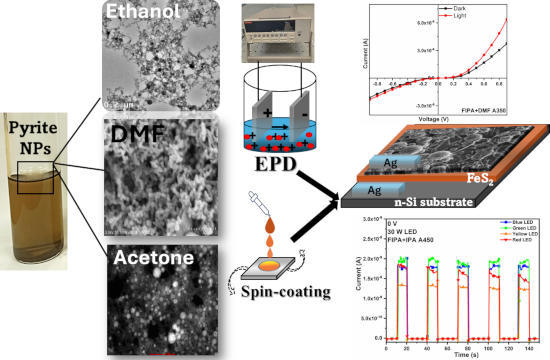
- cubic, tetrakaidecahedron, hollow sphere, and rod-like have been reported for different phases of FeS2 samples prepared in water by single-step hydrothermal process [2]. The transition from spherical to hollow spheres composed of rod-like structures was associated with the conversion of the marcasite


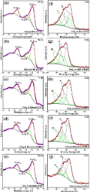


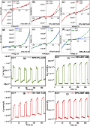


Changes of structural, magnetic and spectroscopic properties of microencapsulated iron sucrose nanoparticles in saline
Beilstein J. Nanotechnol. 2025, 16, 762–784, doi:10.3762/bjnano.16.59
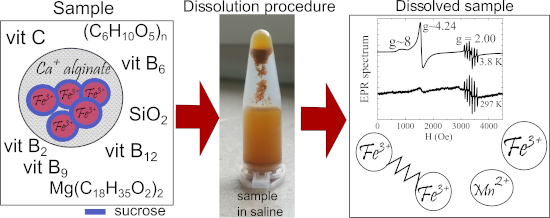
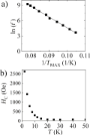
- temperature decrease. The first step in the verification, whether the blocking process of individual nanoparticles is observed, was the analysis of the ac magnetic measurement results. The dependence between the temperatures of the χ’(T) maxima, ΤΜΑΧ, and frequency of the ac magnetic field was specified. To
- dissolve first. (The dissolution of the calcium alginate was proved by the XPS studies, and it will be presented and comment in section XPS results and analysis.) The next step is the dissolution of sucrose; whose molecules are polar, thus, they are not a barrier for saline. Without the sucrose shell, the





Efficiency of single-pulse laser fragmentation of organic nutraceutical dispersions in a circular jet flow-through reactor
Beilstein J. Nanotechnol. 2025, 16, 711–727, doi:10.3762/bjnano.16.55
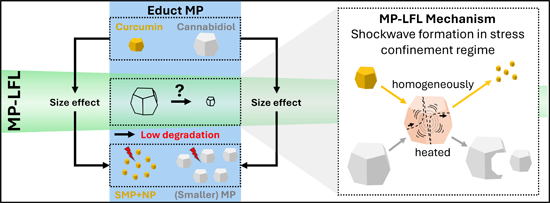
- reduction in particle diameters. Moreover, pronounced morphological changes caused by thermal effects (i.e., LML) like spheroidization of the MPs cannot be observed. This points towards the occurrence of laser fragmentation already after one laser processing step under near single-pulse conditions. However
- chemical degradation. For a reasonable scale-up of this process in a continuous operating mode, suitable irradiation conditions within a single process step are required. Single-PPV conditions allows one to consider simple process intermediates and derive scaling conclusions; linear throughput increase can


Nanostructured materials characterized by scanning photoelectron spectromicroscopy
Beilstein J. Nanotechnol. 2025, 16, 700–710, doi:10.3762/bjnano.16.54
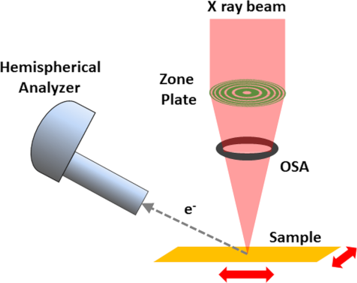
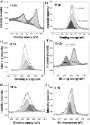
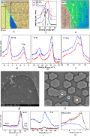
- technologies, the main obstacle in the application still resides in having a full control of their parameters in the production step. This is important to guarantee the availability of bulk materials with reproducible and fully reliable engineered properties and technological functionalities. In the last
- spectra were obtained along the nanowire with a step width of about 130 nm, roughly equaling the size of the X-ray beam, as indicated in Figure 2d. The resulting In 3d5/2 spectra are shown in Figure 2e for the unbiased case, highlighting the p-doped and n-doped nanowire segments with the depletion zone in
- bias. While most of the bias drops across the depletion region, as expected for a sharp p–n junction, an additional voltage drop is observed along the p-doped segment. Our results provide an important step in understanding the electrical behavior of a nanowire p–n junction under device operation with


The impact of tris(pentafluorophenyl)borane hole transport layer doping on interfacial charge extraction and recombination
Beilstein J. Nanotechnol. 2025, 16, 678–689, doi:10.3762/bjnano.16.52
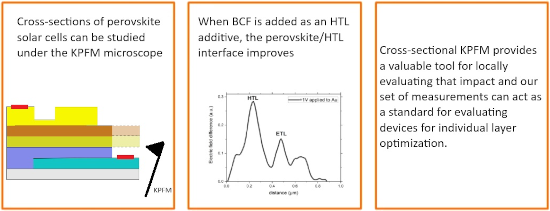
- smooth cross-section. This is useful for getting stable KPFM images, without electrostatic cross-talk. At every step of this procedure, the current–voltage characteristics were being monitored, as shown in Figure 2. By carefully selecting the parameters of the ion milling, we can ensure that the exposed
- deposited a mesoporous TiO2 layer from a (transparent) titania paste solution (Aldrich, 16.67 wt % in ethanol) via spin coating and annealed it (same parameters as in the previous step). After each of these titania deposition steps, we subjected the films to a UV-ozone cleaning step (FHR UVO 150) for 30 min
- , with an oxygen flow of 10 L/min. Then, a 1 M methylammonium lead iodide (MAPI) precursor solution was prepared (lead iodide 99.99% trace metals basis from TCI, methylammonium iodide >99.99% from Greatcell solar) with the materials dissolved in a DMF/DMSO (4:1) solvent and spin-coated using a two-step


Aprepitant-loaded solid lipid nanoparticles: a novel approach to enhance oral bioavailability
Beilstein J. Nanotechnol. 2025, 16, 652–663, doi:10.3762/bjnano.16.50
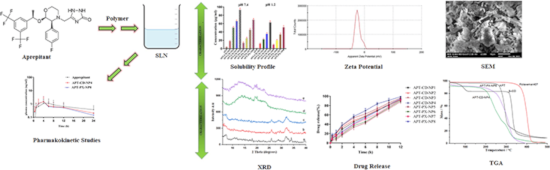
- blood–brain barrier [8]. Its mean volume of distribution is approximately 70 L. In the range of pH 2–10, APT has very low solubility (0.37 µg/mL) [9]. Because of the low water-solubility, the low permeability, and the rate-limiting step of poor gastrointestinal absorption, APT is categorized as a BCS
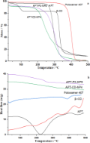
- decomposition of APT occurred in two steps. The first step from 230 to 315 °C corresponded to the elimination of physically absorbed water, and in a second step, further weight loss was observed at 315 to 500 °C, corresponding to the formation of volatile molecules through oxidation (Figure 5a). β-CD and


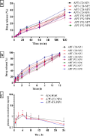

Nanoscale capacitance spectroscopy based on multifrequency electrostatic force microscopy
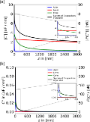
Beilstein J. Nanotechnol. 2025, 16, 637–651, doi:10.3762/bjnano.16.49

- parts of the cantilever, we used the onward and backward differentiation given in Equation 22 and the central differential quotient of the second order given in Equation 23, respectively. The step size was chosen to be 1·10−10 m with a total number of 1,000,000 steps. Models of the first and the second




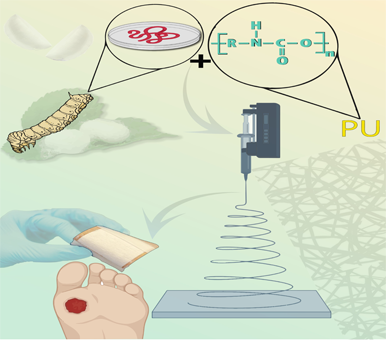
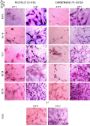
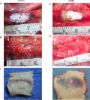
Polyurethane/silk fibroin-based electrospun membranes for wound healing and skin substitute applications
Beilstein J. Nanotechnol. 2025, 16, 591–612, doi:10.3762/bjnano.16.46

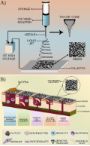


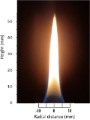
Feasibility analysis of carbon nanofiber synthesis and morphology control using a LPG premixed flame
Beilstein J. Nanotechnol. 2025, 16, 581–590, doi:10.3762/bjnano.16.45
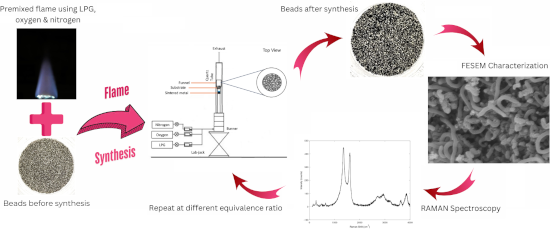
- delivery, tissue engineering, and implants [7]. Methods of CNT/CNF synthesis include (a) chemical vapor deposition, (b) arc discharge, (c) flame synthesis, and (d) laser ablation [1]. Flame-assisted synthesis is a promising method for efficient and continuous one-step production. Various flame



Nanomaterials in targeting amyloid-β oligomers: current advances and future directions for Alzheimer's disease diagnosis and therapy
Beilstein J. Nanotechnol. 2025, 16, 561–580, doi:10.3762/bjnano.16.44
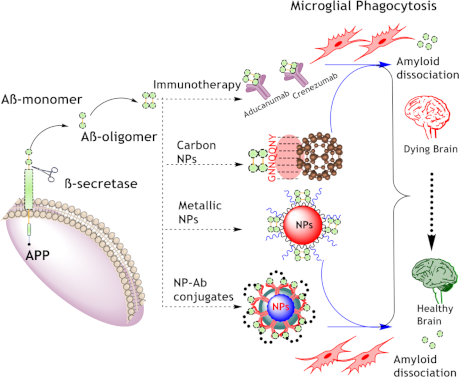
- -sheet oligomers. This property is particularly significant as β-sheet formation is a critical step in the aggregation pathway leading to neurotoxic amyloid fibrils [70]. Further investigations revealed that fullerene C60 interacts strongly with non-polar aliphatic groups in polar residues of the GNNQQNY
- demonstrated a linear response over nine orders of magnitude, with a detection limit of 1 fg/mL. This approach holds promise for early diagnosis and treatment of amyloid-related diseases [64]. Moreover, antibodies can facilitate the uptake of NPs by cells, a crucial step for delivering therapeutic payloads to


Functionalized gold nanoflowers on carbon screen-printed electrodes: an electrochemical platform for biosensing hemagglutinin protein of influenza A H1N1 virus
Beilstein J. Nanotechnol. 2025, 16, 540–550, doi:10.3762/bjnano.16.42
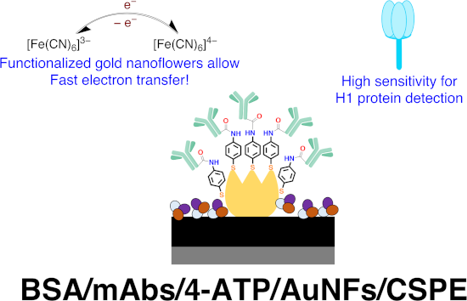
- transfer resistance. A modulation of the Rct magnitude was observed after each modification step on the working electrode of the biosensor (Supporting Information File 1, Figures S2–S6). Finally, the circuit is connected in series to a Warburg element (Wz) representing the diffusion of the [Fe(CN)6]3−/4


Electron beam-based direct writing of nanostructures using a palladium β-ketoesterate complex
Beilstein J. Nanotechnol. 2025, 16, 530–539, doi:10.3762/bjnano.16.41
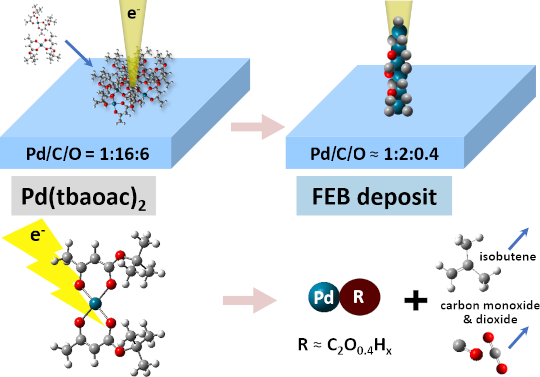
- , though they follow a two-step process similar to lithography techniques [26]. Since the dissociation of molecules under an electron beam on the substrate can follow multiple pathways, the deposition parameters can greatly influence the composition, leading to the creation of novel materials [27