


Search results
Search for "surfactants" in Full Text gives 191 result(s) in Beilstein Journal of Nanotechnology.
Exfoliation in a low boiling point solvent and electrochemical applications of MoO3
Beilstein J. Nanotechnol. 2020, 11, 662–670, doi:10.3762/bjnano.11.52
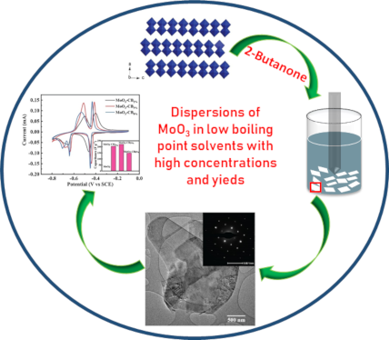
- either by ultrasonic vibrations or shearing in a liquid medium that facilitates the exfoliation. To influence the energies relevant for the exfoliation in aqueous media, additives such as surfactants and polymers are used [8]. However, their removal is quite tedious and the remnants are detrimental for

Silver-decorated gel-shell nanobeads: physicochemical characterization and evaluation of antibacterial properties
Beilstein J. Nanotechnol. 2020, 11, 620–630, doi:10.3762/bjnano.11.49
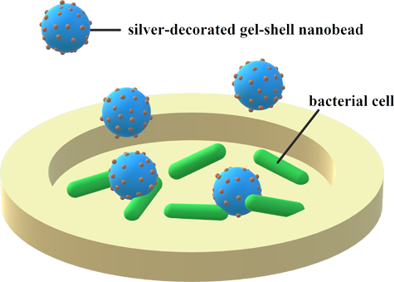
- structures are stable in aqueous solution, this may not be the case after addition of surfactants or the exchange of the solvent for a more hydrophobic one. Zhao et al. [23] proposed to incorporate silver nanoparticles into polystyrene/polystyrene sulfonate particles through accumulation of a silver complex


Phase inversion-based nanoemulsions of medium chain triglyceride as potential drug delivery system for parenteral applications
Beilstein J. Nanotechnol. 2020, 11, 213–224, doi:10.3762/bjnano.11.16
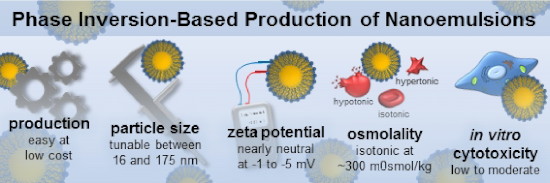
- number of ions or particles n and the molecular weight M [15]: However, the osmolality of many surfactants approaches a plateau above the critical micelle concentration. The formation of a separate micellar phase leads to a constant monomer concentration, therefore to a thermodynamically constrained
- increased unexpectedly exponential-like instead of approaching the expected plateau above the critical micelle concentration. Intense literature research revealed only a single publication by Viegas and Henry [15] describing such a phenomenon for strongly interacting nonionic surfactants. The osmolality of
- solutions of such surfactants increases nonlinearly with the solute concentration due to increasing polymer–solvent hydrogen bonding at low temperatures, which prevents the flow of solvent molecules in the solution and thus affects osmosis. This phenomenon is described by a modified polynomial van’t Hoff




Rational design of block copolymer self-assemblies in photodynamic therapy
Beilstein J. Nanotechnol. 2020, 11, 180–212, doi:10.3762/bjnano.11.15
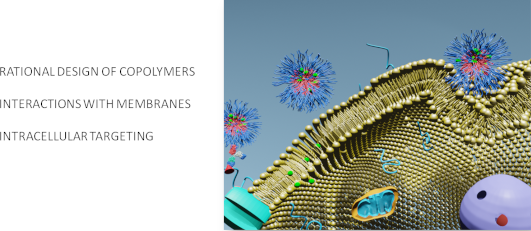
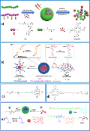
- typical cac range for amphiphilic block copolymers used in nanomedicine is a few milligrams per liter, which represents roughly the micromolar range. This has to be compared to cmc values of small surfactants, which are typically closer to the millimolar range. Furthermore, an important point is that






The effect of heat treatment on the morphology and mobility of Au nanoparticles
Beilstein J. Nanotechnol. 2020, 11, 61–67, doi:10.3762/bjnano.11.6
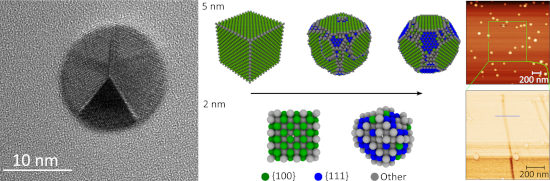
- pronounced facets (and hence higher surface area) as well as the presence of surfactants that can act as a glue. The immobility of the NPs heated to 800 °C was surprising, especially considering the fact that they look the most round in the TEM images. One possible explanation is related to the partial


Recent progress in perovskite solar cells: the perovskite layer
Beilstein J. Nanotechnol. 2020, 11, 51–60, doi:10.3762/bjnano.11.5

- the bladed films and can even passivate charge traps to further improve the device performance. Finally, stabilized PCEs of 15.3% and 14.6% were reached for devices with active areas of 33.0 cm2 and 57.2 cm2 at a high coating speed of 180 m·h−1. More importantly, the surfactants could be a kind of


Design of a nanostructured mucoadhesive system containing curcumin for buccal application: from physicochemical to biological aspects
Beilstein J. Nanotechnol. 2019, 10, 2304–2328, doi:10.3762/bjnano.10.222
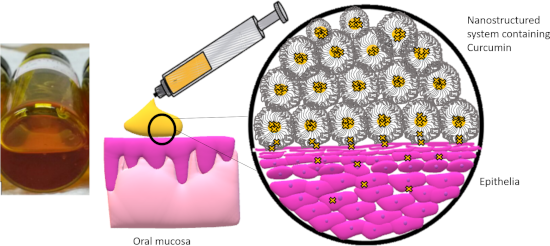
- released from the drug delivery system and how the applied technology influences the availability of the drug. Another aspect to be considered for the in vitro drug release analysis is the choice of release medium. For hydrophobic drugs, sometimes it is necessary to add surfactants that can provide the


Microbubbles decorated with dendronized magnetic nanoparticles for biomedical imaging: effective stabilization via fluorous interactions
Beilstein J. Nanotechnol. 2019, 10, 2103–2115, doi:10.3762/bjnano.10.205
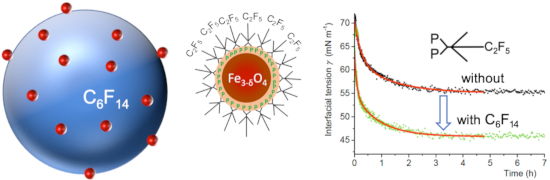
- conjunction with focused ultrasound, and under magnetic resonance imaging guidance, for achieving blood/brain and blood/tumor barrier crossing of drugs [11][12]. Medical MBs have a shell consisting of surfactants, phospholipids, or polymers and are usually stabilized by a fluorocarbon gas [13] that acts as an


Green and scalable synthesis of nanocrystalline kuramite
Beilstein J. Nanotechnol. 2019, 10, 2073–2083, doi:10.3762/bjnano.10.202
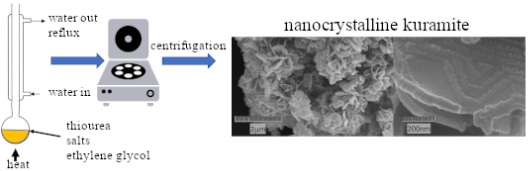
- all of these requirements. The material constraints must be considered, not only for the final product, but for the whole production process. Most works reporting the successful synthesis of CTS have employed surfactants, high pressure or noxious solvents. In this paper, we demonstrate the synthesis
- kuramite by a simple, green and scalable one-pot approach without the use of surfactants. Due to the complex crystal chemistry of the phases in the Cu–Sn–S system, we employed a deep structural and compositional analysis to correctly assign the CTS phases. We emphasize that a multianalytical approach


Gold-coated plant virus as computed tomography imaging contrast agent
Beilstein J. Nanotechnol. 2019, 10, 1983–1993, doi:10.3762/bjnano.10.195
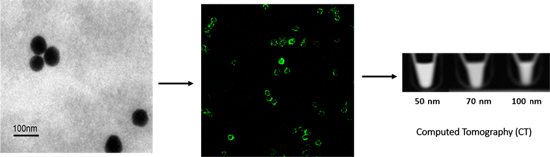
- ) aqueous Hellmanex solution (strong alkaline cleaning concentrate made of phosphates and surfactants from Helma Analytics) and air dried prior to being filled with sample solution (500 μL). The outer surface of the cells was wiped gently with a sheet of soft lens cleaning tissue. In total, 10 successive




Pulsed laser synthesis of highly active Ag–Rh and Ag–Pt antenna–reactor-type plasmonic catalysts
Beilstein J. Nanotechnol. 2019, 10, 1958–1963, doi:10.3762/bjnano.10.192
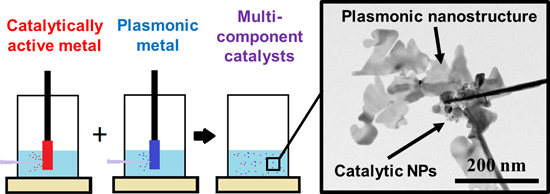
- benefits: (1) the absence of surfactants and ligands; (2) a simple, robust, and quick two-step method production; (3) bulk targets of the constituent metals as the only necessary ingredients. Experimental The synthesis of the monometallic colloids was carried out using a EKSPLA SL312G/SH/TH pulsed laser


Preservation of rutin nanosuspensions without the use of preservatives
Beilstein J. Nanotechnol. 2019, 10, 1902–1913, doi:10.3762/bjnano.10.185
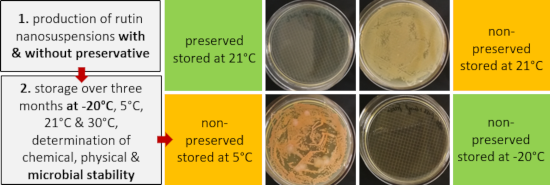
- the early 1990s [1][2][3][4]. They are composed of 100% substance, are stabilized with only small amounts of surfactants, and possess particle sizes below 1 µm. According to the Ostwald–Freundlich equation nanocrystals possess a higher curvature leading to an enhanced dissolution pressure and thus to


Microfluidic manufacturing of different niosomes nanoparticles for curcumin encapsulation: Physical characteristics, encapsulation efficacy, and drug release
Beilstein J. Nanotechnol. 2019, 10, 1826–1832, doi:10.3762/bjnano.10.177
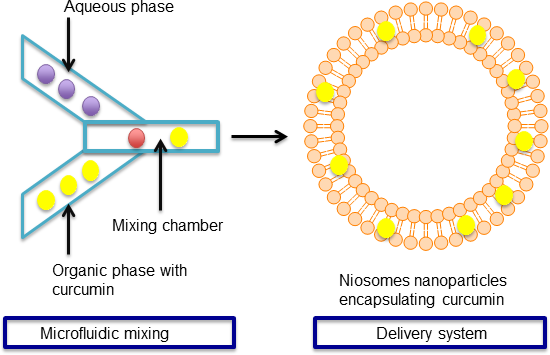
- . Niosome nanoparticles are lipid-based, and composed of non-ionic surfactants with cholesterol orientated into a membrane bilayer structure. Two different non-ionic surfactants were used and the mixing parameters were varied to optimize the characteristics of the prepared niosomes. The prepared niosomes
- surfactants prepared by the solvent evaporation method, Xu et al. were able to achieve around 92% loading efficiency of curcumin and measured enhanced cytotoxic activity against ovarian cancer cells compared with freely dispersed curcumin [9]. Microfluidic mixing is a recently developed method for the
- encapsulating curcumin were prepared by microfluidic mixing by varying the surfactants and mixing parameters. Previously, our lab successfully developed empty niosomes through microfluidic mixing using different types of surfactants such as Tween 85 or Span 85 at different ratios. In this work, these


Materials nanoarchitectonics at two-dimensional liquid interfaces
Beilstein J. Nanotechnol. 2019, 10, 1559–1587, doi:10.3762/bjnano.10.153
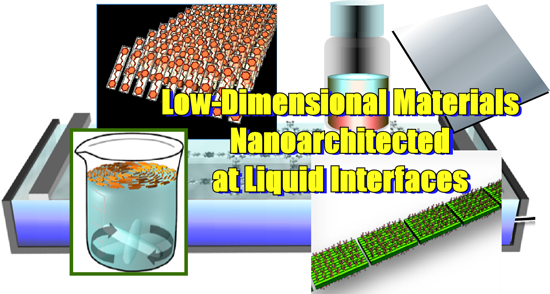
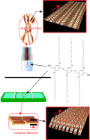
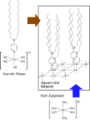
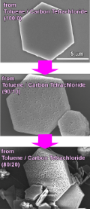
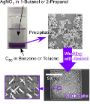
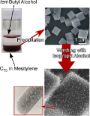
- [241]. At the interface between butanol and benzene, C60 typically assembles into one-dimensional superstructures (rods and tubes). However, by adding surfactants to those interfacial systems, the morphology of the assemblies can be altered to three-dimensional objects. The final morphology highly
- depends on type and concentration of the surfactants. When the non-ionic surfactant diglycerol monolaurate was added to butanol (0.01%), flower-like three-dimensional objects were precipitated at the interface with benzene. Detailed morphological analyses with electron microscopy techniques revealed that
- the surfactants did not basically alter primarily the one-dimensional structures of the formed assemblies. Instead, they seemed to promote super-lattice formation constructing three-dimensional flowers form the same one-dimensional rods observed in non-surfactant systems (tubes). The thermal













Highly ordered mesoporous silica film nanocomposites containing gold nanoparticles for the catalytic reduction of 4-nitrophenol
Beilstein J. Nanotechnol. 2019, 10, 1368–1379, doi:10.3762/bjnano.10.135
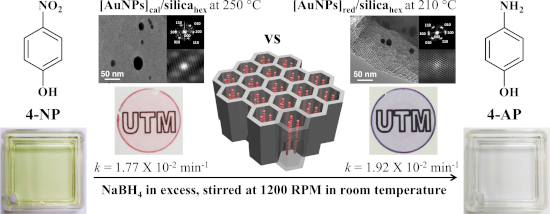
- surfactant to form the material Mobil composition of matter (MCM)-41 [15]. Considering their low toxicity, their bio-degradable nature, and the fact that they are inexpensive and highly availability, non-ionic surfactants such as Brij [16] and Pluronic [17] block copolymers have also been employed as
- from gold(III) chloride trihydrate (HAuCl4) solution have been used as a precursor for post-synthetic grafting upon mixing with mesoporous silica [20]. Another method is to utilize the co-condensation reaction by the mixing solution of HAuCl4 with surfactants and silica sources during the sol–gel


Photoactive nanoarchitectures based on clays incorporating TiO2 and ZnO nanoparticles
Beilstein J. Nanotechnol. 2019, 10, 1140–1156, doi:10.3762/bjnano.10.114
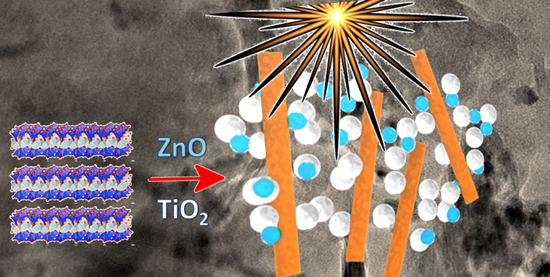
- clay surface from precursors dispersed with surfactants [116] or without [129][130], as well as the direct attachment of already formed particles to the clay [118][122]. The characteristics of the resulting materials are strongly influenced by the preparation conditions as the generated NPs show
- Pangel B20, prepared by modification of montmorillonite and sepiolite with cationic surfactants, respectively) during sol-gel process, and ii) selective photodeposition of the noble metal in the previously formed TiO2@clay nanoarchitecture [131]. The good dispersion of the noble-metal NPs, clearly



Tailoring the stability/aggregation of one-dimensional TiO2(B)/titanate nanowires using surfactants
Beilstein J. Nanotechnol. 2019, 10, 1024–1037, doi:10.3762/bjnano.10.103
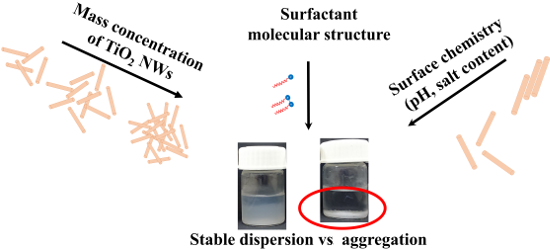
- environmental impact. Due to their high abundance in aqueous environments and their rich technological applicability, surfactants are among the most interesting compounds used for tailoring the stability. The aim of this paper is to determine the influence of surfactant molecular structure on TNW stability
- /aggregation behavior in water and aqueous NaBr solution by dynamic and electrophoretic light scattering. To accomplish this, two structurally different quaternary ammonium surfactants (monomeric DTAB and the corresponding dimeric 12-2-12) at monomer and micellar concentrations were used to investigate TNW
- differences in the intrinsic log K values, it was shown that 12-2-12 interacts more strongly with TNWs than DTAB. The modelling results enable a better understanding of the interaction between TNWs and surfactants as well as the prediction of the conditions that can promote stabilization or aggregation


Deposition of metal particles onto semiconductor nanorods using an ionic liquid
Beilstein J. Nanotechnol. 2019, 10, 718–724, doi:10.3762/bjnano.10.71
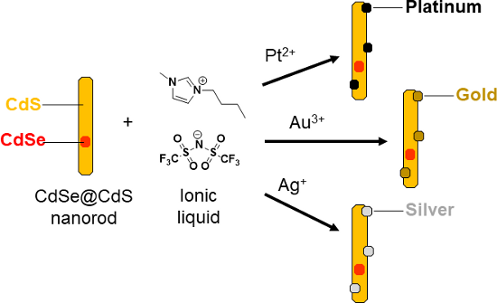
- an ionic liquid, and the effect this has on catalytic performance. Platinum, gold, and silver nanoparticles were deposited onto CdSe@CdS (core@shell) nanorods from metal salts in an ionic liquid (1-butyl-3-methylimidazolium bis(trifluoromethylsulfonyl)imide) without additional surfactants or reducing
- dimensions smaller than 10 nm are commonly reported with small deviations in the distribution of nanorod lengths. Another widely investigated approach to nanoparticle synthesis uses ionic liquids as solvents for the synthesis of nanoparticles without the need for additional stabilizing surfactants [13][14
- without the need for additional surfactants or reducing agents. Results and Discussion CdSe quantum dots and CdSe@CdS nanorods were synthesized using cadmium oxide, octadecylphosphonic acid, hexylphosphonic acid, trioctylphosphine, and trioctylphosphine oxide based on methods reported by Manna et al. and


Ultrathin hydrophobic films based on the metal organic framework UiO-66-COOH(Zr)
Beilstein J. Nanotechnol. 2019, 10, 654–665, doi:10.3762/bjnano.10.65
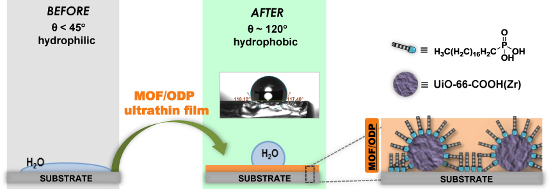
- ≈200 nm have been synthesized and assembled at the air–water interface by the Langmuir–Blodgett technique. The use of different solvents, mixtures of solvents and surfactants has been investigated in order to improve the stability of MOF dispersions and reduce particle aggregation. The compact MOF
- -designed manner to form pores and/or channels of desired dimensions [1]. These materials tend to have a very high surface area and present several advantages compared to traditional porous inorganic materials, including chemical diversity and good compatibility with polymers and surfactants [2][3
- (Zr) with free pendant –COOH groups also fulfills this requirement. Firstly, the effect of using different solvents (or mixtures of solvents) for the preparation of MOF dispersions has been investigated. Additionally, different amounts of two well-known surfactants that form stable and compact


Topochemical engineering of composite hybrid fibers using layered double hydroxides and abietic acid
Beilstein J. Nanotechnol. 2019, 10, 589–605, doi:10.3762/bjnano.10.60
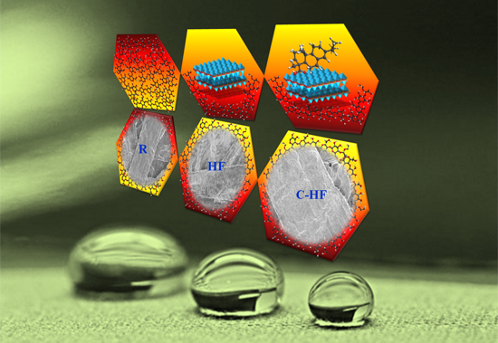
- esterification or etherification, and (2) physical methods such as composite development using hydrophobic moieties of silicones, fluorocarbons, or surfactants. The physical methods employed to make cellulose hydrophobic were applied only to regenerated cellulose and not to pristine wet-state cellulose. Our
- earlier reported work directly utilized the wet pulp fibers without any prior treatment. Moreover, anionic surfactants cause environmental pollution when the resultant acidic materials are washed out. Therefore, the choice of stearic acid was motivated by green-chemistry principles. This method differed




pH-mediated control over the mesostructure of ordered mesoporous materials templated by polyion complex micelles
Beilstein J. Nanotechnol. 2019, 10, 144–156, doi:10.3762/bjnano.10.14
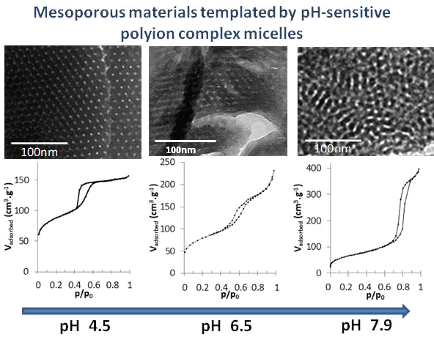
- , silica-based ordered mesoporous materials (OMMs) have attracted considerable attention in various fields such as adsorption, separation and catalysis. The formation of these mesostructures relies on a supramolecular assembly process between silicic species and surfactants or amphiphilic block copolymers
- formation of thermally and mechanically stable materials with larger pore sizes and thicker walls than those obtained with surfactants. This opens up the possibility of easily functionalizing them and tailoring the mesopore arrangement into various ordered mesostructures [7]. This is especially true as long
- curvature of the mesostructure as a function of pH up to 6.9. Such an influence of the solution pH on the variation of mesostructure and mesopore size has also been reported with non-ionic surfactants/copolymers [11][20][35][36] and ionic cetyltrimethylammonium. [37] The up-curvature observed at p/p0 > 0.85


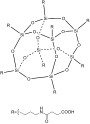
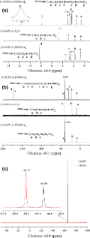
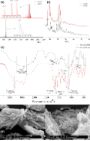
A novel polyhedral oligomeric silsesquioxane-modified layered double hydroxide: preparation, characterization and properties
Beilstein J. Nanotechnol. 2018, 9, 3053–3068, doi:10.3762/bjnano.9.284
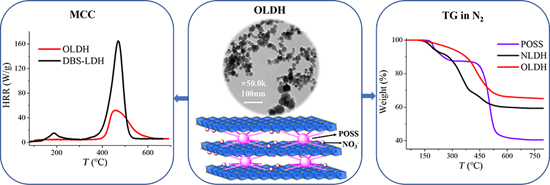
- nanofillers. So far, many organic modifiers have been successfully used to modify LDHs. One of the most commonly used is sodium dodecylbenzene sulfonate (SDBS) [7][14]. Other modifiers include a variety of sulfate and phosphate surfactants [15][16][17], aliphatic and aromatic mono- and dicarboxylic acids [18
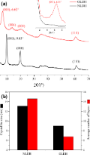
- . In contrast, the LDH modified with OCPS seems to have a denser interlayer packing. Previous literature suggests that the intercalation with linear organic molecules, e.g., surfactants, into pristine LDH can significantly weaken the hydrogen-bonding interactions between interlayer water, interlayer







Accurate control of the covalent functionalization of single-walled carbon nanotubes for the electro-enzymatically controlled oxidation of biomolecules
Beilstein J. Nanotechnol. 2018, 9, 2750–2762, doi:10.3762/bjnano.9.257
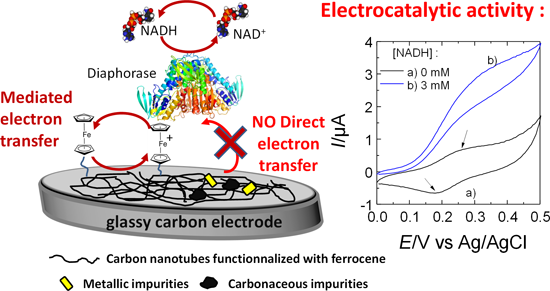
- putting oxidative defects on their sidewalls and extremities to decrease their hydrophobicity, ii) to use non-covalent interaction with hydrophilic biomolecules or surfactants [15][16][17][18] or iii) to use covalently grafted polyethyleneglycol (PEG) linkers, as described by us [9][11][12]. Many studies






Droplet-based synthesis of homogeneous magnetic iron oxide nanoparticles
Beilstein J. Nanotechnol. 2018, 9, 2413–2420, doi:10.3762/bjnano.9.226
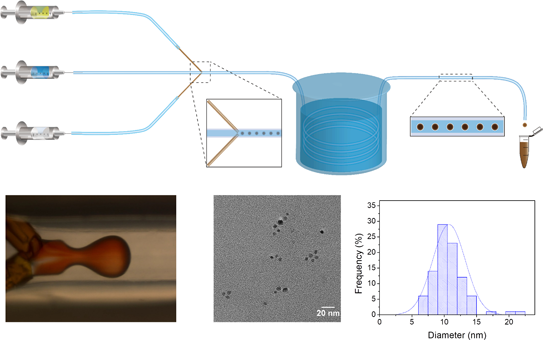
- File 1, and Supporting Information File 2). After internal mixing the droplets showed a homogenous red color. To stabilize the droplets in the tubing, two surfactants (Abil EM 90 and Triton X-100) were added to the mineral oil phase. The concentration of the surfactants was chosen in such a manner that


Block copolymers for designing nanostructured porous coatings
Beilstein J. Nanotechnol. 2018, 9, 2332–2344, doi:10.3762/bjnano.9.218
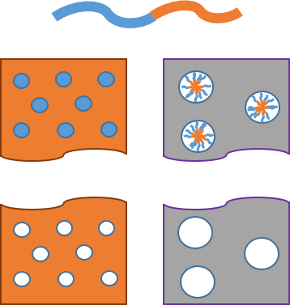
- leaving the PEO domains visible (and forming a porous structure). Analogous results were also obtained for cobalt onto PS-b-PEO [100]. Concerning the soft-templating route, usually the most diffuse porogens used are surfactants: small molecules characterized by having both polar (head) and apolar (tail
- ) parts linked together by chemical bonds [101]. Analogous to surfactants, even amphiphilic block copolymers (such as the PS-b-PEO ones) can be used as templating agents [4]. As reported by Yu and co-workers [102], PS-b-PEO copolymers were used for the production of mesoporous silica films where a cubic





