


Search results
Search for "waste" in Full Text gives 128 result(s) in Beilstein Journal of Nanotechnology.
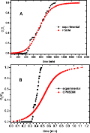
Tailoring the stability/aggregation of one-dimensional TiO2(B)/titanate nanowires using surfactants
Beilstein J. Nanotechnol. 2019, 10, 1024–1037, doi:10.3762/bjnano.10.103
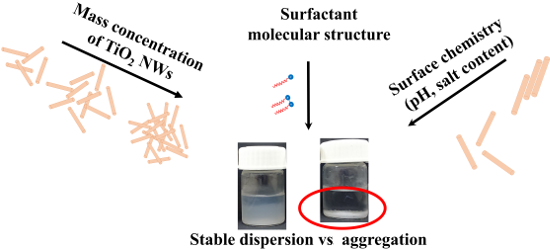
- , Croatia Karlsruhe Institute of Technology (KIT), Institute for Nuclear Waste Disposal, Hermann-von-Helmholtz-Platz 1, 76344 Eggenstein-Leopoldshafen, Germany Department of Chemistry, Faculty of Science, University of Zagreb, Horvatovac 102a, 10002 Zagreb, Croatia current affiliation: Department of Organic


Enhancement in thermoelectric properties due to Ag nanoparticles incorporated in Bi2Te3 matrix
Beilstein J. Nanotechnol. 2019, 10, 634–643, doi:10.3762/bjnano.10.63
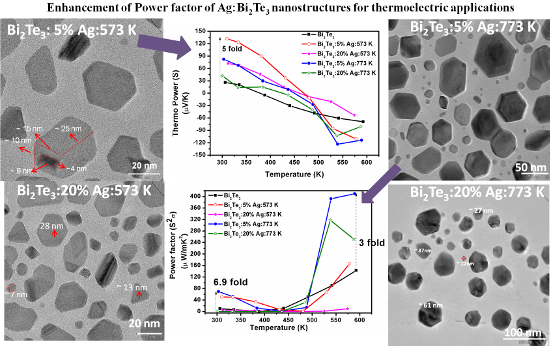
- ; nanoparticles; power factor; thermoelectric power; Introduction Bismuth telluride (Bi2Te3) is an important semiconductor widely used as thermoelectric (TE) material for room-temperature applications to convert waste heat into electricity. The efficiency of a TE material can be defined by figure of merit (ZT



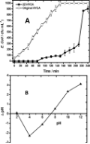
New micro/mesoporous nanocomposite material from low-cost sources for the efficient removal of aromatic and pathogenic pollutants from water
Beilstein J. Nanotechnol. 2019, 10, 119–131, doi:10.3762/bjnano.10.11
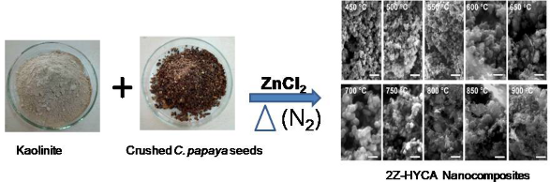
- local raw materials, (ii) the raw materials are either waste or very cheap, (iii) the process does not require a complex technical setup, (iv) the process can be adapted to local requirements, such as exchanging the papaya seeds with other organic components that are available locally, and (v) the




Characterization and influence of hydroxyapatite nanopowders on living cells
Beilstein J. Nanotechnol. 2018, 9, 3079–3094, doi:10.3762/bjnano.9.286
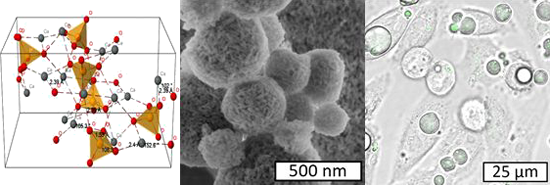
- responsible for detecting, ingesting and digesting cellular waste and microbes [79][80]. The viability results of the examined J774.1 cell line showed a small overall impact of the hydroxyapatite samples, with the exceptions of low toxicity of F202 at 300 µg/mL and a stronger toxic effect for HApSA+Si at 200
- chromatography, protein purification, cell-culture substrates, catalyst production and waste management. Lower crystallinity, high purity and high zeta potential of hydroxyapatite nanoparticles are desired in a material intended for long-term medical use in the body. Since calcium deficiency is a feature of

![[Graphic 1]](/bjnano/content/inline/2190-4286-9-286-i2.svg?max-width=637&scale=1.18182) .
.



Nanostructured liquid crystal systems and applications
Beilstein J. Nanotechnol. 2018, 9, 2644–2645, doi:10.3762/bjnano.9.245

- a huge waste of energy, equivalent to that generated by several nuclear power stations. Many scientific groups all over the world are engaged in the development of new energy-saving display materials. One of the newest ideas is to create a field sequential color liquid crystal display [7], in which
Impact of the anodization time on the photocatalytic activity of TiO2 nanotubes
Beilstein J. Nanotechnol. 2018, 9, 2628–2643, doi:10.3762/bjnano.9.244
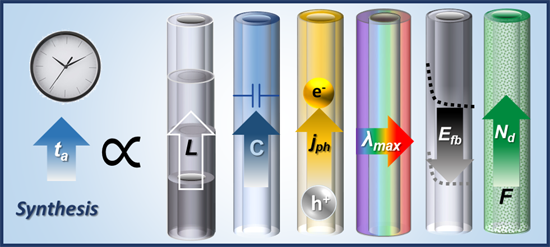
- applications. Photocatalytic activity of the TNTs In order to investigate the PCA of the samples, the degradation of methylene blue (MB) was studied under UV irradiation. Ions are found in the waste waters from the textile industry resulting from the dyeing and bleaching processes, thus allowing the use of an
- electrooxidation process for the degradation of such components. Chlorides are often present in these waste waters [81][82][83][84], and for that reason a dissolution of 0.5 M KCl was chosen as the electrolyte. The electrolyte was not purged with N2 or O2 prior to or during the experiment. Figure 9a depicts the


Nanocellulose: Recent advances and its prospects in environmental remediation
Beilstein J. Nanotechnol. 2018, 9, 2479–2498, doi:10.3762/bjnano.9.232
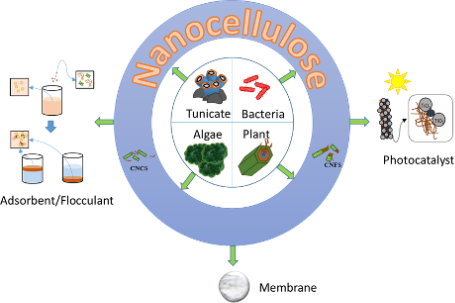
- the potential to overcome challenges pertaining to material biodegradability, renewability, cost, and energy. Furthermore, cellulose found in most lignocellulosic biomass, derived from agricultural waste, energy crops and forestry residues, provides a better option over food crops as a renewable
- electronic waste management by recovering and recycling palladium through an efficient and low-cost technology [42]. Algae as a supply for nanocellulose production could increase the production of cellulose significantly in an inexpensive manner and reduce greenhouse gases by absorbing carbon dioxide
- oxidation. Sulphonation of cellulose provides lower anionic charges, broader functionalities, and consumes less harmful and expensive chemicals in its recyclable process which does not generate halogenated waste [79]. In contrast, quaternization has been used to provide cationic functionality to


Filling nanopipettes with apertures smaller than 50 nm: dynamic microdistillation
Beilstein J. Nanotechnol. 2018, 9, 2181–2187, doi:10.3762/bjnano.9.204
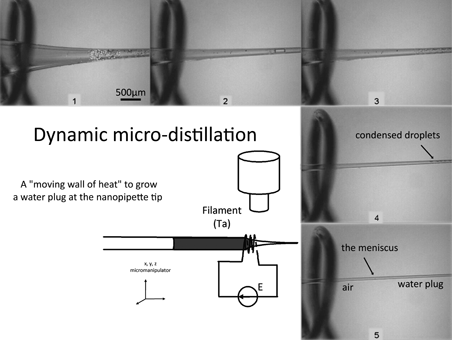
- applying high back-pressure applied to filament capillaries were not very successful: filling remained impossible with elongated nanopipettes. Thus, current nanopipette filling methods appear inefficient, time-consuming and wasteful (up to 80% waste). In section Experimental, we propose a new technique


Cr(VI) remediation from aqueous environment through modified-TiO2-mediated photocatalytic reduction
Beilstein J. Nanotechnol. 2018, 9, 1448–1470, doi:10.3762/bjnano.9.137
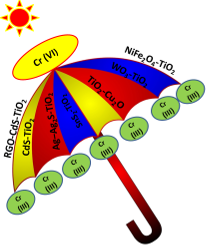
- urbanization, which in turn act to increase the level of environmental pollution [1][2][3]. Heavy metals contribute to a significant extent towards environmental pollution because of their toxicity, bio-accumulation and non-biodegradable nature. They also release large quantities of hazardous waste during
- or alkaline solutions (Ksp(Cr(OH)3) = 6.3 × 10⁻³¹] and are removed as solid wastes [20][21]. However, use of this traditional technique is restricted due to high cost and generation of secondary waste as it requires a large amount of reducing agent such as ferrous sulfate, sodium hydrogen sulfite
- conditions, low cost, high efficiency and reusability. It uses renewable and pollution-free solar energy and produces minimal secondary waste without using toxic chemicals that follow the rules of green chemistry [59][60][61]. Various semiconductor photocatalysts such as CdS, ZnO, WO3, SnO2, and TiO2 have


Colorimetric detection of Cu2+ based on the formation of peptide–copper complexes on silver nanoparticle surfaces
Beilstein J. Nanotechnol. 2018, 9, 1414–1422, doi:10.3762/bjnano.9.134
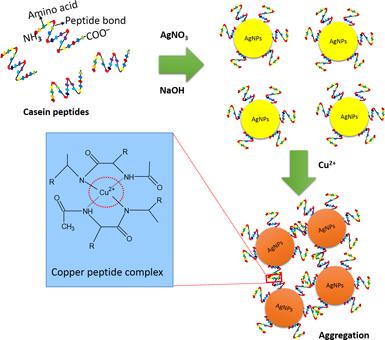
- present above certain concentrations [1]. Copper is a widely distributed heavy metal in water bodies, as a result of direct dumping of industrial and mining waste and electronic waste [2][3]. Cu2+ has been used excessively in the form of copper sulfate and copper hydroxide as a fungicide, algaecide, and


Review on nanoparticles and nanostructured materials: history, sources, toxicity and regulations
Beilstein J. Nanotechnol. 2018, 9, 1050–1074, doi:10.3762/bjnano.9.98



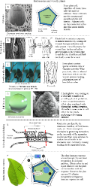
Bioinspired self-healing materials: lessons from nature
Beilstein J. Nanotechnol. 2018, 9, 907–935, doi:10.3762/bjnano.9.85
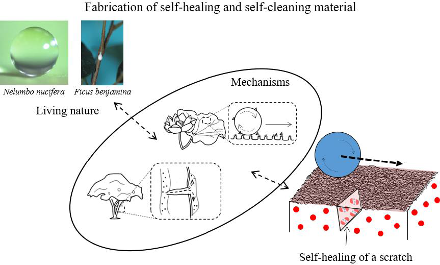

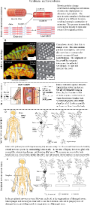

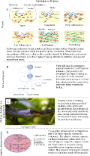




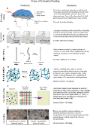


Noble metal-modified titania with visible-light activity for the decomposition of microorganisms
Beilstein J. Nanotechnol. 2018, 9, 829–841, doi:10.3762/bjnano.9.77
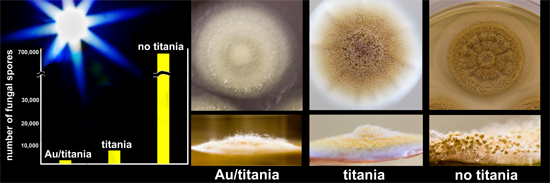
- ; antimicrobial properties; bactericidal effect; noble-metal nanoparticles; plasmonic photocatalysis; Introduction Environmental pollution and the lack of clean potable water are main issues facing human development. Although, various methods of efficient control and monitoring of waste management have been


Facile synthesis of a ZnO–BiOI p–n nano-heterojunction with excellent visible-light photocatalytic activity
Beilstein J. Nanotechnol. 2018, 9, 789–800, doi:10.3762/bjnano.9.72
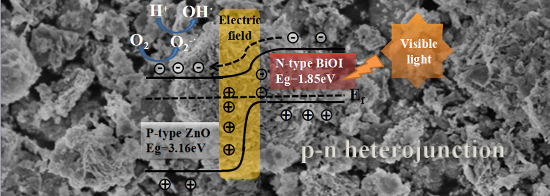
- , probably a result of the quantum confinement effect in the nanometer-sized ZnO particles. Photocatalytic degradation To test the as-synthesized samples’ ability to remove organic pollutants from waste water, the photodegradation of RhB was carried out under illumination by visible light from a 300 W Xe


A review of carbon-based and non-carbon-based catalyst supports for the selective catalytic reduction of nitric oxide
Beilstein J. Nanotechnol. 2018, 9, 740–761, doi:10.3762/bjnano.9.68
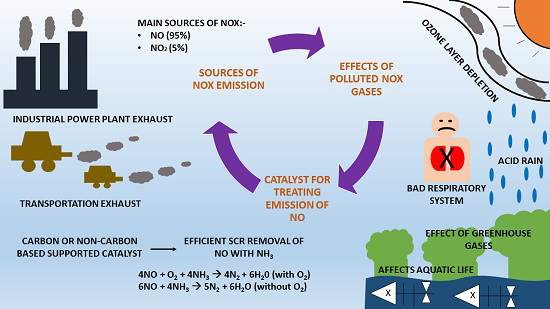
- waste on ACF by impregnation and heat treatment methods. The introduction of a nitrogen functional group by propellant waste promoted the activity removal of NO two-fold to that of the unmodified ACF at low temperature. The SEM analysis reveals that propellant waste was fully oxidised on the ACF surface
Mechanistic insights into plasmonic photocatalysts in utilizing visible light
Beilstein J. Nanotechnol. 2018, 9, 628–648, doi:10.3762/bjnano.9.59
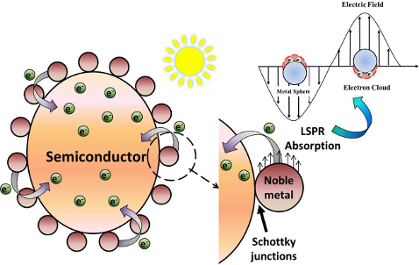
- capsids and DNA origami as biological scaffolds to increase fluorescence intensity by tuning the distance between capsid and Au NPs [155]. In recent years, the phytochemicals present in plant-based and waste materials have been used as reducing and stabilizing agents to prepare plasmonic metals (Au and Ag





Sugarcane juice derived carbon dot–graphitic carbon nitride composites for bisphenol A degradation under sunlight irradiation
Beilstein J. Nanotechnol. 2018, 9, 353–363, doi:10.3762/bjnano.9.35
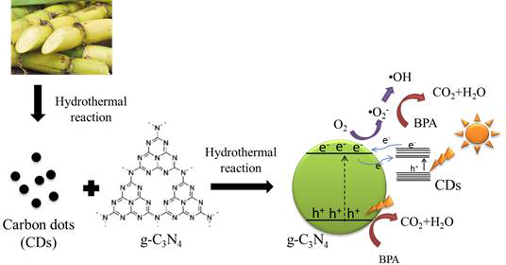
- of CDs has met several limitations including limited spectral efficiency, low product yield and toxic chemicals usage [5]. Thus, the use of renewable bioprecursors such as orange juice [6], soy milk [7], orange waste peels [8], watermelon rinds [9], hair [10] and cow manure [11] to produce CDs has
- -driven photocatalysis. Prasannan and Imae reported a simple and facile one-pot synthesis of fluorescent CDs from orange waste peels using the hydrothermal carbonization method. As prepared CDs were combined with zinc oxide (ZnO) to degrade naphthol blue–black azo dye under UV irradiation, and the


Review on optofluidic microreactors for artificial photosynthesis
Beilstein J. Nanotechnol. 2018, 9, 30–41, doi:10.3762/bjnano.9.5
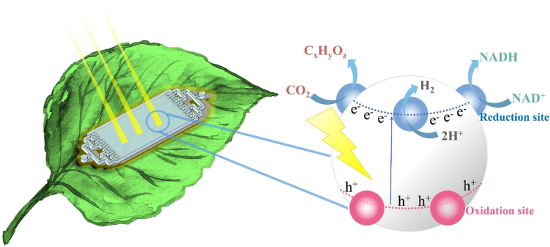
- , known as the PS-A/D-PS system. Since the electron acceptor (A) can react with both the photogenerated electron in PS I and PS II, the electron donor (D) can react with both the photogenerated hole in PS I and PS II, and backward reactions would occur, leading to a significant waste of photogenerated


Hyperthermic intracavitary nanoaerosol therapy (HINAT) as an improved approach for pressurised intraperitoneal aerosol chemotherapy (PIPAC): Technical description, experimental validation and first proof of concept
Beilstein J. Nanotechnol. 2017, 8, 2729–2740, doi:10.3762/bjnano.8.272
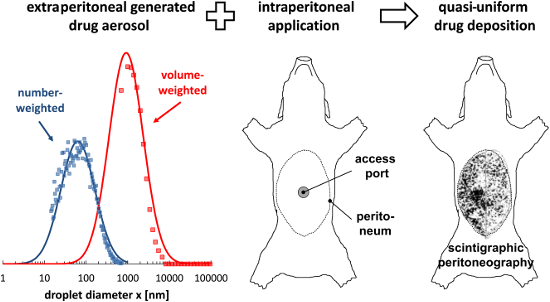
- closed air waste system (CAWS). Experimental Granulometric analyses (ex vivo) Laser diffraction spectrometry (LDS) Laser diffraction spectrometry (LDS) by means of a He–Ne laser diffraction spectrometer [16] according to ISO 13320:2009 [17] (HELOS/KR-H2487, Sympatec GmbH, Germany) was performed to
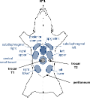
- into body cavities. Furthermore, the liquid atomisation unit of the HINAT approach was designed for multiple use with regard to economic aspects. Schematic illustration of the HINAT approach; CAWS = closed air waste system, HEPA = high efficiency particulate air filter. Schematic illustration of the




A biofunctionalizable ink platform composed of catechol-modified chitosan and reduced graphene oxide/platinum nanocomposite
Beilstein J. Nanotechnol. 2017, 8, 1508–1514, doi:10.3762/bjnano.8.151
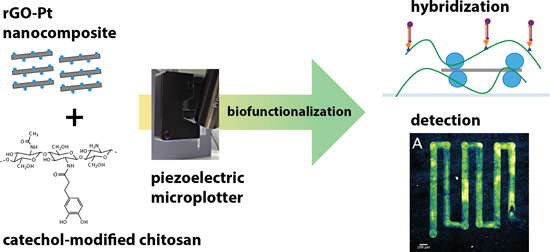
- range of inks, and scalable, as well as cost effective, thanks to reduced material waste and no mask or tooling requirement. Here we present a chitosan–catechol/graphene nanocomposite suitable for use as ink for piezoelectric non-contact printing that can serve as a platform for biosensor development


Preparation of thick silica coatings on carbon fibers with fine-structured silica nanotubes induced by a self-assembly process
Beilstein J. Nanotechnol. 2017, 8, 1145–1155, doi:10.3762/bjnano.8.116
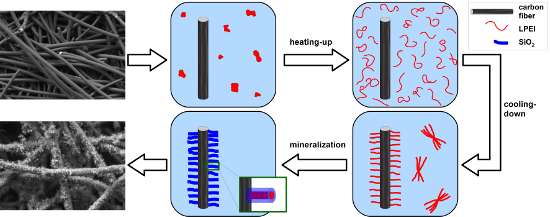
- ]. Moreover, silica surfaces are suitable for adsorption of electron deficient organic molecules enabling an application of silica coated carbon fibers for adsorption issues and waste water treatment [34]. For catalytic applications, the high surface area of the silica shell could be used either as a catalyst


Fully scalable one-pot method for the production of phosphonic graphene derivatives
Beilstein J. Nanotechnol. 2017, 8, 1094–1103, doi:10.3762/bjnano.8.111
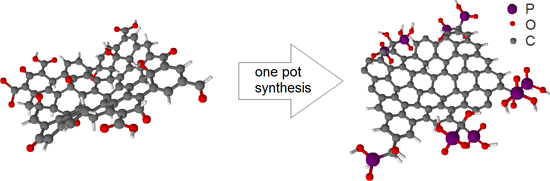
- hazardous waste. Finally, after ball milling for two days the resultant carbonaceous material is rather high-surface-area graphite than graphene. Thermogravimetric (TG) analysis with differential scanning calorimetry (DSC) provided information about thermal stability of GO and GO-P and allowed for an


Treatment of fly ash from power plants using thermal plasma
Beilstein J. Nanotechnol. 2017, 8, 1043–1048, doi:10.3762/bjnano.8.105
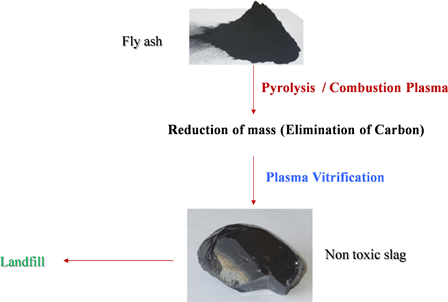
- mass and converting it to a glassy slag with lower leachability than bottle glass [6][7]. For this reason, thermal plasma is a promising technology for the treatment of fly ash [8][9][10]. Furthermore plasma technology was used to treat the most toxic waste like radioactive wastes, contaminated



Study of the correlation between sensing performance and surface morphology of inkjet-printed aqueous graphene-based chemiresistors for NO2 detection
Beilstein J. Nanotechnol. 2017, 8, 1023–1031, doi:10.3762/bjnano.8.103
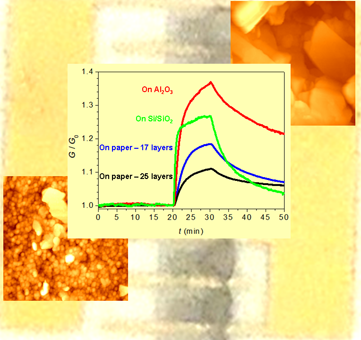
- a sustainable methodology due to a reduced number of processing steps and a minimized amount of waste materials. Indeed, IJP utilizes very minute amounts of materials, deposits selectively and patterns them at the same time under no-contact and no-vacuum conditions by means of digital masters


Needs and challenges for assessing the environmental impacts of engineered nanomaterials (ENMs)
Beilstein J. Nanotechnol. 2017, 8, 989–1014, doi:10.3762/bjnano.8.101
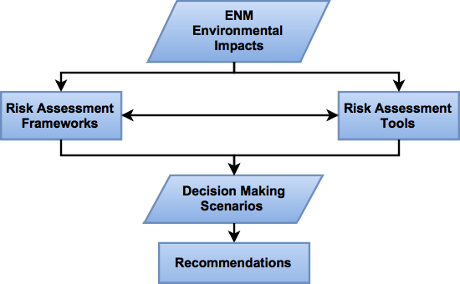
- human exposure via inhalation based on the daily amount of nanomaterial with which a worker comes into contact; (c) the maximum ENM input into the environment during manufacture via wastewater, exhaust gases or solid waste; and (d) the available information on the ENM life cycle. Finally, the score for




