


Search results
Search for "wetting" in Full Text gives 182 result(s) in Beilstein Journal of Nanotechnology.
Single-crystalline FeCo nanoparticle-filled carbon nanotubes: synthesis, structural characterization and magnetic properties
Beilstein J. Nanotechnol. 2018, 9, 1024–1034, doi:10.3762/bjnano.9.95
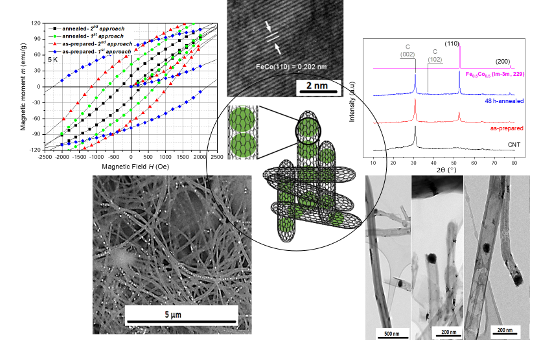
- about 1–1.2, whereas 24% had aspect ratios larger than 1.2, but did not exceed 1.5. Hence, the morphology became more homogenous after further heat treatment. We attribute the homogeneity in the morphology of the annealed samples to the non-wetting behavior of the Fe–Co alloy nanoparticles and carbon


Bioinspired self-healing materials: lessons from nature
Beilstein J. Nanotechnol. 2018, 9, 907–935, doi:10.3762/bjnano.9.85
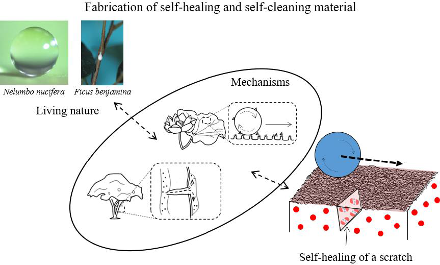
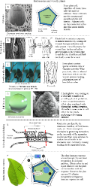
- functionality to their surfaces to accomplish complex tasks without the need for movement. These replenishable surface layers consist of combinations of hierarchical morphology and/or chemistry to create different wetting behaviors and are referred to as functional coatings. In the well-known case of the lotus







Nanoscale mapping of dielectric properties based on surface adhesion force measurements
Beilstein J. Nanotechnol. 2018, 9, 900–906, doi:10.3762/bjnano.9.84
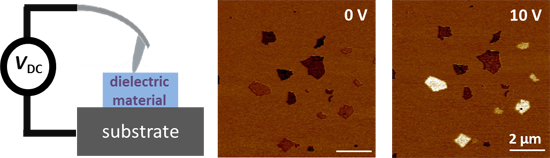
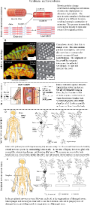
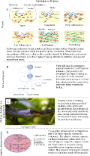
- achieved with high lateral resolution by combining the advantages of the electrowetting (EW) effect [33] and an AFM imaging mode, PeakForce Quantitative Nano-Mechanics (PF-QNM) [34]. Electrowetting is a phenomenon in which the wetting properties of a dielectric surface are modified using an external
- both of the wetting and dielectric properties of the sample. Based on this principle, a quantitative analysis on the dielectric constant of macroscopic film has been realized by measuring the surface–water contact angle and adhesion force between the dielectric layer and a biased AFM tip [38]. Recently


Effect of microtrichia on the interlocking mechanism in the Asian ladybeetle, Harmonia axyridis (Coleoptera: Coccinellidae)
Beilstein J. Nanotechnol. 2018, 9, 812–823, doi:10.3762/bjnano.9.75
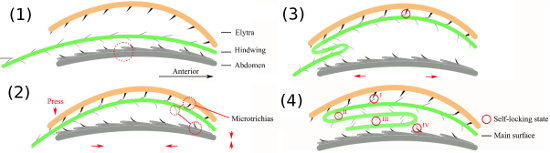
- hindwings of the H. axyridis was established, and its underlying mechanism is discussed. Keywords: anti-wetting; folding process; interlocking mechanism; micro air vehicles; microtrichia; Introduction Insect wings have many properties, such as lightness, thinness, high flexibility and high load capacity
- folding process of H. axyridis hindwings was established. Finally, the anti-wetting function of the hindwings was investigated. Materials and Methods Beetles Twelve Asian ladybeetles, H. axyridis, collected from Changchun, Jilin Province, China (Figure 1) were captured for use in this study. This species
- angular orientation was measured for approximately 20–30 microtrichia in each position, and the mean values were used. Contact angle of the hindwings To further understand the hydrophobic function of H. axyridis hindwings, a standard-type contact angle meter was used to quantify their anti-wetting


Optimisation of purification techniques for the preparation of large-volume aqueous solar nanoparticle inks for organic photovoltaics
Beilstein J. Nanotechnol. 2018, 9, 649–659, doi:10.3762/bjnano.9.60
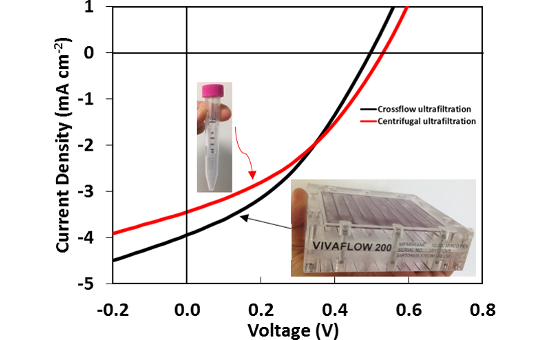
- at a dilution factor of 7.8 × 10⁴, while crossflow purified inks did not reach a maximum efficiency until a dilution factor of 6.1 × 10⁹. This difference was ascribed to the different wetting properties of the prepared inks and was further corroborated by surface tension measurements of the ASNP inks
- aqueous solar nanoparticle (ASNP) inks affects several aspects of the fabrication of nanoparticle (NP)-OPV devices; including the packing density of the photoactive particles in the nanoparticle films and thus the formation of cracks or de-wetting areas [11][12][13]. Previous studies have reported
- crossflow Millipore filtration system [13][17]. However, the fabrication of NP-OPVs using slot-die coating of these purified inks on a roll-to-roll setup required the addition of an fluorosurfactant (FSO) to improve the wetting of the NP ink onto the substrate [17], indicating that the SDS content had not


Kinetics of solvent supported tubule formation of Lotus (Nelumbo nucifera) wax on highly oriented pyrolytic graphite (HOPG) investigated by atomic force microscopy
Beilstein J. Nanotechnol. 2018, 9, 468–481, doi:10.3762/bjnano.9.45
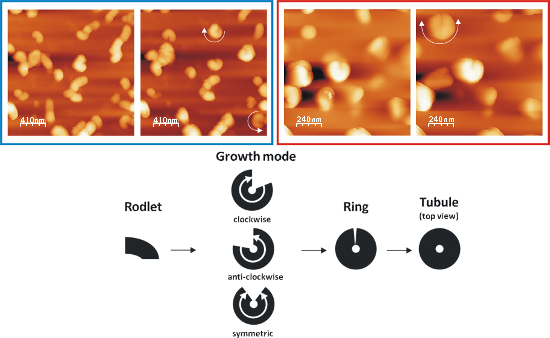
- superhydrophobicity of the wax coated surface. The time and temperature related formation of wax tubules has also been used to develop first artificial Lotus leaves for various wetting studies [24]. However, there are still a number of other factors that can affect tubule growth on HOPG. For example, the


Engineering of oriented carbon nanotubes in composite materials
Beilstein J. Nanotechnol. 2018, 9, 415–435, doi:10.3762/bjnano.9.41
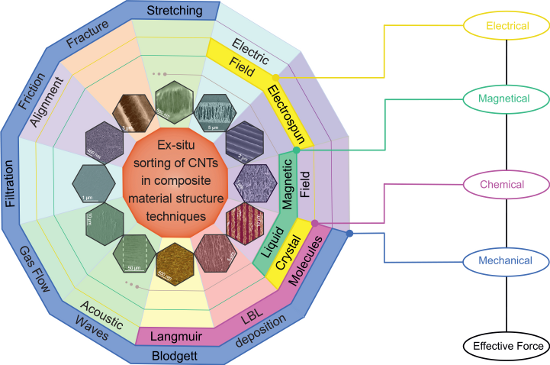
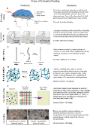
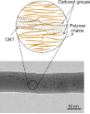
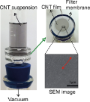
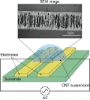
- . Winding onto a rotating mandrel. Step 3. Fixing with a matrix spray. Schematic of the layer-by-layer deposition process. Step 1. Wetting a paper tape with water/poly(vinyl alcohol) (PVA). Step 2. Introducing the assembled CNT layer in the reactor. Step 3. Winding up after drying. Reproduced with








Growth model and structure evolution of Ag layers deposited on Ge films
Beilstein J. Nanotechnol. 2018, 9, 66–76, doi:10.3762/bjnano.9.9
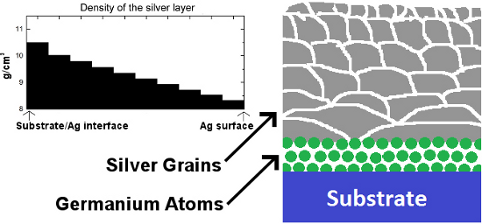
- of Warsaw, Department of Chemistry, Pasteura 1 str., 02-093 Warsaw, Poland 10.3762/bjnano.9.9 Abstract We investigated the crystallinity and optical parameters of silver layers of 10–35 nm thickness as a function 2–10 nm thick Ge wetting films deposited on SiO2 substrates. X-ray reflectometry (XRR
- 10 nm Ag layer on a sapphire substrate at room temperature with a 1 nm germanium wetting film [18]. Recently, it was observed that the germanium atoms, which form the nucleation film, efficiently segregate [21] through the silver structure towards the surface [22][23], which results in additional
- (AFM) scans show that the grain size indeed decreases when the Ag layer is deposited on a Ge wetting film (Figure 2b) with respect to the non wetted film (Figure 2a), which is in consistency with the previous findings [4][19][20][22][24]. Table 1 shows the AFM- and XRR-derived surface roughness root






Transition from silicene monolayer to thin Si films on Ag(111): comparison between experimental data and Monte Carlo simulation
Beilstein J. Nanotechnol. 2018, 9, 48–56, doi:10.3762/bjnano.9.7
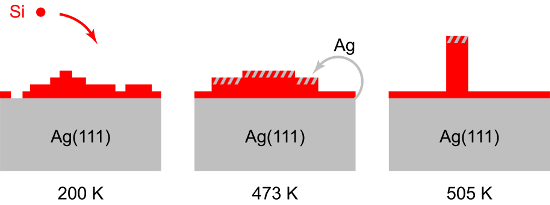
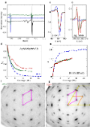
- monolayer. On the contrary, the most intense spots on their LEED diagram were the substrate spots. From that, they concluded to an imperfect wetting of the 10 ML film. Coming back to the present results, our LEED diagram obtained after growth at T = 505 K shows results quite different from the 473 K ones
- that the αd(1) coefficient is set to an arbitrary high value to ensure the continuous wetting of the substrate by the silicene layer. For T = 473 K, a good fit is obtained if one now assumes a conversion of monolayer to Si islands having a height of 2 layers and covered with Si and Ag atoms forming the

One-step chemical vapor deposition synthesis and supercapacitor performance of nitrogen-doped porous carbon–carbon nanotube hybrids
Beilstein J. Nanotechnol. 2017, 8, 2669–2679, doi:10.3762/bjnano.8.267
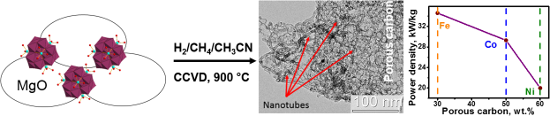
- catalyzed the growth of the MWCNTs with different diameters and morphologies (see, for example, Figure 2d), depending on the nature of the catalytic nanoparticles and possible different wetting behavior toward MgO. According to the statistical analysis of the TEM images, the average outer diameter of the


Interface conditions of roughness-induced superoleophilic and superoleophobic surfaces immersed in hexadecane and ethylene glycol
Beilstein J. Nanotechnol. 2017, 8, 2504–2514, doi:10.3762/bjnano.8.250
- 0 nm as the roughness of a partially wetting surface increases at the nano-scale. Zhu and Granick [17] studied boundary slip on chemically modified octadecyltrichlorosilane (OTS) and octadecyltriethoxysilane (OTE) samples with varying degrees of roughness immersed in DI water and tetradecane by
- of roughness by using AFM. Results show that the slip length enhanced with larger RMS roughness, as the increasing roughness could magnify the intrinsic wetting properties of surface. In addition, the published studies based on LB simulation and molecular dynamics (MD) also show that roughness could





Surfactant-induced enhancement of droplet adhesion in superhydrophobic soybean (Glycine max L.) leaves
Beilstein J. Nanotechnol. 2017, 8, 2345–2356, doi:10.3762/bjnano.8.234
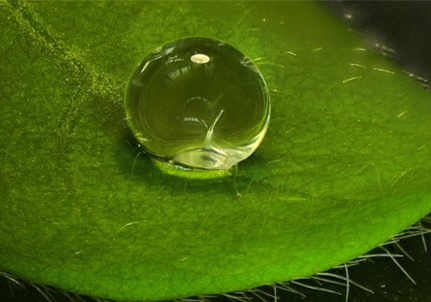
- reduction of the epicuticular wax structures and a change from Cassie–Baxter wetting to an intermediate wetting regime with an increase of droplet adhesion. Keywords: droplet adhesion; epicuticular wax; Glycine max L; superhydrophobic; surfactants; Introduction The cuticle, as the outermost layer of
- applied liquid also depends on the wetting mode. In the Wenzel mode [26] an applied water droplet penetrates into cavities formed by the surface structures, increasing the contact area, and resulting in high hysteresis of the applied liquid. In Cassie–Baxter mode [27] air remains in the surface cavities
- changes. A rapid and distinct increase in the TA was only found after treatment with SBO 10 and XP ED 28-13. Both surfactants increased the TA within 10 s of contact time for SBO 10 from a TA of 20° to a TA of 50°, and for ED 28-13 the TA increased from 16° to 30°. Structural and wetting changes caused by


Identifying the nature of surface chemical modification for directed self-assembly of block copolymers
Beilstein J. Nanotechnol. 2017, 8, 1972–1981, doi:10.3762/bjnano.8.198
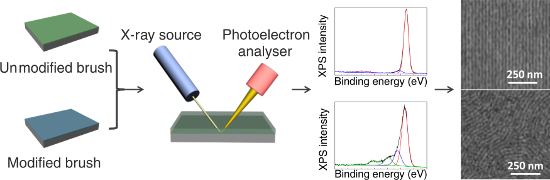
- conclude that the unmodified brush layer is not uniformly covered by the relatively thick PMMA film as a result of the lower affinity between both materials (inefficient wetting). However, in the case of the sample exposed to oxygen plasma, the modified character of the brush layer triggers a higher
- affinity to PMMA (more efficient although non complete wetting). This is further confirmed when the C 1s HAXPES spectra are taken at different photon energies, as shown in Figure 5c,d, where the spectra have been acquired at 2700 and 3000 eV, respectively. Increasing photon energy implies increasing


Enhancement of mechanical and electrical properties of continuous-fiber-reinforced epoxy composites with stacked graphene
Beilstein J. Nanotechnol. 2017, 8, 1909–1918, doi:10.3762/bjnano.8.191
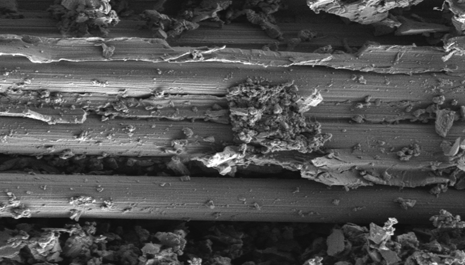
- wetting ability of the modified nanoparticles. The hydrophilic/hydrophobic nature of the SAA dictates the surface energy balance. More hydrophilic SAAs promoted localization of the SG at the Kevlar/epoxy interface, and morphology seems to be driven by thermodynamics, rather than the kinetic effect of
- -100 and MEMO provides improved wetting of the Kevlar fabric with the matrix compound. Kevlar filaments are covered with adhered particles of SAA/SG, while laminates prepared with the same neat epoxy or unmodified epoxy/SG exhibit bare surfaces of the fabric. Triton X-100 and MEMO have lower
- viscosities than Triton X-15 and Polyol 4200, this supports their contribution to better wetting. For compositions in which epoxy resin was modified by hydrophobic Triton X-15 or GLYMO the fiber coverage is less pronounced. Some uncovered sections of Kevlar filaments can be observed in Figure 1e,f. This is in


Collembola cuticles and the three-phase line tension
Beilstein J. Nanotechnol. 2017, 8, 1714–1722, doi:10.3762/bjnano.8.172
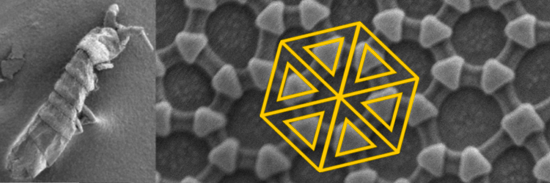
- springtails (Collembola) are superhydrophobic, but the mechanism has not been described in detail. Previous studies have suggested that overhanging surface structures play an important role, but such structures are not a universal trait among springtails with superhydrophobic cuticles. A novel wetting
- experiment with a fluorescent dye revealed the extent of wetting on exposed surface structures. Using simple wetting models to describe the composite wetting of the cuticular surface structures results in underestimating the contact angles of water. Including the three-phase line tension allows for a
- prediction of contact angles in the observed range. The discrepancy between the contact angle predicted by simple models and those observed is especially large in the springtail Cryptopygus clavatus which changes, seasonally, from superhydrophobic to wetting without a large change in surface structure; C


![[Graphic 16]](/bjnano/content/inline/2190-4286-8-172-i22.png?max-width=637&scale=1.18182) . A system with θ0 = 105°, S = 0.1 μm a...
. A system with θ0 = 105°, S = 0.1 μm a...

Air–water interface of submerged superhydrophobic surfaces imaged by atomic force microscopy
Beilstein J. Nanotechnol. 2017, 8, 1671–1679, doi:10.3762/bjnano.8.167
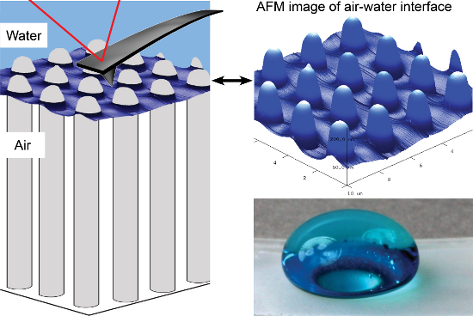
- , the surface shows air retention, with the exception of the lower right area. b) After about 3 minutes, a sudden change of the wetting state occurred, as the air layer collapsed on the upper left. c, d) The collapse occurred stepwise and erratically, propagating towards the cantilevers. In all cases



Process-specific mechanisms of vertically oriented graphene growth in plasmas
Beilstein J. Nanotechnol. 2017, 8, 1658–1670, doi:10.3762/bjnano.8.166
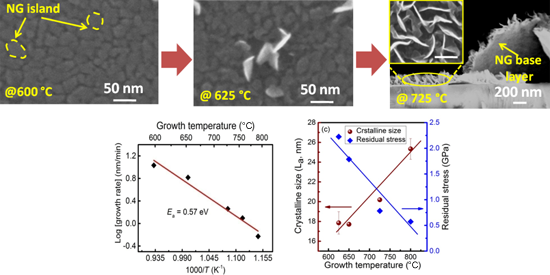
- and the substrate, and (c) increasing the discharge power. The correlation between the wetting characteristics, morphology and structural quality is established. It is also demonstrated that morphology, crystallinity, wettability and sheet resistance of the VGNs can be varied while maintaining the
- properties of VGNs. The culturing rate of cancer cervical cells was found to strongly depend on the density of VGNs by Watanabe and co-workers [13]. Recently, Bo et al. [14] reported the tunability of wetting properties from hydrophobic to hydrophilic by reducing the intersheet spacing of VGNs for enhanced
- desired morphology. Wetting properties The desired wetting properties of materials are one of the important aspects from the application point of view. This wetting property depends on combined effect of several extrinsic and intrinsic factors including morphology, topography, surface texture, chemical


Surface functionalization of 3D-printed plastics via initiated chemical vapor deposition
Beilstein J. Nanotechnol. 2017, 8, 1629–1636, doi:10.3762/bjnano.8.162
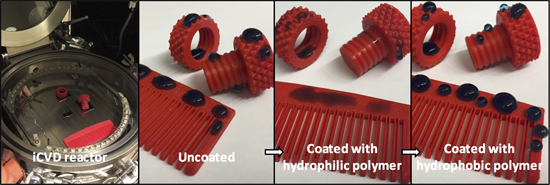
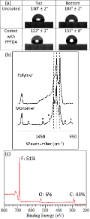
- of 1.25 g/cm3. Since the uncoated PLA is hydrophobic, the pores of the lattice remained filled with air instead of wetting readily, which sufficiently reduced the overall density of the lattice causing it to float. Similarly, a lattice coated with PPFDA did not sink, because its enhanced



Nanotopographical control of surfaces using chemical vapor deposition processes
Beilstein J. Nanotechnol. 2017, 8, 1250–1256, doi:10.3762/bjnano.8.126
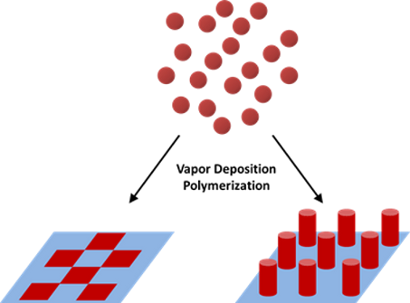
- deposition of poly(p-xylylenes) (PPX), as well as plasma-enhanced chemical vapor deposition polymerization, both of which offer many advantages over solution-based deposition methods [4]. Since no solvents are involved, no wetting problems or problems with solvent residues arise, which can potentially




Study of the correlation between sensing performance and surface morphology of inkjet-printed aqueous graphene-based chemiresistors for NO2 detection
Beilstein J. Nanotechnol. 2017, 8, 1023–1031, doi:10.3762/bjnano.8.103
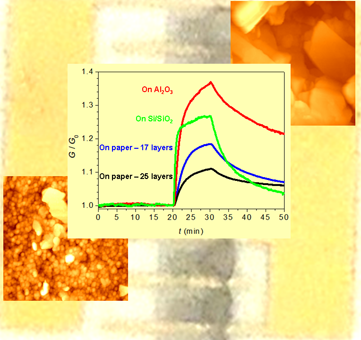
- = 20 kΩ). The device printed on alumina (device D-AO) resulted in 31 overlapped layers, so driving the base resistance to 30 kΩ, similar to those of the paper-based devices. The fourth typology of device has been fabricated on silicon dioxide. It should be pointed out that the wetting of the aqueous


Synthesis of coaxial nanotubes of polyaniline and poly(hydroxyethyl methacrylate) by oxidative/initiated chemical vapor deposition
Beilstein J. Nanotechnol. 2017, 8, 872–882, doi:10.3762/bjnano.8.89
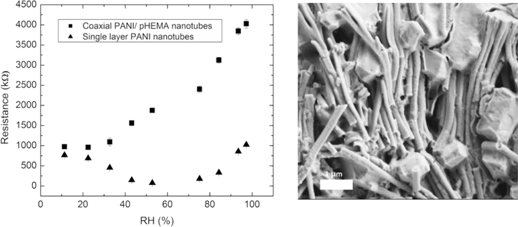
- applications in light emitting diodes [15], photovoltaic cells [16][17], supercapacitors [18], sensors [19] and drug delivery [20]. During synthesis of these nanostructures, the use of solvents is a major drawback for homogeneity and conformal coatings, especially on high-aspect-ratio templates, due to wetting


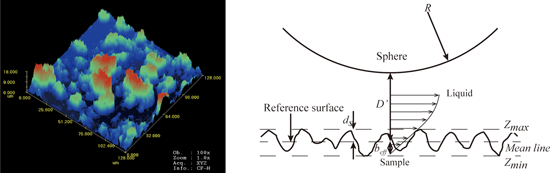
Measuring adhesion on rough surfaces using atomic force microscopy with a liquid probe
Beilstein J. Nanotechnol. 2017, 8, 813–825, doi:10.3762/bjnano.8.84
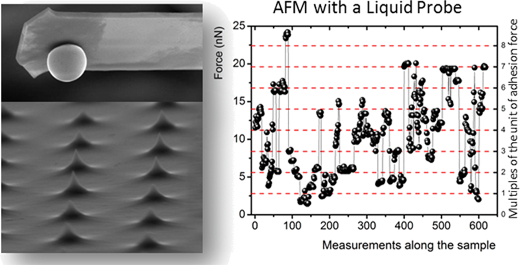
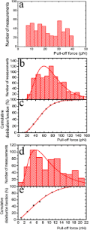
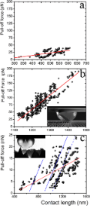
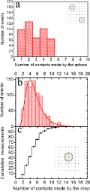
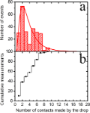
- adhesion between a single peak or protrusion and the liquid drop. This procedure could provide useful microscopic information to improve our understanding of wetting phenomena on rough surfaces. Keywords: atomic force microscopy; force of adhesion; functionalized-tip cantilevers; liquid probe
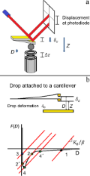
- surfaces are in the appropriate range of AFM force measurements, as we will show below. The novel procedure we use to this end, could be used to provide untapped information about the fundamental understanding of wetting [11][12], and also for practical applications regarding supersolvophobic surfaces [13
- of drops attached to AFM cantilevers [18][19][20][21]. In all cases, the authors used an AFM to measure the interaction between oil droplets inside a water solution to probe the effect of additives adsorbed on the droplets. On the other hand, relevant works regarding the connection between wetting

Vapor deposition routes to conformal polymer thin films
Beilstein J. Nanotechnol. 2017, 8, 723–735, doi:10.3762/bjnano.8.76
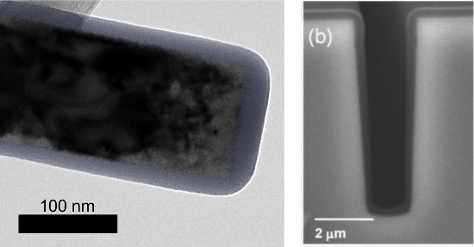
- polymers on nylon membranes to be used in membrane distillation [2]. Conformal film coverage of the membrane microstructure is essential to prevent the wetting of liquid water, a critical property for this application. As seen in Figure 7a and Figure 7b, the overall structure of a nylon membrane before and
- wetting properties of capillary pore membranes, as seen in Figure 7c [4]. To determine the coating conformality, electron microprobe analysis (EMPA) was used to measure the fluorine signal down the pore wall of a coated membrane and presented in Figure 7d. While the fluorine signal is detected at the


Diffusion and surface alloying of gradient nanostructured metals
Beilstein J. Nanotechnol. 2017, 8, 547–560, doi:10.3762/bjnano.8.59
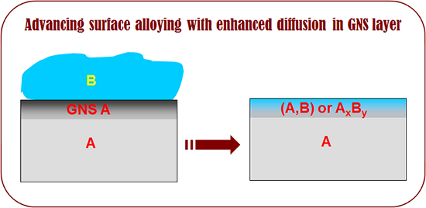
- compared to conventional GBs has been demonstrated by the transformation of partial to complete GB wetting in Sn–Pb alloys during continuous strain by Straumal et al. [25]. However, this notion was confused by two works in the SPD Cu and Cu–Pb alloy [26][27], in which various defects such as vacancy
- dislocations) are difficult to be identified in GNS or SPD metals, it is argued that the GB diffusion might also be accelerated by GB thickening, resulting from either the GB prewetting (premelting) or the pseudo-partial GB wetting during sample preparation [46][47][48][49]. For example, a Zn-rich wetting
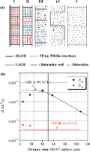
- the issues accelerating diffusion in the GNS layers, because no system (see Table 1) contains components which are inclined to form GB complexions connected with GB prewetting or pseudo-partial wetting [46][50]. Diffusion kinetics and free energy of different interfaces As illustrated in Figure 3a




Role of oxygen in wetting of copper nanoparticles on silicon surfaces at elevated temperature
Beilstein J. Nanotechnol. 2017, 8, 425–433, doi:10.3762/bjnano.8.45
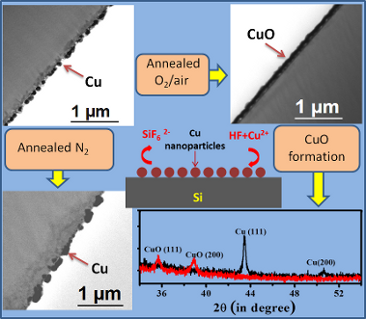
- spectroscopy (EDX) and X-ray diffraction (XRD) analysis shows that the thermal oxidation of the copper nanoparticles and formation of cupric oxide (CuO) on silicon surfaces leads to wetting rather than agglomeration. In contrast, agglomeration has been observed when copper nanoparticles were annealed in a
- nitrogen environment. The lattice transformation from cubic Cu to monoclinic CuO, and hence the change in surface energy of the particles, assists the wetting process. The occurrence of wetting during the oxidation step implies a strong interaction between the oxidized film and the silicon surface
- . Keywords: copper; cupric oxide; electron diffraction; galvanic displacement reaction; oxidation; surface wetting; transmission electron microscopy; Introduction The transition metal oxide cupric oxide (CuO) is a stable oxide of copper, and due to its diverse applications, immense research on CuO





