Search results
Search for "biosensors" in Full Text gives 151 result(s) in Beilstein Journal of Nanotechnology.
Surface-enhanced infrared absorption studies towards a new optical biosensor
Beilstein J. Nanotechnol. 2016, 7, 1736–1742, doi:10.3762/bjnano.7.166
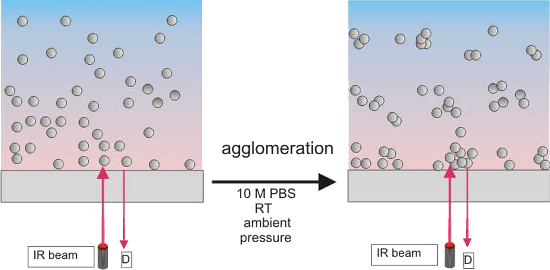
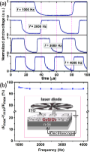
- -enhanced infrared absorption (SEIRA); Introduction Optical biosensors play an important role in the detection and quantification of analytes. Among others, some applications include point-of-care testing (POCT), the monitoring of blood, urine, sudor and respiratory air, and the search for metabolites and
- markers for many diseases. Optical biosensors are used in basic research and life science, for example, to study protein–protein interactions [1][2]. A subfield of optical biosensors are those operated through direct optical detection. Direct optical sensing relates to the detection of analyte molecules
- many optical biosensors operating in the visible or near-infrared wavelength regimes with great success. Shifting the detection window to the mid-infrared (MIR) region has some advantages, but also creates many new problems to be solved. In his review article, Mizaikoff [5] asks the rhetorical question


Graphene-enhanced plasmonic nanohole arrays for environmental sensing in aqueous samples
Beilstein J. Nanotechnol. 2016, 7, 1564–1573, doi:10.3762/bjnano.7.150
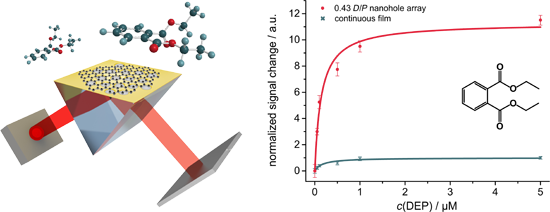
- Christa Genslein Peter Hausler Eva-Maria Kirchner Rudolf Bierl Antje J. Baeumner Thomas Hirsch Institute of Analytical Chemistry, Chemo and Biosensors, University of Regensburg, 93040 Regensburg, Germany Sensorik-ApplikationsZentrum, OTH Regensburg, Franz-Mayer-Str. 1, 93053 Regensburg, Germany
- detection limits in the environmental interesting concentration is important for water safety and direly needed. Surface plasmon resonance spectroscopy (SPR) is a widely-used technique for quantifying and characterizing biomolecular interactions in biosensors for medical diagnostics, food safety and




Nanostructured germanium deposited on heated substrates with enhanced photoelectric properties
Beilstein J. Nanotechnol. 2016, 7, 1492–1500, doi:10.3762/bjnano.7.142
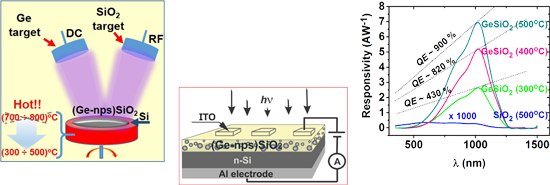
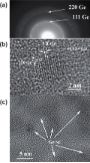
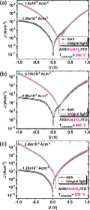
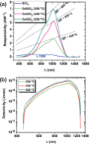
- [18] and biosensors [19]. To produce high-quality Ge particles packed into different matrices, various approaches are reported in scientific papers such as pulsed laser deposition [20][21], sol–gel [22], evaporation under vacuum [23], chemical vapor deposition [24], microwave-assisted heating [25




Straightforward and robust synthesis of monodisperse surface-functionalized gold nanoclusters
Beilstein J. Nanotechnol. 2016, 7, 1278–1283, doi:10.3762/bjnano.7.118
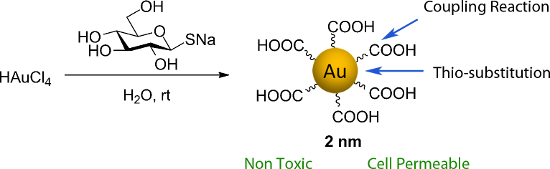
- prepared under reflux using 1-thioglucose as reducing and stabilizing agent [24] but the resulting nanoparticles are too unstable to be used as biosensors [25]. In an effort to create monodisperse, stable and surface-functionalized gold nanoclusters, we explored 1-thioglucose as a stabilizing and reducing


Large-scale fabrication of achiral plasmonic metamaterials with giant chiroptical response
Beilstein J. Nanotechnol. 2016, 7, 914–925, doi:10.3762/bjnano.7.83
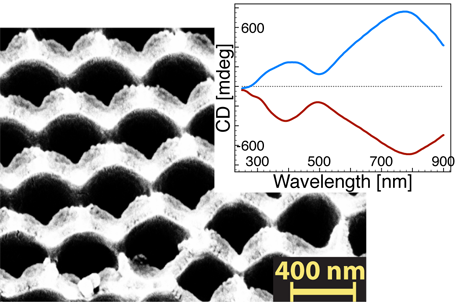
- implementations in various fields such as optics [1], improved photovoltaic devices [2], electronics [3], surface-enhanced infrared spectroscopy [4], Raman spectroscopy [5] and biosensors [6]. Planar chiral metamaterials (PCMs) have also attracted attention because of their negative refractive index [7][8] and

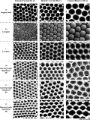


![[Graphic 2]](/bjnano/content/inline/2190-4286-7-83-i2.png?max-width=637&scale=1.18182) , of incident light with respect to the ECM structures.
, of incident light with respect to the ECM structures.



Microwave solvothermal synthesis and characterization of manganese-doped ZnO nanoparticles
Beilstein J. Nanotechnol. 2016, 7, 721–732, doi:10.3762/bjnano.7.64
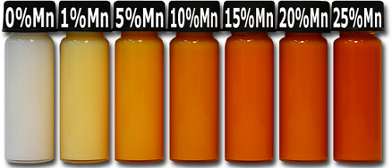
- , varistors, TFT display windows and laser technology [5][6][7]. ZnO displays pyroelectric and piezoelectric properties, thanks to which it is used in electroacoustic devices [8]. It is a biocompatible material used for producing biosensors and in drug delivery applications [9]. Thanks to antibacterial


Gold nanoparticles covalently assembled onto vesicle structures as possible biosensing platform
Beilstein J. Nanotechnol. 2016, 7, 655–663, doi:10.3762/bjnano.7.58
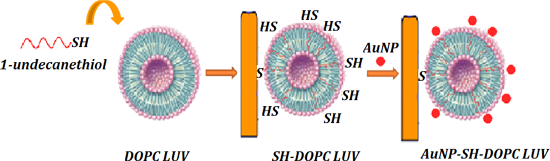
- , biodegradability and biocompatibility, so that they are utilized as versatile carriers in the fields of medical and analytical applications [1][2][3][4]. Several strategies employing vesicles in analytical fields have been reported, namely their use as signal amplifiers in the development of biosensors [3][5] to
- fulfil performance criteria such as high sensitivity and low limit of detection. In this context, vesicles can be used in the construction of biosensors as supporting film to coat Au or Ag electrodes [3]. Self-assembly of nanoparticles onto organised systems combines the advantages of nanomaterials
- inactivation and also in biosensors [12]. There are many properties that depend on the shape of the nanostructures. In this regard, there have been many studies with different ways to synthesize them [13][14][15][16][17]. For example, tips and edges located in the nanoparticles have regions of high electric


Novel roles for well-known players: from tobacco mosaic virus pests to enzymatically active assemblies
Beilstein J. Nanotechnol. 2016, 7, 613–629, doi:10.3762/bjnano.7.54
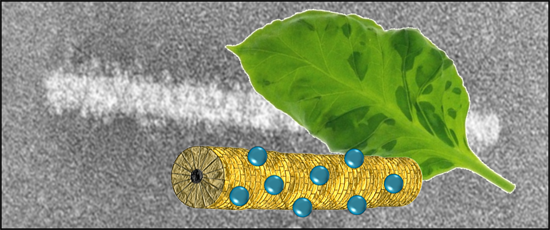
- procedure might lead towards tight spatial control over the positions of the enzyme nanocarriers, which could be of high interest also for basic research on prerequisites for efficient enzymatic cooperation. Fast, sensitive and cost-saving biosensors often employ label-free read-out, in which signal


Bacteriorhodopsin–ZnO hybrid as a potential sensing element for low-temperature detection of ethanol vapour
Beilstein J. Nanotechnol. 2016, 7, 501–510, doi:10.3762/bjnano.7.44
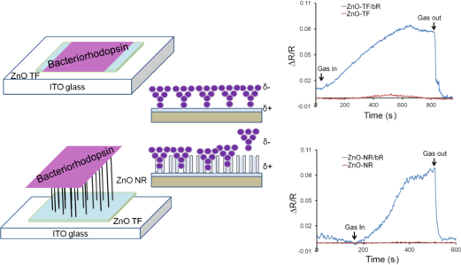
- monolayer/multilayer of thin films, biosensors, and protein-based photonic devices [7][8][9]. The application of proteins for enhancement in signal transduction has been demonstrated by a number of researchers [1][10]. In general, the major drawbacks associated with proteins are their low stability, poor


Organized films
Beilstein J. Nanotechnol. 2016, 7, 406–408, doi:10.3762/bjnano.7.35

- applications. This was most notable in the fields of molecular electronics and biosensors, which were emerging in those times and are now undergoing flourishing development. The interdisciplinary character of OFs, at the fortunately ill-defined borders between physical chemistry, chemical physics, biophysics
Characterisation of thin films of graphene–surfactant composites produced through a novel semi-automated method
Beilstein J. Nanotechnol. 2016, 7, 209–219, doi:10.3762/bjnano.7.19
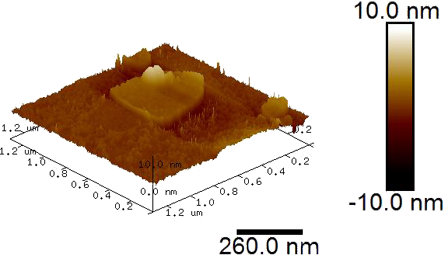
- spectral range, the deposition of graphene layers on gold progressively enhances the plasmon resonance in TIRE Ψ spectra and caused an extra phase shift in TIRE Δ spectra. This phenomenon can be explored in the future for enhancing the performance of SPR-based biosensors. A schematic diagram of the





Fabrication and characterization of novel multilayered structures by stereocomplexion of poly(D-lactic acid)/poly(L-lactic acid) and self-assembly of polyelectrolytes
Beilstein J. Nanotechnol. 2016, 7, 81–90, doi:10.3762/bjnano.7.10
- structures for biotechnological and biomedical applications, such as biosensors and carriers for drug delivery, led researchers to extend this technique beyond multilayer structure fabrication based on electrostatic interactions [7][8][9][10][11]. Over the years, other interactions such as covalent bonding


Chemiresistive/SERS dual sensor based on densely packed gold nanoparticles
Beilstein J. Nanotechnol. 2015, 6, 2498–2503, doi:10.3762/bjnano.6.259
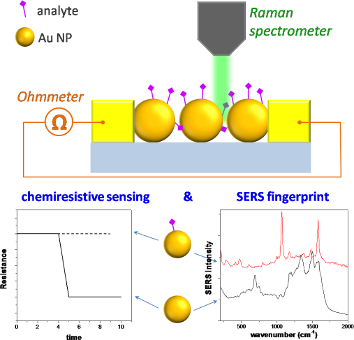
- necessary, e.g., by introducing molecular recognition elements, in order to improve the selectivity of the sensor. Knowledge and technology existing on chemiresistive biosensors on one side and SERS detection on the other, can be commonly exploited for developing advanced dual sensors benefiting from the


Orthogonal chemical functionalization of patterned gold on silica surfaces
Beilstein J. Nanotechnol. 2015, 6, 2272–2277, doi:10.3762/bjnano.6.233
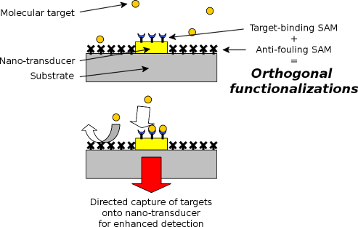
- immobilize proteins onto gold nanostructures on a silica substrate, as demonstrated by atomic force microscopy (AFM). These results are especially promising in the development of future biosensors where the selective anchoring of target molecules onto nanostructured transducers (e.g., nanoplasmonic
- biosensors) is a major challenge. Keywords: characterization; self-assembled monolayer; surface functionalization; ToF–SIMS; XPS; Introduction The orthogonal self-assembly of different molecules onto a patterned substrate was first demonstrated in 1989 by Whitesides and co-workers [1]. Recently, especially
- with the development of localized surface plasmon resonance (LSPR) biosensors, this topic has become a major focus [2][3][4][5][6][7][8]. Indeed, LSPR transduction is expected to yield enhanced signal as compared to classical SPR transduction. However, the enhancement of the LSPR limit of detection is


Optimized design of a nanostructured SPCE-based multipurpose biosensing platform formed by ferrocene-tethered electrochemically-deposited cauliflower-shaped gold nanoparticles
Beilstein J. Nanotechnol. 2015, 6, 1840–1852, doi:10.3762/bjnano.6.187
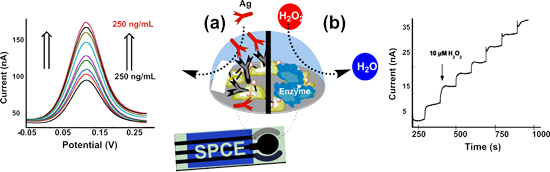
- peroxidase (HRP) enzyme yields biosensors, which have been applied for the selective electrochemical detection of human IgG (hIgG) or H2O2 as model analytes, respectively. Parameters such as the number of sweeps, amount of charge generated from the oxidation of the electrodeposited gold, time of incubation
- substrates using various types of conductive inks can be considered as one of the most promising routes for the development of cost-effective, disposable biosensors [4]. Electrochemical (bio)sensors are inherently endowed with several attracting features which are useful for various technological
- concentrations of, e.g., biologically active analytes and disease-related biomarkers [9][10]. Many electrochemical biosensors use ferrocene to transduce the biological reactions into readily measurable electrical signals [11][12]. For instance, Chen and Diao developed a glucose biosensor using gold nanoparticles


Nonlinear optical properties of near-infrared region Ag2S quantum dots pumped by nanosecond laser pulses
Beilstein J. Nanotechnol. 2015, 6, 1781–1787, doi:10.3762/bjnano.6.182
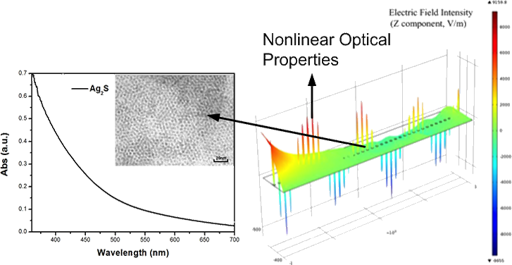
- . In the last ten years, the study and development of QDs has rapidly progressed, and also influenced other research areas, such as nonlinear optics, plasmonics and biosensors. The special optical properties of QDs include good resistance to photo-bleaching, large absorption cross section, long



Synthesis, characterization and in vitro biocompatibility study of Au/TMC/Fe3O4 nanocomposites as a promising, nontoxic system for biomedical applications
Beilstein J. Nanotechnol. 2015, 6, 1677–1689, doi:10.3762/bjnano.6.170
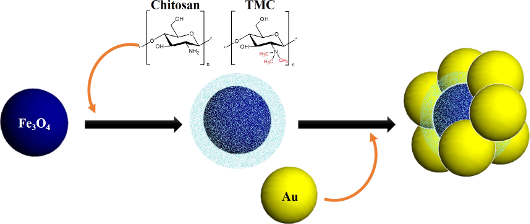
- various fields of application, especially the biomedical sciences and biosensors. Keywords: Au/polymer/Fe3O4 nanocomposites; Au nanoparticles; cell viability; magnetic nanoparticles; N-trimethyl chitosan; Introduction Nanotechnology is the science of the fabrication of novel materials, devices and
- engineering, as well as the in the design of sensors and biosensors [11][12][13][14][15][16][17]. Although all nanoparticles containing a magnetic core are considered as magnetic nanoparticles, the most commonly used are iron oxide nanoparticles, which are mostly synthesized in the form of magnetite (Fe3O4
- particularly anticipated in the fields of electrochemical sensors and biosensors, where Au nanoparticles play a fundamental role as labels or platforms for immobilization. In this respect, our results suggest that enhanced signal amplification and increased magnetic separation efficiency are likely. In




Scalable, high performance, enzymatic cathodes based on nanoimprint lithography
Beilstein J. Nanotechnol. 2015, 6, 1377–1384, doi:10.3762/bjnano.6.142
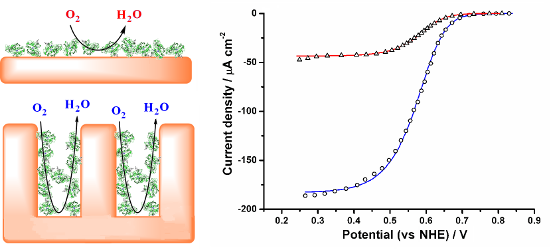
- commercially available MCO, bilirubin oxidase (BOx), which is one of the main biocatalysts exploited today to design third-generation (i.e., direct electron-transfer-based), O2 reducing biodevices (e.g., O2-sensitive biosensors [18] and biocathodes of enzymatic fuel cells [19]). Contrary to many other MCOs


The convenient preparation of stable aryl-coated zerovalent iron nanoparticles
Beilstein J. Nanotechnol. 2015, 6, 1192–1198, doi:10.3762/bjnano.6.121
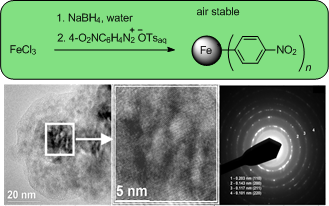
- due to their unique properties and the possibility of widespread applications [1][2]. The modification of magnetic materials may solve a number of high priority problems in medicine and pharmacology [3]. The principal biomedical applications of magnetic NPs include the design of biosensors [4


Effects of swift heavy ion irradiation on structural, optical and photocatalytic properties of ZnO–CuO nanocomposites prepared by carbothermal evaporation method
Beilstein J. Nanotechnol. 2015, 6, 928–937, doi:10.3762/bjnano.6.96
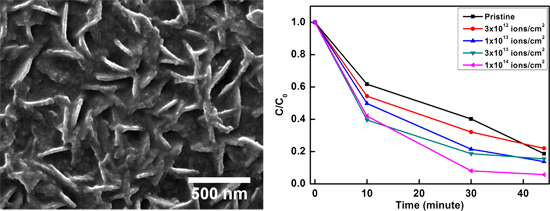
- ], biosensors [22] and photocatalysts [23][24][25]. Nanocomposites consisting of nanostructures of ZnO and other metal-oxide semiconductors are being widely studied due to their improved physicochemical properties as compared to the individual counterparts. CuO, a p-type narrow band gap semiconductor, is




Novel ZnO:Ag nanocomposites induce significant oxidative stress in human fibroblast malignant melanoma (Ht144) cells
Beilstein J. Nanotechnol. 2015, 6, 570–582, doi:10.3762/bjnano.6.59
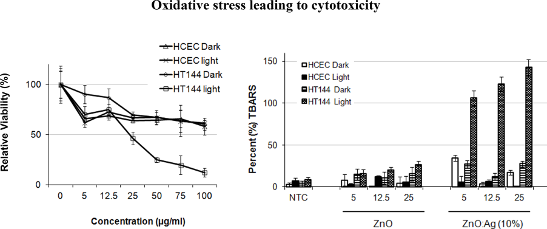
- antibacterial properties [12][13], are used in the cosmetics industry [14][15], and are used as nanoscale biosensors [11] and as drug carriers [16][17]. These NPs are being increasingly recognized due to their differential activity against tumor cells while being non-toxic to normal cells [18][19][20][21][22




Synergic combination of the sol–gel method with dip coating for plasmonic devices
Beilstein J. Nanotechnol. 2015, 6, 500–507, doi:10.3762/bjnano.6.52
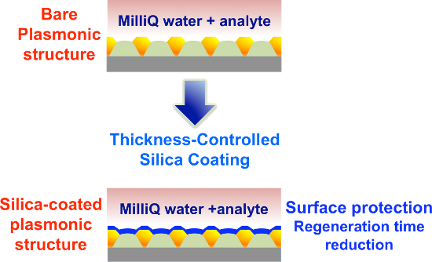
- an extended time and inducing a suitable reduction of the regeneration time of the chip. Keywords: biosensors; nanodevices; plasmonics; sol–gel; thin films; Introduction Plasmonic nanostructures have gained increasing attention for their surface plasmon resonance (SPR)-related properties, which can


Hollow plasmonic antennas for broadband SERS spectroscopy
Beilstein J. Nanotechnol. 2015, 6, 492–498, doi:10.3762/bjnano.6.50
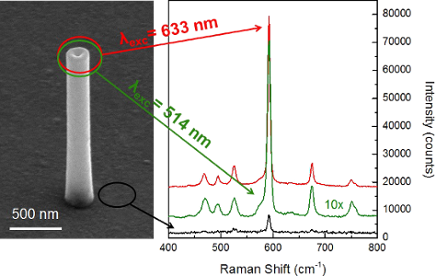
- large enhancement of the vibrational features both in the case of resonant excitation and out-of-resonance excitation. Such characteristics indicate that these structures are potential candidates for plasmonic enhancers in multifunctional opto-electronic biosensors. Keywords: biosensing; multiband
- spectrum. This could be a very attractive property for the design of highly versatile biosensors suitable for SERS spectroscopy on biological systems which use the entire visible wavelength range. The broadband enhancement feature is an addition to the already known broadband absorption of such systems [23


Mechanical properties of MDCK II cells exposed to gold nanorods
Beilstein J. Nanotechnol. 2015, 6, 223–231, doi:10.3762/bjnano.6.21
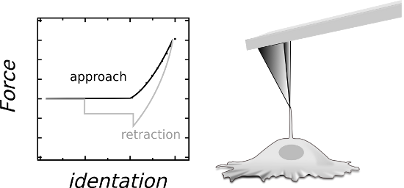
- membrane rendering them prime candidates for multifunctional carriers [6][7][8]. Potential applications encompass selective drug delivery, photothermal therapy, reporters for biosensors and the use as contrast agents [5][9]. Targets can be addressed specifically by functionalization of the particle surface
- in the context of human exposure to nanoparticles. Hence, biosensors with high sensitivity, selectivity, fast real-time readout, and non-invasiveness are desirable design criteria for screening toxicity of nanoparticles varying in size, shape, and surface functionalization. Most cytotoxicity assays


Synthesis of boron nitride nanotubes and their applications
Beilstein J. Nanotechnol. 2015, 6, 84–102, doi:10.3762/bjnano.6.9
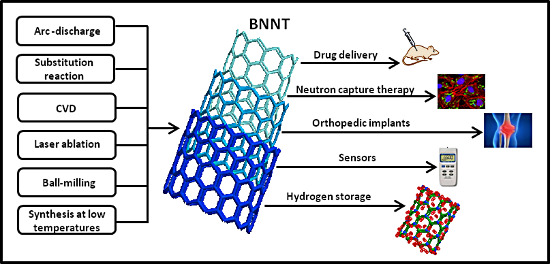
- summarized first, then in vitro and in vivo studies of their toxicity are addressed. Finally, the investigations utilizing BNNTs in applications such as drug delivery, biomaterials preparation, biosensors, hydrogen storage, and neutron capture therapy are summarized by giving examples from the literature