


Search results
Search for "carbon materials" in Full Text gives 109 result(s) in Beilstein Journal of Nanotechnology.
Materials and characterization techniques for high-temperature polymer electrolyte membrane fuel cells
Beilstein J. Nanotechnol. 2015, 6, 68–83, doi:10.3762/bjnano.6.8
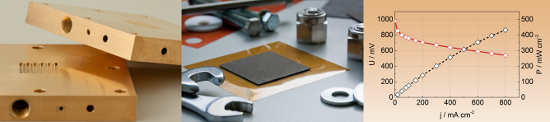
- potentials leads to severe corrosion of theses carbon materials, a drawback well-known from the PAFC research. Carbon nanotubes are a promising alternative for catalyst support because of their higher corrosion resistivity [47]. Matsumoto et al. [48] fabricated a catalyst material by wrapping individual




Carbon nano-onions (multi-layer fullerenes): chemistry and applications
Beilstein J. Nanotechnol. 2014, 5, 1980–1998, doi:10.3762/bjnano.5.207
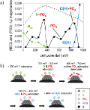
- Juergen Bartelmess Silvia Giordani Istituto Italiano di Tecnologia, Nano Carbon Materials, Via Morego 30, 16163 Genova, Italy 10.3762/bjnano.5.207 Abstract This review focuses on the development of multi-layer fullerenes, known as carbon nano-onions (CNOs). First, it briefly summarizes the most
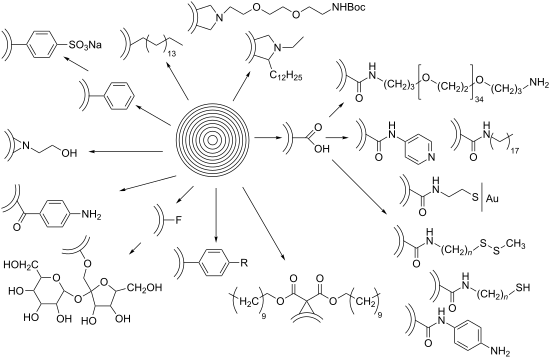
- . Analogous to carbon nanotubes, CNOs display poor solubility in both aqueous and organic solvents. This is due to aggregation, promoted by strong intermolecular interactions such as van-der-Waals forces. To overcome this tendency to aggregate, functionalization of the surface of the carbon materials is the
- the one of fullerene C60. These encouraging results could be a first step toward in situ remediation of heavy metal contaminants. Electronic applications Capacitors: Carbon materials are commonly used as electrode materials in capacitors, but the first study probing CNOs as electrode materials in


Highly NO2 sensitive caesium doped graphene oxide conductometric sensors
Beilstein J. Nanotechnol. 2014, 5, 1073–1081, doi:10.3762/bjnano.5.120
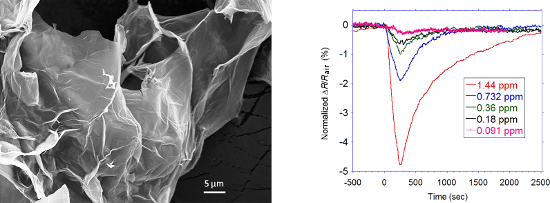
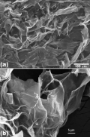
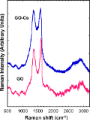
- the oxygen defects that act as low energy adsorption sites. To further enhance its gas sensing properties, reduced GO can be doped with alkali metals [18], similarly to what has been done in other carbon materials, to tune up the electronic properties for sensing applications [44]. Different research




Classical molecular dynamics investigations of biphenyl-based carbon nanomembranes
Beilstein J. Nanotechnol. 2014, 5, 865–871, doi:10.3762/bjnano.5.98
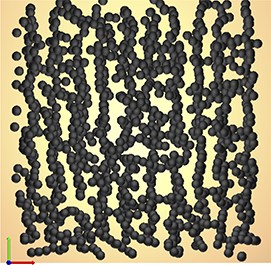
- the results and our interpretation. The article closes with an outlook. Classical carbon–carbon interaction A realistic classical carbon–carbon interaction must be able to account for the various spn-binding modes. Two potentials, developed by Tersoff and Brenner, have been used for carbon materials


Analytical development and optimization of a graphene–solution interface capacitance model
Beilstein J. Nanotechnol. 2014, 5, 603–609, doi:10.3762/bjnano.5.71
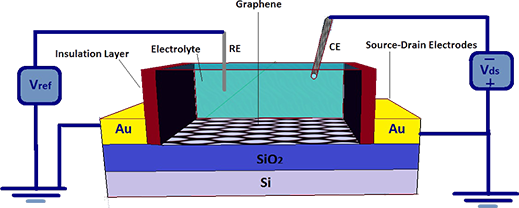
- these days. Geim, in 2004, demonstrated that the six-membered rings are the basis of all carbon materials in electrochemical biosensor research [7]. The remarkable electrical properties of graphene such as fast electron transport, tunable energy bandgap, high thermal conductivity, and ballistic




Tensile properties of a boron/nitrogen-doped carbon nanotube–graphene hybrid structure
Beilstein J. Nanotechnol. 2014, 5, 329–336, doi:10.3762/bjnano.5.37
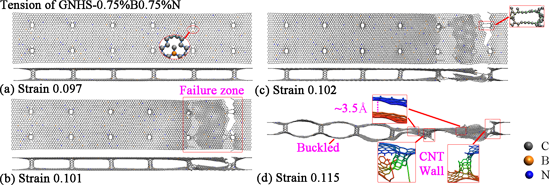
- unstable. Thus, two adjacent N atoms are avoided in the model. It must be noted that the cut-off distance for the C–C bond has been modified from 1.7 Å to 2.0 Å according to a previous work [24]. Several studies have already demonstrated that a cut-off distance of 1.7 Å for carbon materials, which was used


Design criteria for stable Pt/C fuel cell catalysts
Beilstein J. Nanotechnol. 2014, 5, 44–67, doi:10.3762/bjnano.5.5
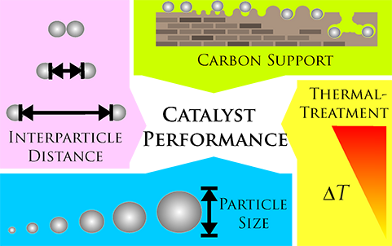
- [23]. Due to the large versatility of carbon structures, many research groups have focused on a variety of alternative carbon materials [24] as supports for fuel cell applications such as single walled and multi-walled carbon nanotubes (SWCNTs, MWCNTs) [25][26], graphene [27], carbon nanofibers [28
- ], nanohorns [29], ordered mesoporous carbons (OMCs) [30][31], carbon aerogels [32], carbon shells [33][34][35][36], colloid-imprinted carbon supports (CIC) [37] and even boron-doped diamond structures [38][39]. Alternatively, certain non-carbon materials (e.g., oxides, carbides and nitrides of metals such as
- Ti, W, Mo etc.) exhibit promising corrosion resistances under fuel cell conditions. However, most of these non-carbon materials suffer from low conductivities and/or poor platinum dispersion, thus limiting the efficiency of the fuel cell [17]. Despite the demonstration of an improved stability as




Influence of particle size and fluorination ratio of CFx precursor compounds on the electrochemical performance of C–FeF2 nanocomposites for reversible lithium storage
Beilstein J. Nanotechnol. 2013, 4, 705–713, doi:10.3762/bjnano.4.80
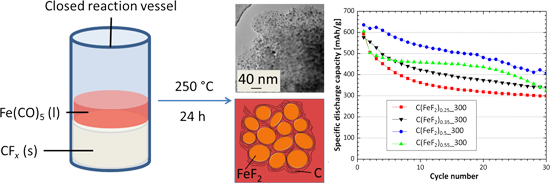
- material in the matrix is a precondition for its electrochemical activity [17][18]. In addition, volume changes that result from phase conversion of the active material during charging and discharging may lead to cracks in the particles and result in poor cyclic stabilities. For this reason, mostly carbon
- materials have been used as conducting matrix as well as to buffer the volume changes. Various methods have been described in the literature to synthesize carbon–metal fluoride nanocomposites. For example, carbon–iron fluoride nanocomposites, which show superior electrochemical performance during the


Size variation of infrared vibrational spectra from molecules to hydrogenated diamond nanocrystals: a density functional theory study
Beilstein J. Nanotechnol. 2013, 4, 262–268, doi:10.3762/bjnano.4.28
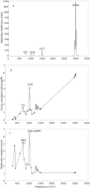
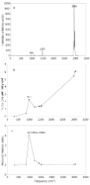
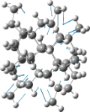
- extraordinary properties of bulk diamond that include high hardness, inertness and high thermal conductivity. The additional properties added by reduction to the nanoscale make diamonds and related carbon materials a focus for recent investigations [1][2][3][4][5][6][7][8][9]. One of the first steps of

Other Beilstein-Institut Open Science Activities



