


Search results
Search for "carboxylate" in Full Text gives 104 result(s) in Beilstein Journal of Nanotechnology.
Parallel- and serial-contact electrochemical metallization of monolayer nanopatterns: A versatile synthetic tool en route to bottom-up assembly of electric nanocircuits
Beilstein J. Nanotechnol. 2012, 3, 134–143, doi:10.3762/bjnano.3.14
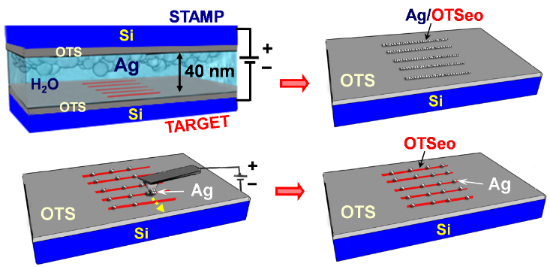
- dense –COOH functionality of the organic monolayer facilitates the establishment of a sufficiently high local concentration of chemisorbed Ag+ ions through the conversion of carboxylic acid groups to the carboxylate salt (–COO−Ag+). In contrast with OTSeo, metal deposition by this mechanism on a


Self-assembled monolayers and titanium dioxide: From surface patterning to potential applications
Beilstein J. Nanotechnol. 2011, 2, 845–861, doi:10.3762/bjnano.2.94
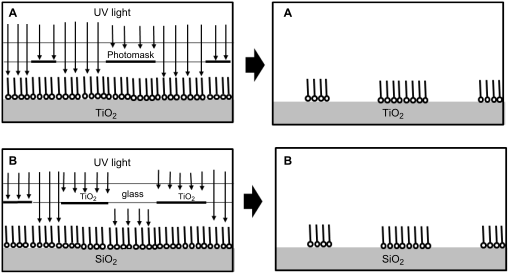
- electrons to titanium dioxide upon illumination with visible light [86] led to the study of a system in which the C60 is anchored to the titanium dioxide through a SAM mediator. The mediator comprised salicylic acid (attached to the TiO2 surface through its carboxylate group) connected to a pyrrodine group



Ceria/silicon carbide core–shell materials prepared by miniemulsion technique
Beilstein J. Nanotechnol. 2011, 2, 638–644, doi:10.3762/bjnano.2.67
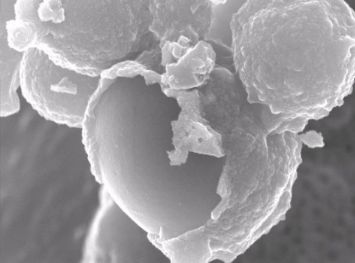
- illustrates that the shape of the PCS spheres was conserved during pyrolysis. Figure 4B shows SiC-Acr spheres synthesized from PCS/acrylic acid. The carboxylate groups were used for molecular binding of ceria [36]. Although a CeO2 shell cannot be seen on SEM pictures, the EDX-analysis of the discrete spheres


Novel acridone-modified MCM-41 type silica: Synthesis, characterization and fluorescence tuning
Beilstein J. Nanotechnol. 2011, 2, 284–292, doi:10.3762/bjnano.2.33
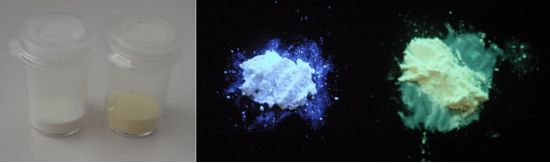
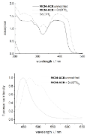
- have been described for carboxylate complexes of Eu(III) [21]. The fluorescence spectrum of the modified silica shows a distinct shoulder at around λem.≈ 515 nm. This indicates a complex radiative relaxation of the formed transition metal species, the fluorescence originating from at least two


Other Beilstein-Institut Open Science Activities



