Search results
Search for "characterization" in Full Text gives 1432 result(s) in Beilstein Journal of Nanotechnology. Showing first 200.
Synthesis of a multicomponent cellulose-based adsorbent for tetracycline removal from aquaculture water
Beilstein J. Nanotechnol. 2025, 16, 728–739, doi:10.3762/bjnano.16.56
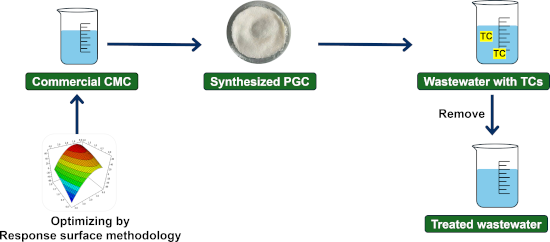
- concentration of 60 mg·L–1 at pH 6–7, reaching equilibrium after 12 h. The surface characteristics and structural properties of PGC were determined using various material characterization techniques, including FTIR, SEM, EDX, and BET. Verification experiments under optimal conditions confirmed that the
- ) and polyvinyl alcohol (PVA); and cationized with Ca2+ and Zn2+ for the removal of TC from aquaculture effluents. Our approach involves optimizing the material’s synthesis using the response surface methodology, and a wide range of characterization methods was performed to assess the surface
- will be applied in the synthesis of an adsorbent for TC removal from water. Material characterization FE-SEM and FTIR results Figure 2 presents comparative field-emission SEM (FE-SEM) images and FTIR spectra of commercial CMC and PGC. Notably, the FE-SEM analysis of PGC (Figure 2d–f) reveals


Efficiency of single-pulse laser fragmentation of organic nutraceutical dispersions in a circular jet flow-through reactor
Beilstein J. Nanotechnol. 2025, 16, 711–727, doi:10.3762/bjnano.16.55
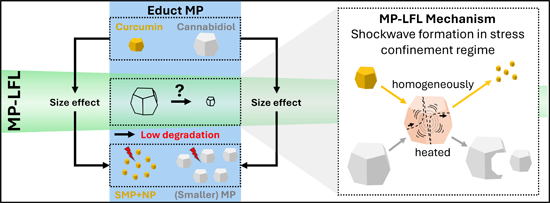
- supernatant characterization. Analogously to Figure 3, Figure 4A and Figure 4B show, the CBD educt and the corresponding fragmented sample after LP1, respectively. The SEM images post-LFL indicate the presence of SMPs <1000 nm, which were not found in the educt samples. Since the CBD educt particles are one


Nanostructured materials characterized by scanning photoelectron spectromicroscopy
Beilstein J. Nanotechnol. 2025, 16, 700–710, doi:10.3762/bjnano.16.54
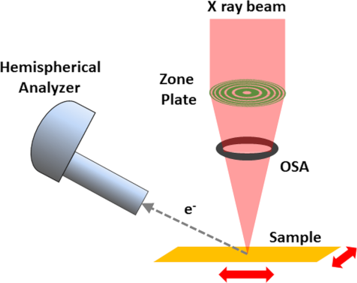
- , environmental reliability, and operando capabilities. Scanning photoelectron spectromicroscopy (SPEM) is one of the characterization tools that combine high spectral resolution X-ray photoelectron spectroscopy with submicron spatial resolution. In particular, the SPEM equipment hosted at the ESCA microscopy
- surfaces. The characterization of the building blocks is of paramount importance to deeply understand their functionalities and mutual interactions when they are part of a nanostructured body. The building blocks may differ in their atomic structure, crystallographic orientation, chemical composition, and
- devices, which include the synthesis, characterization, and processing, are part of an emerging and rapidly growing field referred to as nanotechnology. However, despite the large efforts of the scientific and industrial communities in the development of new nanostructured materials and related


The impact of tris(pentafluorophenyl)borane hole transport layer doping on interfacial charge extraction and recombination
Beilstein J. Nanotechnol. 2025, 16, 678–689, doi:10.3762/bjnano.16.52
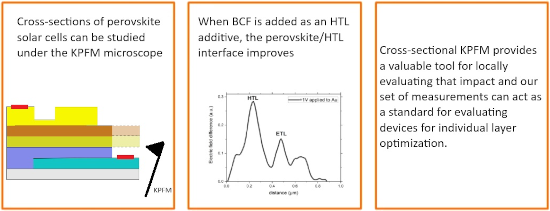
- parameters, and KPFM procedure are reported in the Experimental Section. Results and Discussion Efficiency characterization Whilst BCF (Figure 1) has an advantageous impact on the conductivities of both spiro-OMeTAD and PTAA, when similar dopant concentrations are used, the effect on PTAA is more pronounced
- interfacial structure is not damaged and the cells remain operational. Additionally, in order to more accurately interpret interfacial measurements, a precise characterization of the positions of the different solar cell layers is required. We identified the thickness and uniformity of the layers by comparing
- avoiding shunts, which makes device characterization via SEM essential. To study the effect of different HTLs on the HTL/perovskite interfaces and how their choice affects charge extraction and recombination in our solar cells, we employed cross-sectional KPFM, more specifically our measurement protocol


Colloidal few layered graphene–tannic acid preserves the biocompatibility of periodontal ligament cells
Beilstein J. Nanotechnol. 2025, 16, 664–677, doi:10.3762/bjnano.16.51
- pipetted onto clean silicon wafer substrates. The substrates were then air-dried and mounted on aluminum pins using double-sided carbon tape. Corresponding SEM images were subsequently captured. The S/TEM characterization was performed using a JEOL2100F microscope outfitted with a probe corrector for




Aprepitant-loaded solid lipid nanoparticles: a novel approach to enhance oral bioavailability
Beilstein J. Nanotechnol. 2025, 16, 652–663, doi:10.3762/bjnano.16.50
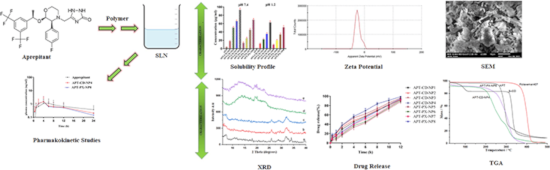
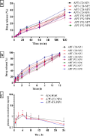
- characterization Particle size, zeta potential, and polydispersity index (PDI) of APT-NPs was analyzed through laser diffractometry (Malvern Instruments, Germany) with a measuring angle of 13° at 25 °C in triplicate [27]. Before particle size determination, APT-NPs samples were diluted with double distilled water



Nanoscale capacitance spectroscopy based on multifrequency electrostatic force microscopy
Beilstein J. Nanotechnol. 2025, 16, 637–651, doi:10.3762/bjnano.16.49

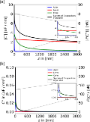
- method for nanoscale capacitance characterization at arbitrary frequencies above the second cantilever resonance. Besides a high spatial resolution, the key advantage of the multifrequency approach of MFH-EFM is that it measures the second-order capacitance gradient at almost arbitrary frequencies
- understanding of material properties, particularly at the nanoscale, where phenomena such as quantum confinement, interface effects, and defect dynamics play a critical role. Innovations in characterization techniques have enabled researchers to explore these properties with unprecedented precision, paving the
- features. Scanning probe techniques have revolutionized nanoscale material characterization. Since the invention of scanning tunneling microscopy (STM) [16] and atomic force microscopy (AFM) [17], various electric force-based methods, called electrostatic force microscopy (EFM) methods, have emerged to




A formulation containing Cymbopogon flexuosus essential oil: improvement of biochemical parameters and oxidative stress in diabetic rats
Beilstein J. Nanotechnol. 2025, 16, 617–636, doi:10.3762/bjnano.16.48
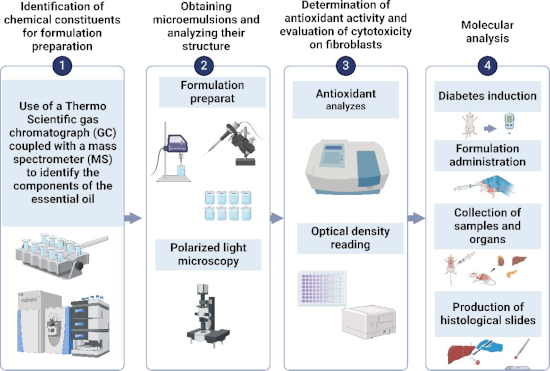
- and one NTS were also obtained. Among the TLS, point 7 (M7-EOCF) was selected for subsequent tests, as it had the lowest amount of surfactants and the highest proportion of water in its composition. Physicochemical characterization of the selected system Some parameters are fundamental for
- exposed to different shear forces [22][23]. The parameters of rheological properties are essential in the classification and characterization of semisolids and fluids, and in the greater understanding of drug release from pharmaceutical forms [22]. Thus, the rheological behavior of M7-EOCF at two
- containing 10% EOCF were then prepared individually (Table 1), and the dispersions were evaluated macroscopically and characterized 48 h after they were obtained. Physicochemical characterization of the selected microemulsions The polydispersity index and average hydrodynamic radius of the droplets were




Focused ion and electron beams for synthesis and characterization of nanomaterials
Beilstein J. Nanotechnol. 2025, 16, 613–616, doi:10.3762/bjnano.16.47

- tailored 3D architectures [4]. Focused beams not only allow the characterization of atomic structures but also enable precise local modification of material properties through ion milling and the creation of novel structures with tunable mechanical, electrical, and magnetic properties using gas-assisted

Feasibility analysis of carbon nanofiber synthesis and morphology control using a LPG premixed flame
Beilstein J. Nanotechnol. 2025, 16, 581–590, doi:10.3762/bjnano.16.45
- deposition with nickel as the catalyst and hydrogen as the plasma source. SEM and TEM characterization showed vertically aligned CNFs. This method highlights the impact of plasma conditions and gas ratios on CNF morphology and alignment [12]. An experiment by Li et al. showed CNT growth at decomposition
- . The temperature was kept below 700 °C, and the efficiency of conversion of carbon precursors into fibers found was 70%. The diameter found was approximately 100 nm, and the TEM and SEM characterization revealed the morphology and the internal structures of the fibers [19]. Ruiz-Cornejo et al
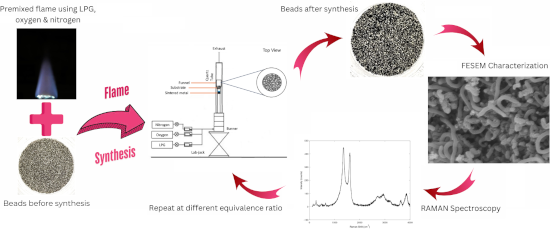
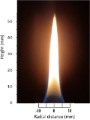
- placed on a stand. The ideal combustion of the premixed flame was achieved by mixing LPG, oxygen, and nitrogen at 0.18, 0.65, and 1.90 slpm, respectively. The mixture produced a premixed flat flame with a secondary diffusion flame at an equivalence ratio of 1.80. Flame and CNF characterization The



Nanomaterials in targeting amyloid-β oligomers: current advances and future directions for Alzheimer's disease diagnosis and therapy
Beilstein J. Nanotechnol. 2025, 16, 561–580, doi:10.3762/bjnano.16.44
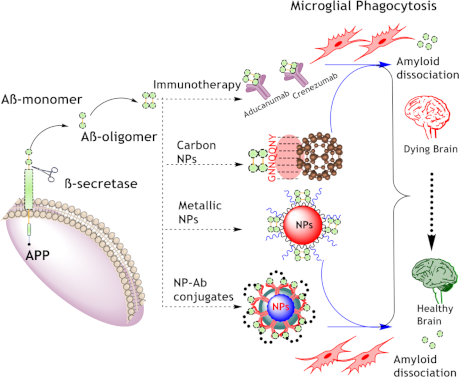
- cell-free therapeutic strategies for AD [84]. Additionally, Deng et al. explored exosomes isolated from ultrasound-stimulated human astrocytes (US-HA-Exo). Characterization via nanoparticle tracking and proteomic analysis revealed that ultrasound treatment increased exosome release approximately five


Retrieval of B1 phase from high-pressure B2 phase for CdO nanoparticles by electronic excitations in CdxZn1−xO composite thin films
Beilstein J. Nanotechnol. 2025, 16, 551–560, doi:10.3762/bjnano.16.43

- diverse characterization techniques, demonstrating the potential reversibility of the B1 to B2 phase transformation induced by ion irradiation. Keywords: irradiation; phase transformation; thermal spike; track diameter; X-ray absorption near edge spectroscopy; X-ray photoelectron spectroscopy
- of Seth (i.e., higher and lower sides). Notably, the reappearance of the B1 phase was observed with O ion irradiation, while no such retrieval occurred with Ag ion irradiation. This intriguing finding is explored in detail in this investigation. Crystallographic characterization of both pristine and
- film prior to further irradiation. The characterization of the thin films was performed using X-ray diffraction (XRD) on a Bruker high-resolution X-ray diffractometer, employing a Cu Kα beam over a 2θ range of 30–50°. Raman spectroscopic measurements were conducted at room temperature with a SENTERRA


Functionalized gold nanoflowers on carbon screen-printed electrodes: an electrochemical platform for biosensing hemagglutinin protein of influenza A H1N1 virus
Beilstein J. Nanotechnol. 2025, 16, 540–550, doi:10.3762/bjnano.16.42
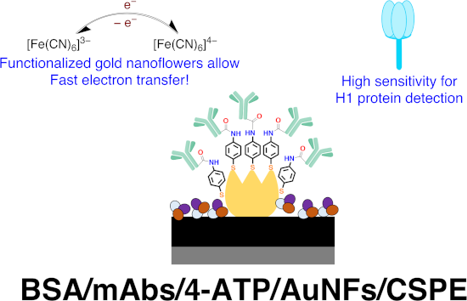
- forms. Electrochemical characterization Although CSPEs have advantageous features such as low cost and wide availability, they tend to possess a characteristic high electrical resistance due to the use of inks containing organic molecules and polymeric binders during the fabrication process [32]. This
- biosensing system and the effect on electrochemical current upon H1 protein recognition. SEM images of (A) CSPE and (B, C) AuNFs/CSPE; (D) size distribution of the gold nanoflowers on AuNFs/CSPE. CV characterization at different steps of the electrode modification, measurements performed in 0.1 M KCl


Zeolite materials with Ni and Co: synthesis and catalytic potential in the selective hydrogenation of citral
Beilstein J. Nanotechnol. 2025, 16, 520–529, doi:10.3762/bjnano.16.40
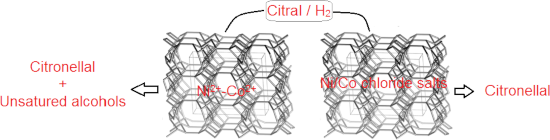
- . Results and Discussion Composition and characterization of the materials XRD patterns and a SEM micrograph of the starting zeolite mineral (ZSA) are shown in Figure 1 and Figure 2, respectively. The diffraction patterns are normalized and evidence the presence of mordenite and clinoptilolite–heulandite
- being mixed. After 24 h, the solid phases were separated, lightly washed with distilled water, and oven-dried at 110 °C. Characterization The elemental composition of ZSA and the modified materials from both treatments was determined using X-ray fluorescence analysis, performed with a ZETIUM PANalytical


N2+-implantation-induced tailoring of structural, morphological, optical, and electrical characteristics of sputtered molybdenum thin films
Beilstein J. Nanotechnol. 2025, 16, 495–509, doi:10.3762/bjnano.16.38
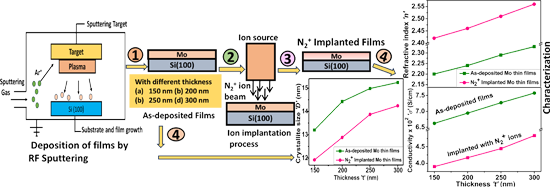
- University, Kurukshetra, ensuring comprehensive and accurate characterization of the properties of Mo thin films. Results and Discussion SRIM-TRIM simulation The “Stopping & Range of Ions in Matter and Transport of Ions in Matter” (SRIM-TRIM) simulation software was used to quantitatively estimate
- CSIR, New Delhi, for providing the CSIR-JRF. The authors are also grateful to the Department of Science and Technology (DST), New Delhi, for providing funds for establishing the 200 kV ion accelerator and related characterization facilities at Kurukshetra University, Kurukshetra. The authors are also


Biomimetics and bioinspired surfaces: from nature to theory and applications
Beilstein J. Nanotechnol. 2025, 16, 418–421, doi:10.3762/bjnano.16.32
- Journal of Nanotechnology emerged from this fruitful exchange of ideas. The symposium featured a range of topics across biomimetic and bioinspired approaches, as well as the characterization of biological surfaces with properties of technological interest. A significant deal of research focused on

ReactorAFM/STM – dynamic reactions on surfaces at elevated temperature and atmospheric pressure
Beilstein J. Nanotechnol. 2025, 16, 397–406, doi:10.3762/bjnano.16.30
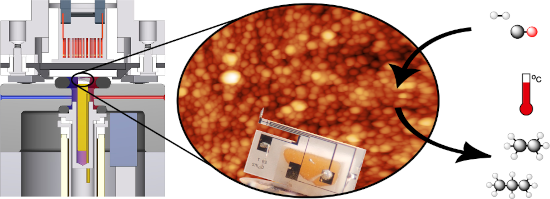
- experimental setup is shown in Figure 1. The apparatus is composed of two chambers maintained at UHV conditions and separated by a gate valve. The preparation chamber is devoted to sample preparation and characterization, while the other accommodates the AFM/STM reactor. The sample can be introduced into the


Engineered PEG–PCL nanoparticles enable sensitive and selective detection of sodium dodecyl sulfate: a qualitative and quantitative analysis
Beilstein J. Nanotechnol. 2025, 16, 385–396, doi:10.3762/bjnano.16.29
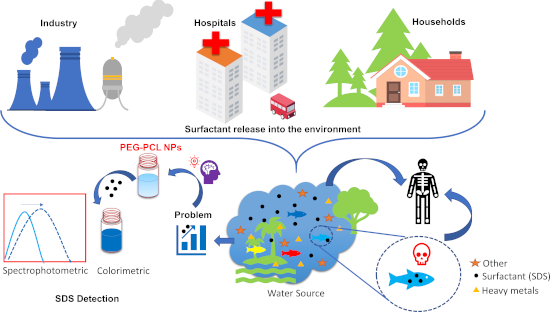
- , selective, and cost-effective sensor for SDS detection in an aqueous solution. The advent of nanotechnology increased their demand for developing colorimetric sensors to detect chemical compounds, toxicants, nutrients, and biomolecules. The nanotechnology field consists of synthesis, characterization, and
- polymerization, the resulting complexes were cooled down to room temperature, dissolved in DCM, and precipitated using an excess of cold diethyl ether. The precipitates were isolated by filtration using filter paper and dried under vacuum. The collected PEG–PCL NPs were then subjected to further characterization
- . Characterization of PEG–PCL nanoparticles The synthesized PEG–PCL nanoparticles were characterized by their unique physicochemical properties, such as size and surface charge. The average hydrodynamic size, monodispersity, and surface charge of the nanoparticles were measured using the ZetaSizer (Nano ZS, Malvern


Development of a mucoadhesive drug delivery system and its interaction with gastric cells
Beilstein J. Nanotechnol. 2025, 16, 371–384, doi:10.3762/bjnano.16.28

- negatively charged alginate nanoparticles were then coated with positively charged Eudragit RS100 with the intent of obtaining mucoadhesive nanoparticles with sustained release properties. The characterization of the delivery system was studied in terms of charge, size, encapsulation efficiency, and release
- . In addition to morphological characterization, the coating of Alg nanoparticles with Eudragit RS100 polymer was studied by using fluorescently tagged polymers during particle synthesis (Supporting Information File 1). For the preparation of fluorescently tagged Alg (F-Alg) nanoparticles, fluorescein
- ). The nanoparticles were resuspended in sodium acetate buffer (pH 4.5) and sonicated for 5 min in a sonication bath before characterization. Preparation of Eudragit RS100-coated alginate NPs The Alg NPs were coated with Eudragit RS100 by a technique similar to that in [20]. Prepared Alg NPs (1 mg/mL; 4


Pulsed laser in liquid grafting of gold nanoparticle–carbon support composites
Beilstein J. Nanotechnol. 2025, 16, 349–361, doi:10.3762/bjnano.16.26
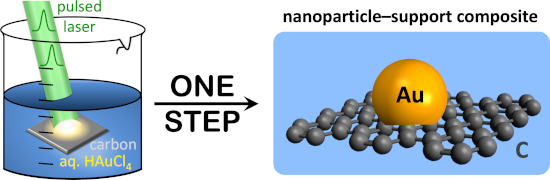
- custom-made Teflon tub, in 2.0 mL of commercially available aqueous colloid of citrate-capped gold nanoparticles (100 nm, nanoComposix), followed by drying under a heat lamp at 60 °C for 20 min. Physical characterization Scanning electron microscopy (SEM) images were obtained at UR-Nano. A Zeiss Auriga


Tailoring of physical properties of RF-sputtered ZnTe films: role of substrate temperature
Beilstein J. Nanotechnol. 2025, 16, 333–348, doi:10.3762/bjnano.16.25
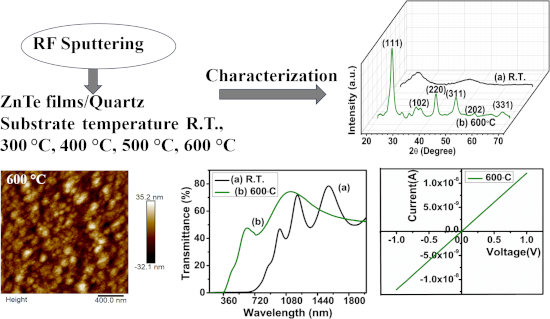
- accelerator and related characterization facilities at Kurukshetra University. The authors are also thankful to the Ministry of Human Resource and Development (MHRD), New Delhi for RUSA 2.0 grants to the Center for Advanced Material Research (CAMR), Kurukshetra University.




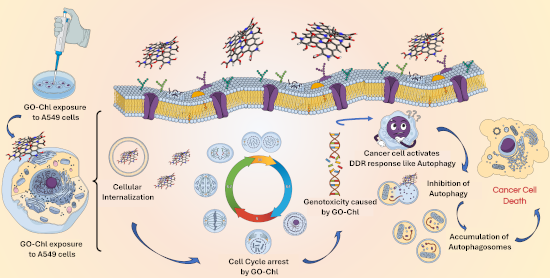
Graphene oxide–chloroquine conjugate induces DNA damage in A549 lung cancer cells through autophagy modulation
Beilstein J. Nanotechnol. 2025, 16, 316–332, doi:10.3762/bjnano.16.24
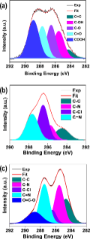
- quantitative estimation of the unbound drug. Physical characterization techniques The functional group and structural analysis of GO and GO–Chl nanoconjugate were studied using a Fourier-transform infrared spectrometer (Cary 630 FTIR, Agilent, CA, USA) in ATR mode and a Raman spectrophotometer (Ranishaw win
- ) through chemiluminescence. Three independent experiments were performed for each group. The values represent the mean ± SE of three independent experiments. A value of p < 0.05 (*) was considered statistically significant. Results and Discussion Physical characterization analysis The synthesis of graphene
- formation of GO–Chl nanoconjugates was confirmed by investigating the optical, functional, structural, and morphological properties employing standard analytical characterization techniques. The optical properties of GO and GO–Chl were assessed using UV–vis spectroscopy (Supporting Information File 1



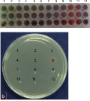
Fabrication and evaluation of BerNPs regarding the growth and development of Streptococcus mutans
Beilstein J. Nanotechnol. 2025, 16, 308–315, doi:10.3762/bjnano.16.23
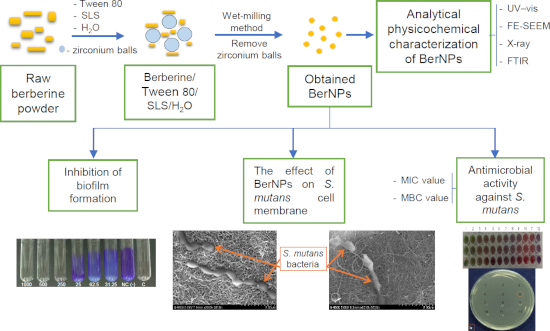
- . Powder BerNPs were obtained by the freeze-drying for 48 h at −55 °C under vacuum. Physicochemical characterization of BerNPs The specific adsorption peak of BerNPs was determined by UV–vis absorption spectroscopy in a wavelength range from 200 to 600 nm after dilution in methanol. The berberine




Enhancing mechanical properties of chitosan/PVA electrospun nanofibers: a comprehensive review
Beilstein J. Nanotechnol. 2025, 16, 286–307, doi:10.3762/bjnano.16.22

- . Key strategies for improvement are analyzed, including material modifications through blending and structural modifications like fiber orientation and multilayer constructions, and surface modifications such as coating and functionalization. The review also covers advanced characterization methods to
- [9]. In this review, we focus on the background of the electrospinning process, the properties of chitosan/PVA electrospun nanofibers, and fabrication techniques, including the effects of various parameters and post-treatment methods. We also review the characterization of chitosan/PVA electrospun
- needleless technique based on a rotating cylinder spinneret to increase production rate. Table 4 summarizes the different electrospinning methods used in fabricating chitosan/PVA nanofibers. Characterization of mechanical properties Electrospun nanofibers possess unique mechanical properties, which depend on


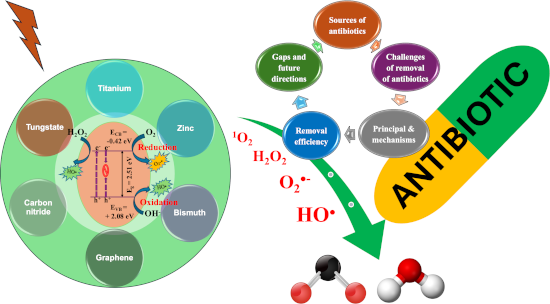
Emerging strategies in the sustainable removal of antibiotics using semiconductor-based photocatalysts
Beilstein J. Nanotechnol. 2025, 16, 264–285, doi:10.3762/bjnano.16.21