


Search results
Search for "charge transport" in Full Text gives 137 result(s) in Beilstein Journal of Nanotechnology.
Electron and heat transport in porphyrin-based single-molecule transistors with electro-burnt graphene electrodes
Beilstein J. Nanotechnol. 2015, 6, 1413–1420, doi:10.3762/bjnano.6.146
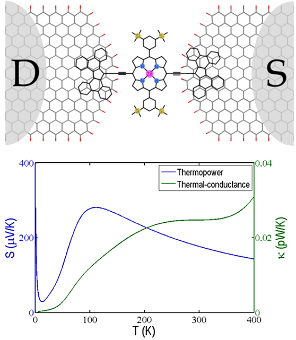
- charge transport by means of an effective tight binding model. Finally, we investigate the thermoelectric properties of the device. Results and Discussion Figure 1 shows the molecular structure of the porphyrin-based single-molecule transistor (SET), which consists of two electro-burnt graphene


Nano-contact microscopy of supracrystals
Beilstein J. Nanotechnol. 2015, 6, 1229–1236, doi:10.3762/bjnano.6.126
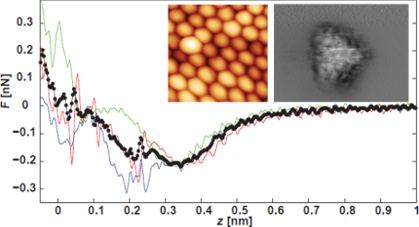
- depends both on the effective dimensionality and the amount of topological/charge disorder in the system. The distribution of nanocrystal connectivity due to this disorder plays an essential role in determining the topological “landscape” for charge transport, which can be affected at the nanoscopic

![[Graphic 1]](/bjnano/content/inline/2190-4286-6-126-i1.png?max-width=637&scale=1.18182) = 20 pA, ...
= 20 pA, ...


Electrical characterization of single molecule and Langmuir–Blodgett monomolecular films of a pyridine-terminated oligo(phenylene-ethynylene) derivative
Beilstein J. Nanotechnol. 2015, 6, 1145–1157, doi:10.3762/bjnano.6.116
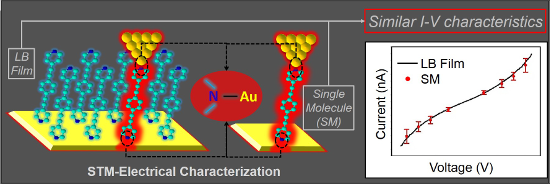
- efficient pyridyl–Au contacts. Previous contributions in the field have shown that the charge transport in molecular wires incorporating electron-withdrawing pyridyl-type anchoring groups is preferentially controlled by the lowest unoccupied molecular orbital (LUMO). That is, the pyridyl group decreases the
- molecular environment is different in both cases. Whilst the molecules are closely packed within the LB film, no nearest molecules exist for the single molecule studies. A widely applied tunneling model for non-resonant tunneling charge transport was developed by Simmons [109]. In this model, the current I
- gold substrates were studied using STM. The shape of the I–V curves and good fit with the Simmons model indicate that charge transport across of the metal–monolayer–metal junctions follows a nonresonant tunneling mechanism. Importantly, the conductance value in LB films (5.17 × 10⁻⁵ G0) is similar to


Charge carrier mobility and electronic properties of Al(Op)3: impact of excimer formation
Beilstein J. Nanotechnol. 2015, 6, 1107–1115, doi:10.3762/bjnano.6.112
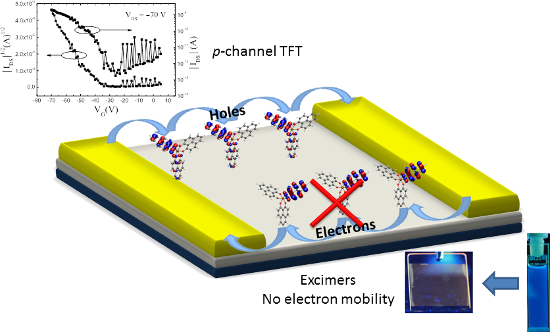
- efficiently accept and delocalize additional electrons) suggest more robust electron charge transport properties. This discrepancy is explained by the excimer formation, whose inclusion in the multiscale simulation workflow is expected to bring the theoretical simulation and experiment into agreement


From lithium to sodium: cell chemistry of room temperature sodium–air and sodium–sulfur batteries
Beilstein J. Nanotechnol. 2015, 6, 1016–1055, doi:10.3762/bjnano.6.105
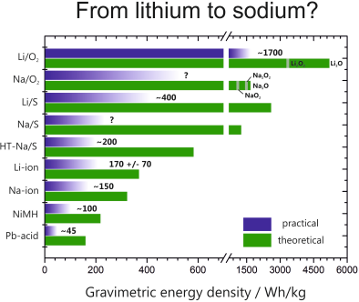
- polysulfides in the case of lithium–sulfur or sodium–sulfur batteries, has only very recently been seriously taken into account. Viswanathan et al. suggest that Li2O2 grows only to film deposits of 5–10 nm in thickness because charge transport through the Li2O2 layer can only proceed by hole tunneling [92][93


Morphological and structural characterization of single-crystal ZnO nanorod arrays on flexible and non-flexible substrates
Beilstein J. Nanotechnol. 2015, 6, 720–725, doi:10.3762/bjnano.6.73
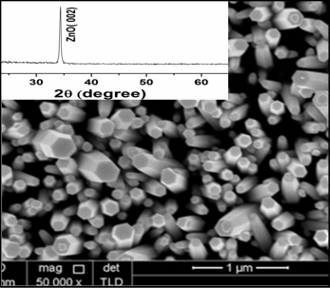
- superior to polycrystalline architectures in a unique way: the decrease of the number of grain boundaries ameliorates charge-carrier transport by permitting a direct and quick charge transport pathway and thus decreases the carrier path length, which in turn decreases recombination losses. To this end


Simple approach for the fabrication of PEDOT-coated Si nanowires
Beilstein J. Nanotechnol. 2015, 6, 640–650, doi:10.3762/bjnano.6.65
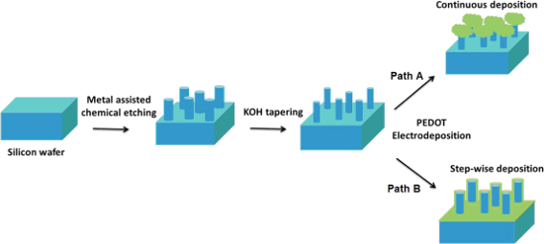
- surface uncovered [16]. In order to improve the junction quality, a conformal PEDOT shell should be introduced to eliminate charge transport paths parallel to the diode. Compared with the spin coating technique, the electrochemical polymerization of PEDOT provides the possibility of excellent polymer
- negative voltage range. This is an indication that most of the shunt paths for charge transport at reverse voltages are blocked. An extremely large shunt resistance (Rsh > 1 M∙Ω∙cm2) and a very low leakage current density (Jlk, on the order of μA/cm2) could be realized with this electrochemical method. The




Hybrid spin-crossover nanostructures
Beilstein J. Nanotechnol. 2014, 5, 2230–2239, doi:10.3762/bjnano.5.232
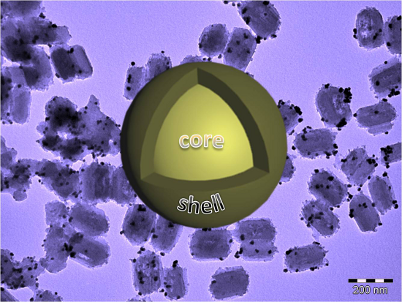
- the SCO properties and the physical properties (magnetic, photonic, charge transport, etc.) of the surrounding matter. The present review constitutes an overview of these systems including their synthesis, theoretical modelling and future possible technological applications. Indeed, a recent strategy



Advances in NO2 sensing with individual single-walled carbon nanotube transistors
Beilstein J. Nanotechnol. 2014, 5, 2179–2191, doi:10.3762/bjnano.5.227
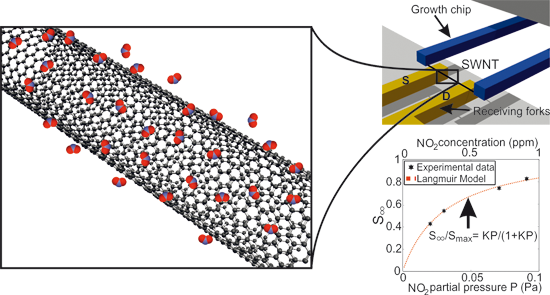
- . Therefore, all the carbon atoms in the nanotube can, in principle, interact with the analyte gas, while simultaneously supporting charge transport in the device. Thus, adsorbates and electrostatic charges and dipoles close to the nanotube can greatly impact charge transport. At the same time, the carbon


Experimental techniques for the characterization of carbon nanoparticles – a brief overview
Beilstein J. Nanotechnol. 2014, 5, 1760–1766, doi:10.3762/bjnano.5.186
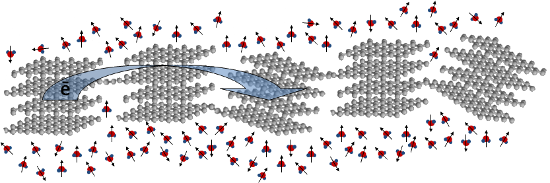
- take part in the charge transport and add to the EPR signal instead. Thus, Curie’s law must be modified with the component resulting from the Equation 1 to take into account the changing number of localized spins. This result is presented in Figure 4 [36]. Another factor greatly influencing the EPR


The influence of molecular mobility on the properties of networks of gold nanoparticles and organic ligands
Beilstein J. Nanotechnol. 2014, 5, 1664–1674, doi:10.3762/bjnano.5.177
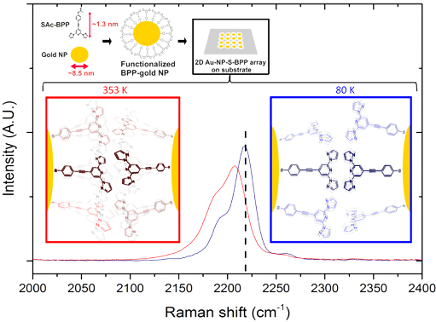
- that dynamic changes in the molecular layers effectively lower the molecular tunnel barrier for BPP-based arrays at higher temperatures. Keywords: aromatic capping ligands; gold nanoparticles; molecular charge transport; self-assembly; surface enhanced Raman spectroscopy; Introduction Inspired by
- . The observed spatial flexibility of the thiol-anchored BPP ligands is of interest for molecule chelation purposes, as it should facilitate the envisioned complexation of Fe(II) metal ions. Conductance measurements on a multilayered Au-NP–S-BPP network Charge transport in Au-NP–S-BPP network devices
- , i.e., the electrostatic energy needed to add an electron onto the metallic nanoparticle (here C is the total capacitance of a nanoparticle in the array and e is the electron charge). In that case, Coulomb blockade will hamper charge transport. Earlier work on alkanethiol–gold nanoparticle networks




Magnesium batteries: Current state of the art, issues and future perspectives
Beilstein J. Nanotechnol. 2014, 5, 1291–1311, doi:10.3762/bjnano.5.143


Gas sensing with gold-decorated vertically aligned carbon nanotubes
Beilstein J. Nanotechnol. 2014, 5, 910–918, doi:10.3762/bjnano.5.104
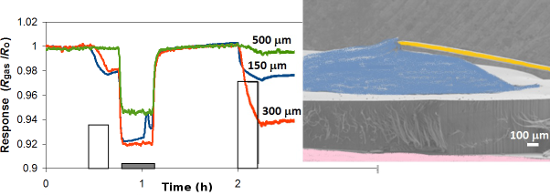
- charge transport [7], unlike in randomly oriented CNT meshes. Sensors made of aligned CNTs synthesized by plasma enhanced chemical vapour deposition (PECVD), have been reported to exhibit fast and high response at room temperature and detect 10 ppb NO2 when operated at 165 °C. Although the detection of


Optical modeling-assisted characterization of dye-sensitized solar cells using TiO2 nanotube arrays as photoanodes
Beilstein J. Nanotechnol. 2014, 5, 895–902, doi:10.3762/bjnano.5.102
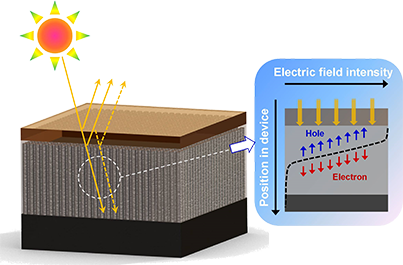
- particulate films [12]. Consequently, this enhanced charge transport led to an improvement in the efficiency of light energy conversion. According to Zhu et al., as considering the charge collection efficiency between TiO2 nanoparticle-based and TNT-based DSSCs with comparable TiO2 thickness, the TNT-based
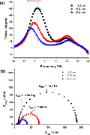
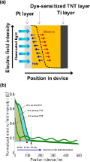
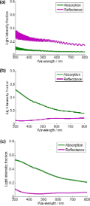
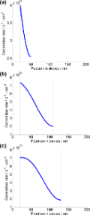
- experimental results with the optical modeling results presents how charge generation and charge transport are associated with the unique morphological property of 1D-TNT photoanodes when enhancing the photovoltaic performance. Results and Discussion TNT-based N719 dye-sensitized solar cells Prior to
- the excellent charge transport property of 1D-TNT structured photoanodes accompanying effective electron–hole charge separation and longer electron lifetime, which were confirmed by EIS analysis and the simulated electric field intensity. Therefore, our characterization approach employing optical


Volcano plots in hydrogen electrocatalysis – uses and abuses
Beilstein J. Nanotechnol. 2014, 5, 846–854, doi:10.3762/bjnano.5.96
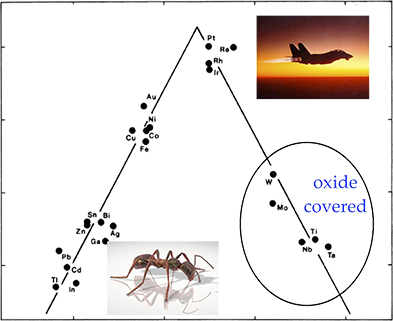
- perfect oxides have shown, that often hydrogen is adsorbed as a proton, and is often incorporated into the film. WO3 is a good example for this effect [31]. (3) The experimental data are affected by the charge transport through the film, which is very difficult to correct for [32]. Therefore, for this


Biomolecule-assisted synthesis of carbon nitride and sulfur-doped carbon nitride heterojunction nanosheets: An efficient heterojunction photocatalyst for photoelectrochemical applications
Beilstein J. Nanotechnol. 2014, 5, 770–777, doi:10.3762/bjnano.5.89
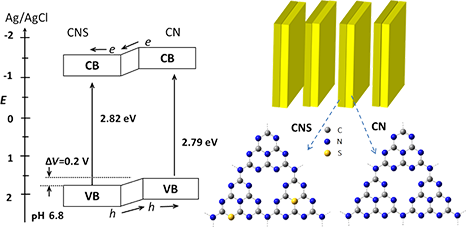
- other counterparts including CN, CNS and physically mixed CN and CNS over the entire potential profile. It is worth noting that the dark current densities of the photoelectrodes follow the order of CN/CNS heterostructure > CNS > CN, indicating the best charge transport properties of CN/CNS


Fullerenes as adhesive layers for mechanical peeling of metallic, molecular and polymer thin films
Beilstein J. Nanotechnol. 2014, 5, 394–401, doi:10.3762/bjnano.5.46
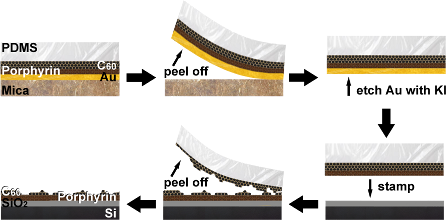
- arrays in some cases continuously covering macroscopic areas of a sample surface [29]. The scientific investigations of such polymers have provided new insights into charge transport in molecular systems [19], but many properties of potential interest, particularly those related to optical and electronic




Charge and spin transport in mesoscopic superconductors
Beilstein J. Nanotechnol. 2014, 5, 180–185, doi:10.3762/bjnano.5.18
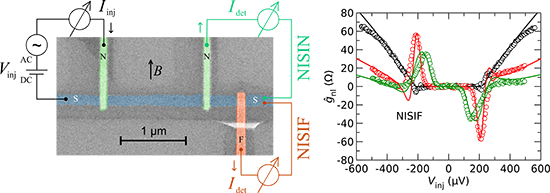
- M. J. Wolf F. Hubler S. Kolenda D. Beckmann Karlsruher Institut für Technologie (KIT), Institut für Nanotechnologie, P.O. Box 3640, D-72021 Karlsruhe, Germany 10.3762/bjnano.5.18 Abstract Background: Non-equilibrium charge transport in superconductors has been investigated intensely in the 1970s
- but no spin. The quasiparticle excitations, however, may carry both charge and spin. Non-equilibrium charge transport in superconductors has been investigated intensely in the 1970s and 1980s, mostly in the vicinity of the critical temperature [8][9][10] and more recently also in the low-temperature
- experiments on spin and charge transport in nanoscale superconductors at very low temperatures and high magnetic fields. We find that charge imbalance can be described surprisingly well with existing models, despite the fact that they were initially developed for experiments close to the critical temperature


![[Graphic 6]](/bjnano/content/inline/2190-4286-5-18-i9.png?max-width=637&scale=1.18182) at a bias voltage of about 2Δ (a) and spin diffusion length λS (b) for di...
at a bias voltage of about 2Δ (a) and spin diffusion length λS (b) for di...

In situ growth optimization in focused electron-beam induced deposition
Beilstein J. Nanotechnol. 2013, 4, 919–926, doi:10.3762/bjnano.4.103
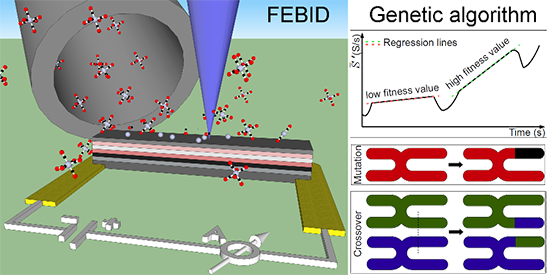
- significant progress could be made in understanding the charge transport regimes in nanogranular metals [8][9][10]. In addition, by the controlled combination of two precursors it has become possible to prepare amorphous binary alloys [11][12], as well as nanogranular intermetallic compounds [13]. As the


Optimization of solution-processed oligothiophene:fullerene based organic solar cells by using solvent additives
Beilstein J. Nanotechnol. 2013, 4, 680–689, doi:10.3762/bjnano.4.77
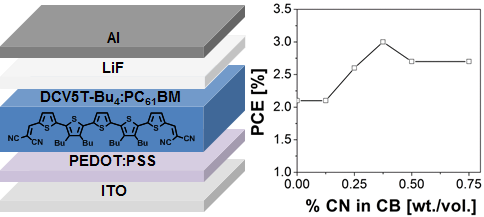
- equation [37][38]: the expected Voc can be calculated to be 1.2 V, which is 0.11 V higher than the measured value (1.09 V). Despite the very high Voc, a moderate PCE of 2.1% was obtained. The device made from CB displayed a relatively low fill factor (0.36), which is indicative of limited charge transport
- believed to be the increase in charge generation, which is reflected in the higher Jsc (6.5 vs 5.2 mA/cm2), and an improved charge transport and collection, as evidenced by the higher fill factor (0.41 vs 0.37) and lower saturation value (1.28 vs 1.33), respectively. The EQE spectra shown in Figure 5b
- , and improve charge transport to the electrodes. The better photocurrent saturation values for the vacuum-deposited cells, 1.17 versus 1.28 for the solution-processed devices, indicate reduced recombination, resulting in increased charge collection. The relatively modest difference in solar cell


Preparation of electrochemically active silicon nanotubes in highly ordered arrays
Beilstein J. Nanotechnol. 2013, 4, 655–664, doi:10.3762/bjnano.4.73
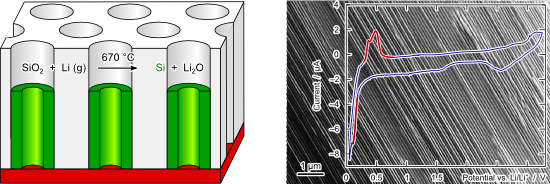
- based on porous silicon [7][9]. However, no study is available to date in which the geometric parameters of this system were varied systematically in order to pinpoint the critical length scales associated with mass transport, charge transport, and mechanical relaxation. We propose an experimental


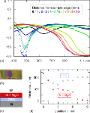


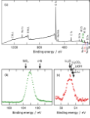

Large-scale atomistic and quantum-mechanical simulations of a Nafion membrane: Morphology, proton solvation and charge transport
Beilstein J. Nanotechnol. 2013, 4, 567–587, doi:10.3762/bjnano.4.65
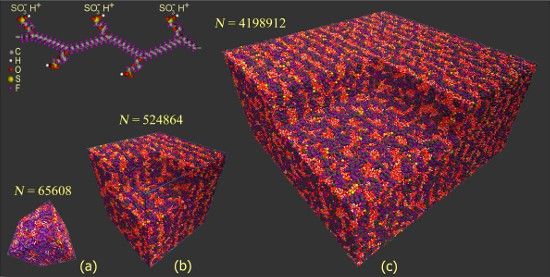
- freedom. The target temperature for the equilibration was set to 400 K. The temperature was then reduced to 298 K and the simulation was continued for additional 110 ps. After that the productive QMD run was performed for 120 ps at 298 K. This time window is sufficient for studying the charge-transport


Functionalization of vertically aligned carbon nanotubes
Beilstein J. Nanotechnol. 2013, 4, 129–152, doi:10.3762/bjnano.4.14
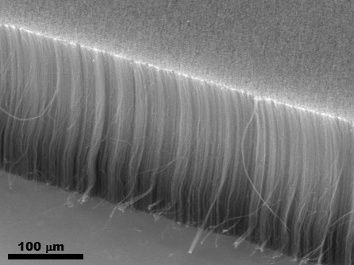
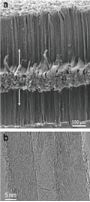
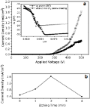
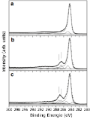
- without a coaxial layer of vanadium oxide (V2O5) as cathode and anode, respectively. Due to their unique properties (e.g., large surface area, electrical conductivity, regular pore structure, electrolyte accessibility, charge transport), they are candidates for replacing traditional electrodes. Instead of








Current–voltage characteristics of single-molecule diarylethene junctions measured with adjustable gold electrodes in solution
Beilstein J. Nanotechnol. 2012, 3, 798–808, doi:10.3762/bjnano.3.89
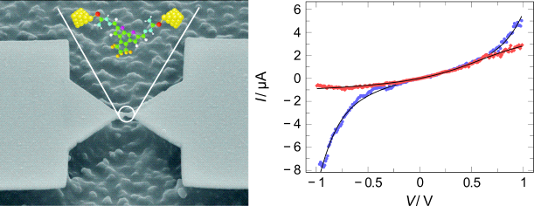
- , Germany Chemistry Department, University of Konstanz, D-78457 Konstanz, Germany 10.3762/bjnano.3.89 Abstract We report on an experimental analysis of the charge transport through sulfur-free photochromic molecular junctions. The conductance of individual molecules contacted with gold electrodes and the
- : diarylethene; mechanically controllable break-junction; molecular electronics; photoswitching; single-molecule junctions; Introduction Charge transport in single-molecule devices is actively investigated with the aim to realize functional electronic circuits [1][2][3][4], such as switches [5], transistors [4
- small geometrical change, which makes diarylethene molecules promising building blocks for optoelectronic applications [19][20]. Since electrical measurements of diarylethene molecules started, measurements of the charge-transport properties of molecular ensembles by using large-area samples [21


The memory effect of nanoscale memristors investigated by conducting scanning probe microscopy methods
Beilstein J. Nanotechnol. 2012, 3, 722–730, doi:10.3762/bjnano.3.82
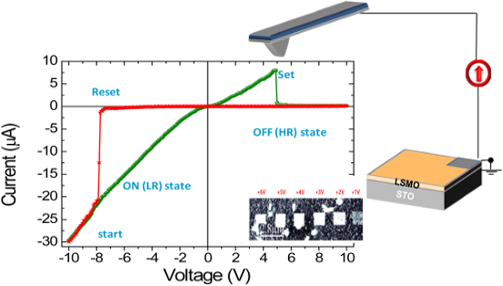
- bipolar switching behaviour, such as that shown in Figure 3a. The clearly asymmetric curve indicates that diverse microscopic processes govern charge transport under each polarity; the different branches are capable of being described by I–Vs of electrical circuits in which both resistors and rectifiers





