Search results
Search for "droplets" in Full Text gives 201 result(s) in Beilstein Journal of Nanotechnology. Showing first 200.
Electrical properties of a liquid crystal dispersed in an electrospun cellulose acetate network
Beilstein J. Nanotechnol. 2018, 9, 155–163, doi:10.3762/bjnano.9.18
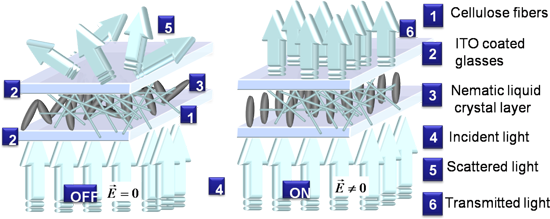
- spectroscopy; liquid crystal; optical transmission; Introduction The widely known polymer dispersed-liquid crystals (PDLCs) are a class of liquid crystal (LC)-based electro-optical devices, formed by LC droplets dispersed in a solid polymeric matrix [1][2][3][4][5]. The optical transmission of such devices is
- sensitive to external AC electric fields. Without external influence (the so called OFF state), PDLCs scatter the incident light due to the fact that the LC molecules are anchored to the inner surface of the droplets in the polymeric matrix, having a non-uniform orientation between different droplets. Since
- there is no uniform direction of alignment of the LC director between different droplets, the optical path of the incident light travelling through a PDLC is different from point to point, due to the mismatch between the effective refractive index of the LC and the refractive index of the polymer. The


Dopant-stimulated growth of GaN nanotube-like nanostructures on Si(111) by molecular beam epitaxy
Beilstein J. Nanotechnol. 2018, 9, 146–154, doi:10.3762/bjnano.9.17
- absence of a doping flux [16]. Compared to other widely studied III–V NWs (e.g., Al(Ga, In)As), which can be synthesized by MBE on Si substrates via a vapor–liquid–solid (VLS) mechanism that uses catalyst droplets, GaN NWs grow according to the self-induced mechanism in the absence of catalyst [17][18


Growth model and structure evolution of Ag layers deposited on Ge films
Beilstein J. Nanotechnol. 2018, 9, 66–76, doi:10.3762/bjnano.9.9
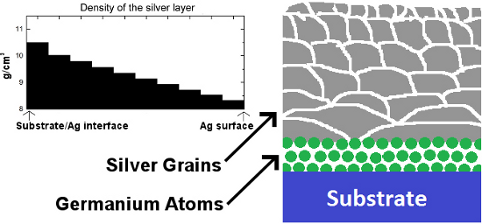
- relatively low and cohesion of Ag adatoms dominates to induce Volmer–Weber growth. During the deposition process, clusters of silver adatoms behave as liquid droplets with high wetting angle. The measured height of these islands was 18.6 nm in the case of depositing an equivalent of 12 nm thick silver layer
- silver, the clusters of silver atoms behave as liquid droplets with low wetting angle as opposed to the case without using Ge [26][27]. Therefore, the silver grains located directly over the SiO2/Ge/Ag interface are large and flat – the in-plane (horizontal) sizes are large, but the out-of-plane






Review on optofluidic microreactors for artificial photosynthesis
Beilstein J. Nanotechnol. 2018, 9, 30–41, doi:10.3762/bjnano.9.5
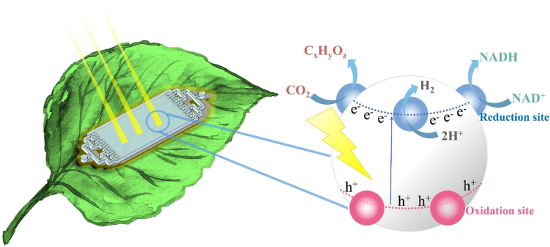
- be designed in different forms in the microreactor inside the optofluidic device, such as in the form of immobilized nanoparticles, films, plugs, droplets, etc. Fortunately, many works have contributed to the field of APS. The research efforts have mostly focus on aspects such as development of novel


Thermo- and electro-optical properties of photonic liquid crystal fibers doped with gold nanoparticles
Beilstein J. Nanotechnol. 2017, 8, 2790–2801, doi:10.3762/bjnano.8.278
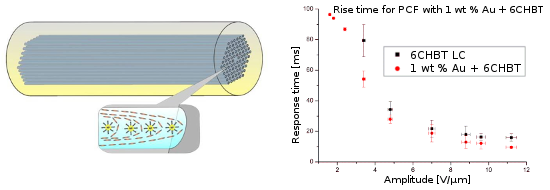
- droplets appeared in the sample. Figure 4 shows the behavior of undoped and Au-doped (0.5 wt % and 1 wt %) LC cells at a temperature near the phase transition. For the MCs the N–I phase transition temperature was defined as the temperature where the nematic phase begins to become distorted and slowly


Hyperthermic intracavitary nanoaerosol therapy (HINAT) as an improved approach for pressurised intraperitoneal aerosol chemotherapy (PIPAC): Technical description, experimental validation and first proof of concept
Beilstein J. Nanotechnol. 2017, 8, 2729–2740, doi:10.3762/bjnano.8.272
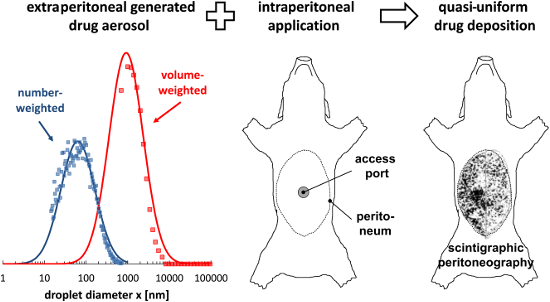
- analyses of the MIP® aerosol by laser diffraction spectrometry showed that around 97.5 vol % of the aerosol is composed of droplets between 3–200 µm with a modal volume-weighted droplet size of ≈25 µm. Such droplets are deposited immediately on the opposite size of the nozzle outlet due to gravitational
- settling and inertial impaction. Thus, Göhler et al. [13] concluded that the fraction of coarse droplets based on the current PIPAC-MIP technology is too large to provide a homogenous drug distribution. The opportunities to optimize single-fluid nozzles (like the MIP®) required aerosol characteristics are
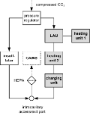
- plate to separate micrometre-sized droplets from submicrometre-sized ones. Impacted droplets flow as a liquid film back to the liquid reservoir, whereas submicrometre-sized droplets propagate within the chamber and leave the LAU through the aerosol outlet. Preliminary analysis concerning the ejection




Interface conditions of roughness-induced superoleophilic and superoleophobic surfaces immersed in hexadecane and ethylene glycol
Beilstein J. Nanotechnol. 2017, 8, 2504–2514, doi:10.3762/bjnano.8.250
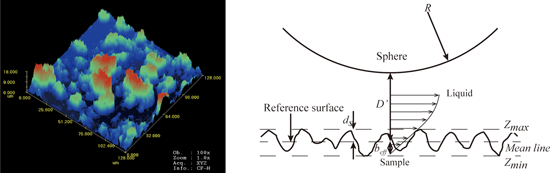
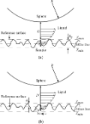
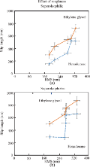
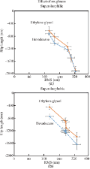
- a goniometer (DropMeterTM Element A-60, MAIST Vision Inc., China) and the Dropmeter software. For CA measurements, a droplet with a volume of 5 μL of each liquid was deposited on the prepared surface. The measurements were taken with three droplets at different positions for one surface, and the
- was captured by goniometer to obtain the CA. The difference between the CAs of the droplets was calculated as the CAH. On two more positions at the surface, the operation was repeated two times to obtain the average CAH. Boundary-slip measurements using an AFM Boundary slip measurements A colloidal





Au nanostructure fabrication by pulsed laser deposition in open air: Influence of the deposition geometry
Beilstein J. Nanotechnol. 2017, 8, 2438–2445, doi:10.3762/bjnano.8.242
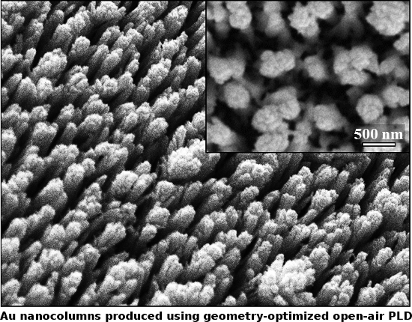
- decrease in the target–substrate distance below 3 mm resulted in the formation of denser, larger structures compared to deposition at larger distances [23]. In the latter case, micrometer-sized droplets and fine nanowires around and over them were obtained [21][23]. Despite the recent significant progress
- particles (Figure 4d). In this case, the deposition of the nanoparticles, aggregates and droplets, and their growth by accumulation of material, were the main mechanism driving the nanostructuring process. It could be concluded that the morphology of the structures obtained by PLD in open air depends
- nanostructures produced in this study focused our attention on their hydrophobic behavior. Table 2 presents the contact angle for the samples obtained at different deposition geometries, together with the images of the droplets formed on the sample surface. All samples present a hydrophobic behavior, except for


Increasing the stability of DNA nanostructure templates by atomic layer deposition of Al2O3 and its application in imprinting lithography
Beilstein J. Nanotechnol. 2017, 8, 2363–2375, doi:10.3762/bjnano.8.236
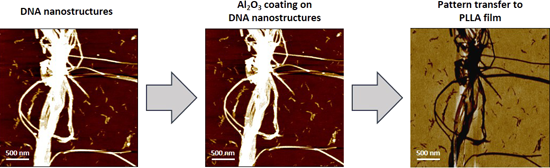
- from the template (Figure 1e). Droplets of water were added to the exposed edges of the template, separating the hydrophobic PLLA film from the hydrophilic master template by penetration into the interface between them. After one minute, the PLLA/PDMS film was peeled off and the negative replica of the
- template. A PDMS stamp with a thickness of ca. 1–2 mm was placed on top of the PLLA film as a backing stamp. Droplets of water were added to the exposed edges of the template. If the water droplets filled out the interface between the PLLA film and the PDMS backing stamp, they were removed using a paper
- a blade. (e) A PDMS film is adhered to the polymer film as a backing support. (f) Droplets of water are added to the exposed edges of the silicon wafer and the PLLA/PDMS film is peeled off. Comparison of features on a DNA nanotube master template with a ca. 2 nm thick Al2O3 film and a PLLA stamp



Surfactant-induced enhancement of droplet adhesion in superhydrophobic soybean (Glycine max L.) leaves
Beilstein J. Nanotechnol. 2017, 8, 2345–2356, doi:10.3762/bjnano.8.234
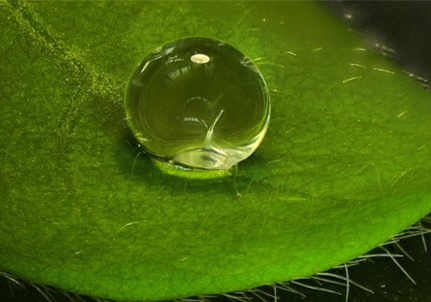
- applied droplets, even on superhydrophobic leaves, to reduce undesirable soil contamination by roll-off of agrochemical formulations from the plant surfaces. The wettability and morphology of soybean (Glycine max L.) leaf surfaces before and after treatment with six different surfactants (Agnique® SBO10
- epicuticular wax showed that 1-triacontanol (C30H61OH) is the main wax component of the soybean leaf surfaces. A water contact angle (CA) of 162.4° (σ = 3.6°) and tilting angle (TA) of 20.9° (σ = 10.0°) were found. Adherence of pure water droplets on the superhydrophobic leaves is supported by the hydrophilic
- surfaces, on which an applied drop of water tends to spread, have a low or zero-degree contact angle. Whether droplets adhere on a surface or not is described by the contact angle hysteresis (CAH). It is measured as the difference between the advancing and receding angles of a droplet (CAH = CAadv − CArec


In situ controlled rapid growth of novel high activity TiB2/(TiB2–TiN) hierarchical/heterostructured nanocomposites
Beilstein J. Nanotechnol. 2017, 8, 2116–2125, doi:10.3762/bjnano.8.211
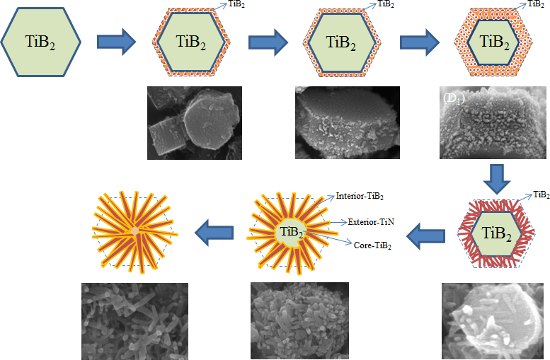
- vapors (Figure 4b) [28][29][30]. Under high temperature, the TiB2 fragments melted into many small droplets (Figure 4c). And the energy balance at the surface of the TiB2 crystal depends strongly on the changes in the external environment conditions. Thus, the small droplets self-assembled into bubble
- nm. Proposed schematic illustration and the corresponding FSEM images related to the formation process of the as-synthesized TiB2/(TiB2–TiN) samples. (a) TiB2 hexagonal prism crystal. (b) (B1) The surface layer was broken into fragments. (c) (C1) TiB2 fragments melted into small droplets. (d) (D1
- ) Small droplets self-assembled into bubble-like short chains. (e) (E1) Bubble-like short chains transformed into nanorods. (f) (F1) TiN formed on the surface on the nanorods. (g) (G1) TiB2/(TiB2–TiN) hierarchical/heterostructured nanocomposites are the resulting product. Typical TEM and FSEM images of


Application of visible-light photosensitization to form alkyl-radical-derived thin films on gold
Beilstein J. Nanotechnol. 2017, 8, 1863–1877, doi:10.3762/bjnano.8.187
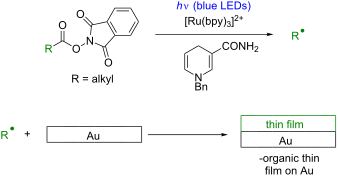
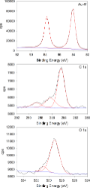
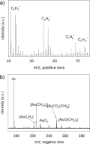
- contact with the terminal methyl groups of the crystalline film. This suggests that Au–Me and Au–NHBoc films in this study are relatively disordered and that water droplets are in contact with the methylene-rich chains derived from Phth–Me and Phth–NHBoc. Indeed, the water contact angle measured on low



Non-intuitive clustering of 9,10-phenanthrenequinone on Au(111)
Beilstein J. Nanotechnol. 2017, 8, 1801–1807, doi:10.3762/bjnano.8.181
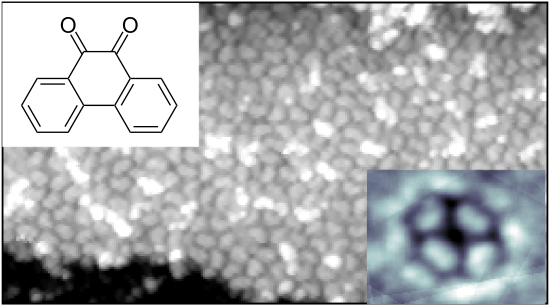
- argon sputtering followed by a 15 min annealing. The substrates were allowed to cool to room temperature prior to deposition. The samples were produced by preparing a 2 mg/mL solution of either 9,10-phenanthrenequinone or 9-fluorenone in tetrahydrofuran and injecting microliter droplets of this solution


Evaluation of preparation methods for suspended nano-objects on substrates for dimensional measurements by atomic force microscopy
Beilstein J. Nanotechnol. 2017, 8, 1774–1785, doi:10.3762/bjnano.8.179
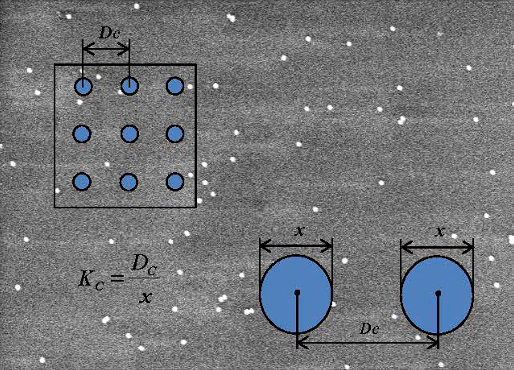
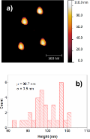
- droplets as generated by atomization are necessary as it can be realized by operating electrospray aerosol generators. In this study, a two-component atomizer (Modell ATM 220, Topas GmbH, Dresden, Germany) and an electrospray aerosol generator (ESG, Modell 3480, TSI Inc. Shoreview, USA) were operated for


Collembola cuticles and the three-phase line tension
Beilstein J. Nanotechnol. 2017, 8, 1714–1722, doi:10.3762/bjnano.8.172
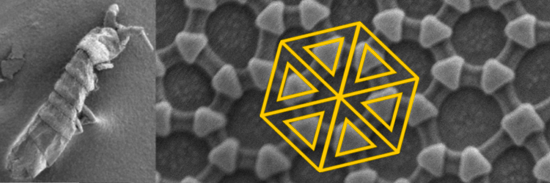
- contact line (). Zheng et al. [16] developed Equation 3 to describe the case of droplets resting on top of small surface roughness features, treating the three-phase line tension as a parameter to describe different contact angles observed for surfaces with feature tops with different size scales but


![[Graphic 16]](/bjnano/content/inline/2190-4286-8-172-i22.png?max-width=637&scale=1.18182) . A system with θ0 = 105°, S = 0.1 μm a...
. A system with θ0 = 105°, S = 0.1 μm a...

Surface functionalization of 3D-printed plastics via initiated chemical vapor deposition
Beilstein J. Nanotechnol. 2017, 8, 1629–1636, doi:10.3762/bjnano.8.162
- methods of 3DP are most common. Fused deposition modeling (FDM) involves heating a feed filament past the melting point of the material and extruding it onto a platform, which moves progressively downwards as layers are printed [8][9]. Inkjet printing deposits droplets of ink onto a platform, with ink
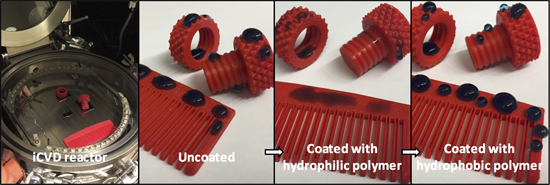
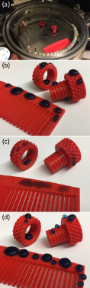
- coated with P(HEMA-co-EGDA). The middle and top of the lattice wicked water, but less readily than the bottom of the lattice, indicating partial polymer coverage. Comparison of the droplets on the coated lattice show that the coated lattice is more hydrophilic than the uncoated lattice. A unique feature
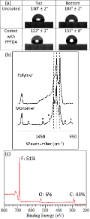
- measured on a goniometer (ramé-hart 290) with 10 μL droplets of deionized water. Five measurements were taken per sample and averaged and profile images were taken using the goniometer camera. Additionally, because the lattice structure consists of alternating, crosshatched layers, the structure has



A biofunctionalizable ink platform composed of catechol-modified chitosan and reduced graphene oxide/platinum nanocomposite
Beilstein J. Nanotechnol. 2017, 8, 1508–1514, doi:10.3762/bjnano.8.151
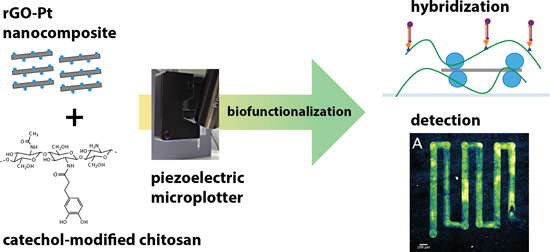
- ” effects. We developed our ink for a commercial microplotter system (Sonoplot GIX Microplotter Desktop), which uses a piezoelectric crystal to pump ink out of a glass micropipette [7]. This system does not generate droplets like an inkjet printer, instead it deposits continuous features via the fluid
- bridge formed between the substrate and dispenser tip. This allows for a broad range of viscosity of inks (up to 0.450 Pa·s), without concern for filaments/ligaments or satellite droplets. However, in order to assess the suitability of our ink for the more commonly used piezoelectric inkjet printing, we


Miniemulsion copolymerization of (meth)acrylates in the presence of functionalized multiwalled carbon nanotubes for reinforced coating applications
Beilstein J. Nanotechnol. 2017, 8, 1328–1337, doi:10.3762/bjnano.8.134
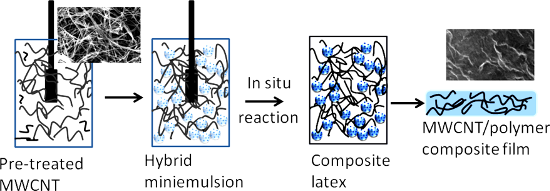
- solid phase, miniemulsion polymerization is much more versatile [27][28][29][30][31]. The characteristic feature of this process is that particle formation predominantly occurs by nucleation of the preformed miniemulsion droplets, which minimizes the changes in the system during the particle nucleation
- . However, n-pentanol is rather water soluble and it cannot hinder Ostwald ripening. Therefore, it is doubtful that the monomer droplets were stable. Ha et al. [18] polymerized miniemulsions prepared by sonicating a mixture of surfactant-stabilized SWCNTs, monomers (styrene and isoprene) and a costabilizer
- formation of oligomers in the aqueous phase, and the large droplet size that reduced the total surface area of the droplets and consequently their ability to capture oligomers from the aqueous phase. For the 0.1 wt % sample, the particle size was similar to the droplet size, likely because the smaller


Fabrication of hierarchically porous TiO2 nanofibers by microemulsion electrospinning and their application as anode material for lithium-ion batteries
Beilstein J. Nanotechnol. 2017, 8, 1297–1306, doi:10.3762/bjnano.8.131
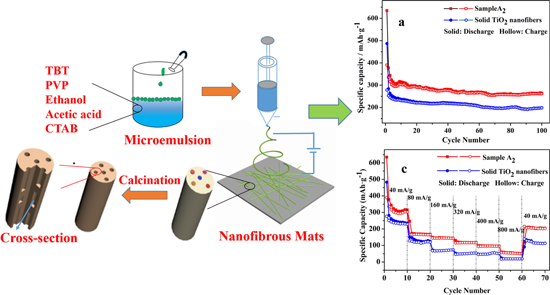
- successfully. During the process of electrospinning, the viscous liquid was elongated quickly accompanied by the evaporation of solvent as well as the hydrolysis condensation of TBT. Herein, despite the fact that the oil droplets in the microemulsion were stable with a diameter of about 20 nm, several small
- oil droplets merged into larger ones and then were stretched strongly by electrostatic force along the direction of fluid jet, thus forming oriented and axially aligned oil droplets. After calcination, the axially aligned oil droplets would be removed, resulting in axially aligned pores with the
- the number of channels in each nanofiber decreased as the content of paraffin oil increased. This is because the pores stemmed from the vacancies of oil droplets after calcination, and a larger oil droplets were formed when more paraffin oil was added into the microemulsion [31]. The SEM image of




Surface-enhanced Raman spectroscopy of cell lysates mixed with silver nanoparticles for tumor classification
Beilstein J. Nanotechnol. 2017, 8, 1183–1190, doi:10.3762/bjnano.8.120
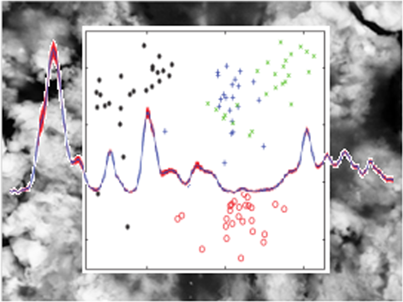
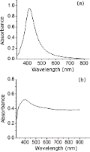
- all approaches mentioned above: generation of droplets with single cells in a microfluidic chip, addition of cell lysis buffer, nanoparticles and activation salt, mixing of all solvents and collection of SERS spectra for classification. Experimental Nanoparticle preparation Silver nitrate (ACS reagent


Measuring adhesion on rough surfaces using atomic force microscopy with a liquid probe
Beilstein J. Nanotechnol. 2017, 8, 813–825, doi:10.3762/bjnano.8.84
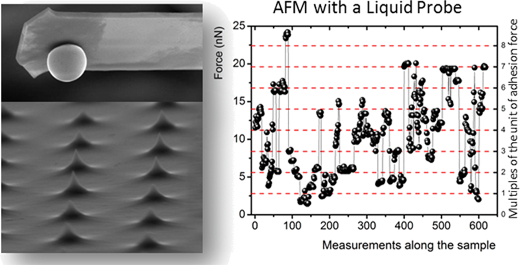
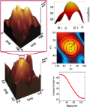
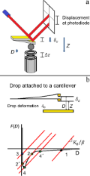
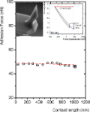
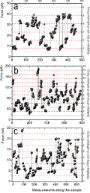
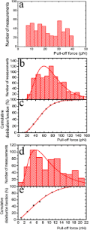
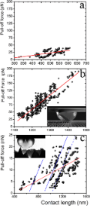
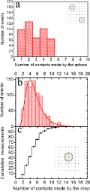
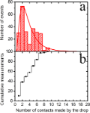
- of drops attached to AFM cantilevers [18][19][20][21]. In all cases, the authors used an AFM to measure the interaction between oil droplets inside a water solution to probe the effect of additives adsorbed on the droplets. On the other hand, relevant works regarding the connection between wetting

The longstanding challenge of the nanocrystallization of 1,3,5-trinitroperhydro-1,3,5-triazine (RDX)
Beilstein J. Nanotechnol. 2017, 8, 452–466, doi:10.3762/bjnano.8.49
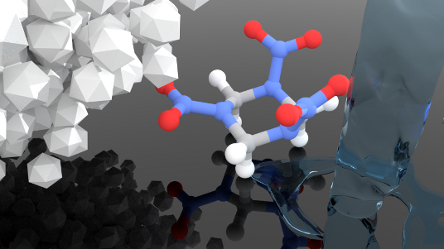
- micrometer-sized agglomerates. CTA is a promising primary explosive compliant with the new REACH legislation [32] forbidding the use of heavy-metal-based materials. Further investigation with surfactants might lead to smaller particles by counteracting the high viscosity of molten droplets. Milling Redner et
- through a nozzle that is electrically charged to a grounded plate. This charges the droplet surface, increasing the surface energy and thus triggering the fission into smaller droplets. This Coulomb fission phenomenon and the evaporation of the solvent leads to crystallization and the deposition of
- have been performed on those degraded materials, which were found to be as insensitive as TNT. The electrospray technique can be used to create a fine spray of micrometer-sized charged droplets repelling each other, which is ideal for crystallization. The high voltage needed is a major handicap for


Biological and biomimetic materials and surfaces
Beilstein J. Nanotechnol. 2017, 8, 403–407, doi:10.3762/bjnano.8.42

- surfaces. From everyday life experience, we all know that during watering or rainfall, water rolls off the leaves of many plants in the form of spherical droplets leaving the leaves themselves entirely dry. This effect can be seen in an especially impressive manner on the leaves of the sacred lotus
- (Nelumbo nucifera) and Tropaeolum (Tropaeolum majus). Interestingly, with the rolling off of water droplets, dirt particles as well as fungus spores and bacteria are also very efficiently removed from the leaf surfaces as they are more tightly attached to the water droplet than to the leaf surface. The
- few contact points to the leaf surface which has a micro-/nanoscale roughness. The same holds for the water droplets which become spherical for energetic reasons and cannot wet the leaf surface [1][2][3]. The discovery of this phenomenon and its structural basis dates back to the 1970s when Wilhelm
Influence of hydrofluoric acid treatment on electroless deposition of Au clusters
Beilstein J. Nanotechnol. 2017, 8, 183–189, doi:10.3762/bjnano.8.19
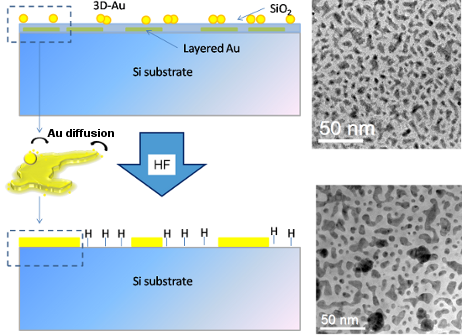
- very fast and bears similarities with the HF self-propelled motion of liquid droplets on solid surfaces [39]. The results are comparable to those obtained after high temperature and/or time consuming annealing procedures. Experimental Pretreatment of silicon substrate and metal deposition. The starting


Structural and tribometric characterization of biomimetically inspired synthetic "insect adhesives"
Beilstein J. Nanotechnol. 2017, 8, 45–63, doi:10.3762/bjnano.8.6
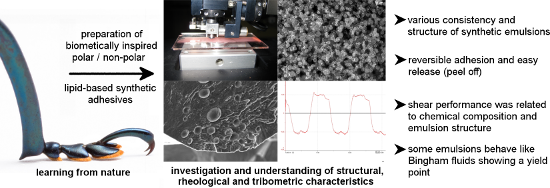
- larger size range of droplets as shown by the bright field/fluorescence microscopic images in comparison with those by cryo-SEM. The microscopic analyses revealed that the first generation provided a broader droplet size range with extremely large individual droplets leading to platykurtic kurtosis
- all other emulsions, those based on octacosane featured polyhedral droplets, which had a crystal-like appearance (Figure 1e,f; Supporting Information File 1, Figure S1a,b,f). In addition, in two out of three cases, the presence of octacosane led to unstable phases and to the formation of clumps within
- , displayed fluorescent droplets only thereby indicating the presence of oil-in-water (o/w) emulsions (Figure 1a,c; Supporting Information File 1, Table S1; Figure S2a,e,g). Vice versa, the two emulsions SA4 and SG4 possessed a fluorescent outer phase surrounding non-fluorescent droplets thus indicating the