


Search results
Search for "gain" in Full Text gives 466 result(s) in Beilstein Journal of Nanotechnology. Showing first 200.
Fate and transformation of silver nanoparticles in different biological conditions
Beilstein J. Nanotechnol. 2021, 12, 665–679, doi:10.3762/bjnano.12.53
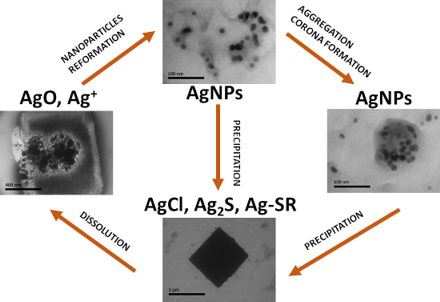
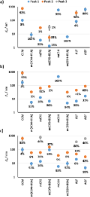
- PVP-AgNPs, as observed in Figure 2b, occurred already in the circulation as blood represents a chloride-rich medium. To gain more detailed insight into the biotransformation of AgNPs, differently coated AgNPs were incubated for 30 min at a concentration of 100 mg Ag/L in PBS, whole blood (WB), blood
- AgNPs in artificial biological media In order to gain more coherent insight into the transformation of different AgNPs in biological media, we examined changes in their size, surface charge, and dissolution in simpler media (i.e., CCM, m(CCM+BSA), mCYS, m(CYS+BSA), mGSH, m(GSH+BSA), ALF, and AGF, see
- AgNPs enter the body where they gain a protein corona, aggregate, and dissolve to Ag+. Ionic silver may precipitate in the anion-rich environment of different tissues, where Ag binds to S, resulting in nanocrystals. Aggregation and corona–NP destabilisation can also lead to precipitation. Whole blood




A review of defect engineering, ion implantation, and nanofabrication using the helium ion microscope
Beilstein J. Nanotechnol. 2021, 12, 633–664, doi:10.3762/bjnano.12.52
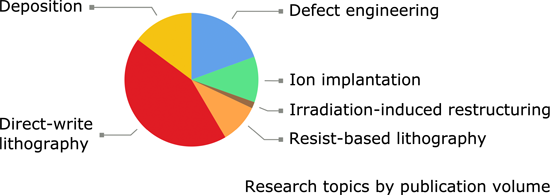
- backscattered electrons from the substrate and the secondary electrons they generate. In contrast, for ion beam lithography, the sensitivity gain can be orders of magnitude higher and the proximity effect is dramatically reduced, due to the much lower propensity of the ions to backscatter. However, before the


Properties of graphene deposited on GaN nanowires: influence of nanowire roughness, self-induced nanogating and defects
Beilstein J. Nanotechnol. 2021, 12, 566–577, doi:10.3762/bjnano.12.47
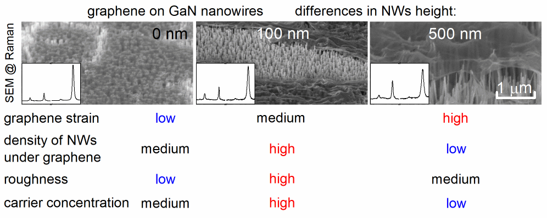
- absorption [9]. However, the interaction between corrugated nanowire substrate and graphene could substantially increase the scattering of carriers in a graphene electrode and decrease its conductivity. Therefore, detailed studies of the interaction between nanowire substrate and graphene are crucial to gain


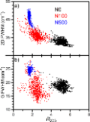


The preparation temperature influences the physicochemical nature and activity of nanoceria
Beilstein J. Nanotechnol. 2021, 12, 525–540, doi:10.3762/bjnano.12.43
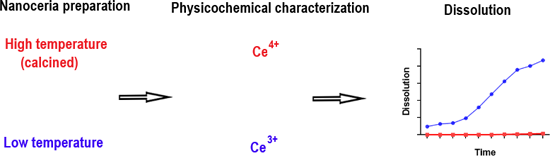
- . Solvothermally synthesized nanoceria dissolve in acidic environments, accelerated by carboxylic acids. NM-212 dissolution has been reported to be minimal. To gain insight into the role of high-temperature exposure on nanoceria dissolution, product susceptibility to carboxylic acid-accelerated dissolution, and




The impact of molecular tumor profiling on the design strategies for targeting myeloid leukemia and EGFR/CD44-positive solid tumors
Beilstein J. Nanotechnol. 2021, 12, 375–401, doi:10.3762/bjnano.12.31
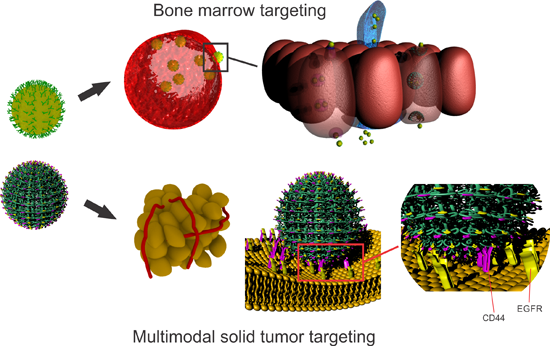
- macrophages protrude through the vascular endothelial wall to gain access and monitor blood circulation [24]. Hussain et al demonstrated that perisinusoidal macrophages are responsible for the accumulation of the chylomicrons in the BM and, hence, play a crucial role in the delivery of lipids, as a source of


Structural and optical characteristics determined by the sputtering deposition conditions of oxide thin films
Beilstein J. Nanotechnol. 2021, 12, 354–365, doi:10.3762/bjnano.12.29
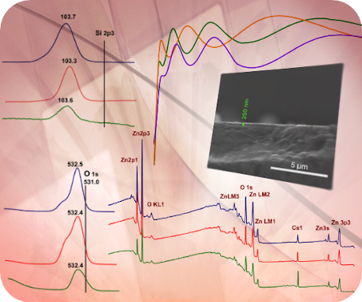
- was possible to gain information related to the thickness of our samples. The high-resolution elementary microanalysis of the cross section perpendicular to the surface of the thin films was performed in manual mode, where the adjustment device allowed the manual setting of the tilt angle from −90° to


Nickel nanoparticle-decorated reduced graphene oxide/WO3 nanocomposite – a promising candidate for gas sensing
Beilstein J. Nanotechnol. 2021, 12, 343–353, doi:10.3762/bjnano.12.28
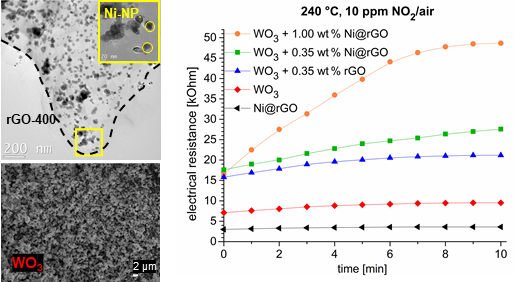
- mbar for several days. Then rGO was dispersed with Ni(COD)2 in [BMIm][NTf2] to gain 0.5 wt % metal nanoparticles and 0.5 wt % rGO. In order to stir the reaction mixture during the microwave decomposition, 0.5 wt % rGO could not be exceeded. The obtained nanomaterial was analyzed using powder X-ray


Intracranial recording in patients with aphasia using nanomaterial-based flexible electronics: promises and challenges
Beilstein J. Nanotechnol. 2021, 12, 330–342, doi:10.3762/bjnano.12.27
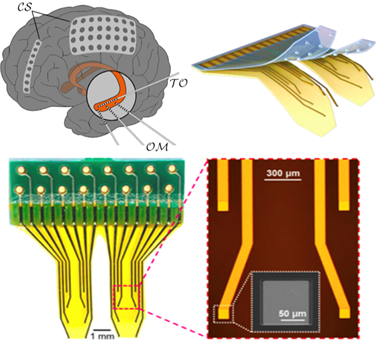
- heat and cause damage to the brain, especially during long-term implantation. Further investigations are required to design electronics that are compatible with the human brain for intracranial recording. Fortunately, with the advancement of brain imaging technology, it is highly possible to gain a


Exploring the fabrication and transfer mechanism of metallic nanostructures on carbon nanomembranes via focused electron beam induced processing
Beilstein J. Nanotechnol. 2021, 12, 319–329, doi:10.3762/bjnano.12.26
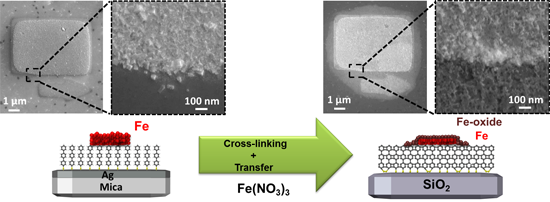
- metallic nanostructures fabricated via EBID and Fe(CO)5 remain unchanged, besides oxidation. This result was achieved by using a SAM consisting of 1,1′,4′,1′′-terphenyl-4-thiol (TPT) on a Au substrate [21]. In this work, we want to gain more insight into the underlying processes yielding such hybrid
- [33]. The bright circular shape around the structure depicted in Figure 4c can be explained by an incomplete dissolution process. After removing the sample from the Fe(NO3)3 solution this type of deformed structure remains. To gain further insight into the effect of the Fe(NO3)3 solution onto the


Scanning transmission helium ion microscopy on carbon nanomembranes
Beilstein J. Nanotechnol. 2021, 12, 222–231, doi:10.3762/bjnano.12.18
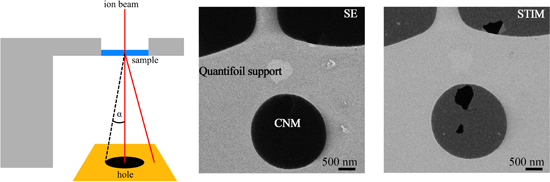
- within a set of images. The grid of the Everhart–Thornley detector was kept at 500 V while photomultiplier gain, brightness, and image intensity were adjusted for each set of images to keep the signal on all images within the dynamic range of the detector. Images were acquired at a dwell time of 0.5 µs


A review on the biological effects of nanomaterials on silkworm (Bombyx mori)
Beilstein J. Nanotechnol. 2021, 12, 190–202, doi:10.3762/bjnano.12.15
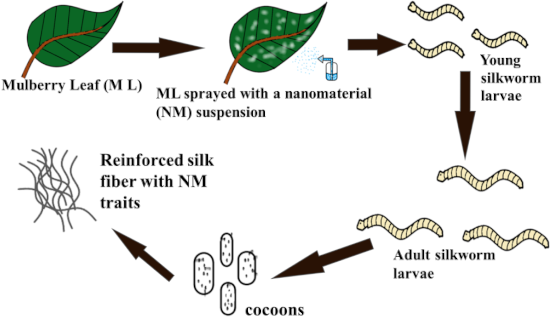
- , which significantly accelerated their body weight gain when compared to the control group and to larvae treated with different concentrations of TiO2 NPs (40, 80, and 160 mg/L) after 168 h. During the larval stages, silkworms feed on mulberry leaves which have all the required nutrients needed for their


Toward graphene textiles in wearable eye tracking systems for human–machine interaction
Beilstein J. Nanotechnol. 2021, 12, 180–189, doi:10.3762/bjnano.12.14
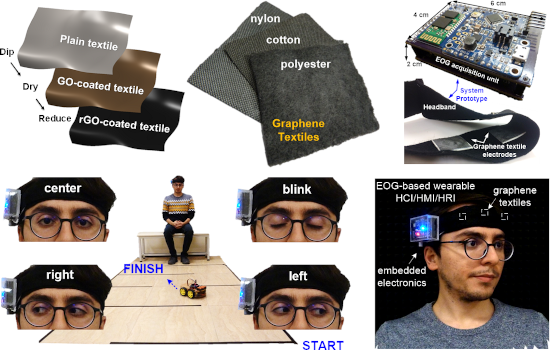
- for portable applications. For adjusting the gain in the post-amplification stage, a digitally programmable voltage divider (MAX5421, Maxim, USA) was used so that the gain can be configured at the software level through a graphical user interface (GUI). As a common practice in portable devices
- Instruments, USA) was implemented at the receiver end, enabling user-friendly operation, calibration, gain adjustment, and event monitoring. In the current version of the embedded system, the Bluetooth coverage is ca. 5 m. The power consumption of the circuitry is ca. 80 mW when the Bluetooth device is not
- graphene textile and the dimensions of the miniaturized-PCB on the rear side of the electrode. Overview of the system prototype showing the detailed hardware-level schematic of the portable, battery-powered, EOG acquisition unit including on-board filtering and gain stages, power management section


Paper-based triboelectric nanogenerators and their applications: a review
Beilstein J. Nanotechnol. 2021, 12, 151–171, doi:10.3762/bjnano.12.12
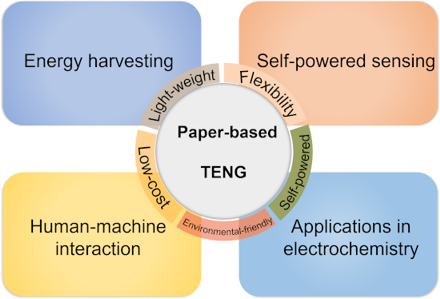
- moisture-retention capacity. This provides an efficient method to prepare paper electrodes for TENGs. Paper has also been proven to be a natural TENG friction layer. Due to that, it shows a tendency of easily losing electrons (i.e., electropositive) when contacting a material that can easily gain electrons
- density. Since paper is mainly composed of cellulose, which generally shows a tendency of losing electrons (electropositive), it is preferred to pair paper with a friction material that can easily gain electrons (electronegative) according to the triboelectric series [83][99][100]. Figure 4 depicts a






Fusion of purple membranes triggered by immobilization on carbon nanomembranes
Beilstein J. Nanotechnol. 2021, 12, 93–101, doi:10.3762/bjnano.12.8
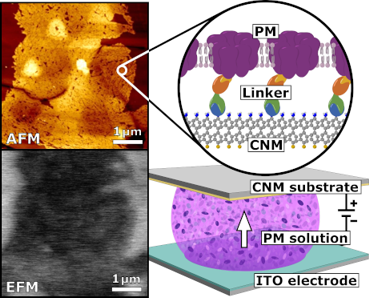
- a higher rate of multilayers and PM clusters. To decrease the number of clusters, both OD and drop size have been reduced as larger drops lead to higher coverage rates due to increasing amounts of WT PM per unit area. In order to improve the deposition and to gain well-oriented WT PM, as shown in


Bulk chemical composition contrast from attractive forces in AFM force spectroscopy
Beilstein J. Nanotechnol. 2021, 12, 58–71, doi:10.3762/bjnano.12.5
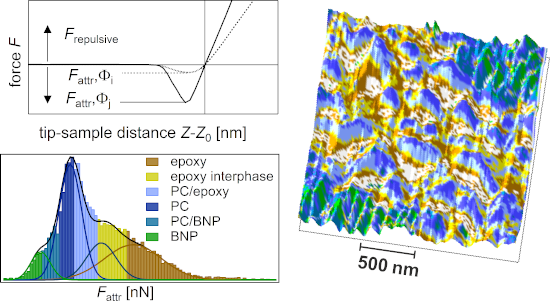
- approach of spatially resolved force spectroscopy data. Second, we demonstrated that by giving up the spatial information of a force map (spatial domain) we gain information about the property distribution (property domain). By taking advantage of this statistical approach, we showed that the maximum


Effect of different silica coatings on the toxicity of upconversion nanoparticles on RAW 264.7 macrophage cells
Beilstein J. Nanotechnol. 2021, 12, 35–48, doi:10.3762/bjnano.12.3
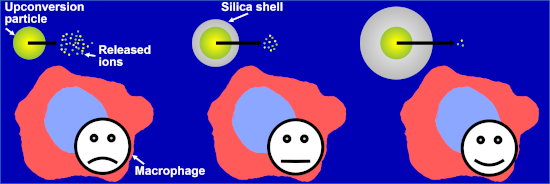
- not result in a stronger increase in cell granularity, such as a higher release of ions and a related reduction in cell viability, as indicated by the ion-release experiments and MTT data (Figure 2 and Figure 3, respectively). Cell cycle analysis To gain a deeper understanding of the effect of silica


Bio-imaging with the helium-ion microscope: A review
Beilstein J. Nanotechnol. 2021, 12, 1–23, doi:10.3762/bjnano.12.1
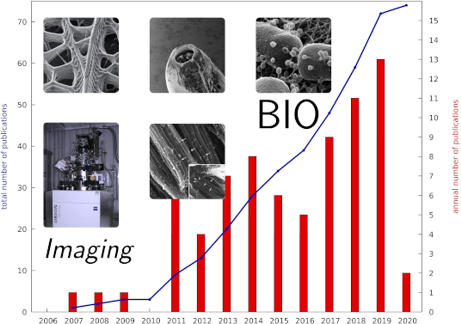
- aspects of microbe–mineral interactions, such as the formation of intra- or extracellular mineral precipitates, or intracellular organelles associated with energy gain or electron transfer [92]. However, over recent years, the number of articles related to geomicrobiology and containing HIM data has


Self-standing heterostructured NiCx-NiFe-NC/biochar as a highly efficient cathode for lithium–oxygen batteries
Beilstein J. Nanotechnol. 2020, 11, 1809–1821, doi:10.3762/bjnano.11.163
- were evenly distributed in the selected area. In other words, N-doped carbon was formed as a support material. The images also show that Fe and Ni uniformly covered the entire particles, forming Fe and Ni alloy particles. To gain further information on the chemical state and element composition on the






The influence of an interfacial hBN layer on the fluorescence of an organic molecule
Beilstein J. Nanotechnol. 2020, 11, 1663–1684, doi:10.3762/bjnano.11.149
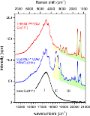
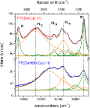
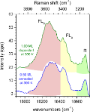
- (varying by a factor of up to ca. 7). This indicates that the specific local surface quality, for example, the surface roughness at the spot where the Raman scattering occurred, influences the intensity of the Raman modes. Hence, we cannot draw quantitative conclusions here. Nevertheless, we gain some





Design of V-shaped cantilevers for enhanced multifrequency AFM measurements
Beilstein J. Nanotechnol. 2020, 11, 1525–1541, doi:10.3762/bjnano.11.135
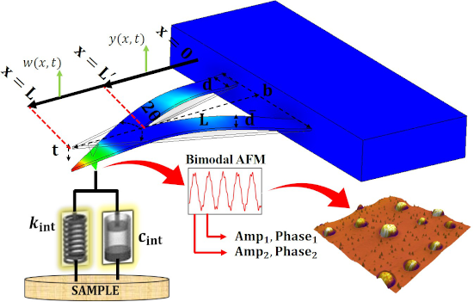
- , and A2 = 2 nm. The gain was adjusted to maintain the quality of the images. The image size is 10 µm times 10 µm. Bimodal AFM images of PS-LDPE samples. Left column: MULTI75G, middle column: TR400Long, right column: TR400Short. (a), (b), and (c) are height images. (d), (e), and (f) are phase images
- . All images were recorded at the same spot with a scan rate of 1 Hz, a setpoint ratio of 65%, a first eigenmode amplitude of A1 = 10 nm, and A2 = 2 nm. The gain was adjusted to maintain the quality of the images. The image size is 5 µm times 5 µm. Properties of Au and PS for AFM simulation. Range of


![[Graphic 4]](/bjnano/content/inline/2190-4286-11-135-i26.svg?max-width=637&scale=1.18182) = 15 µm, bref = 8...
= 15 µm, bref = 8...


![[Graphic 17]](/bjnano/content/inline/2190-4286-11-135-i39.svg?max-width=637&scale=1.18182) ) of V-shaped cantilevers for...
) of V-shaped cantilevers for...


Adsorption and self-assembly of porphyrins on ultrathin CoO films on Ir(100)
Beilstein J. Nanotechnol. 2020, 11, 1516–1524, doi:10.3762/bjnano.11.134
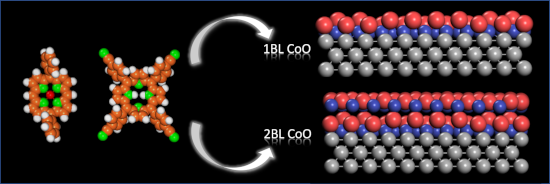
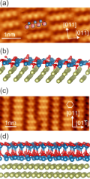
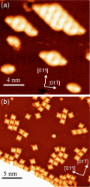
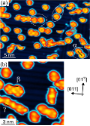
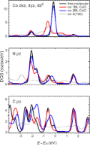
- between functionalized porphyrins has also been observed on metal surfaces [27]. Discussion To gain insight into the reasons behind the experimental findings, DFT calculations were performed. Both, 1 and 2 were structurally relaxed on the 1BL CoO film in order to find the adsorption geometry. The lowest
- orthogonal configuration towards a 45° tilting angle. This indicated an energy gain upon flattening of the molecule and allows for an interaction between the cyano group and the substrate. Consequently, we tested the relaxation of 2 in several attempts starting with configurations where the phenyl rings were




A wideband cryogenic microwave low-noise amplifier
Beilstein J. Nanotechnol. 2020, 11, 1484–1491, doi:10.3762/bjnano.11.131
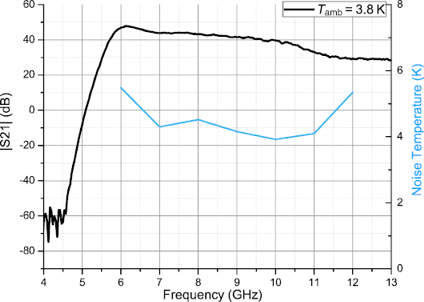
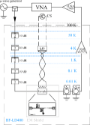
- amplifier was designed and characterized in a cryogen-free dilution refrigerator at the 3.8 K temperature stage. The obtained power dissipation of the amplifier is below 20 mW. In the frequency range from 6 to 12 GHz its gain exceeds 30 dB. The equivalent noise temperature of the amplifier is below 6 K for
- gain (G). The superconducting qubit measurement setup requires particular low-noise amplifiers applicable for cryogenic temperatures. An important point is that cryogenic low-noise amplifiers (cLNAs) are wideband noise sources itself. In the superconducting qubit experimental setup the noise generated
- heterojunction bipolar technology (HBT). Recently, it has been shown that cryogenic amplifiers based on SiGe HBT [16][17][18] can provide low noise levels and high gain at 4 K. They are suitable for superconducting qubit readout [25][26] and radio astronomy systems [12][14]. In order to obtain high gain values




Protruding hydrogen atoms as markers for the molecular orientation of a metallocene
Beilstein J. Nanotechnol. 2020, 11, 1432–1438, doi:10.3762/bjnano.11.127
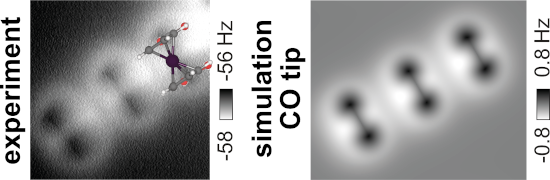
- of small organic 3D molecules from NC-AFM data [10]. Adapting these approaches to a broad range of 3D molecules bears the strong potential not only to gain insight into the on-surface adsorption properties of molecules, but also to unravel the intramolecular geometry. A prototypical class of
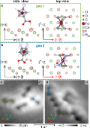


![[Graphic 10]](/bjnano/content/inline/2190-4286-11-127-i10.svg?max-width=637&scale=1.18182) row of FDCA molecules in geo 2. (a–c) Constant-height frequency-shi...
row of FDCA molecules in geo 2. (a–c) Constant-height frequency-shi...
Cryogenic low-noise amplifiers for measurements with superconducting detectors
Beilstein J. Nanotechnol. 2020, 11, 1316–1320, doi:10.3762/bjnano.11.115
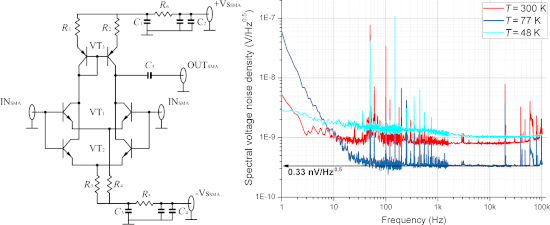
- bipolar junction transistor technology. The amplifiers show high gain values of more than 60 dB at 300, 77, and 48 K. The minimum voltage noise spectral density was achieved at 77 K and corresponded to 0.33 nV/Hz0.5 with a flicker noise of 20 Hz. The maximum voltage gain was 70 dB at 77 K for a frequency
- density of 0.33 nV/ with a 1/f flicker noise corner frequency of 0.1 Hz but there is no information about gain and noise performance at 77 K. Moreover, it would be useful to compare room-temperature results of BJT-based differential amplifiers with results obtained at 77 K. Also, modern cryogenic
- amplifier design is simple to modify, fast to implement, and requires only a proper selection of components. The amplifiers show a high gain value of 70 dB for a frequency range from DC to 17 kHz, a low voltage noise spectral density of 0.33 nV/ and low flicker noise at 77 K. The total power consumption for


Hybridization vs decoupling: influence of an h-BN interlayer on the physical properties of a lander-type molecule on Ni(111)
Beilstein J. Nanotechnol. 2020, 11, 1168–1177, doi:10.3762/bjnano.11.101
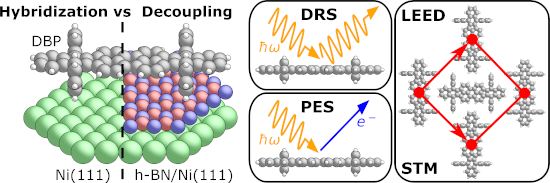
- matrix. However, we can exclude higher-order commensurate (HOC) and point-on-line (POL) coincidences with a substrate order lower than four. By tendency, the higher the substrate order, the lower is the epitaxial energy gain and therefore the probability of the coincidence [35][36]. In the case of highly





