Search results
Search for "high-speed" in Full Text gives 122 result(s) in Beilstein Journal of Nanotechnology.
Superluminescence from an optically pumped molecular tunneling junction by injection of plasmon induced hot electrons
Beilstein J. Nanotechnol. 2015, 6, 1100–1106, doi:10.3762/bjnano.6.111
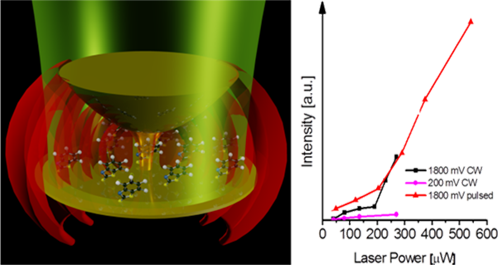
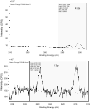
- applications. Furthermore, this concept represents the basis for novel ultra-small, fast, optically and electronically switchable devices which could find applications in high-speed signal processing and optical telecommunications. Sequences of tip-enhanced spectra (a,b) (Raman lines on luminescence background


High-frequency multimodal atomic force microscopy
Beilstein J. Nanotechnol. 2014, 5, 2459–2467, doi:10.3762/bjnano.5.255
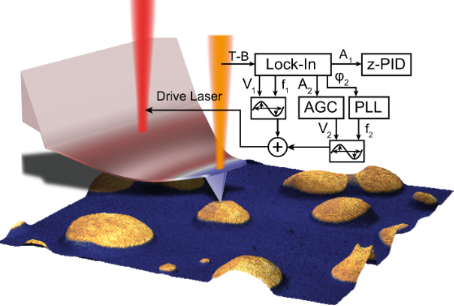
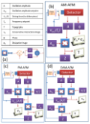
- has been recently demonstrated as a powerful technique for quickly obtaining information about the mechanical properties of a sample. Combining this development with recent gains in imaging speed through small cantilevers holds the promise of a convenient, high-speed method for obtaining nanoscale


Aquatic versus terrestrial attachment: Water makes a difference
Beilstein J. Nanotechnol. 2014, 5, 2424–2439, doi:10.3762/bjnano.5.252
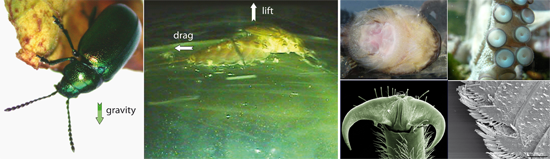
- , balitorid loaches and loricariid catfishes also have specialized suction discs, which help them to stay in place in the high-speed currents in stream environments [62][63][64]. Some gobies are even able to climb waterfalls by using a pelvic fin derived suction disc [63][65]. Moreover, lampreys are able to


High speed e-beam lithography for gold nanoarray fabrication and use in nanotechnology
Beilstein J. Nanotechnol. 2014, 5, 1918–1925, doi:10.3762/bjnano.5.202
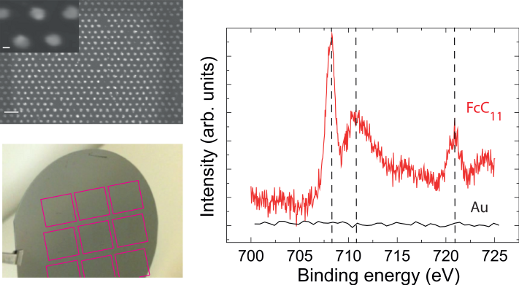
- ; high-speed e-beam lithography; molecular electronics; nanoarray; self-assembled monolayers; XPS; Introduction Well-ordered arrays of nanoparticles are already showing exciting applications in nanotechnology, including materials science [1][2][3][4][5], electronics [6][7][8][9][10], biology [11][12][13
- covalent bond is one of the most promising methods for low-cost and high speed fabrication of such gold nanoarrays [18]. However, to keep the versatility, well positioning and reliable nanoarray fabrication offered by e-beam lithography, another way is to notice that high-speed e-beam writing can be
- specifically developed for such nanoarray fabrication. Such high-speed e-beam technique called “dot-on-the-fly” (DOTF) has been previously developed for 25 nm diameter periodic metal patterns fabrication [19] and more recently for making 14 nm diameter holes for thermoelectricity application [20]. DOTF


A sonochemical approach to the direct surface functionalization of superparamagnetic iron oxide nanoparticles with (3-aminopropyl)triethoxysilane
Beilstein J. Nanotechnol. 2014, 5, 1472–1476, doi:10.3762/bjnano.5.160
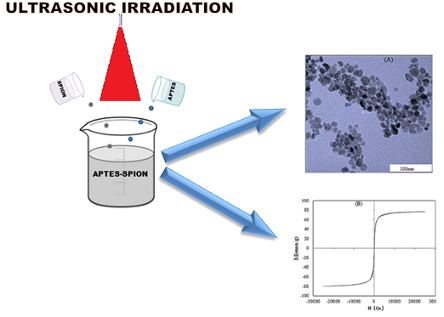
- microjets with huge pressure and high speed are produced, which are transferred into the liquid solution, thereby creating a mechanical stirring effect [20]. As demonstrated in Scheme 1, these unique conditions generated from the sonochemical environment are harnessed to produce a facile and rapid


Sublattice asymmetry of impurity doping in graphene: A review
Beilstein J. Nanotechnol. 2014, 5, 1210–1217, doi:10.3762/bjnano.5.133
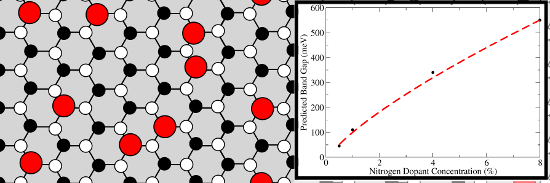
- Introduction With its excellent transport properties and low dimensionality, graphene, an atomically thin layer of Carbon atoms bonded together in a hexagonal lattice, initially seems a strong candidate for use in many future commercial applications such as ultra high-speed transistors, integrated circuits and


Electron-beam induced deposition and autocatalytic decomposition of Co(CO)3NO
Beilstein J. Nanotechnol. 2014, 5, 1175–1185, doi:10.3762/bjnano.5.129
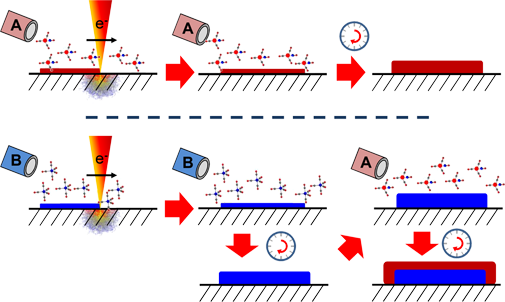
- keV and a current of 400 pA. The lithographic processes were controlled through a custom-developed software based on LabVIEW 8.6 (National Instruments) and a high-speed DAC PCIe-card (M2i.6021-exp, Spectrum GmbH, Germany). SEM images were acquired with SmartSEM (Zeiss) and are shown with minor




The study of surface wetting, nanobubbles and boundary slip with an applied voltage: A review
Beilstein J. Nanotechnol. 2014, 5, 1042–1065, doi:10.3762/bjnano.5.117
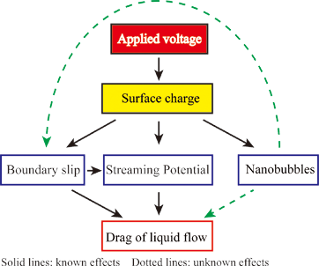
- function generator (33120A, HP). Both DC voltage and AC voltage were applied. The AC voltage was in square wave, and the frequency was varied from 0.5 to 104 Hz. A high-speed camera (FS100, Canon) with 1152 × 864 pixels was used to observe the shape of the droplet, and the image was recorded. For each










Insect attachment on crystalline bioinspired wax surfaces formed by alkanes of varying chain lengths
Beilstein J. Nanotechnol. 2014, 5, 1031–1041, doi:10.3762/bjnano.5.116
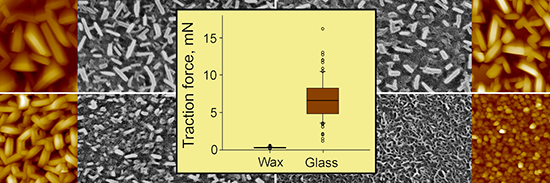
- -distilled water on wax surfaces were performed by using a high-speed optical contact angle measuring device OCAH 200 (DataPhysics Instruments GmbH, Filderstadt, Germany) according to the needle-in sessile drop method. For a detailed description of the method, see [50]. We applied 1 μL drops and ellipse


Direct observation of microcavitation in underwater adhesion of mushroom-shaped adhesive microstructure
Beilstein J. Nanotechnol. 2014, 5, 903–909, doi:10.3762/bjnano.5.103
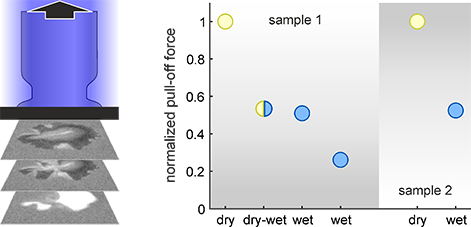
- than by cavitation. These results obtained due to the high-speed visualisation of the contact behavior at nanoscale-confined interfaces allow for a microscopic understanding of the underwater adhesion of MSAMSs and may aid in further development of artificial adhesive microstructures for applications
- make each individual MSAMS to act as a passive suction device [19]. In the present study, we report on underwater adhesion experiments with individual MSAMSs. The visualisation of the MSAMS interface using the combination of high speed video recording and reflection contrast microscopy under applied
- epi-illumination mode and the complete spectrum of the light source HXP 120 (Carl Zeiss MicroImaging GmbH) was used. Detachment behavior was recorded with an attached high-speed camera Photron Fastcam SA1.1 (VKT Video Kommunikation GmbH, Pfullingen, Germany) either with 54,000 frames/s or with 100,000


The optimal shape of elastomer mushroom-like fibers for high and robust adhesion
Beilstein J. Nanotechnol. 2014, 5, 630–638, doi:10.3762/bjnano.5.74
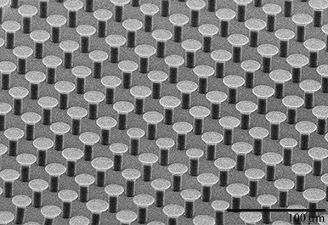
- al. [32]. Both Heepe et al. and Varenberg et al. presented experimental results with mushroom-like fibers by using high speed imaging and showed that the detachment of the fiber was initiated with an internal crack. Similarly, Murphy et al. observed under tensile loading of polyurethane mushroom-like



High-resolution electrical and chemical characterization of nm-scale organic and inorganic devices
Beilstein J. Nanotechnol. 2013, 4, 318–319, doi:10.3762/bjnano.4.35

- standards and comparative metrology. The development of high-performance devices (high speed and density, low consumption) is not the only objective of the electronic industry. The need for low-cost devices processed industrially on flexible and light substrates over very large surfaces has led to the
Thermal noise limit for ultra-high vacuum noncontact atomic force microscopy
Beilstein J. Nanotechnol. 2013, 4, 32–44, doi:10.3762/bjnano.4.4
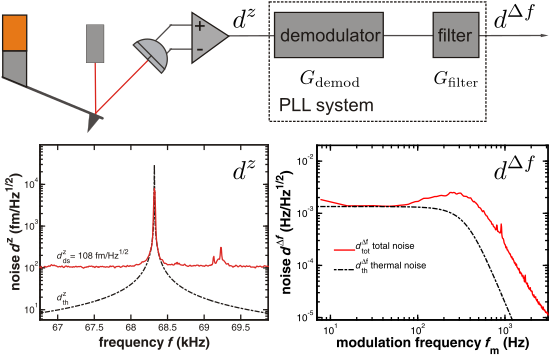
- , however, consider that the assumed oscillation amplitude of 5 nm may be at the limit of stable operation [15], specifically for the soft cantilever D 5. In conclusion, the high-frequency and relatively stiff cantilever AL 3 represents an excellent choice for high-speed measurements with small amplitudes


![[Graphic 53]](/bjnano/content/inline/2190-4286-4-4-i64.png?max-width=637&scale=1.18182) =
= ![[Graphic 32]](/bjnano/content/inline/2190-4286-4-4-i43.png?max-width=637&scale=1.18182) f...
f...


![[Graphic 56]](/bjnano/content/inline/2190-4286-4-4-i67.png?max-width=637&scale=1.18182) using three diff...
using three diff...

Advanced atomic force microscopy techniques
Beilstein J. Nanotechnol. 2012, 3, 893–894, doi:10.3762/bjnano.3.99
- amazing in how many ways the shaking of a simple cantilever can improve our knowledge about the tip–sample interaction. Another direction is high-speed atomic force microscopy, which is one of the eminent challenges that need to be solved in order to allow the in situ observation of biological processes
Large-scale analysis of high-speed atomic force microscopy data sets using adaptive image processing
Beilstein J. Nanotechnol. 2012, 3, 747–758, doi:10.3762/bjnano.3.84
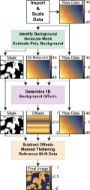
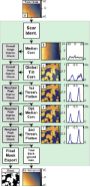
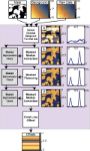
- , Massachusetts Institute of Technology, Cambridge, MA 02139, United States of America 10.3762/bjnano.3.84 Abstract Modern high-speed atomic force microscopes generate significant quantities of data in a short amount of time. Each image in the sequence has to be processed quickly and accurately in order to
- applicable to all channels of AFM data, and can process images in seconds. Keywords: adaptive algorithm; artifact correction; atomic force microscopy; high-speed atomic force microscope; image processing; Introduction Atomic force microscopes (AFMs) are a useful tool for investigating nanoscale surfaces
- a function of time or treatment [18][19][20][21][22][23][24]. High-speed AFM (HS-AFM) focuses on reducing imaging time to track faster dynamics than can be observed with existing instruments [25][26][27][28][29]. Where conventional AFM generates only a few images, HS-AFM generates hundreds of images




Focused electron beam induced deposition: A perspective
Beilstein J. Nanotechnol. 2012, 3, 597–619, doi:10.3762/bjnano.3.70


Drive-amplitude-modulation atomic force microscopy: From vacuum to liquids
Beilstein J. Nanotechnol. 2012, 3, 336–344, doi:10.3762/bjnano.3.38
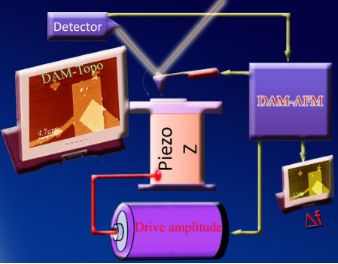
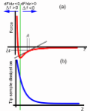
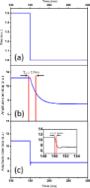
- at smaller tip–sample distances than the conventional modes. Finally, since DAM reduces the settling time, it may be useful for high-speed scanning in air under ambient conditions. The interaction versus distance. (a) Conservative force versus distance interaction between an AFM tip and a surface. As


Forming nanoparticles of water-soluble ionic molecules and embedding them into polymer and glass substrates
Beilstein J. Nanotechnol. 2012, 3, 267–276, doi:10.3762/bjnano.3.30
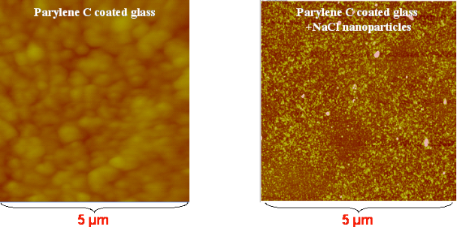
- atm) and temperature (>500 K) developed during the collapse of the acoustic bubble. The after effect of this collapse near a solid surface is the formation of high-speed microjets and shock waves in the liquid, directed towards the solid surface. These microjets throw the just-formed nanoparticles
- toward the substrate at such a high speed (>500 m/s) that it leads to the strong adherence of the NPs to the surface without the need for any binding agents [11][12]. In the present work we report for the first time on a novel general method for the preparation of water-soluble NPs of ionic salts. The
- that the presence of a solid surface increases the nucleation rate [23]. The generated high-speed jets of the liquid, formed after the collapse of the bubble, throw the formed nanoparticles at high speed toward the glass slides. The proposed mechanism for the sonochemical deposition of inorganic




Direct-write polymer nanolithography in ultra-high vacuum
Beilstein J. Nanotechnol. 2012, 3, 52–56, doi:10.3762/bjnano.3.6
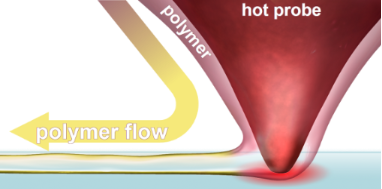
- the relatively high speed of 20 µm/s, only a single monolayer is deposited as shown by the line average to the right of the image. Lower speeds deposit thicker polymer lines as shown by line averages in (c). The polymer deposit heights and widths of PDDT deposited onto Si substrate (non-UHV prepared


Simple theoretical analysis of the photoemission from quantum confined effective mass superlattices of optoelectronic materials
Beilstein J. Nanotechnol. 2011, 2, 339–362, doi:10.3762/bjnano.2.40
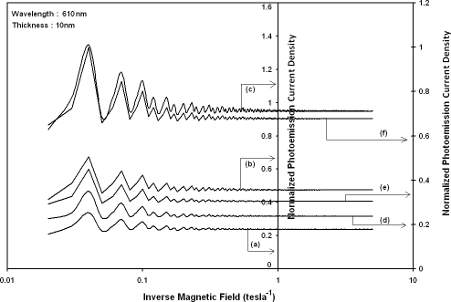
- ], etc. Among the III–V SLs, the GaAs/Ga1−xAlxAs SL has been extensively investigated, in which the GaAs layers form the quantum wells and Ga1−xAl1−xAs layers form the potential barriers. The III–V SLs are being extensively used in the realization of high speed optoelectronic devices [10]. The II–VI [11


Functional morphology, biomechanics and biomimetic potential of stem–branch connections in Dracaena reflexa and Freycinetia insignis
Beilstein J. Nanotechnol. 2011, 2, 173–185, doi:10.3762/bjnano.2.21
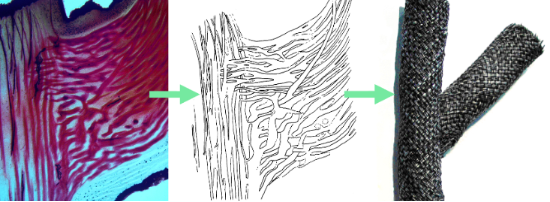
- tears off the lateral branch from the main axis (due to the upward movement of the cross-head, the branch–stem-junctions were oriented ‘upside-down’ in the testing device, see Figure 9). The speed of the cross-head was set to 100 mm/min. The experiments were recorded with a high speed camera at 1000 fps




Precursor concentration and temperature controlled formation of polyvinyl alcohol-capped CdSe-quantum dots
Beilstein J. Nanotechnol. 2010, 1, 119–127, doi:10.3762/bjnano.1.14
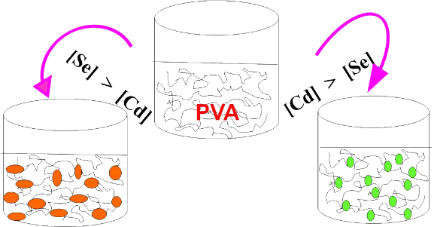
- the sample on a polished silicon wafer. The presence of PVA in the aqueous CdSe sols interfered in TEM and AFM imaging. Therefore, CdSe nanoparticles were separated from the aqueous sols using a high-speed centrifuge, washed and re-dispersed in water using an ultrasonicator before preparing samples