


Search results
Search for "hybrid materials" in Full Text gives 108 result(s) in Beilstein Journal of Nanotechnology.
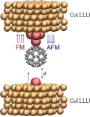
Strong spin-filtering and spin-valve effects in a molecular V–C60–V contact
Beilstein J. Nanotechnol. 2012, 3, 589–596, doi:10.3762/bjnano.3.69
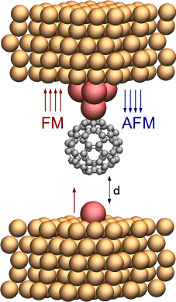
- Mohammad Koleini Mads Brandbyge Hybrid Materials Interfaces Group, Faculty of Production Engineering and Bremen Center for Computational Materials Science, University of Bremen, 28359 Bremen, Germany DTU Nanotech, Department of Micro and Nanotechnology, Technical University of Denmark, Ørsteds

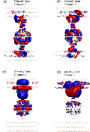


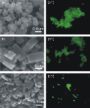
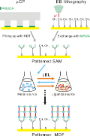
The oriented and patterned growth of fluorescent metal–organic frameworks onto functionalized surfaces
Beilstein J. Nanotechnol. 2012, 3, 570–578, doi:10.3762/bjnano.3.66
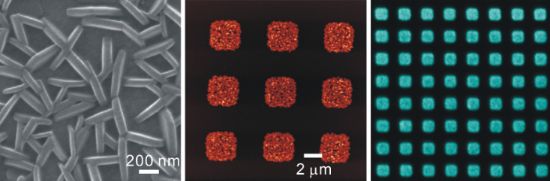
- -assembled monolayer; surface-attached metal–organic framework; Introduction Metal–organic frameworks (MOFs) are a fascinating class of organic–inorganic hybrid materials with nanometer-sized pores. The size and density of the pores renders these materials with extraordinary large free volumes and inner





Surface functionalization of aluminosilicate nanotubes with organic molecules
Beilstein J. Nanotechnol. 2012, 3, 82–100, doi:10.3762/bjnano.3.10
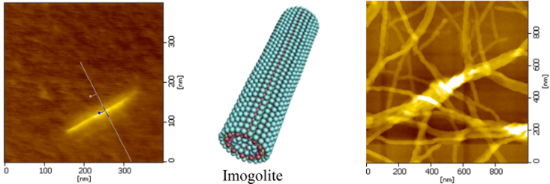
- , and a broad range of fluorescence frequencies in the entire UV–visible and the near-IR spectrum, through molecular engineering [57][58][59]. For preparation of terthiophene/imogolite hybrid materials, imogolite solution was added dropwise to a THF solution of 2-(5’’-hexyl-2,2’:5’,2’’-terthiophen-5-yl
- terthiophene/imogolite hybrid materials. Reprinted with permission from W. O. Yah et al., Bull. Chem. Soc. Jpn. 2011, 84, 893–902 [60]. © 2011, The Chemical Society of Japan. FTIR spectra (a) of HT3P/imogolite hybrid, HT3P, and imogolite, (b) of HT3OP/imogolite hybrid, HT3OP, and imogolite. Reprinted with


Approaches to nanostructure control and functionalizations of polymer@silica hybrid nanograss generated by biomimetic silica mineralization on a self-assembled polyamine layer
Beilstein J. Nanotechnol. 2011, 2, 760–773, doi:10.3762/bjnano.2.84
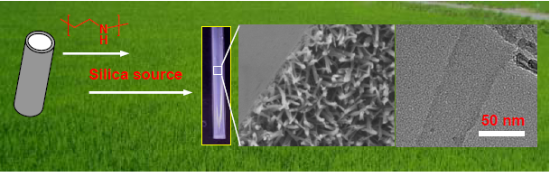
- and morphology of LPEI@silica hybrid materials in solution [29][30]. Here we found that the surface nanostructure of LPEI@silica hybrid nanograss can also be controlled by tuning the LPEI concentrations or adding methanol for LPEI crystalline self-assembly. Figure 5 shows the SEM images of LPEI@silica
- , and a titania component into the LPEI@silica hybrid nanograss, leading to the facile creation of a functional nanosurface. This novel functionalization concept could be generally applied to other polyamine@silica hybrid materials. The silica@titania composite nanograss has been demonstrated to be a


Ceria/silicon carbide core–shell materials prepared by miniemulsion technique
Beilstein J. Nanotechnol. 2011, 2, 638–644, doi:10.3762/bjnano.2.67
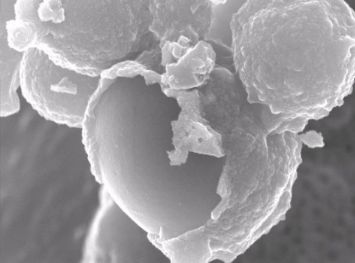
- ; TPO catalytic; Introduction In recent years miniemulsions have been studied intensively [1][2][3]. Polymeric nanoparticles [1][2] from homo- or copolymers [3] as well as hybrid materials [3][4] such as magnetic [5][6][7][8] or silica/polymer nanoparticles [9][10] have been synthesized by this
- resulting PCS spheres are either pyrolyzed instantaneously or functionalized before pyrolysis. The latter results in a core–shell-structured hybrid material. A promising method for the synthesis of core–shell hybrid materials in general was described by Landfester et al. [36]. They created surface
- shell and were converted to silicon(oxy)carbide by pyrolysis under an inert atmosphere. The resulting hybrid materials were studied with scanning electron microscopy and elemental mapping, which verified the core–shell design of this new material. Finally, it was shown that these materials are suitable


Inorganic–organic hybrid materials through post-synthesis modification: Impact of the treatment with azides on the mesopore structure
Beilstein J. Nanotechnol. 2011, 2, 486–498, doi:10.3762/bjnano.2.52
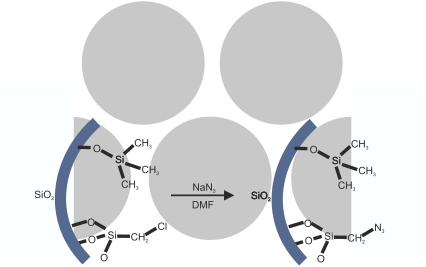
- solvent (N,N-dimethylformamide, 1,1,3,3-tetramethylurea, 1,3-dimethyl-2-imidazolidinone) or a protic solvent that can form hydrogen bonds, such as water, was used. Keywords: inorganic–organic hybrid materials; mesoporous materials; nucleophilic substitution; silica; sol–gel chemistry; Introduction
- Inorganic–organic hybrid materials with tailored porosity on several length scales are of interest for a variety of applications, such as separation, adsorption, catalysis, energy storage, etc., due to the benefits arising from each pore size regime, e.g., rapid mass transport through macropores combined


Novel acridone-modified MCM-41 type silica: Synthesis, characterization and fluorescence tuning
Beilstein J. Nanotechnol. 2011, 2, 284–292, doi:10.3762/bjnano.2.33
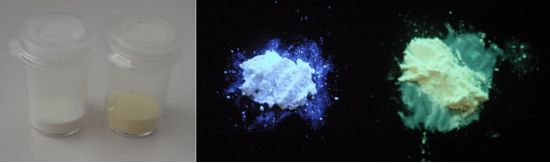
- -tailored sol–gel precursors prior to implementing them into the solid, thus increasing the depth of information compared to the data solely drawn from solid state measurements. Focusing on the synthesis of novel inorganic–organic hybrid materials, we also investigated new ways to produce trialkoxysilanes
- well as the textural properties of the hybrid materials were determined at 77 K by a Quantachrome Autosorb 1 sorption analyzer. Before analysis, the samples were activated at 120 °C overnight in the vacuum and then the adsorption–desorption procedure was conducted by passing nitrogen into the sample


Twofold role of calcined hydrotalcites in the degradation of methyl parathion pesticide
Beilstein J. Nanotechnol. 2011, 2, 99–103, doi:10.3762/bjnano.2.11
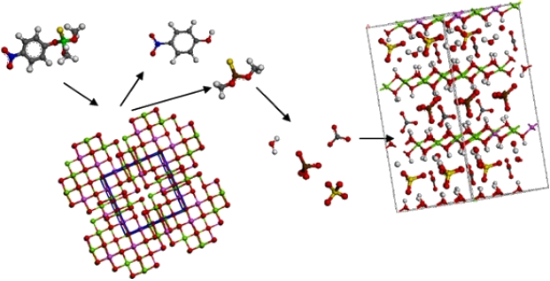
- organic anions to give hybrid materials, which have been recently studied as materials for drug delivery [22] or green pesticides [23]. As the basic properties of HTs depend on the metal composition and the M3+/(M3+ + M2+) ratio, [24][25][26], in this work we prepared HTs with different M2+ composition


Other Beilstein-Institut Open Science Activities



