Search results
Search for "irradiation" in Full Text gives 590 result(s) in Beilstein Journal of Nanotechnology. Showing first 200.
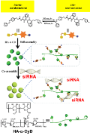
Nanoarchitectonics of photothermal materials to enhance the sensitivity of lateral flow assays
Beilstein J. Nanotechnol. 2023, 14, 988–1003, doi:10.3762/bjnano.14.82
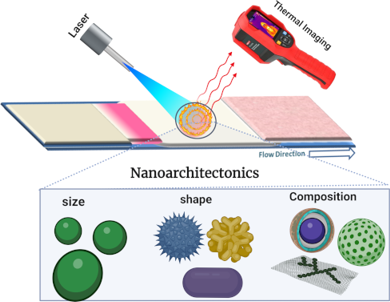
- analytes using LFAs. One of the promising strategies is to enhance the photothermal properties of nanomaterials to generate heat after light irradiation, followed by a temperature measurement to detect and quantify the analyte concentration. Recently, it has been observed that the nanoscale architecture of
- change [20][21]. Generally, photothermal nanomaterials are being used in cancer therapy, removal of bacterial biofilms, and sensing applications [22][23][24]. Photothermal nanomaterials produce heat in response to the irradiation of photons at a particular wavelength [23]. Similarly, when plasmonic
- technique to enhance the sensitivity of LFAs. In LFAs, the nanomaterials are deposited in the test zone along with the analyte to be determined. Upon laser irradiation, thermal energy is generated. The thermal output can be quantified using infrared thermal cameras or thermometers [25]. The quantity of heat


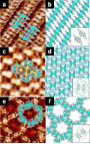
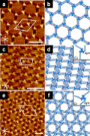
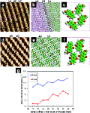
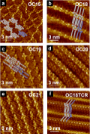
Two-dimensional molecular networks at the solid/liquid interface and the role of alkyl chains in their building blocks
Beilstein J. Nanotechnol. 2023, 14, 872–892, doi:10.3762/bjnano.14.72
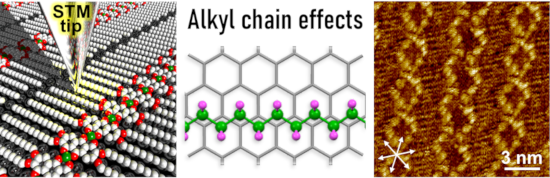
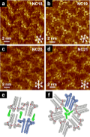
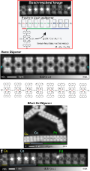
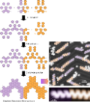
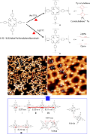
- resolution. (ii) Post-reaction is available by external stimuli such as the addition of metal ions for metal coordination, light irradiation for photoreaction, and post-blending of other molecules. (iii) The dynamic process of the 2D structural change (caused by the external stimuli) can be followed in situ









Ultralow-energy amorphization of contaminated silicon samples investigated by molecular dynamics
Beilstein J. Nanotechnol. 2023, 14, 834–849, doi:10.3762/bjnano.14.68
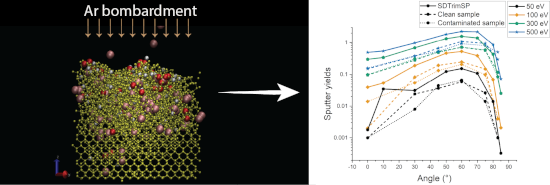
- . Furthermore, several domains of nanotechnology and industry use nanoscaled samples that need to be controlled to an extreme level of precision. To reduce the irradiation-induced damage and to limit the interactions of the ions with the sample, low-energy ion beams are used because of their low implantation
- for some significant amorphization (maximal at angles of 60–75°). Higher impact energies will induce deeper damage as well as increased sputtering yields, hence the depth of the crater will increase with impact energy. The methodologies to characterize irradiation-induced sample modifications and
- amorphous region”, where 0.89 < µ < 0.94. The damage induced by ion Ar irradiation has not yet completely disturbed the local order. This region is always located between the crystalline and amorphous slabs. In the crystalline region, the sample is intact, and only thermal vibrations occurs. The amorphous


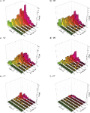


Silver-based SERS substrates fabricated using a 3D printed microfluidic device
Beilstein J. Nanotechnol. 2023, 14, 793–803, doi:10.3762/bjnano.14.65
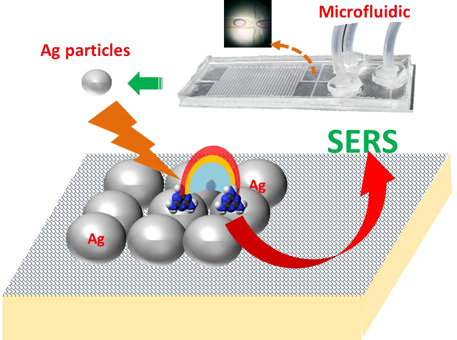
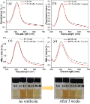
- NPs. The SEM image of PS@Ag reveals the presence of nanoscale gaps between the Ag NPs, which act as hot spots with a high electric field intensity when exposed to laser irradiation (Figure S10c). To confirm the distribution of chemical elements on the SERS substrate, energy-dispersive X-ray



Carboxylic acids and light interact to affect nanoceria stability and dissolution in acidic aqueous environments
Beilstein J. Nanotechnol. 2023, 14, 762–780, doi:10.3762/bjnano.14.63
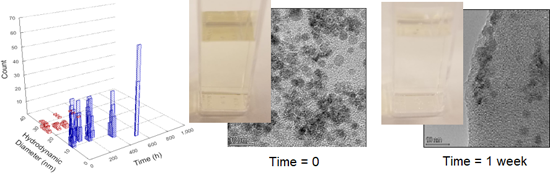
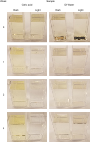
- biological systems. Ceria has been considered a possible UV filter in sunscreens [2][42]. Oxygen defects in the crystal lattice of ceria can presumably be altered by UV irradiation causing a redox switching of the cerium atoms between Ce3+ and Ce4+. This could explain the observance of a blue shift of the
- absorption edge in the UVA region [43]. Studying the effects of UV irradiation on nanoceria would be informative for environmental applications. In biological systems, colloidal nanoceria dispersions were found to be non-toxic to fibroblasts and were capable of preventing damage from UV irradiation [44
- ]. When exposed to artificial sunlight, ceria nanoparticles produced hydroxy radicals and induced lipid peroxidation of the gills of cardinal tetra, a native species of the Rio Negro region [45]. The citric acid coating can also be altered by UV irradiation. Photolysis of citric acid under a Hg lamp
Nanomaterials for photocatalysis and applications in environmental remediation and renewable energy
Beilstein J. Nanotechnol. 2023, 14, 722–724, doi:10.3762/bjnano.14.58

- appropriate for treating pollutants, even in atmospheric conditions [9][10][11]. Moreover, the photocatalysis method is also a potential solution for environmental remediation, carbon emission reduction, and renewable energy production [12][13][14]. Combining photocatalysts and sunlight irradiation is a

Metal-organic framework-based nanomaterials as opto-electrochemical sensors for the detection of antibiotics and hormones: A review
Beilstein J. Nanotechnol. 2023, 14, 631–673, doi:10.3762/bjnano.14.52
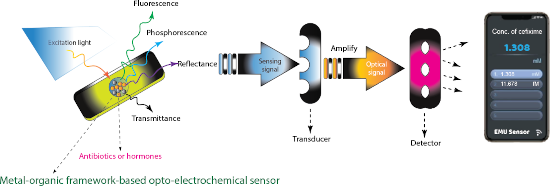
- fluorescence measurement error. It has gained widespread use in luminescent sensing in recent years as a significant non-irradiation energy conversion technology. IFE is observed when the analyte (acceptor) absorbs the fluorophore’s (donor) excitation or emission light. The IFE-based fluorescence technique is


Titania nanoparticles for photocatalytic degradation of ethanol under simulated solar light
Beilstein J. Nanotechnol. 2023, 14, 616–630, doi:10.3762/bjnano.14.51
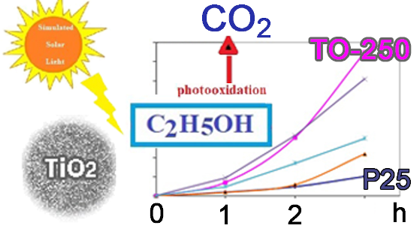
- nanoparticles with dimensions of 40–80 nm, whose number increases with increasing the working pressure. The photocatalytic properties have been investigated regarding the photodegradation of ethanol vapors in Ar with 0.3% O2 using P25 powder as reference under simulated solar light. During the irradiation H2
- -doped materials. It is inexpensive, non-toxic, stable in different solvents and under irradiation, and it can be doped with different elements according to specific necessities. TiO2 can crystalize in three different crystallographic structures, namely anatase, rutile, and brookite [29][30]. The
- compounds. For example, the hydroxyl radical (•OH) is a strong oxidizer. The generation of (•OH) over the samples under simulated solar light irradiation (AM 1.5) has been evaluated according to the PL emission from 451 nm, attributable to the presence of umbelliferone, a derivative of coumarin resulting




Conjugated photothermal materials and structure design for solar steam generation
Beilstein J. Nanotechnol. 2023, 14, 454–466, doi:10.3762/bjnano.14.36
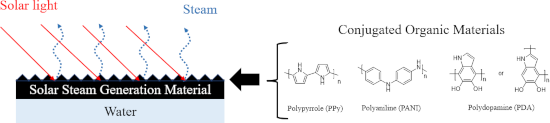
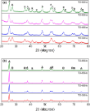
- first one is sunlight absorption. PTMs must be able to efficiently absorb light in order to utilize the irradiation energy. The second one is the photothermal conversion efficiency. Absorbed light needs to be converted to heat energy rather than other forms of energy loss. The last one is the efficiency
- the spectral range of terrestrial solar irradiation (Figure 6b and Figure 6c). Single-layer PPy nanosheets transmit 0.2–0.3% of light, while two or more layers of the PPy nanosheets exhibit a very low transmittance over the entire solar spectrum. It is interesting to note that the light absorption
- irradiation. (b) The Jablonski diagram representing the photophysical processes of conjugated molecules including the photothermal effect. Figure 3 was reproduced from [5] (© 2021 H. J. Kim et al., published by Wiley-VCH GmbH, distributed under the terms of the Creative Commons Attribution NonCommercial 4.0


Molecular nanoarchitectonics: unification of nanotechnology and molecular/materials science
Beilstein J. Nanotechnol. 2023, 14, 434–453, doi:10.3762/bjnano.14.35
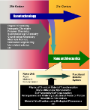
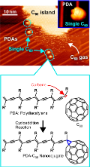
- molecules by UV light irradiation. In the process, a cycloaddition reaction occurred between one nearby C60 molecule adsorbed on the surface and the most frontal part of the polydiacetylene molecular skeleton. As a result, nanojunctions were created. Scanning tunneling microscopy proved that the C60





Plasmonic nanotechnology for photothermal applications – an evaluation
Beilstein J. Nanotechnol. 2023, 14, 380–419, doi:10.3762/bjnano.14.33
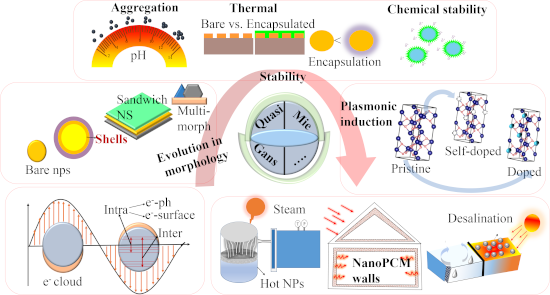
- ]. Interestingly, such small nanoparticles (typically smaller than 5 nm) have been found to undergo a much higher increase in temperature than larger nanoparticles (by more than five orders of magnitude) on irradiation with a single photon due to a much more efficient energy conversion [69][70]. Inferences from
- water vaporisation can be calculated from Δm is the water mass loss during irradiation, is the phase change enthalpy of water to vapour, M is the molar mass of water, I is the solar power intensity at the surface of the sample, S is the irradiated area of the water surface, and τ is the irradiation
- [83]. Plasmonic nanobubbles (formed when the irradiation fluence exceeded a threshold value), although being excellent tunable scatterers themselves, did not result in thermal phenomena such as heating and only led to mechanical phenomena such as cavitation effects. Explosive boiling is of explicit




Polymer nanoparticles from low-energy nanoemulsions for biomedical applications
Beilstein J. Nanotechnol. 2023, 14, 339–350, doi:10.3762/bjnano.14.29
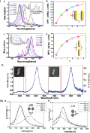
- were functionalized with the monoclonal antibody F19 via carbodiimide conjugation. This approach enabled the use of ethyl cellulose nanoparticles in bioanalytical applications with the aim to detect Yersinia pestis from direct agglutination tests. Irradiation of nanoparticles under UV light favored




Bismuth-based nanostructured photocatalysts for the remediation of antibiotics and organic dyes
Beilstein J. Nanotechnol. 2023, 14, 291–321, doi:10.3762/bjnano.14.26
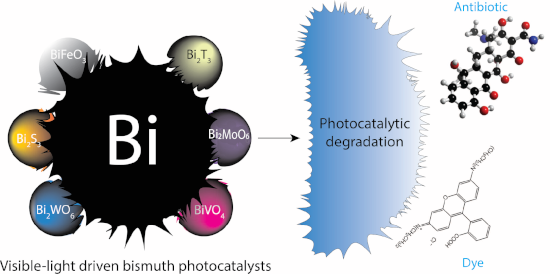
- ] prepared 1-D Bi2WO6 nanofibers with a flower-like morphology by using a hydrothermal process for the degradation of rhodamine B dye. Under visible-light irradiation, the 1-D nanofiber photocatalyst reached a degradation rate of 78.2% after 50 min. Because of their extraordinarily small size, 0-D
- dye degradation after 180 min under visible-light irradiation. 2-D nanostructured materials are thought to function more effectively in photocatalytic processes than 3-D nanostructured photocatalysts [88][102][106][124]. This is because photogenerated carriers in a 2-D structure can rise from a deeper
- pure Bi2WO6 (82.8%), the dopant significantly increased the tetracycline-degrading activity, which reached 94.6% within 1 h of visible light irradiation. Additionally, Irfan et al. [148] used a bi-solvent sol–gel technique to synthesise porous bismuth ferrite nanostructures with various morphological


Recent progress in cancer cell membrane-based nanoparticles for biomedical applications
Beilstein J. Nanotechnol. 2023, 14, 262–279, doi:10.3762/bjnano.14.24
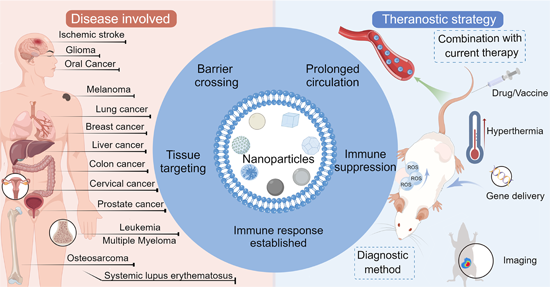
- anticancer effects [76]. After QT was delivered to tumor tissue by the active targeting ability of the membrane, the sensitivity to radiotherapy was effectively improved, and a strong anticancer effect was exerted under X-ray irradiation [76]. Gong et al. designed a pH-responsive multifunctional biomimetic
- nanoparticle with radiosensitizing activity, which showed better biocompatibility and tumor targeting after coating with a cancer cell membrane [77]. Volume and weight of tumors in mice treated with biomimetic NPs and irradiation were significantly reduced compared to those of mice treated with bare NPs. The
- laser irradiation and generate ROS, which synergizes with the subsequent release of CQ for anticancer effects. In the early stages of intervention with nanoagents and laser irradiation, both bare NPs and cancer cell membrane-encapsulated NPs exhibited good tumor suppressive effects. However, the tumors


Cyclodextrins as eminent constituents in nanoarchitectonics for drug delivery systems
Beilstein J. Nanotechnol. 2023, 14, 218–232, doi:10.3762/bjnano.14.21
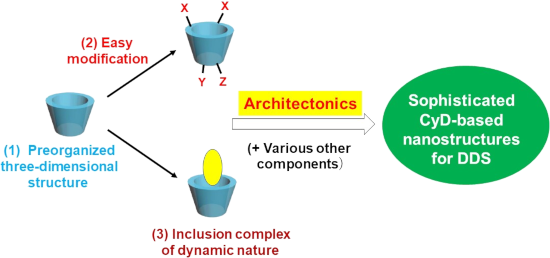
- delivery of chemical drugs Light irradiation is an eminent stimulus for the on–off control of drug delivery since light can be strictly focused to target sites and irradiated only when necessary. These two factors facilitate the precise spatiotemporal control of the therapy and minimize undesired side
- nanoarchitectures through the isomerization of azobenzene Azobenzene isomerizes upon UV irradiation (around 300 nm) from the trans form to the cis form [47]. The reverse isomerization (from cis to trans) is accomplishable by light with longer wavelength (e.g., 400 nm). This isomerization is a notable structural
- units [48]. Prior to photoirradiation, azobenzene takes the trans form, and is included into the cavity of α-CyD to form nanoparticles. Upon irradiation with UV light, however, azobenzene isomerizes to the cis form, leading to the breakdown of the inclusion complex with α-CyD. Thus, the nanoparticles




Concentration-dependent photothermal conversion efficiency of gold nanoparticles under near-infrared laser and broadband irradiation
Beilstein J. Nanotechnol. 2023, 14, 205–217, doi:10.3762/bjnano.14.20
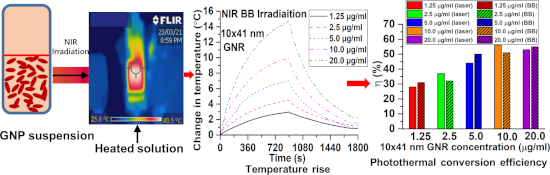
- Organisation, Sector-30C, Chandigarh-160030, India 10.3762/bjnano.14.20 Abstract The photothermal conversion efficiency of gold different nanoparticles (GNPs) in different concentrations (1.25–20 µg/mL) and at different irradiation intensities of near-infrared (NIR) broadband and NIR laser irradiation is
- evaluated. Results show that for a concentration of 20.0 µg/mL, 40 nm gold nanospheres, 25 × 47 nm gold nanorods (GNRs), and 10 × 41 nm GNRs show a 4–110% higher photothermal conversion efficiency under NIR broadband irradiation than under NIR laser irradiation. Broadband irradiation seems suitable to
- attain higher efficiencies for the nanoparticles whose absorption wavelength is different from the irradiation wavelength. Lower concentrations (1.25–5 µg/mL) of such nanoparticles show 2–3 times higher efficiency under NIR broadband irradiation. For GNRs of sizes 10 × 38 nm and 10 × 41 nm, the different




Structural, optical, and bioimaging characterization of carbon quantum dots solvothermally synthesized from o-phenylenediamine
Beilstein J. Nanotechnol. 2023, 14, 165–174, doi:10.3762/bjnano.14.17
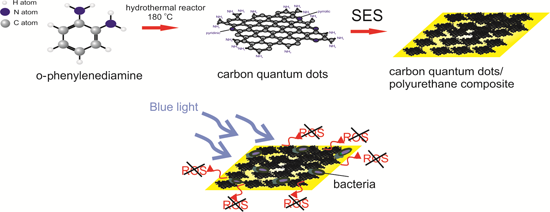
- and thermally stable, quasi-spherical, photoluminescent material with very good antibacterial and anticancer properties under visible light irradiation [9][10][11][12][13][14][15][16]. This material has very good biocompatibility, including low dark cytotoxicity and good cell proliferation
- . Photoluminescence of CQDs can be tuned, and quantum dots emit light in the range from blue to red. Some of them have very good prooxidant and antioxidant properties [14]. Under blue light irradiation, CQDs produce reactive oxygen species (ROS), which cause oxidative stress and further bacterial death [17][18][19
- (nitrogen, chlorine, and fluorine) affected structural properties and ROS production with or without visible light irradiation. In addition, we examined antibacterial and cytotoxic properties. An important issue is the preparation of CQDs and polymer-based composites and their possible antibacterial


Formation of nanoflowers: Au and Ni silicide cores surrounded by SiOx branches
Beilstein J. Nanotechnol. 2023, 14, 133–140, doi:10.3762/bjnano.14.14
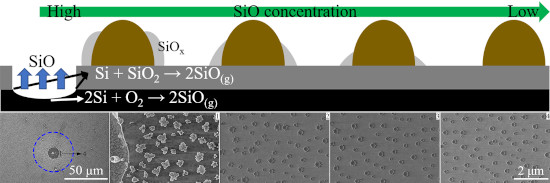
- atomic numbers show brighter contrasts. EDS measurements were performed to obtain the element distribution in the target areas. X-ray diffraction (XRD, Siemens D-5000) analyses were conducted in Bragg–Brentano mode using Cu Kα irradiation at 40 kV. The height distribution of the areas of interest was


Antimicrobial and mechanical properties of functionalized textile by nanoarchitectured photoinduced Ag@polymer coating
Beilstein J. Nanotechnol. 2023, 14, 95–109, doi:10.3762/bjnano.14.11
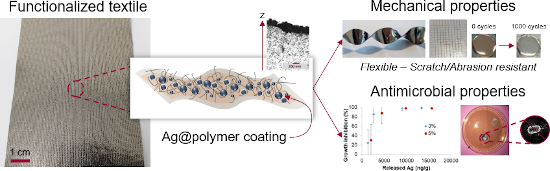
- Jessica Ple Marine Dabert Helene Lecoq Sophie Helle Lydie Ploux Lavinia Balan Université d’Orléans, Conditions Extrêmes Matériaux Haute Température et Irradiation CNRS UPR 3079, F-45000, Orléans, France Biomaterials Bioengineering INSERM/Université de Strasbourg U1121, Centre de Recherche en
- non-bonding doublets of oxygen atoms create steric hindrance and avoid their aggregation. The coating, colorless before irradiation, becomes progressively pale yellow, orange, then finally brown. Due to the strong increase of AgNPs, the measurement system reaches the detection limit (OD > 3) after 15
- formation and coalescence during UV exposure. When comparing the absorbance spectra for both coatings after 15 s irradiation, the full-widths at half maximum (FMWH) are calculated to be 134 and 131 nm, for Ag@PEG600DA and Ag@PEG600DA/PETIA, respectively (Figure 2c). Consequently, the nanoparticle size


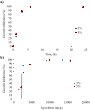

Observation of collective excitation of surface plasmon resonances in large Josephson junction arrays
Beilstein J. Nanotechnol. 2022, 13, 1578–1588, doi:10.3762/bjnano.13.132
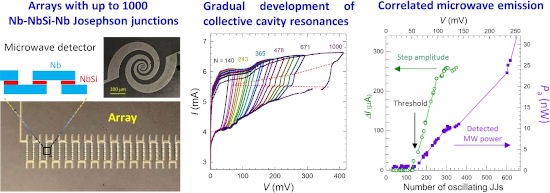
- maxima of Ic(H), see Figure 2c, and vanishes when Ic(H) → 0, see Figure 2d. The correlation between ΔI and Ic reflects the cavity mode–junction interaction. The mechanism for appearance of resonant steps is similar to that for the formation of Shapiro steps upon external microwave (MW) irradiation. The




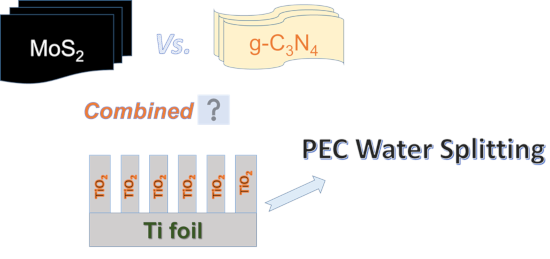
Photoelectrochemical water oxidation over TiO2 nanotubes modified with MoS2 and g-C3N4
Beilstein J. Nanotechnol. 2022, 13, 1541–1550, doi:10.3762/bjnano.13.127
- at 393 nm. This means that TNAs are only activated by near-UV irradiation. In contrast, the g-C3N4 sample shows an absorption edge at 464 nm. Meanwhile, MoS2 exhibits strong absorption from the UV region extending to the entire visible-light region. It can be seen that the loading of both MoS2 and g
- of the photo-response under visible-light irradiation at 0.63 V in Figure 6c. A current density of about 38.6 µA/cm2 was obtained with the g-C3N4/TNAs even after five cycles, which is nearly ten times higher than that of pure TNAs. The current density of MoS2/TNAs is even higher than that of g-C3N4
- incorporation of TNAs with MoS2 and g-C3N4 are all of type II. Type-II heterostructures promote the migration of h+ and e− under visible-light irradiation. Electrons can move from the conduction band (CB) of MoS2 or g-C3N4 to the CB of TNAs in MoS2/TNAs or g-C3N4/TNAs, respectively. In contrast, holes will


Non-stoichiometric magnetite as catalyst for the photocatalytic degradation of phenol and 2,6-dibromo-4-methylphenol – a new approach in water treatment
Beilstein J. Nanotechnol. 2022, 13, 1531–1540, doi:10.3762/bjnano.13.126
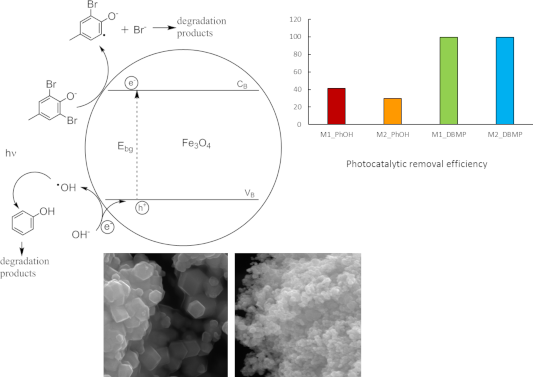
- irradiation was performed with a TQ150 excimer lamp (150 W, with forced water cooling to 25 °C, 47 W light energy flux of power density 4.7 mW·cm−2 measured by a Peak Tech digital lux meter) immersed in the continuously stirred reaction suspension. The photocatalytic reaction was performed for 60 min. During
- pHPZC for M1 (red) and M2 (blue). (a) Substrate decay rate of PhOH/O3 (blue), PhOH/M1 (orange), PhOH/M2 (green), and PhOH/photolysis (pink); (b) plot of ln(Ct/C0) vs irradiation time for phenol; (c) substrate decay rate of DBMP/O3 (yellow), DBMP/M1 (grey), DBMP/M2 (light blue), and DBMP/photolysis (red
- ); (d) plot of ln(Ct/C0) vs irradiation time for DBMP. Bromide ion production as a function of the time (circles – M1, crosses – M2, triangles – ozonation, squares – photolysis). Substrate removal efficiency of PhOH/O3 (dark blue), PhOH/M1 (red), PhOH/M2 (orange), PhOH/photolysis (black), DBMP/O3


A TiO2@MWCNTs nanocomposite photoanode for solar-driven water splitting
Beilstein J. Nanotechnol. 2022, 13, 1520–1530, doi:10.3762/bjnano.13.125
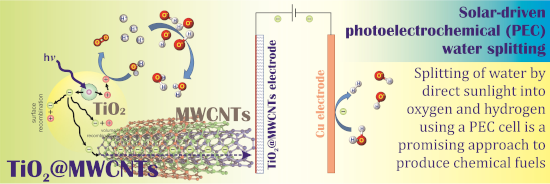
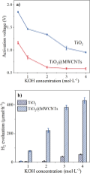
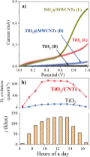
- irradiation is significantly higher than that prepared by TiO2 (vs Ag/AgCl). The low charge capacity of the TiO2@MWCNTs electrode–electrolyte interface hinders the recombination of the photogenerated electrons and holes, which contributes to the enhancement of the solar-to-hydrogen (STH) conversion efficiency
- under solar irradiation. Keywords: multi-wall carbon nanotubes (MWCNTs); nanomaterials; photoelectrochemical; TiO2; water splitting; Introduction TiO2 is an excellent photochemical catalyst for environmental and chemical applications due to its good activity regarding numerous reduction and oxidation
- evolution of 450 µmol·h−1. Reddy et al. loaded TiO2 particles on MWCNTs via a simple hydrothermal method [13]. However, the MWNTs/TiO2 nanocomposite showed photoactivity only under UV irradiation due to the high bandgap of 3.1 eV. To the best of our knowledge, there are only a few studies on TiO2@MWCNTs



Facile preparation of Au- and BODIPY-grafted lipid nanoparticles for synergized photothermal therapy
Beilstein J. Nanotechnol. 2022, 13, 1432–1444, doi:10.3762/bjnano.13.118
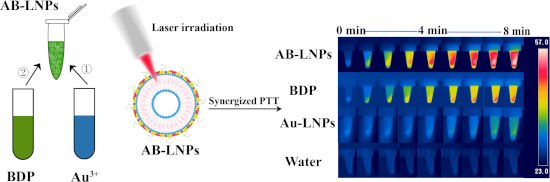
- could be associated stably to Au-LNPs, and the release of BODIPY from AB-LNPs could be accelerated by laser irradiation. AB-LNPs are scalable and showed excellent photothermal effects. AB-LNPs showed enhanced cellular uptake efficiency compared to free BODIPY in 4T1 breast cancer cells. Under laser
- irradiation, AB-LNPs exhibited synergistic photothermal effects with significantly reduced dosage compared to monotherapy (treatments with Au-LNPs or free BODIPY alone). This study thus provides a facile and adaptive strategy for the development of a scalable and safe high-performance nanoplatform for
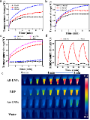
- to the commercial AuNPs. The numerous ultrasmall gold nanoclusters stably anchored on the LNPs yield a concentrated heat generation of Au-LNPs under NIR irradiation. However, Au-LNPs are still not ideal for PTT because of the limited temperature elevation (only to ca. 25 °C). The anti-proliferative




LED-light-activated photocatalytic performance of metal-free carbon-modified hexagonal boron nitride towards degradation of methylene blue and phenol
Beilstein J. Nanotechnol. 2022, 13, 1380–1392, doi:10.3762/bjnano.13.114
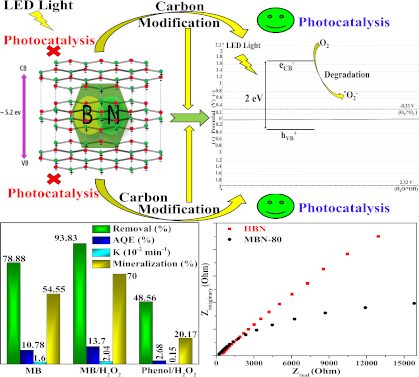
- absorb LED light irradiation with a light harvesting efficiency of ≈90% and a direct bandgap of 2 eV. The introduction of carbon into the HBN lattice led to a significant change in the electronic environment through the formation of C–B and C–N bonds which resulted in improved visible light activity
- modified boron nitride Photocatalytic study Figure 7a–g depicts the adsorption and photocatalytic degradation performance of MBN-80 towards MB (20 ppm) and phenol (10 ppm) accomplished through LED irradiation. Specifically, it removed 78.87% of MB (20 ppm solution) which was further enhanced to 93.83% in