Search results
Search for "liquid phase" in Full Text gives 118 result(s) in Beilstein Journal of Nanotechnology.
Liquid-phase exfoliated graphene: functionalization, characterization, and applications
Beilstein J. Nanotechnol. 2014, 5, 2328–2338, doi:10.3762/bjnano.5.242
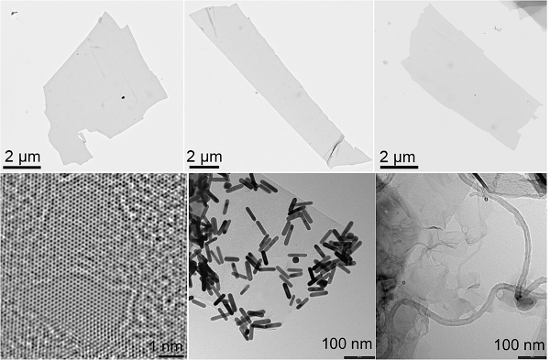
- strategies presents advantages and disadvantages depending on the type of application. In this contribution, we summarize some of the chemical procedures used to obtain graphene dispersions for various applications. Special emphasis is placed on the liquid-phase exfoliation of graphite by ultrasonic
- conditions, graphite is exfoliated as high-quality graphene [18]. Ultrasonic techniques A versatile and simple strategy to exfoliate graphite in liquid phase is based on the use of ultrasonic wave treatment. Ultrasound techniques have important applications in a wide range of materials synthesis strategies


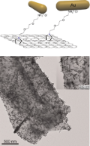



A nanometric cushion for enhancing scratch and wear resistance of hard films
Beilstein J. Nanotechnol. 2014, 5, 1005–1015, doi:10.3762/bjnano.5.114
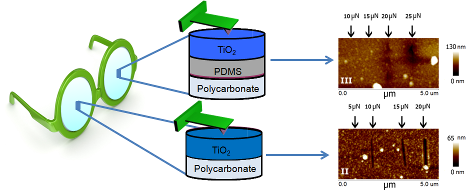
- polydimethylsiloxane (PDMS) using liquid phase deposition [34][35][36]. In this work, we further apply the technique to polycarbonate (PC) substrates, which are used in the lens industry and carry requirement of scratch/wear resistance. In addition to scratch and wear resistance, we demonstrate that the soft polymer
- overlayer and polymer resulting from the liquid phase deposition procedure ensures the robustness of the film. These effects can be tuned by varying titania thickness while preserving the bulk properties and surface chemical properties. AFM/LFM measurements are powerful tools for determining scratch



Controlling mechanical properties of bio-inspired hydrogels by modulating nano-scale, inter-polymeric junctions
Beilstein J. Nanotechnol. 2014, 5, 887–894, doi:10.3762/bjnano.5.101
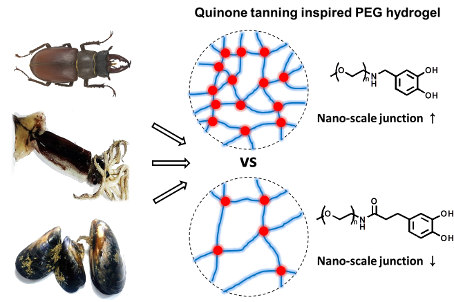
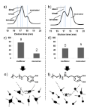
- parameter. A poly(tetrafluoroethylene) (PTFE) surface was set up at a 45° slope angle, and drops of 6Arm-PEG-NH-catechol (Figure 3d, right) and 6Arm-PEG-catechol (Figure 3d, left) solutions were applied to observe the gelation time. The PEG solution flowed in the liquid phase but stopped in the gel phase



Applicability and costs of nanofiltration in combination with photocatalysis for the treatment of dye house effluents
Beilstein J. Nanotechnol. 2014, 5, 476–484, doi:10.3762/bjnano.5.55
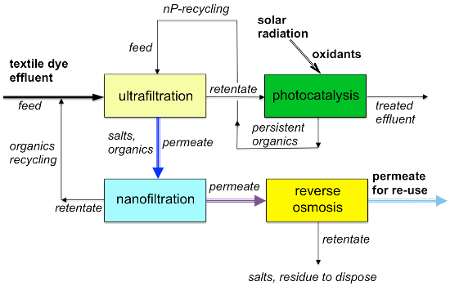
- can be applied in the pre-treatment prior to the catalytic reactor or in connection with the reactor to separate the liquid phase from the reaction system and to recycle finely suspended catalysts and/or organic compounds. When concerning such reaction systems on a bigger scale, cost figures will


Nanoscale particles in technological processes of beneficiation
Beilstein J. Nanotechnol. 2014, 5, 458–465, doi:10.3762/bjnano.5.53
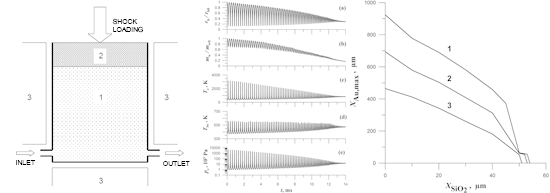
- opens up, the pressure decreases, resulting in phase separation of the fluid, which stratifies into an essentially liquid phase and a gas phase existing in the form of gas bubbles. When the fluid goes into the narrowing of the canal cavity, the pressure is reestablished and the bubbles collapse. The


Adsorption of the ionic liquid [BMP][TFSA] on Au(111) and Ag(111): substrate effects on the structure formation investigated by STM
Beilstein J. Nanotechnol. 2013, 4, 903–918, doi:10.3762/bjnano.4.102
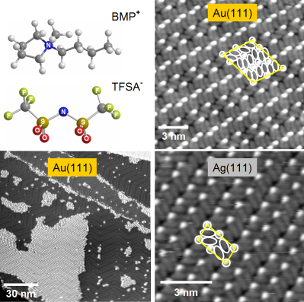
- islands and a 2D gas/liquid of IL adsorbates. Again those regions, which are apparently free of adsorbate appear with streaky features, which we attribute to highly mobile molecules in a 2D gas/liquid phase, which diffuse to fast to be resolved with STM. Round shaped protrusion in the inner parts of the
- conclusions and adsorption characteristics: 1) Upon adsorption at room temperature, the [BMP][TFSA] adsorbates form a 2D gas/2D liquid phase with highly mobile adsorbed species on the surface. The integrity of the ions is maintained and both ions are in direct contact with the substrate surface. Interaction




Lithium peroxide crystal clusters as a natural growth feature of discharge products in Li–O2 cells
Beilstein J. Nanotechnol. 2013, 4, 758–762, doi:10.3762/bjnano.4.86
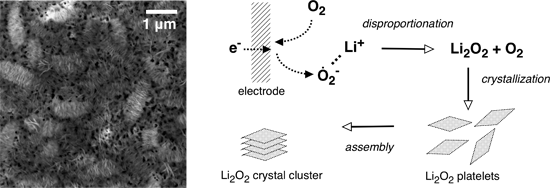
- oxygen reduction reaction (ORR). This feature limits the rechargeability of Li–O2 cells, but at the same time it can be beneficial for both capacity improvement and gain in recharge rate if a proper liquid phase mediator can be found. Keywords: lithium–air batteries; lithium peroxide; oxygen reduction
- films that might allow a faster recharge. This idea becomes highly interesting in view of recent findings of Chen et al. [17] who suggested a liquid phase mediator. Further work on this topic is in progress. (a) Typical SEM image of the pristine porous gold electrodes. (b) Discharge voltage profiles


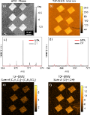
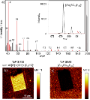
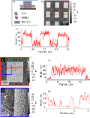
Site-selective growth of surface-anchored metal-organic frameworks on self-assembled monolayer patterns prepared by AFM nanografting
Beilstein J. Nanotechnol. 2013, 4, 638–648, doi:10.3762/bjnano.4.71
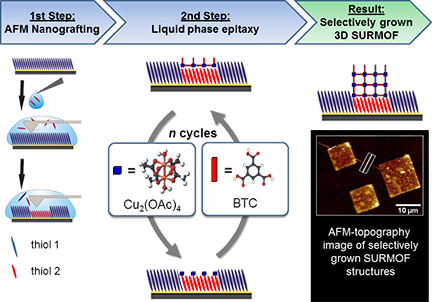
- -epitaxial layer-by-layer method (liquid-phase epitaxy, or LPE). The chemical termination of the supporting substrate is crucial, because the most convenient method for substrate modification is the formation of a suitable self-assembled monolayer. The choice of a particular SAM also allows for control over





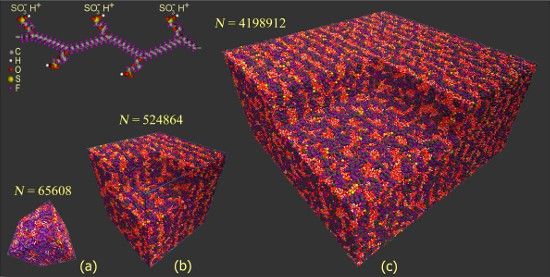
Large-scale atomistic and quantum-mechanical simulations of a Nafion membrane: Morphology, proton solvation and charge transport
Beilstein J. Nanotechnol. 2013, 4, 567–587, doi:10.3762/bjnano.4.65


Influence of the solvent on the stability of bis(terpyridine) structures on graphite
Beilstein J. Nanotechnol. 2013, 4, 269–277, doi:10.3762/bjnano.4.29
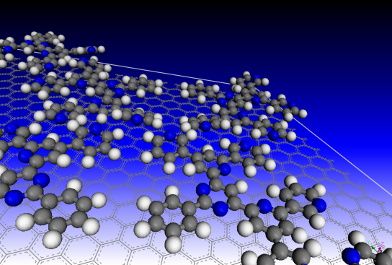
- adsorption of BTP on graphite in the presence of a liquid phase in order to assess the explicit influence of the solvent on the molecular adsorption at the solid/liquid interface. Note that the modeling of a liquid requires the determination of free energies instead of just total energies, which means that


Functionalization of vertically aligned carbon nanotubes
Beilstein J. Nanotechnol. 2013, 4, 129–152, doi:10.3762/bjnano.4.14
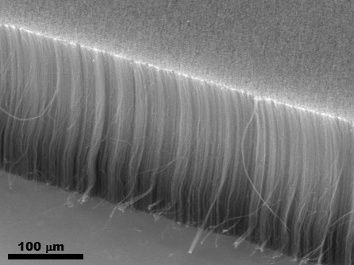
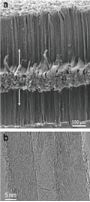
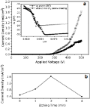
- traditional organic electrolytes, they used ionic liquids because of their nonflammability, nonvolatility, nontoxicity, large electrochemical window, and wide liquid-phase range. Practically, VA-CNTs were etched by H2O plasma in order to open the extremities of the nanotubes prior to an electrochemical








Synthesis and electrical characterization of intrinsic and in situ doped Si nanowires using a novel precursor
Beilstein J. Nanotechnol. 2012, 3, 564–569, doi:10.3762/bjnano.3.65
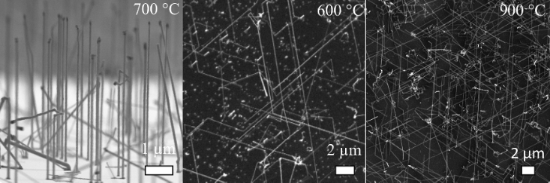
- straight, crystalline, nanometre-sized wires. During VLS growth a Si precursor is introduced, which is cracked and dissolved into the catalytic liquid phase. Generally Au is used as the catalyst on Si substrates, forming a liquid alloy with a eutectic temperature of 364 °C, which, upon supersaturation


Mapping mechanical properties of organic thin films by force-modulation microscopy in aqueous media
Beilstein J. Nanotechnol. 2012, 3, 464–474, doi:10.3762/bjnano.3.53
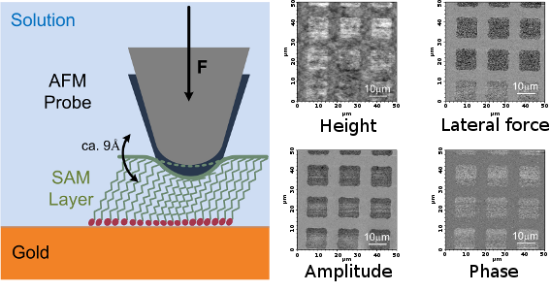
- microscopy (AFAM) [31], and contact resonance AFM (CR-AFM) [32][33][34][35], contact resonance frequencies are deliberately chosen to enhance the imaging sensitivity. However, acoustic AFM imaging in solution is challenging since the liquid phase complicates the cantilever dynamics through fluid damping. To



Self-assembled monolayers and titanium dioxide: From surface patterning to potential applications
Beilstein J. Nanotechnol. 2011, 2, 845–861, doi:10.3762/bjnano.2.94
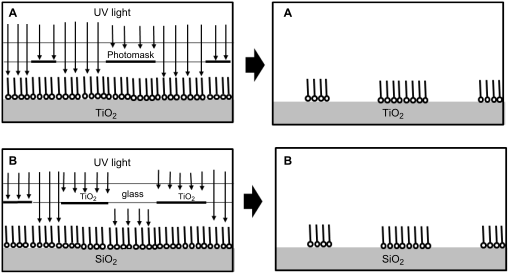
- often observed both in the liquid phase and in the gas phase, suggesting, albeit not proving [11][12] the need for adsorption as a prerequisite for photocatalysis. Self-assembled monolayers (SAMs) being chemisorbed in an ordered manner on surfaces such as metals (Au, Ag), oxides (SiO2, Al2O3, TiO2) and
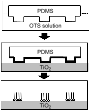
- methods for growing titanium dioxide particles and films on SAMs: Liquid-phase deposition (LPD), atomic-layer deposition, and sol–gel. Within the context of growing TiO2 on SAMs, the LPD method is probably the most popular. It employs a solution containing TiF62− anions together with boric acid. The
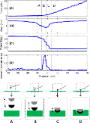
- -productive bias had been measured with a liquid-phase contaminant, one could have claimed that the observed decrease in the rate was due to a significant decrease in the adsorption rate of the target molecule. Here, the fact that the OCTS molecules were chemically and irreversibly attached to the TiO2



Novel acridone-modified MCM-41 type silica: Synthesis, characterization and fluorescence tuning
Beilstein J. Nanotechnol. 2011, 2, 284–292, doi:10.3762/bjnano.2.33
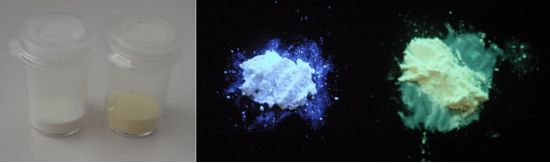
- at resonance frequencies of 400 MHz, 101 MHz and 80 MHz for 1H, 13C or 29Si nuclei, respectively. Liquid phase 1H and 13C NMR spectra were recorded on Bruker Spectrospin DPX-400 and Avance 600 devices at resonance frequencies of 400 MHz or 151 MHz for 1H or 13C nuclei, respectively. These spectra are


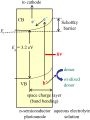
Schottky junction/ohmic contact behavior of a nanoporous TiO2 thin film photoanode in contact with redox electrolyte solutions
Beilstein J. Nanotechnol. 2011, 2, 127–134, doi:10.3762/bjnano.2.15
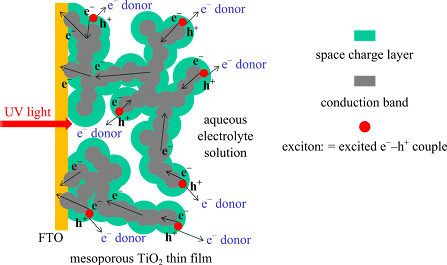
- electron can migrate towards inside of the semiconductor bulk, thus the hole and the electron are now separated. After such migration of holes and electrons, when an electron donor (such as ethanol) is present in the contacted liquid phase, the holes can oxidize the donor in the liquid, and the electrons
- various electron donors and acceptors and other redox compounds in the liquid phase. Such Schottky junction/ohmic contact characteristics of nanoporous semiconductor thin films could be applied to a variety of photonic and electronic devices in the future. Experimental Materials and electrodes preparation
- ambient air (Figure 1). For Figure 8, the larger size G2 TiO2 was used, and Pt black was deposited electrochemically from K2[PtCl6] on a Pt plate (1 cm × 1 cm) in order to use it as an O2-reduction cathode in the liquid phase. Cell, irradiation, and measurements A cell (1 cm × 1 cm × 3 cm) was designed




Review and outlook: from single nanoparticles to self-assembled monolayers and granular GMR sensors
Beilstein J. Nanotechnol. 2010, 1, 75–93, doi:10.3762/bjnano.1.10
- process is driven by a superposition of interparticle interactions and external forces [47][48][49][50][51][52][53]. Interparticle forces act on the nanocrystals in the liquid phase of a particle solution as well as during the assembly process on a substrate. Different forces may have major impact on the
- to the highly idealized particle distribution on top of the sensor: According to the preliminary section, (ferro-)magnetic particles form self-assembled structures and agglomerations in the liquid phase (Figure 10(a)). Therefore, the degree of clustered nanocrystals is much higher in the experimental