


Search results
Search for "magnetic nanoparticles" in Full Text gives 113 result(s) in Beilstein Journal of Nanotechnology.
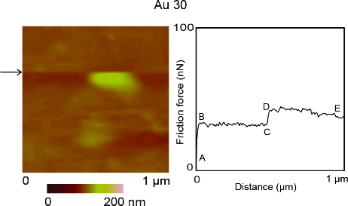
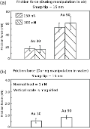
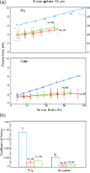
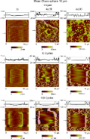
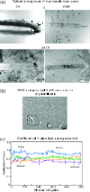
Effect of spherical Au nanoparticles on nanofriction and wear reduction in dry and liquid environments
Beilstein J. Nanotechnol. 2012, 3, 759–772, doi:10.3762/bjnano.3.85
- absorbs the oil by motion of the nanoparticles towards the oil in a magnetic field [12]. Magnetic nanoparticles are also of interest in enhanced oil recovery (EOR) since they can be dispersed in fluid and manipulated and monitored by an external magnetic field [13][14]. In both oil detection and EOR




Magnetic-Fe/Fe3O4-nanoparticle-bound SN38 as carboxylesterase-cleavable prodrug for the delivery to tumors within monocytes/macrophages
Beilstein J. Nanotechnol. 2012, 3, 444–455, doi:10.3762/bjnano.3.51
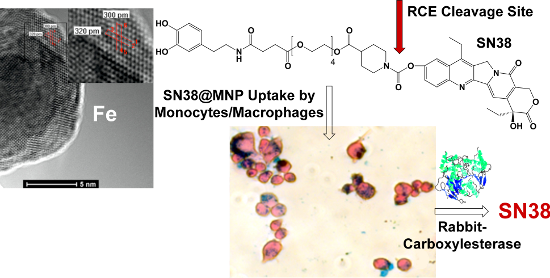
- to the tumor site is highly desirable in cancer treatment, because it is capable of minimizing collateral damage. Herein, we report the synthesis of a nanoplatform, which is composed of a 15 ± 1 nm diameter core/shell Fe/Fe3O4 magnetic nanoparticles (MNPs) and the topoisomerase I blocker SN38 bound
- was released successfully by switching on the Tet-On Advanced system. We have demonstrated that this nanoplatform can be potentially used for thermochemotherapy. We will be able to achieve the following goals: (1) Specifically deliver the SN38 prodrug and magnetic nanoparticles to the cancer site as
- of hyperthermia with radiation therapy and chemotherapy can greatly improve the efficacy of cancer treatment [30][31]. Ultrasmall magnetic nanoparticles generate heat efficiently in an alternating magnetic field (AMF). Due to their superior properties, such as negligible or low toxicity


Improvement of the oxidation stability of cobalt nanoparticles
Beilstein J. Nanotechnol. 2012, 3, 75–81, doi:10.3762/bjnano.3.9
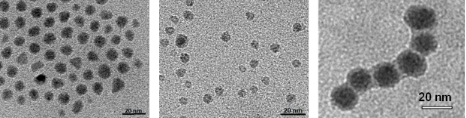
- nanoparticles can effectively be protected against oxidation in order to improve their mid- to longterm stability. Keywords: cobalt nanoparticles; core–shell particles; isothermal oxidation; nanoscale passivation; parabolic rate constant; Findings Magnetic nanoparticles are currently given great attention due


Nanoscaled alloy formation from self-assembled elemental Co nanoparticles on top of Pt films
Beilstein J. Nanotechnol. 2011, 2, 473–485, doi:10.3762/bjnano.2.51
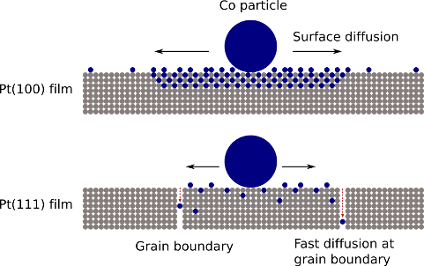
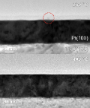
- ; nanoparticles; Pt; XMCD; Introduction Magnetic nanoparticles (NPs), with narrow distributions of their size and mutual spacing, offer a high potential with respect to both, fundamental and applied studies [1][2][3][4]. Although a broad palette of methods has been established for the preparation of such NPs, if





Organic–inorganic nanosystems
Beilstein J. Nanotechnol. 2011, 2, 363–364, doi:10.3762/bjnano.2.41

- be obtained with controllable particle size and inter-particle distance. In that case, the organic–inorganic nanosystem simply serves as an intermediate step towards the sought after particle arrangement. An application of this technique for the preparation of magnetic nanoparticles is described in
- another recent Thematic Series about the preparation, properties and applications of magnetic nanoparticles in the Beilstein Journal of Nanotechnology [2]. In the present context, the wide field of ligand-stabilized nanoparticles should also be mentioned. Here, each particle represents an organic
Effect of large mechanical stress on the magnetic properties of embedded Fe nanoparticles
Beilstein J. Nanotechnol. 2011, 2, 268–275, doi:10.3762/bjnano.2.31
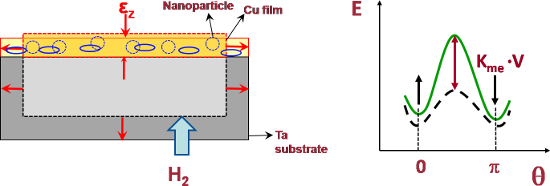
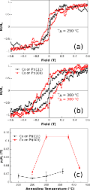
- Abstract Magnetic nanoparticles are promising candidates for next generation high density magnetic data storage devices. Data storage requires precise control of the magnetic properties of materials, in which the magnetic anisotropy plays a dominant role. Since the total magneto-crystalline anisotropy
- -organization of magnetic nanoparticles, as demonstrated first by Sun and co-workers [5] and subsequently by applying micellar preparation techniques [6], has opened up new possibilities for generating this type of media. Another approach for stabilization of the magnetization in small particles is the coupling
- sensors. In this context, it should be noted that magnetic nanoparticles also have applications in other fields, such as medical treatment, diagnostics and imaging [9]. A precise control of the magnetic anisotropy energy is most important for the design of future magnetic data storage media. The total


Structure, morphology, and magnetic properties of Fe nanoparticles deposited onto single-crystalline surfaces
Beilstein J. Nanotechnol. 2011, 2, 47–56, doi:10.3762/bjnano.2.6
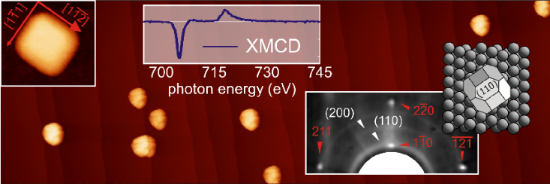
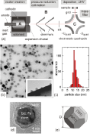
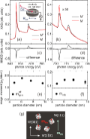
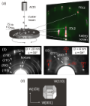
- process might be accompanied by a complex reshaping of the particles. Keywords: epitaxy; iron; magnetic nanoparticles; Ni(111); RHEED; spontaneous self-alignment; STM; W(110); XMCD; Introduction Ferromagnetic clusters and nanoparticles have gained huge interest due to their interesting fundamental
- energy is dissipated into the substrate. Depending on the available total energy and the size of the particles, the latter may realign or even reshape on the surface with respective consequences for their resulting properties. Results and Discussion In previous works it was found that magnetic
- nanoparticles show surprisingly strong variations in their properties – such as the magnetic anisotropy energies or microscopic spin and orbital contributions to the total magnetization – when being in contact with different substrates or embedded into different matrices [20][38][42][43][44]. Here, we focus on

Magnetic interactions between nanoparticles
Beilstein J. Nanotechnol. 2010, 1, 182–190, doi:10.3762/bjnano.1.22
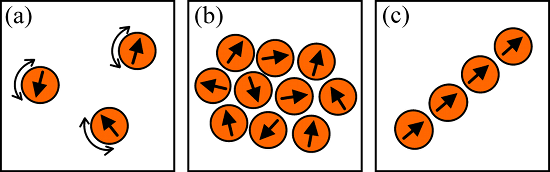
- 10.3762/bjnano.1.22 Abstract We present a short overview of the influence of inter-particle interactions on the properties of magnetic nanoparticles. Strong magnetic dipole interactions between ferromagnetic or ferrimagnetic particles, that would be superparamagnetic if isolated, can result in a
- collective state of nanoparticles. This collective state has many similarities to spin-glasses. In samples of aggregated magnetic nanoparticles, exchange interactions are often important and this can also lead to a strong suppression of superparamagnetic relaxation. The temperature dependence of the order
- ferrimagnetic Fe3O4 layers with a Curie temperature of about 850 K. Similarly, an increase of the Curie temperature of ferrimagnetic γ-Mn2O3 due to interaction with antiferromagnetic MnO has been found in MnO/γ-Mn2O3 core–shell particles [6]. The magnetic properties of non-interacting magnetic nanoparticles are



Magnetic nanoparticles for biomedical NMR-based diagnostics
Beilstein J. Nanotechnol. 2010, 1, 142–154, doi:10.3762/bjnano.1.17
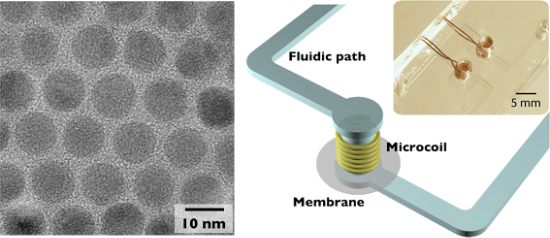
- medicine. In general, biological samples have only negligible magnetic susceptibility. Thus, using magnetic nanoparticles for biosensing not only enhances sensitivity but also effectively reduces sample preparation needs. This review focuses on the use of magnetic nanoparticles for in vitro detection of
- biomolecules and cells based on magnetic resonance effects. This detection platform, termed diagnostic magnetic resonance (DMR), exploits magnetic nanoparticles as proximity sensors, which modulate the spin–spin relaxation time of water molecules surrounding molecularly-targeted nanoparticles. By developing
- more effective magnetic nanoparticle biosensors, DMR detection limits for various target moieties have been considerably improved over the last few years. Already, a library of magnetic nanoparticles has been developed, in which a wide range of targets, including DNA/mRNA, proteins, small molecules


Review and outlook: from single nanoparticles to self-assembled monolayers and granular GMR sensors
Beilstein J. Nanotechnol. 2010, 1, 75–93, doi:10.3762/bjnano.1.10
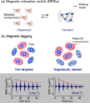
- interactions is discussed. Keywords: bottom-up particle synthesis; dipolar particle coupling; granular giant magnetoresistance sensor; magnetic nanoparticles; self-assembly; Introduction Magnetic nanoparticles have been thoroughly studied during the last decades due to their many promising applications in
- monitoring of magnetically labeled biomolecules. The interaction between several particles is also of high practical relevance: Due to different types of coupling, magnetic nanoparticles assemble in superstructures. Various technological applications such as their employment in data storage devices, where
- degrees of freedom. Within such assemblies, magnetic nanoparticles themselves may act as magnetoresistive sensor devices: Surrounded by a non-magnetic matrix, various spin-dependent transport phenomena have been observed [5][6][7][8][9]. Contrary to formerly used metallurgic preparation techniques




Uniform excitations in magnetic nanoparticles
Beilstein J. Nanotechnol. 2010, 1, 48–54, doi:10.3762/bjnano.1.6
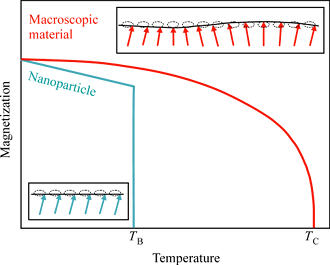
- the magnetization and the magnetic hyperfine field, in contrast to the Bloch T3/2 law in bulk materials. The temperature dependence of the average magnetization is conveniently studied by Mössbauer spectroscopy. The energy of the uniform excitations of magnetic nanoparticles can be studied by
- inelastic neutron scattering. Keywords: collective magnetic excitations; Mössbauer spectroscopy; neutron scattering; spin waves; superparamagnetic relaxation; Review Introduction One of the most important differences between magnetic nanoparticles and the corresponding bulk materials is that the magnetic
- these effects may be difficult to distinguish from the contribution from the thermoinduced magnetization. Conclusion After the discovery of superparamagnetism much of the research in the field of magnetic nanoparticles has focused on superparamagnetic relaxation while the magnetic dynamics below TB has


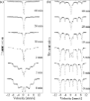
![[Graphic 3]](/bjnano/content/inline/2190-4286-1-6-i22.png?max-width=637&scale=1.18182) as a function of temperature for particles of magneti...
as a function of temperature for particles of magneti...


Preparation and characterization of supported magnetic nanoparticles prepared by reverse micelles
Beilstein J. Nanotechnol. 2010, 1, 24–47, doi:10.3762/bjnano.1.5
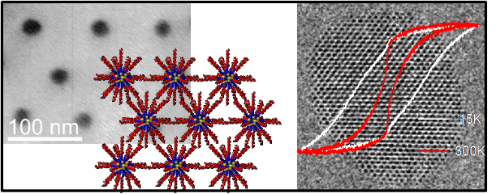
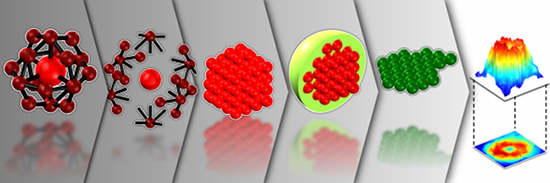
- conservation of nanoparticles by Au photoseeding is presented. Keywords: Co; CoPt; core–shell particles; FePt; magnetic anisotropy; magnetic particles; plasma etching; reverse micelles; self-assembly; Introduction Magnetic nanoparticles have been the focus of research for over 60 years [1][2]. These






Preparation, properties and applications of magnetic nanoparticles
Beilstein J. Nanotechnol. 2010, 1, 21–23, doi:10.3762/bjnano.1.4
- magnetic NPs, which are in the focus of the present Thematic Series entitled “Preparation, properties and applications of magnetic nanoparticles”. While the most notable feature of magnetic NPs, their superparamagnetic behavior, has already been reported by Neel as early as 1949 [6], this phenomenon



