


Search results
Search for "nano" in Full Text gives 857 result(s) in Beilstein Journal of Nanotechnology. Showing first 200.
Classification and application of metal-based nanoantioxidants in medicine and healthcare
Beilstein J. Nanotechnol. 2024, 15, 396–415, doi:10.3762/bjnano.15.36
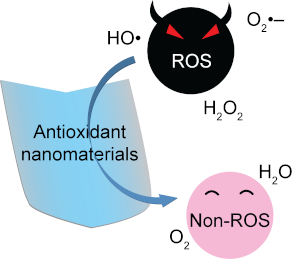
- sites. In this regard, nanomaterials exhibit CAT-like activity with the ability to generate O2 from H2O2 to increase the performance of PDT and PTT in tumors. For example, nano-MnO2 with acid-/redox-responsive properties could decompose acidic H2O2 at the tumor sites by exhibiting CAT activity [168
- acute toxicity causes tissue damage immediately after exposure to certain nanosized metals. Besides, the large specific surface area of nanomaterials has some benefits regarding excellent ROS scavenging; yet, a large specific surface area can also be a double-sided sword because it increases nano–bio


On the mechanism of piezoresistance in nanocrystalline graphite
Beilstein J. Nanotechnol. 2024, 15, 376–384, doi:10.3762/bjnano.15.34
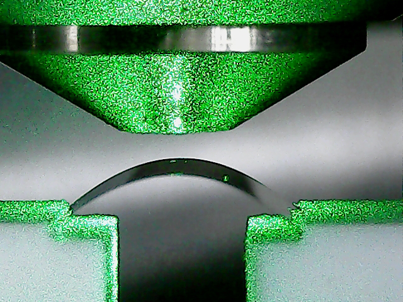
- can be considered as a matrix of grains and grain boundaries (GBs), where the grains are separated by the GBs and have different resistivities [31]. Hence, the tunneling + destruction model might indeed be an appropriate physical representation of the nano/microstructure of NCG. The model explains
- , indicating potential grain rotation and bond reformation, leading to a modified nano/microstructure. In the larger-strain regime, an exponential increase in sheet resistance vs strain signifies further partially reversible crack formation. To enhance understanding, a tunneling + destruction model was fitted


Nanomedicines against Chagas disease: a critical review
Beilstein J. Nanotechnol. 2024, 15, 333–349, doi:10.3762/bjnano.15.30
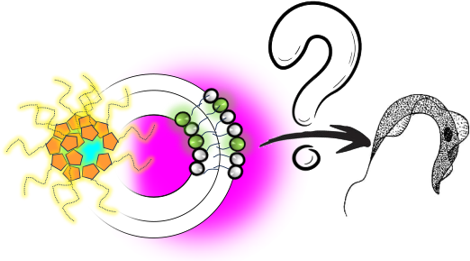
- that structurally simpler formulations with minimal production cost, such as oral nanocrystals and/or parenteral nano-immunostimulants, have the highest chances of making it to the market to treat CD. Nonetheless, substantive political and economic decisions, key to facing technological challenges, are

Exploring the relationships between physiochemical properties of nanoparticles and cell damage to combat cancer growth using simple periodic table-based descriptors
Beilstein J. Nanotechnol. 2024, 15, 297–309, doi:10.3762/bjnano.15.27
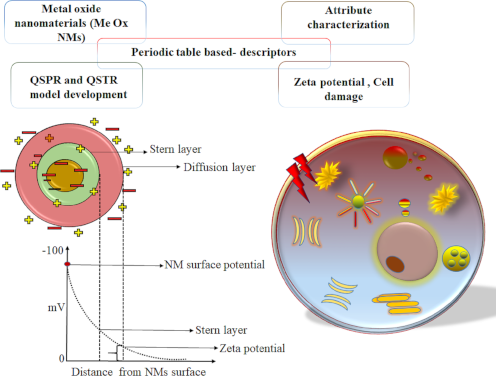
- them effectively for regulated use. Although NMs are utilized in therapeutics, their cytotoxicity has attracted great attention. Nanoscale quantitative structure–property relationship (nano-QSPR) models can help in understanding the relationship between NMs and the biological environment and provide
- ; cell damage; MeOx NMs (metal oxide nanomaterials); nano-QSPR; zeta potential; Introduction Engineered nanoparticles have become an integral part of our daily lives in consumable products and commercial goods. Their versatile tunable properties have made nanomaterials a center of innovation in
- descriptors were calculated without any expert intervention and are independent of size variations. Splitting of the data sets Splitting of the datasets into training sets and test sets is essential for developing statistically robust nano-QSPR models. Each of the datasets, that is, the zeta potential dataset


Multiscale modelling of biomolecular corona formation on metallic surfaces
Beilstein J. Nanotechnol. 2024, 15, 215–229, doi:10.3762/bjnano.15.21
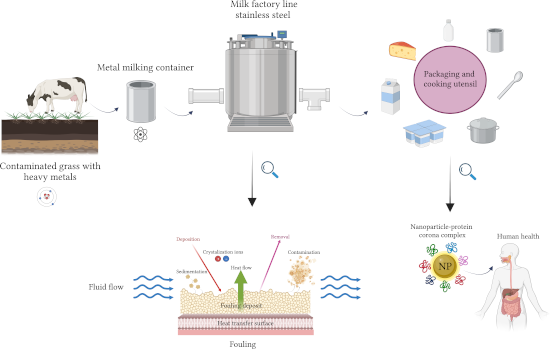
- the outer surface of macroscropic and micro- and nano-sized particulate after packaging. It also highlights the dynamic interactions at the bionano interface associated with potential human health hazards. Through biomolecule adsorption, change of conformation, and surface chemistry, foreign materials




Ion beam processing of DNA origami nanostructures
Beilstein J. Nanotechnol. 2024, 15, 207–214, doi:10.3762/bjnano.15.20
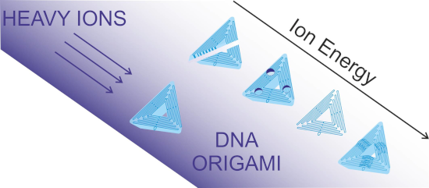
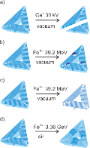
- impact. Such shape modifications are becoming important with the development of higher-order DNA origami nanostructures [43], particularly lattices for surface nanopatterning [44][45]. Ion beam lattice trimming can be used in combined lithographic approaches as well as in forming well-defined nano-bio


Enhanced feedback performance in off-resonance AFM modes through pulse train sampling
Beilstein J. Nanotechnol. 2024, 15, 134–143, doi:10.3762/bjnano.15.13
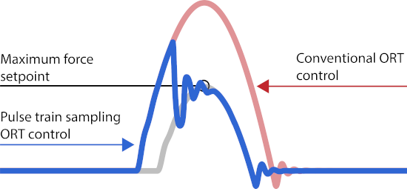
- Mustafa Kangul Navid Asmari Santiago H. Andany Marcos Penedo Georg E. Fantner Laboratory for Bio- and Nano-Instrumentation, Swiss Federal Institute of Technology Lausanne (EPFL), Lausanne CH-1015, Switzerland 10.3762/bjnano.15.13 Abstract Dynamic atomic force microscopy (AFM) modes that operate
- reads the deflection of the cantilever and keeps the applied tip–sample vertical force at a fixed setpoint value by adjusting the voltage applied to a Z axis nano-positioner. While this AFM mode achieves high precision in controlling vertical forces, the high lateral forces applied while scanning limits


New application of bimetallic Ag/Pt nanoplates in a colorimetric biosensor for specific detection of E. coli in water
Beilstein J. Nanotechnol. 2024, 15, 95–103, doi:10.3762/bjnano.15.9
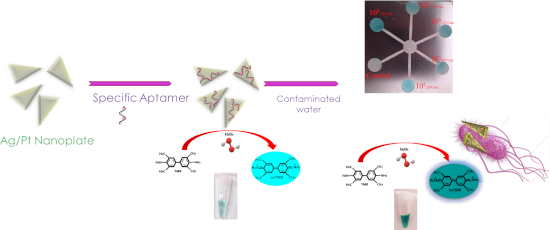
- room temperature using a Zetasizer Nano-ZS90 Malvern. The elementary compositions of the samples were determined using EDS on a Tescan energy-dispersive spectrometer. The ImageJ software was used to determine the gray intensity of the blue color of the paper-based microfluidic device. Synthesis of Ag


Berberine-loaded polylactic acid nanofiber scaffold as a drug delivery system: The relationship between chemical characteristics, drug-release behavior, and antibacterial efficiency
Beilstein J. Nanotechnol. 2024, 15, 71–82, doi:10.3762/bjnano.15.7
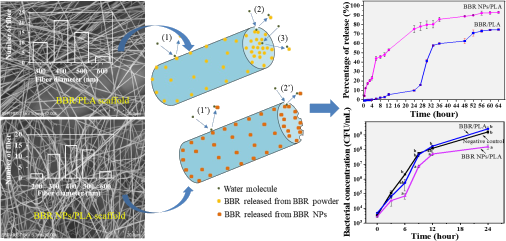
- Le Thi Le Hue Thi Nguyen Liem Thanh Nguyen Huy Quang Tran Thuy Thi Thu Nguyen Phenikaa University Nano Institute (PHENA), Phenikaa University, Hanoi 12116, Vietnam School of Material Science and Technology, Hanoi University of Science and Technology, Hanoi 11600, Vietnam Faculty of Biomedical
- (Nano NC, Korea) to generate a 15 kV voltage for the electrospinning process. By using a microinfusion pump, the flow rate of the solution through the needle was maintained at 1.0 mL/h. The distance between the needle tip and the roller collector was fixed at 18 cm. The electrospinning process was


Curcumin-loaded nanostructured systems for treatment of leishmaniasis: a review
Beilstein J. Nanotechnol. 2024, 15, 37–50, doi:10.3762/bjnano.15.4
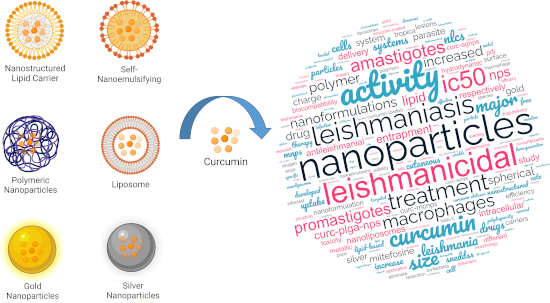
- , lipid nanoparticles, nano- and microemulsions, liposomes, or metallic nanoparticles [68]. Costa-Lima and colleagues incorporated bisnaphthalimidopropyldiaaminooctane (BNIPDaoct) into PLGA polymeric nanoparticles and obtained particles with sizes around 150 nm, with encapsulation efficiency around 90


Nanotechnological approaches in the treatment of schistosomiasis: an overview
Beilstein J. Nanotechnol. 2024, 15, 13–25, doi:10.3762/bjnano.15.2
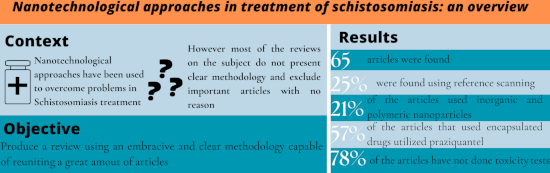
- , Scopus, and Web of Science databases. These searches were conducted from March 31st, 2022, to March 31st, 2023, using the following search keywords: (nano* OR encapsul*) AND (treatment OR therap* OR activity OR chemotherapy) AND schistosomiasis. After obtaining the list of papers, a filter by type of


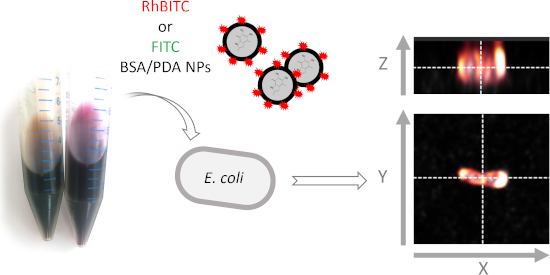
Fluorescent bioinspired albumin/polydopamine nanoparticles and their interactions with Escherichia coli cells
Beilstein J. Nanotechnol. 2023, 14, 1208–1224, doi:10.3762/bjnano.14.100
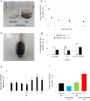
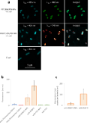
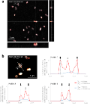
- measured by dynamic light scattering (DLS) using a Zetasizer Nano ZS from Malvern Panalytical (Malvern, UK). Measurements were performed while taking into account a refractive index of 1.73 − 0.02i for PDA (the imaginary part corresponds to the absorption coefficient) at a wavelength of 589 nm, that is



Hierarchically patterned polyurethane microgrooves featuring nanopillars or nanoholes for neurite elongation and alignment
Beilstein J. Nanotechnol. 2023, 14, 1157–1168, doi:10.3762/bjnano.14.96
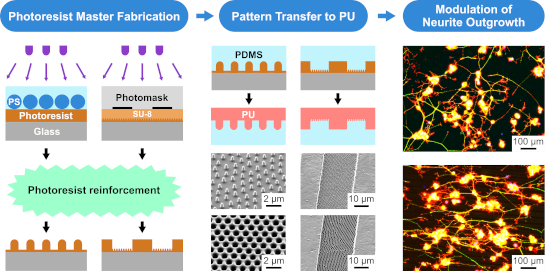
- patterned nano-/microstructured PU films enhance both PC12 neurite elongation and alignment, showing the potential use of our proposed method for the micro-/nanopatterning of polymers for nerve tissue engineering. Keywords: hierarchical; nanopatterning; neurite alignment; neurite outgrowth; topography
- ]. Therefore, there is still a need to develop simple and cost-effective fabrication methods applicable to a wide range of nano- and micropatterns and biomaterials. In our previous studies, we have shown how nanosphere lens lithography (NLL) can be used with a low-cost ultraviolet light-emitting diode (UV-LED
- -cost SU-8 substrates can be used as a reusable master mold to create nano-/micropatterns on polyurethane (PU), a soft, versatile material that has been used for nerve conduits [17]; and finally, by showing, for the first time, significant enhancement of both PC12 neurite elongation and alignment on the


Curcumin-loaded albumin submicron particles with potential as a cancer therapy: an in vitro study
Beilstein J. Nanotechnol. 2023, 14, 1127–1140, doi:10.3762/bjnano.14.93
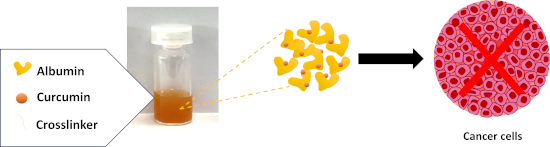
- Cytation™ 5 Cell Imaging Multi-Mode Reader and analyzed using Gen5 data analysis software (BioTek® Instruments, Inc., Winooski, VT, USA). Particle size and zeta potential Hydrodynamic size, polydispersity index (PDI), and zeta potential of the particles were evaluated using a Zetasizer Nano ZS (Malvern




Spatial mapping of photovoltage and light-induced displacement of on-chip coupled piezo/photodiodes by Kelvin probe force microscopy under modulated illumination
Beilstein J. Nanotechnol. 2023, 14, 1059–1067, doi:10.3762/bjnano.14.87
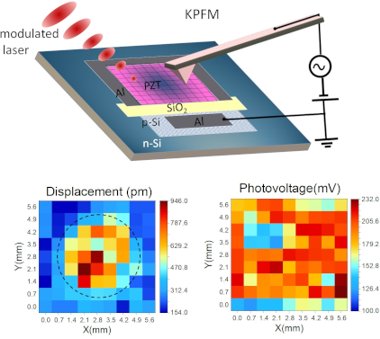
- spatially map voltage-induced oscillation of various sizes of piezoelectric membranes without the photodiode to investigate their position- and size-dependent displacement. Keywords: Kelvin probe force microscopy (KPFM); light-driven micro/nano systems; piezoelectric membrane; surface photovoltage (SPV
- these micro/nano devices is to scrutinize their structure and the interaction between their different components. This can be done by high-resolution characterization techniques that simultaneously probe dynamic properties of different parts of the device. This enables the decoupling of the roles of
- characterization technique, we cannot fully conclude the reason for the deviation from the expected behavior, the results stress the importance of employing advanced, time-dependent spatial mapping characterization techniques for the development of novel nano/micro-actuators. Conclusion In this study, we


Recognition mechanisms of hemoglobin particles by monocytes – CD163 may just be one
Beilstein J. Nanotechnol. 2023, 14, 1028–1040, doi:10.3762/bjnano.14.85
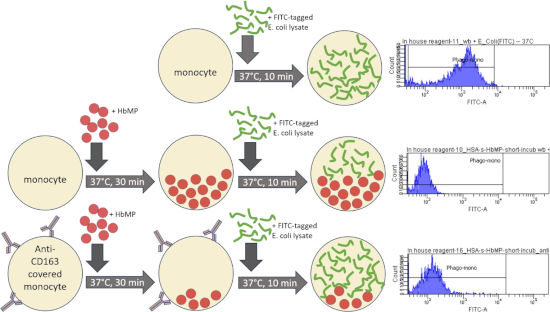
- conductivity After dilution of the particle suspension to 0.13% (V/V) with NaCl, the average size and conductivity, as well as the zeta potential of the particles were determined using a zetasizer (zetasizer Nano ZS, Malvern Instruments, Malvern, United Kingdom) with each measurement in triplicate. Hemoglobin




Exploring internal structures and properties of terpolymer fibers via real-space characterizations
Beilstein J. Nanotechnol. 2023, 14, 1004–1017, doi:10.3762/bjnano.14.83
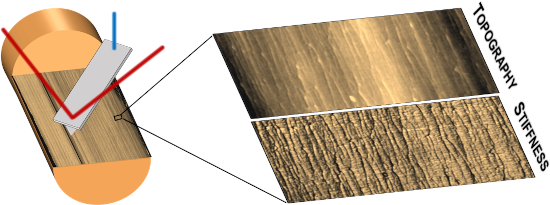
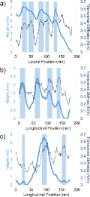
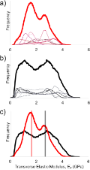
- investigated the processing and properties of high-performance terpolymer fibers, much remains to be understood about the internal nano- and microstructures of these fibers, and how these morphologies relate to fiber properties. Here we use a focused ion beam notch technique and multifrequency atomic force
- nano- and microscale topography, stiffness, and transverse elastic modulus (ET) maps of internal structural features and local mechanical responses in real space. (See the Experimental section for additional details.) As Technora® has often been compared to Kevlar® K29 fibers, we focus further on
- development of future classes of high-performance fibers. Results AFM characterizations of Technora® AFM maps enable direct characterization of both fiber nano- and microstructures in real space. Large-scale maps span across the fiber diameter to highlight prominent microstructural features. For Technora






Low temperature atomic layer deposition of cobalt using dicobalt hexacarbonyl-1-heptyne as precursor
Beilstein J. Nanotechnol. 2023, 14, 951–963, doi:10.3762/bjnano.14.78
- Mathias Franz Mahnaz Safian Jouzdani Lysann Kassner Marcus Daniel Frank Stahr Stefan E. Schulz Fraunhofer-Institute for Electronic Nano Systems ENAS, Technologie-Campus 3, 09126 Chemnitz, Germany Chemnitz University of Technology, Straße der Nationen 62, 09111 Chemnitz, Germany scia Systems GmbH
- Process equipment The ALD process development was done on a scial Atol 200 single-wafer reactor equipped with cassette loading and a handling robot. This machine was designed and fabricated by scia Systems GmbH in corporation with Fraunhofer Institute for Electronic Nano Systems ENAS, Center for


Prediction of cytotoxicity of heavy metals adsorbed on nano-TiO2 with periodic table descriptors using machine learning approaches
Beilstein J. Nanotechnol. 2023, 14, 939–950, doi:10.3762/bjnano.14.77
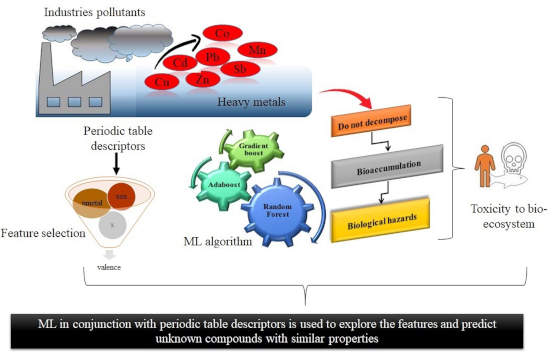
- metals, upon release and emission, may interact with different environmental components, which may lead to co-exposure to living organisms. Nanoscale titanium dioxide (nano-TiO2) can adsorb heavy metals. The current idea is that nanoparticles (NPs) may act as carriers and facilitate the entry of heavy
- metals into organisms. Thus, the present study reports nanoscale quantitative structure–activity relationship (nano-QSAR) models, which are based on an ensemble learning approach, for predicting the cytotoxicity of heavy metals adsorbed on nano-TiO2 to human renal cortex proximal tubule epithelial (HK-2
- cause of cytotoxicity. To demonstrate the predictive ability of the developed nano-QSAR models, simple periodic table descriptors requiring low computational resources were utilized. The nano-QSAR models generated good R2 values (0.99–0.89), Q2 values (0.64–0.77), and Q2F1 values (0.99–0.71). Thus, the


Upscaling the urea method synthesis of CoAl layered double hydroxides
Beilstein J. Nanotechnol. 2023, 14, 927–938, doi:10.3762/bjnano.14.76
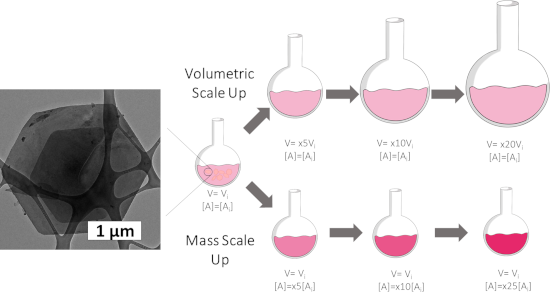
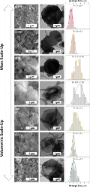
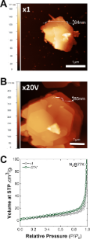
- hydroxides; layered double hydroxide; layered materials; scale-up process; synthesis; two-dimensional materials; Introduction Since the discovery of graphene [1], research on two-dimensional (2D) materials has become one of the most relevant topics in physics, chemistry, and (nano)materials science [2][3][4


Green SPIONs as a novel highly selective treatment for leishmaniasis: an in vitro study against Leishmania amazonensis intracellular amastigotes
Beilstein J. Nanotechnol. 2023, 14, 893–903, doi:10.3762/bjnano.14.73
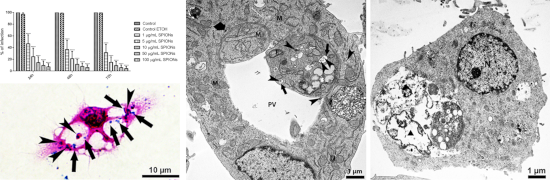
- , Duque de Caxias, RJ, Brasil Núcleo Multidisciplinar de Pesquisas em Nanotecnologia, NUMPEX-Nano, Campus UFRJ Duque de Caxias Prof. Geraldo Cidade, Universidade Federal do Rio de Janeiro, Rodovia Washington Luiz, n. 19593, km 104.5, 25240-005, Duque de Caxias, RJ, Brasil 10.3762/bjnano.14.73 Abstract


Two-dimensional molecular networks at the solid/liquid interface and the role of alkyl chains in their building blocks
Beilstein J. Nanotechnol. 2023, 14, 872–892, doi:10.3762/bjnano.14.72
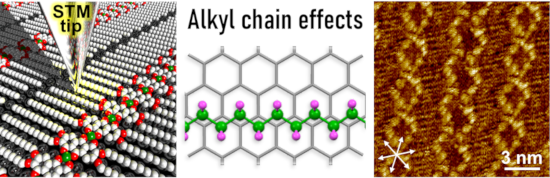
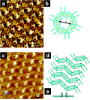
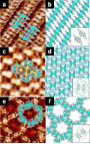
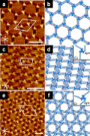
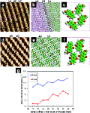
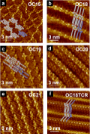
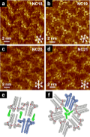
- , understanding the effects of alkyl chains and combining them with other interactions is an important strategy in the design and control of 2D nanoarchitectures. We hope that this review can evoke the unprecedented idea of nano-architecture design for the application regarding nanodevices and nanopatterning









Ultralow-energy amorphization of contaminated silicon samples investigated by molecular dynamics
Beilstein J. Nanotechnol. 2023, 14, 834–849, doi:10.3762/bjnano.14.68
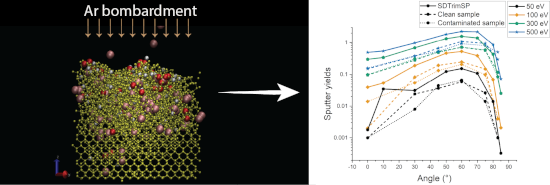
- Gregoire R. N. Defoort-Levkov Alan Bahm Patrick Philipp Advanced Instrumentation for Nano-Analytics (AINA), Materials Research and Technology Department (MRT), Luxembourg Institute of Science and Technology (LIST), 4422 Belvaux, Luxembourg University of Luxembourg, 4365 Esch-sur-Alzette




Nanostructured lipid carriers containing benznidazole: physicochemical, biopharmaceutical and cellular in vitro studies
Beilstein J. Nanotechnol. 2023, 14, 804–818, doi:10.3762/bjnano.14.66
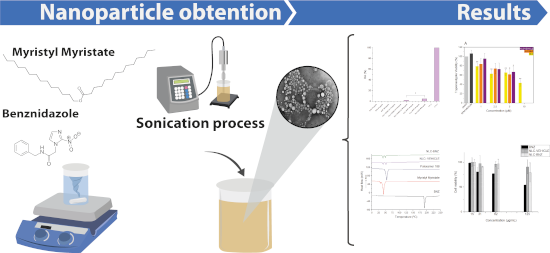
- polydispersion index Nano ZS Zetasizer (Malvern Instruments Corp, Worcestershire, UK) was used to measure particle size distribution and mean diameter by DLS at 25 °C in polystyrene cuvettes with a thickness of 10 mm. The zeta potential was determined by Doppler anemometry using the previously described


Cross-sectional Kelvin probe force microscopy on III–V epitaxial multilayer stacks: challenges and perspectives
Beilstein J. Nanotechnol. 2023, 14, 725–737, doi:10.3762/bjnano.14.59
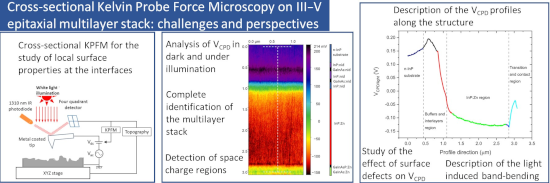
- considered. In particular, contamination of the tip is likely to occur due to pollutants (e.g., nano- and/or micrometre-size dust grains), which may be present on the sample surface leading to a variation of the tip surface potential. The tip-averaging effect represents an important aspect of KPFM under





