Search results
Search for "nanospheres" in Full Text gives 142 result(s) in Beilstein Journal of Nanotechnology.
Tailoring bifunctional hybrid organic–inorganic nanoadsorbents by the choice of functional layer composition probed by adsorption of Cu2+ ions
Beilstein J. Nanotechnol. 2017, 8, 334–347, doi:10.3762/bjnano.8.36
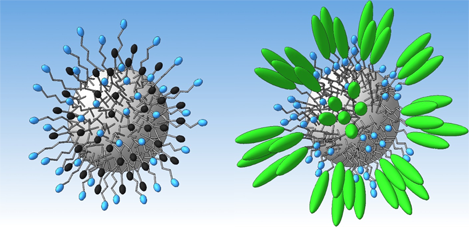
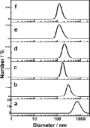
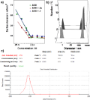
- was optimized controlling the synthesis conditions, such as concentrations of reactants, basicity of the medium, and the process temperature. Keywords: copper(II) ions; methyl groups; N- and F-containing functional groups; silica nanospheres; sol–gel processes; sorption; surface chemistry


Nanoscale isoindigo-carriers: self-assembly and tunable properties
Beilstein J. Nanotechnol. 2017, 8, 313–324, doi:10.3762/bjnano.8.34
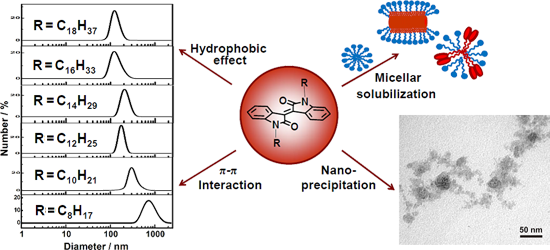
- , hyaluronic acid, and heparin, also amphiphilic prodrugs, and supramolecular hydrogels) [38][39][40]. One of the main strategies deals with the creation of self-assembled supramolecular structures with tunable morphologies (e.g., nanospheres, rods, nanofibers or nanotubes) adapted to the administration route
- and hydrogen bonding. Another strategy is the use of soft matter (micelles, emulsions, dendrimers, nanospheres, solid lipid nanoparticles or liposomes) as the delivery vehicle. These studies have been encouraged by the possibility to prevent side effects, to increase drug bioavailability, to decrease




Tunable longitudinal modes in extended silver nanoparticle assemblies
Beilstein J. Nanotechnol. 2016, 7, 1219–1228, doi:10.3762/bjnano.7.113
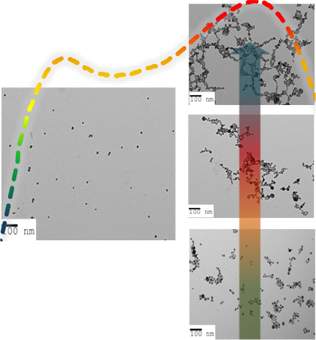
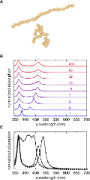
- approximation (DDA) method [45]. A similar approach as the method used here has been earlier successfully used to model DNA-assembled nanospheres [46]. Extinction spectra of AgNPs modified by varying ratios of ligands: A) cysteamine, B) DTT and C) cysteine. Legend: r = number of ligand molecules/AgNP. Insets


The role of morphology and coupling of gold nanoparticles in optical breakdown during picosecond pulse exposures
Beilstein J. Nanotechnol. 2016, 7, 869–880, doi:10.3762/bjnano.7.79
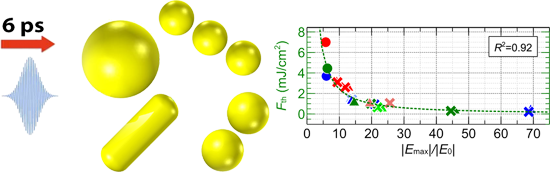
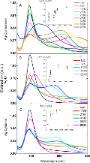
- -dimensional assembly of particles affects the optical breakdown threshold of its surroundings. For this purpose we used a fully coupled electromagnetic, thermodynamic and plasma dynamics model for a laser pulse interaction with gold nanospheres, nanorods and assemblies, which was solved using the finite
- affected by the optical properties of the surrounding environment [3], the morphology of individual nanoparticle as well as the formation of nanoparticle assemblies [4][5]. Nanospheres and nanorods are the two most common shapes of gold nanoparticles. They can be made to assemble through binding to the
- resonance peaks of gold nanospheres towards the near infrared region. (This is useful in biological applications, where light has a good penetration depth) [5][16]. The use of plasmonic nanoparticles and the associated near-field enhancement has been used in applications based on the laser-induced breakdown




Surface coating affects behavior of metallic nanoparticles in a biological environment
Beilstein J. Nanotechnol. 2016, 7, 246–262, doi:10.3762/bjnano.7.23
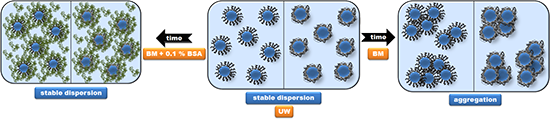
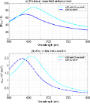
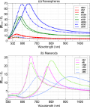
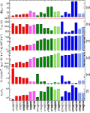
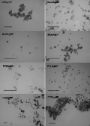
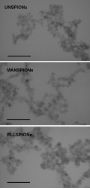
- TEM images provide evidence that no changes in the morphology or size of the CITAgNPs, PVPAgNPs and BSAAgNPs occurred upon dispersion in BM. Conversely, after being dispersed in the BM, all of the other studied NPs exhibited disordered and agglomerated morphologies (Figure 6). Small AgNP nanospheres
- nanodiscs, triangular nanoplates or nanospheres. In recent years, solution-phase methods developed rapidly toward a reproducible preparation of metallic NPs with controlled shape [66]. A typical synthesis of nanocrystals can be divided into three levels: nucleation, evolution of nuclei into seed, and growth




Evaluation of gas-sensing properties of ZnO nanostructures electrochemically doped with Au nanophases
Beilstein J. Nanotechnol. 2016, 7, 22–31, doi:10.3762/bjnano.7.3
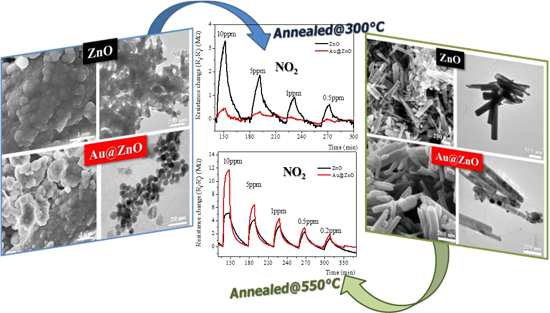
- . Comparing the pristine ZnO nanostructures annealed at the two different temperatures the responses of ZnO nanorods formed at 550 °C were higher than those of ZnO nanospheres obtained at 300 °C. Thus, the poor response of ZnO nanospheres compared to ZnO nanorods, although their surface area is higher, is
- possibly related to transducer function. Rai et al. [5] reported that the presence of a great number of grain boundaries in ZnO nanospheres acts as a highly resistive barrier, inducing the increase of the overall device resistance, since the electrical conductivity is equally influenced by the density and
- mobility of the charge carriers in the material. Moreover, the response times of pristine ZnO nanorods at different NO2 concentrations are lower compared to that of ZnO nanospheres, although their recovery times are higher, as reported in Table 2. H2S detection by means of ZnO nanostructures was




Green and energy-efficient methods for the production of metallic nanoparticles
Beilstein J. Nanotechnol. 2015, 6, 2354–2376, doi:10.3762/bjnano.6.243
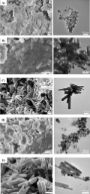
- into solution to synthesize Ag nanosheets. They claimed that the in situ generated Al(OH)3 influenced the formation of Ag nanosheets. The produced nanosheets in 60 min reaction had a thickness of 20–30 nm [111]. Sun and Li produced colloidal carbon micro and nanospheres from glucose in a hydrothermal


The Kirkendall effect and nanoscience: hollow nanospheres and nanotubes
Beilstein J. Nanotechnol. 2015, 6, 1348–1361, doi:10.3762/bjnano.6.139
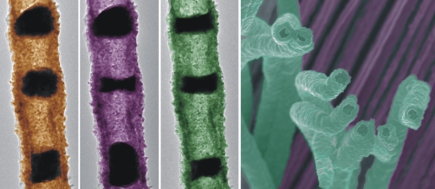
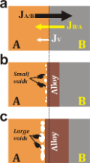
- the conversion chemistry of nanostructures from solid to hollow has reached a very advanced maturity, there is still much to be discovered and learned on this effect. Here, the recent progress on the use of the Kirkendall effect to synthesize hollow nanospheres and nanotubes is reviewed with a special
- emphasis on the fundamental mechanisms occurring during such a conversion process. The discussion includes the oxidation of metal nanostructures (i.e., nanospheres and nanowires), which is an important process involving the Kirkendall effect. For nanospheres, the symmetrical and the asymmetrical mechanisms
- conclude with a summary, where the prospective future direction of this research field is discussed. Keywords: hollow nanospheres; Kirkendall effect; metals; nanotubes; oxides; Review Introduction In the years following the discovery of the diffusion of gold in solid lead by Roberts-Austen in 1896 [1][2



Influence of the shape and surface oxidation in the magnetization reversal of thin iron nanowires grown by focused electron beam induced deposition
Beilstein J. Nanotechnol. 2015, 6, 1319–1331, doi:10.3762/bjnano.6.136
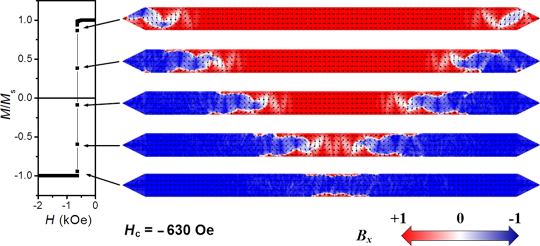
- magnetic structures [19], the growth of three-dimensional nanowires [20][21] and the fabrication of nanospheres on scanning probe tips [22][23]. One of the crucial parameters to be controlled in such magnetic nanostructures grown by FEBID is the coercive field, HC, which corresponds to the magnetic field


PLGA nanoparticles as a platform for vitamin D-based cancer therapy
Beilstein J. Nanotechnol. 2015, 6, 1306–1318, doi:10.3762/bjnano.6.135
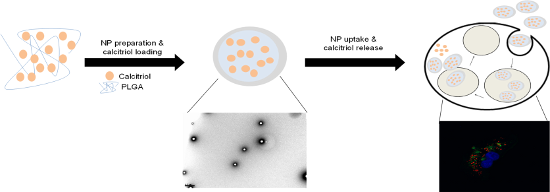
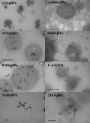
- significant. Acronyms TEM images of (a) unloaded PLGA nanospheres, scale bar: 200 nm; and (b) loaded PLGA nanospheres, scale bar: 500 nm. The white arrow indicates the pluronic layer surrounding the PLGA NP. In vitro release profile of calcitriol from PLGA NPs in PBS (0.01 M, pH 7.4) at 37 °C. The data is


Experimental determination of the light-trapping-induced absorption enhancement factor in DSSC photoanodes
Beilstein J. Nanotechnol. 2015, 6, 886–892, doi:10.3762/bjnano.6.91
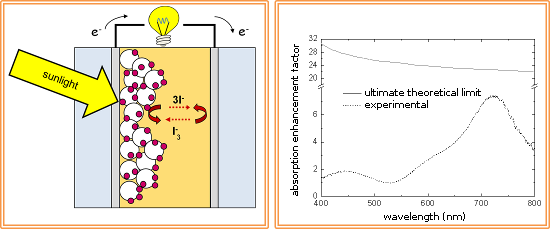
- photoanode with the light absorbed by the dye without the mesoporous titania structure. In order to gain more insight from this result, the fraction of light absorbed in the photoanode (on the basis of the dye loading capacity of the titania nanospheres) was also calculated by an optical model for the two
- titania nanospheres was also calculated using a simplified, purely optical model in the two extreme cases of no or maximum light trapping [14]. The corresponding short-circuit photocurrent density under AM1.5 illumination of an ideal DSSC was then calculated for the two limiting cases above and compared


Silica micro/nanospheres for theranostics: from bimodal MRI and fluorescent imaging probes to cancer therapy
Beilstein J. Nanotechnol. 2015, 6, 546–558, doi:10.3762/bjnano.6.57
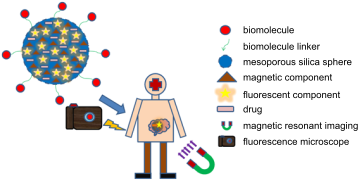
- materials have limitations such as low chemical stability (magnetic component) and harsh cytotoxic effects (fluorescent component) and, hence, require a biocompatible protecting agent. Silica micro/nanospheres have shown promise as protecting agent due to the high stability and low toxicity. This review
- will cover a full description of MRI-active and fluorescent multifunctional silica micro/nanospheres including the design of the probe, different characterization methods and their application in imaging and treatment in cancer. Keywords: bimodal imaging; fluorescence imaging; magnetic nanoparticles
- ; organic dyes; quantum dots; silica nanospheres; theranostics; Review 1 Introduction In the modern era of medical diagnosis, X-rays have long played a major role in the clinical imaging of anatomical details of disease sites [1]. However, the development of suitable molecular diagnostic systems for


Influence of size, shape and core–shell interface on surface plasmon resonance in Ag and Ag@MgO nanoparticle films deposited on Si/SiOx
Beilstein J. Nanotechnol. 2015, 6, 404–413, doi:10.3762/bjnano.6.40
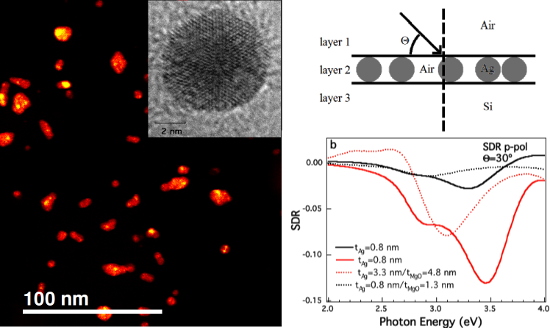
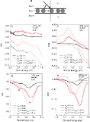
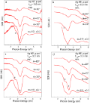
- originated by the coalescence process, in accordance with the experimental observations (see Figure 2). The plasmon resonance linked to the nanospheres and the minor axes of the nanospheroids causes the deep recess (minimum) around 3.5 eV, which slightly blue-shifted with respect to the film thickness ratio
- dimers or other smaller aggregates. Indeed, for both thicknesses, the simulations provide a good match with the experiments when the quantity of nanospheroids is less than that of the nanospheres (compare Figure 3e with Figure 3c). For tAg = 0.8 nm, the best spectrum reproduction was found for a
- coordinates. Equation 1 reduces to the well-known Maxwell Garnett formula with spherical inclusions when only nanospheres of the same material are considered (i.e., when i = 1 and L11 = L12 = L13 = 1/3) [10][43][44]: SEM images taken from (a) bare Ag NP deposited on Si/SiOx substrates with tAg = 0.8 nm (given



Mechanical properties of MDCK II cells exposed to gold nanorods
Beilstein J. Nanotechnol. 2015, 6, 223–231, doi:10.3762/bjnano.6.21
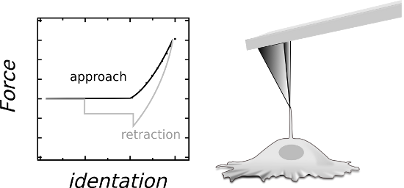
- coated gold nanoparticles (>100 kPa). Importantly, this effect seems to be independent of particle shape. Using CTAB-coated gold nanospheres with a mean diameter of 43 nm we found that at a particle concentration of 3 μg/mL already results in a Young’s modulus of E = 42 kPa (Figure 5). Higher particle
- of cells with GDA results in a shift to lower resonance frequency by a few hundred Hertz, while dissipation grows [14]. The same is observed for CTAB-coated gold nanorods and nanospheres (Figure 6). In good accordance, elasticity measurements of MDCK II cells after GDA fixation with an AFM provides a
- after reaching confluence by washing with PBS, followed by trypsinization and centrifugation at 110g. Particle synthesis and characterization Gold nanorods and nanospheres were prepared as described previously following the seeded growth method [25]. First, seeds were prepared by adding 0.6 mL of ice


Functionalization of α-synuclein fibrils
Beilstein J. Nanotechnol. 2015, 6, 124–133, doi:10.3762/bjnano.6.12
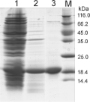
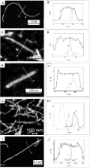
- ]. These natural building blocks with a wide range of modifiable properties have become very attractive tools for applications in biotechnology, material science, molecular electronics and related fields [6]. A variety of nanostructures, including nanotubes, nanospheres, nanofibers, nanotapes and hydrogels


Mammalian cell growth on gold nanoparticle-decorated substrates is influenced by the nanoparticle coating
Beilstein J. Nanotechnol. 2014, 5, 2479–2488, doi:10.3762/bjnano.5.257
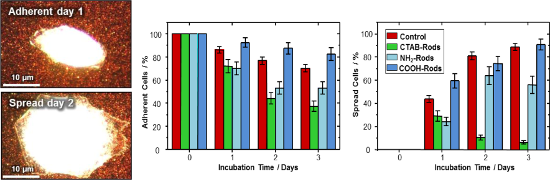
- larger in diameter than the actual size of the nanoparticles and the spot color is the plasmon frequency. This correlates to the particle shape: green spots are correlated with single gold nanospheres, while red spots correlate to individual gold nanorods. When the aggregation of two or more particles


Localized surface plasmon resonances in nanostructures to enhance nonlinear vibrational spectroscopies: towards an astonishing molecular sensitivity
Beilstein J. Nanotechnol. 2014, 5, 2275–2292, doi:10.3762/bjnano.5.237
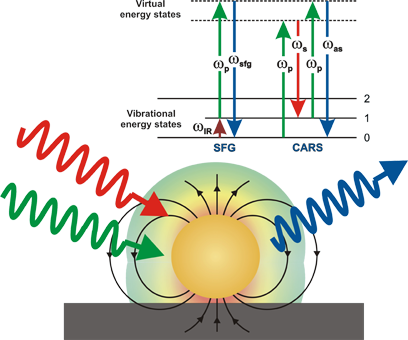
- the junction between the nanospheres, with a strong dipolar contribution parallel to the substrate. This explains the necessity to use ssp polarization (in the order of SFG, vis, IR) to obtain a strong amplification for such dense nanoparticle layer. As a result, an octadecanethiol SAM chemisorbed on




Properties of plasmonic arrays produced by pulsed-laser nanostructuring of thin Au films
Beilstein J. Nanotechnol. 2014, 5, 2102–2112, doi:10.3762/bjnano.5.219
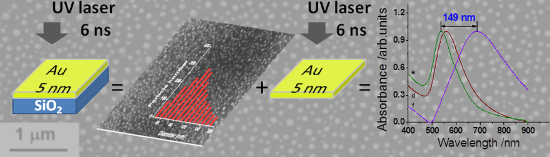
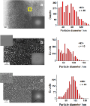
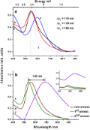
- surface plasmon resonance (SPR) peak around 520 nm resulted in the observable decrease of the film roughness and resistivity [14]. In case of nanostructuring of a thin Au film by a pulsed-laser beam passing through a pinhole (60 μm), the forced arrangement of nanospheres into micro-circular patterns due


Controlling the dispersion of supported polyoxometalate heterogeneous catalysts: impact of hybridization and the role of hydrophilicity–hydrophobicity balance and supramolecularity
Beilstein J. Nanotechnol. 2014, 5, 1749–1759, doi:10.3762/bjnano.5.185
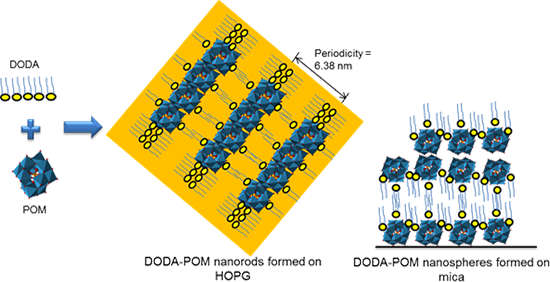
- dictated by the interaction of the alkyl side chains of DODA with the substrate surface. On HOPG, the DODA–POM hybrid forms small domains of epitaxially arranged straight nanorod structures with their orientation parallel to each other. Conversely, randomly distributed nanospheres are formed when the
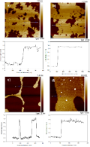
- , DODA–POM hybrids form randomly distributed nanosphere-like assemblies on the hydrophilic mica surface. The vertical height of the nanospheres, as measured by AFM cross-section analysis, were 8.0 ± 0.2 nm, and 17.5 ± 0.5 nm for the hybrids formed from Keggin and WD POM, respectively (Figure 6). A close
- examination of the cross-section of the nanospheres in Figure 6a shows that they are composed of vertical multi-layered assemblies. The thickness of the first layer is ca. 4.5 nm, while that of the second layer is ca. 3.5 nm, resulting in an overall thickness of ca. 8 nm. The vertical assembly of DODA–POM


Protein-coated pH-responsive gold nanoparticles: Microwave-assisted synthesis and surface charge-dependent anticancer activity
Beilstein J. Nanotechnol. 2014, 5, 1452–1462, doi:10.3762/bjnano.5.158
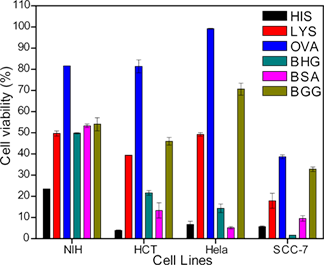
- and hence carried a negative surface charge. A recent report shows that gold nanospheres attached to a negatively charged cell surface penetrate the cell wall more easily, if they carry positive charges, because the cell membrane tries to restore its previous surface charge distribution by removing



Functionalized nanostructures for enhanced photocatalytic performance under solar light
Beilstein J. Nanotechnol. 2014, 5, 994–1004, doi:10.3762/bjnano.5.113
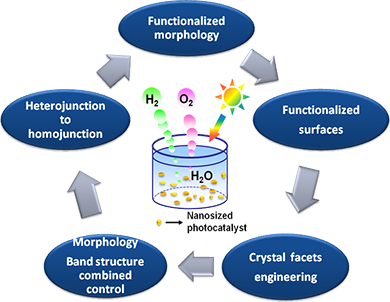
- hydrogen production. Both CuGa2In3S8 (1.91 eV) and AgGa2In3S8 (2.27 eV) showed a quite high photocatalytic activity [62]. Chen and co-workers synthesized hierarchical ZnS–In2S3–CuS nanospheres with a nanoporous structure. A high QE of 22.6% at 420 nm is achieved without loading cocatalysts due to their


Nanodiamond-DGEA peptide conjugates for enhanced delivery of doxorubicin to prostate cancer
Beilstein J. Nanotechnol. 2014, 5, 937–945, doi:10.3762/bjnano.5.107
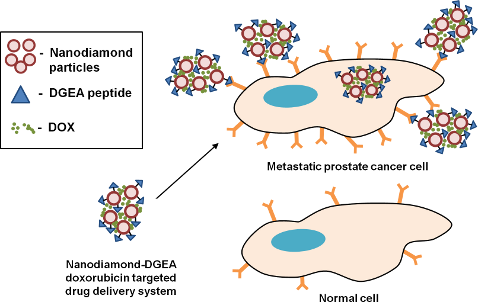
- tumor types [6][7][8][9]. Currently, there are several clinically approved nanoparticle-based cancer drugs using liposomes, nanoparticle albumin-bound (nab) technology, dendrimers, polymeric, carbon, and metal nanoparticles [6][8]. Gold nanorods, iron magnetic nanoparticles, polymer nanospheres, lipids


Optimizing the synthesis of CdS/ZnS core/shell semiconductor nanocrystals for bioimaging applications
Beilstein J. Nanotechnol. 2014, 5, 919–926, doi:10.3762/bjnano.5.105
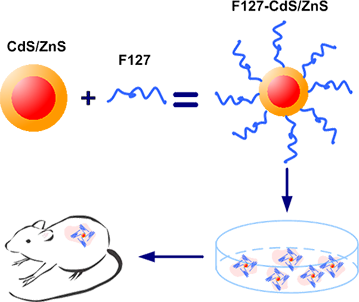
- analysis, the thickness of the adsorbed polymer layer was determined according to Equation 2 [36]: where δ is the width of the polymer layer, da is the hydrodynamic size after polymer adsorption and d0 is the hydrodynamic size of the bare nanospheres. However, the bare nanospheres were not stable. From
- stabilize nanospheres and prolong their circulation time in vivo. In this experiment, F127 was used to modify the surface of the CdS/ZnS QDs Preparation of in vitro cell imaging Panc-1 cells were maintained in Dulbecco’s modified Eagle’s medium (DMEM, Sigma-Aldrich) supplemented with 10% fetal bovine serum


Antimicrobial nanospheres thin coatings prepared by advanced pulsed laser technique
Beilstein J. Nanotechnol. 2014, 5, 872–880, doi:10.3762/bjnano.5.99
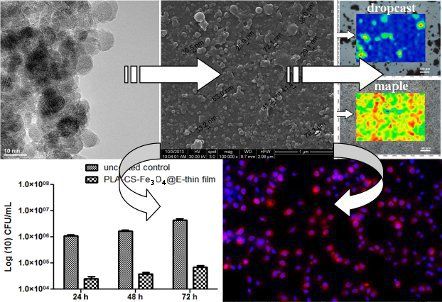
- -chitosan-magnetite-eugenol (PLA-CS-Fe3O4@EUG) nanospheres by matrix assisted pulsed laser evaporation (MAPLE). Transmission electron microscopy (TEM) and scanning electron microscopy (SEM) investigation proved that the homogenous Fe3O4@EUG nanoparticles have an average diameter of about 7 nm, while the PLA
- -CS-Fe3O4@EUG nanospheres diameter sizes range between 20 and 80 nm. These MAPLE-deposited coatings acted as bioactive nanosystems and exhibited a great antimicrobial effect by impairing the adherence and biofilm formation of Staphylococcus aureus (S. aureus) and Pseudomonas aeruginosa (P. aeruginosa
- nanoparticles; nanospheres; P. aeruginosa; polylactic acid; S. aureus; Introduction Driven by more and more microbial antibiotic resistance, alternative therapeutic approaches are emerging [1][2][3][4]. Polar and nonpolar, functionalized and non-functionalized magnetite nanostructures have proven successfully