Search results
Search for "nanostructure" in Full Text gives 366 result(s) in Beilstein Journal of Nanotechnology. Showing first 200.
Self-standing heterostructured NiCx-NiFe-NC/biochar as a highly efficient cathode for lithium–oxygen batteries
Beilstein J. Nanotechnol. 2020, 11, 1809–1821, doi:10.3762/bjnano.11.163
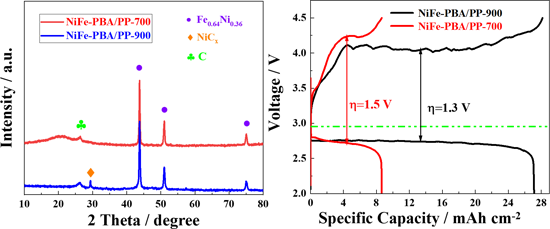
- [26]. For instance, molybdenum/tungsten carbide with a well-defined nanostructure was synthesized via a hydrothermal method, and the obtained metal carbide catalyst yielded a high capacity in lithium–oxygen batteries [15]. Also, titanium carbide was synthesized by Bruce et al. as cathode material for
- porous cubic nanostructure exhibiting excellent catalytic properties [36][37]. Biomass materials can be used to prepare N-doped carbons since their proteins contain nitrogen atoms. This method is an economically viable way to produce N-doped carbons at a large scale [38][39]. Our group has synthesized a






Molecular dynamics modeling of the influence forming process parameters on the structure and morphology of a superconducting spin valve
Beilstein J. Nanotechnol. 2020, 11, 1776–1788, doi:10.3762/bjnano.11.160
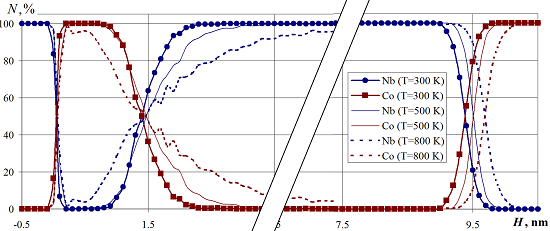
- atomic structures depending on the main parameters of the deposition process. Keywords: hybrid nanostructure; mathematical modeling; modified embedded-atom method; molecular dynamics; spintronics; spin valve; vacuum deposition; Introduction Multilayer superconductor/ferromagnetic (S/F) hybrid
- nondissipative elements of spintronics, it is possible to create new superconducting nanoelectronics devices that consume minimum energy and have a high operation speed [8][9][10][11][12][13]. One type of magnetic nanostructure with wide potential use is the spin valve [14][15], consisting of several magnetic
- significantly reduce the number of technological steps and adjustments required to obtain the desired multilayer nanostructure. It should be noted that mathematical modeling is widely used in the design and analysis of various nanosystems properties [24][25]; however, in relation to the considered class of


Selective detection of complex gas mixtures using point contacts: concept, method and tools
Beilstein J. Nanotechnol. 2020, 11, 1631–1643, doi:10.3762/bjnano.11.146
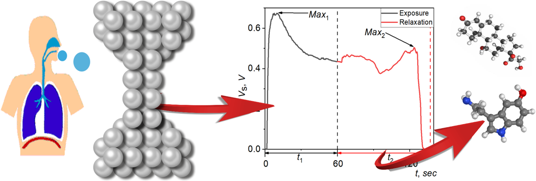
- special technique during the synthesis of this nanostructure. The production of the energy source and the matrix as a whole is based on electrochemical processes described previously [34][37][38]. The applied technology guaranteed high reliability and longevity to the sensor elements. Point-contact sensor


![[Graphic 4]](/bjnano/content/inline/2190-4286-11-146-i8.svg?max-width=637&scale=1.18182) in th...
in th...

![[Graphic 7]](/bjnano/content/inline/2190-4286-11-146-i11.svg?max-width=637&scale=1.18182) in the...
in the...
High-responsivity hybrid α-Ag2S/Si photodetector prepared by pulsed laser ablation in liquid
Beilstein J. Nanotechnol. 2020, 11, 1596–1607, doi:10.3762/bjnano.11.142
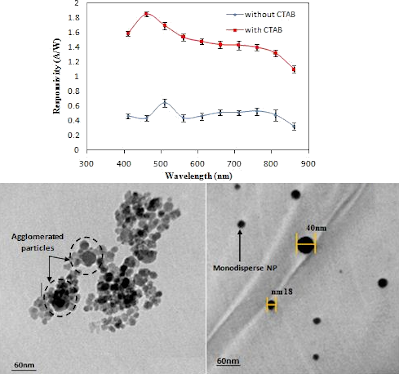
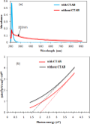
- . Two peaks appeared at 2842 and 2942 cm−1 in the FTIR spectrum of Ag2S prepared with CTAB. These peaks were attributed to the methylene (–CH2) extension vibration, indicating the adsorption of CTAB on the nanostructure surface. The broad IR peak at 3400 cm−1 is indexed to the presence of adsorbed water




Fabrication of nano/microstructures for SERS substrates using an electrochemical method
Beilstein J. Nanotechnol. 2020, 11, 1568–1576, doi:10.3762/bjnano.11.139
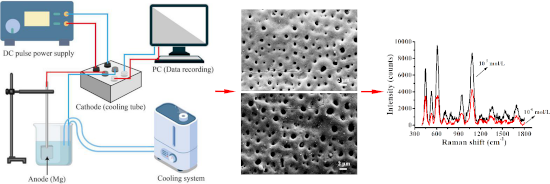
- ] fabricated micro/nanostructures on the surface of Au-coated single crystal silicon. By changing the etching time and current, micro/nanostructures with different size scales and geometric shapes (such as hexagons and pentagons) were obtained. Compared with other geometries, the hexagonal micro/nanostructure


Optically and electrically driven nanoantennas
Beilstein J. Nanotechnol. 2020, 11, 1542–1545, doi:10.3762/bjnano.11.136

- . However, owing to the polarization and far-field interference, a silencing of the SHG is observed for decreasing gap sizes [53]. This effect is further studied in [54] using the surface integral equation method. On the other hand, the generation of higher harmonics by a dielectric nanostructure can be
Wafer-level integration of self-aligned high aspect ratio silicon 3D structures using the MACE method with Au, Pd, Pt, Cu, and Ir
Beilstein J. Nanotechnol. 2020, 11, 1439–1449, doi:10.3762/bjnano.11.128
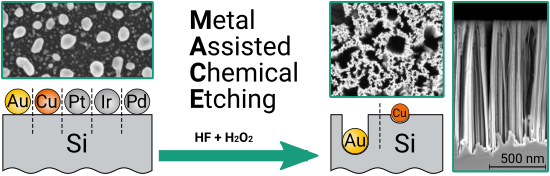
- MEMS process flow. This means that the etched silicon structures have to be fabricated within a pre-defined area of the die with common semiconductor fabrication processes. These nanostructure templates are the basis for a further processing towards integrated functional systems. Results and Discussion
- The fabrication of the wafer-level integrated nanostructure templates is divided into two main parts, i.e., the formation of the noble metal nanoparticles, and the subsequent silicon wet etching process. The subsidiary process steps are standard semiconductor processes and therefore not analysed and
- main etching mechanism remains the same. However, these structures stick together at the topmost point. The nanostructure bundles form during the drying process. This occurs when the capillary forces during drying are high enough to cluster neighbouring single Si wires, and the adhesion force of the


Analysis of catalyst surface wetting: the early stage of epitaxial germanium nanowire growth
Beilstein J. Nanotechnol. 2020, 11, 1371–1380, doi:10.3762/bjnano.11.121
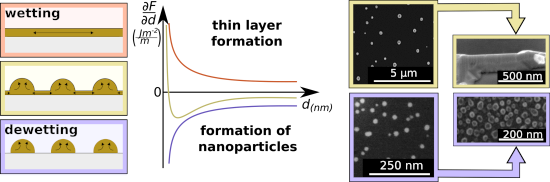
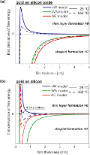
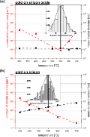
- grow germanium nanowires on different substrates is described. Keywords: dewetting; germanium; interfacial energy; Laplace pressure; nanostructure; nanowire; Ostwald ripening; wetting layer; Introduction Wetting phenomena as well as the formation and movement of droplets are essential for numerous


Photothermally active nanoparticles as a promising tool for eliminating bacteria and biofilms
Beilstein J. Nanotechnol. 2020, 11, 1134–1146, doi:10.3762/bjnano.11.98
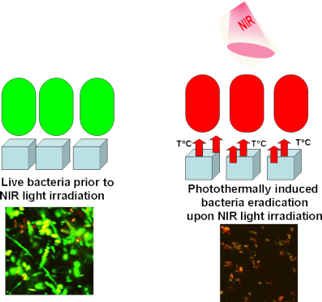
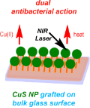
- terms of their photothermally induced antibacterial activity [80][81]. Currently, there are still a few studies relating the application of the photothermal effect on CuS to eradicate bacteria. A multifunctional core/satellite nanostructure was engineered by decorating CuS nanoparticles onto the surface


Thermophoretic tweezers for single nanoparticle manipulation
Beilstein J. Nanotechnol. 2020, 11, 1126–1133, doi:10.3762/bjnano.11.97
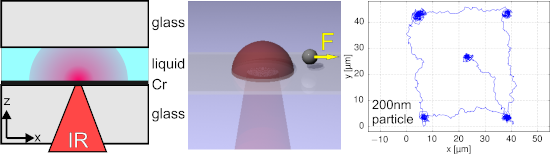
- tweezers is that the former uses a plasmonic nanostructure to create large local temperature gradients of the order of 100 K/μm, while the temperature gradients in our experiments, using a uniform substrate, are approximately ten times lower. To understand the effect of the gradient ∇T, one can define the
- molecules in the “reactor” area is needed. A combination of a uniform absorbing substrate for large-scale manipulation and a central, smaller plasmonic nanostructure with a large thermal gradient, therefore, seems ideal. One might argue about another limitation of the setup for single-molecule chemistry


Excitonic and electronic transitions in Me–Sb2Se3 structures
Beilstein J. Nanotechnol. 2020, 11, 1045–1053, doi:10.3762/bjnano.11.89
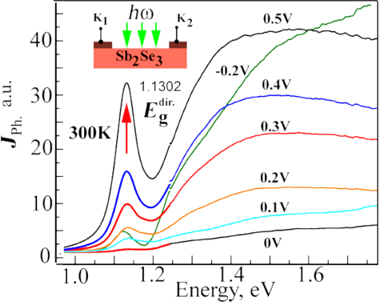
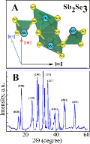
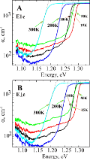
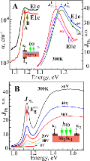
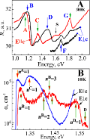
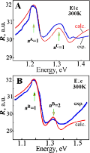
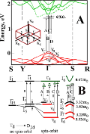
- ][15]. In order to use Sb2Se3 to build high-performance devices it is necessary to study its crystalline nanostructure in terms of band structure and optical and optoelectronic properties, especially in the bandgap region in which ambiguous and contradictory results have been obtained. For example, the


A new photodetector structure based on graphene nanomeshes: an ab initio study
Beilstein J. Nanotechnol. 2020, 11, 1036–1044, doi:10.3762/bjnano.11.88
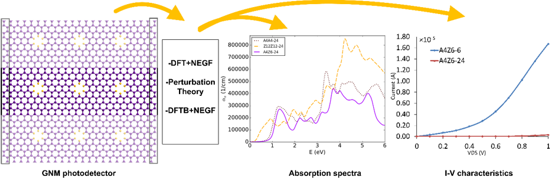
- atomic orbitals (LCAO) basis set. Generalized gradient approximation (GGA) is used for the exchange–correlation functional. A 9 × 9 k-point grid and a cutoff energy of 160 Ry are used to perform these calculations. All nanostructure geometries are relaxed. To evaluate optical absorption, the


Gas-sensing features of nanostructured tellurium thin films
Beilstein J. Nanotechnol. 2020, 11, 1010–1018, doi:10.3762/bjnano.11.85
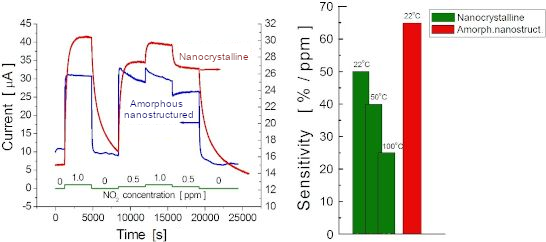
- nanostructured Te films were studied with a special focus on the gas-response kinetics. Results and Discussion Sample preparation, morphology and structure Two methods were used to nanostructure Te-based films: growth of Te nanocrystals on Pyrex glass substrates or deposition of amorphous Te films onto


A set of empirical equations describing the observed colours of metal–anodic aluminium oxide–Al nanostructures
Beilstein J. Nanotechnol. 2020, 11, 798–806, doi:10.3762/bjnano.11.64
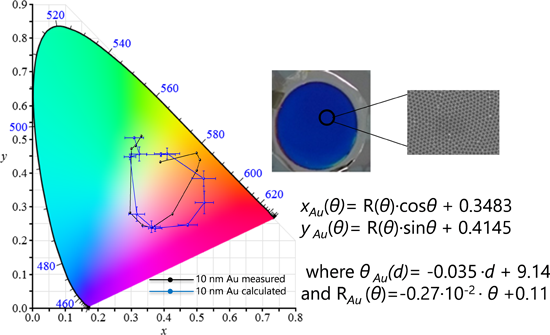
- . In a previous study by our group, the effects of morphological parameters (pore diameters, interpore distance, porosity, and nanostructure order) on the colours and the effective refractive index of AAO films were studied on metal–AAO–Al nanostructures [4]. Thickness and porosity are the two main


Light–matter interactions in two-dimensional layered WSe2 for gauging evolution of phonon dynamics
Beilstein J. Nanotechnol. 2020, 11, 782–797, doi:10.3762/bjnano.11.63
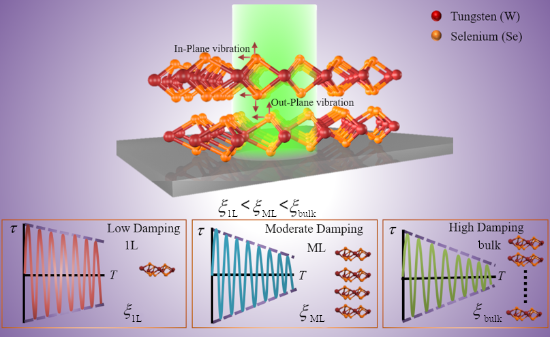
- consequently (Figure 4e) vary widely in 1L, ML, and bulk WSe2, as nanostructure differences become the more dominant scattering source at low T. These dissimilarities in the decay in 1L, ML and bulk WSe2 at low T are characterized by fitting the results of Figure 4a, i.e., τ(T) for the mode, to the

Evolution of Ag nanostructures created from thin films: UV–vis absorption and its theoretical predictions
Beilstein J. Nanotechnol. 2020, 11, 494–507, doi:10.3762/bjnano.11.40
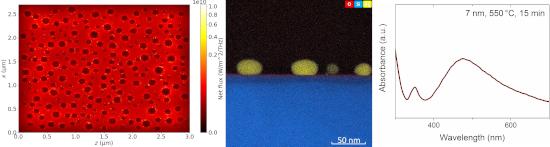
- responsible for dewetting. Especially because defects are always present in the interface between the substrate and the film. In the design of metallic nanostructure systems for plasmonic applications, the homogeneous distribution of nanostructures is very important, both in size and location on the surface
- different periods of time: (a) 1 min, (b) 5 min, (c) 10 min and (d) 15 min; (e) average nanostructure diameter as a function of the annealing time. SEM images of a 2.8 nm thick film, annealed for a constant time 15 min at different temperatures: (a) 100 °C, (b) 200 °C, (c) 300 °C, (d) 400 °C, (e) 500 °C and
- (f) 600 °C; (g) average nanostructure diameter as a function of the annealing temperature. (a) HRTEM image of a cross section of a nanoisland formed from a 3 nm thick film, annealed at 550 °C for 15 min; (b) EDS analysis and (c) detailed EDS analysis of the cross section of the nanoisland. Absorbance




An advanced structural characterization of templated meso-macroporous carbon monoliths by small- and wide-angle scattering techniques
Beilstein J. Nanotechnol. 2020, 11, 310–322, doi:10.3762/bjnano.11.23
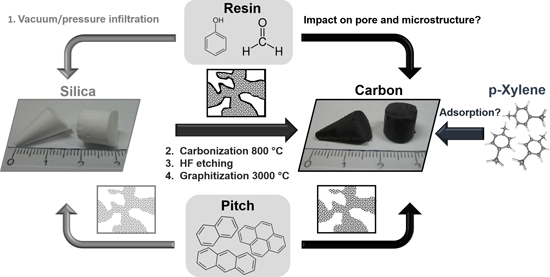
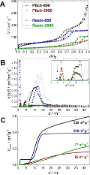
- resin- and pitch-based samples treated at 3000 °C show no general (hkl) reflections as expected for graphite, while the non-templated precursors are converted to graphite at this temperature. This absence of 3D order can be attributed to the confinement and the nanostructure, which hinder the
- counterintuitive as pitches belong to the carbon materials that usually transform readily into graphite. This inhibition of graphite formation is probably due to the confinement effect of the nanostructure imposed by the nanoscale porosity. The structural alterations on the nanometer scale are depicted in Figure 8




Rational design of block copolymer self-assemblies in photodynamic therapy
Beilstein J. Nanotechnol. 2020, 11, 180–212, doi:10.3762/bjnano.11.15
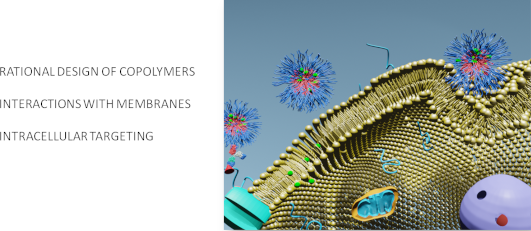
- in order to induce a change in the nanostructure as a consequence of a change of pH value. Piperidine groups for example possess a pKa value close to the acidity of tumor tissues and exhibit a transition from hydrophobic at pH 7.4 to hydrophilic at pH 6.8. As a consequence, micelles increase their







Fabrication of Ag-modified hollow titania spheres via controlled silver diffusion in Ag–TiO2 core–shell nanostructures
Beilstein J. Nanotechnol. 2020, 11, 141–146, doi:10.3762/bjnano.11.12
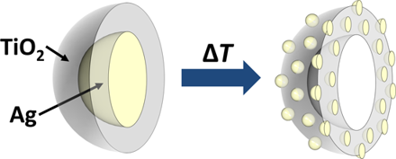
- dedicated to fabrication and application of plasmonic NP-modified TiO2 HSs have been published, including those mentioned above. In most cases the methodologies used are either complex or allow only for a limited control of the nanostructure morphologies and the resulting properties. In addition, we are not
- to several changes occurring in the nanostructure morphology. Any interactions affecting the optical properties of these CSNs occurred only between a single silver core and the titania shell. Based on the proposed mechanism, the annealing gradually led to a transformation of the single and relatively



Synthesis and acetone sensing properties of ZnFe2O4/rGO gas sensors
Beilstein J. Nanotechnol. 2019, 10, 2516–2526, doi:10.3762/bjnano.10.242
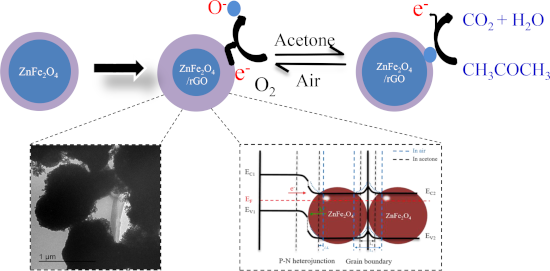
- morphology [16]. Some researchers also found that Ag-activated hollow spheres of ZnFe2O4 exhibited an excellent acetone gas-sensing performance at 175 °C [17]. Moreover, ZnFe2O4/ZnO composites showed an excellent response and recovery performance, which was attributed to their nanostructure and synergistic
- ][25][26][27][28]. An optimum ratio of the composition and the fine nanostructure will contribute to obtaining better gas-sensing properties. A gas sensor with 3 wt % reduced graphene oxide (rGO) incorporated into In2O3 showed a rapid response, an improved stability and a low limit of detection of NO2
- atmosphere. The nanostructure, the micromorphology and the acetone sensing performance of all samples were discussed. Moreover, the optimized rGO mixing ratio and the operating temperature have been determined as 0.5 wt % and 200 °C, respectively. Experimental Materials Aqueous dispersion solution of single




Label-free highly sensitive probe detection with novel hierarchical SERS substrates fabricated by nanoindentation and chemical reaction methods
Beilstein J. Nanotechnol. 2019, 10, 2483–2496, doi:10.3762/bjnano.10.239
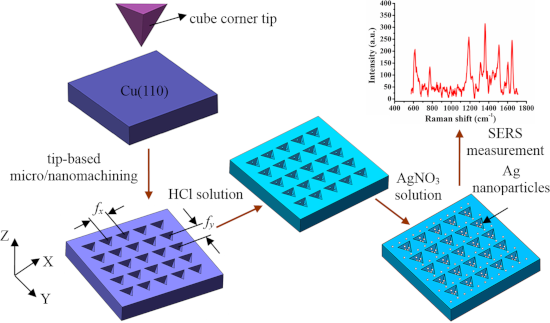
- thickness. However, nanoparticles fabricated by the chemical synthesis method have poor reproducibility and uneven density, and the hot spot position is difficult to accurately determine. Recently, many nanostructure shapes have been fabricated for use as SERS substrates including nanorods [14][15][16


Small protein sequences can induce cellular uptake of complex nanohybrids
Beilstein J. Nanotechnol. 2019, 10, 2477–2482, doi:10.3762/bjnano.10.238
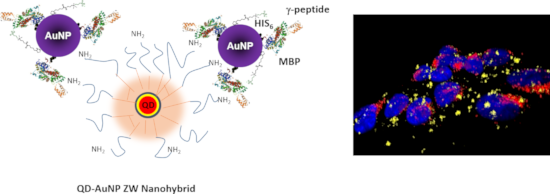
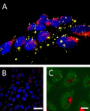
- have also been discussed [12][14][15]. More recently, there have been a few reports discussing the use of luminescent Eu-loaded hydroxyapatite nanocrystals for rapid HeLa cancer cell imaging [9][11][16], or the nanostructure self‐assembly driven by amino acid coordination to increase the biological

Multiple Fano resonances with flexible tunablity based on symmetry-breaking resonators
Beilstein J. Nanotechnol. 2019, 10, 2459–2467, doi:10.3762/bjnano.10.236
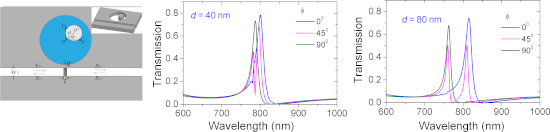
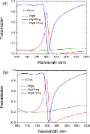
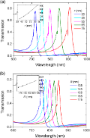
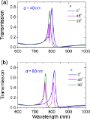
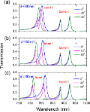
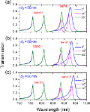
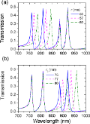
- 300072, China 10.3762/bjnano.10.236 Abstract A symmetry-breaking nanostructure is proposed to achieve multiple Fano resonances. The nanostructure consists of an asymmetric ring resonator coupled to a plasmonic waveguide. The broken symmetry is introduced by deviating the centers of regular ring. New




Design and facile synthesis of defect-rich C-MoS2/rGO nanosheets for enhanced lithium–sulfur battery performance
Beilstein J. Nanotechnol. 2019, 10, 2251–2260, doi:10.3762/bjnano.10.217
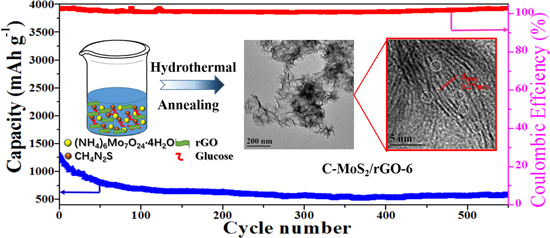
- ) method is given in Figure 5b. This difference can be ascribed to the nanostructure of smaller MoS2 nanosheets and the influence of amorphous carbon and rGO. The obtained high specific surface area of the C-MoS2/rGO-6 composite is mainly attributed to the following two aspects: a large amount of amorphous


Ultrathin Ni1−xCoxS2 nanoflakes as high energy density electrode materials for asymmetric supercapacitors
Beilstein J. Nanotechnol. 2019, 10, 2207–2216, doi:10.3762/bjnano.10.213
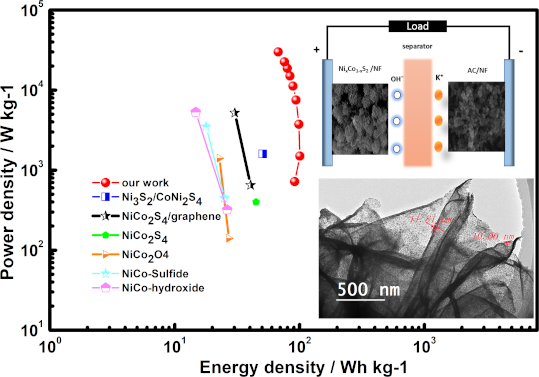
- structures with rich channels for diffusion of electrolyte ions and large surface area accessible for electrolyte ions favour the electrochemical performance of electrode materials. The morphology of the material was first investigated by SEM. From the SEM images in Figure 1, a flower-like nanostructure that
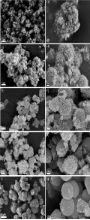
- the material can shorten the ion diffusion path lengths, overcoming the kinetics barrier of the faradaic redox reaction for most of the energy storage materials. The hierarchical nanostructure can provide abundant surface active sites for electrochemical reactions during the charge/discharge process
- method can also maintain the 3D hierarchical porous nanostructure of precursor materials. The as-prepared sulfide material exhibited improved electrochemical performance with a specific capacitance of 1066.8 F·g−1 (533.4 C·g−1) at 0.5 A·g−1 and a 63.4% capacitance retention at 20 A·g−1 and excellent