


Search results
Search for "nanowires" in Full Text gives 335 result(s) in Beilstein Journal of Nanotechnology. Showing first 200.
The effect of heat treatment on the morphology and mobility of Au nanoparticles
Beilstein J. Nanotechnol. 2020, 11, 61–67, doi:10.3762/bjnano.11.6
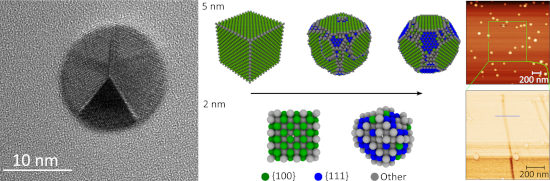
- , is annealing time. We believe that the surface effects resulting in the rounding of the NPs are due to energy minimization via a rearrangement of surface atoms, similar to the effect demonstrated recently by Vigonski et al. [17] for heat-induced segmentation of Au nanowires at temperatures much below


Label-free highly sensitive probe detection with novel hierarchical SERS substrates fabricated by nanoindentation and chemical reaction methods
Beilstein J. Nanotechnol. 2019, 10, 2483–2496, doi:10.3762/bjnano.10.239
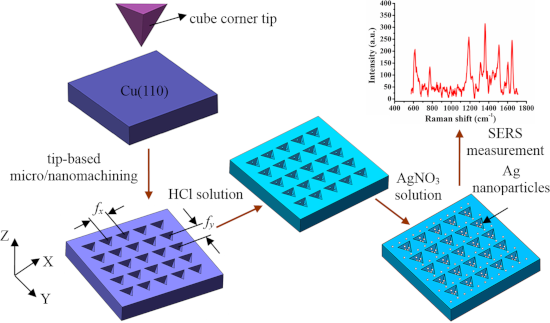
- with increase in the corrosion time in AgNO3 solution, as shown in Figure 2a,b. The Raman intensity can be enhanced further due to the formation of nanoclusters. Other scholars have already obtained similar conclusions [10][17][32]. Copper nanowires were soaked in AgNO3 solution by Wang et al. [10]. A


Abrupt elastic-to-plastic transition in pentagonal nanowires under bending
Beilstein J. Nanotechnol. 2019, 10, 2468–2476, doi:10.3762/bjnano.10.237
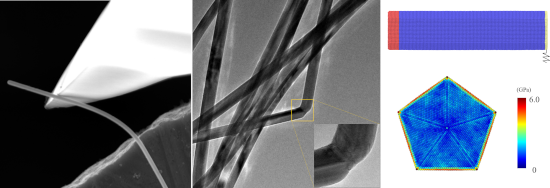
- , Kengaraga 8, LV-1063, Riga, Latvia Department of Industrial Engineering, University of Padova, Via Gradenigo 6/a, 35131 Padova, Italy, Institute of Technology, University of Tartu, Nooruse 1, 50411 Tartu, Estonia 10.3762/bjnano.10.237 Abstract In this study, pentagonal Ag and Au nanowires (NWs) were bent
- flexible polymer composite materials. Keywords: finite element method; mechanical properties; molecular dynamics; nanowires; Introduction Nanostructures comprised of noble metals with face centered cubic (FCC) crystal structure (Au, Ag and Cu according to the most common physical definition) prepared via
- soft chemical colloidal techniques often demonstrate a morphology with axes of five-fold (pentagonal) symmetry [1]. Depending on the synthesis conditions such structures can be synthesized in the form of 0D nanoparticles or high-aspect ratio 1D nanowires (NWs) with pentagonal cross-section [2][3]. The



Self-assembly of a terbium(III) 1D coordination polymer on mica
Beilstein J. Nanotechnol. 2019, 10, 2440–2448, doi:10.3762/bjnano.10.234
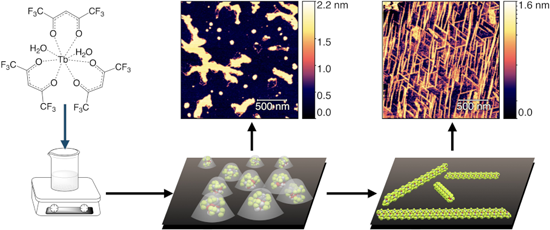
- tungsten oxide nanowires assembled on mica [21]. Insights are provided to link this ordering to the one observed in crystalline bulk [Tb(hfac)3·2H2O]n [22]. We also demonstrate that the luminescent and magnetic properties of the pristine compound are preserved on the surface, thus confirming the nature of
- suitable for atomic force microscopy (AFM) imaging [24] as well as for its hydrophilic nature promoting the interaction with the deposited molecules. Indeed, muscovite mica has already been used for the deposition of magnetic materials such as FeCoN magnetic films [25] or tungsten oxide nanowires [21]. The
- ceric oxide [38] surfaces and is favored by the presence of moisture [35]. As far as surface deposits are concerned, the epitaxial orientation of tungsten oxide (WO3) nanowires upon deposition on air-cleaved mica [21] has been linked to the formation of K2CO3 acting as a precursor for the pure WO3




A novel all-fiber-based LiFePO4/Li4Ti5O12 battery with self-standing nanofiber membrane electrodes
Beilstein J. Nanotechnol. 2019, 10, 2229–2237, doi:10.3762/bjnano.10.215
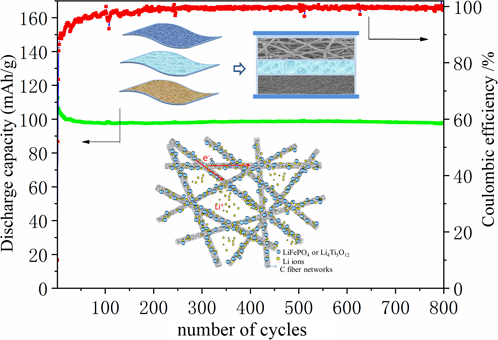
- . Nanostructures of various shapes such as nanofibers [27][28], nanoparticles [29], nanotubes [30], nanowires [31], and nanosheets [32] can greatly shorten the conduction path of Li+, thus improving the Li+ conductivity. In addition, coating or blending with conductive carbon can significantly increase the


The importance of design in nanoarchitectonics: multifractality in MACE silicon nanowires
Beilstein J. Nanotechnol. 2019, 10, 2094–2102, doi:10.3762/bjnano.10.204
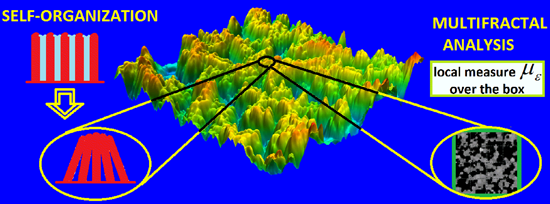
- design through suited statistical analysis tools. Results: We have investigated the self-assembly bundling process of nanowires fabricated by metal-assisted chemical etching (MACE). First, we have applied theoretical models in order to obtain a quantitative estimation of the driving forces leading to
- conditions and the capacity dimension of the nanowires was obtained. Keywords: atomic force microscopy (AFM); capillary force; metal-assisted chemical etching (MACE); multifractal analysis; nanoarchitectonics; nanowires; self-assembly; Introduction In the last years, huge progress was made regarding the
- technological advantage is that in comparison to the nanoscaled units these self-organized assemblies possess new functionalities. Atoms, molecules, or even nanoparticles or nanowires (NWs) can be used as basic units to self-arrange in new wholes. NWs are among the most widely investigated nanoscaled objects


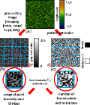


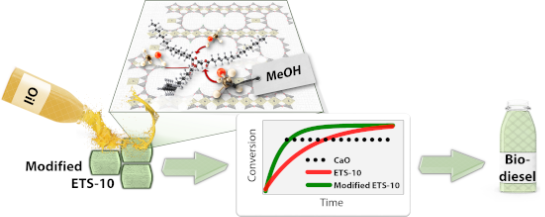
Synthesis of highly active ETS-10-based titanosilicate for heterogeneously catalyzed transesterification of triglycerides
Beilstein J. Nanotechnol. 2019, 10, 2039–2061, doi:10.3762/bjnano.10.200
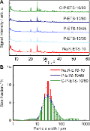
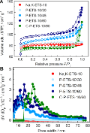
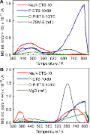
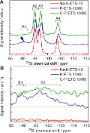
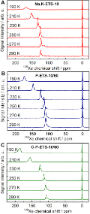
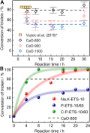
- high crystallinity of Na,K-ETS-10 is further confirmed by TEM (Figure 6) demonstrating high order of the titanosilicate framework with parallel Ti nanowires showing no visible defects on the length scale of hundreds of nanometers. The spacing between adjacent nanowires showed good agreement with








TiO2/GO-coated functional separator to suppress polysulfide migration in lithium–sulfur batteries
Beilstein J. Nanotechnol. 2019, 10, 1726–1736, doi:10.3762/bjnano.10.168
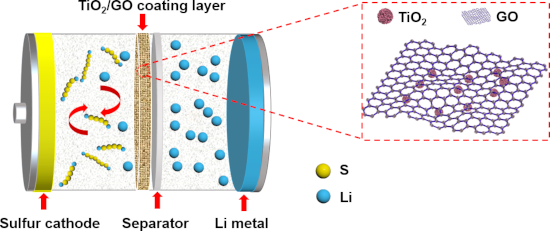
- synthesized by selectively dissolving Al atoms from a Ti10Al90 alloy. It can be readily observed that the abundant nanowires and uniform nanopores, with a pore size of ≈40 nm, formed a sea-urchin-like structure. Furthermore, the energy-dispersive X-ray spectroscopy (EDS) analysis confirms the homogenous
- distribution of Ti and O elements (Figure 3b). In addition, the transmission electron microscopy (TEM) image of TiO2 shows the nanoporous architecture with dark nanowires and bright nanopores (Figure 3c). On the other hand, the SEM and TEM images of the as-prepared TiO2/GO composite show that the surface of


Kelvin probe force microscopy work function characterization of transition metal oxide crystals under ongoing reduction and oxidation
Beilstein J. Nanotechnol. 2019, 10, 1596–1607, doi:10.3762/bjnano.10.155
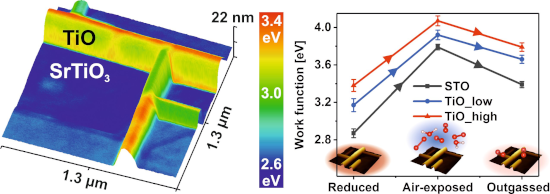
- characterization of the work function using the example of artificially formed crystalline titanium monoxide (TiO) nanowires on strontium titanate (SrTiO3) surfaces, providing a sharp atomic interface. The measured value of 3.31(21) eV is the first experimental work function evidence for a cubic TiO phase, where
- significant variations among the different crystallographic facets were also observed. Despite the remarkable height of the TiO nanowires, KPFM was implemented to achieve a high lateral resolution of 15 nm, which is close to the topographical limit. In this study, we also show the unique possibility of
- . Keywords: Kelvin probe force microscopy (KPFM); reduction and oxidation; SrTiO3; TiO nanowires; TiO/SrTiO3 heterostructure; transition metal oxides; work function; Introduction Transition metal oxides are viewed today as some of the most promising materials in various fields, ranging from (photo)catalysis


Materials nanoarchitectonics at two-dimensional liquid interfaces
Beilstein J. Nanotechnol. 2019, 10, 1559–1587, doi:10.3762/bjnano.10.153
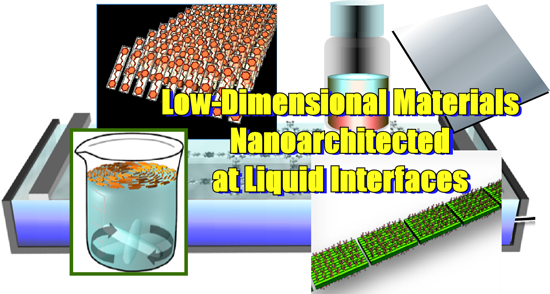
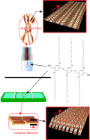
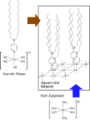
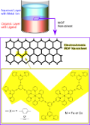
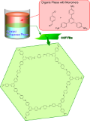
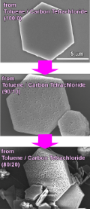
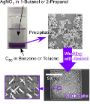
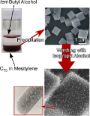
- –Blodgett method, liquid–liquid interfacial precipitation, instructed assembly, and layer-by-layer assembly to give low-dimensional materials including nanowires, nanowhiskers, nanosheets, cubic objects, molecular patterns, supramolecular polymers, metal-organic frameworks and covalent organic frameworks
- nanoarchitectonics (controlled single atom/ion transfer) to regulate the number of dopant atoms in one-dimensional solid electrolyte nanodots (α-Ag2+δS) [127]. The nanoarchitectonic construction of one-dimensional nanowires from II–VI semiconductors was demonstrated for the use as wavelength division multiplexer as
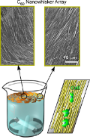
- exhibit interesting properties [209][210][211][212][213][214][215]. Such materials can be also nano-engineered at liquid interfaces. Niederberger and co-workers successfully fabricated two-dimensionally aligned arrays of one-dimensional W18O49 nanowires and used them for H2-sensing at room temperature













Selective gas detection using Mn3O4/WO3 composites as a sensing layer
Beilstein J. Nanotechnol. 2019, 10, 1423–1433, doi:10.3762/bjnano.10.140
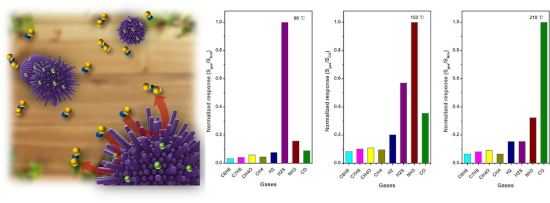
- [16]. The blue-colored precursor was first oxidized into faint-yellow-colored WO3 nanowires, and then re-crystallized to nanoparticles or nanorods of larger size with less grain boundaries in order to reduce the free energy. Furthermore, with the increase of the amount of Mn, the proportion of


Gas sensing properties of individual SnO2 nanowires and SnO2 sol–gel nanocomposites
Beilstein J. Nanotechnol. 2019, 10, 1380–1390, doi:10.3762/bjnano.10.136
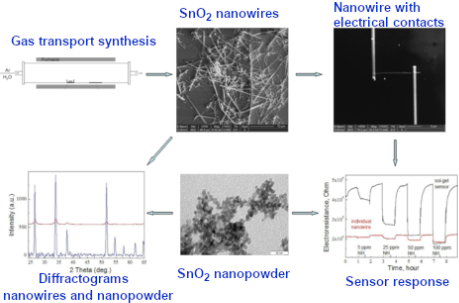
- selectivity to target gases. The aim of this work is the comparison of gas sensing properties of tin dioxide in the form of individual nanowires and nanopowders obtained by sol–gel synthesis. This comparison is necessary because the traditional synthesis procedures of small particle, metal oxide materials
- seem to be approaching their limit. Because of this, there is increasing interest in the fabrication of functional materials based on nanowires, i.e., quasi-one-dimensional objects. In this work, nanocrystalline tin dioxide samples with different morphology were synthesized. The gas-transport method
- was used for the fabrication of well-faceted wire-like crystals with diameters ranging between 15–100 nm. The sol–gel method allowed us to obtain fragile gels from powders with grain sizes of about 5 nm. By means of X-ray photoelectron spectroscopy (XPS) it was proven that the nanowires contain




Multicomponent bionanocomposites based on clay nanoarchitectures for electrochemical devices
Beilstein J. Nanotechnol. 2019, 10, 1303–1315, doi:10.3762/bjnano.10.129
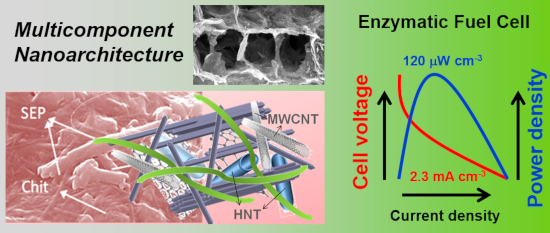
- nanofillers to ensure the mechanical strength and electrical conductivity of the prepared bionanocomposite films and foams [26]. Moreover, MWCNTs are supposed to act as nanowires improving the contact between the active site of the immobilized enzymes and an electrode surface via direct electron transfer [39
- (1000–2500 S·m−1 [14][15]). The high in-plane conductivity found here can be attributed to a synergic effect of MWCNTs and the lamellar assembly of graphene nanoplatelets in the plane of the film as observed by SEM (see Figure 3F). The MWCNTs act as nanowires connecting the GNPs, which facilitates the



Green fabrication of lanthanide-doped hydroxide-based phosphors: Y(OH)3:Eu3+ nanoparticles for white light generation
Beilstein J. Nanotechnol. 2019, 10, 1200–1210, doi:10.3762/bjnano.10.119
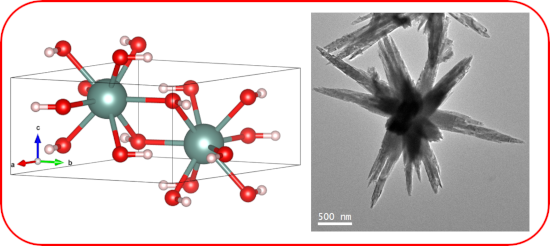
- nanowires. The level of doping for Y(OH)3:7.5% Eu3+ phosphors produced at 5 min was captured through an annular dark field (ADF) STEM micrograph and the STEM-EELS analysis of the indicated area is presented in Figure 3. Elemental composition maps of Y (red) and Eu (green) along with their composites are
- ≈10 nm thick nanowires. Annular dark field (ADF) STEM micrograph of an agglomerate of nanoparticles synthesized at 5 min with 7.5% doping ratio. STEM-EELS elemental composition maps of the area indicated with a white rectangle: Y (in red) and Eu (in green) maps along with their composite image. (a



Pure and mixed ordered monolayers of tetracyano-2,6-naphthoquinodimethane and hexathiapentacene on the Ag(100) surface
Beilstein J. Nanotechnol. 2019, 10, 1188–1199, doi:10.3762/bjnano.10.118
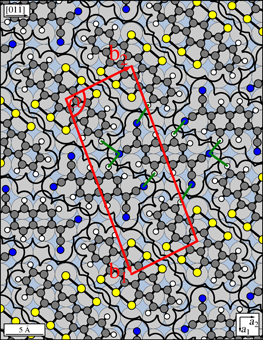
- ]. These authors [20][21] also noted that HTPEN is a one-dimensional semiconductor when it is synthesized in the form of nanowires. These nanowires exhibit a molecular structure similar to that of the bulk crystal with the primary growth direction along the [100] direction. These wires are considered to


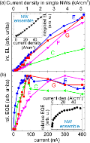
Electroluminescence and current–voltage measurements of single-(In,Ga)N/GaN-nanowire light-emitting diodes in a nanowire ensemble
Beilstein J. Nanotechnol. 2019, 10, 1177–1187, doi:10.3762/bjnano.10.117
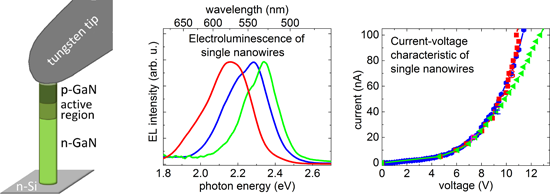
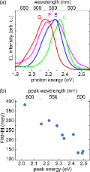
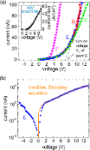
- ensemble is mandatory. In order to characterize NW-ensemble LEDs in depth, a combined analysis of the emission and transport behavior of single NWs under electrical carrier injection is needed. One way to do such a combined analysis is to remove the nanowires from the ensemble, disperse them on a substrate


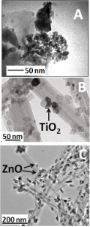
Photoactive nanoarchitectures based on clays incorporating TiO2 and ZnO nanoparticles
Beilstein J. Nanotechnol. 2019, 10, 1140–1156, doi:10.3762/bjnano.10.114
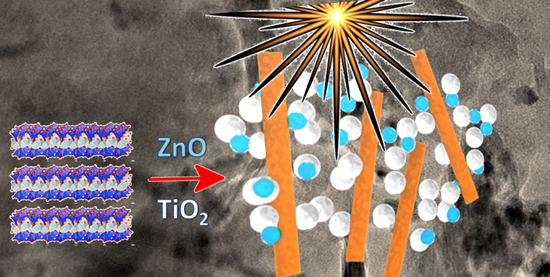
- reactivity can be modified [48][49]. TiO2 and ZnO NPs with different shapes, sizes and exposed crystal facets were assembled to yield hollow particles, fibers, nanosheets, nanowires, nanorods, nanoflowers and nanobelts through various synthesis routes including template synthesis [50][51][52][53



Tailoring the stability/aggregation of one-dimensional TiO2(B)/titanate nanowires using surfactants
Beilstein J. Nanotechnol. 2019, 10, 1024–1037, doi:10.3762/bjnano.10.103
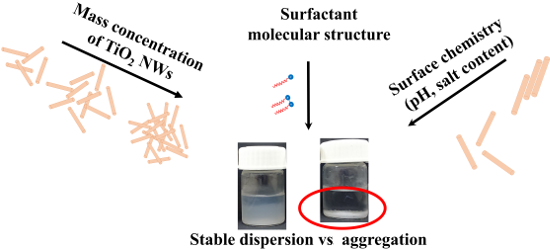
- Zagreb, Croatia 10.3762/bjnano.10.103 Abstract The increased utilization of one-dimensional (1D) TiO2 and titanate nanowires (TNWs) in various applications was the motivation behind studying their stability in this work, given that stability greatly influences both the success of the application and the
- . Keywords: 1D nanomaterials; cationic surfactants; stability; surface complexation model; titanate nanowires; Introduction Among the extensive variety of metal oxide nanomaterials, titanium dioxide nanomaterials (TNMs) (e.g., anatase, rutile, TiO2(B) and titanate) have attracted considerable attention
- and in the presence of different additives [12][20][21][22], much less is known about 1D TNMs, such as titanium oxide nanotubes (TNTs), titanium oxide nanowires (TNWs) and titanium oxide nanorods (TNRs). As shown previously, the morphology of TNMs is expected to play a significant role in their


Novel reversibly switchable wettability of superhydrophobic–superhydrophilic surfaces induced by charge injection and heating
Beilstein J. Nanotechnol. 2019, 10, 840–847, doi:10.3762/bjnano.10.84
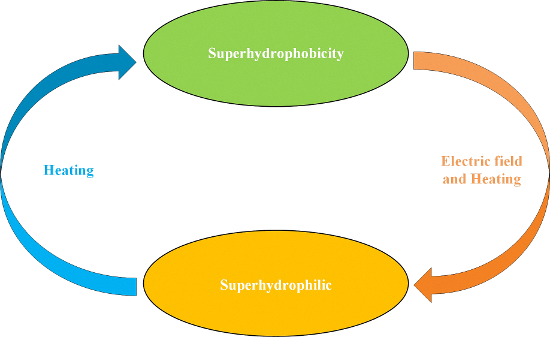
- termed electrowetting [19]. The equilibrium morphology under electrical wetting conditions is determined by the equilibrium of Maxwell stress and Laplace pressure [20][21]. Verplanck et al. [22] reported the reversible electrical wetting of droplets on superhydrophobic silicon nanowires in air and oil


Features and advantages of flexible silicon nanowires for SERS applications
Beilstein J. Nanotechnol. 2019, 10, 725–734, doi:10.3762/bjnano.10.72
- flexible silicon nanowires (SiNWs) substrates for surface-enhanced Raman spectroscopy (SERS) applications. The novel SERS substrates are described in detail considering three main aspects. First, the key synthesis parameters for the flexible nanostructure SERS substrates were optimized. It is shown that
- allowed hot spots occurrence. Finally, the test with 4-mercaptophenylboronic acid showed excellent SERS performance of the flexible, horizontally oriented SiNWs in comparison with several other commercially available substrates. Keywords: flexible hot spots; horizontal silicon nanowires; 4
- the targeted molecule. The Raman signal of these commercially available substrates exceeds that of competitors [19]. Therefore, these substrates can be considered as one of the top SERS substrates on the market. We have synthesized similar flexible, but horizontally oriented silicon nanowires (SiNWs


The effect of translation on the binding energy for transition-metal porphyrines adsorbed on Ag(111) surface
Beilstein J. Nanotechnol. 2019, 10, 706–717, doi:10.3762/bjnano.10.70
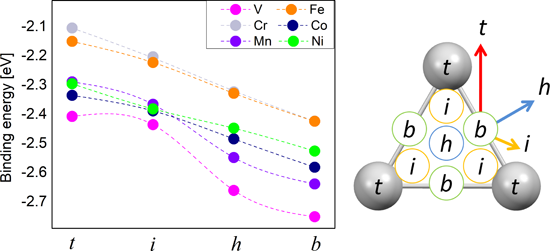
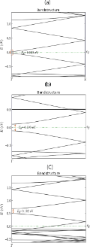
- the TM atom. Indeed, with the only exception of NiPP, we have similar magnetic moments for all four adsorption positions. The values are listed in Table 1. Our results are similar to those obtained for porphyrin-based molecular nanowires [66]: The total magnetic moments of TM-PNWs are calculated to be


![[Graphic 1]](/bjnano/content/inline/2190-4286-10-70-i1.svg?max-width=637&scale=1.18182) , for all systems and relative molecule–surface positions. Right: symm...
, for all systems and relative molecule–surface positions. Right: symm...


![[Graphic 7]](/bjnano/content/inline/2190-4286-10-70-i7.svg?max-width=637&scale=1.18182) for selected TMPP systems (M = V, Mn, Co; red: positive values, blue: negative value...
for selected TMPP systems (M = V, Mn, Co; red: positive values, blue: negative value...
A carrier velocity model for electrical detection of gas molecules
Beilstein J. Nanotechnol. 2019, 10, 644–653, doi:10.3762/bjnano.10.64
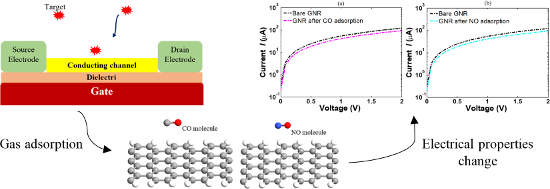
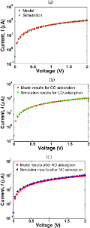
- nanowires and carbon nanotubes, GNRs possess high sensitivity, high electron and hole mobility, chemical stability, low noise, and a large surface-to-volume ratio, properties which are highly desired for gas sensor applications. Electrically, GNRs have shown high sensitivity to their surroundings and




Gold nanoparticles embedded in a polymer as a 3D-printable dichroic nanocomposite material
Beilstein J. Nanotechnol. 2019, 10, 442–447, doi:10.3762/bjnano.10.43
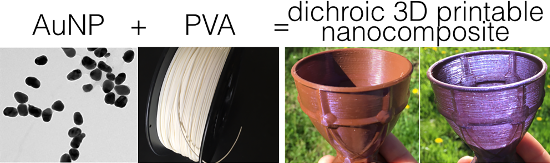
- reflection. The explanation is that, while boiling, the gold nanowires fragment, creating nanoparticles with a large head and a slim and long tail, comparable to a tadpole. Over time the tail starts to shrink, due to intra-particle Ostwald ripening to minimize the total surface energy of the nanoparticle



Sub-wavelength waveguide properties of 1D and surface-functionalized SnO2 nanostructures of various morphologies
Beilstein J. Nanotechnol. 2019, 10, 379–388, doi:10.3762/bjnano.10.37
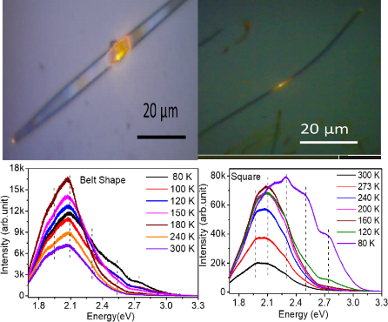
- understanding of the surface defects and role of morphology in 1D SnO2 nanowires can help to better utilize these nanostructures more efficiently. For this purpose, three different nanowires (NWs), namely belts, cylindrical- and square-shaped structures were grown using SnO2 quantum dots as a precursor material
- measurements and a band diagram is proposed. Keywords: functionalization; nanowires; photoluminescence; SnO2; sub-wavelength waveguide; Introduction The development and understanding of one-dimensional (1D) nanowire (NW) sub-wavelength waveguides is a crucial step towards on-chip routing of optical signals


Geometrical optimisation of core–shell nanowire arrays for enhanced absorption in thin crystalline silicon heterojunction solar cells
Beilstein J. Nanotechnol. 2019, 10, 322–331, doi:10.3762/bjnano.10.31
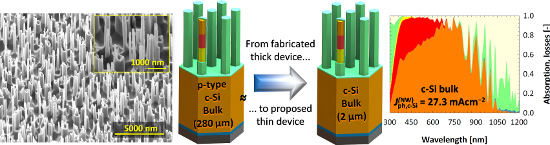
- Thin Film Electronic Laboratory (PV-Lab), Rue de la Maladière 71b, 2002 Neuchâtel, Switzerland 10.3762/bjnano.10.31 Abstract Background: Elongated nanostructures, such as nanowires, have attracted significant attention for application in silicon-based solar cells. The high aspect ratio and
- modelling analysis of the optical performance of the proposed solar cell architecture was also carried out. Results showed that nanowires act as resonators, amplifying interference resonances and exciting additional wave-guided modes. The optimisation of the array geometrical dimensions highlighted a strong
- illumination conditions, by exciting resonances inside the absorber layer. However, passivation of nanowires is critical to further improve the efficiency of such devices. Keywords: heterojunction; nanowires; optical modelling; photovoltaics; silicon; Introduction The implementation of effective and low-cost





