Search results
Search for "photon energy" in Full Text gives 137 result(s) in Beilstein Journal of Nanotechnology.
Case studies on the formation of chalcogenide self-assembled monolayers on surfaces and dissociative processes
Beilstein J. Nanotechnol. 2016, 7, 263–277, doi:10.3762/bjnano.7.24
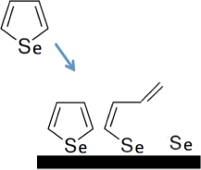
- resolution was 500 meV. The binding energy in the XPS spectra was calibrated with respect to the Au 4f7/2 peak, set at 84 eV. The calibration error is estimated to be 50 meV at TEMPO and about 100 meV at BEAR. With some exceptions (indicated later in the text), we used a photon energy corresponding to a


Impact of ultrasonic dispersion on the photocatalytic activity of titania aggregates
Beilstein J. Nanotechnol. 2015, 6, 2423–2430, doi:10.3762/bjnano.6.250
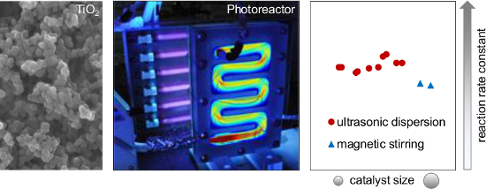
- energy of the incident beam. In UV range, where radiation is adequate for TiO2 photocatalytic activation (appropriate for the photon energy of 3.2 eV and a wavelength of 387 nm [2][22][34][35]), the independence of transmittance as a function of the photocatalyst size is no longer valid as it is in the


Self-organization of gold nanoparticles on silanated surfaces
Beilstein J. Nanotechnol. 2015, 6, 2345–2353, doi:10.3762/bjnano.6.242
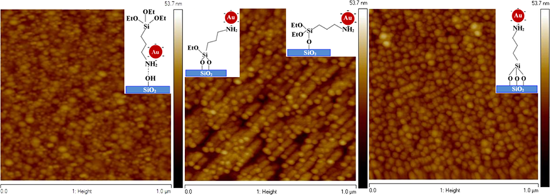
- electron emission after APTES was deposited on the glass substrate and AuNPs were deposited on the APTES-functionalized glass substrate. The work function (Φ) can be calculated from the difference in the photon energy of He(I) (21.2 eV) and the energy difference ΔE between the secondary cut-off energy


Plasma fluorination of vertically aligned carbon nanotubes: functionalization and thermal stability
Beilstein J. Nanotechnol. 2015, 6, 2263–2271, doi:10.3762/bjnano.6.232
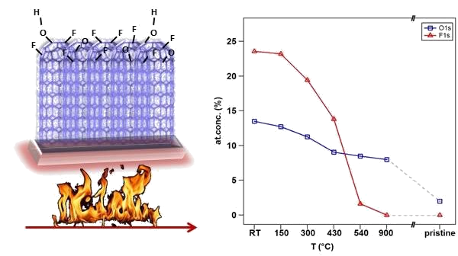
- surface during the measurements, a dual beam charge neutralization composed of an electron gun (≈1 eV) and an Ar ion gun (≤10 eV) was used. The valence band investigation was performed using an excitation photon energy of hν = 31 eV from a horizontally polarized (p-polarized) synchrotron light source at
- O 2p-like states and F 2p-like states are almost the same when using a photon energy of hν = 31 eV, it can be suggested that, when in high amounts, the structure generated by fluorine atoms prevails over that of oxygen-related states in valence band spectra. Fluorine atoms mainly bind to carbon
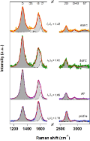
- . UPS spectra acquired with a photon energy of hν = 31 eV, the red line is the pristine vCNT sample, the blue is the functionalized, annealed (T = 300 °C) sample, the black and the green lines are related to samples heated at 500 and 900 °C, respectively. Raman spectra acquired on pristine


Influence of wide band gap oxide substrates on the photoelectrochemical properties and structural disorder of CdS nanoparticles grown by the successive ionic layer adsorption and reaction (SILAR) method
Beilstein J. Nanotechnol. 2015, 6, 2252–2262, doi:10.3762/bjnano.6.231
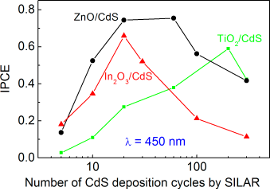
- reprecipitation during the photocorrosion process. It should be noted that the oxide (ZnO, TiO2, In2O3)/CdS heterostructures are characterized by relatively high IPCE values of up to 60–90% at a photon energy of about 3 eV. This is due to the intimate contact of SILAR-deposited CdS nanoparticles with the
- NPs is reduced to hν due to weakening of the quantum-confinement effect. For this reason, at an early stage in the SILAR process, the signal intensity grows faster than the CdS amount. Due to the further weakening of the quantum-confinement effect in CdS nanoparticles, at larger N, the photon energy


Improved optical limiting performance of laser-ablation-generated metal nanoparticles due to silica-microsphere-induced local field enhancement
Beilstein J. Nanotechnol. 2015, 6, 1199–1204, doi:10.3762/bjnano.6.122
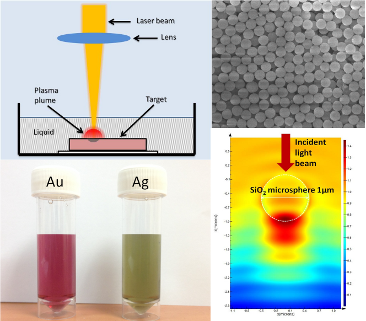
- transmission through the dispersion as shown in Figure 2a. The optical limiting effect of the nanoparticles appears upon formation of microbubbles. The bubble formation occurs at the solvent–nanoparticle interface. The absorbed photon energy by the nanoparticle is dissipated as heat to the surrounding solvent


Characterization of nanostructured ZnO thin films deposited through vacuum evaporation
Beilstein J. Nanotechnol. 2015, 6, 971–975, doi:10.3762/bjnano.6.100
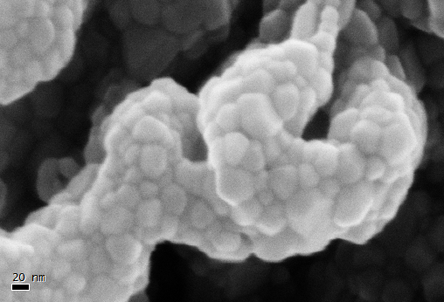
- transmittance by using Equation 1: where d is the thickness of the thin film, and T is measured transmission. In consequence, the relation between the coefficient and the photon energy for direct transition is , where A is a constant, Eg is the optical band gap, the plot of this relation has a linear region


Applications of three-dimensional carbon nanotube networks
Beilstein J. Nanotechnol. 2015, 6, 792–798, doi:10.3762/bjnano.6.82

- remove different types of oil has been demonstrated and can be considered very interesting for environmental applications. In addition, the CNT network shows a good photo response to incident light in the visible and near ultraviolet range, thus proving its potential application in photon-energy


Graphene quantum interference photodetector
Beilstein J. Nanotechnol. 2015, 6, 726–735, doi:10.3762/bjnano.6.74
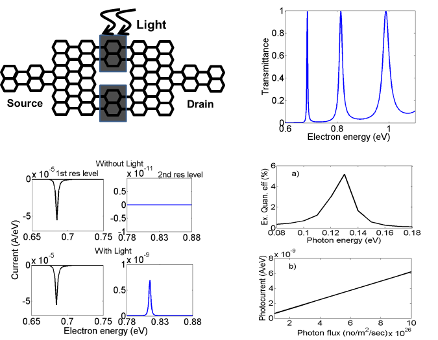
- % for the device. The results of the interaction of light with the zigzag and armchair structures are shown in Figure 5 and Figure 6, respectively. For this simulation, the parameters used for the zigzag structure were an applied voltage of 0.1 eV, photon energy of 0.26 eV and a photon flux of 1025
- photon/m2/s (4.16 × 10⁶ W/m2). The parameters used for armchair structure were an applied voltage of 0.1 eV, photon energy of 0.13 eV and a photon flux of 1025 photon/m2/s (2.08 × 10⁶ W/m2). For both the zigzag and armchair structures, the polarization of the applied electromagnetic field was along the
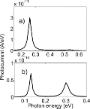
- variation of light. With the appropriate bias, the device can also be used to detect the photon energy corresponding to the energy difference of any two resonant levels. The peak photocurrent variations with different photon energies are shown in Figure 8a and Figure 8b corresponding to zigzag and armchair




Tm-doped TiO2 and Tm2Ti2O7 pyrochlore nanoparticles: enhancing the photocatalytic activity of rutile with a pyrochlore phase
Beilstein J. Nanotechnol. 2015, 6, 605–616, doi:10.3762/bjnano.6.62
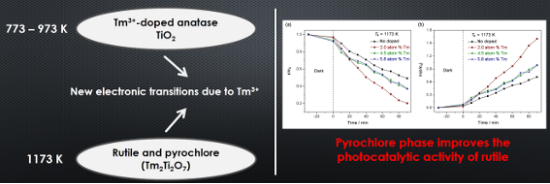
- determined by direct transition, or for n = 2 if the transition is indirect [18][19]. As the TiO2 band gap is determined by direct transition, the plot of [f(R)·hν]1/2 versus hν shows a linear region which satisfies the equation where hν is the photon energy, Eg is the band gap energy, and K a characteristic


Overview of nanoscale NEXAFS performed with soft X-ray microscopes
Beilstein J. Nanotechnol. 2015, 6, 595–604, doi:10.3762/bjnano.6.61
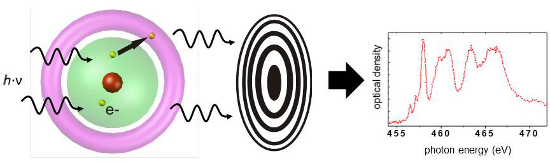
- (i.e., up to 10 µm) specimens in materials and biological sciences using photon energies that covers the K- and L-X-ray absorption edges of elements of major interest [2][3][4][5]. High-photon energy X-ray diffraction used in operando studies can correlate changes in size of the unit cell of catalysts
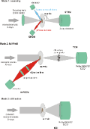
- normally detect the photons which are transmitted through the sample. The penetration depth of X-rays and therefore the usable sample thickness correlates with the X-ray photon energy used for the analysis and is much larger than for electrons (Figure 2) [30]. In the soft X-ray regime penetration depths in
- the spatial resolution of the TXM, but still provide signals which can be used for NEXAFS spectroscopy. Spectroscopic studies at the carbon K-edge are very challenging because nearly in all beamlines the photon flux is sharply reduced within the carbon K-edge photon energy range (280 up to 320 eV) due


Structural, optical, opto-thermal and thermal properties of ZnS–PVA nanofluids synthesized through a radiolytic approach
Beilstein J. Nanotechnol. 2015, 6, 529–536, doi:10.3762/bjnano.6.55
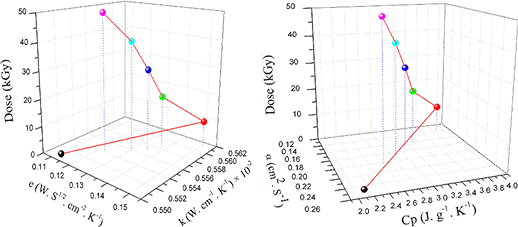
- concentration in agreement with the FTIR results. The optical band gap energy of the ZnS NPs was estimated through the Tauc equation as follows [6]: where α is the absorption coefficient, hν is the photon energy of the incident light, Eg is the band gap energy, B is a constant and n depends on the type of


Influence of size, shape and core–shell interface on surface plasmon resonance in Ag and Ag@MgO nanoparticle films deposited on Si/SiOx
Beilstein J. Nanotechnol. 2015, 6, 404–413, doi:10.3762/bjnano.6.40
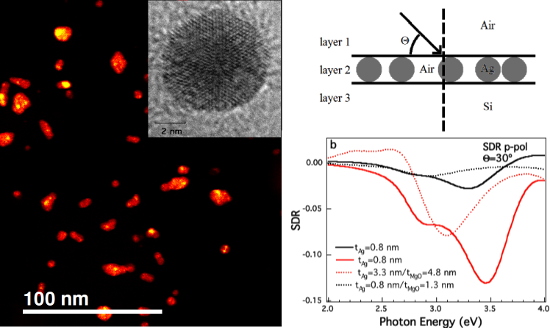
- radiation of s- and p-polarisation, together with classical electrodynamics simulations. For s-polarised incident radiation, it can be readily observed that SDR data from bare NPs do not reveal any significant features in the photon energy region between 2 and 4 eV (Figure 3b). In the case of MgO-covered
- . When co-deposited with Mg in O atmosphere, SEM images showed grains, which were assigned to formation of MgO shells around the original Ag NPs. SDR spectra taken under p-polarisation excitation exhibited a plasmon feature (with a deep minimum) at a photon energy between 3 and 3.5 eV where the intensity



Optical properties and electrical transport of thin films of terbium(III) bis(phthalocyanine) on cobalt
Beilstein J. Nanotechnol. 2014, 5, 2070–2078, doi:10.3762/bjnano.5.215
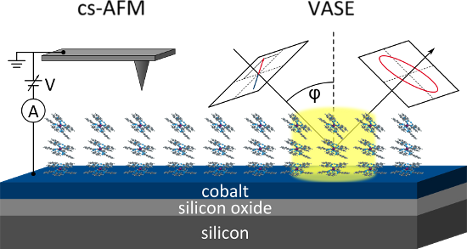
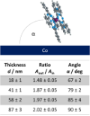
- , respectively. For the dielectric constant we consider a minimum value of ε = 4.5, which is the real part of the dielectric function at the lowest photon energy (1.3 eV) used in our ellipsometry experiment (see Figure 2). As a maximum value for the dielectric constant we used ε = 13, which was previously



Cathode lens spectromicroscopy: methodology and applications
Beilstein J. Nanotechnol. 2014, 5, 1873–1886, doi:10.3762/bjnano.5.198

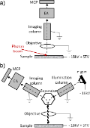
- simplified sketch of an XPEEM setup is given in Figure 1a. Similar to LEEM, it is based on the cathode lens, which accelerates the photoelectrons to an energy of several keV and directs them towards the imaging column of the instrument. The low photon energy of the conventional photon sources readily
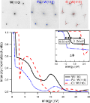
- secondary photoelectrons are collected in XPEEM as a close approximation to the total photoelectron yield measurement. The local XAS spectra are obtained by acquiring image sequences as a function of the photon energy, which can then be processed in order to extract the intensity variation within any region
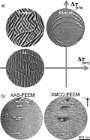
- function. When the photon energy is tuned to the Fe absorption threshold (middle panel), the elongated Fe nanowires become much brighter, whereas the regions in between barely change intensity. The spectrum seen in the plot in Figure 3a is extracted from an individual nanowire. Magnetic imaging. X-ray



An insight into the mechanism of charge-transfer of hybrid polymer:ternary/quaternary chalcopyrite colloidal nanocrystals
Beilstein J. Nanotechnol. 2014, 5, 1235–1244, doi:10.3762/bjnano.5.137
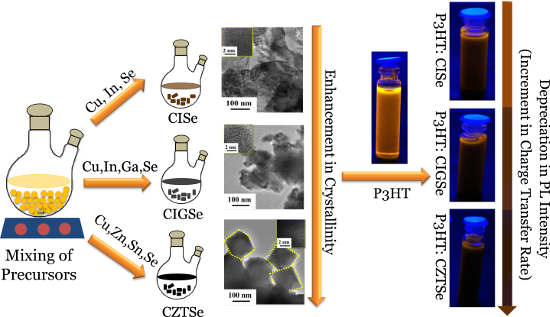
- in Figure 3C(a–c), which shows the enhancement of the optical bandgap (as calculated from the Tauc’s plot involving the absorption coefficient, α and the photon energy hν) from CISe to CZTSe. The bandgap values of pristine CISe, CIGSe and CZTSe are ≈1.03 eV, 1.1 eV and 1.15 eV, respectively (Figure


Electron-beam induced deposition and autocatalytic decomposition of Co(CO)3NO
Beilstein J. Nanotechnol. 2014, 5, 1175–1185, doi:10.3762/bjnano.5.129
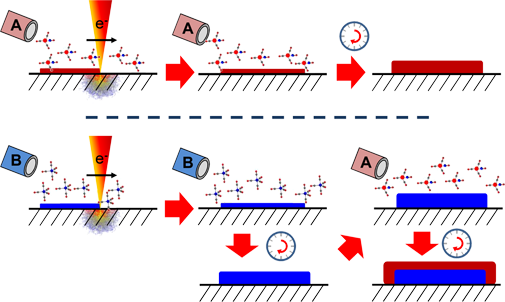
- Si3N4 membrane. In transmission X-ray microscopy or NEXAFS spectroscopy in transmission mode, the absorbance (or optical density, OD) is derived from: with I0 and I being the incident and the transmitted intensities, respectively, d represents the sample thickness and µ(E) the photon energy dependent
- interferometric control through the focal spot, while the transmitted photon intensity is recorded by using a photo multiplier tube. Near-edge X-ray absorption fine structure (NEXAFS) spectra were recorded by consecutive scanning of the investigated area with varying photon energy. The lateral resolution in
- deposits at an enlarged photon energy scale, along with the spectrum of a Co layer produced by PVD as reference (grey). Evaluation of the X-ray absorption data for the growth of Co-containing deposits by EBID plus autocatalytic growth upon Co(CO)3NO dosage. a) Optical density (left vertical axis) and




Characterization and photocatalytic study of tantalum oxide nanoparticles prepared by the hydrolysis of tantalum oxo-ethoxide Ta8(μ3-O)2(μ-O)8(μ-OEt)6(OEt)14
Beilstein J. Nanotechnol. 2014, 5, 1082–1090, doi:10.3762/bjnano.5.121
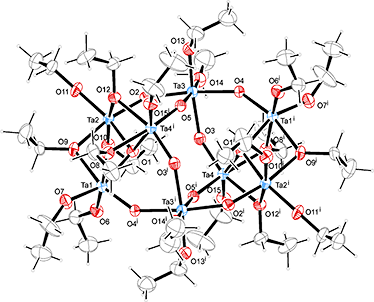
- absorption coefficient F(R′) values according to the Kubelka–Munk remission function [24][25][26] (Equation 5), where α is the absorption coefficient (cm−1) and S is the dispersion factor. The absorption coefficient α is related to the incident photon energy by Equation 6: A is a constant for the given
- material, E is the photon energy, Eg is the band gap energy and n is a constant of different values, 1/2, 3/2, 2 and 3, depending on the type of electronic transition, i.e., permitted/prohibited-direct or indirect transition. The band gap is calculated from a Tauc plot [27][28][29][30]. The band gap of the


Effects of the preparation method on the structure and the visible-light photocatalytic activity of Ag2CrO4
Beilstein J. Nanotechnol. 2014, 5, 658–666, doi:10.3762/bjnano.5.77
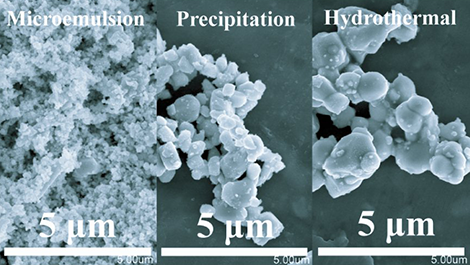
- particle size among the three samples. The indirect band gaps of the Ag2CrO4 samples are calculated according to the Kubelka–Munk (KM) method by the following equation [62]: where α is the absorption coefficient, hν is the photon energy, Eg is the indirect band gap, and A is a constant. As shown in the


Interaction of iron phthalocyanine with the graphene/Ni(111) system
Beilstein J. Nanotechnol. 2014, 5, 308–312, doi:10.3762/bjnano.5.34
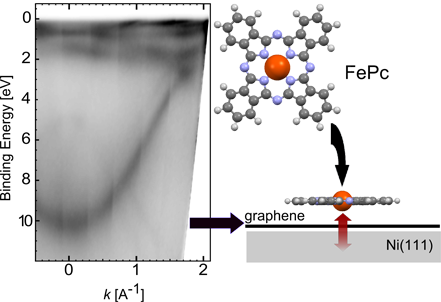
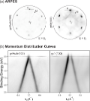
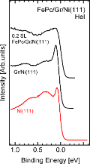
- energy in normal emission and by the quenching of the Gr–Ni π−d hybrid state at the K point of the BZ. Experimental ARPES band structure for graphene grown on Ni(111) (left) and on Ir(111) (right), taken with 40.814 eV photon energy along the ΓK direction of the 2D BZ. Insets: corresponding LEED patterns
- graphene (red lines) and of the FePc/Gr systems (black lines). Data taken with 40.814 eV photon energy (HeIIα) and around normal emission (±4° angular integration around the Γ point). The data was normalized to the intensity at the Fermi edge and vertically stacked for clarity. In the insets, a zoom around
- the Fermi level for a coverage of 0.3 and 1 SL of FePc is given. Valence band spectral density of states of clean Ni(111) (red line), of Gr/Ni(111) and of 0.2 SL FePc onto Gr/Ni (black lines), taken at the K point of the BZ (±2° angular integration around K, with 21.218 eV photon energy


Challenges in realizing ultraflat materials surfaces
Beilstein J. Nanotechnol. 2013, 4, 875–885, doi:10.3762/bjnano.4.99
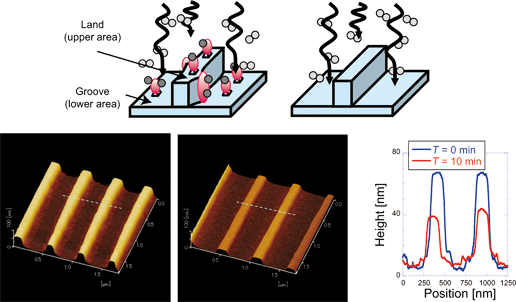
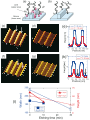
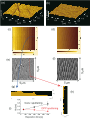
- DPPs induce the photodissociation of molecules at protrusions on the substrate (Figure 1b) even when the incident photon energy is smaller than the photodissociation energy, Ed. The dissociated molecules in turn induce the etching of the protrusion and the flattening the substrate (Figure 1c). This
- gas in the DPP etching, which produced the oxygen radicals O* to etch the protrusions of the diamond substrate and ultimately yielded an ultra-flat surface. Since the photon energy of the laser is lower than Ed of O2, the conventional O2 adiabatic photochemical reaction was avoided. Furthermore, the
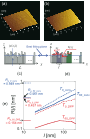
- by the fact that the Ra value remained the same after 24 hours of etching. To verify that the smoothing effect originated from the DPP process, the surface roughness was compared by using AFM images taken after conventional photoetching, in which a photon energy higher than Ed was used and after DPP

Probing the plasmonic near-field by one- and two-photon excited surface enhanced Raman scattering
Beilstein J. Nanotechnol. 2013, 4, 834–842, doi:10.3762/bjnano.4.94
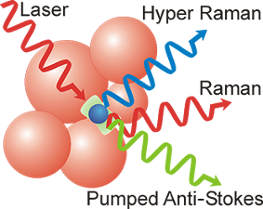
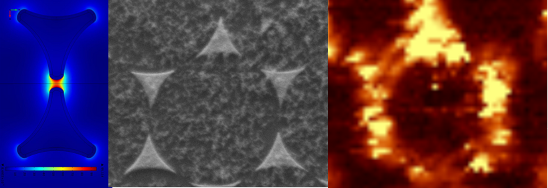
- near-field of silver nanoaggregates. The experiments reveal enhancement factors of local fields in the hottest hot spots of the near-field and their dependence on the photon energy. Also, the number of the hottest spots and their approximate geometrical size are found. Near-field amplitudes in the
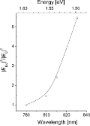
- hottest spots can be enhanced by three orders of magnitudes. Nanoaggregates of 100 nm dimensions provide one hot spot on this highest enhancement level where the enhancement is confined within less than 1nm dimension. The near-field enhancement in the hottest spots increases with decreasing photon energy
- interesting question is the dependence of the near-field enhancement on the photon energy. The ratio between SEHRS and SERS signals measured vs the excitation wavelengths delivers direct information about this dependence. Figure 5 shows the result of experiments, in which a tunable ps Ti:sapphire was used for




Evolution of microstructure and related optical properties of ZnO grown by atomic layer deposition
Beilstein J. Nanotechnol. 2013, 4, 690–698, doi:10.3762/bjnano.4.78
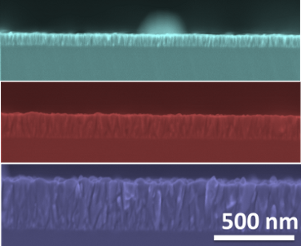
- is the optical transmittance. The optical density D is related to the band gap Eg by proportion [35]: where hν is the photon energy, and Eg is the band gap. Graphically estimated band gap values of thin ZnO films are shown in Figure 3c. The obtained values are lower than the value typical of a ZnO
- the band edge is an exponential function of the photon energy as described by the Urbach law [37]: where E0 is the Urbach energy interpreted as the width of the tail of the states localized close to the conductance band in the forbidden zone. Numerical calculations show a decrease of the Urbach energy


Photocatalytic antibacterial performance of TiO2 and Ag-doped TiO2 against S. aureus. P. aeruginosa and E. coli
Beilstein J. Nanotechnol. 2013, 4, 345–351, doi:10.3762/bjnano.4.40
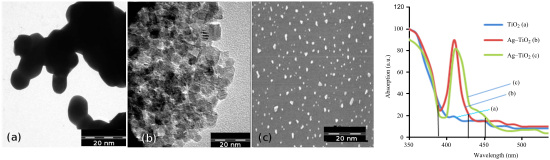
- case, for an indirect band gap, the value of n is ½ [17]. The variation of (αhν)1/2 with photon energy is shown in Figure 4. The band gaps were determined to be about 3.15 eV, 2.8 eV and 2.7 eV for annealed TiO2, Ag–TiO2 (3%) and Ag–TiO2 (7%), respectively, by extrapolation of the linear portion of the
- versus photon energy (eV) curve of (a) TiO2 and (b) 3% and (c) 7% Ag-doped TiO2 nanoparticles. Photoluminescence spectra of annealed TiO2 (a) and 3% and 7% Ag-doped TiO2 nanoparticles (b,c). Viability of bacteria (S. aureus) against the concentration of nanoparticles (mg/30 mL of culture) in %. Viability


Near-field effects and energy transfer in hybrid metal-oxide nanostructures
Beilstein J. Nanotechnol. 2013, 4, 306–317, doi:10.3762/bjnano.4.34
- measured. Figure 3 shows a typical emission spectrum of a TiO2:Eu sample containing 0.8 wt % Eu under excitation at 330 or 390 nm. The characteristic Eu3+ emission lines with the dominating 5D0→7F2 transition at 617 nm can be clearly observed. For excitation with 330 nm, the photon energy (3.76 eV) is