Search results
Search for "protein" in Full Text gives 402 result(s) in Beilstein Journal of Nanotechnology. Showing first 200.
Cyclodextrins as eminent constituents in nanoarchitectonics for drug delivery systems
Beilstein J. Nanotechnol. 2023, 14, 218–232, doi:10.3762/bjnano.14.21
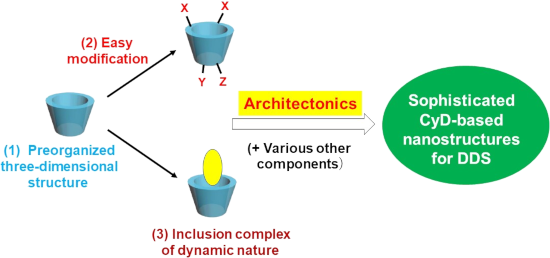
- siRNA from the endosome. In another example, a supramolecular nanoparticle was prepared from a linear CyD-based polymer, hydrophilic polyethylene glycol bearing an adamantane at the end, and siRNA [64]. By attaching a human transferrin protein, this composite was steered to target cancer cells to
- transferrin (tumor-targeting protein) which bears poly(ʟ-lysine), mitochondrion-targeting peptide, poly(ethylene glycol), and arylazopyrazole (trans isomer) [89]. Under irradiation with NIR light (808 nm), the photothermal effect disrupted mitochondrial function, leading to inhibition of tumor growth. 6 Some
- also to increase the solubility of the protein through the binding to bulky and apolar side chains. The antiviral activity of modified CyDs towards various viruses has been previously reported as well [108]. 6.2 Molecular imprinting on CyD to bind large drugs It often happens that one CyD molecule is




Antimicrobial and mechanical properties of functionalized textile by nanoarchitectured photoinduced Ag@polymer coating
Beilstein J. Nanotechnol. 2023, 14, 95–109, doi:10.3762/bjnano.14.11
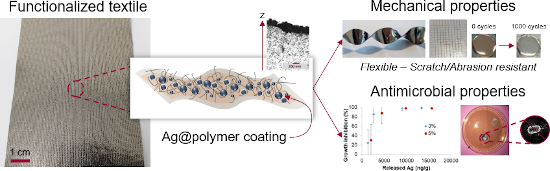
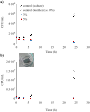
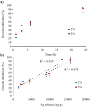
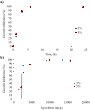
- with compounds generating reactive oxygen species (ROS) or blocks DNA replication and protein action (enzymes), thereby leading to cell death. The increased growth inhibition observed for C. albicans compared to E. coli could be explained in part by the difference in kinetics of silver penetration into



Combining physical vapor deposition structuration with dealloying for the creation of a highly efficient SERS platform
Beilstein J. Nanotechnol. 2023, 14, 83–94, doi:10.3762/bjnano.14.10
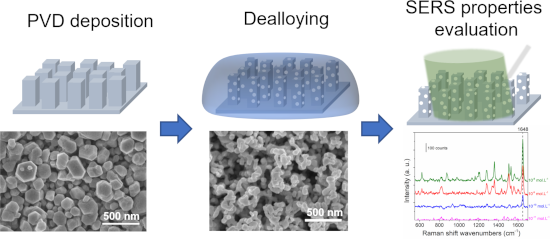
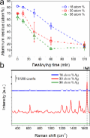
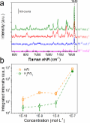
- sensors are promising for various applications in chemical (e.g., explosive [3] or chemical warfare agents [4]) or biological (e.g., lipid or protein [5]) sensing, environmental monitoring [6] as well as in food safety through the detection of pollutants such as phenol [3][7] or rhodamine [8]. The SERS




Single-step extraction of small-diameter single-walled carbon nanotubes in the presence of riboflavin
Beilstein J. Nanotechnol. 2022, 13, 1564–1571, doi:10.3762/bjnano.13.130
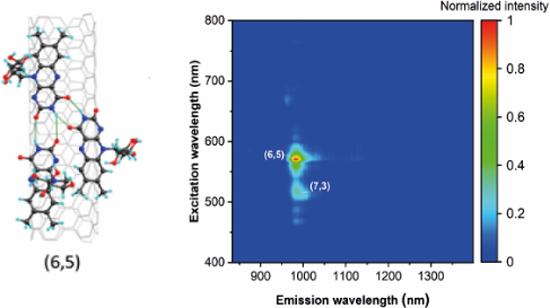
- . Application trends of riboflavin-stabilized SWCNTs Small-diameter SWCNT–riboflavin conjugates represent a promising class of nanomaterials for cancer treatment and targeted riboflavin delivery [26][27][28]. It has been shown that riboflavin carrier protein is highly overexpressed in several cancer tissues
- such as melanoma, luminal 45 A breast cancer, and squamous cell carcinoma. Riboflavin-covered SWCNTs have immense potential in detecting tumors since riboflavin is selectively attached to the riboflavin carrier protein in the tumor cells while the photoluminescence increased by SWCNTs allows for high


Rapid and sensitive detection of box turtles using an electrochemical DNA biosensor based on a gold/graphene nanocomposite
Beilstein J. Nanotechnol. 2022, 13, 1458–1472, doi:10.3762/bjnano.13.120
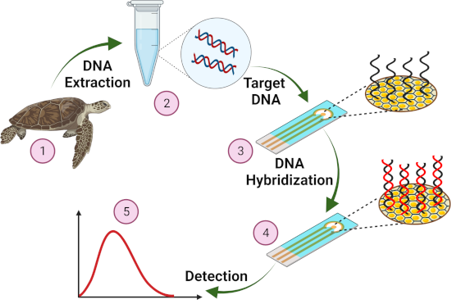
- over time [14][15]. However, molecular biology techniques such as protein- [16] and DNA-based [17] methods are commonly used. The structure of proteins in processed meat products is altered, reducing the accuracy of species identification in processed meals [18][19]. DNA-based technologies are thought
- to be more stable compared to protein-based methods [20]. A variety of DNA-based PCR techniques [21][22][23][24] is widely used for species identification. Although such techniques are selective, sensitive, and repetitive, they are time-consuming, laborious, have complex laboratory protocols [12][16



Studies of probe tip materials by atomic force microscopy: a review
Beilstein J. Nanotechnol. 2022, 13, 1256–1267, doi:10.3762/bjnano.13.104
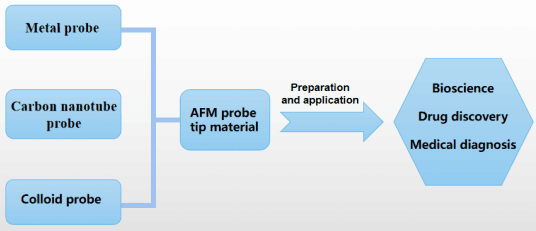
- mechanical properties of the cantilever beam directly affect the performance, measurement resolution, and image quality of the AFM instrument. AFM probe tips [9][10] are generally fabricated with coatings, carbon nanotubes, magnetic nanoparticles, or even protein functionalization. A combination of probe
- prepared colloidal gold was identified by transmission electron microscopy and UV spectrophotometer for size and uniformity. The amount of colloidal gold-labeled HBsAg Mab protein was determined by the CVAI curve; the probe was identified by spot immunosorbent assay. The prepared 15 nm colloidal gold
- particles were homogeneous; the maximum absorption wavelength was 518 nm with narrow peak width in the UV spectrophotometer 400–700 nm scan; the purified HBsAg Mab concentration was 65 mg/mL; the optimal protein protection amount was 32.5 μg per mL of colloidal gold at pH 8.2; the quality of the probe was
Design of surface nanostructures for chirality sensing based on quartz crystal microbalance
Beilstein J. Nanotechnol. 2022, 13, 1201–1219, doi:10.3762/bjnano.13.100
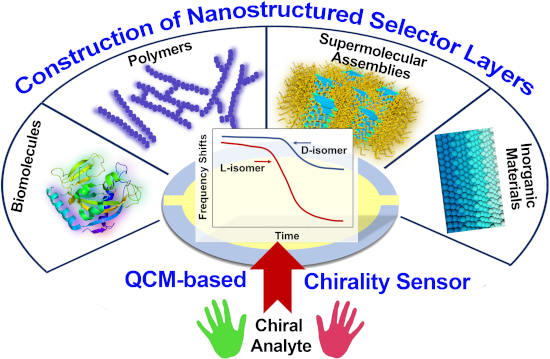
- . A similar QCM response is also seen for gelatin. As physicochemical properties of BSA and gelatin are different, it was inferred that the chiral sensing effect of this system could be applied to various protein species. The authors further employed fluorescent titration measurements to study the
- affinity between proteins and chiral selectors. It was elucidated that stereoselective hydrophobic interactions are the major driving forces that govern protein adsorption on ʟ-Val-modified surfaces. Besides small biomolecules, biological macromolecules, such as proteins and enzymes, also show natural
- nanostructures such as carbon nanotubes and fullerenes were demonstrated to have chirality. However, the preparation of chirality-pure substrates still requires the combination of specific carbon nanostructures and homochiral functionalizations [150][151]. Protein misfolding, which may form amyloid aggregates


Application of nanoarchitectonics in moist-electric generation
Beilstein J. Nanotechnol. 2022, 13, 1185–1200, doi:10.3762/bjnano.13.99
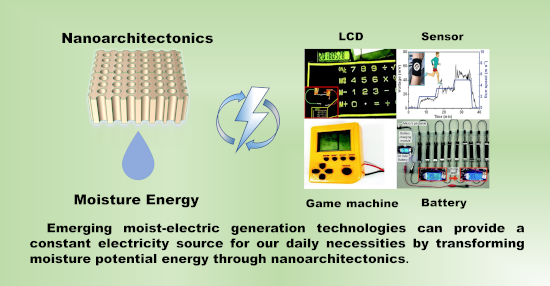
- capacity in different directions, which naturally leads to a difference in the concentration of ions contained in the film material. These film materials include biological nanofibers (NFs) [85], porous polydopamine (g-PDA) [84], protein nanowires [86], and gelatin molecules [87], which yielded output
- voltages of 0.115, 0.52, 0.5, and 0.71 V, respectively. As shown in Figure 8a, the existence of this natural concentration difference has been experimentally proved in a work regarding protein nanowires. In organic materials, in addition to the difference in natural adsorption capacity to construct
- John Wiley and Sons. Copyright © 2019 WILEY-VCH Verlag GmbH & Co. KGaA, Weinheim. This content is not subject to CC BY 4.0. (a) Vapor pressure gradient near the air interface. (b) TEM images of the purified nanowire network. Scale bars: 100 nm. (c) Diagram of the protein device structure. Figure 8a–c


Microneedle-based ocular drug delivery systems – recent advances and challenges
Beilstein J. Nanotechnol. 2022, 13, 1167–1184, doi:10.3762/bjnano.13.98
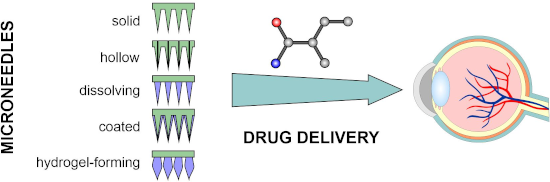
- . For comparison, the cornea permeates substances with a mass not greater than 1 kDa [28]. Unfortunately, transscleral absorption is often reduced by elimination via nasolacrimal drainage pathways, tear protein binding, or drug metabolism [44]. The treatment efficiency is also decreased by constant
- injection [177]. Amer and Chen fabricated PVA hydrogel-based microneedle arrays for the delivery of immunoglobin G1, a model protein resembling bevacizumab, a monoclonal antibody applied in the treatment of age-related macular degeneration (AMD) (Figure 6). First, the master mold was produced with the use
- suspension used for 5 min was almost five times less effective than the MNs [158]. Nanoparticle-loaded bilayer dissolving microneedle arrays for the sustained delivery of proteins to the posterior region of the eye were developed by Wu and co-workers (Figure 8). Ovalbumin, a model protein, was encapsulated


Recent advances in green carbon dots (2015–2022): synthesis, metal ion sensing, and biological applications
Beilstein J. Nanotechnol. 2022, 13, 1068–1107, doi:10.3762/bjnano.13.93
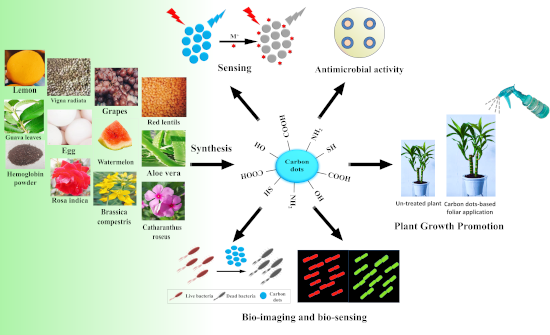
- synthesis of carbon dots Green synthesis of CDs mainly utilizes biomass. Biomass synthesis makes use of natural raw materials (organisms, waste material, protein products, or natural polymers), instead of reaction precursors usually used in the traditional methods, and also requires external energy supply




Biomimetic chitosan with biocomposite nanomaterials for bone tissue repair and regeneration
Beilstein J. Nanotechnol. 2022, 13, 1051–1067, doi:10.3762/bjnano.13.92
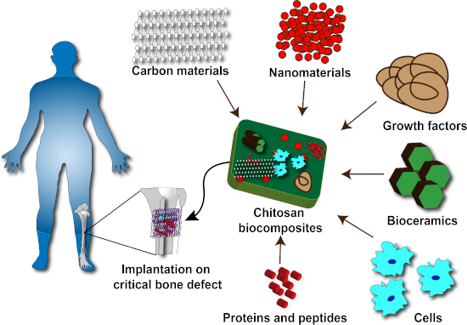
- phosphatase, bone morphogenic protein, runt-related transcription factor-2, bone sialoprotein, and osteocalcin. In vitro and in vivo studies highlight the scientific findings of antibacterial activity, tissue integration, stiffness, mechanical strength, and degradation behaviour of composite materials for
- , the gene RUNX2 upregulates the genes for collagen type I alpha 1 (ColIA1), alkaline phosphatase (ALP), bone sialoprotein (BSP), bone gamma-carboxyglutamate protein (BGLAP), and osteocalcin (OCN), which are important for the regeneration process [34]. To mimic the natural bone function, the composite
- bone mimetic scaffolds [37]. Bone morphogenetic protein 2 (BMP-2) is one of the widely utilized growth factors for the treatment of bone-related diseases and defects [38][39]. Growth factors are responsible for bone formation which happens through the stimulation of different kinds of cells in our body
Bioselectivity of silk protein-based materials and their bio-inspired applications
Beilstein J. Nanotechnol. 2022, 13, 902–921, doi:10.3762/bjnano.13.81
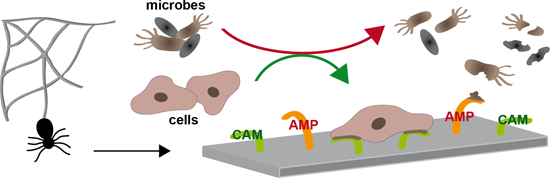
- urgently requires new material concepts for preventing microbial infestation and biofilm formation. Thus, materials exhibiting microbial repellence or antimicrobial behaviour to reduce inflammation, while selectively enhancing regeneration in host tissues are of utmost interest. In this context, protein
- on biological processes and surface interactions involved in the bioselective adhesion of mammalian cells and repellence of microbes on protein-based material surfaces. In addition, it highlights the importance of materials made of recombinant spider silk proteins, focussing on the progress regarding
- bioselectivity. Keywords: antifouling; bacteriostatic; biofouling; bioselective cell adhesion; spider silk protein; Review 1 Introduction 1.1 Bioadhesive protein surfaces Biological adhesion is important for all organisms such as plants, animals, bacteria, and fungi, covering a wide range of biological aspects


DNA aptamer selection and construction of an aptasensor based on graphene FETs for Zika virus NS1 protein detection
Beilstein J. Nanotechnol. 2022, 13, 873–881, doi:10.3762/bjnano.13.78
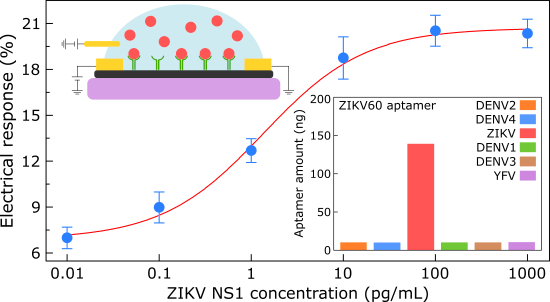
- ligands by exponential enrichment” (SELEX). In this study, we select an aptamer (termed ZIKV60) by capillary electrophoresis SELEX (CE-SELEX) to the Zika virus non-structural protein 1 (NS1) and counterselection against the NS1 proteins of DENV (serotypes 1, 2, 3, and 4) and YFV. The ZIKV60 dissociation
- constant (Kd) is determined by enzyme-linked oligonucleotide assay (ELONA) and the aptamer specificity is evaluated by quantitative real-time polymerase chain reaction. ZIKV60 shows a high binding affinity to the ZIKV NS1 protein with a Kd value of 2.28 ± 0.28 nM. The aptamer presents high specificity for
- ZIKV NS1 compared to NS1 of DENV and YFV. Furthermore, graphene field-effect transistor devices functionalized with ZIKV60 exhibit an evident identification of NS1 protein diluted in human serum. These results point to the applicability of biosensors based on the ZIKV60 aptamer for the differential



Gelatin nanoparticles with tunable mechanical properties: effect of crosslinking time and loading
Beilstein J. Nanotechnol. 2022, 13, 778–787, doi:10.3762/bjnano.13.68
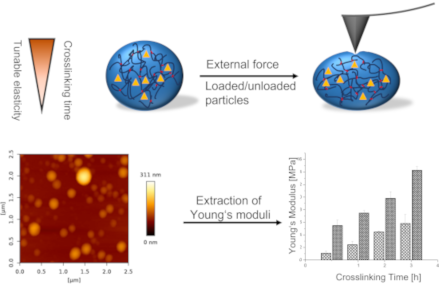
- for 0.5 h imaged under liquid conditions by AFM are shown in Figure 1. Incorporating lysozyme as a protein drug up to an initial loading of 3 mg per 20 mg gelatin resulted in particles with comparable size (242.67 ± 11.32 nm), size distribution (0.132 ± 0.04), and a negative zeta potential at neutral


Design and selection of peptides to block the SARS-CoV-2 receptor binding domain by molecular docking
Beilstein J. Nanotechnol. 2022, 13, 699–711, doi:10.3762/bjnano.13.62
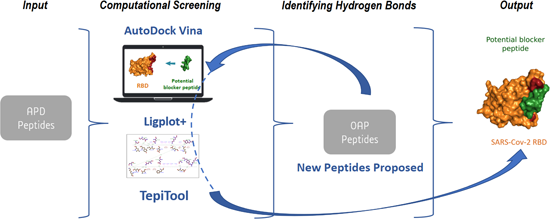
- site of a given protein, due to the low cost, versatility, and ease to develop [16][17][18]. Current peptide design techniques involve the modification of peptides based on the ACE2 receptor to increase their binding affinity to the SARS-CoV-2 RBD and to prevent the virus from binding onto the ACE2
- , hydrogen bonds, and interactions of the selected ligand and protein docked complexes were analyzed by PyMOL (version 2.4) and LigPlot+ (version 2.2) [33][34]. Protein and ligand preparation for AutoDock Vina AutoDock Vina (1.1.2) software was employed for all docking experiments [21]. The X-ray diffraction
- crystal structure of SARS-CoV-2 RBD spike protein (PDB ID: 6VYB) was selected for this study. The molecules bound to the protein receptor molecule were removed. The RBD spike protein was prepared using AutoDock Tools to add polar hydrogen atoms, Kollman charges, and to remove water molecules. The active



Effects of substrate stiffness on the viscoelasticity and migration of prostate cancer cells examined by atomic force microscopy
Beilstein J. Nanotechnol. 2022, 13, 560–569, doi:10.3762/bjnano.13.47
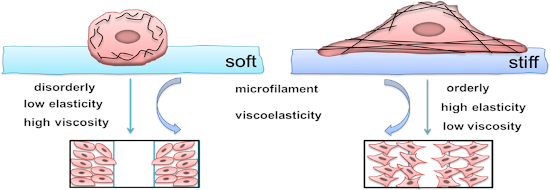
- elastography, whose imaging is based on the differences in stiffness between the lesion and the adjacent healthy tissue. It was found that an external environment with a high stiffness value promotes PC-3 cell migration and proliferation by inducing yes-associated protein and tafazzin (YAP/TAZ) nuclear
- that when we inhibit actin polymerisation with an actin-binding protein inhibitor, the actin fibrils fail to polymerise into bundles and the prostate cancer cells themselves have reduced elasticity values and increased viscosity values, thus reducing the migration ability of the prostate cancer cells
- with different stiffness. On stiff substrates, the F-actin cytoskeleton organized into bundles and increased the elasticity while the viscosity of PC-3 cells decreased to enhance their migration ability. Furthermore, the results of the treatment with the myosin-binding protein inhibitor suggested that



Stimuli-responsive polypeptide nanogels for trypsin inhibition
Beilstein J. Nanotechnol. 2022, 13, 538–548, doi:10.3762/bjnano.13.45
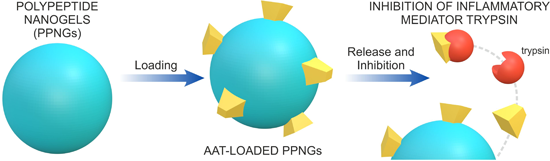
- substituents compared to PHEG-Tyr nanogel [25]. This assumption is also supported by the DH dependence (Figure 3a) showing a DH maximum at pH 7.4. Adsorption and release of BSA and AAT Next, optimization studies of in vitro loading of 125I-radiolabeled BSA as a model protein and its release from PHEG-Tyr and


Zinc oxide nanostructures for fluorescence and Raman signal enhancement: a review
Beilstein J. Nanotechnol. 2022, 13, 472–490, doi:10.3762/bjnano.13.40
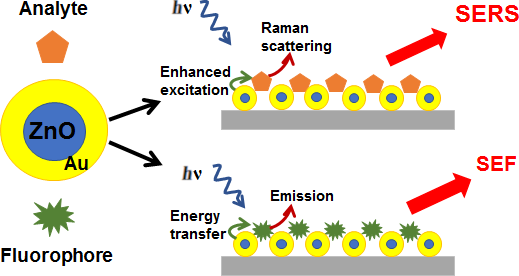
- fluorescence based on ZnO nanoscaled films is different from the metal enhancement. The use of ZnO nanosubstrates for enhanced biomedical detection has received great attention due to their optical properties and other great advantages. Early detection of disease markers and the measurement of specific protein
- were successfully used for the detection of relevant biological and biomedical proteins, such as bovine serum albumin and streptavidin, as well as to study the protein–protein interactions by enhanced fluorescence detection [117]. The ZnO nanoplatforms showed several key advantages, such as enhanced
- fluorescence emission of fluorophores emitting at different wavelengths, chemical inertness to the environmen, and simple assembly and fabrication. Moreover, the ZnO nanoplatforms can be covalently modified to host specific protein molecules of interest only and to present increased detection specificity of




Effect of sample treatment on the elastic modulus of locust cuticle obtained by nanoindentation
Beilstein J. Nanotechnol. 2022, 13, 404–410, doi:10.3762/bjnano.13.33
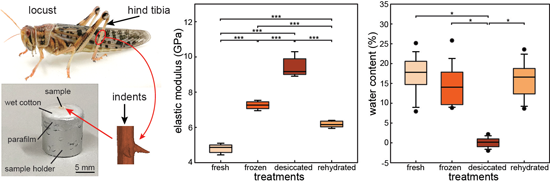
- changes in the interaction of water molecules with the chitin of the cuticle after rehydration. Insect cuticle is a biological composite with a protein matrix and embedded chitin fibers [17]. It is the only biological composite that has been modelled successfully using the modified Voigt estimate of the
- Em and Vm are elastic modulus and volume fraction of the matrix, respectively. Most of the water in the cuticle is associated with the protein matrix, where free water can be added to or taken from [1]. Thus, the elastic modulus of the matrix might not show a difference between the fresh and


Micro- and nanotechnology in biomedical engineering for cartilage tissue regeneration in osteoarthritis
Beilstein J. Nanotechnol. 2022, 13, 363–389, doi:10.3762/bjnano.13.31
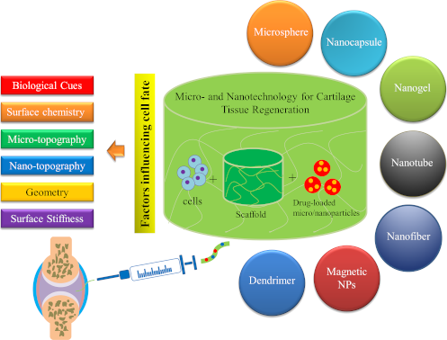
- the entrapment of the bone morphogenetic protein 7 (BMP7) and basic fibroblast growth factor (BFGF) within chitosan NPs inhibited the initial burst release and allowed for the controlled release of growth factors and therefore, improved the osteogenic differentiation of stem cells [53]. In another
- maleilated chitosan hydrogel containing micro-/nanoparticles of methacrylated silk fibroin, a natural fibrous protein mimicking the collagen structure, improved the mechanical properties of nanocomposites fabricated for cartilage TE [60]. The development of a magnetic nanocomposite hydrogel from poly(vinyl
- because they are not biodegradable and provide a more stable matrix in which osteoblasts can proliferate and deposit new ECM. The integration of CNTs into a polymer matrix would increase surface roughness and activate the mitogen-activated protein kinase (MAPK) pathway [128], which is responsible for


Alcohol-perturbed self-assembly of the tobacco mosaic virus coat protein
Beilstein J. Nanotechnol. 2022, 13, 355–362, doi:10.3762/bjnano.13.30
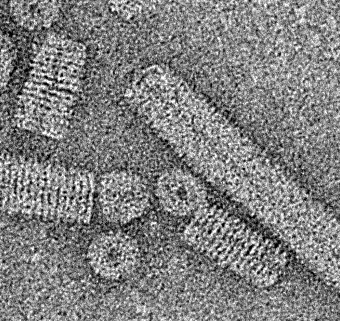
- Ismael Abu-Baker Amy Szuchmacher Blum Department of Chemistry, McGill University, Montréal, Québec, Canada 10.3762/bjnano.13.30 Abstract The self-assembly of the tobacco mosaic virus coat protein is significantly altered in alcohol–water mixtures. Alcohol cosolvents stabilize the disk aggregate
- alcohol having the strongest effect and methanol the weakest. We discuss several effects that may contribute to preventing the protein–protein interactions between disks that are necessary to form helical rods. Keywords: alcohol; hydrophobic effect; protein assembly; self-assembly; tobacco mosaic virus
- applications [7][8]. Many viruses and VLPs form monodisperse particles due to the natural capsid protein symmetry and inter-subunit interactions, as well as interactions with encapsidated genetic material [9][10]. Viruses can be obtained in high yields by propagation in host organisms, and viral capsid


Systematic studies into uniform synthetic protein nanoparticles
Beilstein J. Nanotechnol. 2022, 13, 274–283, doi:10.3762/bjnano.13.22
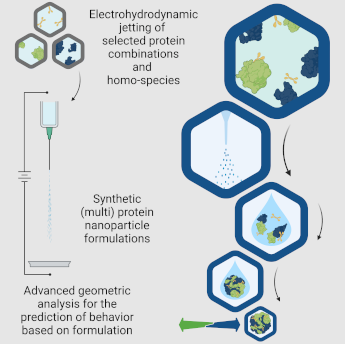
- , or monodispersity. Electrohydrodynamic (EHD) jetting is a probate method to formulate synthetic protein nanoparticles (SPNPs), but a systematic understanding of the influence of crucial processing parameters, such as protein composition, on nanoparticle morphologies is still missing. Here, we address
- this knowledge gap by evaluating formulation trends in SPNPs prepared by EHD jetting based on a series of carrier proteins and protein blends (hemoglobin, transferrin, mucin, or insulin). In general, blended SPNPs presented uniform populations with minimum diameters between 43 and 65 nm. Size
- , blended SPNPs displayed higher circularity and lower anisotropy, as compared to single-protein SPNPs. Secondary statistical analysis indicated that blended SPNPs generally present combined features of their constituents, with some properties driven by the dominant protein constituent. Our study suggests


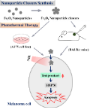
Photothermal ablation of murine melanomas by Fe3O4 nanoparticle clusters
Beilstein J. Nanotechnol. 2022, 13, 255–264, doi:10.3762/bjnano.13.20
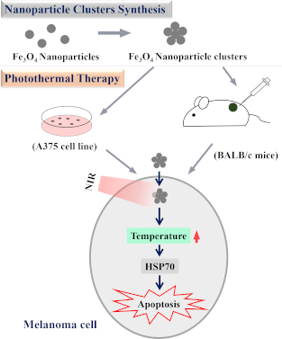
- experimental approaches including semi-quantitative PCR, western blot and immunohistochemistry, the heat shock protein HSP70 to be upregulated in response to PTT, suggesting this chaperone protein could be a plausible underlying mechanism for the observed therapeutic outcome. Altogether, our results highlight
- the promise of Fe3O4 NPCs as a new PTT option to treat melanoma. Keywords: Fe3O4 nanoparticle clusters; heat shock protein 70; melanoma; near infrared; photothermal therapy; Introduction The global incidence of melanoma, one of the deadliest forms of cancer, has kept increasing annually over the
- NIR irradiation. HSP70 is frequently activated in response to heat stress, and earlier studies have found that it promotes apoptosis at least by eliciting antitumor immune responses [21]. This chaperone protein has been shown in our earlier study to be involved in mediating the photothermal effects of


Engineered titania nanomaterials in advanced clinical applications
Beilstein J. Nanotechnol. 2022, 13, 201–218, doi:10.3762/bjnano.13.15
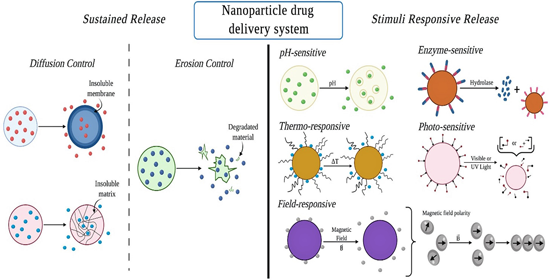
- excretion [33]. When a TiO2 nanomaterial circulates through the body, certain biomolecules (such as proteins, phospholipids, or DNA contained in biological fluids or present in living cells) get adsorbed onto the surface of it very quickly, which is termed as “protein corona (PC)” formation. This protein
- integrin clustering and focal adhesion development. In this context, Chen et al. employed the adsorption of functional proteins (bone morphogenetic protein 2 and sclerostin antibody) to modify TiO2 nanotube arrays to repair bone fractures [35]. The PC alters biodistribution, biological identity and


A comprehensive review on electrospun nanohybrid membranes for wastewater treatment
Beilstein J. Nanotechnol. 2022, 13, 137–159, doi:10.3762/bjnano.13.10
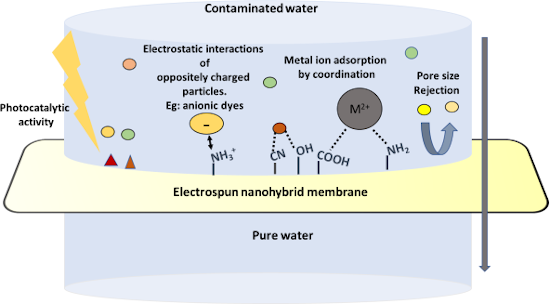
- hydrophobic PVDF membrane to a hydrophilic membrane with a water contact angle of 22.72°. The nanohybrid membrane showed a dye removal efficiency of 88.9% and an adsorption capacity of 72.6 mg/g for IC [78]. Huong et al. developed a waste protein-immobilized cationic dye removal membrane from PAN. In this