Search results
Search for "relative humidity" in Full Text gives 145 result(s) in Beilstein Journal of Nanotechnology.
Nanoscale rippling on polymer surfaces induced by AFM manipulation
Beilstein J. Nanotechnol. 2015, 6, 2278–2289, doi:10.3762/bjnano.6.234
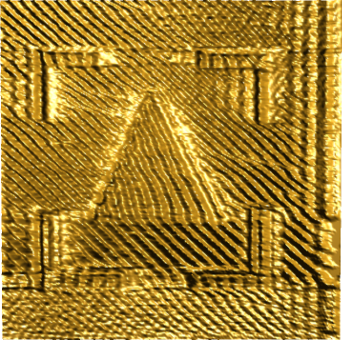
- (relative humidity: 50 to 60% and T = 22–23 °C). How to avoid ripple formation The nanoripple formation can be either a nuisance or an opportunity. In the framework of nanolithography, one should consider the development of tools for creating but also preventing the pattern formation. Regarding this second
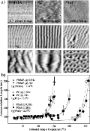
- load is constant and equal to 10 nN. Adapted with permission from [31]. Copyright 2001 American Chemical Society. Solvent-enriched polymer films. Examples of 3D ripple structures on PCL (left) and PET (right). The images were obtained in air (relative humidity 40%), with a silicon conical shape tip




Nanofibers for drug delivery – incorporation and release of model molecules, influence of molecular weight and polymer structure
Beilstein J. Nanotechnol. 2015, 6, 1939–1945, doi:10.3762/bjnano.6.198
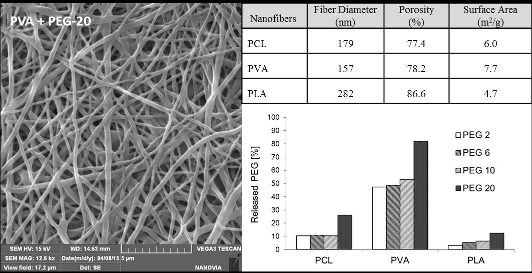
- the polymer mixtures at a concentration of 3 wt %. PCL was dissolved in a 1:1 (w/w) mixture of tetrahydrofuran and N,N-dimethylformamide at a concentration of 10 wt %. The electrospinning parameters were 6 rpm, 15 cm and 5.5 kV/cm. The maximum temperature was 30 °C, and the maximum relative humidity
- . PVA was dissolved in water/phosphoric acid at a concentration of 11 wt %. The electrospinning parameters were 2 rpm, 13 cm and 45–55 kV/cm. The relative humidity was 25–30%, and the temperature was 22 °C. The PVA layers were crosslinked thermally in a drying oven at 145 °C for 15 min to reach their



Template-controlled mineralization: Determining film granularity and structure by surface functionality patterns
Beilstein J. Nanotechnol. 2015, 6, 1763–1768, doi:10.3762/bjnano.6.180
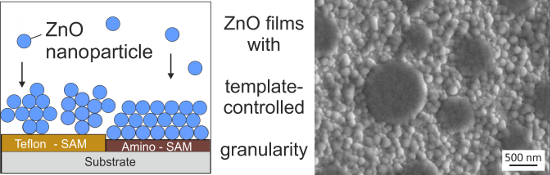
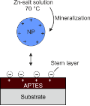
- were previously cleaned by CO2 snow-jet treatment (at least 20 s for a 2 × 2 cm substrate). The relative humidity, measured by a Testo 635 Hygrometer, was adjusted to 40–45% during the spin-coating process. For the adjustment of the humidity, a mixture of water-saturated and pure nitrogen were led into

Nanomechanical humidity detection through porous alumina cantilevers
Beilstein J. Nanotechnol. 2015, 6, 1332–1337, doi:10.3762/bjnano.6.137
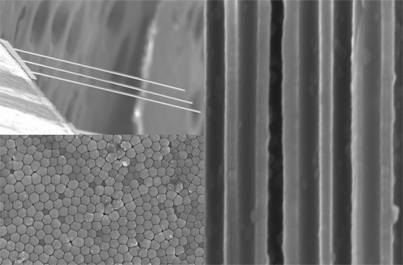
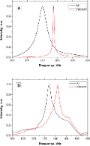
- ). The shift here is 3900 Hz. Frequency responses of AAO rectangular cantilever (2 μm thick, 800 μm long and 100 μm wide) at relative humidities of 10 and 21% (1120 Hz shift). Resonance frequency of the AAO cantilevers (2 μm thick, 800 μm long and 100 μm wide) as function of relative humidity from 10 to
- shown on Figure 6. The AFM is equipped with vacuum chamber Ar-flow controllers as well as humidity and temperature sensors. The desired moisture level was obtained by controlling the humidity at 25 °C with saturated salt-water and CaCl2 dryer. Saturated salt-water was used to reach high relative
- humidity in the microscope chamber. After stabilization of humidity equilibrium in the system we start measurements of the resonance frequency over a CaCl2 dryer down to the lowest possible humidity level. The microscope determined the upper limit of humidity level. Typically around 10 min have been needed



Polymer blend lithography for metal films: large-area patterning with over 1 billion holes/inch2
Beilstein J. Nanotechnol. 2015, 6, 1205–1211, doi:10.3762/bjnano.6.123
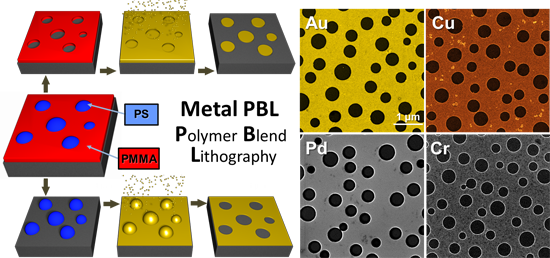
- dissolution in CO2. Preparation of a polymer blend lithographic mask (humidity) The polymer blend films were spin-casted at a speed of ca. 1500 revolutions per minute (rpm) under a relative humidity of 40% onto silicon substrates cleaned by snow jet treatment (at least 20 s for a 2 cm × 2 cm substrate). The


Transformation of hydrogen titanate nanoribbons to TiO2 nanoribbons and the influence of the transformation strategies on the photocatalytic performance
Beilstein J. Nanotechnol. 2015, 6, 831–844, doi:10.3762/bjnano.6.86
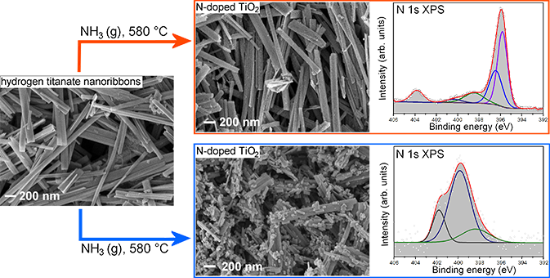
- concentration began to rise. The system was kept at a temperature of 25 ± 3 °C and a relative humidity of 22 ± 3%. The light source was a 300 W Xe lamp (Newport Oriel Instrument, USA). The lamp imitates the solar spectrum and emits both ultraviolet (UV) and visible light (vis). The radiance intensity on the




Capillary and van der Waals interactions on CaF2 crystals from amplitude modulation AFM force reconstruction profiles under ambient conditions
Beilstein J. Nanotechnol. 2015, 6, 809–819, doi:10.3762/bjnano.6.84
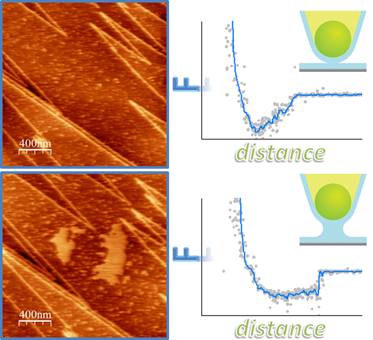
- approach when relative humidity is allowed to spontaneously reach the ambient value of about 40% and homogeneous micrometer-sized water patches stabilize on top of the crystals surface. The dissipation induced by the capillary bridge formation is unambiguously identified in experimental Ediss and ΔΦ curves
- no extended water patches were present on the surface. When dry samples were needed, the crystals were kept at 120 °C for 30 min under nitrogen flow before calibrating the cantilevers. In general, repeatedly scanning and/or collecting curves at ambient relative humidity RH ≈ 40% results in the


Conformal SiO2 coating of sub-100 nm diameter channels of polycarbonate etched ion-track channels by atomic layer deposition
Beilstein J. Nanotechnol. 2015, 6, 472–479, doi:10.3762/bjnano.6.48
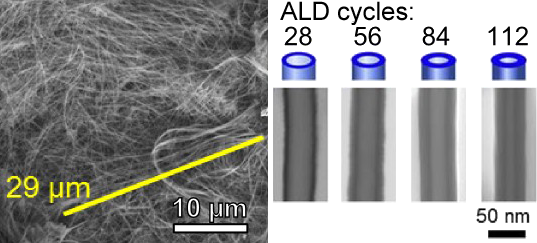
- were measured on a OCA35 apparatus from Dataphysics Instruments GmbH. Distilled water with a volume of 2 µL was dropped onto the membrane surface at 21 °C and 50% relative humidity of air. Besides ALD coating, the samples were not treated otherwise prior to measurements. Results and Discussion


A scanning probe microscope for magnetoresistive cantilevers utilizing a nested scanner design for large-area scans
Beilstein J. Nanotechnol. 2015, 6, 451–461, doi:10.3762/bjnano.6.46
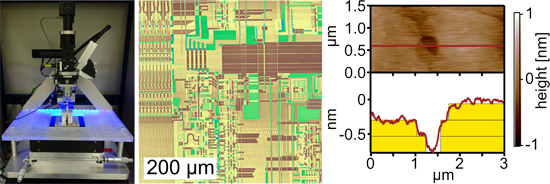
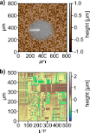
- ]. If exposed to ambient conditions with a relative humidity of around 40%, the topographic contrast on those two materials disappears in amplitude modulation imaging. The height difference, however, can be observed if the sample is scanned in a liquid [63]. Therefore, we conclude that the vanishing


Boosting the local anodic oxidation of silicon through carbon nanofiber atomic force microscopy probes
Beilstein J. Nanotechnol. 2015, 6, 215–222, doi:10.3762/bjnano.6.20
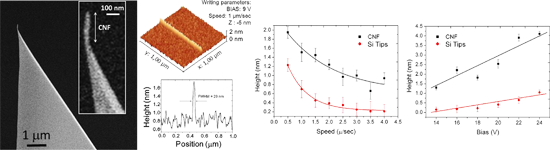
- captured and subtracted. All tests are performed at room conditions, with a temperature of 25 °C and under a controlled relative humidity ranging from 20 to 40%. The Si substrates consist of chips cut from Si(100) wafers. Organic contamination on the chips was removed by oxygen plasma etching before the
- voltage is 20 V, relative humidity (RH) is 36%. Results of LAO-AFM on Si with CNF (a) and Si (b) probes as a function of the bias voltage (in V). Writing speed is 1 μm/s, RH is 36%. Monitoring chemical and mechanical stability of CNF probes for LAO-AFM. SEM images before (a) and after (c) the definition


Functionalization of α-synuclein fibrils
Beilstein J. Nanotechnol. 2015, 6, 124–133, doi:10.3762/bjnano.6.12
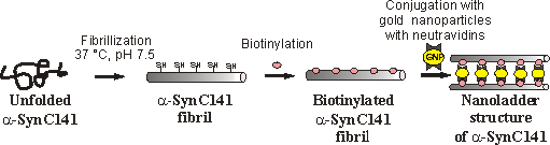
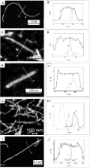
- immobilization was allowed to proceed for 5 to 20 min, at 23 °C at a relative humidity of about 45%. The density of fibrillar structures on mica was increased or decreased by the immobilization time or the dilution rate. After adsorption, the surfaces were rinsed with distilled water, dried and visualized using


Synthesis of boron nitride nanotubes and their applications
Beilstein J. Nanotechnol. 2015, 6, 84–102, doi:10.3762/bjnano.6.9
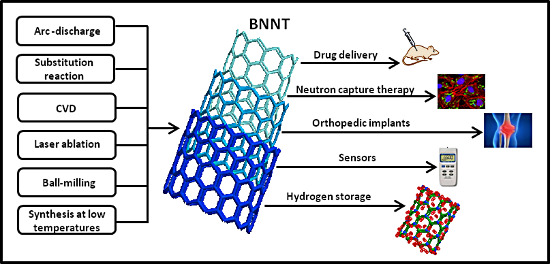
- humidity sensor system. The adsorption–desorption tests showed that the AgNP–BNNT material had a potentially fast response/recovery time of 100/15 s for the detection of relative humidity at room temperature [90]. The use of Ni-encapsulated BNNTs in optomagnetic-based sensors with respect to their magnetic


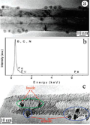


Materials and characterization techniques for high-temperature polymer electrolyte membrane fuel cells
Beilstein J. Nanotechnol. 2015, 6, 68–83, doi:10.3762/bjnano.6.8
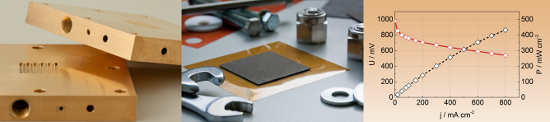
- phosphoric acid. The proton conductivity of the fully doped PBI membrane at 200 °C (0.07 S·cm−1) [23] is almost as high as that of fully hydrated perfluorinated membranes and far less dependent on the relative humidity, thus allowing its use in HT-PEMFCs without humidifying the gas reactants. A HT-PEMFC
- by an activation mechanism that obeys the Arrhenius law [29]. In contrast, the proton conductivity of Nafion is attributed to the vehicle mechanism, which has a weaker temperature dependence. Moreover, the conductivity of acid-doped PBI is less dependent on the relative humidity, although there is a


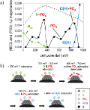


The capillary adhesion technique: a versatile method for determining the liquid adhesion force and sample stiffness
Beilstein J. Nanotechnol. 2015, 6, 11–18, doi:10.3762/bjnano.6.2
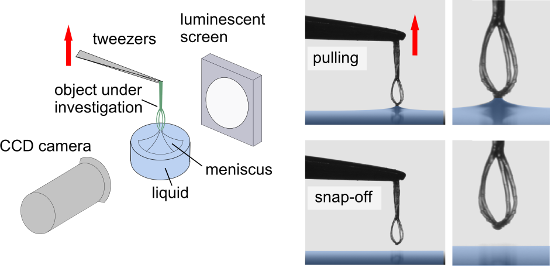
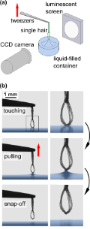
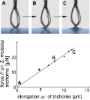
- in Table 1. For each type of hair coating (natural, PDMS- or Teflon-coated ends), the Young’s modulus was the same within the accuracy of the measurement. Its average value was E = (3.04 ± 0.11 ± 0.22) × 105 N/cm2, with the statistical and systematic errors follow the data, respectively. The relative
- humidity during the measurements was roughly RH = 50% and the temperature was 22 °C. Literature values citing Young’s modulus of human head hair are scarce. For example, in [27] a value of 3.89 × 10⁵ N/cm2 (RH = 60%) was indicated. In [28], a range between 1.5 and 4.6 × 10⁵ N/cm2 (RH = 65%) was indicated


Silica nanoparticles are less toxic to human lung cells when deposited at the air–liquid interface compared to conventional submerged exposure
Beilstein J. Nanotechnol. 2014, 5, 1590–1602, doi:10.3762/bjnano.5.171
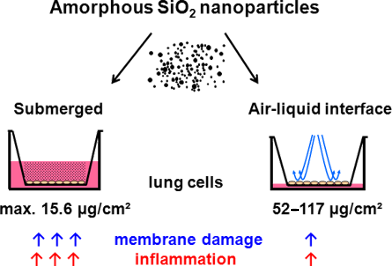
- ALIDA exposure system described in detail by Comouth et al. [18]. For cell exposure the aerosol was humidified to 80–90% relative humidity at 37.5 °C. The humidified aerosol was then carried with identical flows of 100 mL·min−1 (sccm) through six tubes of equal dimensions to the inlets of six exposure



Influence of the PDMS substrate stiffness on the adhesion of Acanthamoeba castellanii
Beilstein J. Nanotechnol. 2014, 5, 1393–1398, doi:10.3762/bjnano.5.152
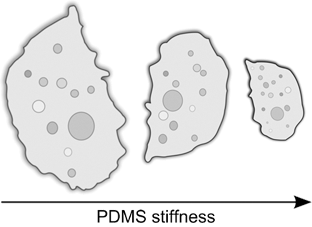
- . For all substrates, elastic moduli were determined from the unloading part of the curve to consider only the elastic behavior and not the plastic deformation of the sample. The measurements were performed under ambient conditions (25–26 °C temperature and 40–50% relative humidity). Analysis of the



Surface topography and contact mechanics of dry and wet human skin
Beilstein J. Nanotechnol. 2014, 5, 1341–1348, doi:10.3762/bjnano.5.147
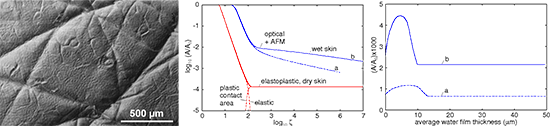
- order of ΔV/LD ≈ 90 μm, where L ≈ 8 cm is the stroke length and D ≈ 0.8 cm the width of the (nominal) Hertzian contact region. A uniform water film of thickness Δd = 90 μm evaporates in about 500 s at room temperature, 50% relative humidity, and an evaporation rate of ≈ 1.7 × 10⁻⁷ m/s (see below). This
- ) temperature, pa is the water vapor pressure in the air (which is the product of the relative humidity and the saturation water pressure at the air temperature and air pressure), and v the velocity of the air (some distance from the water surface) over the water surface. Y is the latent heat of evaporation
- relative humidity of 50% giving pa = 0.5 × 2.3 kPa = 1.15 kPa. Hence, since v << 1 m/s, we get ≈ 1.7 × 10⁻⁷ m/s. Thus it takes Δt = Δd/ ≈ 60 s for the water film thickness to decrease by Δd ≈ 10 μm, which according to the theory is the film thickness range over which the capillary attraction between the


Effects of palladium on the optical and hydrogen sensing characteristics of Pd-doped ZnO nanoparticles
Beilstein J. Nanotechnol. 2014, 5, 1261–1267, doi:10.3762/bjnano.5.140
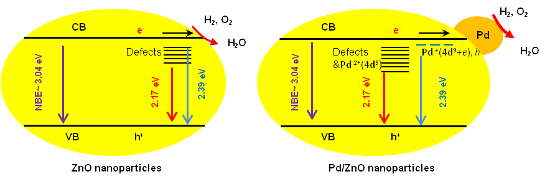
- relative humidity of 65% RH. To keep the operating temperature of the sensor in the range of 200–300 °C, an applied voltage Vapplied of 1.7 V and a current of about 120 mA are required. The obtained linear curve implied that it is possible to control the operating temperature by turning the applied voltage
- the Pd/ZnO sample. The values of the output voltage maximum, Vout, were 17 and 37 mV for ZnO and Pd/ZnO samples, respectively. An operating temperature of 250 °C was selected to investigate the gas-sensitive characteristics of the Pd/ZnO sensor. With a flow speed of 100 mL/min and a relative humidity


Nanoporous composites prepared by a combination of SBA-15 with Mg–Al mixed oxides. Water vapor sorption properties
Beilstein J. Nanotechnol. 2014, 5, 1226–1234, doi:10.3762/bjnano.5.136

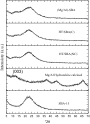
- are homogeneously dispersed. Vapor sorption behavior The water vapor adsorption–desorption isotherms of all samples were acquired at 60 °C with a rate of 0.5%·min−1 of relative humidity (RH) until to achieve 80% of RH (Figure 5). The calcined hydrotalcite (HT) adsorbs up to 5.0 mmol H2O/gHT and the
- /SBA(NC) and (Mg/Al)/SBA composites (Figure 6). The HT/SBA(NC) composite shows adsorption curves consistent with a Langmuir-like behavior. As expected, the amount of water vapor adsorbed increased with the RH, until equilibrium temperature is reached. Still, if the relative humidity is increased, the
- carried out on a temperature-controlled thermobalance Q5000SA from TA Instruments, equipped with a humidity-controlled chamber. The experimental variables were temperature and relative humidity (RH). Such experiments were carried out by using N2 from Praxair (grade 4.0) as a carrier gas and distilled



Trade-offs in sensitivity and sampling depth in bimodal atomic force microscopy and comparison to the trimodal case
Beilstein J. Nanotechnol. 2014, 5, 1144–1151, doi:10.3762/bjnano.5.125
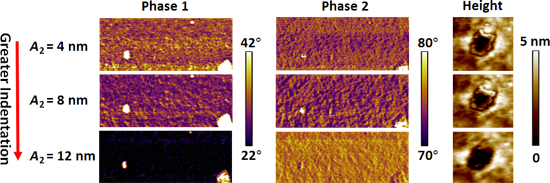
- container. During the experiments reported in this paper, the air in the AFM chamber was monitored to be at 23 °C and 17% relative humidity. Computational For the numerical simulations the first three eigenmodes of the AFM cantilever were modeled by using individual equations of motion for each, coupled


Organic and inorganic–organic thin film structures by molecular layer deposition: A review
Beilstein J. Nanotechnol. 2014, 5, 1104–1136, doi:10.3762/bjnano.5.123




Dry friction of microstructured polymer surfaces inspired by snake skin
Beilstein J. Nanotechnol. 2014, 5, 1091–1103, doi:10.3762/bjnano.5.122
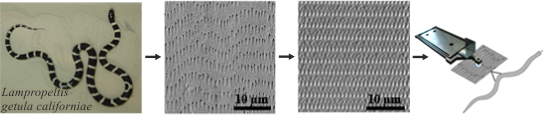
- . Scans were carried out at a 1 Hz scan rate and a resolution of 1024 × 1024 pixels with an intermittent contact mode cantilever (c = 50 N·m−1, NST-NCHF, Nascatec GmbH, Stuttgart, Germany), at ambient conditions (room temperature 24° C, relative humidity 41%). NanoWizard® SPM software 3.3.23 (JPK


Gas sensing with gold-decorated vertically aligned carbon nanotubes
Beilstein J. Nanotechnol. 2014, 5, 910–918, doi:10.3762/bjnano.5.104
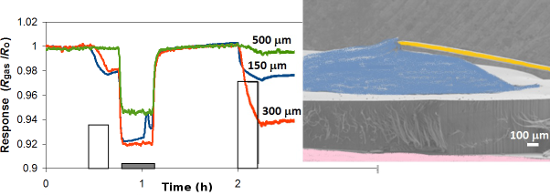
- that the sensing response to nitrogen dioxide depends on the nanotube length. The optimum was found to be 300 µm for getting the higher response. When the background humidity level was changed from dry to 50% relative humidity, an increase in the response to NO2 was observed for all the sensors


Scale effects of nanomechanical properties and deformation behavior of Au nanoparticle and thin film using depth sensing nanoindentation
Beilstein J. Nanotechnol. 2014, 5, 822–836, doi:10.3762/bjnano.5.94
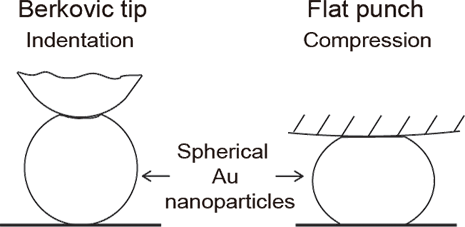
- nanoparticle from slipping under the indenter during more rapid and unstable loading. Topography images were also taken before and after indentation with the same tip used for indentation. All experiments were performed at room temperature (23 °C) and 50–55% relative humidity. Compression For compression
- were performed at room temperature (23 °C) and 50–55% relative humidity. Macromechanical characterization For comparison to the macroscale, data from polycrystalline bulk Au was used from experiments presented by Lozinskii [39]. The Vickers hardness was obtained by using a four sided diamond tip under