


Search results
Search for "resolution" in Full Text gives 1325 result(s) in Beilstein Journal of Nanotechnology. Showing first 200.
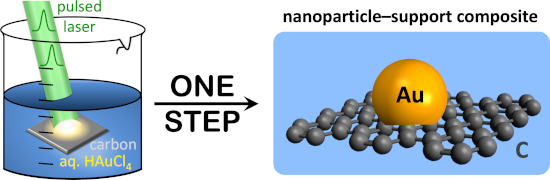
Pulsed laser in liquid grafting of gold nanoparticle–carbon support composites
Beilstein J. Nanotechnol. 2025, 16, 349–361, doi:10.3762/bjnano.16.26
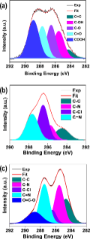
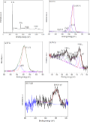
- absence of a carbonaceous shell on the gold nanoparticles, evident from the detection of surface gold (Figure 4). The elements carbon and oxygen are present in hydrophilic carbon fiber paper (Figure 4A), as expected for this support material [22]. High-resolution C 1s region spectra required six peaks to
- ][56][57][58]. Two peaks were needed to fit the high-resolution O 1s region spectra with central binding energies of (532.0 ± 0.5) eV, consistent with C=O functional groups, and (533.5 ± 0.5) eV, assigned to C–O species [52][53][54][55], in keeping with prior data for hydrophilic carbon fiber paper [22
- treatment that enabled the embedding of gold atoms. Gold was additionally present in XPS data of the pulsed laser-grafted gold nanoparticle–carbon fiber paper composites (Figure 4B). High-resolution Au 4f data were fitted using a Gaussian–Lorentzian doublet with an orbital splitting of (3.5 ± 0.14) eV of Au


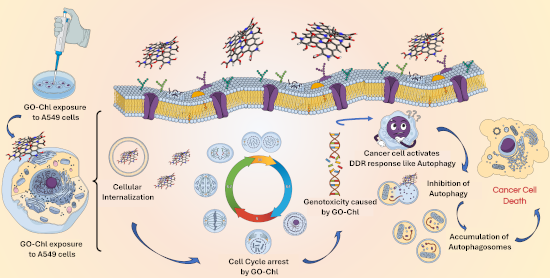
Graphene oxide–chloroquine conjugate induces DNA damage in A549 lung cancer cells through autophagy modulation
Beilstein J. Nanotechnol. 2025, 16, 316–332, doi:10.3762/bjnano.16.24
- -resolution transmission electron microscope (Technai G2 F30 STWIN, Japan), field emission scanning electron microscope (FEI, Quanta FEG 450, USA), and atomic force microscope (Nanoscope, Veeco V, USA) [28][29][30]. Cell culture A549 cells from the American Type Culture Collection (ATCC, Manassas, VA, USA
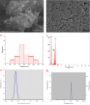
- nanoconjugates. The observed data with relative % are shown in Supporting Information File 1, Table S1. The morphological analysis of GO was carried out using field-emission scanning electron microscopy (FESEM) and high-resolution transmission electron microscopy (HRTEM). In Supporting Information File 1, Figure



Enhancing mechanical properties of chitosan/PVA electrospun nanofibers: a comprehensive review
Beilstein J. Nanotechnol. 2025, 16, 286–307, doi:10.3762/bjnano.16.22

- viscoelastic deformation and sliding. Morphological properties and structure Mechanical properties can often be correlated with the morphology and structure of the nanofibers [143]. The use of optical microscopes in obtaining nanofiber images is quite rare because of the relatively low resolution, but it is


Preferential enrichment and extraction of laser-synthesized nanoparticles in organic phases
Beilstein J. Nanotechnol. 2025, 16, 254–263, doi:10.3762/bjnano.16.20
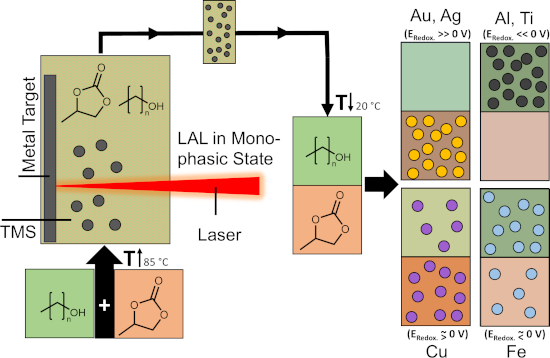
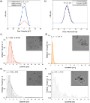
- detectible. Extinction values for the Cu and Fe colloids can be found in Supporting Information File 1, Table S1 and Table S2, and the fractions of colloidal NPs in the propylene carbonate phase are found in Supporting Information File 1, Table S3. High-resolution transmission electron microscopy (HRTEM




Radiosensitizing properties of dual-functionalized carbon nanostructures loaded with temozolomide
Beilstein J. Nanotechnol. 2025, 16, 229–251, doi:10.3762/bjnano.16.18




Recent advances in photothermal nanomaterials for ophthalmic applications
Beilstein J. Nanotechnol. 2025, 16, 195–215, doi:10.3762/bjnano.16.16
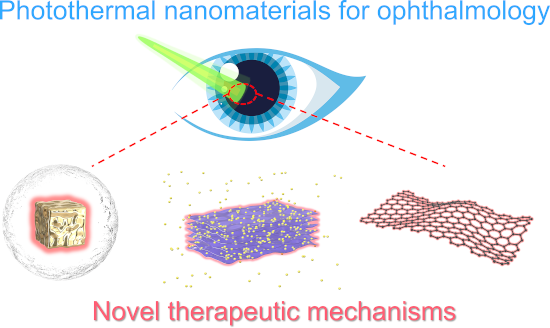
- Abstract The human eye, with its remarkable resolution of up to 576 million pixels, grants us the ability to perceive the world with astonishing accuracy. Despite this, over 2 billion people globally suffer from visual impairments or blindness, primarily because of the limitations of current ophthalmic
- ), fluorescence imaging (FI), scanning laser ophthalmoscopy (SLO), and fundus photography have significantly changed the diagnosis and monitoring of ocular diseases [174][175][176]. OCT is the most prevalent ophthalmic imaging technique, providing high-resolution and high-sensitivity imaging; however, the test
- example, blood flow, oxygen saturation, oxygenated and deoxygenated hemoglobin, oxygen metabolism, and melanin concentration [187][188]. The main limitations of PAI are the slower imaging speed and the decreasing resolution as the depth of imaging is increased [189]. The use of contrast agents can improve


A review of metal-organic frameworks and polymers in mixed matrix membranes for CO2 capture
Beilstein J. Nanotechnol. 2025, 16, 155–186, doi:10.3762/bjnano.16.14
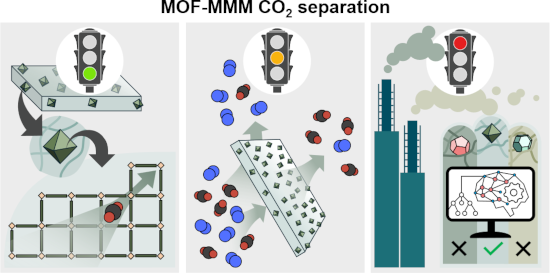
- high-resolution transmission electron microscopy (HRTEM). Utilizing smaller MOF filler sizes is a straightforward approach to improve filler dispersion. The contact area with the polymer matrix increases when the size of MOF particles is decreased, promoting adhesion, and reducing interfacial defects
- MMMs Material characterization techniques are pivotal for the assessment of novel MOF-based MMMs structures. Electron microscopy enables direct imaging of a sample with up to sub-nanometer resolution [139]. Scanning electron microscopy (SEM) is a popular and straightforward method to obtain images of




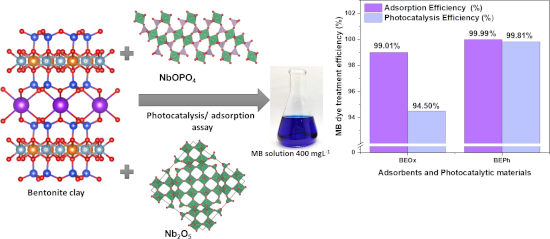
Clays enhanced with niobium: potential in wastewater treatment and reuse as pigment with antibacterial activity
Beilstein J. Nanotechnol. 2025, 16, 141–154, doi:10.3762/bjnano.16.13
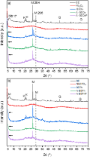
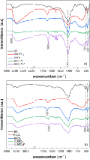
- spectrometer using KBr pellets containing 1% by weight of the samples. Analyses of all samples were performed in the range of 4000 to 400 cm−1 with a resolution of 4 cm−1, accumulating 10 scans. Absorbance measurements of the supernatant solutions were analyzed using a UV–vis spectrophotometer (UV-1800



Nanocarriers and macrophage interaction: from a potential hurdle to an alternative therapeutic strategy
Beilstein J. Nanotechnol. 2025, 16, 97–118, doi:10.3762/bjnano.16.10

- ]. Strategies for manipulating macrophage activation and function are diverse, ranging from depleting macrophages in diseased tissues, such as in cancer immunotherapy [9][10][11], to employing non-surgical treatments like extracorporeal shock wave therapy in various rheumatic diseases to promote resolution and
- tissue repair and homeostasis, regulating inflammation and its resolution by adopting different functional states, simplified in classically activated (M1) and alternatively activated (M2). This activation occurs on a spectrum, with various intermediate states influenced by microenvironmental signals
- the context. In cancer therapy, reprogramming M2 macrophages into M1 enhances antitumor immunity, while in chronic inflammatory diseases, shifting from M1 to M2 facilitates inflammation resolution and tissue repair. This modulation can be achieved using small molecules, cytokines, or nanotechnology to


Characterization of ZnO nanoparticles synthesized using probiotic Lactiplantibacillus plantarum GP258
Beilstein J. Nanotechnol. 2025, 16, 78–89, doi:10.3762/bjnano.16.8
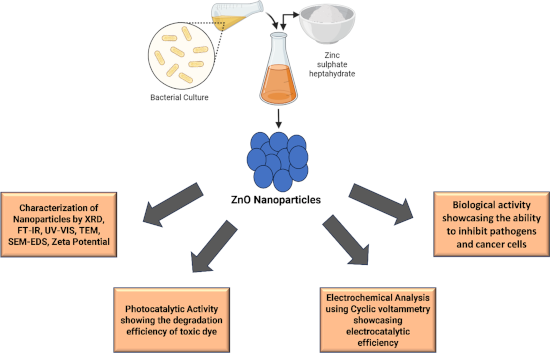
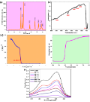
- range of 200–800 nm with a resolution of 1 nm. Additionally, chemical characteristics were investigated using FTIR analysis on a PerkinElmer Spectrum 65 spectrophotometer in the range of 400–4000 cm−1. ZnO NPs were mixed with potassium bromide (KBr) at a ratio of 1:10 (w/w) to prepare pellets for



Advanced atomic force microscopy techniques V
Beilstein J. Nanotechnol. 2025, 16, 54–56, doi:10.3762/bjnano.16.6

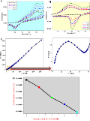
- . investigate the cross-sectional potential distribution across a III-V multilayer stack [6]. With a spatial resolution down to 20 nm at ambient conditions, they identified the presence of several space charge regions along the stack. The authors further conclude on future requirements on electrical contacts to
- mechanical oscillation of the piezoelectric membrane with highest resolution in real time. In addition to the measurement of surface potentials or photovoltages, Navarro-Rodriguez et al. investigate the dynamics of surface charges and how they couple to the detection system [9]. They describe in detail how
Bioinspired nanofilament coatings for scale reduction on steel
Beilstein J. Nanotechnol. 2025, 16, 25–34, doi:10.3762/bjnano.16.3

- induce corrosion of the samples. Scanning electron microscopy and energy-dispersive X-ray spectroscopy measurements Scanning electron microscopy images were acquired in a TESCAN CLARA (S8151) using the ANALYSIS and the UH-resolution scan mode with an accelerator voltage of 15 keV and 10 keV, a beam


A nanocarrier containing carboxylic and histamine groups with dual action: acetylcholine hydrolysis and antidote atropine delivery
Beilstein J. Nanotechnol. 2025, 16, 11–24, doi:10.3762/bjnano.16.2

- that was 1 × 1 × 3.5 cm3 in size. The excitation wavelength was 475 nm, and the fluorescence spectra ware measured between 480 and 700 nm. Electronic analytical balances ViBRA AF-225 DRCE (220/0.001 g, resolution 0.00001 g) were utilized for weighing the samples. Ultrasonic treatment was performed with


Fabrication of hafnium-based nanoparticles and nanostructures using picosecond laser ablation
Beilstein J. Nanotechnol. 2024, 15, 1639–1653, doi:10.3762/bjnano.15.129
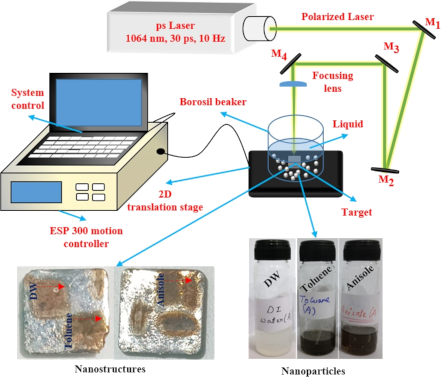
- and HfC in toluene and anisole can be attributed to chemical interactions between the ablated Hf atoms and the liquid medium. Careful observation of high-resolution TEM images revealed the formation of core–shell structures for the particles obtained in anisole and toluene (Figure 4b,c). In contrast
- distributions, and SAED patterns of laser-ablated NPs in (a–c) DW, (d–f) toluene, and (g–i) anisole. High-resolution TEM images of laser-ablated NPs in (a) DW, (b) toluene, and (c) anisole. Zoomed TEM images of the shell-like structures shown in Figure 4b and Figure 4c for (a) toluene and (b) anisole (the d




Natural nanofibers embedded in the seed mucilage envelope: composite hydrogels with specific adhesive and frictional properties
Beilstein J. Nanotechnol. 2024, 15, 1603–1618, doi:10.3762/bjnano.15.126
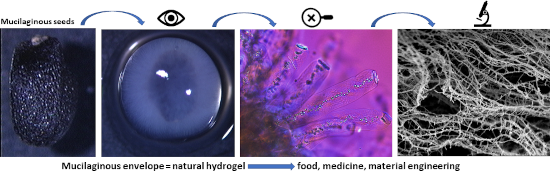
- rather thin (2–3 nm), which makes their differentiation from other polysaccharides (pectins and hemicelluloses) rather difficult. The size of the microfibrils of the secondary cell wall (20–30 nm) [53] makes their observation easier, particularly using high-resolution microscopy techniques, such as


Ultrablack color in velvet ant cuticle
Beilstein J. Nanotechnol. 2024, 15, 1554–1565, doi:10.3762/bjnano.15.122

- different magnifications, starting at 15,000× and adjusted as needed. Transmission electron microscopy (TEM) TEM was utilized to examine the internal cuticle morphology at high resolution at a nanometer scale. The apparatus was configured to operate at 50 kV with a minimum vacuum column pressure of 5.10
- measurements were conducted using a high-resolution optical fiber spectrometer (Flame; Ocean Insight, Inc., Dunedin, FL, USA), equipped with a DH-2000-BAL light source (Ocean Insight, Inc.) and an optical fiber probe consisting of a 400 µm detector and a light guide. Spectral luminance was controlled using a



Electrochemical nanostructured CuBTC/FeBTC MOF composite sensor for enrofloxacin detection
Beilstein J. Nanotechnol. 2024, 15, 1522–1535, doi:10.3762/bjnano.15.120
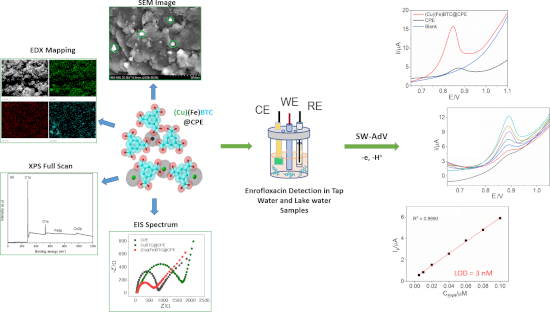
- existence of C (284 eV), O (532 eV), Fe (712 and 726 eV), and Cu (935 eV). The C 1s XPS spectrum of the (Cu)(Fe)BTC sample (Figure 2b) reveals four peaks attributed to C=C/C–C (284.78 eV), C–O (285.42 eV), C=O (286.11 eV), and O–C=O (288.62 eV) [39]. The high-resolution O 1s XPS spectrum (Figure 2c) can be
- room temperature (25 ± 1 °C). (a) XRD pattern and (b) N2 adsorption/desorption isotherms of the (Cu)(Fe)BTC sample. Full-scan (a) and high-resolution C 1s (b), O 1s (c), Fe 2p (d), and Cu 2p (e) XPS spectra of the (Cu)(Fe)BTC sample. TEM image of (Cu)(Fe)BTC sample. SEM images of (Cu)(Fe)BTC@CPE (a





Effect of radiation-induced vacancy saturation on the first-order phase transformation in nanoparticles: insights from a model
Beilstein J. Nanotechnol. 2024, 15, 1453–1472, doi:10.3762/bjnano.15.117

- film through in situ ion irradiation, observed using atomic-resolution transmission electron microscopy [16]. The gold sample was irradiated with 2.8 MeV Au4+ ions at 200 °C with a fluence of approximately 1014 ions·cm−2 (equivalent to a dose of 10 dpa). A combination of surface- and radiation-induced


Lithium niobate on insulator: an emerging nanophotonic crystal for optimized light control
Beilstein J. Nanotechnol. 2024, 15, 1415–1426, doi:10.3762/bjnano.15.114
- and driving coherent interactions with the organic semiconductor molecules. Secondly, enabling the measurement of the evolution of stored energy and the differential reflectivity induced by the pump pulse, which is essential for monitoring the charging dynamics at a femtosecond resolution. The


A biomimetic approach towards a universal slippery liquid infused surface coating
Beilstein J. Nanotechnol. 2024, 15, 1376–1389, doi:10.3762/bjnano.15.111
- flood gun. Scans were collected with a takeoff angle of 55° at a pressure below 3 × 10⁻⁹ Torr. A pass energy of 187.5 eV with a step size of 0.8 eV was used for the survey scans, and the high resolution had a pass energy of 23.5 eV and a step size of 0.5 eV/step. Spectra were collected with an X-ray
- steps. XPS survey and high-resolution C 1s spectra collected from PDA–FDT-coated substrates can be found in Figure 3. All survey spectra (Figure 3a,c,e) are nearly identical across the three substrates, which suggests a uniform FDT coating across the three different sample types. High-resolution C 1s
- stem from the PDA layer, while the fluorinated species can be attributed to the FDT layer covalently attached the PDA film. This covalent attachment is also confirmed by the XPS S 2p high-resolution spectra (Supporting Information File 1), which exhibited the same peak envelope across all the three




Investigation of Hf/Ti bilayers for the development of transition-edge sensor microcalorimeters
Beilstein J. Nanotechnol. 2024, 15, 1353–1361, doi:10.3762/bjnano.15.108

- based on a transition-edge sensor (TES) in experiments to determine the magnetic moment of neutrinos. Based on the measurements of the critical current, the critical temperature, and the width of the superconducting transition, we estimate the energy resolution δE of the TES prototypes, showing that it
- recoil energy, the adsorption energy is released, which for the most common metals reaches tens of millielectronvolts, amplifying the signal. Thus, the task of detecting the neutrino spectrum requires microcalorimeters with an energy resolution capable of distinguishing the initial recoil energy
- transferred from neutrinos to helium against the background of binding energies, that is, not worse than 0.1 meV. However, a lower resolution is sufficient to detect that a scattering event has taken place, it is estimated that δE of less than 1 eV will already suffice for this purpose. Microcalorimeters


Hymenoptera and biomimetic surfaces: insights and innovations
Beilstein J. Nanotechnol. 2024, 15, 1333–1352, doi:10.3762/bjnano.15.107
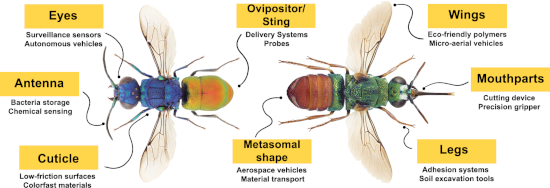
- that offers several visual advantages, such large field of view, high temporal resolution, rapid capture and tracking of fast-moving objects [83][84]. This renders compound eyes particularly suitable for electronic surveillance applications, where broad observation coverage is essential for detecting






Interaction of graphene oxide with tannic acid: computational modeling and toxicity mitigation in C. elegans
Beilstein J. Nanotechnol. 2024, 15, 1297–1311, doi:10.3762/bjnano.15.105

- TA. XPS survey data suggest that GO after 24 h in EPA medium is composed of 75.33 ± 0.40% carbon and 24.67 ± 0.40% of oxygen, whereas GO after interaction with TA presents 73.30 ± 0.40% of carbon and 26.70 ± 0.44% of oxygen. High-resolution C 1s XPS analysis showed a C–C/C–H peak contribution of
- fingerprint region with 1734(1), 1625(2), 1390(3), 1230(4), and 1068(5) cm−1 bands, and TA-related bands at 1704(6), 1600(7), 1310(8), and 1180(9) cm−1; b) Raman spectra normalized by intensity of G band; High-resolution C 1s XPS analysis of c) GO and d) GO with TA (10 mg·L−1) showing the peaks of carbon sp2


Mn-doped ZnO nanopowders prepared by sol–gel and microwave-assisted sol–gel methods and their photocatalytic properties
Beilstein J. Nanotechnol. 2024, 15, 1283–1296, doi:10.3762/bjnano.15.104
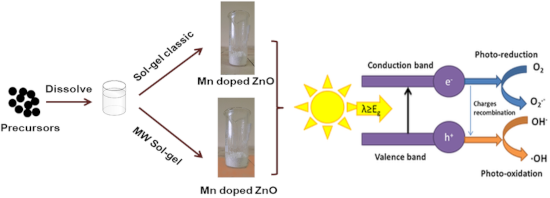
- /min. Characterization Fourier transform infrared spectra (FTIR) were recorded with a Nicolet 6700 apparatus in the range of 400–4000 cm−1. The resolution was 4 cm−1. The powders were pressed in KBr pellets, and the spectra were recorded in absorbance mode. Differential thermal analysis (DTA) and
- resolution of 0.5 nm, and 10 nm slits in excitation and emission. All measurements were performed for 0.001 g catalyst suspended after ultrasonication in ultrapure water at room temperature (25 °C) and λexc = 270 nm. For ROS identification, ·OH radicals trapping was performed with 10 mM coumarin solution


New design of operational MEMS bridges for measurements of properties of FEBID-based nanostructures
Beilstein J. Nanotechnol. 2024, 15, 1273–1282, doi:10.3762/bjnano.15.103
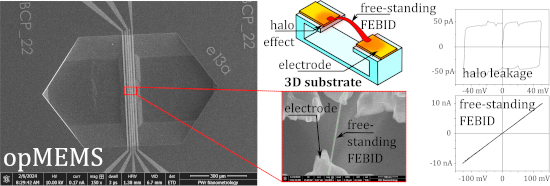
- nanostructures. Experimenting at the nanoscale requires instruments with sufficient resolution and sensitivity to measure various properties of nanostructures. Such measurements (regardless of the nature of the quantities being measured) are particularly problematic in the case of free-standing nanostructures
- emission occur [3][4][5]. There are only a few processes with resolution and repeatability suitable for creating nanostructures, and even fewer are available for self-standing nanostructures. That includes epitaxial techniques as well as focused electron beam-induced deposition (FEBID) [6][7]. Integration
- prototyping and experimentation, such as electron and ion beams, and in particular FEBID [11][12][13]. FEBID has a resolution of a few nanometres [14] and can be automated [15] or combined with other technologies [16][17]. It can be used to deposit conductive or insulating layers, as well as layers of special





