Search results
Search for "temperature dependent" in Full Text gives 133 result(s) in Beilstein Journal of Nanotechnology.
Single-molecule magnet behavior in 2,2’-bipyrimidine-bridged dilanthanide complexes
Beilstein J. Nanotechnol. 2016, 7, 126–137, doi:10.3762/bjnano.7.15
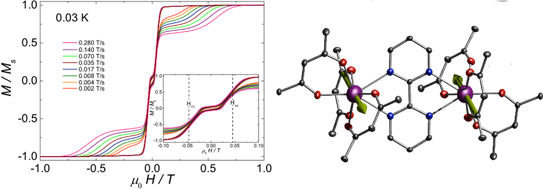
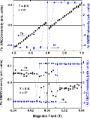
- of 2–20 K and the frequency range of 0.1–1500 Hz with and without applied DC field. No SMM behavior was observed in compound 4 with or without an applied DC field. On the contrary, compound 3 shows a clear temperature dependent in-phase (χ'M(T)) and out of phase (χ"M(T)) component under zero field


Plasma fluorination of vertically aligned carbon nanotubes: functionalization and thermal stability
Beilstein J. Nanotechnol. 2015, 6, 2263–2271, doi:10.3762/bjnano.6.232
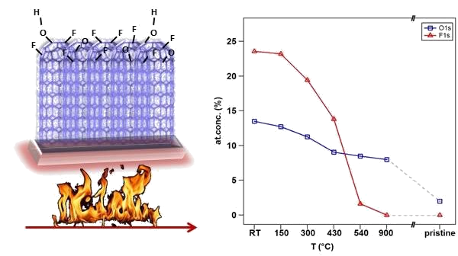
- the vCNTs. A temperature-dependent study was performed and the resulting defluorination process is discussed based on the analysis carried out using different techniques such as XPS, ultraviolet photoemission spectroscopy (UPS) and Raman spectroscopy. We observed that oxygen present in the plasma
- the BaDElPh beamline of the Elettra synchrotron in Trieste, Italy [21]. A temperature-dependent study was performed by thermal heating in ultrahigh vacuum: the selected temperature was reached in about 20 min, and the sample was kept for 15 min at that temperature before turning off the heating. The
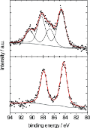
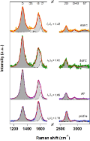
- . Temperature-dependent XPS analysis of functionalized vCNTs. (a) C 1s spectra acquired as a function of heating temperature. The C 1s spectrum recorded just after the fluorination is labelled RT, the pristine spectrum is the bottom curve. The spectra were normalized and stacked for better visualization of


Paramagnetism of cobalt-doped ZnO nanoparticles obtained by microwave solvothermal synthesis
Beilstein J. Nanotechnol. 2015, 6, 1957–1969, doi:10.3762/bjnano.6.200
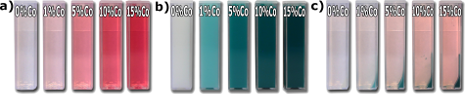
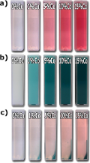
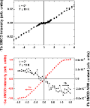
- (Figure 13c). The reciprocal magnetic susceptibility is only weakly temperature dependent for T > 20 K (Figure 13c) and then at low temperature, it drops rapidly to zero at T > 0 K. For this material, the XRD investigation shows formation of metallic inclusions. Thus, we assume that the situation closely




Temperature-dependent breakdown of hydrogen peroxide-treated ZnO and TiO2 nanoparticle agglomerates
Beilstein J. Nanotechnol. 2015, 6, 1897–1903, doi:10.3762/bjnano.6.193
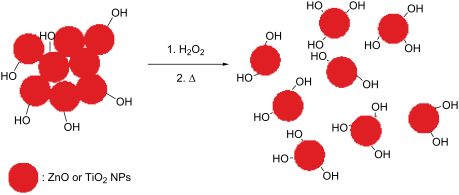
- surface of the NPs [11][12][13][14][15]. Another external factor, temperature, can be utilized for this purpose. In this respect, in several studies, the temperature-dependent viscosity of nanofluids (which could be defined as solid–liquid materials established by the NP dispersions in the range of 1–100
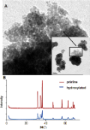
- shown in Figure 4b. The broadened bands in the spectra after H2O2 treatment suggest that the grain size was reduced. Temperature-dependent size distribution of hydroxylated NPs The TiO2 and ZnO NPs used in the study are poorly dispersed in dH2O. When suspensions of these NPs are prepared, large clusters
- the hydrodynamic radius of the NPs in their suspension in water. Figure 4 shows the temperature-dependent, hydrodynamic radius change of the untreated and hydroxylated TiO2 NPs. As mentioned above, the hydroxylation process removes possible impurities from the NP surface and increases the density of




Thermal energy storage – overview and specific insight into nitrate salts for sensible and latent heat storage
Beilstein J. Nanotechnol. 2015, 6, 1487–1497, doi:10.3762/bjnano.6.154
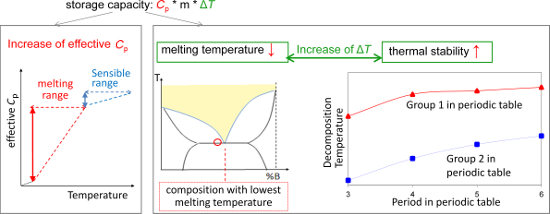
- turbines to produce electricity. Because the heat is generated at a specific and constant temperature and because of the temperature dependent water to steam transition the pressure of the steam can be adjusted to a level which is required by the turbine. Besides the melting temperature another important
- density there are consistent data from the literature in the liquid range. Also the density of multicomponent nitrate mixtures consisting of Ca(NO3)2, KNO3, LiNO3 and NaNO3 has been investigated [15]. It was shown that the temperature dependent molar volume can be estimated by a linear volumetric
- . Because the radius is increasing with the period (rows) of the periodic table the stability increases within the group of the periodic table. Thermal stabilities can be described by the temperature dependent equilibrium constant of decomposition reactions. Temperature dependent values are given for


Current–voltage characteristics of manganite–titanite perovskite junctions
Beilstein J. Nanotechnol. 2015, 6, 1467–1484, doi:10.3762/bjnano.6.152
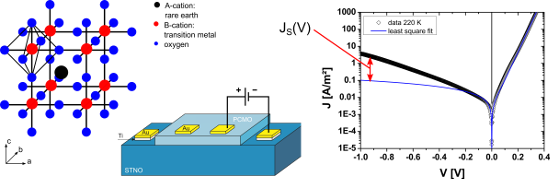
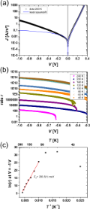
- colossal electro-resistance (CER). For the perovskite heterojunction La0.32Pr0.33Ca0.33MnO3 with 0.5 wt % Nb-doped SrTiO3, the influence of a magnetic field on the temperature-dependent photovoltaic effect was reported [5]. In contrast, STNO has a band gap of around Eg = 3.2 eV [25] and the reported type
- range, which consequently reduces a typical device thickness [2]. For perovskite oxides, no direct measurement of the diffusion length has been reported so far. From the experimental viewpoint, one of the main tools to study photovoltaic devices is the temperature-dependent analysis of current–voltage
- and acceptors in the conduction or valence band is given by nD and nA, respectively. Since the temperature dependence of the intrinsic charge carrier density, ni, is given by the saturation current is also temperature dependent where NC and NV are the effective densities of states of the conduction





Electron-stimulated purification of platinum nanostructures grown via focused electron beam induced deposition
Beilstein J. Nanotechnol. 2015, 6, 907–918, doi:10.3762/bjnano.6.94
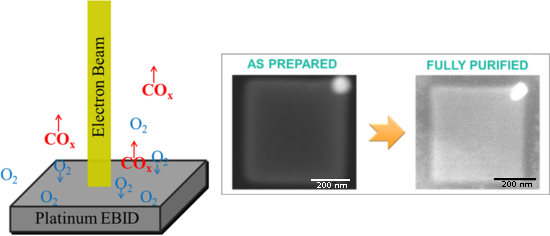
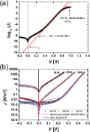
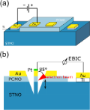
- the resultant percolating network and ultimately their temperature dependent electrical behavior which can reveal the granular properties of the evolving nanostructure as well as the insulator to metal transition. Modeling Finally, to emulate the purification reaction we have developed a model which




Manganese oxide phases and morphologies: A study on calcination temperature and atmospheric dependence
Beilstein J. Nanotechnol. 2015, 6, 47–59, doi:10.3762/bjnano.6.6
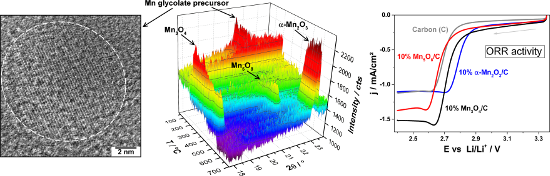
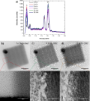
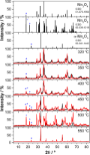
- the different manganese oxides via one route facilitates assigning actual structure–property relationships. The oxidation process related to the different MnOx species was observed by in situ X-ray diffraction (XRD) measurements showing time- and temperature-dependent phase transformations occurring
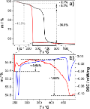
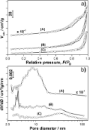
- situ XRD measurements showed the sequence of time- and temperature-dependent phase transformations during oxidation of the Mn(II) glycolate precursor to α-Mn2O3 via Mn3O4 and Mn5O8 in O2 atmosphere. Structural and morphological investigations revealed the dependence of the lattice constants and





Influence of the supramolecular architecture on the magnetic properties of a DyIII single-molecule magnet: an ab initio investigation
Beilstein J. Nanotechnol. 2014, 5, 2267–2274, doi:10.3762/bjnano.5.236
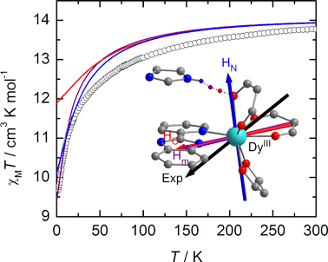
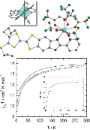
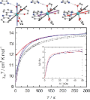
- energies of the ground multiplet (6H15/2) of the Dy ion. The anisotropy tensor, the energy of the eight Kramer doublets of the ground spin–orbit state, as well as the temperature-dependent magnetic susceptibility and the molar magnetization at 2 K were computed to support experimental results. Atomic


Silicon and germanium nanocrystals: properties and characterization
Beilstein J. Nanotechnol. 2014, 5, 1787–1794, doi:10.3762/bjnano.5.189
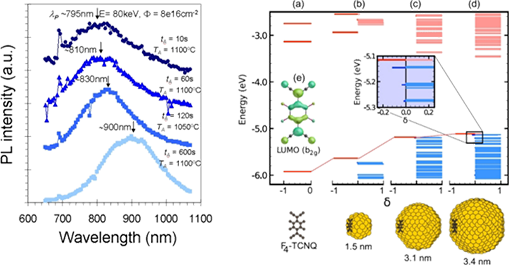
- simple MOS structure, with Ge NCs embedded in the SiO2 film deposited on a Si substrate. In order to check for the existence of the deep level traps coming from the Si/SiO2 interface, temperature dependent C–V measurements have been performed. The activation energy of the electron emission has been


The influence of molecular mobility on the properties of networks of gold nanoparticles and organic ligands
Beilstein J. Nanotechnol. 2014, 5, 1664–1674, doi:10.3762/bjnano.5.177
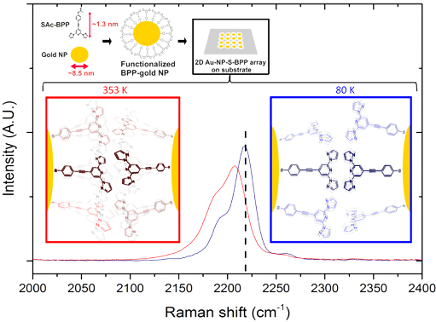
- ) provides insight into the selectivity of the bond formation. Remarkably, Raman experiments also reveal subtle shifts in some S-BPP modes related to reversible structural modification within the array induced by temperature. This observation is compared to temperature-dependent transport experiments. For
- the nanoparticles preferably through the thiol linker. Temperature-dependent Raman spectroscopy on 2D Au-NP–S-BPP arrays The studies by Raman microscopy over the temperature range 80 to 353 K are shown in Figure 4. The absence of significant chemical changes with temperature is indicated by the
- them sensitive to electronic changes within their molecular vicinity, particularly in conjugated systems [40][41]. The surface-bound benzenethiol is sensitive to temperature, but the alkyne exhibits much larger temperature-dependent spectral changes, with a shift of 16 cm−1 between 80 and 353 K. We




Current state of laser synthesis of metal and alloy nanoparticles as ligand-free reference materials for nano-toxicological assays
Beilstein J. Nanotechnol. 2014, 5, 1523–1541, doi:10.3762/bjnano.5.165
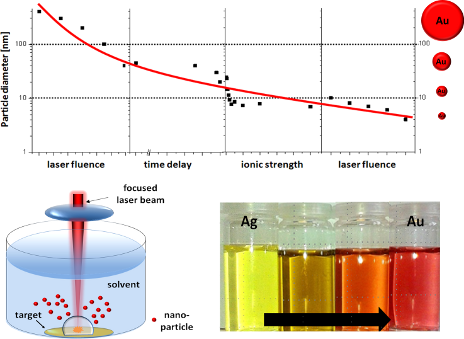
- unique electrostatically controlled nano-environment allows observations of gold nanoparticle buffering effects and specific ion adsorption which cannot be studied in ligand-stabilized systems [45]. Furthermore, it should be noted that the Debeye parameter is known to be temperature-dependent as well (κ


Review of nanostructured devices for thermoelectric applications
Beilstein J. Nanotechnol. 2014, 5, 1268–1284, doi:10.3762/bjnano.5.141
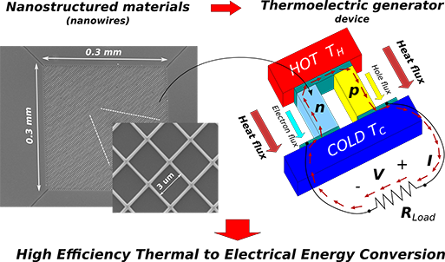
- temperature dependent. Furthermore, these parameters depend on the temperature through non-linear relationships, that in general can be determined only by experimental measurements. Therefore, a numerical solution of the thermoelectric equations (Equation 5 and Equation 6), which takes in account the


Biocalcite, a multifunctional inorganic polymer: Building block for calcareous sponge spicules and bioseed for the synthesis of calcium phosphate-based bone
Beilstein J. Nanotechnol. 2014, 5, 610–621, doi:10.3762/bjnano.5.72
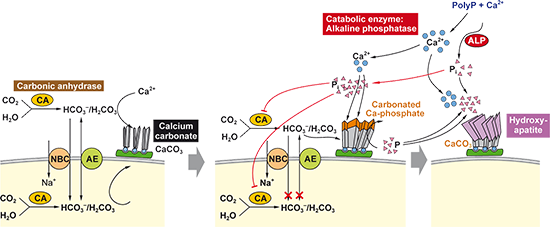
- for the round-shaped vaterite deposits is 9.95 ± 1.60. The enzyme-mediated deposition of calcium carbonate is markedly temperature dependent [31]. While at 10 °C the reaction velocity of calcium carbonate deposition is almost identical in the enzyme-containing and enzyme-lacking assays, at higher




Impact of thermal frequency drift on highest precision force microscopy using quartz-based force sensors at low temperatures
Beilstein J. Nanotechnol. 2014, 5, 407–412, doi:10.3762/bjnano.5.48
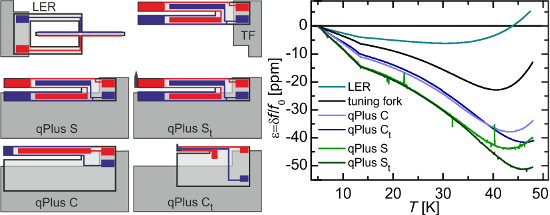
- and the qPlus sensors (Figure 3a) and the LER (Figure 3b). Again, the wiggles in the curves for the qPlus sensors are caused by external excitations due to a lacking damping system. The kink around 13 K from Figure 2 shows up as a clear step. In temperature dependent measurements it might therefore be


Large-scale atomistic and quantum-mechanical simulations of a Nafion membrane: Morphology, proton solvation and charge transport
Beilstein J. Nanotechnol. 2013, 4, 567–587, doi:10.3762/bjnano.4.65
- this effect might occur because more entropy is available to ion pairs than to dissociated ions, leading to an entropically driven temperature dependent contribution to the binding free energy. For the ionomeric system studied here we observe an opposite effect of the temperature, the ion pairing


The role of electron-stimulated desorption in focused electron beam induced deposition
Beilstein J. Nanotechnol. 2013, 4, 474–480, doi:10.3762/bjnano.4.56
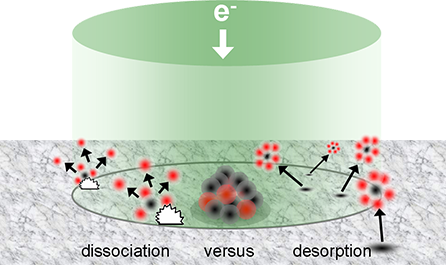
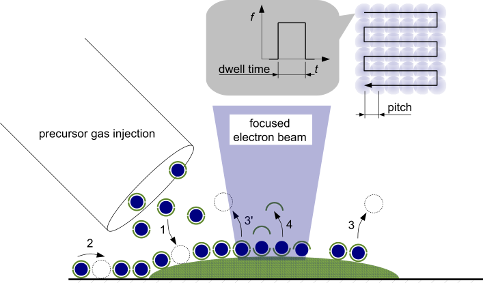
- concentration gradient. The last two terms describe dissociation by the electron beam and desorption from the substrate to the gas phase. The growth rate, R (cm·s−1), can be defined as: with Vmolecule (cm3) being the volume of a deposited molecule. Equation 1 has two temperature-dependent terms: diffusion and


Structural and thermoelectric properties of TMGa3 (TM = Fe, Co) thin films
Beilstein J. Nanotechnol. 2013, 4, 461–466, doi:10.3762/bjnano.4.54
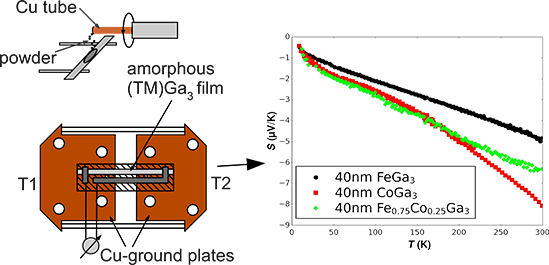
- Seebeck coefficients To determine the temperature-dependent Seebeck coefficients S(T) of (TM)Ga3 films, in a first step the films were complemented by strips of Pb to form (TM)Ga3/Pb-thermocouples arranged on a thin (140 μm) glass substrate. Since S(T) values for Pb are well documented in the literature


Antiferromagnetic coupling of TbPc2 molecules to ultrathin Ni and Co films
Beilstein J. Nanotechnol. 2013, 4, 320–324, doi:10.3762/bjnano.4.36
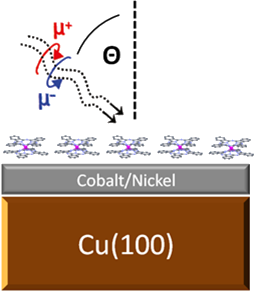
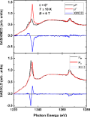
- demonstration of an antiferromagnetic coupling of rare-earth–Pc2 molecules to ferromagnetic substrates. The quantitative analysis of the antiferromagnetic coupling strength goes beyond the scope of this manuscript. This can be achieved by experimental investigation by means of a detailed temperature-dependent

Zeolites as nanoporous, gas-sensitive materials for in situ monitoring of DeNOx-SCR
Beilstein J. Nanotechnol. 2012, 3, 667–673, doi:10.3762/bjnano.3.76
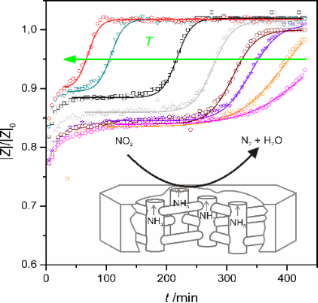
- sensor at the same time. By means of temperature-dependent impedance spectroscopy we found that the thermally induced NH3 desorption in H-form and in Fe-loaded zeolite H-ZSM-5 follow the same process, while a remarkable difference under DeNOx-SCR reaction conditions was found. The Fe-loaded catalyst
- performed a series of measurements to analyse the temperature-dependent impedance. Therefore, the nonsolvated samples were loaded with NH3 (100 ppmv NH3 in N2) at room temperature for 1 h and afterwards heated up to 500 °C, in steps of 5 °C (100–300 °C), 10 °C (300–400 °C) and 20 °C (400–500 °C). To observe


Focused electron beam induced deposition: A perspective
Beilstein J. Nanotechnol. 2012, 3, 597–619, doi:10.3762/bjnano.3.70
- deposited between Au/Cr contacts previously defined by standard lithographic means. The temperature-dependent measurements were performed in a 4He cryostat with variable temperature insert. In Figure 6 the results for the elemental composition of the deposits, as determined by energy dispersive X-ray
- reaching a well-defined minimum at a composition close to Pt2Si3. The temperature-dependent conductivity, which is shown in Figure 8, indicates for this composition and also for the composition PtSi a special form of thermally activated transport, which is commonly associated to a variable-range hopping
- experimentally demonstrated. Great care has therefore to be taken when this precursor in used. Secondly, FEBID structures from Co2(CO)8 can have a metal content of more than 95 atom % and show temperature-dependent transport properties reminiscent of dirty Co thin films in combination with soft-magnetic behavior


Spontaneous dissociation of Co2(CO)8 and autocatalytic growth of Co on SiO2: A combined experimental and theoretical investigation
Beilstein J. Nanotechnol. 2012, 3, 546–555, doi:10.3762/bjnano.3.63
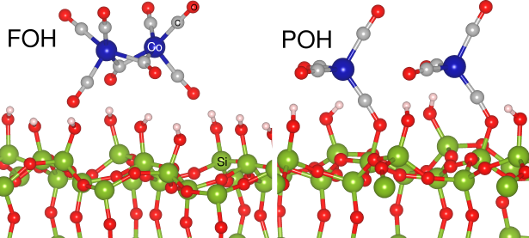
- precursor [52][53]. A larger degree of grain boundary scattering in the spontaneously formed deposit, as well as a possibly higher carbon content may be the cause for this enhanced resistivity. We also performed temperature-dependent resistivity measurements (Figure 4a) as well as Hall effect measurements
- (Figure 4b) for the sample grown on the plasma-activated silica. The samples grown under pre-irradiation conditions are unstable under thermal stress and could not be measured below room temperature. The temperature-dependent resistivity shows a typical metallic behavior as expected for a dirty metal


Mesoporous MgTa2O6 thin films with enhanced photocatalytic activity: On the interplay between crystallinity and mesostructure
Beilstein J. Nanotechnol. 2012, 3, 123–133, doi:10.3762/bjnano.3.13
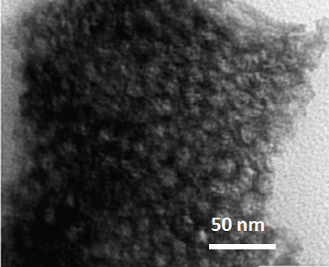
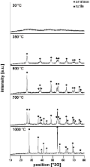
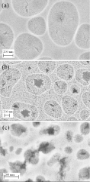
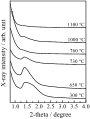
- temperature-dependent X-ray scattering. Optimal activity was obtained when the mesoporous film was heated to 790 °C; at this temperature, crystallinity was significantly high, with MgTa2O6 nanocrystals of 1.6 nm in size (averaged over all reflections), and an ordered mesoporous structure was maintained. When
- , temperature-dependent structural analysis proved that mesoporosity itself is not sufficient to endow metal oxides with advanced physicochemical performance. Experimental section Film fabrication MgCl2 (47 mg; 99.99%, Aldrich) and Ta(OC2H5)5 (500 mg; 99.98%, Aldrich) were dissolved separately in ethanol (2 g






Substrate-mediated effects in photothermal patterning of alkanethiol self-assembled monolayers with microfocused continuous-wave lasers
Beilstein J. Nanotechnol. 2012, 3, 65–74, doi:10.3762/bjnano.3.8
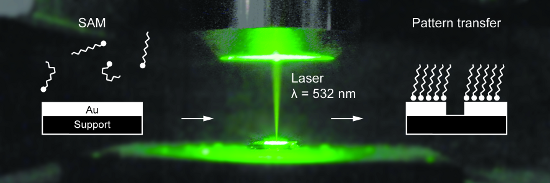
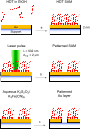
- locally heat the substrate surface and initiate desorption or decomposition of the coating. Because of the strongly temperature-dependent desorption kinetics, the overall process is highly nonlinear in the applied laser power. For this reason, subwavelength patterning is feasible employing ordinary
- patterning technique. Because of the strongly temperature-dependent thermal conductivity of Si, surface-temperature profiles on Au/Si substrates are very narrow ensuring a particularly high lateral resolution. At a 1/e spot diameter of 2 µm, fabrication of subwavelength structures with diameters of 300–400
- absorption [11][12]: with and Note, I0, here and in the following, denotes the modified Bessel function of order zero. Moreover, Equation 3 takes into account the temperature-dependent thermal conductivity of Si. In the case of Au/glass substrates laser absorption is strictly limited to the thin Au layer




Nanostructured, mesoporous Au/TiO2 model catalysts – structure, stability and catalytic properties
Beilstein J. Nanotechnol. 2011, 2, 593–606, doi:10.3762/bjnano.2.63
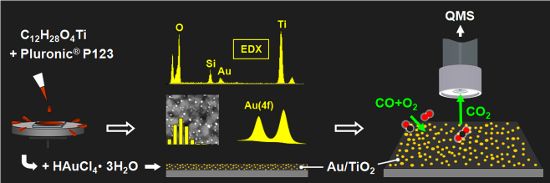
- the CO oxidation reaction, performed with a scanning mass spectrometer directly above the film, yielded reaction characteristics that are very close to those of highly dispersed Au/TiO2 catalysts at comparable reaction conditions, with an activation energy of 23.9 kJ·mol−1 and temperature-dependent