Search results
Search for "titanium dioxide" in Full Text gives 139 result(s) in Beilstein Journal of Nanotechnology.
Fast diffusion of silver in TiO2 nanotube arrays
Beilstein J. Nanotechnol. 2016, 7, 1129–1140, doi:10.3762/bjnano.7.105
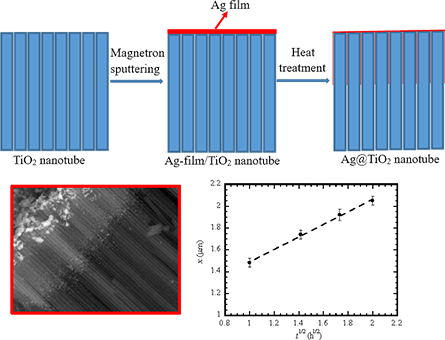
- the outmost surface of TiO2 nanotubes. Probably there are hardly any Ag nanocrystals formed inside the TiO2 nanotubes through the migration of Ag. Keywords: activation energy; fast diffusion; magnetron sputtering; silver; TiO2 nanotube; Introduction Titanium dioxide (TiO2) has gained great attention


Tight junction between endothelial cells: the interaction between nanoparticles and blood vessels
Beilstein J. Nanotechnol. 2016, 7, 675–684, doi:10.3762/bjnano.7.60
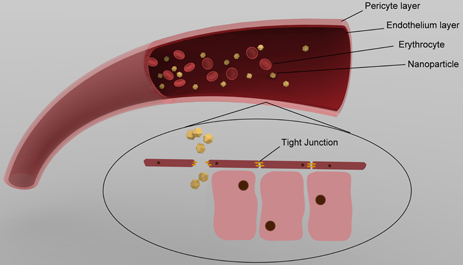
- Asian sand dust, which caused acute inflammation in the lung [44]. Studies also present the effect of NPs on reproductive organs. A study on the toxicity of titanium dioxide nanoparticles showed the ability of NPs to cross the brain–testis barrier and accumulate in mice testes [22]. To further explain

Unraveling the neurotoxicity of titanium dioxide nanoparticles: focusing on molecular mechanisms
Beilstein J. Nanotechnol. 2016, 7, 645–654, doi:10.3762/bjnano.7.57
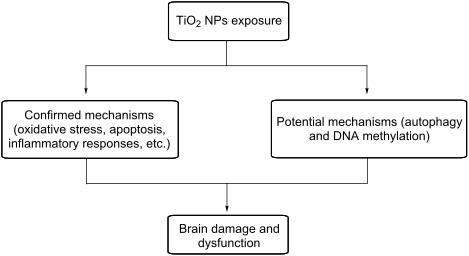
- Bin Song Yanli Zhang Jia Liu Xiaoli Feng Ting Zhou Longquan Shao Guizhou Provincial People’s Hospital, Guiyang 550002, China Nanfang Hospital, Southern Medical University, Guangzhou 510515, China 10.3762/bjnano.7.57 Abstract Titanium dioxide nanoparticles (TiO2 NPs) possess unique characteristics
- investigated comprehensively through studying every possible molecular mechanism. Keywords: autophagy; brain; DNA methylation; neurotoxicity; titanium dioxide nanoparticles; Introduction Titanium dioxide nanoparticles, smaller than 1 μm in at least one dimension, possess specific physico-chemical
- NPs, and improve the bio-safety of TiO2 NPs-based products, every possible molecular mechanism of TiO2 NPs-induced neurotoxicity must be investigated comprehensively. Mechanisms of neurotoxicity of titanium dioxide nanoparticles in in vivo studies. Main mechanisms of neurotoxicity of titanium dioxide
Comparison of the interactions of daunorubicin in a free form and attached to single-walled carbon nanotubes with model lipid membranes
Beilstein J. Nanotechnol. 2016, 7, 524–532, doi:10.3762/bjnano.7.46
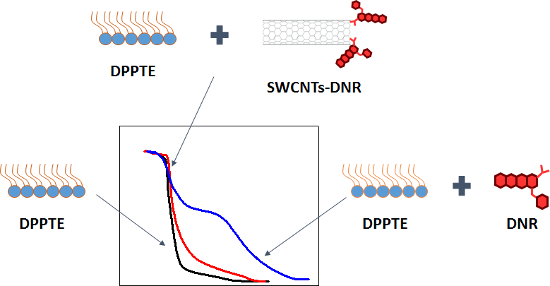
- fields. Such magnetic nanoparticles conjugated with DNR were reported to induce apoptosis of cancer cell lines [11][12]. Other examples of nanoparticles include titanium dioxide (TiO2) and gold nanoparticles (AuNPs) [13][14]. In the latter case the nanoparticles were also modified with aptamer – single




Application of biclustering of gene expression data and gene set enrichment analysis methods to identify potentially disease causing nanomaterials
Beilstein J. Nanotechnol. 2015, 6, 2438–2448, doi:10.3762/bjnano.6.252
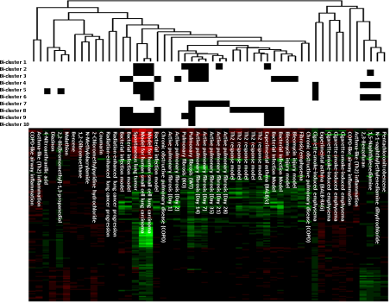
- were examined and functionally related biclusters of genes showing similar expression profiles were identified. The identified biclusters were then used to conduct a gene set enrichment analysis on pulmonary gene expression profiles derived from mice exposed to nano-titanium dioxide (nano-TiO2), carbon
- toxicity induced by nanoparticles of titanium dioxide (nano-TiO2) [46][47][48] and carbon nanotubes (CNTs) [49][50] of various sizes and properties. This work identified the properties of nano-TiO2 that influence their inflammogenic potential [51]. These studies have generated a large repository of gene
Impact of ultrasonic dispersion on the photocatalytic activity of titania aggregates
Beilstein J. Nanotechnol. 2015, 6, 2423–2430, doi:10.3762/bjnano.6.250
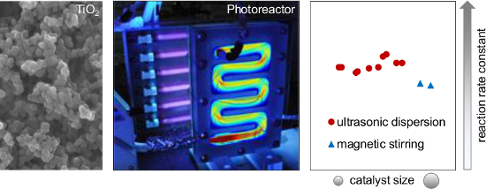
- oxidation, discoloration, mineralization, and degradation of organic pollutants [1][2]. Photocatalysis is an example of an AOP that has been effectively applied for the treatment of highly polluted water such as dye sewage [3][4]. Among the materials for this application, titanium dioxide (TiO2) is a very


Influence of wide band gap oxide substrates on the photoelectrochemical properties and structural disorder of CdS nanoparticles grown by the successive ionic layer adsorption and reaction (SILAR) method
Beilstein J. Nanotechnol. 2015, 6, 2252–2262, doi:10.3762/bjnano.6.231
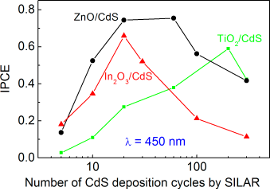
- . The synthesis of the titanium dioxide nanotube arrays was carried out in a two-electrode electrochemical cell by anodization of metallic titanium with a graphite counter electrode in an aqueous electrolyte containing 1 mol/L (NH4)2SO4, 0.1 mol/L NH4F and 0.2 mol/L H2C2O4 with pH 2.8 (corrected with


Effect of SiNx diffusion barrier thickness on the structural properties and photocatalytic activity of TiO2 films obtained by sol–gel dip coating and reactive magnetron sputtering
Beilstein J. Nanotechnol. 2015, 6, 2039–2045, doi:10.3762/bjnano.6.207
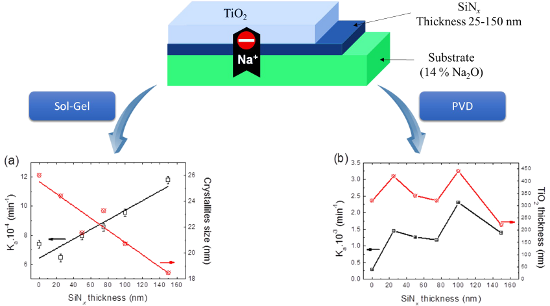
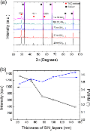
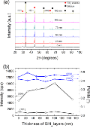
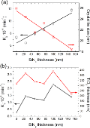
- films obtained by each process was discussed. Keywords: diffusion barrier; photocatalysis; reactive sputtering; SiNx; sol–gel; titanium dioxide film; TiO2; Introduction Titanium dioxide thin films in active phase (mostly anatase) have been widely studied due to their ability to produce strong oxidant
- titanium dioxide grown on soda lime glass (SLG) occurs during the calcination step and is due to the diffusion of alkali elements (especially sodium ions, Na+) [3][4]. Usually, TiO2 is amorphous when deposited at low temperature [5][6]. Heat treatment at a higher temperature (around 450 °C) is usually
- species responsible for the degradation of OII. For an equivalent TiO2 thickness, the degradation rate of OII is relatively similar. Conclusion We investigated the structural and photocatalytic properties of titanium dioxide films obtained by low temperature sol–gel and reactive sputtering processes for
NanoE-Tox: New and in-depth database concerning ecotoxicity of nanomaterials
Beilstein J. Nanotechnol. 2015, 6, 1788–1804, doi:10.3762/bjnano.6.183
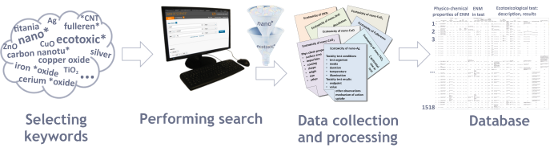
- database NanoE-Tox that is available as Supporting Information File 2. The database is based on existing literature on ecotoxicology of eight ENMs with different chemical composition: carbon nanotubes (CNTs), fullerenes, silver (Ag), titanium dioxide (TiO2), zinc oxide (ZnO), cerium dioxide (CeO2), copper
- : carbon nanotubes (CNTs), fullerenes, silver (Ag), titanium dioxide (TiO2), zinc oxide (ZnO), cerium dioxide (CeO2), copper oxide (CuO), and iron oxide (FeOx; Fe2O3, Fe3O4). Furthermore, all these ENMs, except CuO, are listed by the Organisation for Economic Co-operation and Development (OECD) Working


Nanotechnology in the real world: Redeveloping the nanomaterial consumer products inventory
Beilstein J. Nanotechnol. 2015, 6, 1769–1780, doi:10.3762/bjnano.6.181

- primary particles have at least one dimension between 1 and 100 nm, with no provisions for “novel properties” stemming from their small size [16]. Cosmetics that contain nanomaterials are also regulated by the European Commission, and although the use of nanoscale titanium dioxide is permitted, zinc oxide
- nanomaterial component and 62 of those products list more than one nanomaterial component (e.g., a product comprised of both silver and titanium dioxide nanomaterials). There are 39 different types of nanomaterial components listed in the inventory (listed in Supporting Information File 1, Table S2), which
- . Titanium dioxide (TiO2), silicon dioxide, and zinc oxide are the most produced nanomaterials worldwide (on a mass basis) and the global annual production of silver nanoparticles represents only 2% of that of TiO2 [20][21]. However, silver nanoparticles are the most popular advertised nanomaterial in the





How decision analysis can further nanoinformatics
Beilstein J. Nanotechnol. 2015, 6, 1594–1600, doi:10.3762/bjnano.6.162

- nanomaterial research is identified. A case study by Hristozov et al. used a quantitative WOE framework to evaluate the hazards associated with titanium dioxide nanoparticles. Three sets of criteria (physiochemical properties, toxicity, and data quality) were used to evaluate and calculate the hazard scores by
- to prioritize research portfolios at the national level. This PDA was an extension of a VOI approach evaluating multiple research topics for three emerging nanomaterials: multiwalled carbon nanotubes, silver nanoparticles, and titanium dioxide nanoparticles [26]. First, a preliminary screening tool
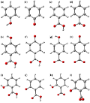
Transformations of PTCDA structures on rutile TiO2 induced by thermal annealing and intermolecular forces
Beilstein J. Nanotechnol. 2015, 6, 1498–1507, doi:10.3762/bjnano.6.155
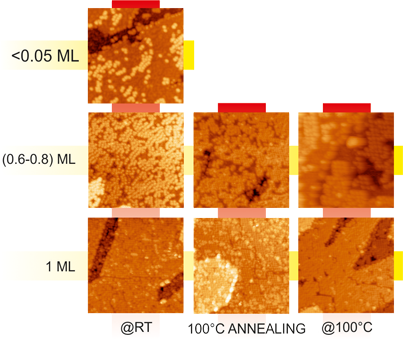
- example, titanium dioxide surfaces are exceptionally useful in various applications, including the catalysis, solar energy conversion, gas sensing and others [8][9][10][11][12][13][14][15]. Merging two classes of materials, i.e., metal oxide surfaces with organic molecules, seems to be one of the most
- titanium dioxide. The chosen perylene derivative, i.e., PTCDA, is often considered as a model planar-stacking organic molecule for organic semiconductors [19][20][21][22][23][24][25][26], similar to how the CO molecule is regarded as a model for small inorganic molecules. There are several important
- established on the basis of experimental and theoretical studies [14]. The (110) face is the most stable face of rutile titanium dioxide. The surface is composed of protruding oxygen rows running along the [001] crystallographic direction separated by approximately 0.649 nm. The structural model of the


Using natural language processing techniques to inform research on nanotechnology
Beilstein J. Nanotechnol. 2015, 6, 1439–1449, doi:10.3762/bjnano.6.149

- the sentence “The purpose of this study was to review published dose-response data on acute lung inflammation in rats after instillation of titanium dioxide particles or six types of carbon nanoparticles.” with the NANO, EXPO, TARGET and TOXIC mentions within the sentence “The purpose of this study
- was to review published dose-response data on acute
lung inflammation inrats afterinstallation oftitanium dioxide particles or six types ofcarbon nanoparticles ).” Features extracted from the context
Tattoo ink nanoparticles in skin tissue and fibroblasts
Beilstein J. Nanotechnol. 2015, 6, 1183–1191, doi:10.3762/bjnano.6.120

- to work was 1 in 100. Wamer and Yin found a phototoxic effect of eight decorative tattoo inks and permanent make-up inks that contained titanium dioxide on human dermal fibroblasts [38]. The phototoxic effect from the inks was attributed to the generation of hydroxyl radicals under UV excitation


Transformation of hydrogen titanate nanoribbons to TiO2 nanoribbons and the influence of the transformation strategies on the photocatalytic performance
Beilstein J. Nanotechnol. 2015, 6, 831–844, doi:10.3762/bjnano.6.86
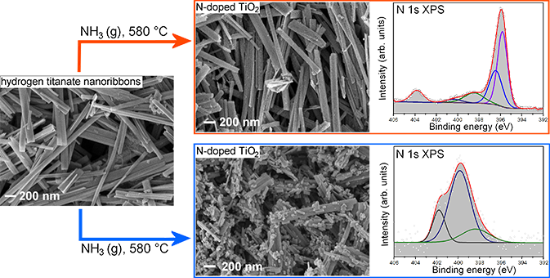
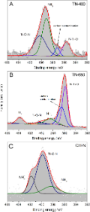
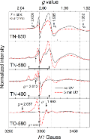
- in air. Keywords: doping; nanoribbon; photocatalytic performance; titanate; titanium dioxide (TiO2); transformation; Introduction Titanium dioxide (TiO2) is a technologically important material due to its remarkable combination of properties, its chemical stability and nontoxicity [1][2]. In




Influence of gold, silver and gold–silver alloy nanoparticles on germ cell function and embryo development
Beilstein J. Nanotechnol. 2015, 6, 651–664, doi:10.3762/bjnano.6.66
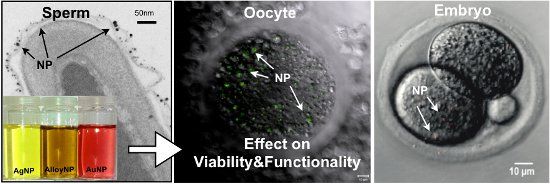
- and collegues examined the effect of titanium dioxide nanoparticles on isolated preantral rat follicles in vitro [75], while Hsieh et al. studied the cytotoxicity of CdSe quantum dots on the maturation of mouse oocytes, fertilization, and fetal development [76]. Both studies reported detrimental




Self-assembled anchor layers/polysaccharide coatings on titanium surfaces: a study of functionalization and stability
Beilstein J. Nanotechnol. 2015, 6, 617–631, doi:10.3762/bjnano.6.63
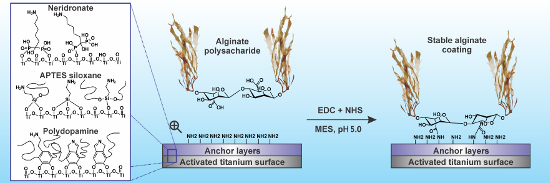
- range of values of 5–15 hydroxy groups per nm2 reported for titanium foils [3] and titanium dioxide powders [44]. The observed concomitant increase in concentration of surface hydroxy groups and decrease in the presence of surface contaminants inevitably leads to higher reactivity of the treated
- = 1.4714 ± 0.008, Bn = 13200 ± 1000 nm2 for the ALG layers). The optical dispersion functions of PDA, silicon dioxide and silicon were taken from previous reports [34][62]. The optical dispersion functions of ethanol, isobutanol, toluene and titanium dioxide were taken from the EP4-SE database. Contact


Tm-doped TiO2 and Tm2Ti2O7 pyrochlore nanoparticles: enhancing the photocatalytic activity of rutile with a pyrochlore phase
Beilstein J. Nanotechnol. 2015, 6, 605–616, doi:10.3762/bjnano.6.62
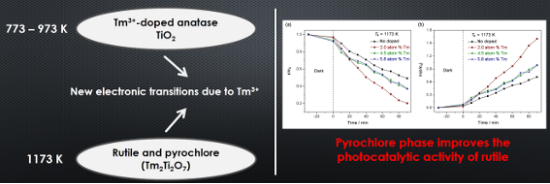
- obtained with a predominant rutile phase. The photodegradation of methylene blue showed that this pyrochlore phase enhanced the photocatalytic activity of the rutile phase. Keywords: nanoparticles; photocatalysis; pyrochlore; titanium dioxide; thulium; Introduction TiO2 is one of the most efficient


In situ scanning tunneling microscopy study of Ca-modified rutile TiO2(110) in bulk water
Beilstein J. Nanotechnol. 2015, 6, 438–443, doi:10.3762/bjnano.6.44
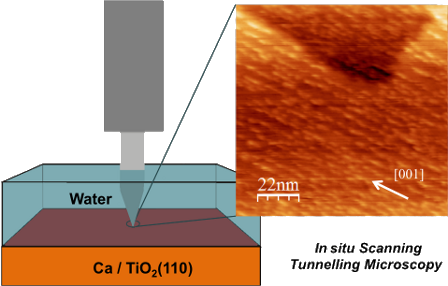
- microscopy; solid/liquid interface; titanium dioxide reconstruction; Introduction Metal oxide surfaces (in particular titanium dioxide (TiO2) surfaces) covered by an alkaline-earth-metal overlayer have been investigated in recent years in experiments [1][2][3][4][5] and theoretical studies [6], considering


Overview about the localization of nanoparticles in tissue and cellular context by different imaging techniques
Beilstein J. Nanotechnol. 2015, 6, 263–280, doi:10.3762/bjnano.6.25
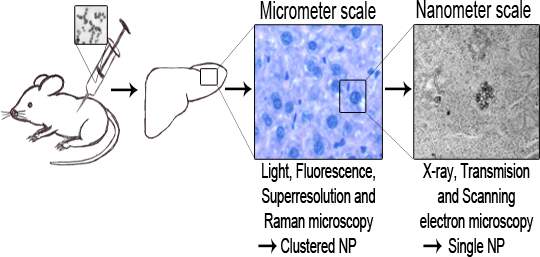
- possibilities [15][16]. However, other authors have failed to see an aggravation of disease. In some cases, they even reported an alleviation of skin lesions following exposure with SiO2-NP or zinc oxide NP (ZnO-NP) [17][18]. ZnO-NP and titanium dioxide NP (TiO2-NP) are major ingredients of sunscreens [19] and
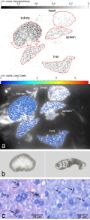
- various cancers [45][46][47][48]. In several applications, they have proven to possess excellent tumor-targeting efficacy [49]. Likewise, titanium dioxide nanoparticles, essential components of sunscreens, were visualized as yellow-brown particles on superficial stratum corneum layers in HE-stained skin
- example, titanium dioxide, SiO2-NP or QD, TEM has been widely used to characterize the morphology and size of NP as well as their location in tissues [28][35][39][113][156][157][158]. It has to be kept in mind, however, that artifacts due to staining with lead citrate and uranyl acetate can easily be




Interaction of dermatologically relevant nanoparticles with skin cells and skin
Beilstein J. Nanotechnol. 2014, 5, 2363–2373, doi:10.3762/bjnano.5.245
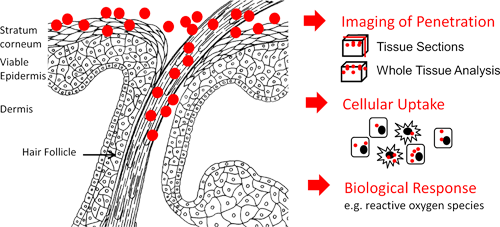
- sensitive imaging and detection methods are required. Here, we present our studies on nanoparticle interactions with skin, skin cells, and biological media. Silica, titanium dioxide and silver particles were chosen as representative examples for different types of skin exposure to nanomaterials, e.g
- ., unintended environmental exposure (silica) versus intended exposure through application of sunscreen (titanium dioxide) or antiseptics (silver). Because each particle type exhibits specific physicochemical properties, we were able to apply different combinations of methods to examine skin penetration and
- as a result of interactions with the skin microenvironment. In the following, we present results obtained from own studies on the interactions of skin, skin cells and biological media with silica, titanium dioxide and silver particles as representatives for nanomaterials of high relevance from the


Towards bottom-up nanopatterning of Prussian blue analogues
Beilstein J. Nanotechnol. 2014, 5, 1933–1943, doi:10.3762/bjnano.5.204
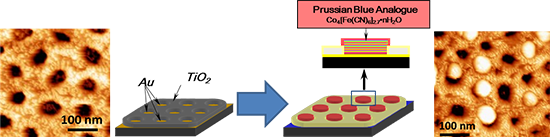
- treatment, which induces the decomposition of the organic part and the crystallization of the titanium dioxide leading to the nanoperforated layer. The fourth step is the selective functionalization of the surfaces to localize the PBA growth within the perforations while avoiding its formation outside. The
- under an IR-lamp at 450 °C over 5 min, which results in the decomposition of the organic part and the crystallization of the titanium dioxide leading to the nanoperforated layer (ca. 15 nm) with homogeneous and ordered holes (50 nm in diameter) giving access to the gold layer underneath (Scheme 1) [15


A reproducible number-based sizing method for pigment-grade titanium dioxide
Beilstein J. Nanotechnol. 2014, 5, 1815–1822, doi:10.3762/bjnano.5.192

- lacking. By using the example of titanium dioxide, this paper shows that both necessities are well met by the sophisticated counting algorithm presented here, which is based on the imaging of polished sections of embedded particles and subsequent automated image analysis. The data presented demonstrate
- that the typical difficulties of sizing processes are overcome by the proposed method of sample preparation and image analysis. In other words, a robust, reproducible and statistically reliable method is presented, which leads to a number-based size distribution of pigment-grade titanium dioxide, for
- example, and therefore allows reliable classification of this material according to forthcoming regulations. Keywords: electron microscopy; particle size; pigment; sizing; titanium dioxide; Introduction Titanium dioxide is among the ten most abundant materials on the Earth [1]. In the form of a fine


Microstructural and plasmonic modifications in Ag–TiO2 and Au–TiO2 nanocomposites through ion beam irradiation
Beilstein J. Nanotechnol. 2014, 5, 1419–1431, doi:10.3762/bjnano.5.154
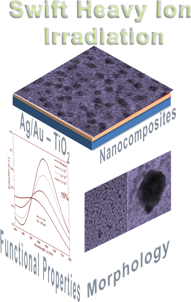
- deposited by the DC planar magnetron source ION’X 2UHV (Thin Film Consulting). A similar-type RF magnetron source was used for sputtering the copper-bonded titanium dioxide (Williams Advanced Materials) to prevent charging of the target. The deposition rates from both targets were in situ monitored by two


DFT study of binding and electron transfer from colorless aromatic pollutants to a TiO2 nanocluster: Application to photocatalytic degradation under visible light irradiation
Beilstein J. Nanotechnol. 2014, 5, 1016–1030, doi:10.3762/bjnano.5.115
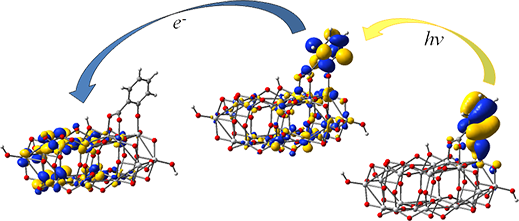
- ; density functional theory; photocatalytic degradation; titanium dioxide; visible light irradiation; Introduction Titania, TiO2, has been widely used as photocatalyst for environmental applications [1][2][3][4][5][6], particularly for waste water purification. Due to its large band gap TiO2 absorbs only
- complexation of colloidal titanium dioxide [18]. This results in the formation of a six-atom ring with a chelating type of bonding to the same Ti(IV) ion. Similarly, the binding of the salicylic acid to titania was thought as bidentate chelate through the oxygen atoms of –OH and of –OCOH [14][20