Search results
Search for "vibration" in Full Text gives 337 result(s) in Beilstein Journal of Nanotechnology. Showing first 200.
High-responsivity hybrid α-Ag2S/Si photodetector prepared by pulsed laser ablation in liquid
Beilstein J. Nanotechnol. 2020, 11, 1596–1607, doi:10.3762/bjnano.11.142
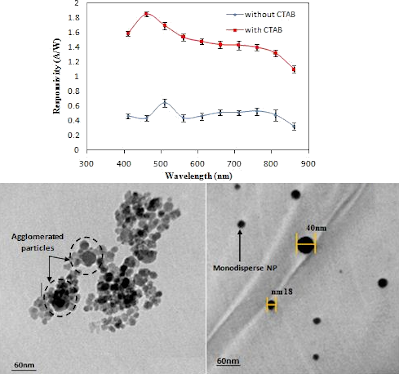
- vibration and silver material is expelled from the target surface in the form of a plasma plum. Thus, silver ions Ag+ and sulfur ions S2− are produced from silver target and thiourea solution, respectively. They form Ag2S NPs according to the following chemical reaction [21]: Figure 3 shows the XRD patterns
- reported data [24]. Figure 4 shows the Raman spectra of Ag2S NPs synthesized in Tu solution with and without CTAB. Four vibration modes were assigned to Ag2S. The peaks at 45 and 65 cm−1 are related to Ag–S bonds (Ag modes) [25]. The third peak at 480 cm−1 was indexed to the longitudinal optical phonon 2LO
- the range of 500–4000 cm−1 are shown in Figure 7. The peaks at 541, 640, and 2210 cm−1 were indexed to the characteristic vibration of the Ag–S bond. The peak at 1460 cm−1 can be indexed to C–C stretching vibration, and the peak at 1650 cm−1 belonged to the stretching vibration of the sulfide group




Walking energy harvesting and self-powered tracking system based on triboelectric nanogenerators
Beilstein J. Nanotechnol. 2020, 11, 1590–1595, doi:10.3762/bjnano.11.141
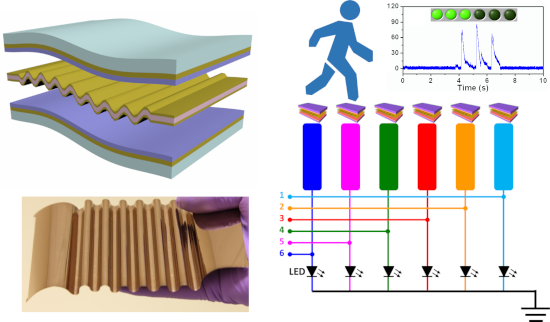
- . Recently, triboelectric nanogenerators (TENGs) have been invented, which offer an innovative combination between electrostatic induction and contact electrification. These devices are able to harvest mechanical energy from a vast array of sources, such as body motion [16][17][18][19], vibration [20][21][22




Design of V-shaped cantilevers for enhanced multifrequency AFM measurements
Beilstein J. Nanotechnol. 2020, 11, 1525–1541, doi:10.3762/bjnano.11.135
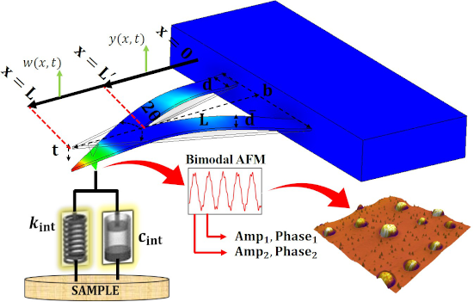
- introduced other models to calculate spring constants [22][23]. These methods were improved by Sader to a higher accuracy [11][24]. As a second category of application of V-shaped cantilevers, dynamic AFM is used to characterize soft matter. For example, Korayem et al. have carried out a free-vibration
- vibrational behavior of rectangular and V-shaped AFM cantilevers using FEM [27]. All abovementioned researchers focused on the accuracy and sensitivity of the microscope by interpreting and analyzing the dynamic and vibration behavior. One way to increase accuracy and sensitivity in atomic force microscopy is
- exciting the higher modes of the cantilever (higher-modes AFM) or exciting multiple modes simultaneously (multifrequency AFM). It is important to simulate the dynamic and vibration behavior of the AFM under these conditions to interpret the dependency of sensitivity and material composition contrast on


![[Graphic 4]](/bjnano/content/inline/2190-4286-11-135-i26.svg?max-width=637&scale=1.18182) = 15 µm, bref = 8...
= 15 µm, bref = 8...


![[Graphic 17]](/bjnano/content/inline/2190-4286-11-135-i39.svg?max-width=637&scale=1.18182) ) of V-shaped cantilevers for...
) of V-shaped cantilevers for...


Structural and electronic properties of SnO2 doped with non-metal elements
Beilstein J. Nanotechnol. 2020, 11, 1321–1328, doi:10.3762/bjnano.11.116
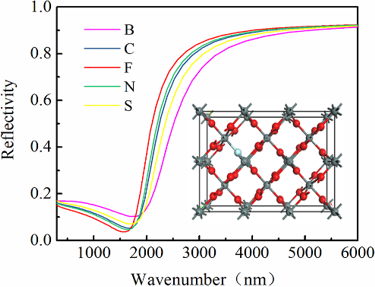
- characteristic frequency of the material. The plasma oscillation frequencies vary for different crystal materials. In general, it is proportional to the concentration of free electrons. When the vibration frequency of the incident light is greater than the plasma oscillation frequency, the crystal material is



Structure and electrochemical performance of electrospun-ordered porous carbon/graphene composite nanofibers
Beilstein J. Nanotechnol. 2020, 11, 1280–1290, doi:10.3762/bjnano.11.112
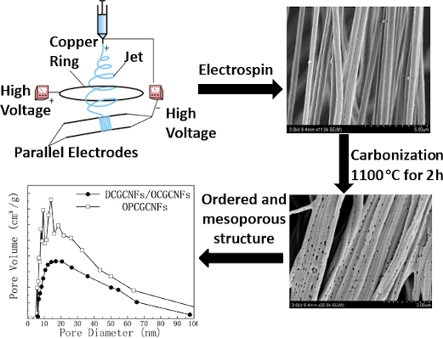
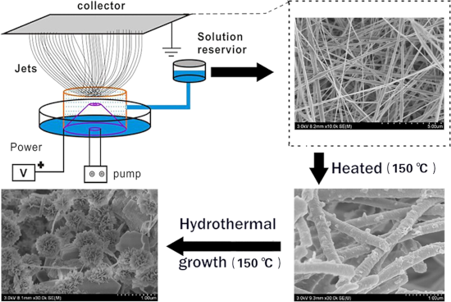
- stirred at room temperature for 2 h until a homogeneous solution was obtained. Then 0.5 wt % of graphene was added to the PAN/DMF solution, which was submitted to ultrasonic vibration for 30 min until graphene was well-dispersed in the solution. Finally, DIW was added to the graphene/PAN/DMF solution upon
- , 1378 and 1452 cm−1 were due to the bending of the C−H of PAN, the absorption peak at the wavelength of 2243 cm−1 was attributed to the stretching vibration of C−N, and the absorption peak at 1668 cm−1 was generated by the stretching vibration of C=C [35]. As shown in Figure 3a, upon addition of


High permittivity, breakdown strength, and energy storage density of polythiophene-encapsulated BaTiO3 nanoparticles
Beilstein J. Nanotechnol. 2020, 11, 1190–1197, doi:10.3762/bjnano.11.103
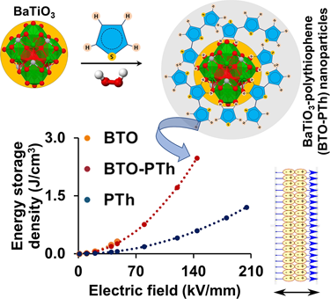
- vibration (νTi–O) of BTO structure [13][14]. PTh is characterized by the symmetric and asymmetric stretching vibrations (νC=C) of the aromatic ring at 1628 and 1385 cm−1, a sharp aromatic ring deformation (δC–S–C) at 610 cm−1, and a typical stretching vibration of the aromatic β-hydrogens (νCβ–H) at 3060 cm




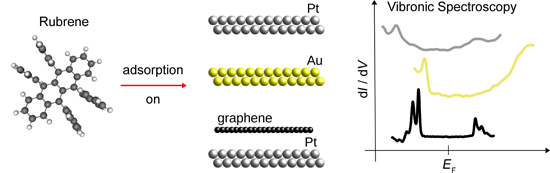
Scanning tunneling microscopy and spectroscopy of rubrene on clean and graphene-covered metal surfaces
Beilstein J. Nanotechnol. 2020, 11, 1157–1167, doi:10.3762/bjnano.11.100
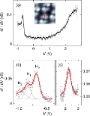
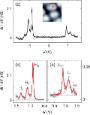
- the hole or electron to the vibrational quantum with energy hν. The Huang–Rhys factor can be expressed as where εν denotes the relaxation energy of the vibration when charging the molecule [10][41]. Comparing the peak height of the orbital signature (I0) with the first vibronic subband (Iν,1) enables
- previously determined on a theoretical basis to exhibit a particularly strong Holstein coupling to the HOMO of C42H28 embedded in a molecular crystal [42]. Generally speaking, the Holstein coupling describes the local interaction of a charge carrier with a molecular vibration [40] and may therefore be
- ) and corresponds to the vibrational mode with large Holstein coupling (vide supra). The second vibrational quantum with energy hν2 ≈ 220 meV is likely to coincide with the C42H28 vibration with energy 1594 cm−1 ≈ 200 meV, which was likewise predicted to exhibit an elevated Holstein coupling [42]. The



Vibration analysis and pull-in instability behavior in a multiwalled piezoelectric nanosensor with fluid flow conveyance
Beilstein J. Nanotechnol. 2020, 11, 1072–1081, doi:10.3762/bjnano.11.92
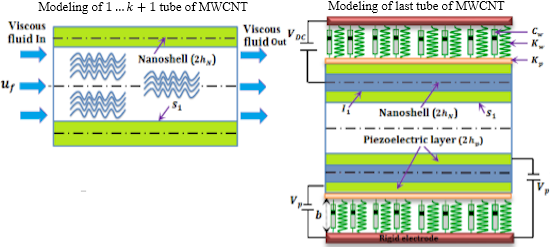
- , pharmaceutical, agricultural, environmental, advanced materials, chemical science, physics, electronics, information technology, biomedical and medical fields [1][2][3][4][5][6][7][8][9][10]. Due to this extended use of nanosensors, especially piezoelectric nanosensors in vibration devices, mathematical models
- and the study of vibration behavior are essential. Additionally, it is important that the size-dependent parameters for the dynamics analysis and mathematical modeling of these nanostructures be contained in the theoretical models. For this reason, surface/interface elasticity, which was addressed by
- result, MWNS materials are preferred in many applications such as nanoresonators. Many studies have been carried out on the vibration and stability analysis of nanostructures with some reviews given as follows. Strozzi and Pellicano investigated the vibration analysis of triple-walled carbon nanotubes


![[Graphic 46]](/bjnano/content/inline/2190-4286-11-92-i46.svg?max-width=637&scale=1.18182) on DNF of FC-MWPENS.
on DNF of FC-MWPENS.


![[Graphic 50]](/bjnano/content/inline/2190-4286-11-92-i50.svg?max-width=637&scale=1.18182) on DNF of SS FC-MWPENS.
on DNF of SS FC-MWPENS.


![[Graphic 54]](/bjnano/content/inline/2190-4286-11-92-i54.svg?max-width=637&scale=1.18182) on DNF of SS FC-MWPENS.
on DNF of SS FC-MWPENS.


![[Graphic 59]](/bjnano/content/inline/2190-4286-11-92-i59.svg?max-width=637&scale=1.18182) for fluid velocity
for fluid velocity ![[Graphic 60]](/bjnano/content/inline/2190-4286-11-92-i60.svg?max-width=637&scale=1.18182) on DNF of SS FC-MWPENS.
on DNF of SS FC-MWPENS.

![[Graphic 61]](/bjnano/content/inline/2190-4286-11-92-i61.svg?max-width=637&scale=1.18182) for pull-in voltage on DNF of SS FC-MWPENS.
for pull-in voltage on DNF of SS FC-MWPENS.

![[Graphic 67]](/bjnano/content/inline/2190-4286-11-92-i67.svg?max-width=637&scale=1.18182) for fluid velocity
for fluid velocity ![[Graphic 68]](/bjnano/content/inline/2190-4286-11-92-i68.svg?max-width=637&scale=1.18182) on DNF of SS FC-MWPENS.
on DNF of SS FC-MWPENS.

![[Graphic 69]](/bjnano/content/inline/2190-4286-11-92-i69.svg?max-width=637&scale=1.18182) for pull-in voltage on DNF of SS FC-MWPENS.
for pull-in voltage on DNF of SS FC-MWPENS.

![[Graphic 73]](/bjnano/content/inline/2190-4286-11-92-i73.svg?max-width=637&scale=1.18182) on DNF of SS FC-MWPENS.
on DNF of SS FC-MWPENS.


![[Graphic 75]](/bjnano/content/inline/2190-4286-11-92-i75.svg?max-width=637&scale=1.18182) on DNF of SS FC-MWPENS.
on DNF of SS FC-MWPENS.

Monolayers of MoS2 on Ag(111) as decoupling layers for organic molecules: resolution of electronic and vibronic states of TCNQ
Beilstein J. Nanotechnol. 2020, 11, 1062–1071, doi:10.3762/bjnano.11.91
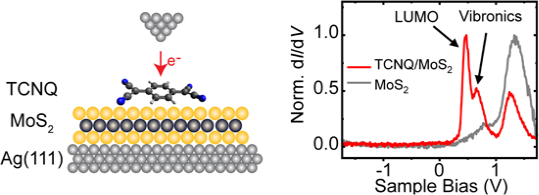
- group, where no nodal planes exist in the LUMO, as their presence may lead to vibration-assisted tunneling in addition to the bare Franck–Condon excitation [52]. Conclusion We have shown that a single layer of MoS2 may act as a decoupling layer for molecules from the underlying metal surface, if the


Highly sensitive detection of estradiol by a SERS sensor based on TiO2 covered with gold nanoparticles
Beilstein J. Nanotechnol. 2020, 11, 1026–1035, doi:10.3762/bjnano.11.87
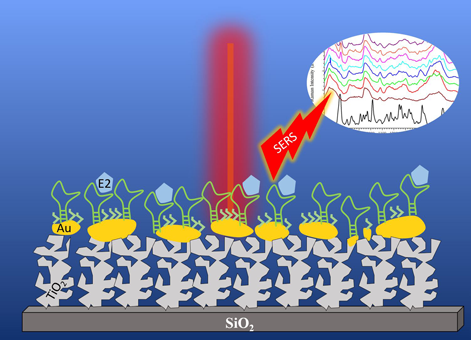
- Raman spectra of the powder can be observed, which are due to the fact that the molecule is bound to the aptamer, affecting the vibration frequencies. For instance, the peak at 743 cm−1 corresponds to the peak at 730 cm−1 in the E2 Raman spectra, while the peak at 822 cm−1 corresponds to the peak at 830



Uniform Fe3O4/Gd2O3-DHCA nanocubes for dual-mode magnetic resonance imaging
Beilstein J. Nanotechnol. 2020, 11, 1000–1009, doi:10.3762/bjnano.11.84
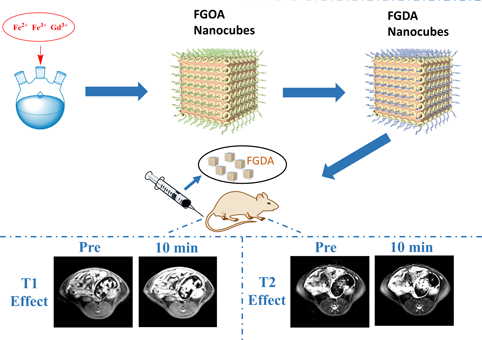
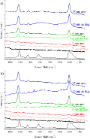
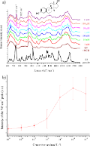
- absorption peaks. On the one hand, the FGOA nanocubes have characteristic absorption peaks at 2937 and 2857 cm−1, corresponding to the stretching vibration of –CH3 and –CH2, respectively, which are both present in oleic acid. On the other hand, the FGDA nanocubes have the characteristic absorption peak at
- 1617 cm−1, corresponding to the benzene ring stretching vibration, which indicates that DHCA successfully modified the FGDA nanocubes. In order to verify the magnetic properties of FGDA nanocubes, the field-dependent magnetization (M–H) curves (Figure 2j) were obtained from the physical property



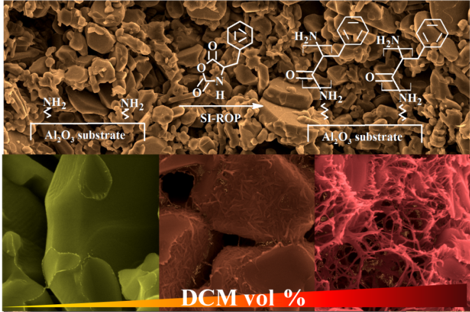
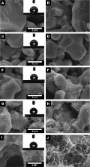
A 3D-polyphenylalanine network inside porous alumina: Synthesis and characterization of an inorganic–organic composite membrane
Beilstein J. Nanotechnol. 2020, 11, 938–951, doi:10.3762/bjnano.11.78
- , respectively [64]. Whereas the amide A mode is assigned to an intermolecular hydrogen-bonded NH stretching vibration, the amide B band is due to the "free" NH stretching vibration and amide II to the NH bending motion of the peptide bond. Schultz et al. demonstrated a correlation between the amide I band (C=O
- stretching vibration) at 1641 cm−1 (indicating a β-sheet conformation) in the MIR region and the combination band of amide A and amide II in the NIR region at 4867 cm−1 [68]. The authors observed an increase of intensity as well a small red shift of the combination band between 4890 and 4860 cm−1 with
- −1 of the polyphenylalanine functionalized membrane from pure DCM. MIR spectra of polyphenylalanine synthesized from solution (pure THF black line and pure DCM red line) at different wavenumber regions. Dotted lines indicate typical values of the amide I vibration band for α-helix (around 1665 cm−1




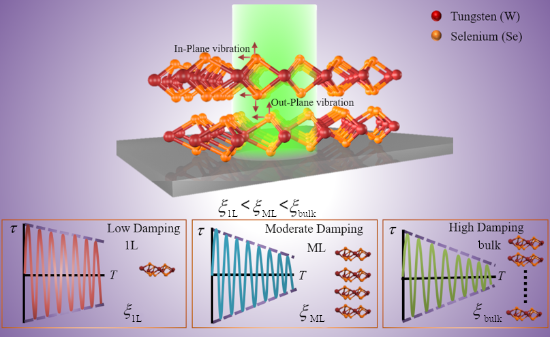
Light–matter interactions in two-dimensional layered WSe2 for gauging evolution of phonon dynamics
Beilstein J. Nanotechnol. 2020, 11, 782–797, doi:10.3762/bjnano.11.63
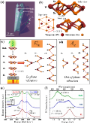
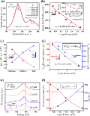
- which was originally formulated for diamond [55], and is also applicable here, as given by Equation 7 below, where ω0 is the frequency of vibration of the and A1g modes at T = 0 K and χT is the first-order Raman temperature coefficient calculated for both the and A1g modes (just as in the computation
Hexagonal boron nitride: a review of the emerging material platform for single-photon sources and the spin–photon interface
Beilstein J. Nanotechnol. 2020, 11, 740–769, doi:10.3762/bjnano.11.61
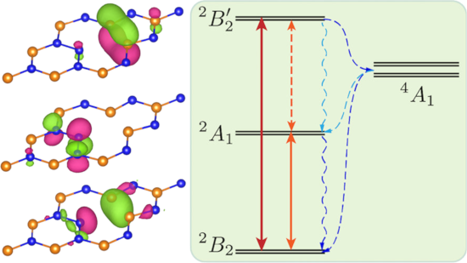
- and clarified their temperature dependence of the ZPL peak shift, line width, and PL intensity ranging from 4 to 300 K. The temperature-dependent line width, spectral energy shift, and intensity differing ZPLs are described by a lattice vibration model that considers piezoelectric coupling to in-plane




Preparation, characterization and photocatalytic performance of heterostructured CuO–ZnO-loaded composite nanofiber membranes
Beilstein J. Nanotechnol. 2020, 11, 631–650, doi:10.3762/bjnano.11.50
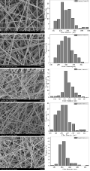
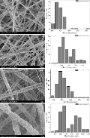
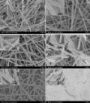
- studies. FTIR and XRD analysis: FTIR was used to characterize the CNFMs with different [Cu(Ac)2/Zn(Ac)2]/[PVDF/PAN] weight ratios (Figure 7). The peaks at 879 cm−1 correspond to the asymmetric stretching vibration of –CF2– in PVDF. The peaks at 1070 and 1276 cm−1 represent the β-phase of PVDF. There was
- also an obscure peak near 1070 cm−1, which might belong to –C–C– stretching vibrations. The peak at 2250 cm−1 corresponds to the stretching vibration of –CN– in PAN and the peak at 2942 cm−1 can be assigned to the stretching vibration of –CH2–. The spectra of the CNFMs with Cu(Ac)2 and Zn(Ac)2 (Figure
- 7b–e) have a wide peak at 1573 cm−1, which represents the antisymmetric stretching vibration of –COO–, indicating that these CNFMs include Cu(Ac)2 and Zn(Ac)2 [38][39][40]. The change of the [Cu(Ac)2/Zn(Ac)2]/[PVDF/PAN] weight ratio has little influence on the spectra. In order to determine the











Silver-decorated gel-shell nanobeads: physicochemical characterization and evaluation of antibacterial properties
Beilstein J. Nanotechnol. 2020, 11, 620–630, doi:10.3762/bjnano.11.49
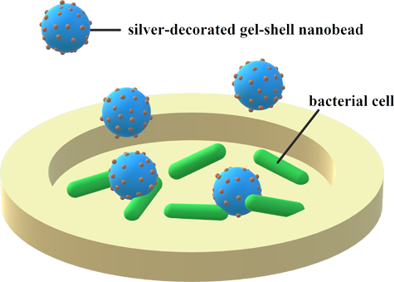
- is characteristic of C–H out-of-plane vibrations in para-substituted benzene rings. On the other hand, the 756 cm−1 mode is attributable to monosubstituted benzene due to the out-of-plane bending vibration of the five CH groups in the aromatic ring. The presence of these two bands confirms therefore


Soybean-derived blue photoluminescent carbon dots
Beilstein J. Nanotechnol. 2020, 11, 606–619, doi:10.3762/bjnano.11.48
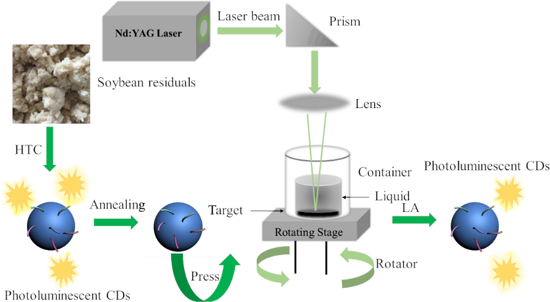
- %, suggesting the presence of similar chemical-bonding structures. For example, both CDs possess the bonds of O–H and N–H stretching vibration at 3344 cm−1 and 3366 cm−1 [43][44], respectively. The presence of the O–H and N–H groups makes the CDs hydrophilic and improves the stability and dispersibility of the


Comparison of fresh and aged lithium iron phosphate cathodes using a tailored electrochemical strain microscopy technique
Beilstein J. Nanotechnol. 2020, 11, 583–596, doi:10.3762/bjnano.11.46
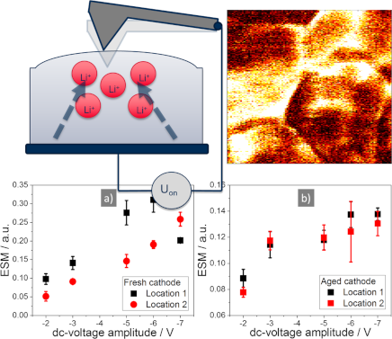
- , which is induced by the ionic vibration in the material. Due to the modified experimental set-up, the presented ESM technique does not correspond to the classical ESM technique introduced by Balke et al. [24], but is similar to the time-domain measurements reported by Jesse et al. [33], therefore we



Multilayer capsules made of weak polyelectrolytes: a review on the preparation, functionalization and applications in drug delivery
Beilstein J. Nanotechnol. 2020, 11, 508–532, doi:10.3762/bjnano.11.41



Interfacial charge transfer processes in 2D and 3D semiconducting hybrid perovskites: azobenzene as photoswitchable ligand
Beilstein J. Nanotechnol. 2020, 11, 466–479, doi:10.3762/bjnano.11.38
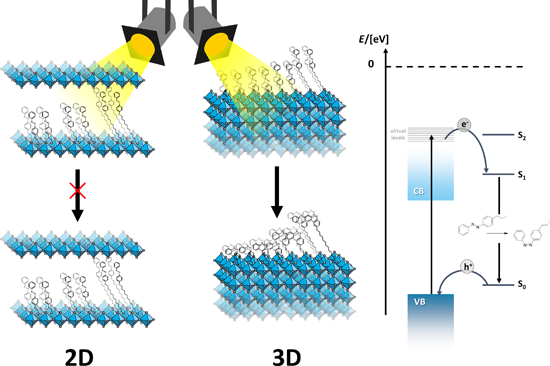
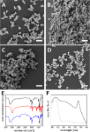
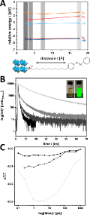
- presence of the azo compounds was verified using a combination of Fourier-transform infrared (FTIR) and UV–vis absorption spectroscopy. A characteristic vibration at 2991 cm−1, which can be associated to the N–H stretching vibrations of the ammonium headgroup (Figure 4E), vanishes completely for 3D-AzoC2




Synthesis and enhanced photocatalytic performance of 0D/2D CuO/tourmaline composite photocatalysts
Beilstein J. Nanotechnol. 2020, 11, 407–416, doi:10.3762/bjnano.11.31
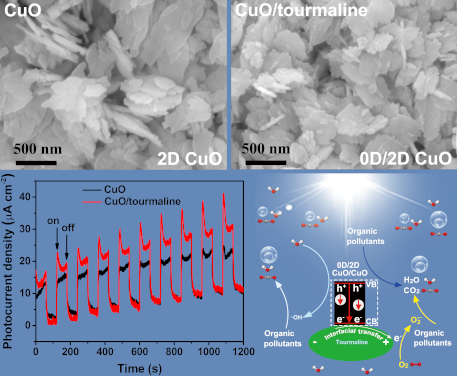
- molecular vibration characterization revealed that CuO chemically interacted with tourmaline via Si–O–Cu bonds. The specific surface area of the CuO/tourmaline composite (23.60 m2 g−1) was larger than that of the pristine CuO sample (3.41 m2 g−1). The CuO/tourmaline composite exhibited excellent
- spectroscopy. As shown in Figure 2, three bands appeared at 3487 cm−1, 3554 cm−1, and 3635 cm−1 resulting from the vibration of the three OH groups in tourmaline [2]. The bending vibration of the Si–O group was detected at 488 cm−1 [27]. The band at 649 cm−1 was due to the RIV–O (R = Al, Fe, Mg, Mn) stretching
- vibration, and the peaks at 708 cm−1 and 777 cm−1 result from the Si–O–Si stretching vibration [2][28]. A well-resolved band at 974 cm−1 originated from the Si–O stretching vibration [29], and was shifted to 989 cm−1 with a blue-shift of 15 cm−1 for the CuO/tourmaline composite compared with that of the


Poly(1-vinylimidazole) polyplexes as novel therapeutic gene carriers for lung cancer therapy
Beilstein J. Nanotechnol. 2020, 11, 354–369, doi:10.3762/bjnano.11.26
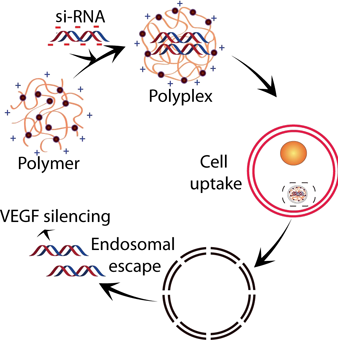
- investigated by using FTIR and DSC (Figure 2). The FTIR of PVI shows vibration bands at 2950 cm−1 (imidazole C–H stretching vibrations) and at 1645, 1506 and 1411 cm−1 (imidazole C–N stretching vibrations). The N–H in-plane bending vibrations are observed at 1235 cm−1. The polyplex also shows stretching


Facile biogenic fabrication of hydroxyapatite nanorods using cuttlefish bone and their bactericidal and biocompatibility study
Beilstein J. Nanotechnol. 2020, 11, 285–295, doi:10.3762/bjnano.11.21
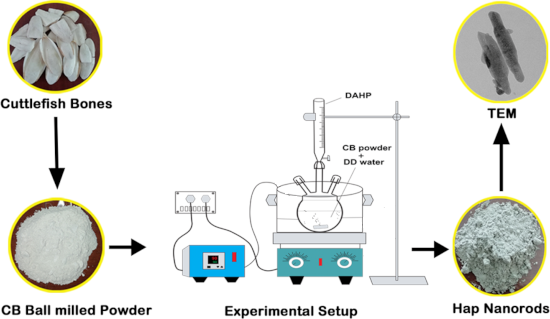
- the existence of aragonite carbonates [26]. The presence of a characteristic peak at 3424 cm−1 is due to the vibration of O–H stretching, which indicates the presence of alcoholic functional groups [27]. Likewise, the IR bands recorded for the CB-Hap sample at 1038 and 568 cm−1 reveals the presence of


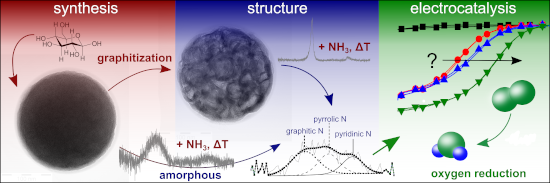
Synthesis of amorphous and graphitized porous nitrogen-doped carbon spheres as oxygen reduction reaction catalysts
Beilstein J. Nanotechnol. 2020, 11, 1–15, doi:10.3762/bjnano.11.1
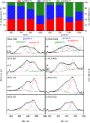
- ) and (101) crystal planes of the graphite lattice. All Raman spectra (Figure 6 and Table 3) of the N-doped carbon spheres show two bands at ca. 1350 cm−1 (D band) and ca. 1600 cm−1 (G band). The G band is due to the E2g in-plane vibration mode of the graphite lattice and hence assigned to the sp2
- -hybridized carbon atoms inside the graphite layers; the D band is associated to the A1g in-plane breathing vibration mode occurring at the edges of sp2-hybridized carbon domains, which appear for structural defects and disordered structures. A relative degree of graphitization can be evaluated by the ratio




pH-Controlled fluorescence switching in water-dispersed polymer brushes grafted to modified boron nitride nanotubes for cellular imaging
Beilstein J. Nanotechnol. 2019, 10, 2428–2439, doi:10.3762/bjnano.10.233
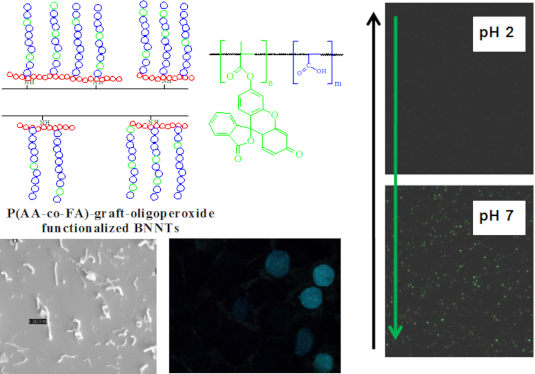
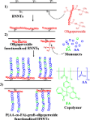
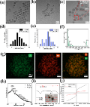
- functionalized by oligoperoxide. The recorded FTIR spectra of pristine and P(AA-co-FA)-functionalized BNNTs are presented in Figure 3. The spectrum of pristine BNNTs is comprised of two broad asymmetric absorption bands, the B–N–B longitudinal in-plane bond vibration at 1327 cm−1, and the out-of-plane radial