Search results
Search for "CVD" in Full Text gives 215 result(s) in Beilstein Journal of Nanotechnology. Showing first 200.
Liquid permeation and chemical stability of anodic alumina membranes
Beilstein J. Nanotechnol. 2017, 8, 561–570, doi:10.3762/bjnano.8.60
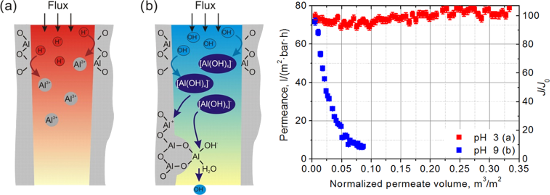
- channels blocking. This process intensifies in basic pH due to the high positive charge of the anodic alumina surface. An approach for improving anodic aluminum oxide stability towards dissolution in water by carbon CVD coating of the membrane walls is suggested. Keywords: anodic alumina; carbon-modified
- , thermally treated membranes have also illustrated water permeation loss during the operation and after membrane drying between the cycles. To provide an additional protection, carbon CVD (by the pyrolysis of hydrocarbons) was also adopted in the same thermal treatment regime to provide a continuous 10 nm
- error limits; however, slightly better stability of carbon-coated membranes was noticed. Therefore, both the thermal treatment procedure and the CVD coating of the membrane with an amorphous carbon results in the stabilization of AAO membranes towards dissolution in water. This therefore allows for


Advances in the fabrication of graphene transistors on flexible substrates
Beilstein J. Nanotechnol. 2017, 8, 467–474, doi:10.3762/bjnano.8.50
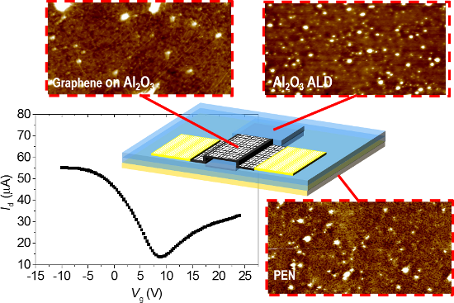
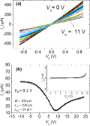
- transferred to the target substrate. In this sense, the use of graphene grown by chemical vapor deposition (CVD) on various metals (Ni [7], Cu [13]) and using various precursors [14] represents the most suitable choice. Among the various device architectures, Gr-FET-based sensors can represent a great
- deposition conditions must be optimized in order to ensure the expected layer-by-layer ALD mechanism of the insulating film, instead of a massive CVD growth mechanism, which in turn can result in a degradation of the overall structural and electrical quality of the insulator. This aspect is particularly
- between the precursor exposure in order to prevent the precursor mixing and a consequent CVD growth mechanism. The developed low temperature (LT) and prolonged cycle process was analyzed on a silicon (100) reference wafer and compared to a standard temperature (ST) PE-ALD growth process. The morphology



The longstanding challenge of the nanocrystallization of 1,3,5-trinitroperhydro-1,3,5-triazine (RDX)
Beilstein J. Nanotechnol. 2017, 8, 452–466, doi:10.3762/bjnano.8.49
- rate of a continuous hydrothermal process from 1–10 tons/year to 100 tons/year for inorganic nanomaterials [123]. Tsuzuki et al. [124] statistically studied which methods for inorganic nanosynthesis are mostly employed in industry: vapor (39% mainly chemical vapor deposition (CVD)) and liquid (45


Study of the surface properties of ZnO nanocolumns used for thin-film solar cells
Beilstein J. Nanotechnol. 2017, 8, 446–451, doi:10.3762/bjnano.8.48
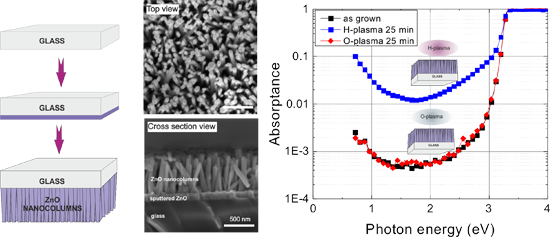
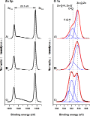
- surface properties of ZnO NCs and the binding state of present elements were investigated before and after different plasma treatments, typically used in plasma-enhanced CVD solar cell deposition processes, by X-ray photoelectron spectroscopy (XPS). Photothermal deflection spectroscopy (PDS) was used to



Role of oxygen in wetting of copper nanoparticles on silicon surfaces at elevated temperature
Beilstein J. Nanotechnol. 2017, 8, 425–433, doi:10.3762/bjnano.8.45
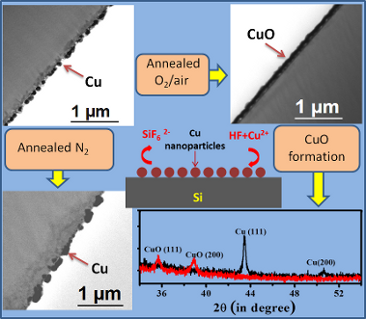
- of CuO nanostructures on Si surfaces. There are several techniques such as physical vapor deposition (PVD), chemical vapor deposition (CVD), electroplating, etc., that can be used to create Cu films. For the PVD and CVD techniques, high vacuum is required, which takes enormous effort and also


In-situ monitoring by Raman spectroscopy of the thermal doping of graphene and MoS2 in O2-controlled atmosphere
Beilstein J. Nanotechnol. 2017, 8, 418–424, doi:10.3762/bjnano.8.44
- ] and chemical vapor deposition (CVD) on catalytic metals [9][10] followed by the poly(methyl methacrylate) (PMMA) assisted transfer [11][12], enlarged the interest and perspectives for applications. In particular in view of the realization of electronic devices and to obtain Gr-based field effect
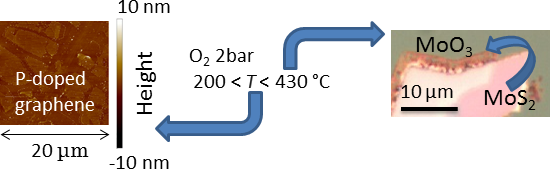
- or in O2 gas on samples of Gr produced by CVD on copper foil and successively transferred on a SiO2 substrate on Si. Analogous studies were carried out on MoS2 transferred on the same substrate to evaluate the features and doping effectiveness of thermal processes similar to those used for Gr


Nitrogen-doped twisted graphene grown on copper by atmospheric pressure CVD from a decane precursor
Beilstein J. Nanotechnol. 2017, 8, 145–158, doi:10.3762/bjnano.8.15
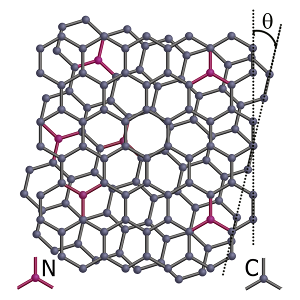
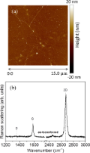
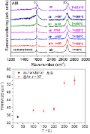
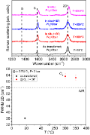
- graphene films grown on copper foil by atmospheric pressure CVD with n-decane as a precursor, a mixture of nitrogen and hydrogen as the carrier gas, under different hydrogen flow rates. A novel approach for the processing of the Raman spectroscopy data was employed. It was found that in particular cases
- from both fundamental and applied aspects. TG can be obtained by different methods, e.g., by means of graphene folding, graphene layer stacking, thermal decomposition of SiC [9] or chemical vapor deposition (CVD) on metal catalysts [10][11]. Generally speaking, CVD is one of the most common methods to
- obtain large area and high quality graphene [12]. Moreover, TG may be grown at ambient pressure applying atmospheric pressure CVD (APCVD) [10]. The use of different hydrocarbon sources to explore the growth mechanism and properties of TG is a hot topic nowadays. Generally, methane (CH4) is the most


Diffusion of dilute gas in arrays of randomly distributed, vertically aligned, high-aspect-ratio cylinders
Beilstein J. Nanotechnol. 2017, 8, 64–73, doi:10.3762/bjnano.8.7
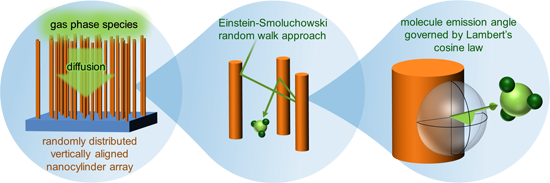
- the coating of nanotubes or nanowires with thin films employing techniques such as chemical vapour deposition (CVD) [11] or atomic layer deposition (ALD) [12][13]. Our recent study constitutes an example of the coating of vertically aligned carbon nanotubes (VACNTs) with monocrystalline anatase using
- precise modelling of gas-transport specifics required in the optimisation of the aforementioned processes [17]. Furthermore, root growth of VACNTs with a CVD method has been reported to be limited by gas diffusion, which additionally emphasizes the need for a reliable method of gas-transport modelling [18
- ][26], as well as for ALD growth in nanopores [27][28][29][30][31], and conformal CVD [32] considering kinetic parameters of surface sticking, surface diffusion, adsorption and desorption phenomena as a function of gas pressure and temperature. Recently Arya et al. [33][34] suggested that for


Fundamental properties of high-quality carbon nanofoam: from low to high density
Beilstein J. Nanotechnol. 2016, 7, 2065–2073, doi:10.3762/bjnano.7.197
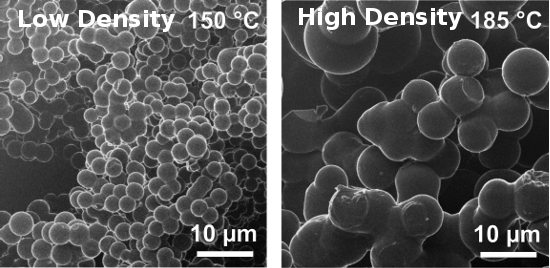
- ], nanoporous carbons [46], carbon nanotube scaffolds [47], and carbon foams [48][49]. The densities of these carbon materials are significantly lower compared to “heavy carbons” such as pristine graphite (2.26 g·cm−3), CVD grown carbon films (2.14 g·cm−3 [50]), or carbon nanotube forests (1.6 to 0.38 g·cm−3


Nanostructured SnO2–ZnO composite gas sensors for selective detection of carbon monoxide
Beilstein J. Nanotechnol. 2016, 7, 2045–2056, doi:10.3762/bjnano.7.195
- ]. However, the addition of another oxide component described in these papers involves complicated and expensive vapor preparation techniques (e.g., chemical vapor deposition (CVD) or physical vapor deposition (PVD), ion-beam or laser-assisted techniques, spray pyrolysis), expensive dedicated equipment (e.g




Ferromagnetic behaviour of ZnO: the role of grain boundaries
Beilstein J. Nanotechnol. 2016, 7, 1936–1947, doi:10.3762/bjnano.7.185
- technologies such as wet-chemistry methods or chemical vapour deposition (CVD) sometimes yielded ferromagnetic ZnO and sometimes they did not. It was of course a challenge for solid-state physics and materials science to explain such strange behaviour and to develop the methods to predict (at least


Enhanced detection of nitrogen dioxide via combined heating and pulsed UV operation of indium oxide nano-octahedra
Beilstein J. Nanotechnol. 2016, 7, 1507–1518, doi:10.3762/bjnano.7.144
- numbers. This could be the case if such sensors were to integrate widespread personal or indoor air monitors. Experimental The indium oxide nano-octahedra were grown onto silicon substrates via a vapour-phase transport method using a horizontal chemical vapour deposition (CVD) furnace. Substrates were
- cleaned before their insertion in the CVD reactor by three consecutive, five minutes long steps of sonication in acetone, ethanol and deionized water, respectively. Finally cleaned substrates were dried using a flow of pure dry air. In a typical synthesis, 0.3 g of high purity In metal powder (99.99% pure


Surface roughness rather than surface chemistry essentially affects insect adhesion
Beilstein J. Nanotechnol. 2016, 7, 1471–1479, doi:10.3762/bjnano.7.139
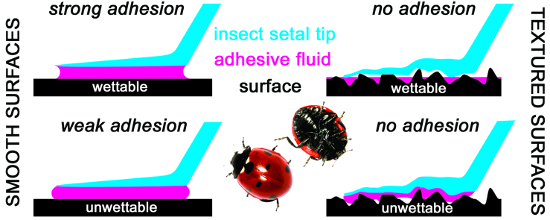
- , hydrophobic monolayer-covered surfaces, terminated with octadecylsilyl (CH3(CH2)17-) or perfluoroalkyl (CF3(CF2)7CH2CH2-) groups, were prepared using chemical vapor deposition (CVD) of ODS or FAS17 [36], respectively. UV–ozone treated Si substrates (2 × 2 cm2 and 5 × 5 cm2) were placed on a heat-resistant
- a method modified from a report previously published by Deng et al [37]. The candle-soot-covered Si substrates (2 × 2 cm2 and 5 × 5 cm2) were exposed to VUV light at 103 Pa for 30 min. The samples were then exposed to TMOS vapor for 4 h at 80 °C using the CVD method described previously. Next, the



Dealloying of gold–copper alloy nanowires: From hillocks to ring-shaped nanopores
Beilstein J. Nanotechnol. 2016, 7, 1361–1367, doi:10.3762/bjnano.7.127
- [6][7]. The formation of hillocks has been encountered in case of various processes such as evaporation and sputtering [7][8][9], ion beam assisted deposition (IBAD) [10][11], chemical vapor deposition (CVD) [12][13] and electroplating [14]. Hillocks are the outcome of a nodular growth taking place




Fabrication and characterization of branched carbon nanostructures
Beilstein J. Nanotechnol. 2016, 7, 1260–1266, doi:10.3762/bjnano.7.116
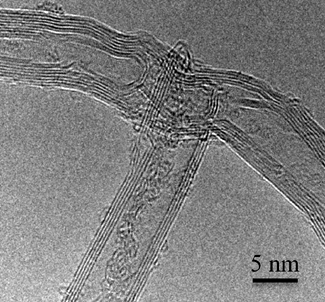
- been fabricated using a variety of methods, which include pyrolysis of metallocenes [19][20], nanowelding [21], catalytic CVD [22][23], carbon infiltration of MWCNTs [24], templating [25] and chemical functionalization [26]. However, none of these methods are easily industrially scalable. Herein, we
- produces b-MWCNTs when using thick MWCNTs (more than a few walls). However, when the same procedure is used with thin MWCNTs (e.g., triple-walled MWCNTs, Figure 6a), synthesised by a “water-assisted” CVD method [41], graphene nanoribbons are produced in small yields (Figure 6b) which is consistent with
- characterization. Preparation of graphene nanoribbons A “water-assisted” CVD process as reported earlier [41][42] was used to fabricate thin walled MWCNTs (ca. three walls), which were subsequently heated in air to 500 °C for 2 h. Subsequently, ca. 10 mg of this material was sonicated (UP200s Dr. Hielscher, 200 W


Reasons and remedies for the agglomeration of multilayered graphene and carbon nanotubes in polymers
Beilstein J. Nanotechnol. 2016, 7, 1174–1196, doi:10.3762/bjnano.7.109
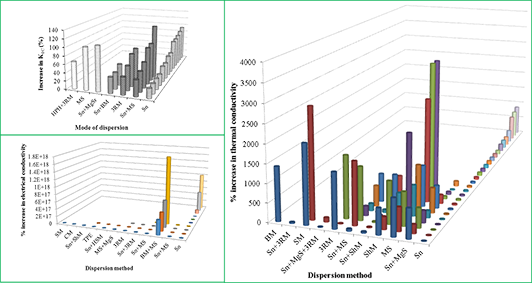
- SWNT, i.e., the area of a parallelogram OACB, and δ is the distance between nearest-neighbor C–C atoms in adjacent SWNTs (0.34 nm for the ideal case) [42]. The value obtained for close-packed SWNTs produced by catalytic chemical vapor deposition (CVD) is about one order of magnitude lesser than that of
- the theoretical value. Hence, the catalytic CVD process is nearly ideal [42]. Remedies for agglomeration The dispersion state of nano-fillers can be tailored in two ways. Firstly, in the uncured state, the dispersion can be improved by using surfactants, mechanical mixing, or surface modification
- was added and the same process was repeated. The mixture was poured into a steel mold [55]. Degassing was carried out for 20 min under vacuum followed by curing for 4 h at 122 °C [58]. Meincke et al. also used a twin screw extruder to mix CVD-MWNTs, polyamide-6, and acrylonitrile butadiene styrene


Multiwalled carbon nanotube hybrids as MRI contrast agents
Beilstein J. Nanotechnol. 2016, 7, 1086–1103, doi:10.3762/bjnano.7.102
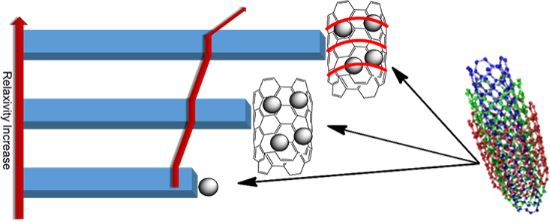
- vapor deposition (c-CVD) [20]. This is the most common method of MWCNT synthesis. The inherent consequence of the application of a metal catalyst (e.g., ferrocene, aluminum oxide) is the presence of a nanometallic deposit in the tubes [21]. Thus obtained MWCNTs are already an interesting scaffold for
- materials, oMWCNT#Maciejewska, were investigated by Maciejewska [18]. A different catalyst (ferrocene) percentage (2 wt %, 5 wt %, 10 wt %) in the c-CVD procedure resulted in corresponding residual iron contents of 3.9, 5.8 and 12.4 wt %, as well as in varying diameters of 29, 49 and 40 nm, respectively



Photocurrent generation in carbon nanotube/cubic-phase HfO2 nanoparticle hybrid nanocomposites
Beilstein J. Nanotechnol. 2016, 7, 1075–1085, doi:10.3762/bjnano.7.101
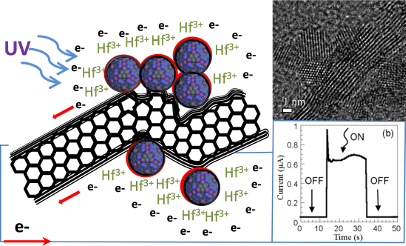
- been conducted where ultrasonication without functionalizing agents has been used for successfully debundling CNTs with minimal damage to the tube walls [23]. CNTs produced via CVD methods typically contain various imperfections, such as residual impurities of metal catalysts, graphene sheets


Development of highly faceted reduced graphene oxide-coated copper oxide and copper nanoparticles on a copper foil surface
Beilstein J. Nanotechnol. 2016, 7, 1010–1017, doi:10.3762/bjnano.7.93
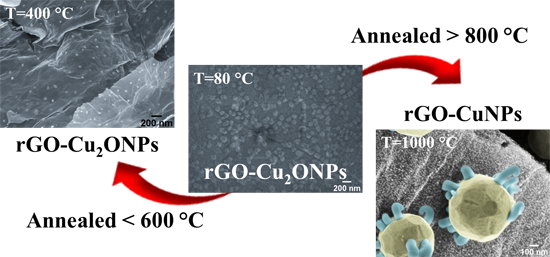
- or metal oxide nanoparticles [11]. In particular, rGO–Cu core–shell nanostructures have been synthesized by CVD [12][13], hydrothermal synthesis [14] and pyrolysis of an organocopper compound [15][16][17]. In a previous work, the authors reported the effective reduction of chemically exfoliated GO
- °C under nitrogen flux for 15 min. The thermal process leading to the reduction of GO and the formation of Cu-based nanoparticles was carried out in an atmospheric pressure CVD apparatus equipped with a quartz tube. The annealing process was performed at 200, 400, 600, 800 and 1000 °C under an inert


Optical absorption signature of a self-assembled dye monolayer on graphene
Beilstein J. Nanotechnol. 2016, 7, 862–868, doi:10.3762/bjnano.7.78
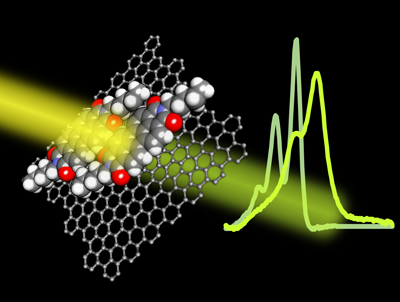
- ) has been formed onto CVD graphene transferred on a transparent substrate. Its structure has been probed by scanning tunnelling microscopy and its optical properties by polarized transmission spectroscopy at varying incidence. The results show that the transition dipoles of adsorbed PTCDI are all
- to various predetermined patterns [31]. These techniques can be extended to monolayer CVD graphene as a substrate [32], which offers optical transparency when transferred from its native CVD substrate –usually copper– onto a transparent one such as quartz or polyethylene terephthalate (PET). This
- offers opportunities for advanced optical characterizations in a transmission geometry, such as polarized variable-incidence transmission spectroscopy. In addition, the electrical conductivity of a CVD graphene monolayer is sufficiently high to apply scanning tunnelling microscopy (STM) and thus



Synthesis and applications of carbon nanomaterials for energy generation and storage
Beilstein J. Nanotechnol. 2016, 7, 149–196, doi:10.3762/bjnano.7.17
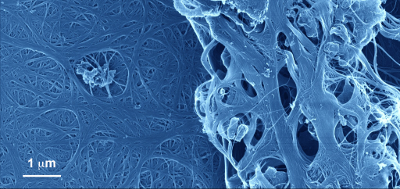
- ]. There are three main methods to synthesize CNTs, each of which have advantages and disadvantages in terms of quality and length of the nanotubes produced, are [47] (Figure 11): Arc discharge: higher batch yield (≈1 g/day) as compared to CVD, Laser vaporization: higher batch yield (≈1–10 g/day) as
- compared to CVD, and Chemical vapor deposition (CVD): high quality, most common method with low batch yield (≈30 mg/day). In the arc-discharge method, the carbon is evaporated by helium plasma ignited by high current passed through an opposing carbon anode and cathode. This method requires the use of a
- acid [53]. In both the arc discharge and laser ablation methods, bundles of MWNTs and SWNTs held together by van der Waals forces are generated by the condensation of carbon atoms generated from the evaporation of solid carbon sources. The third method, chemical vapor deposition (CVD), involves the















Sonochemical co-deposition of antibacterial nanoparticles and dyes on textiles
Beilstein J. Nanotechnol. 2016, 7, 1–8, doi:10.3762/bjnano.7.1
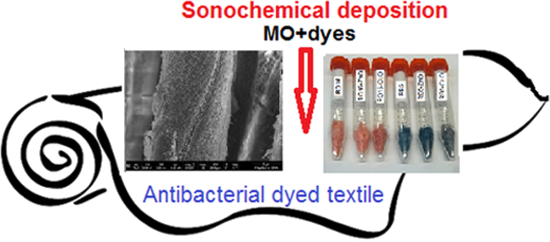
- is the direct impregnation of textiles in the reactant solution. Other methods such as chemical vapor deposition (CVD) of silver NPs on textiles have also been used [1]. Among the various other coating techniques the sonochemical immobilization was carried out on a large variety of substrates




Enhanced model for determining the number of graphene layers and their distribution from X-ray diffraction data
Beilstein J. Nanotechnol. 2015, 6, 2113–2122, doi:10.3762/bjnano.6.216
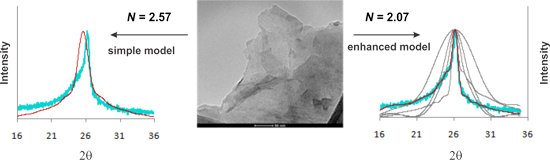
- attracted great interest in terms of fundamental studies as well as potential applications [2]. To date, several methods have been used to produce high-quality graphene sheets, such as mechanical exfoliation of graphite, chemical vapor deposition (CVD) of gases containing carbon atoms on the surface of


Nitrogen-doped graphene films from chemical vapor deposition of pyridine: influence of process parameters on the electrical and optical properties
Beilstein J. Nanotechnol. 2015, 6, 2028–2038, doi:10.3762/bjnano.6.206
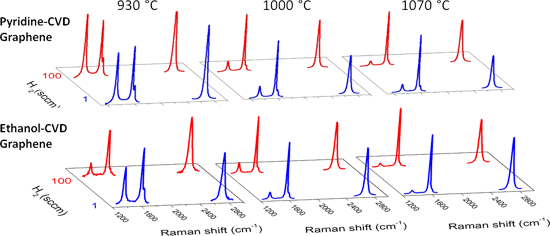
- Moro 5, 00185 Rome, Italy Dipartimento di Ingegneria dell'Informazione, delle Infrastrutture e dell'Energia Sostenibile (DIIES), Università “Mediterranea” di Reggio Calabria, 89122 Reggio Calabria, Italy 10.3762/bjnano.6.206 Abstract Graphene films were produced by chemical vapor deposition (CVD) of
- pyridine on copper substrates. Pyridine-CVD is expected to lead to doped graphene by the insertion of nitrogen atoms in the growing sp2 carbon lattice, possibly improving the properties of graphene as a transparent conductive film. We here report on the influence that the CVD parameters (i.e., temperature
- and gas flow) have on the morphology, transmittance, and electrical conductivity of the graphene films grown with pyridine. A temperature range between 930 and 1070 °C was explored and the results were compared to those of pristine graphene grown by ethanol-CVD under the same process conditions. The


The role of low-energy electrons in focused electron beam induced deposition: four case studies of representative precursors
Beilstein J. Nanotechnol. 2015, 6, 1904–1926, doi:10.3762/bjnano.6.194
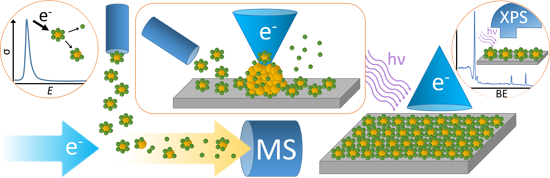
- attributes: i) sufficient vapor pressure to facilitate their introduction into a vacuum chamber, ii) chemical stability under ambient conditions and iii) non-toxicity and easy handling. These criteria are the same as those that define suitable precursors for chemical vapor deposition (CVD) [4][5]. Because of
- this, as well as their widespread commercial availability, FEBID has to-date mainly relied on existing CVD precursors. There is, however, a fundamental difference between the physics and chemistry behind precursor decomposition and deposit formation in CVD and in FEBID. While CVD is primarily thermally
- determining the spatial resolution, aspect ratio, and composition of FEBID deposits is complex, FEBID is unlikely to reach its full capacity through empirical process parameter optimization with currently available CVD precursors. Rather, a sound understanding of the chemistry and physics governing the