Search results
Search for "ZnO" in Full Text gives 271 result(s) in Beilstein Journal of Nanotechnology. Showing first 200.
Nitrogen-doped carbon nanotubes coated with zinc oxide nanoparticles as sulfur encapsulator for high-performance lithium/sulfur batteries
Beilstein J. Nanotechnol. 2018, 9, 1677–1685, doi:10.3762/bjnano.9.159
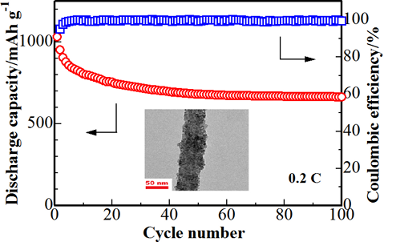
- carbon nanotubes coated with zinc oxide nanoparticles (ZnO@NCNT) were prepared via a sol–gel route as sulfur encapsulator for lithium/sulfur (Li/S) batteries. The electrochemical properties of the S/ZnO@NCNT composite cathode were evaluated in Li/S batteries. It delivered an initial capacity of 1032
- bonds in the composite. This indicates that an enhanced cycling and rate capability of the S/ZnO@NCNT composite could be ascribed to advantages of the ZnO@NCNT matrix. In the composite, the active ZnO-rich surfaces offer a high sulfur-bonding capability and the NCNT core acts as a conductive framework
- providing pathways for ion and electron transport. The as-prepared S/ZnO@NCNT composite is a promising cathode material for Li/S batteries. Keywords: batteries; nanocomposites; sol–gel processes; sulfur; zinc oxide (ZnO); Introduction Due to its high theoretical specific capacity of 1672 mAh·g−1 and


Cr(VI) remediation from aqueous environment through modified-TiO2-mediated photocatalytic reduction
Beilstein J. Nanotechnol. 2018, 9, 1448–1470, doi:10.3762/bjnano.9.137
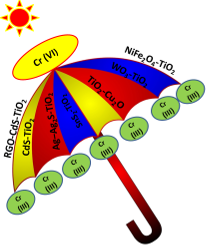
- conditions, low cost, high efficiency and reusability. It uses renewable and pollution-free solar energy and produces minimal secondary waste without using toxic chemicals that follow the rules of green chemistry [59][60][61]. Various semiconductor photocatalysts such as CdS, ZnO, WO3, SnO2, and TiO2 have
- Transition metal oxides such as ZnO have been combined with TiO2 to form composite photocatalysts, which are used efficiently for photocatalytic reduction of Cr(VI). ZnO has been recognized as a potential photocatalyst for extensive environmental applications because of its availability and low cost. It also
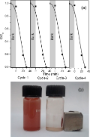
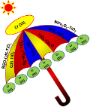
- possesses intriguing optical and electric properties [145][146][147][148]. Studies involving ZnO-mediated photoreduction of Cr(VI) have been carried out under illumination with UV radiation [149]. Since the conduction band edge potential for TiO2 is more positive than that of ZnO (Figure 2), the combination


Room-temperature single-photon emitters in titanium dioxide optical defects
Beilstein J. Nanotechnol. 2018, 9, 1085–1094, doi:10.3762/bjnano.9.100
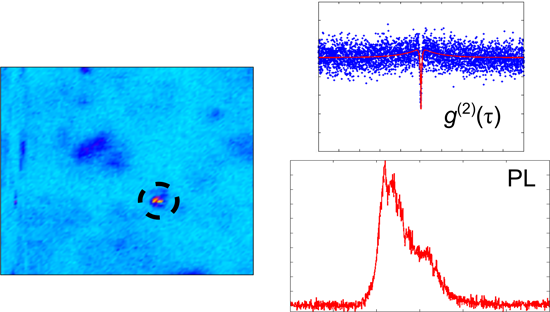
- types of single-photon emitters that include molecules [3], trapped atoms [4], quantum dots [5] and defects in diamond [6]. More recently point defects of wide-bandgap semiconductors, such as zinc oxide (ZnO) [7][8][9] and silicon carbide [10], were shown to exhibit room-temperature single-photon
- emission. ZnO is the only metal oxide reported to host single-photon emitting defects at room temperature and was recently shown to exhibit stable fluorescence when uptaken into skin cells, making it a viable biomarker [11]. Titanium dioxide (TiO2) is a well-studied wide-bandgap semiconductor, its
- of a sample is obtained by large spot size excitations, e.g., Amekura et al. investigated the PL from ZnO nanoparticles with a spot size of approximately 4 mm [55][56]. This spot size constitutes an ensemble measurement where PL from many defects is sampled. Therefore, single defects and their


Review on nanoparticles and nanostructured materials: history, sources, toxicity and regulations
Beilstein J. Nanotechnol. 2018, 9, 1050–1074, doi:10.3762/bjnano.9.98

- production methods for these carbon-based materials fabrication (except carbon black) [8]. (ii) Inorganic-based nanomaterials: These NMs include metal and metal oxide NPs and NSMs. These NMs can be synthesized into metals such as Au or Ag NPs, metal oxides such as TiO2 and ZnO NPs, and semiconductors such as


Cyclodextrin inhibits zinc corrosion by destabilizing point defect formation in the oxide layer
Beilstein J. Nanotechnol. 2018, 9, 936–944, doi:10.3762/bjnano.9.86
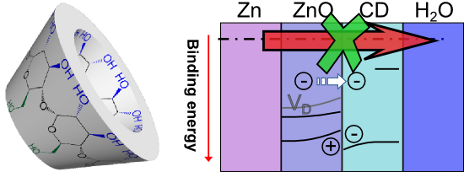
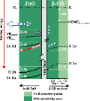
- , with Raman spectra of the interface proving the adsorption of the intact β-CD. Angular dependent X-ray photoelectron spectroscopy (ADXPS) and ultraviolet photoelectron spectroscopy (UPS) were used to extract a band-like diagram of the β-CD/ZnO interface, showing a large energy level shift at the
- interface, closely resembling the energy level alignment in an n–p junction. The energy level shift is too large to permit further electron transfer through the layer, inhibiting corrosion. Adsorption hence changes the defect density in the protecting ZnO layer. This mechanism of corrosion inhibition shows
- reactions, forming precipitates such as hydrated zinc oxide [15]. ZnO is naturally an n-type semiconductor with a band gap of 3.4 eV [20]. Oxides formed in an aerated corrosion process are typically defect-rich oxides [21], especially in the presence of Cl− [15]. Consequently, the products remain initially


Comparative study of antibacterial properties of polystyrene films with TiOx and Cu nanoparticles fabricated using cluster beam technique
Beilstein J. Nanotechnol. 2018, 9, 861–869, doi:10.3762/bjnano.9.80
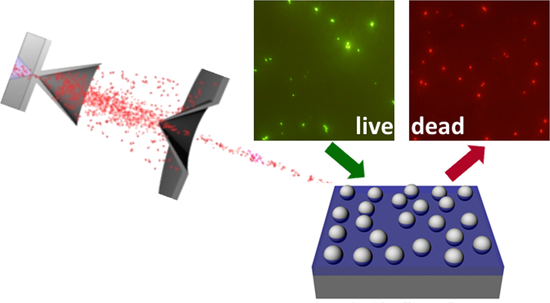
- organic cells. Because of these toxic properties the films and nanostructures of such metals or metal compounds are widely used as antibacterial and antimicrobial agents. Among them are Ag, Cu, Au, CuO, ZnO, Fe3O4, Al2O3 and TiO2, to name just a few [1][2][3]. They all exhibit bactericidal properties




Noble metal-modified titania with visible-light activity for the decomposition of microorganisms
Beilstein J. Nanotechnol. 2018, 9, 829–841, doi:10.3762/bjnano.9.77
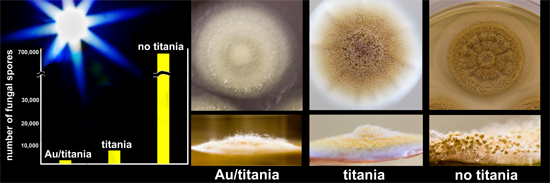
- few times more sensitive towards antifungal agents than other fungi. Auyeung et al. found that only metallic and ZnO NPs showed a potent antimould activity against A. niger and P. chrysogenum [71]. Despite the low antifungal activity of silver-modified titania, the inhibition zones around paper disks


Facile synthesis of a ZnO–BiOI p–n nano-heterojunction with excellent visible-light photocatalytic activity
Beilstein J. Nanotechnol. 2018, 9, 789–800, doi:10.3762/bjnano.9.72
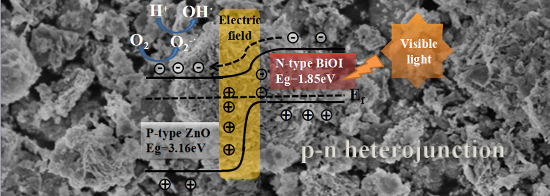
- , Thailand, Research Unit of Advanced Materials for Energy Storage, Chulalongkorn University, Bangkok, Thailand 10.3762/bjnano.9.72 Abstract In this paper, an efficient method to produce a ZnO/BiOI nano-heterojunction is developed by a facile solution method followed by calcination. By tuning the ratio of
- Zn/Bi, the morphology varies from nanoplates, flowers to nanoparticles. The heterojunction formed between ZnO and BiOI decreases the recombination rate of photogenerated carriers and enhances the photocatalytic activity of ZnO/BiOI composites. The obtained ZnO/BiOI heterostructured nanocomposites
- exhibit a significant improvement in the photodegradation of rhodamine B under visible light (λ ≥ 420 nm) irradiation as compared to single-phase ZnO and BiOI. A sample with a Zn/Bi ratio of 3:1 showed the highest photocatalytic activity (≈99.3% after 100 min irradiation). The photodegradation tests


Surface-plasmon-enhanced ultraviolet emission of Au-decorated ZnO structures for gas sensing and photocatalytic devices
Beilstein J. Nanotechnol. 2018, 9, 771–779, doi:10.3762/bjnano.9.70
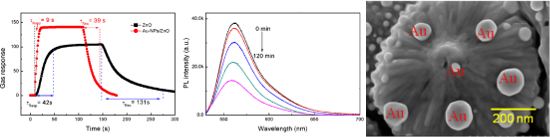
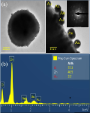
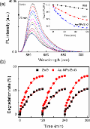
- , 790000, Ba Ria-Vung Tau, Vietnam Graduate University of Science and Technology, Vietnam Academy of Science and Technology, 18 Hoang Quoc Viet, Caugiay, 100000, Hanoi, Vietnam 10.3762/bjnano.9.70 Abstract Pure and Au-decorated sub-micrometer ZnO spheres were successfully grown on glass substrates by
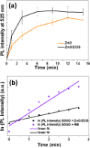
- of plasmonic Au nanoparticles (NPs) on the ZnO film. Time-resolved photoluminescence (TRPL) spectra indicated that a surface plasmonic effect exists with a fast rate of charge transfer from Au nanoparticles to the sub-micrometer ZnO sphere, which suggested the strong possibility of the use of the
- material for the design of efficient catalytic devices. The NO2 sensing ability of as-deposited ZnO films was investigated with different gas concentrations at an optimized sensing temperature of 120 °C. Surface decoration of plasmonic Au nanoparticles provided an enhanced sensitivity (141 times) with




Mechanistic insights into plasmonic photocatalysts in utilizing visible light
Beilstein J. Nanotechnol. 2018, 9, 628–648, doi:10.3762/bjnano.9.59
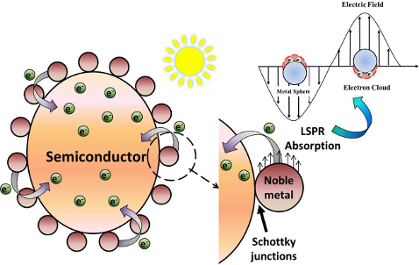
- were used to prepare Ag-ZnO nanostructures, in which both green extracts acted as a shape controllers and reducing agents of Ag+ to overcome the self-nucleation problem of Ag NPs [164][165]. Direct photocatalysis by plasmonic metals Plasmonic catalyst systems have almost exclusively focused on the





Sugarcane juice derived carbon dot–graphitic carbon nitride composites for bisphenol A degradation under sunlight irradiation
Beilstein J. Nanotechnol. 2018, 9, 353–363, doi:10.3762/bjnano.9.35
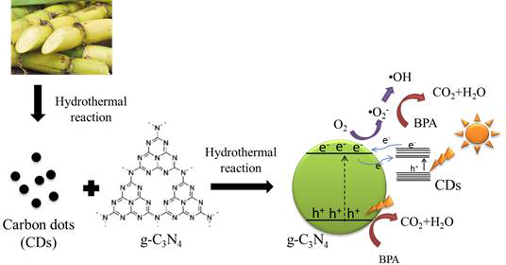
- -driven photocatalysis. Prasannan and Imae reported a simple and facile one-pot synthesis of fluorescent CDs from orange waste peels using the hydrothermal carbonization method. As prepared CDs were combined with zinc oxide (ZnO) to degrade naphthol blue–black azo dye under UV irradiation, and the
- superior photocatalytic activity was demonstrated [8]. Guo and co-workers used the electrochemical method to produce CDs from graphite rods. The deposition of CDs onto g-C3N4/ZnO heterojunctions enhanced the degradation of tetracycline by absorbing a wider spectrum of visible light and suppressing the


Review: Electrostatically actuated nanobeam-based nanoelectromechanical switches – materials solutions and operational conditions
Beilstein J. Nanotechnol. 2018, 9, 271–300, doi:10.3762/bjnano.9.29
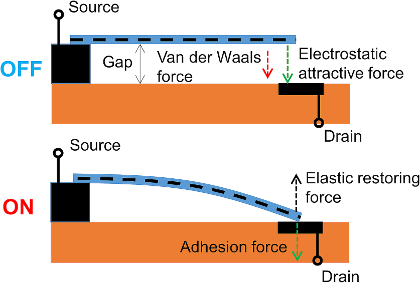
- interface at low (123 K) temperatures [85]. Studies of intimate ZnO nanowire–Au contacts have also shown that the mechanism of nanoscale electrical transport through the potential barrier depends on the relation between contact area and diameter of the nanowire, allowing a controllable transition from


BN/Ag hybrid nanomaterials with petal-like surfaces as catalysts and antibacterial agents
Beilstein J. Nanotechnol. 2018, 9, 250–261, doi:10.3762/bjnano.9.27
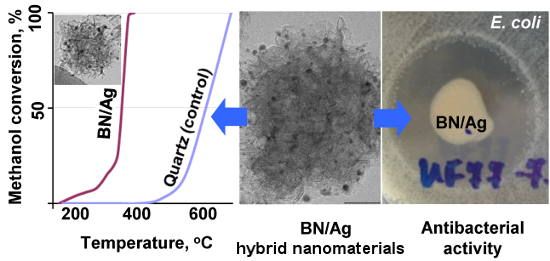
- only improve the colloidal stability of Ag NPs but also improve their antibacterial characteristics. A wide range of materials, such as graphene oxide [30][31], carbon nanotubes [32], SiO2 [33], Fe3O4 [34], ZnO [35], CuO [36], TiO2 [37] and others, have been tested as the supports for Ag NPs. Compared





Dopant-stimulated growth of GaN nanotube-like nanostructures on Si(111) by molecular beam epitaxy
Beilstein J. Nanotechnol. 2018, 9, 146–154, doi:10.3762/bjnano.9.17
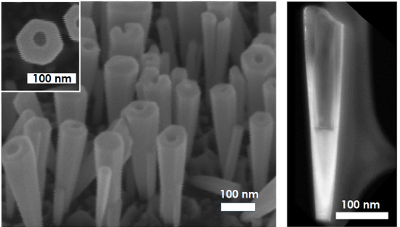
- ) formation of a GaN shell over the NW template (e.g., ZnO) followed by the template NW removal [14]; 3) selective area molecular beam epitaxy (MBE) growth of GaN on sapphire (111) substrates over titanium mask [15]; and 4) MBE deposition of GaN on Si(111) substrates covered by a silicon oxide layer in the


Gas-sensing behaviour of ZnO/diamond nanostructures
Beilstein J. Nanotechnol. 2018, 9, 22–29, doi:10.3762/bjnano.9.4
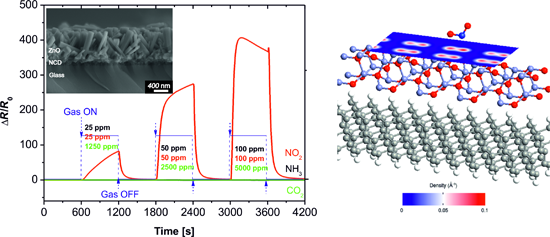
- -terminated nanocrystalline diamond (NCD) films and/or n-type ZnO nanorods (NRs) have been obtained via a facile microwave-plasma-enhanced chemical vapour deposition process or a hydrothermal growth procedure. The morphology and crystal structure of the synthesized materials was analysed with scanning
- electron microscopy, X-ray diffraction measurements and Raman spectroscopy. The gas sensing properties of the sensors based on i) NCD films, ii) ZnO nanorods, and iii) hybrid ZnO NRs/NCD structures were evaluated with respect to oxidizing (i.e., NO2, CO2) and reducing (i.e., NH3) gases at 150 °C. The
- hybrid ZnO NRs/NCD sensor showed a remarkably enhanced NO2 response compared to the ZnO NRs sensor. Further, inspired by this special hybrid structure, the simulation of interaction between the gas molecules (NO2 and CO2) and hybrid ZnO NRs/NCD sensor was studied using DFT calculations. Keywords


Fabrication of CeO2–MOx (M = Cu, Co, Ni) composite yolk–shell nanospheres with enhanced catalytic properties for CO oxidation
Beilstein J. Nanotechnol. 2017, 8, 2425–2437, doi:10.3762/bjnano.8.241
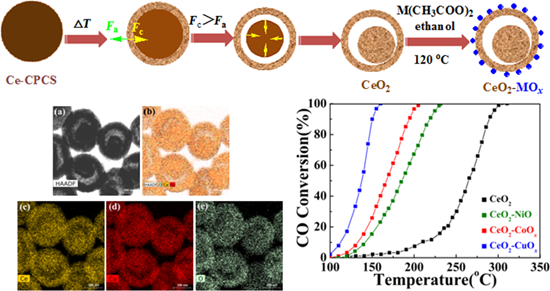
- noble metal-based catalysts in some catalytic reactions [11][12]. So far, a remarkable process has been developed for the synthesis of CeO2-based composite oxides, including CeO2–CuOx [13], CeO2–ZnCo2O4 [14], CeO2–CoOx [15], CeO2–MnOx [16], CeO2–ZnO [17], CeO2–Fe2O3 [18], and CeO2–ZrO2 systems [19
- synthesized by thermal decomposition of the as-prepared Ce–Zn precursor and exhibited excellent activity for removing CO [17]. CeO2–ZnO composite hollow microspheres were fabricated via annealing of a precursor of amorphous zinc–cerium citrate hollow microspheres and presented excellent catalytic activity in






Hydrothermal synthesis of ZnO quantum dot/KNb3O8 nanosheet photocatalysts for reducing carbon dioxide to methanol
Beilstein J. Nanotechnol. 2017, 8, 2264–2270, doi:10.3762/bjnano.8.226
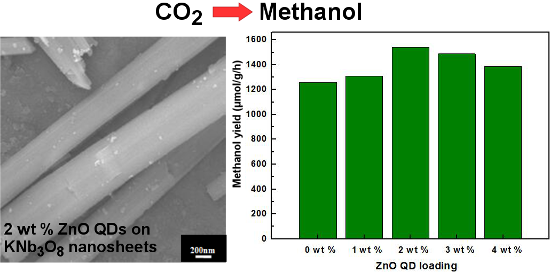
- , East China University of Science and Technology, Shanghai 200237, China 10.3762/bjnano.8.226 Abstract ZnO quantum dots and KNb3O8 nanosheets were synthesized by a two-step hydrothermal method for the photocatalytic reduction of CO2 to methanol where isopropanol is simultaneously oxidized to acetone
- materials was evaluated by formation rate of methanol under UV light irradiation at ambient temperature and pressure. The methanol formation rate of pure KNb3O8 nanosheets was found to be 1257.21 μmol/g/h, and after deposition of 2 wt % ZnO quantum dots on the surface of KNb3O8 nanosheets, the methanol
- production rate was found to increase to 1539.77 μmol/g/h. Thus, the ZnO quantum dots obviously prompted separation of charge carriers, which was explained by a proposed mechanism for this photocatalytic reaction. Keywords: CO2 reduction; KNb3O8 nanosheets; methanol production; photocatalysis; ZnO quantum




Growth and characterization of textured well-faceted ZnO on planar Si(100), planar Si(111), and textured Si(100) substrates for solar cell applications
Beilstein J. Nanotechnol. 2017, 8, 1939–1945, doi:10.3762/bjnano.8.194
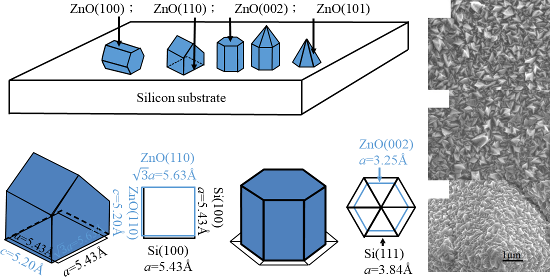
- and Center for Nanoscience and Nanotechnology, National Sun Yat-Sen University, Kaohsiung, Taiwan, R.O.C 10.3762/bjnano.8.194 Abstract In this work, textured, well-faceted ZnO materials grown on planar Si(100), planar Si(111), and textured Si(100) substrates by low-pressure chemical vapor deposition
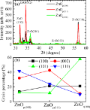
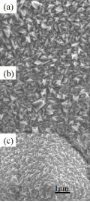
- (LPCVD) were analyzed by X-ray diffraction (XRD), scanning electron microscopy (SEM), atomic force microscopy (AFM), and cathode luminescence (CL) measurements. The results show that ZnO grown on planar Si(100), planar Si(111), and textured Si(100) substrates favor the growth of ZnO(110) ridge-like, ZnO
- (002) pyramid-like, and ZnO(101) pyramidal-tip structures, respectively. This could be attributed to the constraints of the lattice mismatch between the ZnO and Si unit cells. The average grain size of ZnO on the planar Si(100) substrate is slightly larger than that on the planar Si(111) substrate



![[Graphic 2]](/bjnano/content/inline/2190-4286-8-194-i4.png?max-width=637&scale=1.18182) × lattice constant a) by 5.20 Å (l...
× lattice constant a) by 5.20 Å (l...


Two-dimensional carbon-based nanocomposites for photocatalytic energy generation and environmental remediation applications
Beilstein J. Nanotechnol. 2017, 8, 1571–1600, doi:10.3762/bjnano.8.159
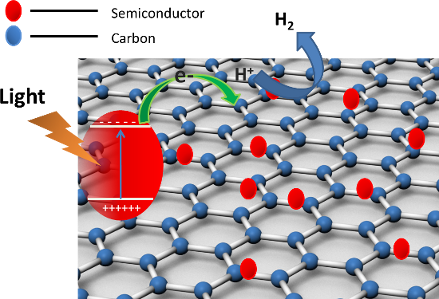
- ]. Hence, in the recent decade, heterogeneous photocatalysis has been widely explored for the conversion of solar energy into chemical energy and for pollutant removal from water [11][12]. Up to now, various interesting semiconductors such as TiO2, ZnO, WO3, CdS, Bi2O3, Fe2O3, SnO2, BiVO4, etc. have been
- coupling with semiconductor materials such as TiO2 [73], ZnO [74], CdS [75], SnO2 [76], CeO2 [77], WO3 [78], Fe2O3 [79], Ag3PO4 [80], Ag3VO4 [81], ZnWO4 [82], SrTiO3 [83], BiVO4 [84], Bi2WO6 [85], BiOX [86][87], etc. These heterojunction formations have proved to be an effective method to improve the


Metal oxide nanostructures: preparation, characterization and functional applications as chemical sensors
Beilstein J. Nanotechnol. 2017, 8, 1205–1217, doi:10.3762/bjnano.8.122
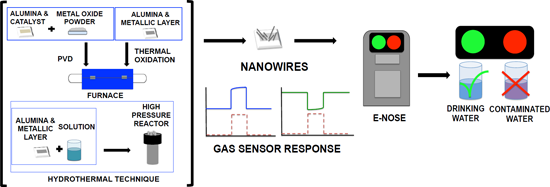
- characterization of different metal oxide (NiO, WO3, ZnO, SnO2 and Nb2O5) nanostructures for chemical sensing are presented. p-Type (NiO) and n-type (WO3, SnO2, ZnO and Nb2O5) metal oxide nanostructures were grown on alumina substrates using evaporation–condensation, thermal oxidation and hydrothermal techniques
- nanostructures Evaporation–condensation technique: NiO, SnO2 and ZnO Evaporation–condensation allows one to obtain disordered mats of nanowires, covering the area of substrates with the catalyst. Figure 1 (top) shows the FE-SEM images of NiO nanowires at different magnifications, while Figure 1 (middle) and
- Figure 1 (bottom) report SnO2 nanowires and ZnO nanowires, respectively. Nanowires were directly grown on the active substrates used for functional characterization. It has been observed that the NiO nanowires were grown thin and long and they showed a dense morphology covering the whole substrate. The


Atomic structure of Mg-based metallic glass investigated with neutron diffraction, reverse Monte Carlo modeling and electron microscopy
Beilstein J. Nanotechnol. 2017, 8, 1174–1182, doi:10.3762/bjnano.8.119
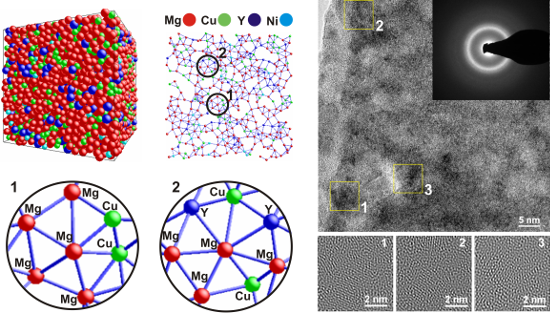
- pure and doped ZnO films with thickness from 50 to 200 nm, which contained equiaxial grains of about 20 nm length. Moreover, the ZnO films exhibited ferromagnetic behavior. The structure of the ribbons in the as-cast state was preliminary checked by conventional X-ray diffraction (XRD) in the




ZnO nanoparticles sensitized by CuInZnxS2+x quantum dots as highly efficient solar light driven photocatalysts
Beilstein J. Nanotechnol. 2017, 8, 1080–1093, doi:10.3762/bjnano.8.110
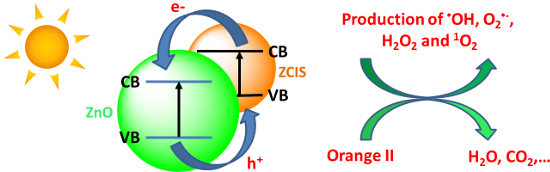
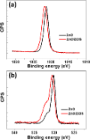
- (IJL), UMR CNRS 7198, BP 70239, 54506 Vandoeuvre-lès-Nancy Cedex, France Institut de Science des Matériaux de Mulhouse (IS2M), CNRS UMR 7361, 15 rue Jean Starcky, 68093 Mulhouse, France 10.3762/bjnano.8.110 Abstract Alloyed CuInZnxS2+x (ZCIS) quantum dots (QDs) were successfully associated to ZnO
- nanoparticles by a thermal treatment at 400 °C for 15 min. The ZnO/ZCIS composite was characterized by TEM, SEM, XRD, XPS and UV–vis absorption spectroscopy. ZCIS QDs, with an average diameter of ≈4.5 nm, were found to be homogeneously distributed at the surface of ZnO nanoparticles. ZCIS-sensitized ZnO
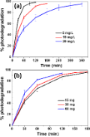
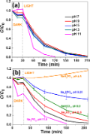
- nanoparticles exhibit a high photocatalytic activity under simulated solar light irradiation for the degradation of Orange II dye (>95% degradation after 180 min of irradiation at an intensity of 5 mW/cm2). The heterojunction built between the ZnO nanoparticle and ZCIS QDs not only extends the light adsorption





Treatment of fly ash from power plants using thermal plasma
Beilstein J. Nanotechnol. 2017, 8, 1043–1048, doi:10.3762/bjnano.8.105
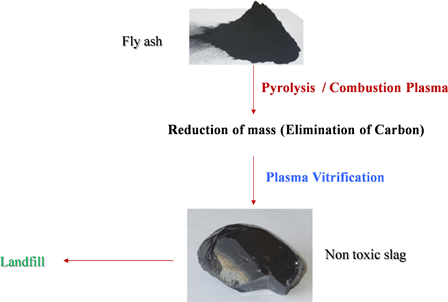
- contributions of K2O, TiO2, ZnO, Cr2O3, CuO, and RuO2 were detected. The concentrations of product elements measured by ICP-AES are summarized in Table 1. The product has the same major and minor constituents of the feed (Table 1) and also contains toxic elements. As indicated before, fly ash has a high level



Needs and challenges for assessing the environmental impacts of engineered nanomaterials (ENMs)
Beilstein J. Nanotechnol. 2017, 8, 989–1014, doi:10.3762/bjnano.8.101

- nanoparticles in human volunteers and quantum dots ‘QDs’ in rat skin) and cause irritation (e.g., nano ZnO in zebrafish models) [10]. Oral exposure to ENMs can result in subsequent absorption in the GI tract and organ damage (e.g., nano Cu in mice via oral gavage damaged liver, spleen and kidneys, and nano ZnO
- risk communication strategies. The use of NanoRiskCat was demonstrated for categorization of the following ENM containing products: cleansing soap (containing nano Ag), tennis rackets (CNTs), automotive oil (Fullerene C60), and sunblock (nano ZnO), among others [35]. NanoRiskCat analysis concluded that

Synthesis of graphene–transition metal oxide hybrid nanoparticles and their application in various fields
Beilstein J. Nanotechnol. 2017, 8, 688–714, doi:10.3762/bjnano.8.74
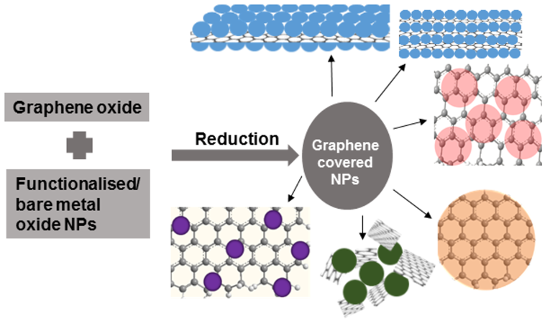
- oxide (ZnO)–graphene hybrids Most of the reports of graphene hybrid systems are related to ZnO NPs, as it is very easy to control the size and morphology of ZnO NPs as well as the properties of the material. ZnO is an important II–VI semiconductor with large direct band gap of 3.37 eV and large exciton
- binding energy of 60 meV. It has been extensively studied because of its potential application in solar cells, sensors, diode lasers, piezoelectric devices, as surface acoustic wave propagators, antibacterial agents and ultraviolet light emitters. Graphene-based ZnO hybrids proved to be promising
- materials having a much wider range of applications in the field of energy conversion and storage, such as catalysts and in optoelectronics. Comprehensive work has been done to prepare graphene-wrapped ZnO NPs for better performance in optoelectronics applications. Single-layer graphene-wrapped ZnO NPs