Search results
Search for "aqueous solutions" in Full Text gives 215 result(s) in Beilstein Journal of Nanotechnology. Showing first 200.
α-((4-Cyanobenzoyl)oxy)-ω-methyl poly(ethylene glycol): a new stabilizer for silver nanoparticles
Beilstein J. Nanotechnol. 2017, 8, 627–635, doi:10.3762/bjnano.8.67
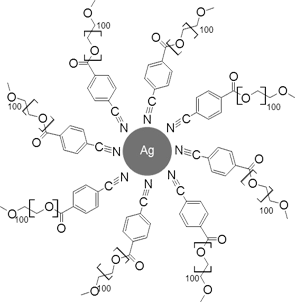
- , E) GPC data of CBAmPEG. NMR and IR bands are listed in the Experimental section. TEM images of A) citrate@SNPs and B) CBAmPEG@SNPs. C) Raman spectra of aqueous solutions or suspensions of CBAmPEG, CBAmPEG@SNPs, and citrate@SNPs. A detailed assignment of the Raman bands is given in the Experimental


Uptake of the proteins HTRA1 and HTRA2 by cells mediated by calcium phosphate nanoparticles
Beilstein J. Nanotechnol. 2017, 8, 381–393, doi:10.3762/bjnano.8.40
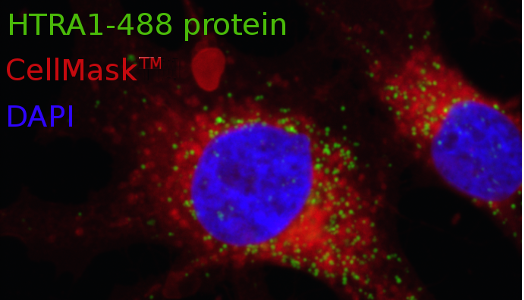
- described in the following, according to synthetic procedures described previously [7][46]. Aqueous solutions of calcium nitrate (6.25 mM; Merck p.a.) and diammonium hydrogen phosphate (3.74 mM; Merck p.a.) were rapidly mixed by pumping them into a glass vessel with a peristaltic pump. The pH of both


Association of aescin with β- and γ-cyclodextrins studied by DFT calculations and spectroscopic methods
Beilstein J. Nanotechnol. 2017, 8, 348–357, doi:10.3762/bjnano.8.37
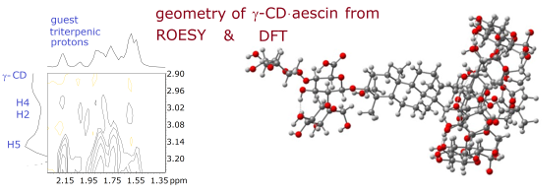
- variation method In the evaluation of the interaction of cyclodextrin with a guest molecule in aqueous solution, one first needs to investigate the stoichiometry [26]. For this, the continuous variation method (Job plot) [27] was employed. This assay consists in mixing aqueous solutions of host and guest in
- solution, most likely the 2:1 γ-CD/aescin species. Apparent association constant The samples used for the calculation of the apparent association constant (Kapp) comprised aqueous solutions with a fixed concentration of cyclodextrin and variable concentrations of aescin (in excess from five to ten folds


Nanoscale isoindigo-carriers: self-assembly and tunable properties
Beilstein J. Nanotechnol. 2017, 8, 313–324, doi:10.3762/bjnano.8.34
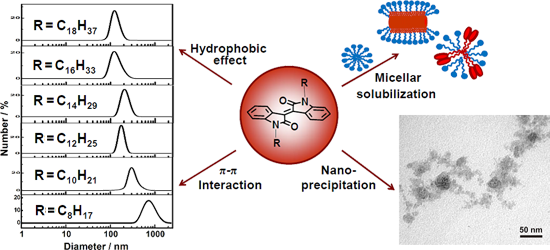
- large aggregates of 500 to 700 nm in size. We failed to prepare nanoparticles for high homologues 1g and 3 through the nanoprecipitation technique. It is known that size and morphology of aggregates in aqueous solutions are markedly determined by hydrophilic-lipophilic balance. This is probably due to




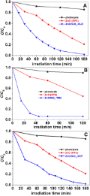
Photocatalysis applications of some hybrid polymeric composites incorporating TiO2 nanoparticles and their combinations with SiO2/Fe2O3
Beilstein J. Nanotechnol. 2017, 8, 272–286, doi:10.3762/bjnano.8.30
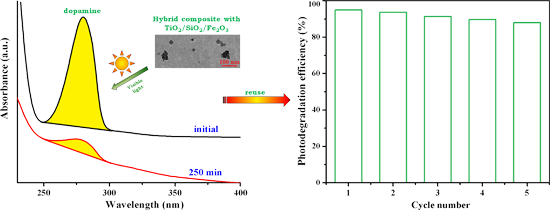
- degrading hydroxybenzene derivatives under UV and visible light, was investigated using hybrid films in aqueous solutions. The motivation for this selection is that the phenolic compounds play a major role among the various organic pollutants that cause environmental hazard, being a part of the widely used
- is completely removed from the aqueous solutions. The lack of photocatalytic activity of S1 (with TiO2) and S2 (TiO2/SiO2) hybrid films under visible light may be related to the absorption of TiO2 NPs in the UV region. On the other hand, the presence of Fe3+ cation extends the UV–vis absorption of
- In a manner analogous to [59], the photocatalytic activity of the synthesized hybrid films was evaluated following the degradation of phenol, hydroquinone or dopamine in aqueous solutions under ambient conditions and UV–visible irradiation. A piece of each composite film (1 g) was added into 50 mL of


Performance of colloidal CdS sensitized solar cells with ZnO nanorods/nanoparticles
Beilstein J. Nanotechnol. 2017, 8, 210–221, doi:10.3762/bjnano.8.23
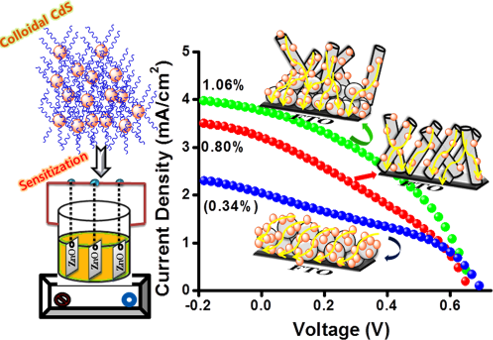
- synthesized using a BSA-mediated process under sonication. Aqueous solutions of 0.1 M Cd(NO3)2·4H2O and 1.25 × 10⁻⁶ M (BSA) were sonicated (ultrasonic probe, Rivotek, 30 kHz, 250 W) for 45 min followed by immediate dropwise addition of 0.1 M Na2S until the pH of the resultant solution reached ≈4. The


Surface-enhanced Raman scattering of self-assembled thiol monolayers and supported lipid membranes on thin anodic porous alumina
Beilstein J. Nanotechnol. 2017, 8, 74–81, doi:10.3762/bjnano.8.8
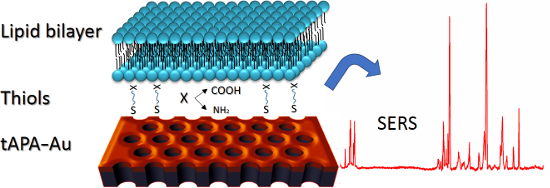
- , to let the sulfur of the –SH group bind covalently to the Au surface (chemisorption). The substrates were then gently washed with their aqueous solutions and dried under nitrogen flow. All the lipids were dissolved in chloroform/methanol 2:1 vol/vol, dried under a gentle nitrogen flux in a test tube



A dioxaborine cyanine dye as a photoluminescence probe for sensing carbon nanotubes
Beilstein J. Nanotechnol. 2016, 7, 1991–1999, doi:10.3762/bjnano.7.190
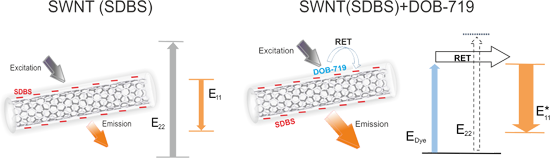
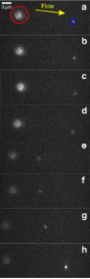
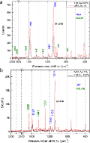
- coded in red colour, whereas low intensities are coded in blue colour. The concentration of DOB-719 in panel (b) is 0.001 mg/mL. Absorption spectra in (a) the visible and (b) the NIR range for dispersions of SWNT (1), aqueous solutions of neat DOB-719 (2), as-prepared mixtures of DOB-719 with SWNT (3
- ), and (8,4), respectively. The RET from the dye to the SWNT at λEX = 735 nm is indicated in panels b–d. PLE maps of aqueous solutions for (a) the as-prepared and (b) aged neat DOB-719 as well as (c) the as-prepared and (d) aged mixtures of DOB-719 with SWNTs in water. High PL intensities are coded in


Organoclay hybrid materials as precursors of porous ZnO/silica-clay heterostructures for photocatalytic applications
Beilstein J. Nanotechnol. 2016, 7, 1971–1982, doi:10.3762/bjnano.7.188
- ± 0.5 °C inside the reactor controlled by a thermostatic bath. This temperature below room temperature was chosen to minimize water evaporation. Batch tests were performed using aqueous solutions of MB and ibuprofen. To a volume of 100 mL containing a 3·10−5 mol·L−1 MB water solution, were added 20 mg





Evolution of the graphite surface in phosphoric acid: an AFM and Raman study
Beilstein J. Nanotechnol. 2016, 7, 1878–1884, doi:10.3762/bjnano.7.180
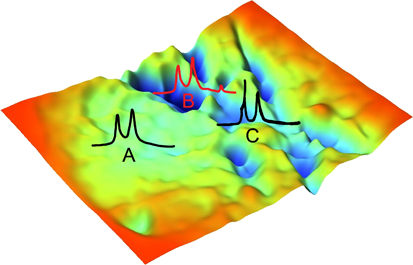
- spectroscopy investigation. Keywords: atomic force microscopy (AFM); electrochemical atomic force microscopy (EC-AFM); electrochemical delamination of graphite; graphene; phosphoric acid; Raman spectroscopy; Introduction Sulfuric (H2SO4), perchloric (HClO4) and phosphoric (H3PO4) acid in aqueous solutions


3D printing of mineral–polymer bone substitutes based on sodium alginate and calcium phosphate
Beilstein J. Nanotechnol. 2016, 7, 1794–1799, doi:10.3762/bjnano.7.172
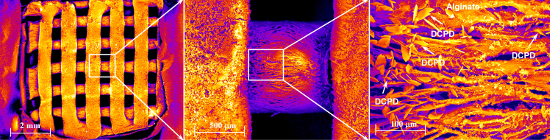
- Discussion 3D printing is a powerful tool for the production of custom-designed and complex bone substitutes [2][3]. In our work, the fabrication of 3D composite structures was performed using a binary system based on aqueous solutions of sodium alginate containing PO43− groups. A calcium chloride aqueous
- binary system based on aqueous solutions of sodium alginate. The polymer slurry of sodium alginate (CAS number 9005-38-3) with concentrations of 0.25, 1.0 and 2.0 wt % was prepared in distilled water in presence of glutamic acid (C5H9NO4) (CAS number 56-86-0) with concentrations of 0.25, 1.0 and 2.0 wt


Role of RGO support and irradiation source on the photocatalytic activity of CdS–ZnO semiconductor nanostructures
Beilstein J. Nanotechnol. 2016, 7, 1684–1697, doi:10.3762/bjnano.7.161
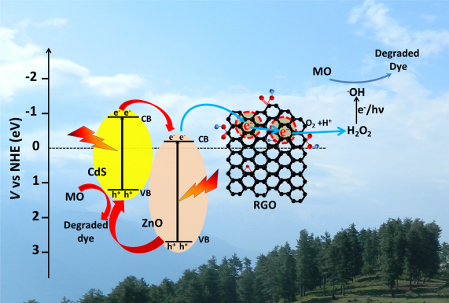
- [11], ozonization [12] and adsorption [13], as these methods are unable to remove the contaminants completely. Some recent studies have reported ZnO as a better photocatalytic material in the degradation of organic dyes in aqueous solutions, because of high charge carrier mobility and significantly
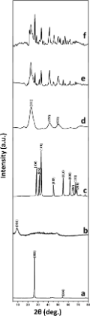


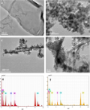


Influence of hydrothermal synthesis parameters on the properties of hydroxyapatite nanoparticles
Beilstein J. Nanotechnol. 2016, 7, 1586–1601, doi:10.3762/bjnano.7.153
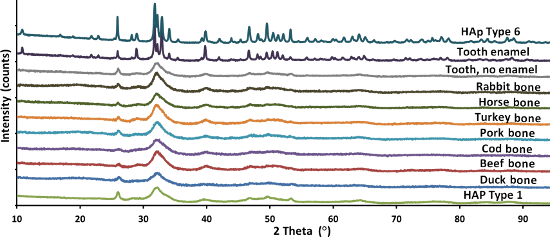
- chemistry techniques, such as direct precipitation from aqueous solutions, electrochemical deposition [23], sol–gel processes [24] and hydrothermal synthesis [25][26][27] (Table 1). In the majority of cases, the synthesized powder is a stoichiometric hydroxyapatite, and oftentimes contains additional phases


Development of adsorptive membranes by confinement of activated biochar into electrospun nanofibers
Beilstein J. Nanotechnol. 2016, 7, 1556–1563, doi:10.3762/bjnano.7.149
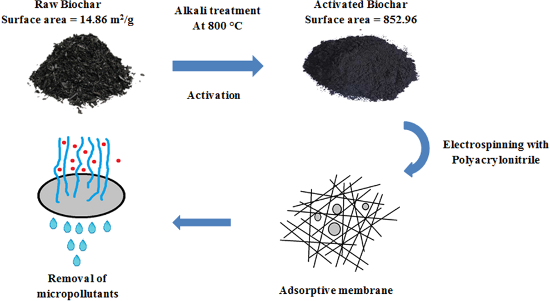
- affinity towards metallic ions, such as copper and lead [13]. In a similar study, Aliabadi et al. used PEO/Chitosan for NFM fabrication to remove nickel, cadmium, lead and copper from aqueous solutions and reported no considerable change in the adsorption capacity after five cycles [14]. Also, there are




Antitumor magnetic hyperthermia induced by RGD-functionalized Fe3O4 nanoparticles, in an experimental model of colorectal liver metastases
Beilstein J. Nanotechnol. 2016, 7, 1532–1542, doi:10.3762/bjnano.7.147
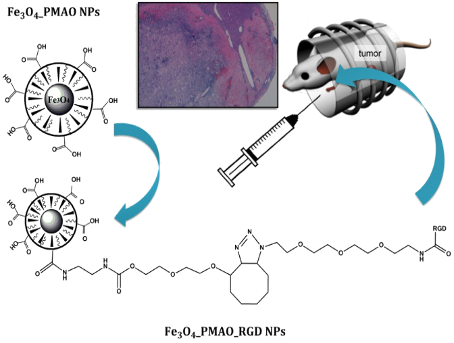
- hydrodynamic size for Fe3O4@PMAO_RGD (in a 1:10 PBS/H2O solution) nanoparticles increased until the particles reached a diameter of 111 nm. The zeta potential value at 24 h confirms the high stability of the aqueous solutions of Fe3O4@PMAO (−41 mV), but the stability decreases until −15 mV when RGD is adhered


Photothermal effect of gold nanostar patterns inkjet-printed on coated paper substrates with different permeability
Beilstein J. Nanotechnol. 2016, 7, 1480–1485, doi:10.3762/bjnano.7.140
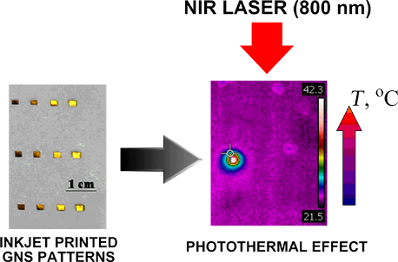
- intense LSPR extinction band in the NIR range (750–1100 nm), finely regulated through the synthesis conditions [18]. Previously, it was demonstrated that this type of GNS is photothermally active under NIR irradiation both in aqueous solutions and as monolayers grafted on dry glass surface, displaying
- linear dependence as a function of laser irradiance up to I ≈ 0.2 W/cm2 [27][28]. This effect was much higher than in case of previously studied GNS aqueous solutions and of monolayers of GNS on a glass surface under NIR irradiation. However, the dependence of the photothermal effect was not linear with
- increase achieved on the printed GNS patterns under ambient conditions compared to the values previously reported for GNS in aqueous solutions [17][30] is likely due to the absence of the thermal dissipation from the bulk solvent (water) that has a high thermal capacity compared to air (see the model


Functional diversity of resilin in Arthropoda
Beilstein J. Nanotechnol. 2016, 7, 1241–1259, doi:10.3762/bjnano.7.115
- by single conventional dyes. Chemical reactions with the Masson and Mallory dyes were mentioned to stain resilin red. Staining of resilin with aqueous solutions of methylene blue and toluidine blue is a common method and can provide good information about the presence and distribution of resilin


Influence of synthesis conditions on microstructure and phase transformations of annealed Sr2FeMoO6−x nanopowders formed by the citrate–gel method
Beilstein J. Nanotechnol. 2016, 7, 1202–1207, doi:10.3762/bjnano.7.111
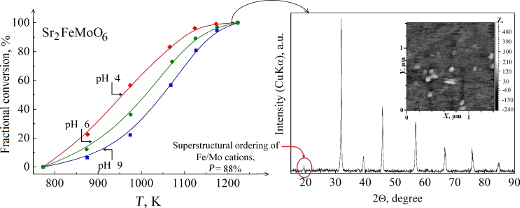
- citric acid monohydrate C6H8O7·H2O (99.9%) as starting materials. First, the aqueous solutions of 0.4 mol dm−3 Sr(NO3)2 and 2 mol dm−3 Fe(NO3)3 were mixed in a molar ratio of Sr/Fe 2:1, and then citric acid was added to the solution in a molar ratio of citric acid/Fe 6.5:1. After this, the 0.2 mol dm−3



Fast diffusion of silver in TiO2 nanotube arrays
Beilstein J. Nanotechnol. 2016, 7, 1129–1140, doi:10.3762/bjnano.7.105
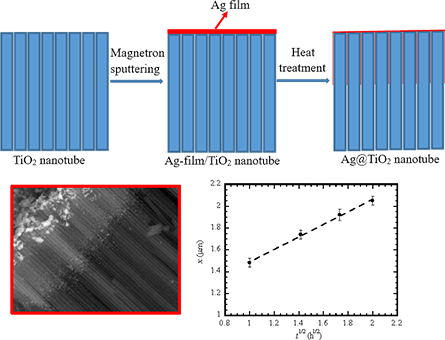
- aqueous solutions. In addition, the technique of magnetron sputtering has been used to deposit Ag nanostructures on the surface of TiO2 nanotube arrays. It is worth mentioning that Enachi et al. [25] heat-treated the TiO2 nanotube arrays after the deposition of Ag film of 50 nm on the top surface of TiO2
- nanotubes prepared by the methods involving aqueous solutions, Ag nanocrystals were formed on the outmost surface of TiO2 nanotubes. There probably were hardly any Ag nanocrystals formed inside the TiO2 nanotubes through the migration of Ag. Such a result reveals that Ag atoms prefer to migrate/diffuse on


The influence of phthalocyanine aggregation in complexes with CdSe/ZnS quantum dots on the photophysical properties of the complexes
Beilstein J. Nanotechnol. 2016, 7, 1018–1027, doi:10.3762/bjnano.7.94
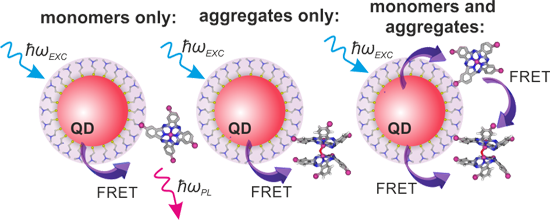
- acquire a negative charge. Therefore, mixing of aqueous solutions of DMAET QDs and PcSz leads to the formation of QD–DMAET–PcSz complexes as a result of the electrostatic interaction between phthalocyanine and positive DMAET solubilizer molecules on the surface of the QDs. Figure 1b shows the scheme of
- [38][39] using Rhodamine 6G in ethanol (φR = 0.95) [45] as a reference fluorophore. Photosens® has a PL QY of ca. 12% in aqueous solution [41]. The QD samples have a PL QY > 20% in hydrophobic solvents and of about 10% in aqueous solutions. Light with wavelengths of 475 and 640 nm was used for PL



Reconstitution of the membrane protein OmpF into biomimetic block copolymer–phospholipid hybrid membranes
Beilstein J. Nanotechnol. 2016, 7, 881–892, doi:10.3762/bjnano.7.80
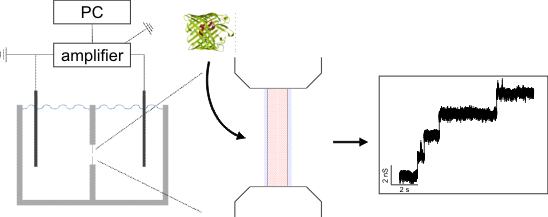
- (DPhPC). To vary the membrane thickness, PIPEO with three different molecular weights were chosen from a library of various PIPEO, which we had synthesized in an attempt to design new amphiphilic molecules that self-assemble in aqueous solutions into membranes (unpublished results). PIPEO was used
- -block-ethylene oxide) block copolymers (PIPEO) were designed at poly(isoprene) (PI) to poly(ethylene oxide) (PEO) ratios that are known to foster the formation of polymeric bilayers in aqueous solutions [19][20][51]. The three copolymers PIPEO877 (1), PIPEO1530 (2) and PIPEO3188 (3) were synthesized
- monomer-activated approach [52]. However, an incomplete initiation of the second block could be excluded as side reaction since no tailing within the size exclusion chromatography traces has been observed. Thus, effects on the self-assembly behavior of the block copolymers in aqueous solutions were not



Efficient electron-induced removal of oxalate ions and formation of copper nanoparticles from copper(II) oxalate precursor layers
Beilstein J. Nanotechnol. 2016, 7, 852–861, doi:10.3762/bjnano.7.77
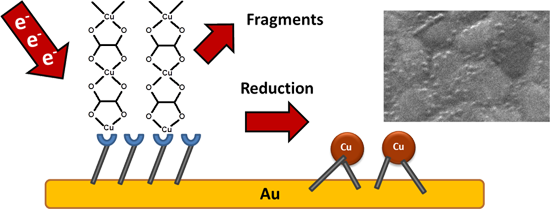
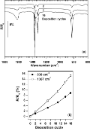
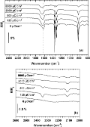
- ][12][13] and molten [5] metal salts or their aqueous solutions [6][8] as well as in polymers loaded with metal salts [14][15][16][17], metal-organic frameworks [18] and spin-coated assemblies [19]. Independent of the width and energy of the electron beam, the purity of the deposited material [18][20


Antibacterial activity of silver nanoparticles obtained by pulsed laser ablation in pure water and in chloride solution
Beilstein J. Nanotechnol. 2016, 7, 465–473, doi:10.3762/bjnano.7.40
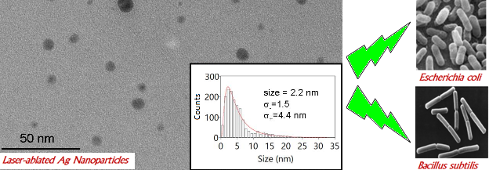
- water or in aqueous solutions of LiCl using a 1064 nm ablation wavelength. Then, the obtained AgNPs were characterized and tested for antimicrobial activity against Escherichia coli and Bacillus subtilis as references for Gram-negative and Gram-positive bacteria, respectively. Results AgNP


Surface coating affects behavior of metallic nanoparticles in a biological environment
Beilstein J. Nanotechnol. 2016, 7, 246–262, doi:10.3762/bjnano.7.23
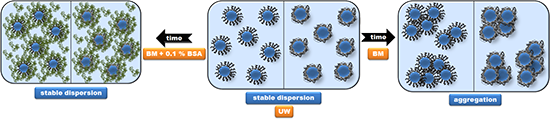
- screening of the biocompatibility and colloidal stability of metallic NPs in biological environments. The obtained results have shown that the agglomeration behavior of metallic NPs in aqueous solutions with the pH and ionic strength close to biological fluids depends on the surface coating. This study
- solution was injected into the boiling aqueous solutions of AsA (just after 1 min boiling after AsA addition to boiling water). The final concentrations of reactants were 0.673 mM for sodium citrate, 0.3 mM for AgNO3 and 0.1 μM for AsA. The color of the reaction solution quickly changed from colorless to




Single-molecule mechanics of protein-labelled DNA handles
Beilstein J. Nanotechnol. 2016, 7, 138–148, doi:10.3762/bjnano.7.16
- from Sigma-Aldrich (Dublin, Ireland). All aqueous solutions were prepared using nanopure water from a Millipore Milli-Q system, additionally filtered with 0.22 µm pore size filters. We used TICO buffer (20 mM HEPES-KOH, pH 7.5, 6 mM magnesium acetate, 30 mM ammonium acetate, 4 mM 2-mercaptoethanol) to