


Search results
Search for "chemical vapor deposition" in Full Text gives 239 result(s) in Beilstein Journal of Nanotechnology. Showing first 200.
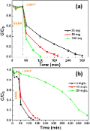
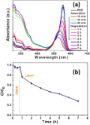
CdSe nanorod/TiO2 nanoparticle heterojunctions with enhanced solar- and visible-light photocatalytic activity
Beilstein J. Nanotechnol. 2017, 8, 2741–2752, doi:10.3762/bjnano.8.273
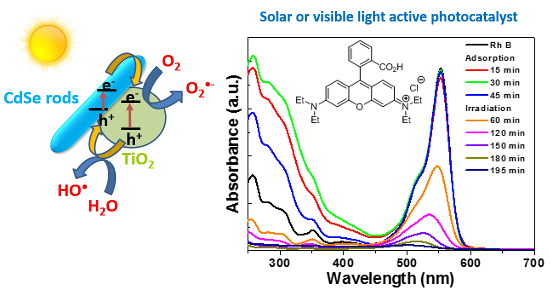
- . used chemical vapor deposition to associate CdS, CdSe or CdSeS rods to TiO2 NRs arrays and demonstrated that the CdSeS/TiO2 heterostructure exhibits the highest performances as photoelectrode [39]. More recently, small CdSe NRs [40] or type II CdSe/CdSexTe1−x NRs [41] were also used as light harvesters






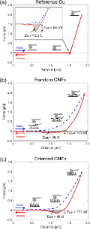
Dry adhesives from carbon nanofibers grown in an open ethanol flame
Beilstein J. Nanotechnol. 2017, 8, 2719–2728, doi:10.3762/bjnano.8.271
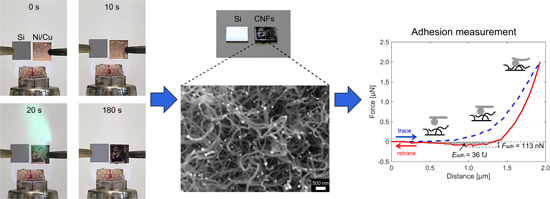
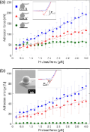
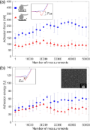
- in a closed chamber. The standard process for their growth is chemical vapor deposition (CVD) [3], which results in randomly oriented structures, whereas a plasma-enhanced CVD (PECVD) [4] allows for the growth of aligned structures. During growth of 1D-CNs, oxidized catalytic centers reduce into


One-step chemical vapor deposition synthesis and supercapacitor performance of nitrogen-doped porous carbon–carbon nanotube hybrids
Beilstein J. Nanotechnol. 2017, 8, 2669–2679, doi:10.3762/bjnano.8.267
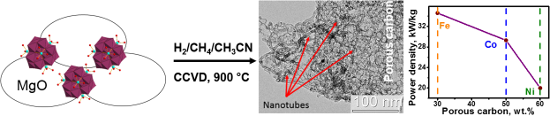
- , 630090 Novosibirsk, Russia, Institute of Coal Chemistry and Materials Science FRC CCC SB RAS, Kemerovo 650000, Russia 10.3762/bjnano.8.267 Abstract Novel nitrogen-doped carbon hybrid materials consisting of multiwalled nanotubes and porous graphitic layers have been produced by chemical vapor deposition
- prepared hybrid materials [6][7][8][9]. Another less common strategy consists of CNT growth by catalytic chemical vapor deposition (CCVD) over catalyst nanoparticles predeposited on the graphitic surfaces [10][11][12][13]. The obtained hybrids are characterized by tight bonding between the components


Synthesis of [{AgO2CCH2OMe(PPh3)}n] and theoretical study of its use in focused electron beam induced deposition
Beilstein J. Nanotechnol. 2017, 8, 2615–2624, doi:10.3762/bjnano.8.262
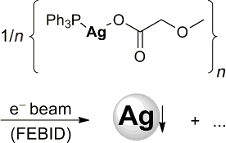
- beam induced deposition (FEBID) is a cost efficient direct resist-free chemical vapor deposition technique producing free-standing 3D metal-containing nanoscale structures in a single step on, for example, surfaces of sub-10 nm size using a variety of materials with a high degree of spatial and time
- -domain control [1][2][3]. Up to now, FEBID relies on the chemical availability of chemical vapor deposition (CVD) precursors. However, such precursors are not optimized for the electron-driven FEBID process and hence molecular precursors particularly adapted to its underlying electron-induced
- -bonded PPh3 group could be detected under the measurement conditions applied (Experimental, Figure 5). To show, if 2 is a suitable FEBID or chemical vapor deposition (CVD) precursor for the deposition of silver, vapor pressure measurements of 2 were undertaken (Figure 6). In order to determine the


Localized growth of carbon nanotubes via lithographic fabrication of metallic deposits
Beilstein J. Nanotechnol. 2017, 8, 2592–2605, doi:10.3762/bjnano.8.260
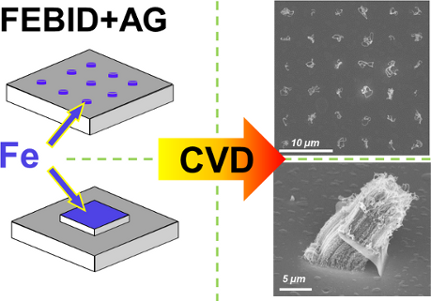
- morphology, for example, as individual nanotubes or as CNT forests. Electron beam induced deposition (EBID) with subsequent autocatalytic growth (AG) was applied to lithographically produce catalytically active seeds for the localized growth of CNTs via chemical vapor deposition (CVD). With the precursor Fe
- storage [1][2][3][4]. The most common synthesis method for CNTs is chemical vapor deposition (CVD) [5][6][7][8], in which statistically distributed, metal-containing particles act as catalysts for CNT growth. Thereby, not only does the random position of the catalyst particles determine the position of
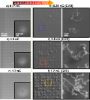
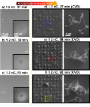
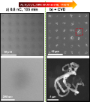
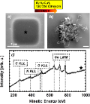
- (300:30:30 sccm). (d) Auger electron spectrum of the indicated Fe deposit. SEM micrographs of Fe EBID deposits before and after the chemical vapor deposition (CVD) experiment (1163 K, N2:H2:C2H4 300:30:30 sccm). Fe deposits fabricated with (a) 0.25 nC, (b) 0.5 nC, (c) 1.2 nC electron dose per point. (d




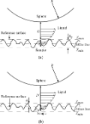
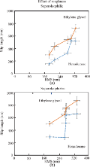
Interface conditions of roughness-induced superoleophilic and superoleophobic surfaces immersed in hexadecane and ethylene glycol
Beilstein J. Nanotechnol. 2017, 8, 2504–2514, doi:10.3762/bjnano.8.250
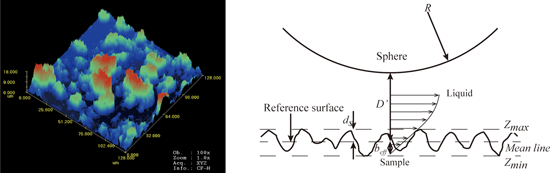
- function layer (thickness ca. 20 nm) by chemical vapor deposition (CVD), one drop (about 0.1 mL) of methyltrichlorosilane (methylsilane, Sigma Aldrich) was placed next to the samples under sealing and left for 10 h. To prepare the superoleophobic surface, the same materials and processes as for





Increasing the stability of DNA nanostructure templates by atomic layer deposition of Al2O3 and its application in imprinting lithography
Beilstein J. Nanotechnol. 2017, 8, 2363–2375, doi:10.3762/bjnano.8.236
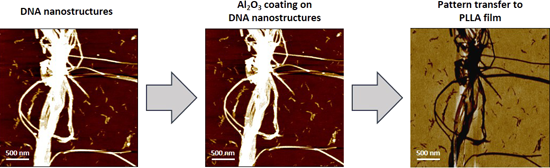
- the exposed substrate through shadow gaps was etched to generate trenches with linewidths of sub-10 nm resolution [32]. By differentiating the adsorption of water between DNA nanostructures and a SiO2 substrate, the rates of HF vapor-phase etching of the SiO2 substrate [33] and of chemical vapor
- deposition of SiO2 and TiO2 on the DNA nanostructures and the substrate [34] were modulated to replicate the patterns of the DNA nanostructures into those of the inorganic oxides. In both cases, the patterns of the nanostructures were transferred in both positive tone and negative tone at room temperature



Changes of the absorption cross section of Si nanocrystals with temperature and distance
Beilstein J. Nanotechnol. 2017, 8, 2315–2323, doi:10.3762/bjnano.8.231
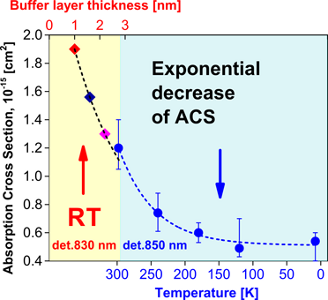
- of silicon-rich silicon oxynitride (SRON: SiOxNy) with 4.5 nm thickness and of stoichiometric SiO2 (1, 1.6, 2.2 or 2.8 nm thick) on fused silica substrates by plasma-enhanced chemical vapor deposition (PECVD). On top and below the superlattice stack, 10 nm of SiO2 were deposited as a buffer and


Dissociative electron attachment to coordination complexes of chromium: chromium(0) hexacarbonyl and benzene-chromium(0) tricarbonyl
Beilstein J. Nanotechnol. 2017, 8, 2257–2263, doi:10.3762/bjnano.8.225
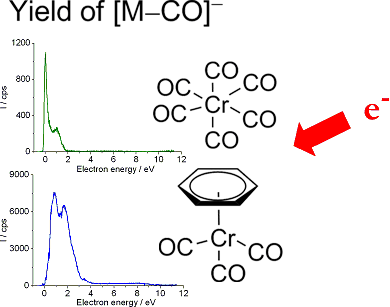
- [1][2][3]. However, they also play an important role in nanotechnology. In fact, a number of organometallic complexes, originally designed for chemical vapor deposition (CVD) purposes, have also been recognized as promising precursors for focused electron beam induced deposition (FEBID), a process to
Vapor-based polymers: from films to nanostructures
Beilstein J. Nanotechnol. 2017, 8, 2219–2220, doi:10.3762/bjnano.8.221

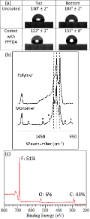
- using techniques such as plasma-, initiated-, or oxidative chemical vapor deposition polymerization [4][5]. The reason for the ongoing interest in this research field is that, analogue to the deposition of inorganic coatings by chemical vapor deposition, the deposition of polymer coatings from the vapor
- chemical vapor deposition [13]. A variation of the process parameters influences the quality of the deposited film as the oligomer content or the oxidation state. Another example of polymers with low solubility are fluoropolymers. Christian and Coclite investigated the deposition of fluoroacrylate polymer
- thin films via initiated chemical vapor deposition and the impact of crosslinking on the mechanical and chemical stability [14]. Vapor-based techniques can also be used to create chemically or topographically structured coatings on various substrates, which is of interest for example in the development
A systematic study of the controlled generation of crystalline iron oxide nanoparticles on graphene using a chemical etching process
Beilstein J. Nanotechnol. 2017, 8, 2017–2025, doi:10.3762/bjnano.8.202
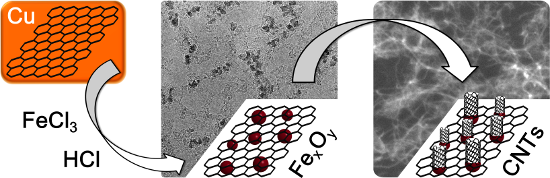
- Peter Krauss Jorg Engstler Jorg J. Schneider Fachbereich Chemie, Eduard-Zintl-Institut für Anorganische und Physikalische Chemie, Technische Universität Darmstadt, Alarich-Weiss Str. 12, 64287 Darmstadt, Germany 10.3762/bjnano.8.202 Abstract Chemical vapor deposition (CVD) of carbon precursors
- on graphene are active in the catalytic growth of carbon nanotubes when employing a water-assisted CVD process. Keywords: carbon nanotubes; chemical vapor deposition; graphene; iron oxide; nanoparticles; Introduction Graphene was first described by Boehm and coworkers in the early 1960s [1][2][3][4
- -down and bottom-up approaches to synthesize and isolate graphene, each having their own advantages and disadvantages [5][6][7][8][9][10][11][12]. The most common route to synthesize continuous, large-area graphene is chemical vapor deposition (CVD) using a carbon precursor on a planar metal catalyst


Bi-layer sandwich film for antibacterial catheters
Beilstein J. Nanotechnol. 2017, 8, 1982–2001, doi:10.3762/bjnano.8.199
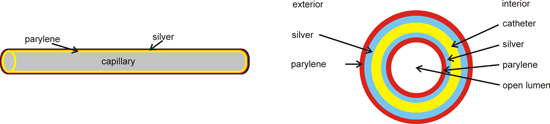
- electrolessly deposited applying Tollens’ reagens, the cap layer is deposited by using chemical vapor deposition. Conclusion: The three main problems of this process, electroless deposition of a fragmented silver film on the surface of an electrically insulating organic polymer, irreproducible evaporation
- , irrespective of whether the catheter is utilized as urethral balloon catheter or as ureteral stent. Due to the high aspect ratio of the catheters (20 to 30 cm in length at with a small lumen of maximal 1 or 3 mm), the only technique to achieve a double-sided coating is chemical vapor deposition (CVD). A
- coating, because it forms the very stable complex [Ag(NH3)2]+, which dissolves a possible precipitate of AgCl [19]. 3. Among the various deposition techniques, chemical vapor deposition (CVD) is known for its outstanding conformal coatings, in particular on three-dimensional substrates. Because the


Growth and characterization of textured well-faceted ZnO on planar Si(100), planar Si(111), and textured Si(100) substrates for solar cell applications
Beilstein J. Nanotechnol. 2017, 8, 1939–1945, doi:10.3762/bjnano.8.194
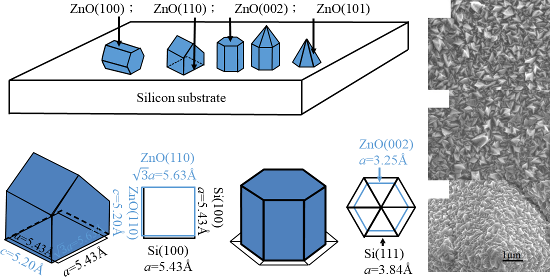
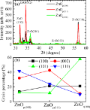
- and Center for Nanoscience and Nanotechnology, National Sun Yat-Sen University, Kaohsiung, Taiwan, R.O.C 10.3762/bjnano.8.194 Abstract In this work, textured, well-faceted ZnO materials grown on planar Si(100), planar Si(111), and textured Si(100) substrates by low-pressure chemical vapor deposition
- replacement for the metal contact in semiconductor devices. When applied to solar cells, it can eliminate the optical shading effect induced by the conventional metal contact thereby effectively increasing solar cell photocurrent and efficiency. Granular ZnO thin films grown by low pressure chemical vapor
- deposition (LPCVD) can act as good TCOs for thin film silicon solar cells [1][2][3][4][5][6][7][8][9][10]. This is mainly due to its high transparency over the visible and near-infrared (NIR) wavelength range, lower electrical resistivity (down to 1 × 10⁻³ Ω·cm), and the light-trapping capability due to its

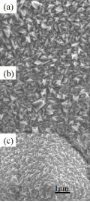


![[Graphic 2]](/bjnano/content/inline/2190-4286-8-194-i4.png?max-width=637&scale=1.18182) × lattice constant a) by 5.20 Å (l...
× lattice constant a) by 5.20 Å (l...


Fabrication of carbon nanospheres by the pyrolysis of polyacrylonitrile–poly(methyl methacrylate) core–shell composite nanoparticles
Beilstein J. Nanotechnol. 2017, 8, 1897–1908, doi:10.3762/bjnano.8.190

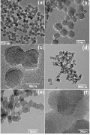
- batteries [3][4][5], fuel cells [6][7], supercapacitors [8][9], catalysis carriers [10][11], drug delivery [12][13] and adsorption [14][15]. Various techniques, including arc discharge [16], laser ablation [17], chemical vapor deposition [18], and solvothermal method [19], have been developed for the



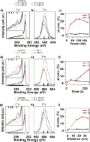
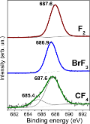
Fluorination of vertically aligned carbon nanotubes: from CF4 plasma chemistry to surface functionalization
Beilstein J. Nanotechnol. 2017, 8, 1723–1733, doi:10.3762/bjnano.8.173
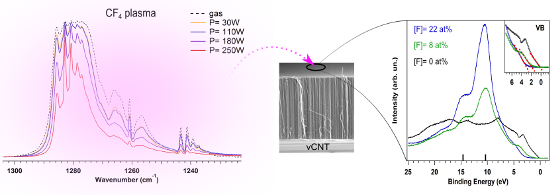
- vapor deposition (CCVD) at atmospheric pressure. The catalysts are prepared by magnetron sputtering: a 30 nm Al2O3 buffer layer is deposited on Si wafers with native SiO2 and a 6 nm Fe layer is then deposited to form nanoparticles which catalyse the vCNT growth. Then, the substrate is placed inside the
- function of the fluorine content and ageing effects are evaluated after storing the samples for two weeks under ambient conditions: a limited loss of fluorine functionalities is observed for most of the samples. Experimental Vertically aligned carbon nanotubes (vCNT) are produced by catalytic chemical




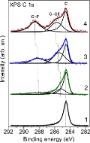
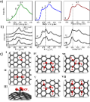
Effect of the fluorination technique on the surface-fluorination patterning of double-walled carbon nanotubes
Beilstein J. Nanotechnol. 2017, 8, 1688–1698, doi:10.3762/bjnano.8.169
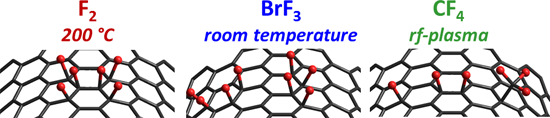
- by catalytic chemical vapor deposition (CCVD) using CH4 (18 mol %) in H2 at 1000 °C and an Mg1−xCoxO solid solution as catalyst [23]. High-resolution transmission electron microscopy (HRTEM) showed that a typical sample consists of ca. 80% DWCNTs, 20% SWCNTs, and a few triple-walled nanotubes. The



Process-specific mechanisms of vertically oriented graphene growth in plasmas
Beilstein J. Nanotechnol. 2017, 8, 1658–1670, doi:10.3762/bjnano.8.166
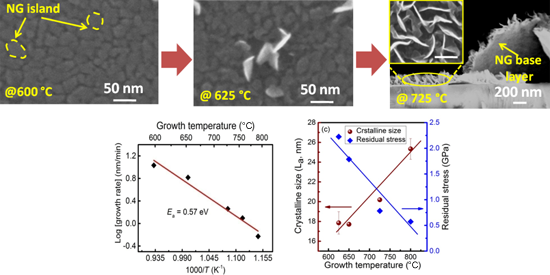
- growth. Plasma-enhanced chemical vapor deposition (PECVD) is one of the most suitable techniques for the transfer-free and catalyst-free growth of VGNs at low temperature [15][16][17][18][19][20]. Various research groups reported the growth mechanism of VGNs during PECVD [21][22][23][24]. In brief, the
- improved the crystallinity and resulted in lower resistivity. Conclusion In summary, plasma-enhanced chemical vapor deposition (PECVD) was employed to conduct a series of controlled growth experiments. The experimental results specify the effects of the growth temperature, plasma power and distance from


Surface functionalization of 3D-printed plastics via initiated chemical vapor deposition
Beilstein J. Nanotechnol. 2017, 8, 1629–1636, doi:10.3762/bjnano.8.162
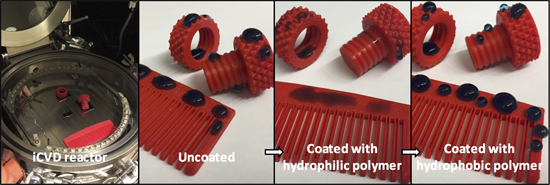
- studied the ability of the initiated chemical vapor deposition (iCVD) process to coat 3D-printed shapes composed of poly(lactic acid) and acrylonitrile butadiene styrene. The thermally insulating properties of 3D-printed plastics pose a challenge to the iCVD process due to large thermal gradients along
- microfluidics. Keywords: 3D printing; chemical vapor deposition; coatings; functional polymers; surface modification; Introduction Three-dimensional printing (3DP) is a useful fabrication technique that offers rapid and low-cost prototyping, high levels of design complexity, and resolution on the micron scale
- SLA-printed objects and wastes unused initiator embedded within the bulk structure. The breadth of materials and feature sizes of 3D-printed objects presents a challenge to finding a universal method for surface functionalization. Initiated chemical vapor deposition (iCVD) is a technique that can be



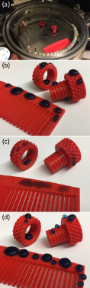
Parylene C as a versatile dielectric material for organic field-effect transistors
Beilstein J. Nanotechnol. 2017, 8, 1532–1545, doi:10.3762/bjnano.8.155
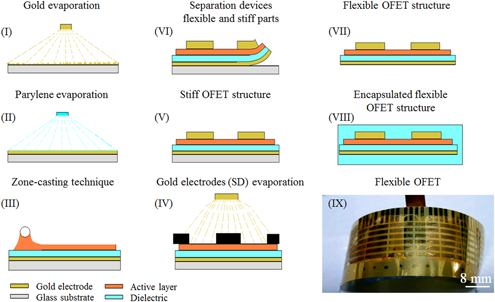
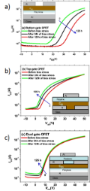
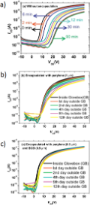
- under the commercial name of parylenes, is unique in many ways. It is a synthetic path for polymer formation, at the same time it belongs to the category of chemical vapor deposition (CVD) and, as such, it yields products in a form of conformal solid films depositing at any surface exposed. As a CVD




Adsorption and electronic properties of pentacene on thin dielectric decoupling layers
Beilstein J. Nanotechnol. 2017, 8, 1388–1395, doi:10.3762/bjnano.8.140
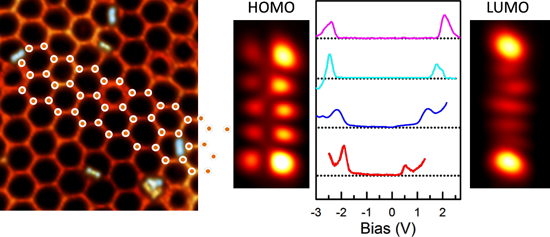
- at 1073 K for 5 min. A h-BN layer was grown by chemical vapor deposition (CVD) by heating the Rh(111) sample to 1073 K and exposing it to 110 L of borazine ((HBNH)3) gas. h-BN grows in a self-terminating growth process [22] on the (111) surface of the crystal. The KCl layers on various metal surfaces


Micro- and nano-surface structures based on vapor-deposited polymers
Beilstein J. Nanotechnol. 2017, 8, 1366–1374, doi:10.3762/bjnano.8.138
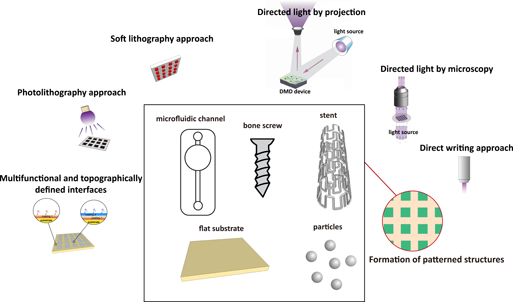
- technologies for vapor-based coatings largely depend on adaptation from these lithographical approaches (Figure 1). A DNA array was fabricated in a photolithographical liftoff process on a vapor-deposited (chemical vapor deposition, CVD) poly-p-xylylene surface, and the resulting array surface showed excellent


Oxidative chemical vapor deposition of polyaniline thin films
Beilstein J. Nanotechnol. 2017, 8, 1266–1276, doi:10.3762/bjnano.8.128
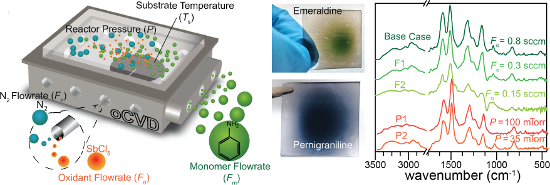
- Yuriy Y. Smolin Masoud Soroush Kenneth K. S. Lau Department of Chemical and Biological Engineering, Drexel University, Philadelphia, PA 19104, USA 10.3762/bjnano.8.128 Abstract Polyaniline (PANI) is synthesized via oxidative chemical vapor deposition (oCVD) using aniline as monomer and antimony
- can be used for depositing PANI and for effectively controlling the chemical state of PANI. Keywords: conducting polymers; emeraldine oxidation state; oxidative chemical vapor deposition; polyaniline; thin film processing; Introduction Conducting polymers (CPs) have attracted considerable attention
- solvent-based methods becomes considerably more challenging due to the lack of solubility in common commercial solvents, which limits processability and leads to poor wettability. These challenges can be overcome with oxidative chemical vapor deposition (oCVD). oCVD is a single step, solvent-free


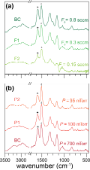


Nanotopographical control of surfaces using chemical vapor deposition processes
Beilstein J. Nanotechnol. 2017, 8, 1250–1256, doi:10.3762/bjnano.8.126
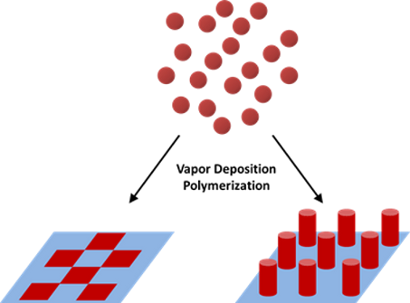
- deposition of poly(p-xylylenes) (PPX), as well as plasma-enhanced chemical vapor deposition polymerization, both of which offer many advantages over solution-based deposition methods [4]. Since no solvents are involved, no wetting problems or problems with solvent residues arise, which can potentially
- feed. Trujillo et al. produced polymeric nanostructures using colloidal lithography [12]. In this technique, two-dimensional self-assembled monolayer (SAM) arrays of colloidal nanoparticles serve as lithographic templates for “nanobowl” patterns in an initiated chemical vapor deposition (iCVD) process




Preparation of thick silica coatings on carbon fibers with fine-structured silica nanotubes induced by a self-assembly process
Beilstein J. Nanotechnol. 2017, 8, 1145–1155, doi:10.3762/bjnano.8.116
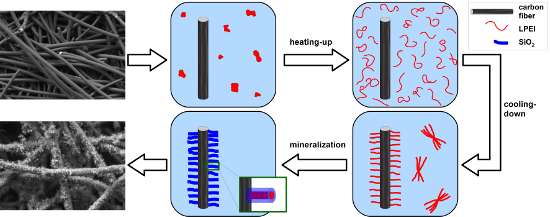
- study is the deposition of nanostructured silica onto the surface of carbon fibers. Among other techniques of covering the carbon fiber surface with a silicon dioxide layer (or other ceramic coatings), the most common ones are chemical vapor deposition (CVD) [4], liquid phase impregnation [5] and sol
- deposition of thick silica coatings onto carbon fibers in the micrometer range. In addition, the silica shell exhibits a fine-structure in the nanometer regime. Both features are not feasible by means of conventional coating procedures such as chemical vapor deposition. The hierarchically and nanostructured


The integration of graphene into microelectronic devices
Beilstein J. Nanotechnol. 2017, 8, 1056–1064, doi:10.3762/bjnano.8.107
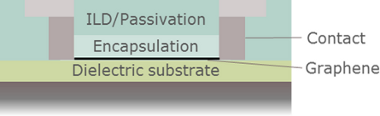
- , epitaxy on silicon carbide or chemical vapor deposition (CVD) on catalytic metals [5]. Besides meeting the requirements of film quality and cost, the scalability to 200 or 300 mm wafer sizes is crucial for being suitable for industrial production. Currently, the highest-quality graphene synthesis method





