Search results
Search for "contaminants" in Full Text gives 196 result(s) in Beilstein Journal of Nanotechnology.
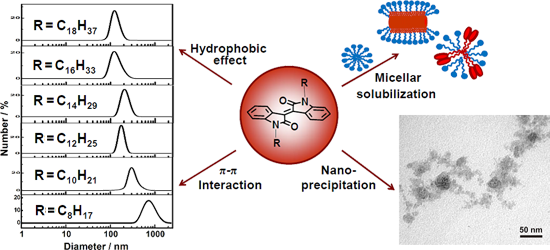
Nanoscale isoindigo-carriers: self-assembly and tunable properties
Beilstein J. Nanotechnol. 2017, 8, 313–324, doi:10.3762/bjnano.8.34
- soaking it in nitric acid for 5–7 min, rinsing again with double-distilled water, and finally flame-drying. All glassware was soaked in nitric acid to avoid any contaminants, thoroughly rinsed with double-distilled water, and then steamed before use. Temperature was kept at 25 ± 0.2 °C during all

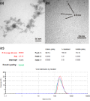


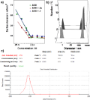

Laser irradiation in water for the novel, scalable synthesis of black TiOx photocatalyst for environmental remediation
Beilstein J. Nanotechnol. 2017, 8, 196–202, doi:10.3762/bjnano.8.21
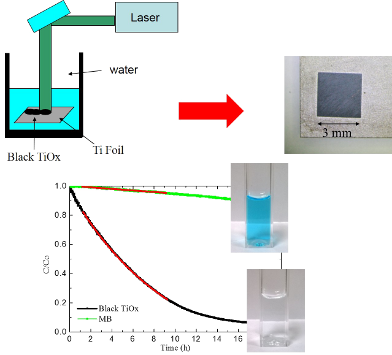
- widely used for both water splitting and mineralization of organic contaminants in solution [2]. The applications range from third generation solar cells [3] to material for air or water purification [4] to antifogging and self-cleaning surfaces [5][6]. The main advantage of this material is its high


Optical and photocatalytic properties of TiO2 nanoplumes
Beilstein J. Nanotechnol. 2017, 8, 190–195, doi:10.3762/bjnano.8.20
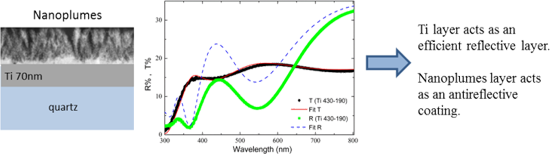
- renewable energy generation but also in sustainable technology to remove dangerous contaminants from water [2][3][4][5][6]. In this context, TiO2 is one of the most extensively studied materials. However, TiO2 is characterized by a wide band gap (ca. 3 eV) resulting in a poor absorption of light in the


Nanocrystalline TiO2/SnO2 heterostructures for gas sensing
Beilstein J. Nanotechnol. 2017, 8, 108–122, doi:10.3762/bjnano.8.12
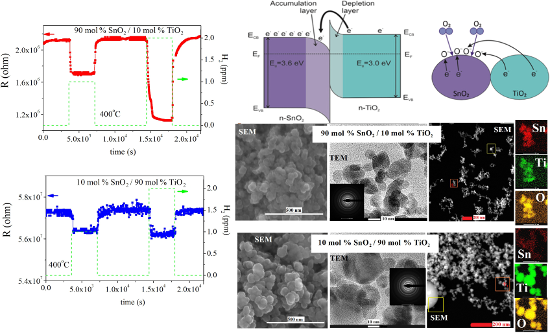
- were carried out in dry atmosphere. The synthetic air contained less than 1 ppm of water vapor while that of hydrogen + argon mixture had less than 10 ppm of contaminants. The relative humidity level was verified to be of about 0–1% RH at room temperature. Dynamic changes in the electrical resistance




Role of RGO support and irradiation source on the photocatalytic activity of CdS–ZnO semiconductor nanostructures
Beilstein J. Nanotechnol. 2016, 7, 1684–1697, doi:10.3762/bjnano.7.161
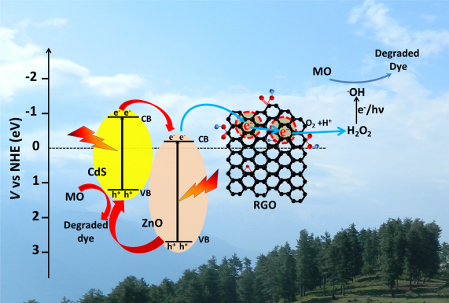
- photocatalytic decomposition of organic pollutants [4][5][6][7][8]. These semiconductor photocatalysts not only degrade the contaminants, but also cause their complete mineralization into CO2, H2O and mineral acids [9][10]. Thus, it is advantageous over physico-chemical methods such as flocculation–coagulation
- [11], ozonization [12] and adsorption [13], as these methods are unable to remove the contaminants completely. Some recent studies have reported ZnO as a better photocatalytic material in the degradation of organic dyes in aqueous solutions, because of high charge carrier mobility and significantly




Development of adsorptive membranes by confinement of activated biochar into electrospun nanofibers
Beilstein J. Nanotechnol. 2016, 7, 1556–1563, doi:10.3762/bjnano.7.149
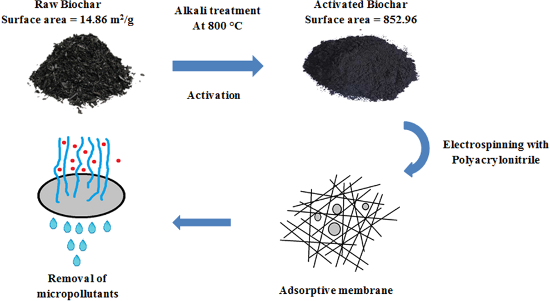
- Solutions Inc., 2300, rue Jean-Perrin, Québec, Québec G2C 1T9, Canada Department of Civil Engineering, University of Nebraska-Lincoln, N104 SEC PO Box 886105, Lincoln, NE 68588-6105, USA 10.3762/bjnano.7.149 Abstract Adsorptive membranes have many applications in removal of contaminants, such as heavy
- metals and organic contaminants from water. Recently, increasing concentrations of pharmaceutically active compounds, especially antibiotics, such as chlortetracycline in water and wastewater sources has raised concerns about their potentially adverse impacts on environment and human health. In this
- chlortetracycline showed that, under environmentally relevant concentrations, the fabricated adsorptive NFMs had a potential for removal of these types of emerging contaminants from water and wastewaters. Keywords: adsorptive membrane; biochar; chlortetracycline; nanofibers; Introduction Adsorptive membranes have




An efficient recyclable magnetic material for the selective removal of organic pollutants
Beilstein J. Nanotechnol. 2016, 7, 1447–1453, doi:10.3762/bjnano.7.136
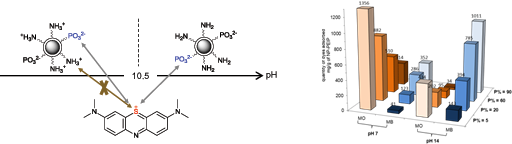
- magnetic core. Polyethylenimine is phosphonated at different percentages by a one-step process and used to coat maghemite nanoparticles. It selectively extracts high amounts of cationic and anionic contaminants over a wide range of pH values, depending on the adjustable number of phosphonate groups
- of the NP-PEIP in removing pollutants was determined by the adsorption of two organic dyes used as contaminants models: the positively charged (regardless of the pH value) methylene blue (MB) and the negatively charged (from pH 3.4 to basic pH) methyl orange (MO). Such dyes are pollutants themselves
- cycles (Figure 5B). A little loss of activity for MO and MB was observed but more than 90% of contaminants were removed after the seventh cycle. The loss in magnetic particles between cycles is negligible compared to the amount of pollutant extracted and in addition, no traces of iron were detected by


Modelling of ‘sub-atomic’ contrast resulting from back-bonding on Si(111)-7×7
Beilstein J. Nanotechnol. 2016, 7, 937–945, doi:10.3762/bjnano.7.85
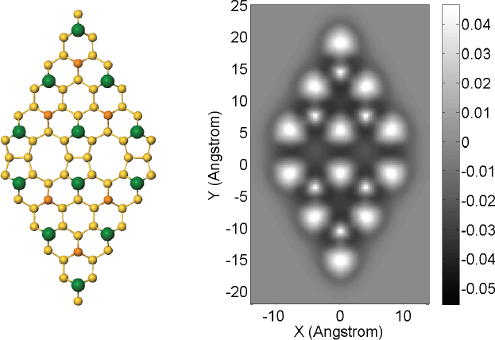
- common vacuum contaminant, our tip termination could also easily be a number of other common contaminants (for example H, OH or O), which would also suppress the chemical reactivity of the tip apex. Therefore our modelling, using CO parameters, is only intended to represent a ‘generic’ passivated tip. In


High-resolution noncontact AFM and Kelvin probe force microscopy investigations of self-assembled photovoltaic donor–acceptor dyads
Beilstein J. Nanotechnol. 2016, 7, 799–808, doi:10.3762/bjnano.7.71
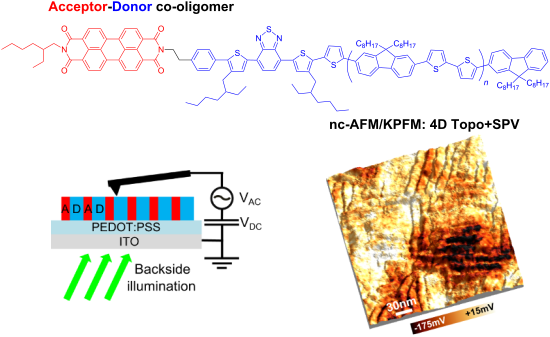
- Ar-sputtered in vacuum to remove the oxide layer and possible contaminants. KPFM measurements were performed in FM mode with the modulation bias VAC (typically 1 V peak-to-peak at 900 Hz) and the compensation voltage VDC applied to the cantilever (tip bias Vtip = VDC). In that configuration, the


Characterization of spherical domains at the polystyrene thin film–water interface
Beilstein J. Nanotechnol. 2016, 7, 581–590, doi:10.3762/bjnano.7.51
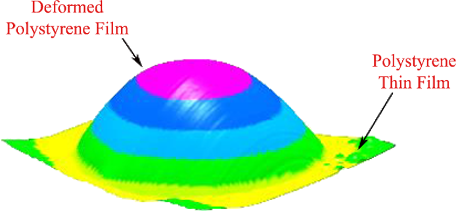
- , their insensitivity to lateral force, absence of long-range hydrophobic attraction, and the presence of possible contaminants and scratches on these domains suggested that these objects are most likely blisters formed by the stretched PS film. Furthermore, the analysis of the PS film before and after
- ; contaminants; defects; nanobubbles; water permeation; Introduction Thin films of several nanometer thickness have long been a topic of interest for researchers. The application of such thin films has been demonstrated in nonvolatile memory devices [1], sensors [2][3], for the modification of emissive
- obtained on different sized spherical domains are given in Supporting Information File 1, Figure S6. Analysis of phase contrast and presence of contaminants on the spherical domains The phase shift is sensitive to the variation in the local surface property [23]. Any change in the surface property can be




Probing the local environment of a single OPE3 molecule using inelastic tunneling electron spectroscopy
Beilstein J. Nanotechnol. 2015, 6, 2477–2484, doi:10.3762/bjnano.6.257
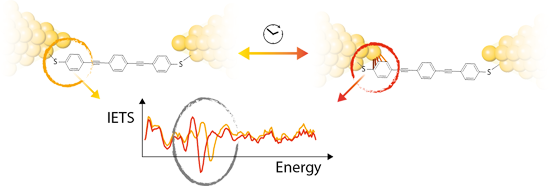
- peak at 215–220 mV is not identified in the calculations. This may be due to contaminants close to the molecular junction, and/or overtones of lower energy modes. In contrast to the modes mentioned above, the experimental modes labeled with Roman numbers in Table 1 and Figure 2 are present with


Ultrastructural changes in methicillin-resistant Staphylococcus aureus induced by positively charged silver nanoparticles
Beilstein J. Nanotechnol. 2015, 6, 2396–2405, doi:10.3762/bjnano.6.246
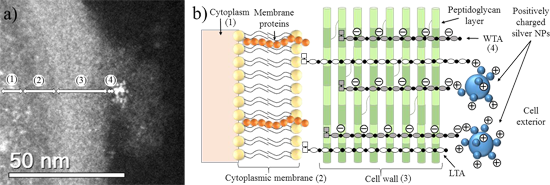
- , microwave irradiation generated thermal energy that was able to convert silver nitrate into metallic silver. In such a manner, we are able to produce silver nanoparticles in water without the introduction of contaminants and toxic chemicals, such as borohydride or chloride. Determination of particle size


Plasma fluorination of vertically aligned carbon nanotubes: functionalization and thermal stability
Beilstein J. Nanotechnol. 2015, 6, 2263–2271, doi:10.3762/bjnano.6.232
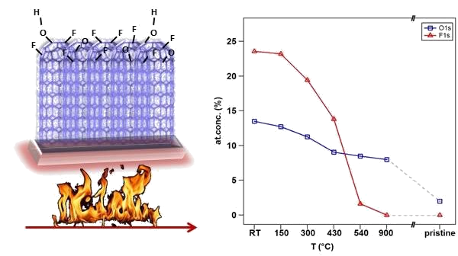
- properties of the starting materials. Various techniques have been employed to achieve a controlled fluorination yield; however, the effect of contaminants is rarely discussed, although they are often present. In the present work, the fluorination of vertically aligned multiwalled carbon nanotubes was


Electrochemical coating of dental implants with anodic porous titania for enhanced osteointegration
Beilstein J. Nanotechnol. 2015, 6, 2183–2192, doi:10.3762/bjnano.6.224
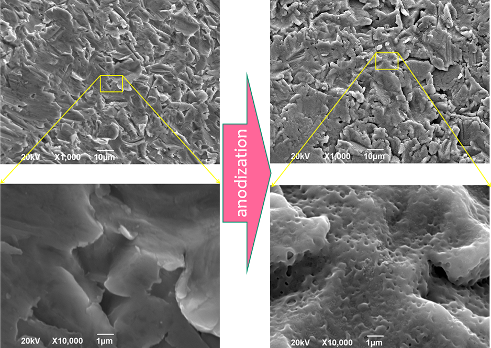
- form in that site. This can be ascribed to the presence of different contaminants on the Ti (e.g., C, not mapped here). Therefore, where no APT forms, the decreased ionic flow lines also prevent formation of a good Mg overlayer. However, overall, a high coverage of Mg is obtained on the surface. As


A single-source precursor route to anisotropic halogen-doped zinc oxide particles as a promising candidate for new transparent conducting oxide materials
Beilstein J. Nanotechnol. 2015, 6, 2161–2172, doi:10.3762/bjnano.6.222
- ], the so-called TCOs (transparent conducting oxides) have some favorable features such as high durability, chemical resistance, e.g., against oxygen, water or other atmospheric contaminants, and they show good mechanical stability [1][12][13]. Optical transparency is realized by selection of a wide-gap



Selective porous gates made from colloidal silica nanoparticles
Beilstein J. Nanotechnol. 2015, 6, 2105–2112, doi:10.3762/bjnano.6.215
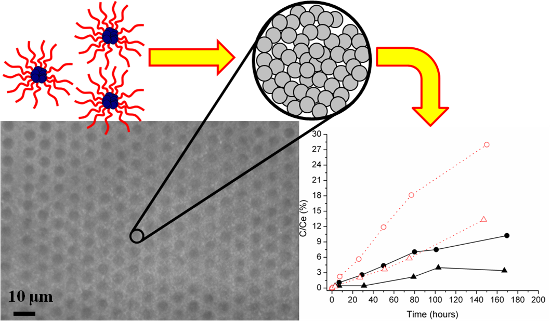
- (residual pressure 10−2 mbar) to ensure complete removal of atmospheric contaminants from surface and pores. Transport tests Transport tests were carried out following the same procedure already described elsewhere [42]. A homemade side-by-side diffusion cell was used, consisting of two half-cells in Pyrex


Nitrogen-doped graphene films from chemical vapor deposition of pyridine: influence of process parameters on the electrical and optical properties
Beilstein J. Nanotechnol. 2015, 6, 2028–2038, doi:10.3762/bjnano.6.206
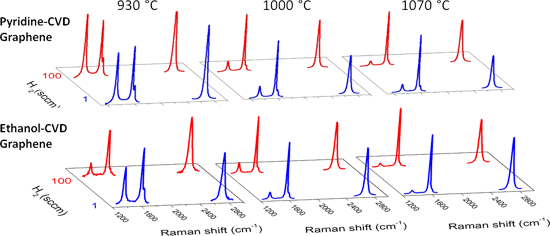
- -ray photoemission spectroscopy (XPS) with Mg Kα X-ray radiation at 1253.6 eV (VG Escalab MkII Spectrometer). The samples were treated in air at 200 °C for a few minutes before XPS to remove possible organic contaminants. AFM Graphene-films transferred on silicon have been characterized by tapping-mode


Lower nanometer-scale size limit for the deformation of a metallic glass by shear transformations revealed by quantitative AFM indentation
Beilstein J. Nanotechnol. 2015, 6, 1721–1732, doi:10.3762/bjnano.6.176
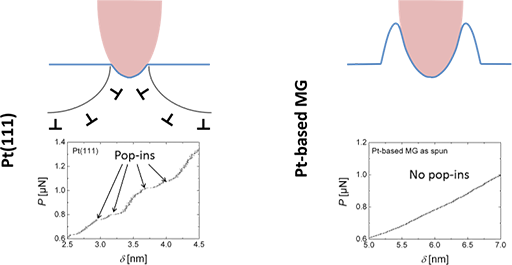
- careful Ar-sputtering for a duration of 5 min with an energy of 1 keV to remove its native oxide layer. Both Pt(111) and Pt57.5Cu14.7Ni5.3P22.5 metallic glass surfaces were characterized with Auger electron spectroscopy (AES) that confirmed the absence of surface contaminants such as C, H, S, and O. For



Continuum models of focused electron beam induced processing
Beilstein J. Nanotechnol. 2015, 6, 1518–1540, doi:10.3762/bjnano.6.157
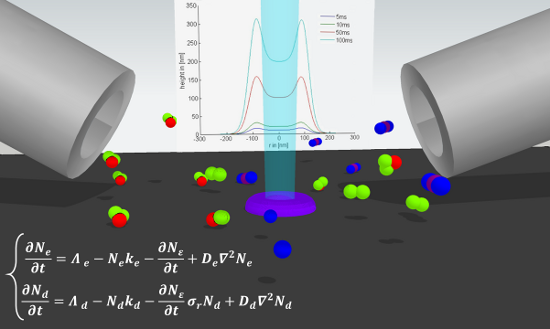
- -activated cross linking of hydrocarbon contaminants is a common problem in many etch processes [6][9][14]. Simultaneous FEBID and FEBIE can be simulated using models such as those described in [11], with adjustment to account for system-specific details such as the surface site competition behavior of the


![[Graphic 37]](/bjnano/content/inline/2190-4286-6-157-i117.png?max-width=637&scale=1.18182) and chemisorbed
and chemisorbed ![[Graphic 38]](/bjnano/content/inline/2190-4286-6-157-i118.png?max-width=637&scale=1.18182) adsorbates versus pressure, calcul...
adsorbates versus pressure, calcul...


High photocatalytic activity of V-doped SrTiO3 porous nanofibers produced from a combined electrospinning and thermal diffusion process
Beilstein J. Nanotechnol. 2015, 6, 1281–1286, doi:10.3762/bjnano.6.132
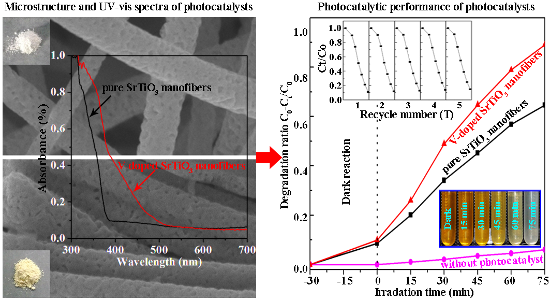
- seriously threatens aquatic organisms and human life. To purify the wastewater, several conventional treatment operations such as screening, sedimentation, and adsorption have been utilized [3]. Nevertheless, such operations cannot remove persistent and toxic soluble contaminants, such as organic dyes


Polymer blend lithography for metal films: large-area patterning with over 1 billion holes/inch2
Beilstein J. Nanotechnol. 2015, 6, 1205–1211, doi:10.3762/bjnano.6.123
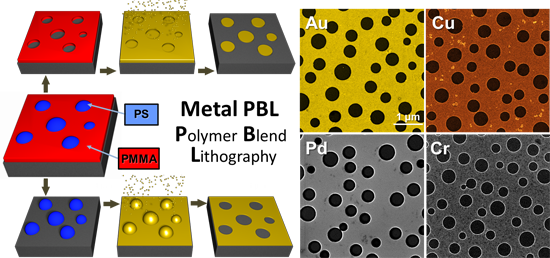
- native oxide layer. Both silicon and quartz glass substrates were cleaned by the snow jet method [21]: The wafers were exposed to a jet of CO2 ice crystals, which were produced by expanding CO2 stream through a nozzle. In this way, surface contaminants are removed either by mechanical impact or by


Simulation tool for assessing the release and environmental distribution of nanomaterials
Beilstein J. Nanotechnol. 2015, 6, 938–951, doi:10.3762/bjnano.6.97
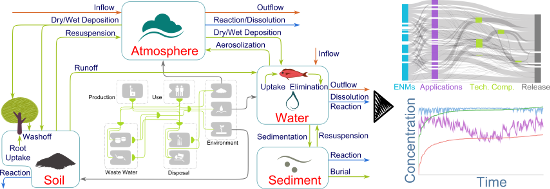
- multimedia environmental distribution and exposure concentrations of contaminants can be accomplished via a tiered approach [12]. A screening level assessment (tier-1 analysis) can be carried out based on multimedia compartmental models (MCMs) [12] to identify major exposure pathways and to monitor data gaps
- . In such analysis, the environmental entry, movement, and distribution of contaminants are described by a set of mathematical expressions. Specifically, MCMs require mechanistic quantification of intermedia transport rates (e.g., dry and wet deposition, sedimentation, dissolution) and rates of


Electroburning of few-layer graphene flakes, epitaxial graphene, and turbostratic graphene discs in air and under vacuum
Beilstein J. Nanotechnol. 2015, 6, 711–719, doi:10.3762/bjnano.6.72
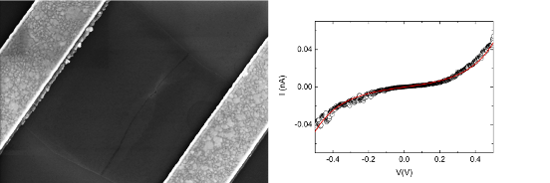
- -linear, probably related to the removal of contaminants induced by the current annealing [10][20][21][27]. Increasing the voltage further, the true EB process develops. At high temperatures, induced by the Joule heating, the carbon atoms react with oxygen until the device breaks and an abrupt increase of



Self-assembled anchor layers/polysaccharide coatings on titanium surfaces: a study of functionalization and stability
Beilstein J. Nanotechnol. 2015, 6, 617–631, doi:10.3762/bjnano.6.63
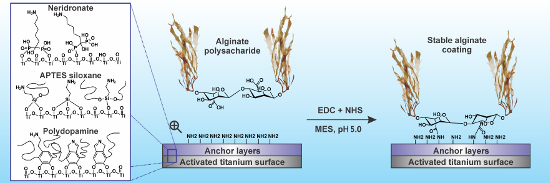
- wettability of the surface, yielding enhanced osteoblast differentiation [19]. The success of these modifications is highly dependent on the chemical state, reactivity and surface concentration of the hydroxy groups, as well as the presence of contaminants [12]. Therefore, one of the main objectives of this
- contribution is to perform and precisely characterize the activation of commercially pure titanium substrates for the realization of reactive titanium surfaces without contaminants. Such activated surfaces can be further functionalized by the covalent immobilization of self-assembled anchoring layers of
- in both alkaline (using alkaline piranha or 0.5 M NaOH) and acidic conditions (using mixtures of H2SO4/HCl or H2SO4/H2O2). The chemical treatments were followed by 5 min oxygen plasma treatments. The tested activation procedures significantly decreased the concentration of inorganic contaminants and


Filling of carbon nanotubes and nanofibres
Beilstein J. Nanotechnol. 2015, 6, 508–516, doi:10.3762/bjnano.6.53
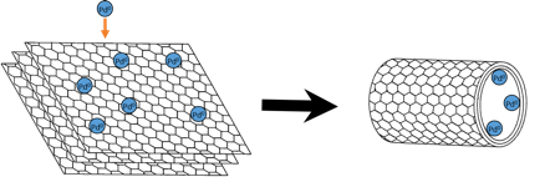
- TCNSs, the selectivity of the membrane can be adapted to remove specific contaminants [82][83]. Tip functionalization has also been used as a method to selectively separate various analytes [84][85] and can be performed at room temperature using ozone and small amounts of water vapour [86]. Capillary