Search results
Search for "copper" in Full Text gives 577 result(s) in Beilstein Journal of Nanotechnology. Showing first 200.
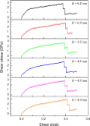
Relationship between corrosion and nanoscale friction on a metallic glass
Beilstein J. Nanotechnol. 2022, 13, 236–244, doi:10.3762/bjnano.13.18
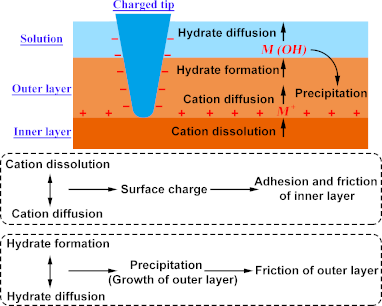
- copper surfaces, where it was suggested that more electrons escape in the vicinity of a peak than in a valley [27]. A surface undulation with parallel valleys on our ZrNiTi MG ribbons may be the reason for the distribution of pits along lines. Another possible reason is residual stress, indicated by the
- during deformation [48][49]. No plastic strain occurs in this work, given the much higher yield strength of Zr-based MGs (approx. 1.7 GPa [50]) than that of copper (69–365 MPa [51]). The maximum contact pressure in this work is ca. 0.49 GPa (JKR model), smaller than the yield strength of MGs. As a


Engineered titania nanomaterials in advanced clinical applications
Beilstein J. Nanotechnol. 2022, 13, 201–218, doi:10.3762/bjnano.13.15
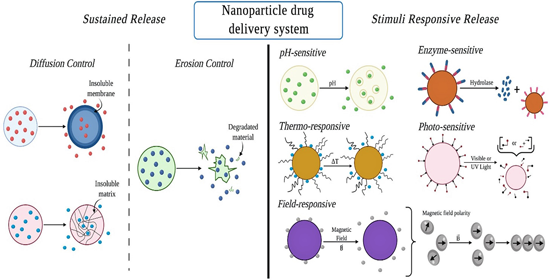
- TiO2 nps [83]. TiO2 supported on silica nanospheres was checked for its antibacterial activity against E. coli, and the result demonstrated a more effective growth inhibition than that of commercial TiO2-P25 under ultraviolet and visible light [84]. Copper is well known for its antimicrobial properties
- incubation [94]. According to a recent study, nanocomposites could be highly effective in the removal of biofilm and killing of pathogenic bacteria in comparison to pure TiO2 nps without harming healthy human cells. In this context, Baig et al. demonstrated the disinfecting properties of copper oxide
- copper, graphene, silver, silver and nitrogen, sulfur and cadmium sulfide, or transition metals was found to be effective for bringing the excitation wavelength near to the biological window (650 ≤ λ ≤ 950 nm and 1000 ≤ λ ≤ 1350 nm) by providing secondary energy levels close to TiO2 conduction band


Sputtering onto liquids: a critical review
Beilstein J. Nanotechnol. 2022, 13, 10–53, doi:10.3762/bjnano.13.2

- to sputter a 5 cm in diameter copper target. The liquid is placed 10 cm away from the target. The red arrow on the thermograms highlights the presence of a cross-over point when the temperature gradient is reversed during the cooling period (plasma OFF). The heating of the liquid as well as the
- reported in [56] where zinc (Zn) and tin/copper (Sn/Cu) targets are both co-sputtered in a reactive H2S/Ar reactive plasma for the synthesis of Cu2ZnSnS4 (CZTS) coatings. In the case of reactive sputtering, MFCs manage the flow (usually expressed in standard cubic centimeters per minute, sccm). This is a
- where platinum/copper (Pt/Cu) NPs were obtained by using an alloy target for the sputtering onto polyethylene glycol (PEG), it was reported that increasing the current from 10 to 50 mA leads to the formation of bigger NPs, from 1.3 to 4.5 nm, respectively [127






Chemical vapor deposition of germanium-rich CrGex nanowires
Beilstein J. Nanotechnol. 2021, 12, 1365–1371, doi:10.3762/bjnano.12.100
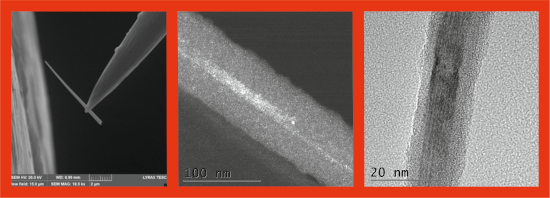
- even replace them due to their better physicochemical properties. However, while research on plenty of metal silicides is already underway, we are only at the beginning with germanides. For example, CuSix has been studied extensively for some time. There is even an important application of copper



Morphology-driven gas sensing by fabricated fractals: A review
Beilstein J. Nanotechnol. 2021, 12, 1187–1208, doi:10.3762/bjnano.12.88
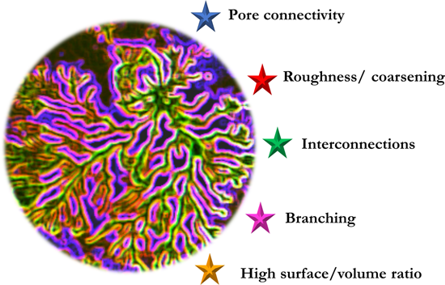
- pits. The self-organization of structures was attributed to tin chloride, which led to a larger size of the pits, while copper oxide led to the formation of hillocks in the film. The D values of the samples were in the range of 2.00–2.24. For the Sn/Cu = 6 ratio, the fractal dimension was 2.0, and the
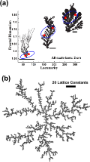
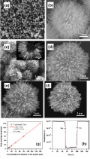
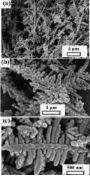
- of ZnO dendrites and single-crystal ZnO dendrites up to the macroscale [77]. These were synthesized via a vapor-phase transport method at 930 °C using a copper catalyst. Figure 16a and Figure 16b show, respectively, a schematic and a SEM image of the ZnO dendrite gas sensor device. The ZnO dendrites














The effect of cobalt on morphology, structure, and ORR activity of electrospun carbon fibre mats in aqueous alkaline environments
Beilstein J. Nanotechnol. 2021, 12, 1173–1186, doi:10.3762/bjnano.12.87
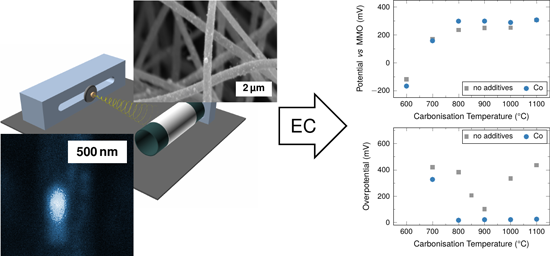
- further improved by applying a copper tape connecting the sample and the graphite tape. To identify the particles decorating the nanofibres, EDX was performed using an Octane Super EDX detector (EDAX). The programme “monte CArlo SImulation of electroN trajectory in sOlids” (CASINO) [23], which simulates
- samples were attached to the sample holder using Cu tape. X-ray diffractograms were recorded with a PANalytical Empyrean Series 2 (Malvern PANalytical B.V., Netherlands) in Bragg–Brentano geometry at room temperature using a copper X-ray source (λ(Kα1) = 1.54056 Å, λ(Kα2) = 1.54493 Å). For the measurement


Revealing the formation mechanism and band gap tuning of Sb2S3 nanoparticles
Beilstein J. Nanotechnol. 2021, 12, 1021–1033, doi:10.3762/bjnano.12.76
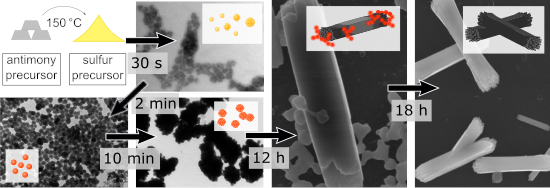
- ][34][35]. Baum et al. studied the formation of copper thioantimonate by injecting a heated (60 °C) and degassed S-OlAm precursor into a heated (200–250 °C) and degassed mixture of Cu(I)Cl, Sb(III)Cl3, and OlAm. When they omitted sulfur and Cu(I)Cl in this process, they obtained cubic α-Sb2O3
- (senarmontite) [33]. In contrast, they could synthesize the desired copper thioantimonate when they used Sb2O3 instead of Sb(III)Cl3 in a following synthesis. They concluded that Sb2S3 works as an intermediate product rather than as a byproduct. To show that antimony oxide can also be formed under the reaction
- = 1.5–2 g/L) of the particles in IPA was dried on a carbon-coated copper grid (carbon-coating type A, 6–10 nm thickness, Cu 200 mesh, Plano GmbH). The software FIJI was used to evaluate the particle size for 200–300 particles per synthesis on several images [51]. TEM A Zeiss EM 109 was used at 80 kV


Progress and innovation of nanostructured sulfur cathodes and metal-free anodes for room-temperature Na–S batteries
Beilstein J. Nanotechnol. 2021, 12, 995–1020, doi:10.3762/bjnano.12.75
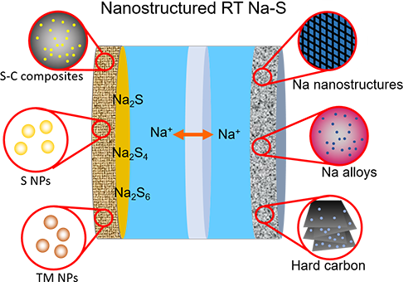
- polysulfides. Thus, the sulfur host has stronger affinity to polysulfides, which get highly immobilized in the cathode. Thus, Zheng et al. [44] reported on a cathode in which the shuttle effect is completely prevented. The sulfur host is based on copper nanoparticles deposited on high surface area mesoporous
- carbon (HSMC). The resulting electrode exhibited a Coulombic efficiency of 100% and a capacity of 610 mAh·g−1 after 110 cycles at 0.03C. This improved cycling stability was attributed to the conductivity enhancement imparted by copper, the sulfur immobilization due to strong copper–polysulfide
- shuttle effect. Zhang et al. [47] studied iron, copper, and nickel nanoclusters (ca 1.2 nm) loaded onto hollow carbon nanospheres. On the one hand, the chemical coupling between nanocluster and sulfur assists in sulfur immobilization and enhances conductivity and reactivity. On the other hand, the





A Au/CuNiCoS4/p-Si photodiode: electrical and morphological characterization
Beilstein J. Nanotechnol. 2021, 12, 984–994, doi:10.3762/bjnano.12.74
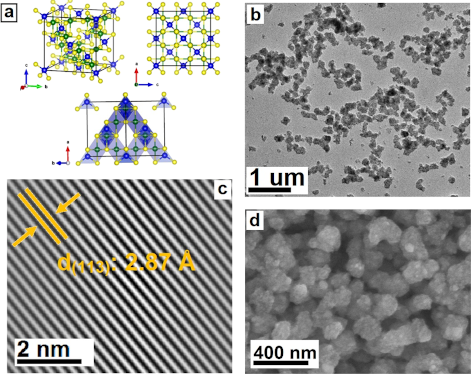
- nanocrystals. Also, I–V and C–V measurements were performed to determine the photodiode and capacitance characteristics of the Au/CuNiCoS4/p-Si devices. Experimental Materials Copper(II) acetate (CuAc2), nickel(II) acetate (NiAc2), cobalt acetate (CoAc2), trioctylphosphine oxide (TOPO), 1-dodecanethiol (DDT



Is the Ne operation of the helium ion microscope suitable for electron backscatter diffraction sample preparation?
Beilstein J. Nanotechnol. 2021, 12, 965–983, doi:10.3762/bjnano.12.73
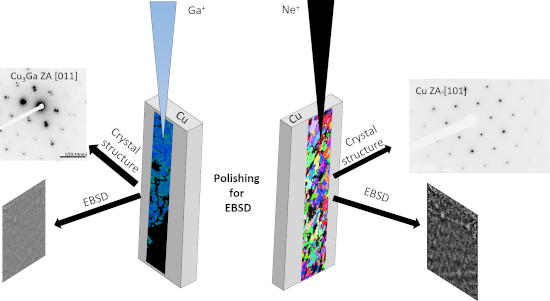
- microscope is better suited to achieve the required mirror-flat sample surface when operating the ion source with Ne instead of He. Copper was chosen as a test material and polished using Ga and Ne ions with different ion energies as well as incident angles. The results show that crystal structure
- here looks at the ion-beam-induced artefacts when polishing copper for EBSD measurements for different ion species (Ga, Ne) as well as polishing protocols. EBSD is a characterization technique in scanning electron microscopes (SEMs) that allows for the study of microstructure, local texture, grain size
- as ion impurity concentration within the smaller of either the EBSD information depth (20 nm) or interaction volume depth are evaluated and correlated to the experiments. Non-irradiated copper To verify the original specimen structure, TEM electron diffraction on thin foils as well as EBSD




Uniform arrays of gold nanoelectrodes with tuneable recess depth
Beilstein J. Nanotechnol. 2021, 12, 957–964, doi:10.3762/bjnano.12.72
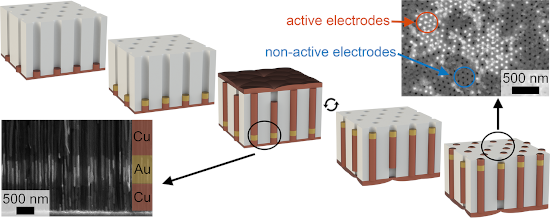
- segment were selectively etched away after turning the AAO template upside down (Figure 1d). Segment 1 – copper Optimization of the deposition potential (Ed) for the formation of the first Cu segment was performed in the range from −0.1 to −0.5 V. In the case of more negative potentials, an intensive
- surface. Segment 3 – copper At this step, a key quality parameter is the percentage of pores filled by the metals completely from the bottom to the top of the AAO template. Only nanowires in this type of pores can take part in an electrochemical reaction during the operation of the NEAs because only these


The role of deep eutectic solvents and carrageenan in synthesizing biocompatible anisotropic metal nanoparticles
Beilstein J. Nanotechnol. 2021, 12, 924–938, doi:10.3762/bjnano.12.69

- successful use in biological milieus. Recent studies indicated that the green synthesis of nanoparticles, such as zinc oxide nanoparticles and bimetallic copper–silver and nickel–cobalt nanoparticles, is preferred for catalytic, antibacterial, and therapeutic applications [12][13][14]. Several other


Modification of a SERS-active Ag surface to promote adsorption of charged analytes: effect of Cu2+ ions
Beilstein J. Nanotechnol. 2021, 12, 902–912, doi:10.3762/bjnano.12.67
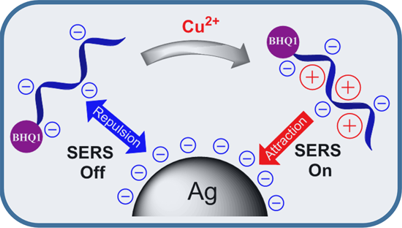
- charged hydrophilic thiols (sodium 2-mercaptoethyl sulfonate, mercaptopropionic acid, 2-mercaptoethanol, 2-(dimethylamino)ethanethiol hydrochloride, and thiocholine) to vary the surface charge of the SERS substrate. We used two oppositely charged porphyrins, cationic copper(II) tetrakis(4-N-methylpyridyl
- ) porphine (CuTMpyP4) and anionic copper(II) 5,10,15,20-tetrakis(4-sulfonatophenyl)porphine (CuTSPP4), with equal charge value and similar structure as model analytes to probe the SERS signal. Our results indicate that the SERS spectrum intensity strongly, up to complete signal disappearance, correlates with
- surface modifications were tested using a negatively charged oligonucleotide labeled with Black Hole Quencher dye. Only the addition of copper ions into the analyte solution yielded a good SERS signal. Considering the strong interaction of copper ions with the oligonucleotide molecules, we suppose that



Effects of temperature and repeat layer spacing on mechanical properties of graphene/polycrystalline copper nanolaminated composites under shear loading
Beilstein J. Nanotechnol. 2021, 12, 863–877, doi:10.3762/bjnano.12.65
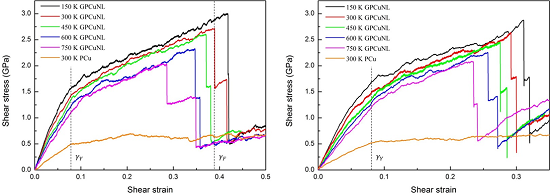
- Chia-Wei Huang Man-Ping Chang Te-Hua Fang Department of Mechanical Engineering, National Kaohsiung University of Science and Technology, Kaohsiung 807618, Taiwan 10.3762/bjnano.12.65 Abstract In the present study, the characteristics of graphene/polycrystalline copper nanolaminated (GPCuNL
- -healing occurs in the armchair direction, which causes the shear stress to increase after failure. Furthermore, the maximum shear stress and the shear strength of the composites decrease with an increase of the repeat layer spacing. Also, the shear modulus increases by increasing the grain size of copper
- nanoplatelets (GNPs) in a copper matrix the in-plane tensile strength was increased by 26% [17]. Li et al. used graphene nanoplatelets decorated with Ni nanoparticles as addition in a Cu matrix. These Ni-GPL/Cu composites exhibited a 42% increase in ultimate tensile strength (UTS) over that of pure Cu, with














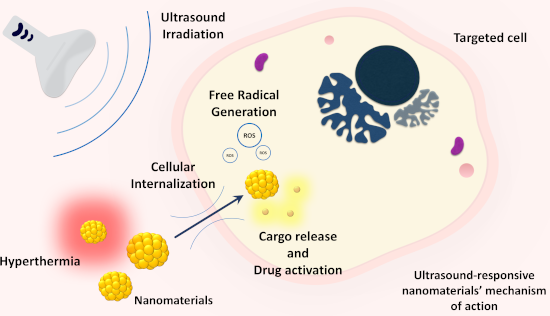
Comprehensive review on ultrasound-responsive theranostic nanomaterials: mechanisms, structures and medical applications
Beilstein J. Nanotechnol. 2021, 12, 808–862, doi:10.3762/bjnano.12.64


Recent progress in actuation technologies of micro/nanorobots
Beilstein J. Nanotechnol. 2021, 12, 756–765, doi:10.3762/bjnano.12.59
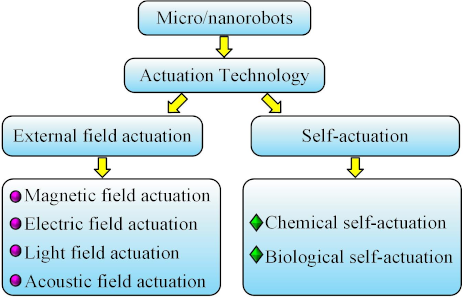
- then copper sulfate was added to make the bacterial flagella enter a “paralysis” state. Finally, ethylenediaminetetraacetic acid was used to separate the copper sulfate, so that the bacteria could move again. The success of this research created a theoretical basis for the use of biomaterials for self


Prediction of Co and Ru nanocluster morphology on 2D MoS2 from interaction energies
Beilstein J. Nanotechnol. 2021, 12, 704–724, doi:10.3762/bjnano.12.56
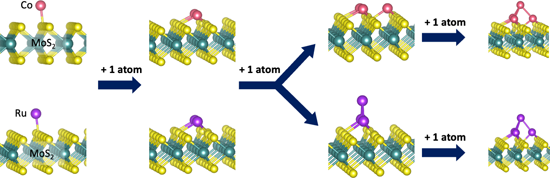
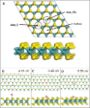
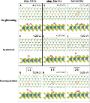
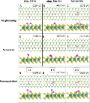
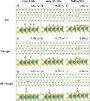
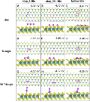
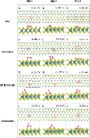
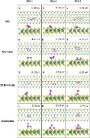
- significant distortions to the ML, in which S atoms migrate out of the surface. Similar rearrangements can be observed for all Ru3 structures at site hollow (Figure 6C,F,I) as well as for the 2D Co3 structures at site hollow (Figure 5C,F). Compared to copper, where we did not observe this distortion, the




Fate and transformation of silver nanoparticles in different biological conditions
Beilstein J. Nanotechnol. 2021, 12, 665–679, doi:10.3762/bjnano.12.53
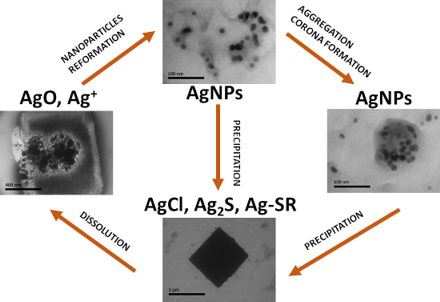
- media. Similar to tissue homogenates, small AgNPs were again found by TEM examination (Figure 7). The elemental mapping of newly formed particles was done via EDX. The EDX spectra (Figure 7c) showed Ag, S, Na, C, O, and Cu. The signals corresponding to C, O, and Cu resulted from the carbon copper grid
- (902A; Carl Zeiss Meditec AG, Jena, Germany) operated in bright-field mode with an acceleration voltage of 80 kV, while a Canon PowerShot S50 camera was used to capture the images. The sample preparation for TEM involved the deposition of a drop of the AgNP suspension onto a Formvar®-coated copper grid
- samples were diluted 1:5 with PBS, dropped on a Formvar®-coated copper grid, air-dried, and examined by TEM. The TEM visualization was also employed to inspect possible transformation of ionic Ag to AgNP in mCYS and mGSH media by dissolving AgNO3 in each media at a concentration of 100 mg Ag/L. After 2 h





A review of defect engineering, ion implantation, and nanofabrication using the helium ion microscope
Beilstein J. Nanotechnol. 2021, 12, 633–664, doi:10.3762/bjnano.12.52
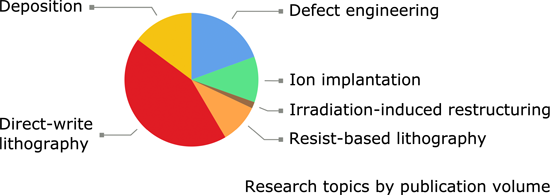
- interaction volume and resulting modification of the sample for helium ions impinging on bulk silicon and copper targets providing key insights into the beam–sample interaction [16]. Dose series were conducted and the interaction volumes directly visualized by preparing cross sections by gallium focused ion
- formed in near-surface regions can then lead to surface blistering. These phenomenona have been known and investigated for several decades. In early HIM studies on the subsurface effects of helium ions on bulk silicon and copper targets by Livengood et al., the formation of nanobubbles and larger
- focused helium ion beam of the HIM. Wang et al. used the HIM to conduct a systematic study of the effect of such a helium gas bubble superlattice on the mechanical properties of copper, which is representative of a range of fcc alloys that are known to exhibit radiation tolerance [78]. Copper nanopillar


High-yield synthesis of silver nanowires for transparent conducting PET films
Beilstein J. Nanotechnol. 2021, 12, 624–632, doi:10.3762/bjnano.12.51
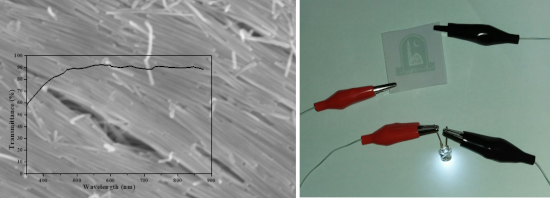
- PET films whose transmittance was calculated to be up to 92.5%. Experimental Materials All required chemical reagents, that is, silver nitrate (AgNO3), ethyl glycol, polyvinylpyrrolidone (PVP), copper chloride (CuCl2), hydroxyethyl cellulose (HEC), polyethylene terephthalate (PET) film, acetone, and


Stability and activity of platinum nanoparticles in the oxygen electroreduction reaction: is size or uniformity of primary importance?
Beilstein J. Nanotechnol. 2021, 12, 593–606, doi:10.3762/bjnano.12.49
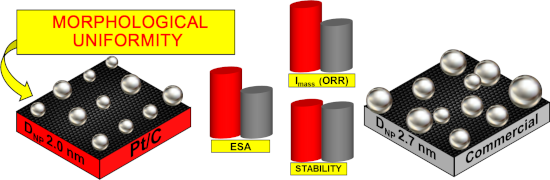
- min. A drop of the resulting suspension was applied to a standard copper mesh with a diameter of 3.05 mm, covered with a 5–6 nm thick layer of amorphous carbon. Next, the sample was dried in air at room temperature for 60 min. The histograms of platinum nanoparticle size distribution in the catalysts
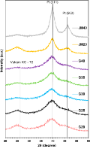



Properties of graphene deposited on GaN nanowires: influence of nanowire roughness, self-induced nanogating and defects
Beilstein J. Nanotechnol. 2021, 12, 566–577, doi:10.3762/bjnano.12.47
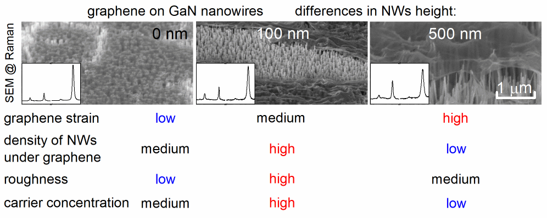
- copper foil with methane gas as the precursor [31]. Next, graphene was transferred onto GaN NWs substrates. Due to low adhesive forces between graphene and corrugated substrates, the most common method to transfer graphene with the use of poly(methyl methacrylate) (PMMA) polymer could not be applied for





On the stability of microwave-fabricated SERS substrates – chemical and morphological considerations
Beilstein J. Nanotechnol. 2021, 12, 541–551, doi:10.3762/bjnano.12.44
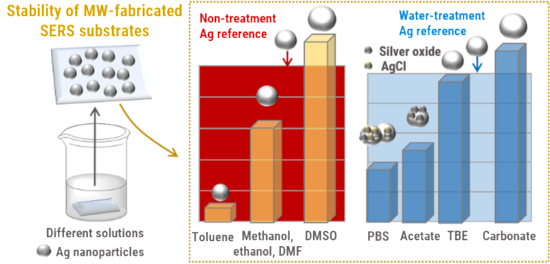
- gold, silver, or copper. Additionally, the shape, density, and form of the nanoparticles on the SERS substrates were found to be critical parameters for field enhancement [4][7] and the formation of the so-called hot spots [4]. These hot spots can be created, for example, by nanoparticles forming small


The preparation temperature influences the physicochemical nature and activity of nanoceria
Beilstein J. Nanotechnol. 2021, 12, 525–540, doi:10.3762/bjnano.12.43
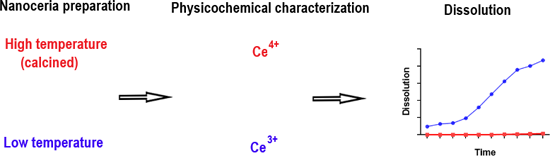
- characterizations. Transmission electron microscopy (TEM) and high-angle annular dark-field scanning transmission electron microscopy (HAADF-STEM) were conducted of NM-212 dispersed in DI water, sonicated for 10 min in a bath, and captured on 300 mesh lacey carbon copper grids dipped into the dispersion for




Solution combustion synthesis of a nanometer-scale Co3O4 anode material for Li-ion batteries
Beilstein J. Nanotechnol. 2021, 12, 424–431, doi:10.3762/bjnano.12.34
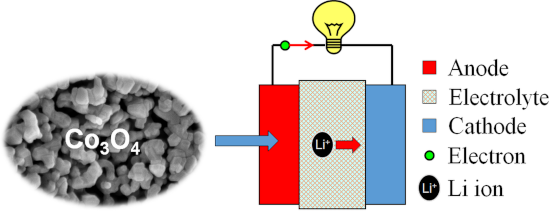
- working electrode, a slurry composed of previously prepared Co3O4 material, super P carbon (Saibo), and polyvinylidene difluoride (PVDF; Arkema) (weight ratio of 8:1:1) mixed in N-methyl-2-pyrrolidone was prepared and then coated on copper foil by using a doctor blade. After that, the electrode was dried