


Search results
Search for "defects" in Full Text gives 746 result(s) in Beilstein Journal of Nanotechnology. Showing first 200.
Nanostructured lipid carriers containing benznidazole: physicochemical, biopharmaceutical and cellular in vitro studies
Beilstein J. Nanotechnol. 2023, 14, 804–818, doi:10.3762/bjnano.14.66
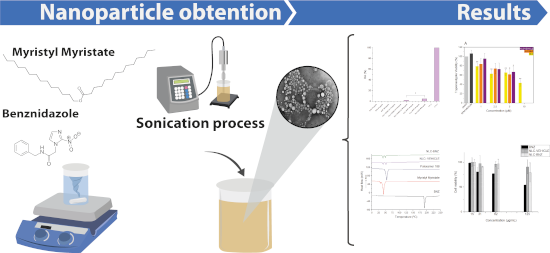
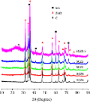
- and NLC-BNZ, respectively, using the Scherrer approximation. However, a broadening of the lower part of the main peak in the NLC-BNZ samples suggests defects in the structure, probably due to the inclusion of BNZ in the formulation. At smaller angles, the copolymer on the surface exhibited a lamellar


Silver-based SERS substrates fabricated using a 3D printed microfluidic device
Beilstein J. Nanotechnol. 2023, 14, 793–803, doi:10.3762/bjnano.14.65
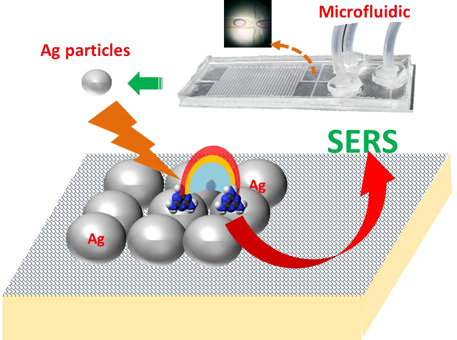
- manufacturer is 100 µm × 100 µm, a mold with line features was created instead of printing the microfluidic device directly. To minimize defects during the printing of the mold, the microchannel was designed with larger dimensions. Three inlets for the mixing channel were made with a width and a depth of 200



Carboxylic acids and light interact to affect nanoceria stability and dissolution in acidic aqueous environments
Beilstein J. Nanotechnol. 2023, 14, 762–780, doi:10.3762/bjnano.14.63
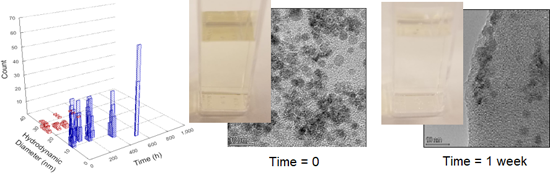
- biological systems. Ceria has been considered a possible UV filter in sunscreens [2][42]. Oxygen defects in the crystal lattice of ceria can presumably be altered by UV irradiation causing a redox switching of the cerium atoms between Ce3+ and Ce4+. This could explain the observance of a blue shift of the
Control of morphology and crystallinity of CNTs in flame synthesis with one-dimensional reaction zone
Beilstein J. Nanotechnol. 2023, 14, 741–750, doi:10.3762/bjnano.14.61
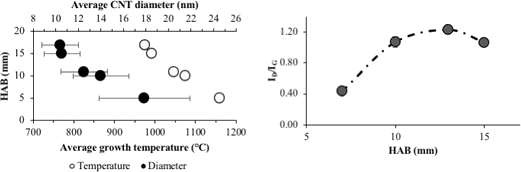
- defects and disorders of the sp2-hybridized sidewalls, while the G′ peak at 2500–2900 cm−1 represents photon–phonon interactions [27]. The absence of a low-frequency peak below 200 cm−1, usually assigned to the A1g symmetry radial breathing mode, which is the main characteristic of SWCNTs [28], indicates


Cross-sectional Kelvin probe force microscopy on III–V epitaxial multilayer stacks: challenges and perspectives
Beilstein J. Nanotechnol. 2023, 14, 725–737, doi:10.3762/bjnano.14.59
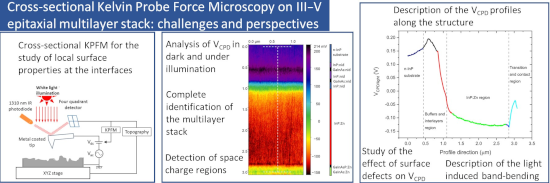
- charge regions and, thus, the presence of several junctions along the stack. Furthermore, a contrast enhancement in the surface potential image was observed when KPFM was performed under illumination, which is analysed in terms of the reduction of surface band bending induced by surface defects by
- interpretation of the KPFM data, specifically to investigate the effect of space charge regions, surface defects, and illumination on VCPD [13]. Experimental Sample preparation The structure of the studied sample is summarized in Table 1. This multilayer stack structure was epitaxially grown using a MOVPE
- section was used. KPFM is a surface technique; therefore, KPFM measurements are strongly influenced by the presence of surface defects. In order to provide a quantitative analysis of the experimental results, KELSCAN allows for the introduction of defects in a surface layer of arbitrary depth. The model


A graphene quantum dots–glassy carbon electrode-based electrochemical sensor for monitoring malathion
Beilstein J. Nanotechnol. 2023, 14, 701–710, doi:10.3762/bjnano.14.56
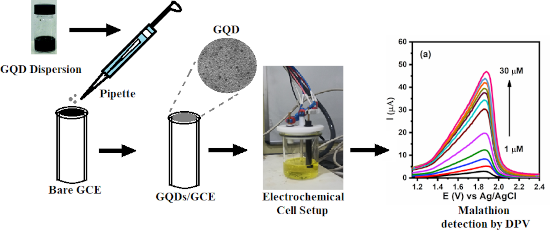
- significantly. Therefore, it can be inferred that not only quantum size effects, but also defects on the surface, contribute to the PL in GQDs. Size and morphology of GQDs were characterized using TEM and AFM. The TEM micrographs shown in Figure 3a confirm the formation of evenly dispersed GQDs with almost
- . 1385 cm−1) and G bands (ca. 1585 cm−1) with an excitation wavelength of 532 nm as shown in Figure 5b, resembling those of a standard graphitic structure [38]. As a result of defects in the sp2-hybridized GQDs structure, the D band occurs due to transverse optical (TO) phonons about the k point of the


Metal-organic framework-based nanomaterials as opto-electrochemical sensors for the detection of antibiotics and hormones: A review
Beilstein J. Nanotechnol. 2023, 14, 631–673, doi:10.3762/bjnano.14.52
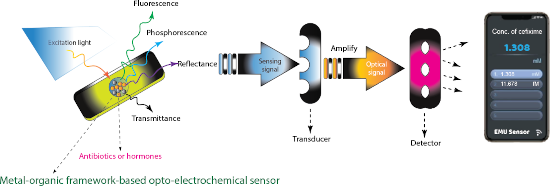
- induced by heat. The emission is caused by electrons transitioning from higher-energy molecular orbitals to lower-energy ones, typically the ground state or the lowest empty molecular orbitals. Luminescence may be caused by intrinsic defects, a particular moiety within the compound (metal or ligand
- ), impurity-induced defects, or it may exist in pure crystals or molecules. According to the manner of the substance excitation, several distinct forms of luminescence are differentiated, as shown in Figure 6. A molecule, nanostructure, or atom must be able to absorb light radiation, resulting in electronic


Titania nanoparticles for photocatalytic degradation of ethanol under simulated solar light
Beilstein J. Nanotechnol. 2023, 14, 616–630, doi:10.3762/bjnano.14.51
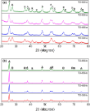
- (point defects), there are some deviations. The small oxygen deficiency observed even after calcination is related to remaining chlorine impurities and Ti3+ ions that resisted calcination. Phase composition and crystallites sizes of the TiO2 powders were investigated. The X-ray diffractograms of the
- (Figure 2c). The highest number of spheres compared to the total number of particles are in sample TO-850-b (7.6%) and the fewest in sample TO-250-b (1.9%). The HRTEM images (Figure 3) show the crystal structure of the TO-850-a powder with point defects and some residual impurities at the particle surface
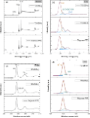
- exclude the possibility that these defects are located on the TiO2 surface and that the concentration of defects is below the detection limit of XPS [52][53]. Another explanation would be this: The surface depth sensitivity of XPS is known to be 5–10 nm compared to 1 μm in PL. Hence, this technique




Thermal transport in kinked nanowires through simulation
Beilstein J. Nanotechnol. 2023, 14, 586–602, doi:10.3762/bjnano.14.49
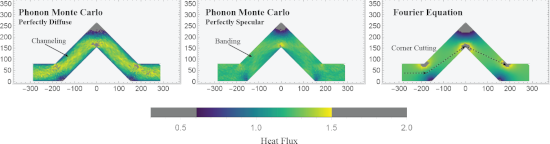
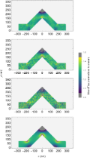
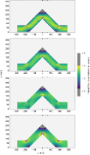
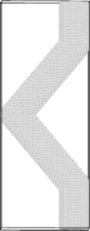
- . Systems where such transport is important are said to have significant ballistic transport compared to the classical scenario, that is, diffusive transport. Ballistic transport can be impacted by features of the system, such as surfaces, edges, defects, and inclusions [7][8][9]. Consequently, the effect
- concentration of heat flux into areas smaller than the wire itself has significant implications for device design. Areas with more significant heat flow can amplify the effects of small changes in the wire. This is particularly true when impurities or defects are a concern [24]. Introduction of a source of




ZnO-decorated SiC@C hybrids with strong electromagnetic absorption
Beilstein J. Nanotechnol. 2023, 14, 565–573, doi:10.3762/bjnano.14.47
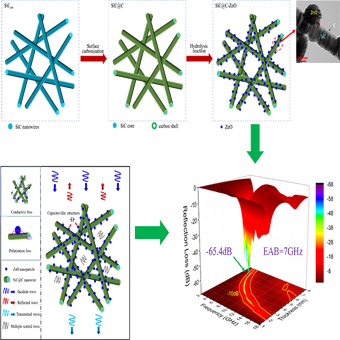
- same time, wide effective absorption bandwidth (EAB ≥ 7 GHz) remains a great challenge. A good strategy is to form hierarchical heterostructures, characterized by diverse components, abundant heterogeneous interfaces, multiple reflective paths, and enrichment of structural defects [18][19][20
- amorphous state (Figure 2e). The carbon shell may have a positive effect on the nucleation of ZnO particles. This is because oxygen-containing functional groups (such as carboxyl and hydroxy groups) and structural defects are generated on the SiC@C surface during the in situ carbonization [24], which both
- SiC surface. As described in our previous work [24], the carbon shell may form a conductive network in the SCZ/wax composites (Supporting Information File 1, Figure S6b). Besides, abundant defects (such as nanopores in carbon) can also result in dipole polarization and Debye relaxations [24][38


SERS performance of GaN/Ag substrates fabricated by Ag coating of GaN platforms
Beilstein J. Nanotechnol. 2023, 14, 552–564, doi:10.3762/bjnano.14.46
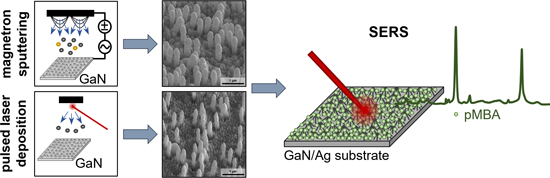
- plasmonic metals or their alloys [23][24][25][26][27][28][29][30][31][32]. The chemical and electrochemical etching of GaN heteroepitaxial layers leads to various nanostructures formed on line defects (dislocations), such as straight nanopillars, bunches of nanopillars, and pits [31][32]. The nanostructured
- in the formation of nanocolumns on line defects (dislocations), as was demonstrated in [45]. The nanostructured GaN platforms were then coated with Ag using a Quorum Q150TS sputter coater (Quorum Technologies Ltd., Laughton, UK) with a cleaning oxidized target function engaged [32]. The thickness of


Observation of multiple bulk bound states in the continuum modes in a photonic crystal cavity
Beilstein J. Nanotechnol. 2023, 14, 544–551, doi:10.3762/bjnano.14.45
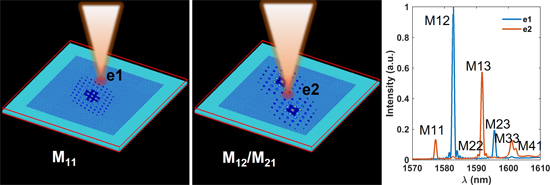
- influenced by both the radiative part Qr and a nonradiative part Qnr via 1/Q = 1/Qr + 1/Qnr provided that the material is lossless. Qnr incorporates defects such as structural disorder, surface roughness, and fabrication errors. The simulation of the unit cell was performed by COMSOL Multiphysics with
- defects are mainly located at the mode node of a specific mode, the loss caused by the defect will decrease. In contrast, disorders at an antinode will lead to obvious loss (small Qnr) and a dominant Q factor degradation. For our sample, a higher loss caused by defects occurs for the mode with shorter


On the use of Raman spectroscopy to characterize mass-produced graphene nanoplatelets
Beilstein J. Nanotechnol. 2023, 14, 509–521, doi:10.3762/bjnano.14.42
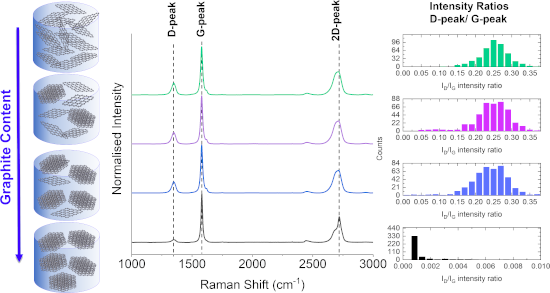
- . For example, information on flake size, extent of structural defects, chemical or electronic doping, and strain and layer number can all be extracted from one spectrum [13][14][15][16][17][18]. As such, Raman spectroscopy is widely used by producers to assess the quality of their material, in


Conjugated photothermal materials and structure design for solar steam generation
Beilstein J. Nanotechnol. 2023, 14, 454–466, doi:10.3762/bjnano.14.36
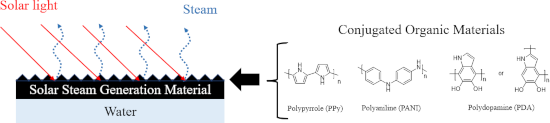
- either undergo radiative relaxation in the form of photons or nonradiative relaxation in the form of phonons (heat) to release and transfer energy to impurities/defects or dangling bonds on the material surface. When energy is released in the form of phonons, local heating of the lattice is induced


Plasmonic nanotechnology for photothermal applications – an evaluation
Beilstein J. Nanotechnol. 2023, 14, 380–419, doi:10.3762/bjnano.14.33
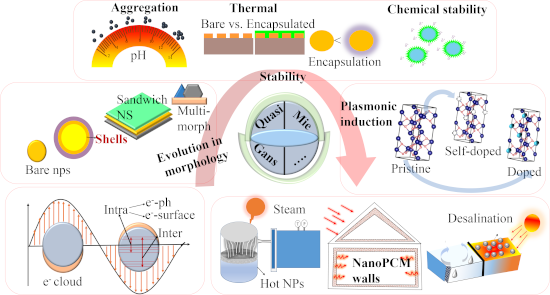
- Planck’s constant, and q is the wave vector of the phonon oscillations. These elementary excitation phonons are bosons with a wave vector of k = 2π/λ. Crystal defects and other such sources of anharmonicity can change their frequencies and, hence, their coupling characteristics to electrons and the




Quasi-guided modes resulting from the band folding effect in a photonic crystal slab for enhanced interactions of matters with free-space radiations
Beilstein J. Nanotechnol. 2023, 14, 322–328, doi:10.3762/bjnano.14.27
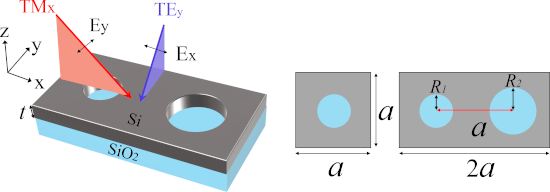
- enhancement are central for the manipulation of light–matter interactions. Optical resonators of various forms have been exploited for this purpose. What follows are a few representative examples investigated in the last several decades: Photonic crystal cavities are realized when small disorders or defects


Bismuth-based nanostructured photocatalysts for the remediation of antibiotics and organic dyes
Beilstein J. Nanotechnol. 2023, 14, 291–321, doi:10.3762/bjnano.14.26
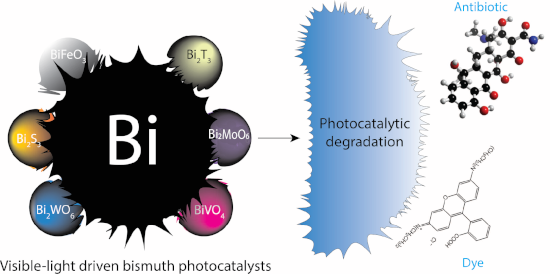
- /and surface defects are created without destroying the crystal structure (though it might be distorted), effectively separating photogenerated carriers. Doping with metallic (Mg, Ag, Ni, Fe, Li, Co, and Ni) and non-metallic ions (F, C, N, and O), can introduce an intraband close to the conduction band


Structural, optical, and bioimaging characterization of carbon quantum dots solvothermally synthesized from o-phenylenediamine
Beilstein J. Nanotechnol. 2023, 14, 165–174, doi:10.3762/bjnano.14.17
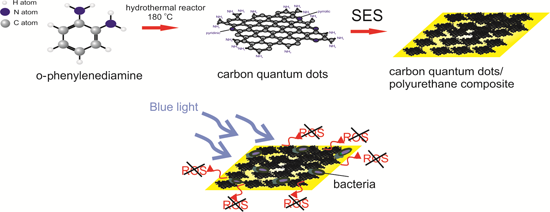
- from this, surface defects can cause a redshift of the PL emission [35]. Based on the recorded PL spectra, we can conclude that the PL of these dots is dominantly governed by the core states in the conjugated π domains and the quantum confinement effect. Similar to other semiconducting quantum dots


Antimicrobial and mechanical properties of functionalized textile by nanoarchitectured photoinduced Ag@polymer coating
Beilstein J. Nanotechnol. 2023, 14, 95–109, doi:10.3762/bjnano.14.11
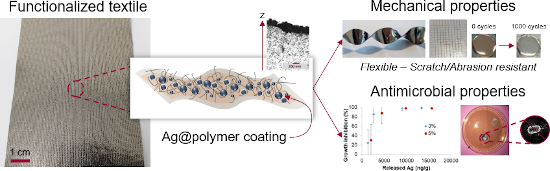
- ] synthesized AgNPs on cotton fabrics using laser ablation, while Ahmad et al. [31] deposited AgNPs by the dip and dry method based on surface reduction reactions. However, the difference in expansion coefficients of the given metal layer and substrate can lead to surface defects under strain (cracks, loss of



The influence of structure and local structural defects on the magnetic properties of cobalt nanofilms
Beilstein J. Nanotechnol. 2023, 14, 23–33, doi:10.3762/bjnano.14.3
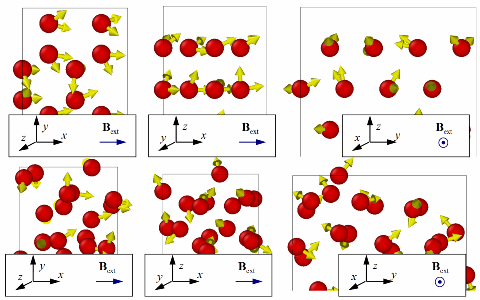
- ideal structure. In all cases of calculations for cobalt, the ferromagnetic behavior was preserved. Defects in the structure and local arrangement of the atoms cause a deterioration in the magnetic macroscopic parameters, such as a decrease in the magnetization modulus. Keywords: LAMMPS; magnetic
- . Morphological analysis enables the identification of local defects in the crystal structure, which form different scale aggregates that can further serve as causes of deterioration of the target material functional characteristics [30][31]. Comprehensive studies in this area not only allow to establish the
- magnetoelasticity or to study the influence of defects on the magnetic properties of materials. Results and Discussion As numerical experiments at the stage of modeling technological processes of niobium and cobalt sample manufacturing showed, the structure of the formed layers is not ideal. Visually, noticeable


Electrical and optical enhancement of ITO/Mo bilayer thin films via laser annealing
Beilstein J. Nanotechnol. 2022, 13, 1589–1595, doi:10.3762/bjnano.13.133
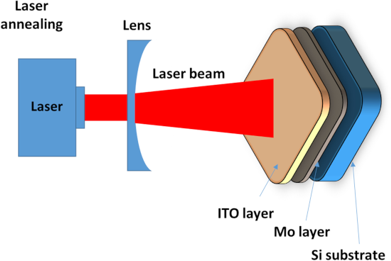
- by many factors, such as the type of substrate [15], the deposition technique [16][17][18], the deposition conditions [19][20][21][22], and the annealing treatment [23]. Among these factors, heat treatment is a significant factor in rearranging the nanostructure, removing defects, and improving the
- size increased with the laser energy up to 200 mJ. It decreased to reach a minimum at an energy of 240 mJ. This trend in crystallite size is due to the rearrangement of the nanostructure. The particles sizes increase, defects are reduced, and the dislocation density (δ) decreases from 6.53 × 10¹⁴ to
- increase is due to the effect of the laser on the surface reducing defects and eliminating grain boundaries. Above 120 mJ, the grain size decreased with the increase of the laser energy to 16.6 nm for 240 mJ. This decrease is due to the diffusion of gas atoms from the chamber into the upper layer


From a free electron gas to confined states: A mixed island of PTCDA and copper phthalocyanine on Ag(111)
Beilstein J. Nanotechnol. 2022, 13, 1572–1577, doi:10.3762/bjnano.13.131
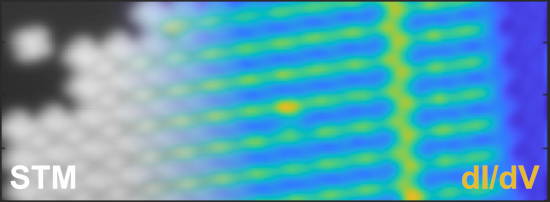
- electron gas (2DEG) is that standing waves can be observed near defects as a result of scattering [13]. Sabitova et al. [11] acquired dI/dV images at various voltages above 0.6 V and observed wave-like patterns around the defects. We reproduced these measurements as can be seen in Figure S1, Supporting
- behaviour as seen in the PTCDA/Ag(111) interface state. We identify a state that appears to be an array of one-dimensional quantum wells based on its shape in the dI/dV spatial maps. However, we do not observe scattering at defects and conclude that it is localized laterally at the PTCDA molecules. Methods
- the PC islands. A further dataset showing both a pure PC island and a large PTCDA island is shown in Figure S3 and Figure S4 of Supporting Information File 1. At two positions on the island shown in Figure 2a, there are unknown defects that are indicated by black arrows. We acquired dI/dV spectra


Induced electric conductivity in organic polymers
Beilstein J. Nanotechnol. 2022, 13, 1551–1557, doi:10.3762/bjnano.13.128
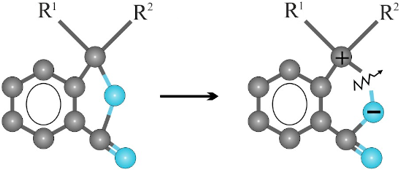
- , associates of macromolecules are formed in the solution, and the influence of adhesion processes decreases, but the cohesive forces increase. In the entire thickness range from 3 nm to 1 µm, the films are solid, without significant defects and/or pin holes. The polymer films were studied by atomic force
- microscopy (AFM) using an earlier described methodology [5]. The study of the film morphology showed that they are homogeneous, and within the entire thickness range from 3 nm to 1 µm the films are solid, without significant defects and/or pin holes. The observation confirms the good film-forming properties
- thickness of the polymer or formation of multiple metallic dendrites. However, a number of microphotographs showed some defects in the form of shortcuts (Figure 2c). The origin of these artifacts is not entirely clear: they could be initially present in heterostructures, or they could have appeared during



A TiO2@MWCNTs nanocomposite photoanode for solar-driven water splitting
Beilstein J. Nanotechnol. 2022, 13, 1520–1530, doi:10.3762/bjnano.13.125
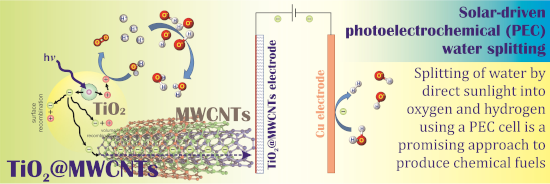
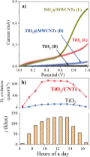
- non-smooth walls of the MWCNTs indicates the presence of defects such as vacancies, dangling bonds, interstitials, and pentagons [14]. Figure 3b shows the irregular shape of TiO2 particles smaller than 20 nm and their non-uniform distribution. In Figure 3c, some MWCNTs link with TiO2 clusters as
- conjunctional bridges. TiO2 particles deposit only on the outside wall surface of the MWCNTs. Additionally, an agglomeration of TiO2 particles is only observed at the branching points, zigzag regions, and the end of MWCNTs where the defects are identified. However, the observation differs from previous studies
- , in which the TiO2 particles are uniformly attached to CNTs by layer-by-layer coating or sol–gel methods [15][16][17]. Notably, the defects on the wall surface of MWCNTs, which enable π–π interactions, could be the active sites to generate the TiO2 agglomerations via hydroxy groups and, thus, enhance



Dry under water: air retaining properties of large-scale elastomer foils covered with mushroom-shaped surface microstructures
Beilstein J. Nanotechnol. 2022, 13, 1370–1379, doi:10.3762/bjnano.13.113
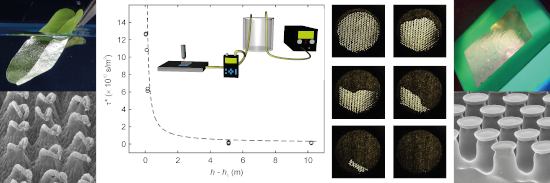
- the shell surface, through which additional diffusion takes place. Therefore, the surface should be compartmented to exclude the influence of these side surfaces. Furthermore, a subdivision of the air volume into small individual volumes ensures better stability, since individual defects only affect a





