Search results
Search for "environment" in Full Text gives 1023 result(s) in Beilstein Journal of Nanotechnology. Showing first 200.
Biomimetic nanocarriers: integrating natural functions for advanced therapeutic applications
Beilstein J. Nanotechnol. 2024, 15, 1619–1626, doi:10.3762/bjnano.15.127

- the production of nature-inspired synthetics as demonstrated in Figure 2B [22][23][24][25][26]. Indeed, the co-incubation of nanoparticles with cellular components creates an environment conducive to the absorption of proteins by the nanoparticles, thereby facilitating the connection of these


Natural nanofibers embedded in the seed mucilage envelope: composite hydrogels with specific adhesive and frictional properties
Beilstein J. Nanotechnol. 2024, 15, 1603–1618, doi:10.3762/bjnano.15.126
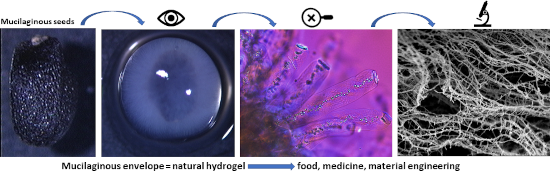
- amount, which raises questions about their role. The experiment answering this question can be an oxidation process of phenols, which happens at increased temperature (40 °C) [98]. One can suppose that the increase of the temperature within the mucilage envelope in the natural environment can happen


Facile synthesis of size-tunable L-carnosine-capped silver nanoparticles and their role in metal ion sensing and catalytic degradation of p-nitrophenol
Beilstein J. Nanotechnol. 2024, 15, 1576–1592, doi:10.3762/bjnano.15.124
- Akash Kumar Ridhima Chadha Abhishek Das Nandita Maiti Rayavarapu Raja Gopal Nanomaterial Toxicology Laboratory, Drug and Chemical Toxicology Group, Food, Drug and Chemical, Environment and Systems Toxicology (FEST) Divison, CSIR-Indian Institute of Toxicology Research (CSIR-IITR), Vishvigyan
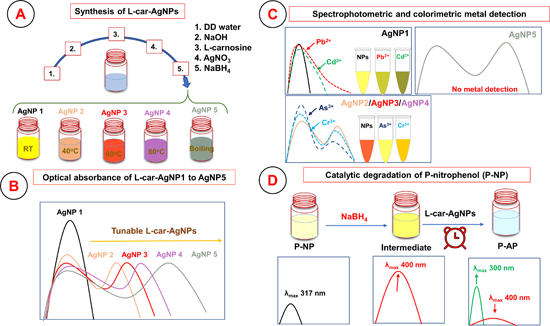
- was performed in vaccum and water as solvent using the SCRF (CPCM) model to account for the effect of the environment. The computations were performed using density functional theory (DFT) with the B3LYP functional [22] and split basis sets 6-31+G* for all atoms (C, O, N, and H), and LANL2DZ for Ag




Green synthesis of silver nanoparticles derived from algae and their larvicidal properties to control Aedes aegypti
Beilstein J. Nanotechnol. 2024, 15, 1566–1575, doi:10.3762/bjnano.15.123
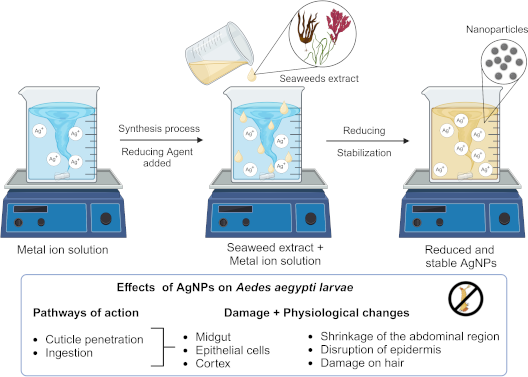
- residues in the environment [30]. Physical methods include laser ablation, UV irradiation, evaporation condensation, aerosol methods, and lithography. High cost, high energy consumption, and expensive equipment make these techniques uneconomical [31]. Because of these disadvantages, synthesis methods based
- formation of substances harmful to human health and the environment [36][37]. It has many advantages compared to chemical and physical methods, that is, it is non-toxic, pollution-free, ecological and economical, and more sustainable [38][39]. There is a variety of natural resources for the green synthesis


Electrochemical nanostructured CuBTC/FeBTC MOF composite sensor for enrofloxacin detection
Beilstein J. Nanotechnol. 2024, 15, 1522–1535, doi:10.3762/bjnano.15.120
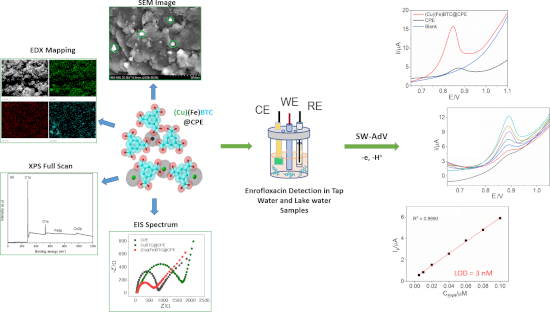
- severe adverse effects, including skeletal, reproductive, immune, and digestive disorders; moreover, ENR cannot be completely absorbed by most animals, it easily enters the environment through the excrement of organisms, also in the form of metabolites [3][4]. Nowadays, the concentration of ENR in
- , that is, PBS, Britton–Robinson (BR), KCl, and NaNO3, were tested to determine the most suitable environment for ENR oxidation. The voltammograms in Figure 8 show no clear SWV peak in KCl and NaNO3 electrolytes. In contrast, PBS and BR yielded well-defined peaks at 0.85 and 0.88 V, respectively. The ENR





Integrating high-performance computing, machine learning, data management workflows, and infrastructures for multiscale simulations and nanomaterials technologies
Beilstein J. Nanotechnol. 2024, 15, 1498–1521, doi:10.3762/bjnano.15.119
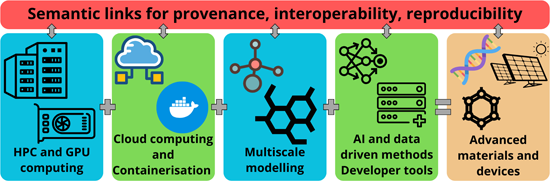
- complex simulations without extensive programming knowledge. The open-source nature of these packages encourages community contributions, fostering a collaborative environment and driving continuous improvement in materials simulation capabilities. Additionally, consumer-driven technologies like virtual
- experimental measurements, simulation results, and materials databases, into a unified model. This digital representation enables researchers to explore and analyze materials in a virtual environment, providing insights that would otherwise require extensive and time-consuming experimental testing [53][54
- reproducible, while giving the possibility to mix actual code with a markdown text and different media, an approach very akin to that of literate programming [76]. The main component of the Jupyter ecosystem is the Jupyter Notebook. The Jupyter Notebook provides an interactive computing environment that


Polymer lipid hybrid nanoparticles for phytochemical delivery: challenges, progress, and future prospects
Beilstein J. Nanotechnol. 2024, 15, 1473–1497, doi:10.3762/bjnano.15.118
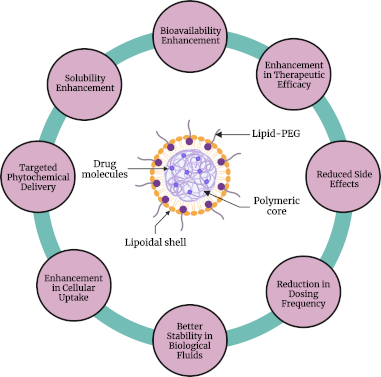
- and controlled release of the encapsulated drugs. Among all PLHNPs, these hybrid nanocarriers show the highest stability in the biological fluids and stimuli-responsive release of encapsulated drugs. In addition, the polymeric cage protects the drug from the harsh environment, and encapsulated drugs
- fabricated QCT-loaded PLHNPs (QCT-PLHNPs) for improved transfollicular delivery to treat alopecia [91]. The developed QCT-PLHNPs provided a lipophilic environment that effectively adheres to the scalp and shows significantly higher follicular uptake. In vivo studies in Sprague Dawley (SD) rats bearing


Effect of radiation-induced vacancy saturation on the first-order phase transformation in nanoparticles: insights from a model
Beilstein J. Nanotechnol. 2024, 15, 1453–1472, doi:10.3762/bjnano.15.117

- in an inert environment, can be considered highly dispersed composite materials (HDCMs). HDCMs exhibit potential for the use under conditions of high temperatures and radiation exposure, making them promising materials for new-generation modular nuclear reactors, advanced charge storage applications


Ion-induced surface reactions and deposition from Pt(CO)2Cl2 and Pt(CO)2Br2
Beilstein J. Nanotechnol. 2024, 15, 1427–1439, doi:10.3762/bjnano.15.115

- transformations of precursor thin films. In this approach, the precursor is adsorbed onto a cooled substrate to form 1–2 nm thin films. The effects of ion beam exposure on the thin films are characterized by X-ray photoelectron spectroscopy to identify changes in the films’ composition and chemical environment
- more heterogeneous local environment as the deposit forms from the molecular precursor, although the invariant peak position indicates that there is little change in the average chemical environment surrounding the halogen atoms. Since the loss of CO from all of the Pt(CO)2X2 films can be described by
- data in Figure S5 (Supporting Information File 1) reveal that no detectable Cl or C signals are present in the Ar+-induced Pt deposits. In contrast, electron-induced deposition of Pt from Pt(CO)2Cl2 was found to contain impurities depending on the background environment. Notably, electron-induced



Lithium niobate on insulator: an emerging nanophotonic crystal for optimized light control
Beilstein J. Nanotechnol. 2024, 15, 1415–1426, doi:10.3762/bjnano.15.114
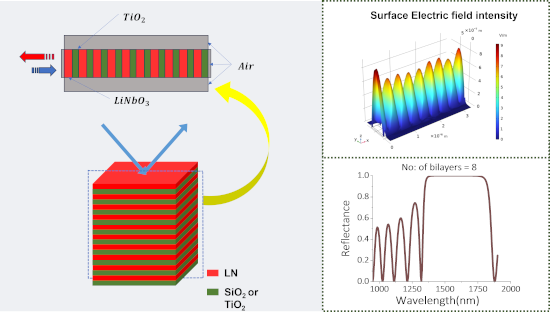
- second-harmonic generation and modulation. This confinement is also crucial in reducing the impact of environmental noise on quantum systems, providing a more stable and controlled environment for quantum computing experiments. Achieving phase matching is crucial for various quantum processes, such as


Nanotechnological approaches for efficient N2B delivery: from small-molecule drugs to biopharmaceuticals
Beilstein J. Nanotechnol. 2024, 15, 1400–1414, doi:10.3762/bjnano.15.113
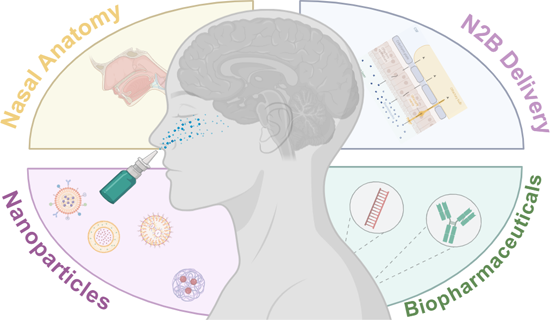
- advantages of liposomes include, but are not limited to, high biocompatibility, biodegradability, and prolonged retention in the blood stream when pegylated [91]. Despite their significant advantages, liposomes could also suffer from disadvantages such as short half-life in the body environment and drug


A biomimetic approach towards a universal slippery liquid infused surface coating
Beilstein J. Nanotechnol. 2024, 15, 1376–1389, doi:10.3762/bjnano.15.111
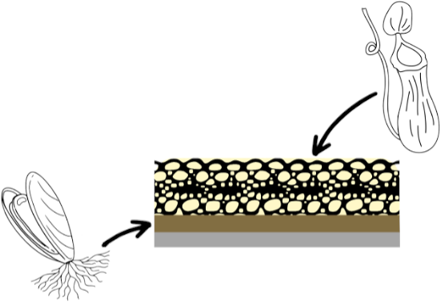
- ][13], anodization [3][14], silane chemistry [18], and polymer multilayers [5][15]. While these methods are effective, there is often a requirement for a specific chemical environment, like a plasma processing step or the growth of an oxide layer. In this investigation, we aim to simplify the




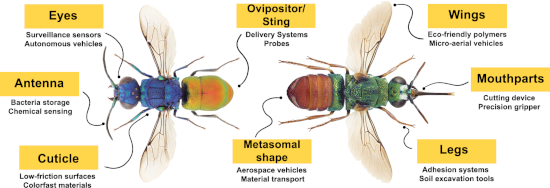
Hymenoptera and biomimetic surfaces: insights and innovations
Beilstein J. Nanotechnol. 2024, 15, 1333–1352, doi:10.3762/bjnano.15.107
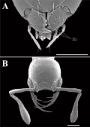
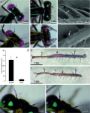
- for detecting chemical, mechanical, and hygrothermal/CO2 cues in the environment, overall known with the term sensilla (Figure 4). Hymenoptera sensilla encompass different morphologies and sizes, which also vary in number both among species and between sexes [54][55]. Such great variability is often







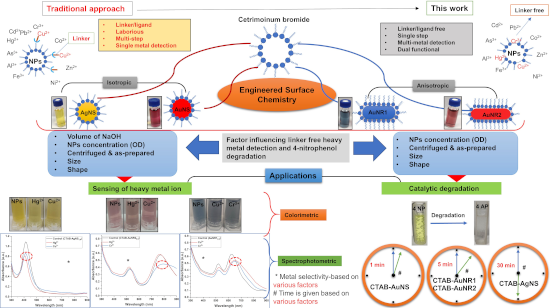
Nanoarchitectonics with cetrimonium bromide on metal nanoparticles for linker-free detection of toxic metal ions and catalytic degradation of 4-nitrophenol
Beilstein J. Nanotechnol. 2024, 15, 1312–1332, doi:10.3762/bjnano.15.106
- Akash Kumar Raja Gopal Rayavarapu Nanomaterial Toxicology Laboratory, Drug and Chemical Toxicology Group, Food, Drug and Chemical, Environment and Systems Toxicology (FEST) Divison, CSIR-Indian Institute of Toxicology Research (CSIR-IITR), Vishvigyan Bhawan, 31 Mahatma Gandhi Marg, Lucknow 226001
- and silver) nanoprobes are emerging as versatile colorimetric and spectrophotometric nanosensors for rapid detection/degradation of heavy metal ions and toxic pollutants that pose a serious challenge to environment and human health. Globally, acceleration of industrial growth and urbanization led to
- the increased release of pollutants into the environment, causing health concerns to humans. Untreated industrial effluents are released, and most heavy metal ions accumulate in water higher than the permissible limits, pollute drinking water, and are non-biodegradable. Heavy metal ions are




Interaction of graphene oxide with tannic acid: computational modeling and toxicity mitigation in C. elegans
Beilstein J. Nanotechnol. 2024, 15, 1297–1311, doi:10.3762/bjnano.15.105
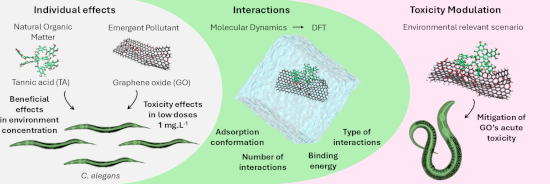
- relevance of GO, it is necessary to ensure its safe application, disposal, and regulation. This begins with understanding the behavior of this material in the environment and its impact on living organisms. Once in a biological/environmental medium, GO undergoes processes such as aggregation
- ions [8][9][10]. The physicochemical changes and interactions undergone by GO in the environment greatly influence the biological effects of this material. Recently, Bortolozzo et al. [11] showed that GO degradation by sodium hypochlorite resulted in the mitigation of GO toxicity to Caenorhabditis
- model in studies of environmental toxicology [31]. Because of its abundance in the environment, its important role in the decomposition and cycling of nutrients, and its sensibility to environmentally relevant concentrations of hazard products, C. elegans is considered a good environmental indicator of


Mn-doped ZnO nanopowders prepared by sol–gel and microwave-assisted sol–gel methods and their photocatalytic properties
Beilstein J. Nanotechnol. 2024, 15, 1283–1296, doi:10.3762/bjnano.15.104
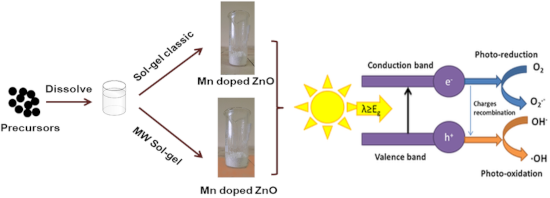
- by microwave irradiation has the advantage of saving time and energy. Developing new depollution technologies to mineralize organic compounds in aqueous media under solar light irradiation is now mandatory for environment preservation. The above-investigated materials proved to fit perfectly well to


New design of operational MEMS bridges for measurements of properties of FEBID-based nanostructures
Beilstein J. Nanotechnol. 2024, 15, 1273–1282, doi:10.3762/bjnano.15.103
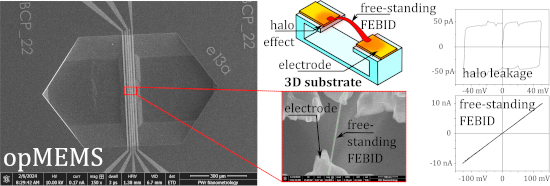
- [38], but this technique is difficult to apply in SEM chambers (the ultimate working environment for opMEMS) because of the difficulty of obtaining a controlled magnetic field inside. In the experiments, the resonance of the opMEMS was measured outside the vacuum chamber using a SIOS nano vibration


Functional morphology of cleaning devices in the damselfly Ischnura elegans (Odonata, Coenagrionidae)
Beilstein J. Nanotechnol. 2024, 15, 1260–1272, doi:10.3762/bjnano.15.102

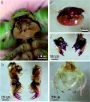
- across the body surface, maintenance of sensory organs, and displacement behavior in stressful conditions [3]. In insects, the chitinous exoskeleton, with the epidermis below it, forms the integumentary boundary between internal organs and the external environment. The exoskeleton can perform numerous


Enhanced catalytic reduction through in situ synthesized gold nanoparticles embedded in glucosamine/alginate nanocomposites
Beilstein J. Nanotechnol. 2024, 15, 1227–1237, doi:10.3762/bjnano.15.99
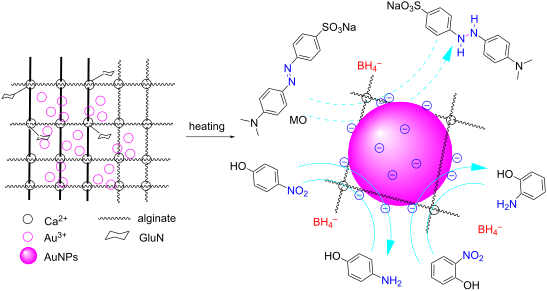
- synthesizing gold nanoparticles (AuNPs) within a glucosamine/alginate (GluN/Alg) nanocomposite via an ionotropic gelation mechanism in aqueous environment. The resulting nanocomposite, AuNPs@GluN/Alg, underwent thorough characterization using UV–vis, EDX, FTIR, SEM, TEM, SAED, and XRD analyses. The spherical
- environment and biological systems. Consequently, integrating green chemistry principles into nanotechnology has become a focus of nanoscience research [6][7]. Numerous studies have highlighted the use of natural compounds or natural sources in the green synthesis of AuNPs [8][9]. Polysaccharides, in
- absorb moisture from the ambient environment well. The second stage revealed a slightly higher thermal stability of AuNPs@GluN/Alg (25% mass loss in the range of 210–290 °C) compared to blank GluN/Alg (31% mass loss in the range of 210–320 °C), indicating that AuNPs enhance the thermal stability of the



Quantum-to-classical modeling of monolayer Ge2Se2 and its application in photovoltaic devices
Beilstein J. Nanotechnol. 2024, 15, 1153–1169, doi:10.3762/bjnano.15.94
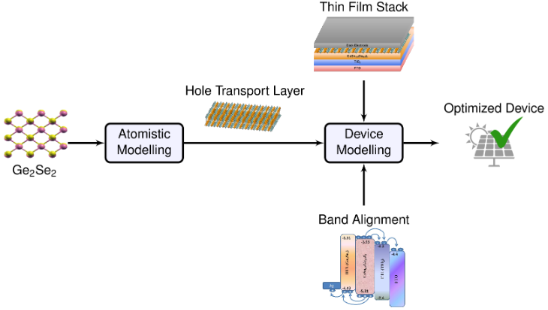
- promising and expedient because it has the potential to address the current energy demand without making a hazardous impact on the environment [1][2]. Henceforth, researchers have made continuous efforts to design efficient and robust PV devices and solar cells. The systematic study of various solar cells




Introducing third-generation periodic table descriptors for nano-qRASTR modeling of zebrafish toxicity of metal oxide nanoparticles
Beilstein J. Nanotechnol. 2024, 15, 1142–1152, doi:10.3762/bjnano.15.93
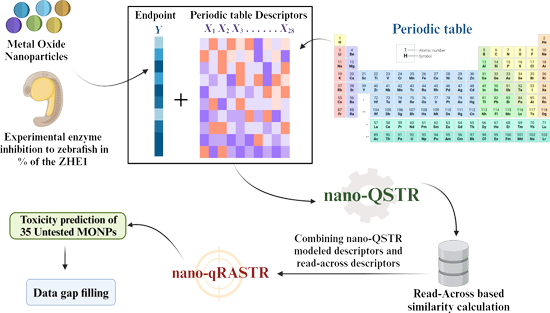
- amendments. However, it is concerning that the environment is affected because of the enormous production and inadvertent use of nanomaterials. Nanoparticles have been identified in wastewater streams, drinking water sources, and tap water in amounts ranging from nanograms to micrograms per liter [10]. Also


Local work function on graphene nanoribbons
Beilstein J. Nanotechnol. 2024, 15, 1125–1131, doi:10.3762/bjnano.15.91
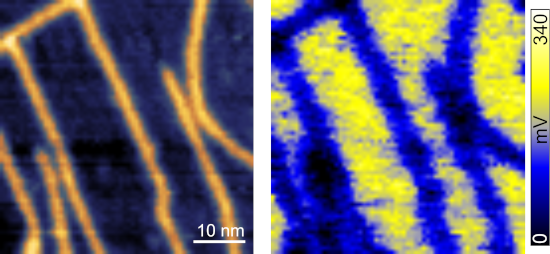
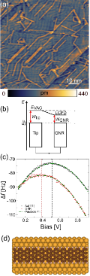
- bandgap [12], which is also related to the work function. GNRs can be synthesized with atomic precision in an ultrahigh-vacuum environment using on-surface synthesis [13]. This synthesis is well known on coinage metals, namely, Cu, Ag, and Au, which possess a high electron density. To study these unique

![[Graphic 1]](/bjnano/content/inline/2190-4286-15-91-i4.svg?max-width=637&scale=1.18182)
Unveiling the potential of alginate-based nanomaterials in sensing technology and smart delivery applications
Beilstein J. Nanotechnol. 2024, 15, 1077–1104, doi:10.3762/bjnano.15.88
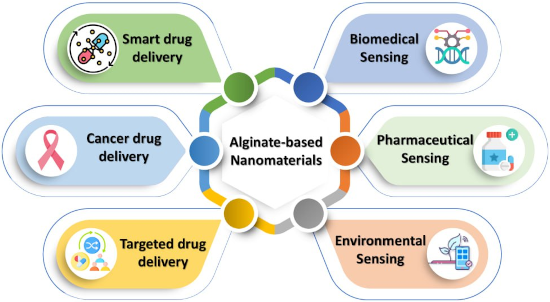
- environment, and industry [1][2][3][4][5][6][7]. When employing these technical devices, users can chose user-friendly, cost-effective, sensitive, and error-free detecting instruments [8]. The field of biosensors has received a lot of interest over the last years because of their amazing capacity for early
- parts of the human body. Despite several advantages, such as simplicity of administration and patient acceptance, conventional DDSs have significant limitations and disadvantages. They have limited efficacy through varying absorption rates of the drugs when given orally. Also, a low-pH environment and
- -based nanoparticles have excellent biocompatibility, which is crucial for sensing applications in biological systems [71]. Their biocompatible nature ensures minimal interference with the sample or surrounding environment, thereby enabling accurate and reliable measurements. Moreover, alginate-based


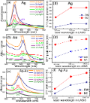
Effect of wavelength and liquid on formation of Ag, Au, Ag/Au nanoparticles via picosecond laser ablation and SERS-based detection of DMMP
Beilstein J. Nanotechnol. 2024, 15, 1054–1069, doi:10.3762/bjnano.15.86

- Abstract The present study investigates the effects of input wavelength (1064, 532, and 355 nm) and surrounding liquid environment (distilled water and aqueous NaCl solution) on the picosecond laser ablation on silver (Ag), gold (Au), and Ag/Au alloy targets. The efficacy of the laser ablation technique
- simulants was observed at a 325 nm Raman excitation. Our findings reveal that a higher ablation yield was observed at IR irradiation than those obtained at the other wavelengths. A size decrease of the NPs was noticed by changing the liquid environment to an electrolyte. These findings have significant
- to 5 mM, which decreased further. The SPR peaks were blue shifted for NPs obtained in NaCl compared to those obtained in DW, which could be attributed to an increase in the refractive index of the surrounding medium. The SPR shifts at different wavelengths of LASiS within the same environment suggest


Interface properties of nanostructured carbon-coated biological implants: an overview
Beilstein J. Nanotechnol. 2024, 15, 1041–1053, doi:10.3762/bjnano.15.85
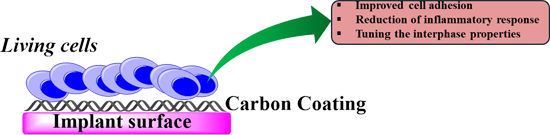
- information at the molecular level with the biological environment [21]. Nanostructured and nanosized materials represent a valid solution to offer all the abovementioned features thanks to their highly controllable properties. Nevertheless, the preparation of nanocarbon-containing materials is still complex
- environment is a dynamic and complex area, where several biological, physical, and chemical interactions can take place simultaneously, including immunological response [27], mechanical mismatch with the tissue [28], degradation [29], responses to stimuli [30], and proliferation of bacteria [31]. In the next