


Search results
Search for "filter" in Full Text gives 438 result(s) in Beilstein Journal of Nanotechnology. Showing first 200.
Kondo effects in small-bandgap carbon nanotube quantum dots
Beilstein J. Nanotechnol. 2020, 11, 1873–1890, doi:10.3762/bjnano.11.169
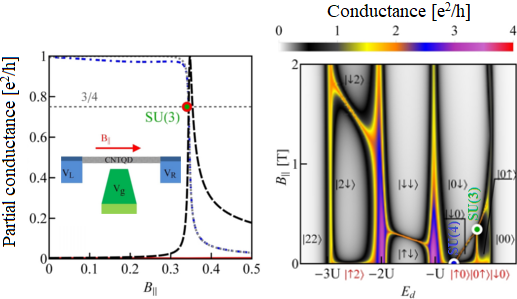
- . An interesting feature regarding spintronics is the occurrence of Kondo lines with high positive and negative conductance polarizations, between which one can switch through changing the gate voltage (spin filter). For any narrow-bandgap nanotube, one can move the SU(3) point between different

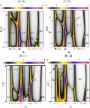
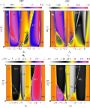


![[Graphic 37]](/bjnano/content/inline/2190-4286-11-169-i52.svg?max-width=637&scale=1.18182) as a functio...
as a functio...


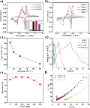
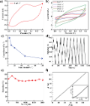
Self-standing heterostructured NiCx-NiFe-NC/biochar as a highly efficient cathode for lithium–oxygen batteries
Beilstein J. Nanotechnol. 2020, 11, 1809–1821, doi:10.3762/bjnano.11.163
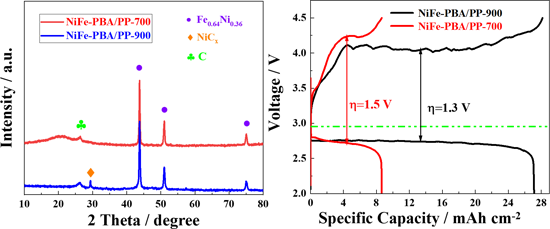
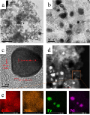
- the anode, and LiCF3SO3 dissolved in tetraethylene glycol dimethyl ether was used as the electrolyte. A glass filter (Whatman grade GF/D) was used as the separator in these coin cells. The cell assembly was carried out in an Ar-filled glove box (H2O < 0.5 ppm, O2 < 0.5 ppm). The sealed coin cells were






Imaging and milling resolution of light ion beams from helium ion microscopy and FIBs driven by liquid metal alloy ion sources
Beilstein J. Nanotechnol. 2020, 11, 1742–1749, doi:10.3762/bjnano.11.156
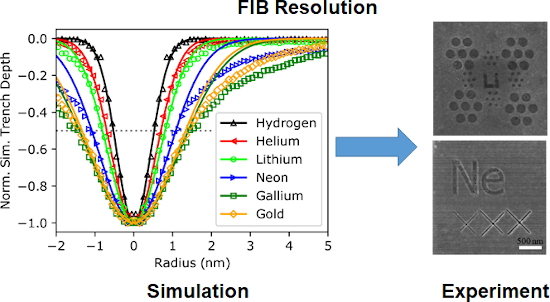
- process of field evaporation. This initially provides a beam containing ions with different masses and charge states, whose fractions depend on the composition of the alloy and the ionization probability. To overcome this problem, an ExB mass filter is introduced in the ion optical column, described in
- more detail in [2]. In principle, an ExB filter acts as a velocity filter and splits the beam according to the mass-to-charge ratio of its constituents. The mass resolution m/Δm of an ExB filter can be written in the following form [26]: Here, Uacc is the acceleration voltage of the ion beam and Ex is
- the electric field strength of the filter perpendicular to the optical axis of the ion column. l is the filter length, D is the distance between the filter and the separation aperture at the exit of the filter, and d is the diameter of this aperture. As an example for a LMAIS mass spectrum, we show


Cardiomyocyte uptake mechanism of a hydroxyapatite nanoparticle mediated gene delivery system
Beilstein J. Nanotechnol. 2020, 11, 1685–1692, doi:10.3762/bjnano.11.150
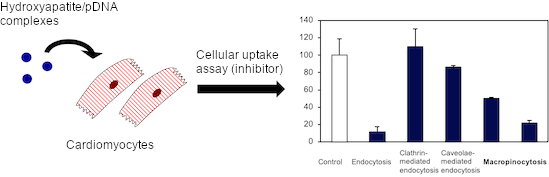
- 0.45 µm filter to remove aggregated nanoparticles. The concentration of the filtered solutions was measured using a calcium assay kit in accordance with the guidelines of the manufacturer (BioAssay Systems). TEM was performed to observe the size and shape of HAp nanoparticles at an acceleration voltage


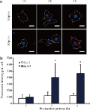
The influence of an interfacial hBN layer on the fluorescence of an organic molecule
Beilstein J. Nanotechnol. 2020, 11, 1663–1684, doi:10.3762/bjnano.11.149
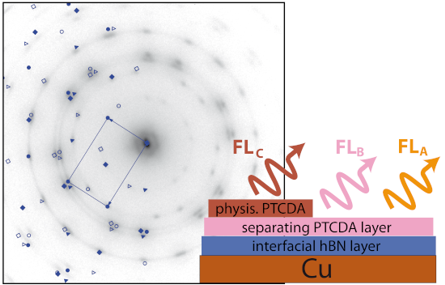
- pumped cw semiconductor laser (Coherent Sapphire LP UBB CDRH) with a wavelength of 458 nm (photon energy of 2.698 eV or 21,816 cm−1) and P = 50 mW. To block the laser light from entering the spectrometer, a long-pass filter (cut-off at 475 nm) was positioned in front of the entrance slit of the

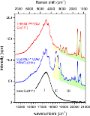


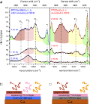
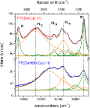


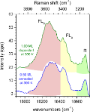
Electrokinetic characterization of synthetic protein nanoparticles
Beilstein J. Nanotechnol. 2020, 11, 1556–1567, doi:10.3762/bjnano.11.138
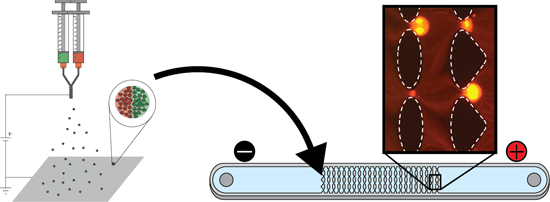
- solution of ultrapure H2O + 0.01% Tween 20. The collected solution was then sonicated on ice, run through a Falcon 40 μm cell filter (Fisher Scientific), and then centrifuged at 3,200 RCF for 5 min to remove large particles. The resulting supernatant was then centrifuged at 21,130 RCF for 40 min to collect

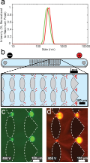


A wideband cryogenic microwave low-noise amplifier
Beilstein J. Nanotechnol. 2020, 11, 1484–1491, doi:10.3762/bjnano.11.131
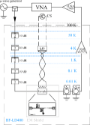
- highly stable current source (marked as CS in Figure 5). The sample was placed in the copper sample holder with Pb and Mu-metal electromagnetic shields at the 10 mK temperature stage. A two-stage differential low-pass filter (marked as LPF) with 10 kHz bandwidth and wide stopband frequency range was
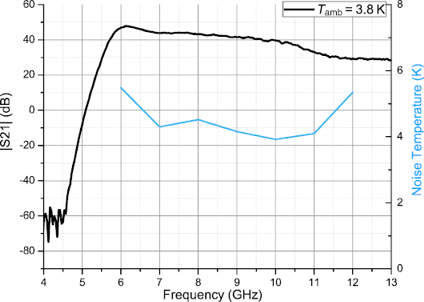
- would like to mention that the current graph was obtained with 100 Hz of the intermediate frequency VNA filter bandwidth and for our experimental setup only four averages were required. In this sense, the cLNA reduces the measurement time of the experiment, which is especially important for preliminary
- CC2 are cryogenic circulators with 50 Ω termination (LPF: low-pass filter for the superconducting coil line, CS: high-precision current source). The following setup was installed in a BlueFors BF-LD400 dilution refrigerator. The qubit “sweet spot”. The transmission (color intensity graph with the blue




Antimicrobial metal-based nanoparticles: a review on their synthesis, types and antimicrobial action
Beilstein J. Nanotechnol. 2020, 11, 1450–1469, doi:10.3762/bjnano.11.129
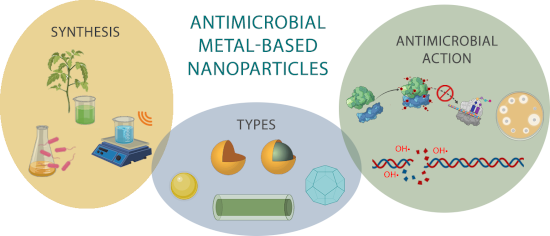
- NPs has been directed towards water disinfection, food packaging in addition to their known use as a UV filter to prevent skin cancer [114]. Lopez de Dicastillo et al. (2019) developed hollow TiO2 nanotubes and nanospheres with high antimicrobial activity through the combination of electrospinning and
- the growth of common microorganisms, such as bacteria, fungi, and yeast, in a rapid manner. As Figure 2 shows, in this method, a standardized concentration of the microorganism is inoculated onto the Petri dish containing the growth culture medium, and filter paper disks with the antimicrobial agents
- modifications included substituting the filter paper disks for wells made in the Petri dish agar which were filled with different concentrations of Ag NPs. After the incubation period, the inhibition zones were measured. This alternative is generally called the agar well diffusion method. The MIC values of Ag


Protruding hydrogen atoms as markers for the molecular orientation of a metallocene
Beilstein J. Nanotechnol. 2020, 11, 1432–1438, doi:10.3762/bjnano.11.127
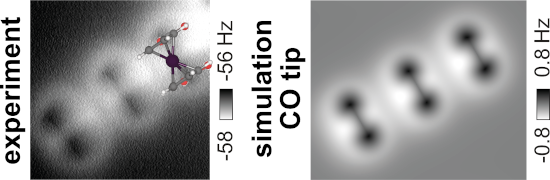
- in the constant-height mode (adapted from [22]). The orientations of the two geometries geo 1 and geo 2 are marked by solid green and dashed blue lines, respectively, and are included in all images with the respective orientation. (A five pixel averaging filter was applied to reduce noise within the
- molecules are marked by a green dumbbell. (a) Experimental STM image (U = 4 V, It = 2 pA). (b–e) Experimental constant-height NC-AFM data (f0 = 24363 Hz, Q0 ≈ 6000, A0 = 0.27 nm). Frequency shift ranges are shown below each image (inverted colour scales are used). A four pixel averaging filter was applied
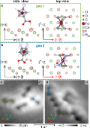


![[Graphic 10]](/bjnano/content/inline/2190-4286-11-127-i10.svg?max-width=637&scale=1.18182) row of FDCA molecules in geo 2. (a–c) Constant-height frequency-shi...
row of FDCA molecules in geo 2. (a–c) Constant-height frequency-shi...
An atomic force microscope integrated with a helium ion microscope for correlative nanoscale characterization
Beilstein J. Nanotechnol. 2020, 11, 1272–1279, doi:10.3762/bjnano.11.111
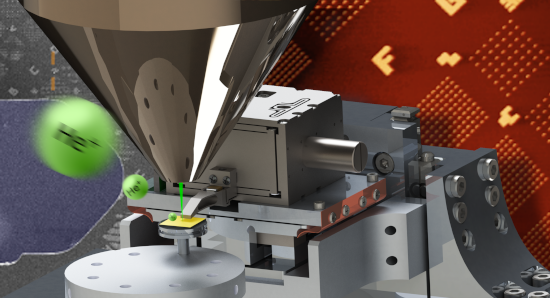
- significant oscillations were seen. AFM images were processed in the software Gwyddion [54]. Pixels were squared to account for X–Y pixel size mismatch when necessary, the background was flattened and a conservative de-noising filter was applied. Finally, hysteresis correction was performed in MATLAB using


Gas sorption porosimetry for the evaluation of hard carbons as anodes for Li- and Na-ion batteries
Beilstein J. Nanotechnol. 2020, 11, 1217–1229, doi:10.3762/bjnano.11.106
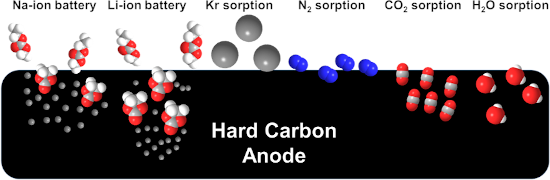
- investigate the Li-ion capacity of the hard carbon active materials, three-electrode Swagelok T-cells were assembled in an argon-filled glovebox using four glass fiber separators (glass microfiber filter, 691, VWR, Germany, with a diameter of 11 mm), a lithium counter electrode (450 µm thick Li foil, Rockwood


Revealing the local crystallinity of single silicon core–shell nanowires using tip-enhanced Raman spectroscopy
Beilstein J. Nanotechnol. 2020, 11, 1147–1156, doi:10.3762/bjnano.11.99
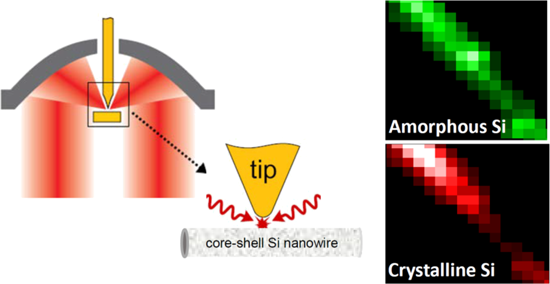
- ]. For polarization angle-resolved emission measurements, a Glan–Taylor prism as polarization filter is positioned in front of the entrance slit of the spectrometer. a) High-resolution TEM image of a segment of a SiNW obtained through Pt-catalyzed growth that exhibits several defects and differently


Thermophoretic tweezers for single nanoparticle manipulation
Beilstein J. Nanotechnol. 2020, 11, 1126–1133, doi:10.3762/bjnano.11.97
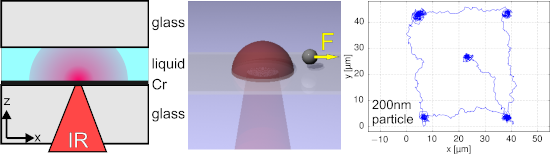
- implemented using a custom-built fluorescence microscope. By using an LED-optimized filter cube (Dapi/FITC/Cy3/Cy5 Quad LED HC Filter Set, AHF analysentechnik AG), Köhler illumination is utilized for fluorescence imaging using an LED as its light source. Light is collected from the sample plane by a 63


Gram-scale synthesis of splat-shaped Ag–TiO2 nanocomposites for enhanced antimicrobial properties
Beilstein J. Nanotechnol. 2020, 11, 1119–1125, doi:10.3762/bjnano.11.96

- solution. The antibacterial activity of the TiO2 and Ag–TiO2 NPs was examined by using the disk diffusion method. The sample solutions were prepared separately by using 0.005 g of the TiO2 NPs or Ag–TiO2 nanocomposites in 3 mL of purified water. Afterwards, 6 mm filter paper discs were soaked in the sample


A few-layer graphene/chlorin e6 hybrid nanomaterial and its application in photodynamic therapy against Candida albicans
Beilstein J. Nanotechnol. 2020, 11, 1054–1061, doi:10.3762/bjnano.11.90
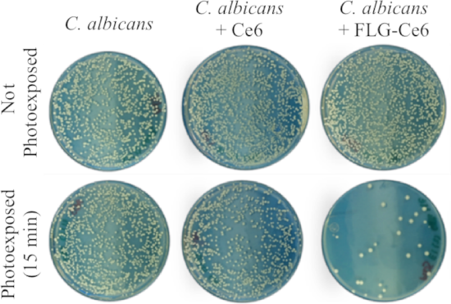
- by the exfoliation of graphite in sterile deionized water using Ce6 as the stabilizing molecule. To do this, graphite was sterilized by exposure to ultraviolet light for 45 min, and a methanol solution of Ce6 was filtered using a 0.2 μm pore size filter to ensure the sterility of the sample. The


Electrochemical nanostructuring of (111) oriented GaAs crystals: from porous structures to nanowires
Beilstein J. Nanotechnol. 2020, 11, 966–975, doi:10.3762/bjnano.11.81
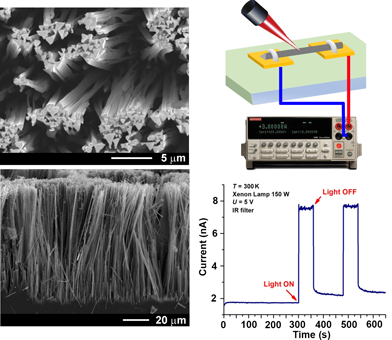
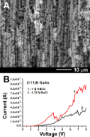
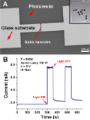
- was used. An optical filter was used to select radiation from the near-IR spectral range (700–2500 nm, optical power 130 mW). The current through the samples was measured by means of a Keithley’s Series 2400 source measure unit. Since the photoconductivity decay time is long enough, a mechanical





A 3D-polyphenylalanine network inside porous alumina: Synthesis and characterization of an inorganic–organic composite membrane
Beilstein J. Nanotechnol. 2020, 11, 938–951, doi:10.3762/bjnano.11.78
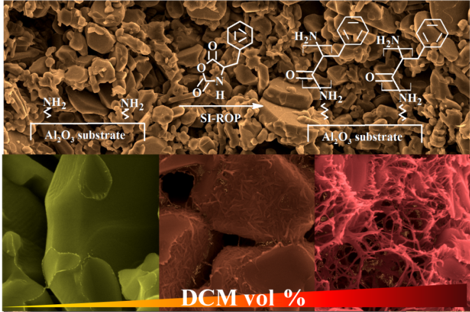
- filter holder from Millipore and sealed with silicone rings. Hydrolysis of methoxy groups and functionalization of the surface of the ALOX-membrane due a condensation reaction between hydroxyl groups on the surface and hydroxylated silanes. Synthesis of NCA-monomers from α-amino acids and triphosgene




Extracting viscoelastic material parameters using an atomic force microscope and static force spectroscopy
Beilstein J. Nanotechnol. 2020, 11, 922–937, doi:10.3762/bjnano.11.77
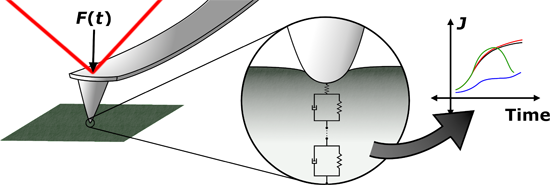
- , smoothing the deflection data with a simple first-order Butterworth filter can remove some of the measurement noise and make finding the deflection minimum easier. While searching for the smallest value without filtering, noise can cause neighboring points to appear lower than the actual minimum and


Measurement of electrostatic tip–sample interactions by time-domain Kelvin probe force microscopy
Beilstein J. Nanotechnol. 2020, 11, 911–921, doi:10.3762/bjnano.11.76
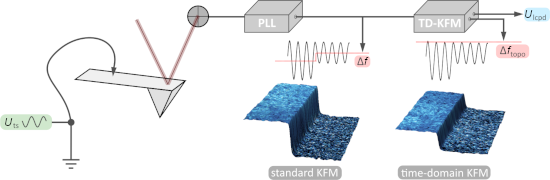
- Kalman filter; Kelvin probe force microscopy (KFM); time domain; Introduction Electrostatic forces are important interactions in non-contact atomic force microscopy (NC-AFM). They arise from differences in the work function of the tip and the sample, from trapped charges, or from potentials applied to
- found from their ratio which otherwise only depends on the parameters of the applied modulation, Uac and Udc. When applying KFM as an open-loop technique, optimization of filter parameters is possible, leading to an improved controller performance [16]. For correct height measurements, it is necessary
- . Another possibility for compensating the remaining frequency shift is the use of two-pass methods with feed-forward compensation techniques [20][21]. In this paper, we present a time-domain (TD) controller for KFM as a single-pass solution to the problem outlined above. Our method uses a Kalman filter as


Hexagonal boron nitride: a review of the emerging material platform for single-photon sources and the spin–photon interface
Beilstein J. Nanotechnol. 2020, 11, 740–769, doi:10.3762/bjnano.11.61
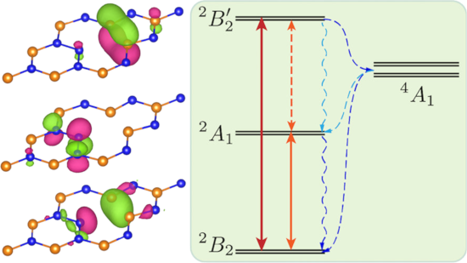
- as well as from nearby emitters which are not resolved by the optical imaging system. A small fraction of the background counts may also come from the laser back reflection that passes through the filter. The coincidence data is background corrected and then normalized to obtain the intensity




Exfoliation in a low boiling point solvent and electrochemical applications of MoO3
Beilstein J. Nanotechnol. 2020, 11, 662–670, doi:10.3762/bjnano.11.52
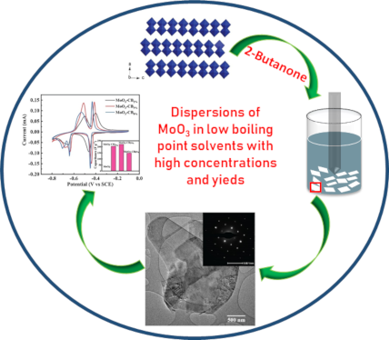
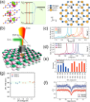
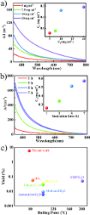
- steel current collectors, separated by filter paper dipped in 1 M H2SO4 electrolyte. Results and Discussion LPE assisted by tip sonication is an effective technique to peel off mono- and few-layers from layered bulk materials. In the crystal structure of α-MoO3 the atoms are connected to layers through

Soybean-derived blue photoluminescent carbon dots
Beilstein J. Nanotechnol. 2020, 11, 606–619, doi:10.3762/bjnano.11.48
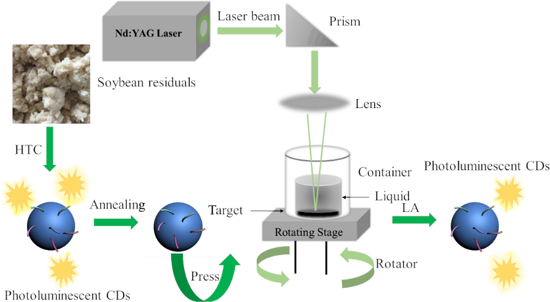
- processing at 200 °C for 20 h. After the Teflon-lined autoclave was cooled to room temperature in air, filtration with filter paper of 10 μm pore size was performed to separate the HTC-produced mixture. The filtrate was further filtered with filter paper of 450 nm pore size. The material collected after the


Preparation and in vivo evaluation of glyco-gold nanoparticles carrying synthetic mycobacterial hexaarabinofuranoside
Beilstein J. Nanotechnol. 2020, 11, 480–493, doi:10.3762/bjnano.11.39
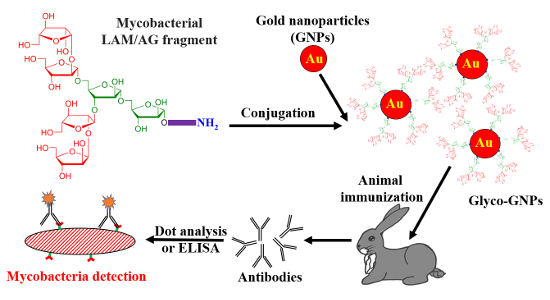
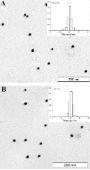
- obtained through holding the grid near an incandescent lamp for 2 min. The excess of the liquids was removed by touching the grid to a strip of the filter paper. The grid was washed by a drop of deionized water, dried and then analyzed by TEM. According to TEM data, the prepared Ara6-GNPs 3 and 4 had the


Current measurements in the intermittent-contact mode of atomic force microscopy using the Fourier method: a feasibility analysis
Beilstein J. Nanotechnol. 2020, 11, 453–465, doi:10.3762/bjnano.11.37
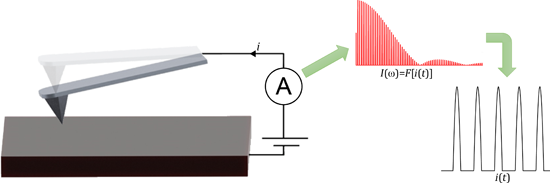
- in our case) acts like an antenna and creates a clear peak at the oscillation frequency in the measured current. This noise is not trivial to filter out due to its location being right at the principal frequency, where we also expect our strongest current peak. This noise may also cause high-gain




Synthesis and enhanced photocatalytic performance of 0D/2D CuO/tourmaline composite photocatalysts
Beilstein J. Nanotechnol. 2020, 11, 407–416, doi:10.3762/bjnano.11.31
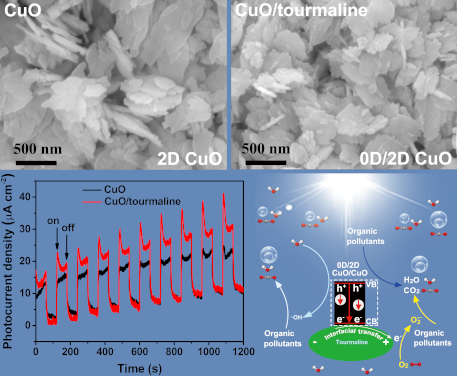
- NANO ZS90 instrument (Malvern, UK). Photocatalytic activity evaluation The photocatalytic performance was examined by the degradation of MB with light irradiation simulated by a 300 W Xe lamp with a 420 nm cut-off filter. In detail, 0.05 g of the as-synthesized photocatalyst was added into 100 mL of





