Search results
Search for "flexible" in Full Text gives 362 result(s) in Beilstein Journal of Nanotechnology. Showing first 200.
Walking energy harvesting and self-powered tracking system based on triboelectric nanogenerators
Beilstein J. Nanotechnol. 2020, 11, 1590–1595, doi:10.3762/bjnano.11.141
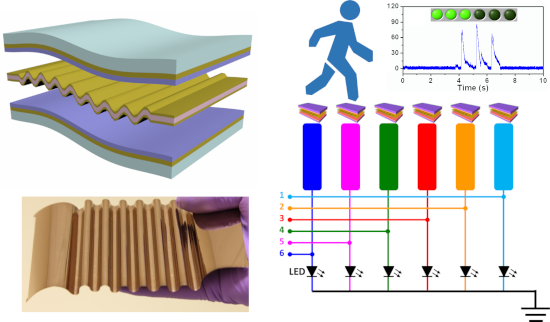
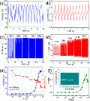
- to the extensive energy consumption and high population density in modern cities, the collection and use of scattered walking energy from the stream of people is crucial for the development of a green ecological city. Herein, a flexible undulated electrode-based triboelectric nanogenerator (u-TENG
- flexible, feasible, and unaffected by season, climate, or location. This work not only proposes a strategy for mechanical energy harvesting in public areas, including subway stations, hospitals, shopping malls, and business streets, but also offers a novel solution for smart cities and low-carbon
- excellent performance, which can be used as motion [35][36][37] and temperature sensors [38][39], UV detectors [40], tactile sensors [41][42][43], sensors for healthcare [44][45][46][47], humidity sensors, and gas sensors [48][49][50][51], for example. In this work, a flexible undulated electrode-based




Fabrication of nano/microstructures for SERS substrates using an electrochemical method
Beilstein J. Nanotechnol. 2020, 11, 1568–1576, doi:10.3762/bjnano.11.139
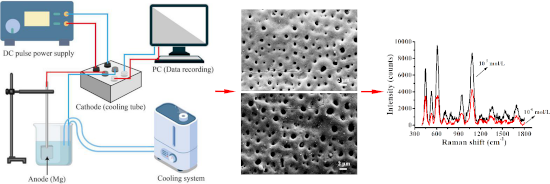
- could be detected. Thus, the electrochemical method can be used to create flexible Au-coated substrates of highly reproducible structure with long-term stability. SERS measurement of lysozyme on the nanopore substrates The enzyme lysozyme can rupture the cell walls of certain pathogens following


Controlling the electronic and physical coupling on dielectric thin films
Beilstein J. Nanotechnol. 2020, 11, 1492–1503, doi:10.3762/bjnano.11.132
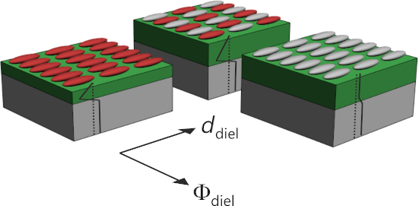
- to 5A, 6P is geometrically more flexible, more specifically, it is nonplanar in the gas phase and has a relatively low electron affinity. On the pristine Ag(100) substrate, 6P simply physisorbs with no evidence of LUMO hybridization, which remains unoccupied [21]. It will be shown that the
- suggests that the εr of thin dielectrics may be significantly different from the values of their bulk counterparts (e.g., the εr of the MgO film presented here is approximately half the value of bulk MgO). In contrast to pentacene, 6P is a geometrically flexible molecule. The charge transfer to 6P leads to




A wideband cryogenic microwave low-noise amplifier
Beilstein J. Nanotechnol. 2020, 11, 1484–1491, doi:10.3762/bjnano.11.131
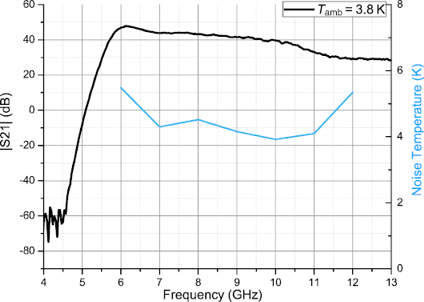
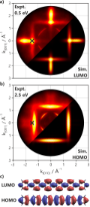
- bands. However, for some applications a flexible amplifier design is needed. Indeed, there are known schematic realizations of cLNAs based on discrete components [11][17][20][21][22][23][24]. The experimental characteristics of the presented amplifiers show that they do not provide gain values of more




Triboelectric nanogenerator based on Teflon/vitamin B1 powder for self-powered humidity sensing
Beilstein J. Nanotechnol. 2020, 11, 1394–1401, doi:10.3762/bjnano.11.123
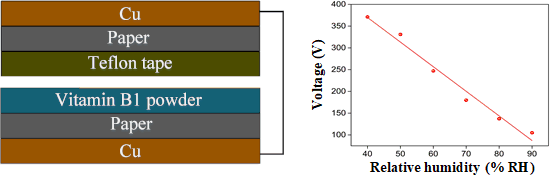
- -free humidity sensors by using biocompatible collagen nanofibrils [43]. More recently, Zhang et al. developed a TENG-driven self-powered flexible humidity sensor based on a tin disulfide nanoflower/reduced graphene oxide (SnS2/rGO) hybrid nanomaterial [44]. However, the large-scale application of TENGs




Atomic defect classification of the H–Si(100) surface through multi-mode scanning probe microscopy
Beilstein J. Nanotechnol. 2020, 11, 1346–1360, doi:10.3762/bjnano.11.119
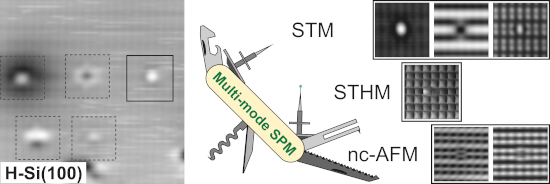
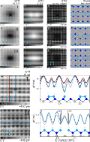
- File 1, Figure S2) while avoiding unwanted tip–sample contact. Figure 1f shows a variation of constant height STM where the tip apex is functionalized with a flexible hydrogen atom. The use of a flexible species at the apex of a metallic tip to provide enhanced contrast was first reported using CO
- separation they should mutually repel each other resulting in a less negative frequency shift over the group location, as shown. Again, AFM does not allow one to discern among individual hydrogen atoms due to the assumed flexible nature of the raised groups, creating a blurred appearance in AFM imaging as



Effect of localized helium ion irradiation on the performance of synthetic monolayer MoS2 field-effect transistors
Beilstein J. Nanotechnol. 2020, 11, 1329–1335, doi:10.3762/bjnano.11.117
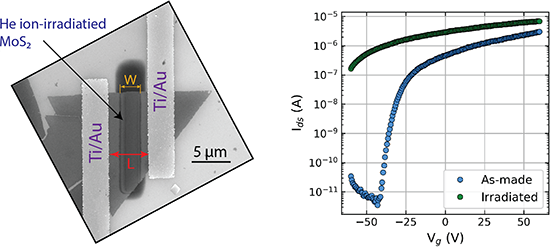
- materials; Introduction Layered two-dimensional (2D) semiconductors have come to the fore in recent years as promising candidates for the implementation of flexible, transparent, and low-power electronics. In particular, transition metal dichalcogenides (TMDs), such as molybdenum disulfide (MoS2), have


Cryogenic low-noise amplifiers for measurements with superconducting detectors
Beilstein J. Nanotechnol. 2020, 11, 1316–1320, doi:10.3762/bjnano.11.115
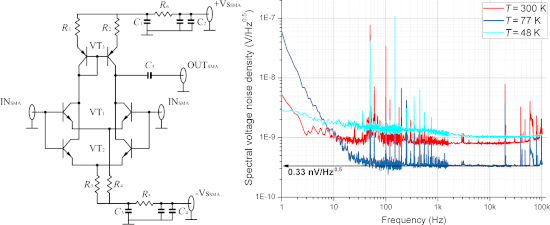
- -temperature measurements at 48 K were made on the uppermost cooling stage of He-7 refrigerator with a Cryomech pulse tube cryocooler PT-405. Flexible shielded coaxial cables with SMA connectors were used for circuit biasing and for the input and output. We used an additional 40 dB attenuator at the SR780


Photothermally active nanoparticles as a promising tool for eliminating bacteria and biofilms
Beilstein J. Nanotechnol. 2020, 11, 1134–1146, doi:10.3762/bjnano.11.98
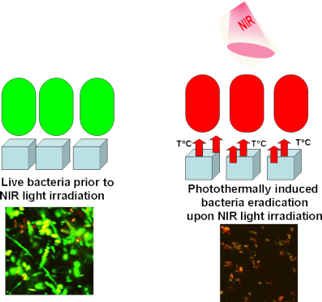
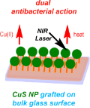
- did not discern a difference in bacteria eradication with respect to the laser irradiation modality (continuous or pulsed). A flexible patch capable of rapidly treating subcutaneous wound infections upon NIR light irradiation was fabricated [68]. This patch combined the photothermal properties of gold
- nanohole arrays with reduced graphene oxide nanosheets in a unique and flexible polyimide film for laser-gated pathogen inactivation. For the in vivo experiments, the patch was irradiated for 5 min with an LED array (940 nm, 10 W) and the patch surface temperature increased to 52 °C. These tests indicated


Light–matter interactions in two-dimensional layered WSe2 for gauging evolution of phonon dynamics
Beilstein J. Nanotechnol. 2020, 11, 782–797, doi:10.3762/bjnano.11.63
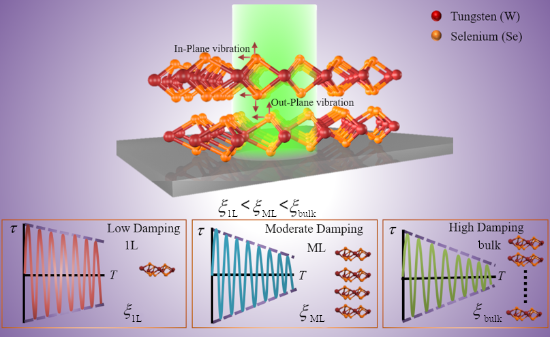
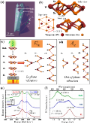
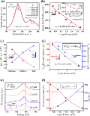
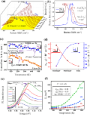
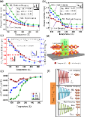
- interaction while the intra-layer bonding is via the strong covalent interaction. This makes them inherently flexible and good candidates for flexible electronics [9], optoelectronics [10], and other related applications [11][12]. Amongst the TMDCs, WSe2 offers unique advantages for device applications, which
A novel dry-blending method to reduce the coefficient of thermal expansion of polymer templates for OTFT electrodes
Beilstein J. Nanotechnol. 2020, 11, 671–677, doi:10.3762/bjnano.11.53
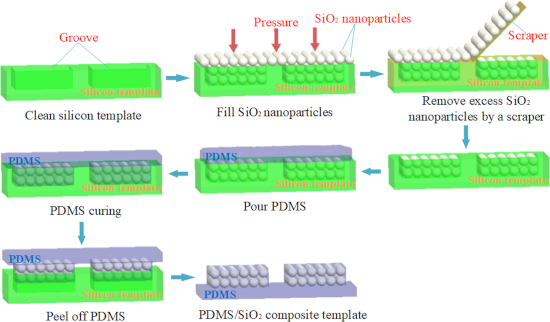
- -generation large-area, light-weight, flexible, and stretchable optoelectronic applications [1][2], including flexible displays [3], electronic papers [4], sensors [5], and medical applications [6]. Fabricating high-performance OTFTs usually requires that the electrodes on the polymer template are precisely
- of flexible displays, electronic papers, sensors, and medical applications, and provide new solutions for constructing large-area, light-weight, flexible, and stretchable optoelectronic applications. The experimental procedure for preparation of the PDMS/SiO2 composite template via dry blending: (a


Exfoliation in a low boiling point solvent and electrochemical applications of MoO3
Beilstein J. Nanotechnol. 2020, 11, 662–670, doi:10.3762/bjnano.11.52
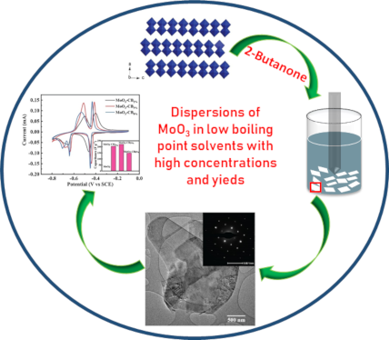
- dimethylformamide are the best solvents [10]. The high boiling point of these dispersions (bp > 150 °C) restrict the usage in flexible devices along with issue that these solvents are also toxic (NFPA 704 health code above 2 [11]). There are reports in literature where MoO3 has been exfoliated in solvents with low
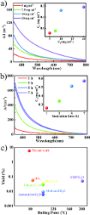
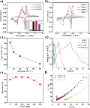
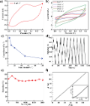
- for the fabrication of flexible supercapacitors for wearable electronics. (a) UV–vis spectra of MoO3 dispersions obtained from different initial concentrations (Ci). The inset shows the final concentration as a function of the initial concentration; (b) UV–vis spectra of MoO3 dispersions obtained from

Multilayer capsules made of weak polyelectrolytes: a review on the preparation, functionalization and applications in drug delivery
Beilstein J. Nanotechnol. 2020, 11, 508–532, doi:10.3762/bjnano.11.41
- microparticles (10–200 µm) fabricated via stop flow lithography have emerged as useful templates to form custom-shaped and flexible microcapsules of poly-ʟ-lysine (PLL) [36]. The shell was formed by diffusion of PLL into an oppositely charged hydrogel matrix, enabling an easy surface modification that can be



Preparation and in vivo evaluation of glyco-gold nanoparticles carrying synthetic mycobacterial hexaarabinofuranoside
Beilstein J. Nanotechnol. 2020, 11, 480–493, doi:10.3762/bjnano.11.39
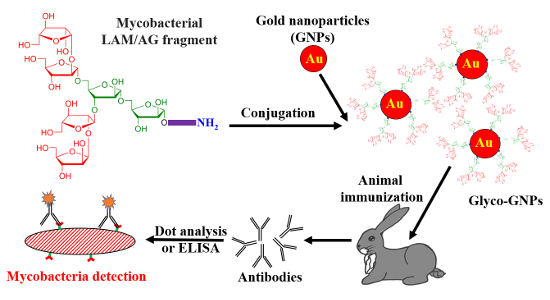
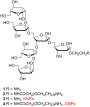
- conjugated to a much longer and flexible hydrophilic linker based on heptaethylene glycol (EG7), which was initially expected to allow for a better recognition of the glycan epitope on the surface of Ara6C2EG7NH2-GNPs 4 than on the surface of Ara6C2NH2-GNPs 3. The differences in hydrophilicity and rigidity


Interfacial charge transfer processes in 2D and 3D semiconducting hybrid perovskites: azobenzene as photoswitchable ligand
Beilstein J. Nanotechnol. 2020, 11, 466–479, doi:10.3762/bjnano.11.38
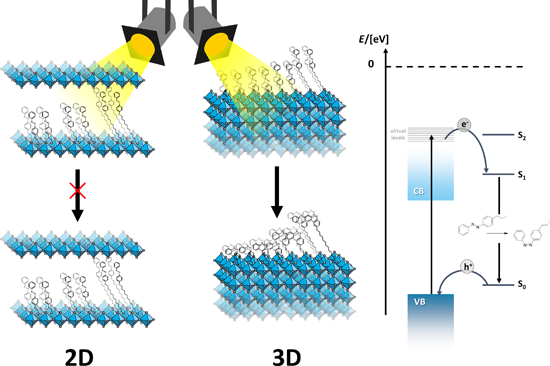
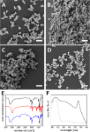
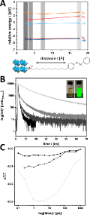
- flexible organic molecule. Our next goal is to check if photoswitching is still possible after integration into the perovskite. Sasai et al. reported the photoswitching of azobenzene molecules in a 2D LHP tracking the optical properties of the molecules [41]. The photoswitching properties of the integrated




Understanding nanoparticle flow with a new in vitro experimental and computational approach using hydrogel channels
Beilstein J. Nanotechnol. 2020, 11, 296–309, doi:10.3762/bjnano.11.22
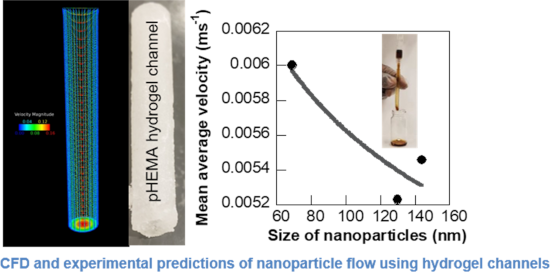
- equation for flow [30][31]. Fullstone et al. have used CFD in couple with flexible large-scale agent based modeling to predict NP distributions in vivo [32]. The size and shape of the NPs greatly influenced the adhesion and path of NPs within the vascular network. This CFD model predicted a higher
- prepared with 1.5 mL of DI water were opaque and tougher compared to the other formulations and considered less suitable for forming flexible flow channels. In addition to mechanical flexibility, surface smoothness of the hydrogels was another key parameter in selecting a suitable material for fabricating


Phase inversion-based nanoemulsions of medium chain triglyceride as potential drug delivery system for parenteral applications
Beilstein J. Nanotechnol. 2020, 11, 213–224, doi:10.3762/bjnano.11.16
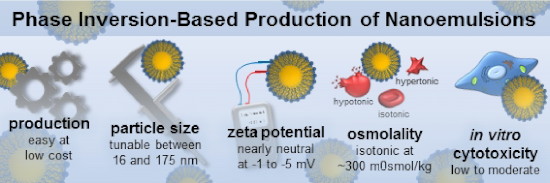
- system with a constant chemical potential and hence a constant osmotic pressure [16]. The aim of this study was to investigate the phase inversion-based production of a lipid nanocarrier without using phospholipids. Thus, instead of solid shelled nanocapsules, flexible nanoemulsions should be formed




Nonclassical dynamic modeling of nano/microparticles during nanomanipulation processes
Beilstein J. Nanotechnol. 2020, 11, 147–166, doi:10.3762/bjnano.11.13
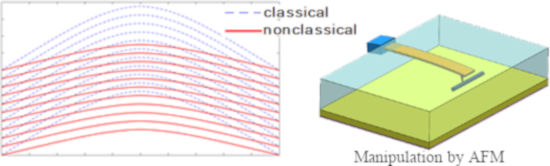
- experimental results were consistent with their proposed algorithm [21]. Wu et al. studied the automated manipulation of flexible nanowires using AFM. Although the automated manipulation of solid nanoparticles was already investigated, it was not generalizable to flexible nanowires due to the complexity of
- flexible behavior. Also, for manipulating multiple nanowires, they presented a method based on graph theory that saved significant time owing to being independent from intermediate scanning [22]. Mahdjour Firouzi et al. tried to simulate the manipulation of biological nanoparticles using molecular dynamics
- requires a material length scale parameter. This constant for the gold particle according to Fathalilou et al. [31] is considered to be l = 1.12 µm. The design parameters in modeling a gold nanoparticle are presented in Table 3. Since the cylindrical gold nanoparticle is flexible, the exerted forces lead







Recent progress in perovskite solar cells: the perovskite layer
Beilstein J. Nanotechnol. 2020, 11, 51–60, doi:10.3762/bjnano.11.5

- coverage of the resulting perovskite layers. The possibility of applying the spray-coating technique to the roll-to-roll fabrication process for highly efficient, flexible large-area PSCs has been demonstrated. It is widely believed that by the use of spray coating a two-step deposition of precursor


Abrupt elastic-to-plastic transition in pentagonal nanowires under bending
Beilstein J. Nanotechnol. 2019, 10, 2468–2476, doi:10.3762/bjnano.10.237
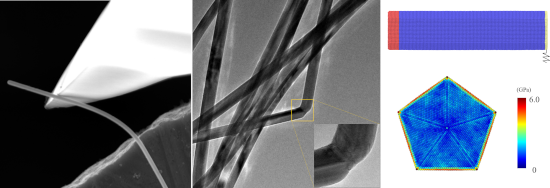
- flexible polymer composite materials. Keywords: finite element method; mechanical properties; molecular dynamics; nanowires; Introduction Nanostructures comprised of noble metals with face centered cubic (FCC) crystal structure (Au, Ag and Cu according to the most common physical definition) prepared via
- materials is expected to lead to mechanical properties different from those of regular monocrystals [7]. This fact must be taken into account when considering applications in which nanocrystals are subjected to mechanical deformation, for example, NW-based nanoswitches [8], nanoresonators [9] and flexible
- electronics [10][11]. In the last case NWs are used as a conductive network in composition with flexible polymer materials such as polydimethylsiloxane (PDMS) [12][13]. The reliability of flexible devices in high-strain conditions will be governed by the mechanical reliability of the individual NWs inside the



Multiple Fano resonances with flexible tunablity based on symmetry-breaking resonators
Beilstein J. Nanotechnol. 2019, 10, 2459–2467, doi:10.3762/bjnano.10.236
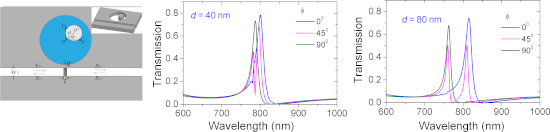
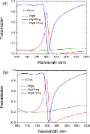
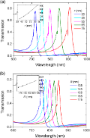
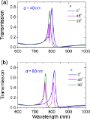
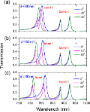
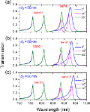
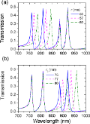
- components [19][20][21][22]. Fano resonances have been obtained in MDM-based waveguide–cavity coupled systems [23][24]. In recent years, multiple Fano resonances have aroused interest [25][26][27]. Compared with a single Fano resonance, multiple Fano resonances have more versatile and flexible applications




Atomic force acoustic microscopy reveals the influence of substrate stiffness and topography on cell behavior
Beilstein J. Nanotechnol. 2019, 10, 2329–2337, doi:10.3762/bjnano.10.223
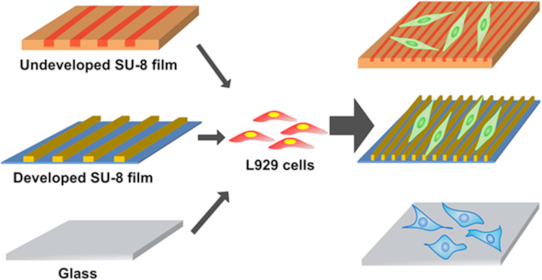
- distribution of molecules. However, many native tissues are not homogeneously stiff and it is not clear whether the controlled presentation of rigid and flexible material axes on the substrate governs the cytoskeletal and nuclear morphology [14]. Several techniques such as fluorescence microscopy [14][15


Design and facile synthesis of defect-rich C-MoS2/rGO nanosheets for enhanced lithium–sulfur battery performance
Beilstein J. Nanotechnol. 2019, 10, 2251–2260, doi:10.3762/bjnano.10.217
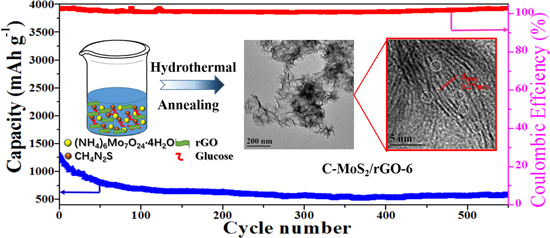
- sulfur [6][7][8], constructing Li2Sn blocking interlayers [9][10][11], and applying functional separators [12][13][14][15]. Although there are many methods, the most common strategy is to combine sulfur with various carbon materials owing to their excellent conductivity and flexible nanostructures


A novel all-fiber-based LiFePO4/Li4Ti5O12 battery with self-standing nanofiber membrane electrodes
Beilstein J. Nanotechnol. 2019, 10, 2229–2237, doi:10.3762/bjnano.10.215
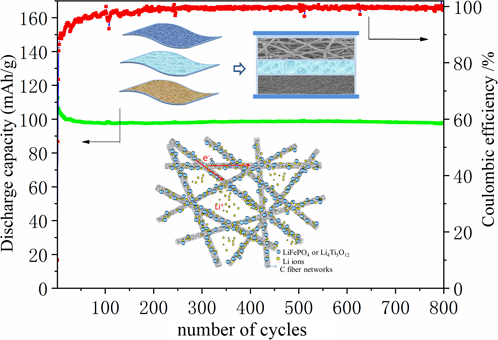
- , Chongqing, 400715, China 10.3762/bjnano.10.215 Abstract Electrodes with high conductivity and flexibility are crucial to the development of flexible lithium-ion batteries. In this study, three-dimensional (3D) LiFePO4 and Li4Ti5O12 fiber membrane materials were prepared through electrospinning and directly
- attributed to the high electronic and ionic conductivity provided by the 3D network structure of the self-standing electrodes. This design and preparation method for all-fiber-based lithium-ion batteries provides a novel strategy for the development of high-performance flexible batteries. Keywords: 3D
- network; electrospinning; flexible electrodes; lithium ion battery; nanofiber; self-standing electrodes; Introduction With the rapid development of renewable energy technologies, electric vehicles and electronic devices, energy storage technology has become a focus of global research [1][2][3][4][5][6][7


Mannosylated brush copolymers based on poly(ethylene glycol) and poly(ε-caprolactone) as multivalent lectin-binding nanomaterials
Beilstein J. Nanotechnol. 2019, 10, 2192–2206, doi:10.3762/bjnano.10.212
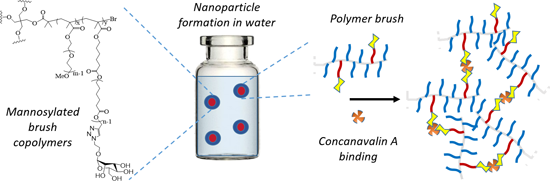
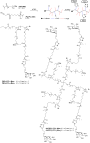
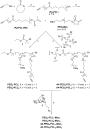
- mannose valencies (1, 2, 4, and 8). The structures, acronyms and valencies of the synthesized comb-like-glycopolymers are reported in Figure 1. The final glycopolymers have a flexible structure that should confer them the possibility to freely adjust the position of the mannose residues, matching the one
- targeted, in order to obtain macromolecules of different valencies, while maintaining relatively short and flexible polymer chains, which minimize steric hindrance during lectin binding. Different percentages of PEG and PCL macromonomers were used, since the number of PCL side chains defined the final