Search results
Search for "impedance" in Full Text gives 197 result(s) in Beilstein Journal of Nanotechnology.
Synthesis and characterization of electrospun molybdenum dioxide–carbon nanofibers as sulfur matrix additives for rechargeable lithium–sulfur battery applications
Beilstein J. Nanotechnol. 2018, 9, 262–270, doi:10.3762/bjnano.9.28
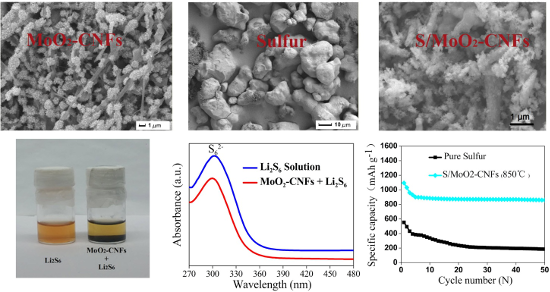
- electrodes were evaluated by cyclic voltammetry (CV), galvanostatic charge–discharge and electrochemical impedance spectroscopy (EIS). The electrochemical characteristics of the cells with S/MoO2–CNF cathodes and pure sulfur cathodes were examined by CV in the voltage range of 1.7–3.0 V at the scanning rate
- effect of the MoO2–CNF matrix material calcined at different temperatures on the electrochemical performance of the sulfur cathode. Compared to the CV technique, the diffusion coefficients under equilibrium conditions can be expressed by electrochemical impedance spectroscopy (EIS). Additionally, the
- steep sloping line in the low-frequency region, corresponding to the Warburg impedance, was represented by W0. The fitting results are listed in Table 4. Obviously, the S/MoO2–CNF cathodes possessed lower charge transfer resistance than pure sulfur cathodes, indicating better charge transfer between the


Electrical properties of a liquid crystal dispersed in an electrospun cellulose acetate network
Beilstein J. Nanotechnol. 2018, 9, 155–163, doi:10.3762/bjnano.9.18
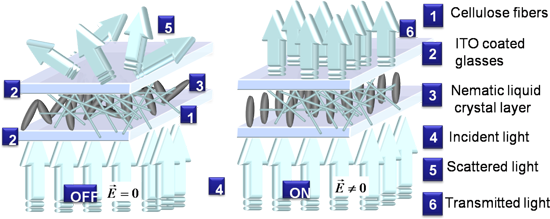
- techniques, such as polarized optical microscopy, dielectric spectroscopy and impedance measurements. Dielectric constant and electric energy loss were studied as a function of frequency and temperature. The activation energy was evaluated and the relaxation time was obtained by fitting the spectra of the
- dielectric loss with the Havriliak–Negami functions. To determine the electrical characteristics of the studied samples, impedance measurements results were treated using the Cole–Cole diagram and the three-element equivalent model. Keywords: cellulose nanocomposite; dielectric spectroscopy; impedance
- fitted to the Havriliak–Negami [37] model and further modelled by the Vogel–Fulcher–Tammann law. In addition to this, impedance spectroscopy measurements were performed, and the results were processed using a simple equivalent circuit model, that permits the extraction of electric circuit parameters


Facile synthesis of silver/silver thiocyanate (Ag@AgSCN) plasmonic nanostructures with enhanced photocatalytic performance
Beilstein J. Nanotechnol. 2017, 8, 2781–2789, doi:10.3762/bjnano.8.277
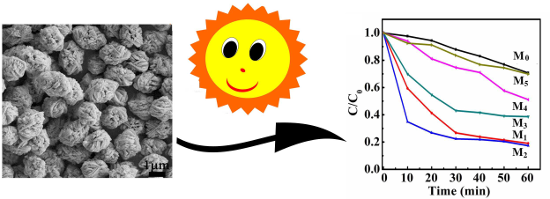
- 4.8-fold faster than that of the bare AgSCN, so the existence of an appropriate amount of Ag played a prominent role in the photodegradation process. Electrochemical impedance spectrum (EIS) was used to illustrate the rate of charge transfer for the photocatalysts. Nyquist plots of M0, M1, M2, M3, M4
- source. N2 adsorption–desorption isotherms were determined by using a Quadrasorb SI apparatus to obtain the Brunauer–Emmett–Teller (BET) surface area. Electrochemical impedance spectroscopy (EIS) was recorded on a CHI660A electrochemical workstation (CH Instrument Company, Shanghai, China


Beyond Moore’s technologies: operation principles of a superconductor alternative
Beilstein J. Nanotechnol. 2017, 8, 2689–2710, doi:10.3762/bjnano.8.269

- resistance, which provide a high output impedance and a high voltage signal [86][87]. Both devices can be utilized as an interface [85][88][89] between superconductor circuit and CMOS electronics or memory depending on requirements to output signal and energy efficiency. It is well known that the major parts


One-step chemical vapor deposition synthesis and supercapacitor performance of nitrogen-doped porous carbon–carbon nanotube hybrids
Beilstein J. Nanotechnol. 2017, 8, 2669–2679, doi:10.3762/bjnano.8.267
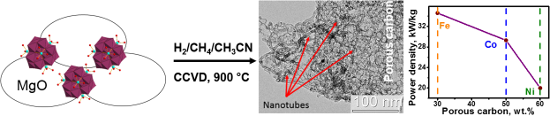
- concentration of incorporated nitrogen. The hybrid materials were tested as electrodes in a 1M H2SO4 electrolyte and the best performance was found for a nitrogen-enriched material produced using the Fe/Mo catalyst. From the electrochemical impedance spectroscopy data, it was concluded that the nitrogen doping
- reduces the resistance at the carbon surface/electrolyte interface and the nanotubes permeating the porous carbon provide fast charge transport in the cell. Keywords: bimetallic catalyst; electrochemical impedance spectroscopy; N-doped carbon; porous carbon–carbon nanotube hybrid; supercapacitor
- composition of the obtained CNx hybrids were correlated with the data of cyclic voltammetry (CV) and electrochemical impedance spectroscopy (EIS) measurements in 1 M H2SO4 electrolyte. Experimental Synthesis Catalysts were prepared using polyoxomolybdate clusters of the ε-Keggin-type structure Mo12O28(μ2-OH


Enhanced photoelectrochemical water splitting performance using morphology-controlled BiVO4 with W doping
Beilstein J. Nanotechnol. 2017, 8, 2640–2647, doi:10.3762/bjnano.8.264
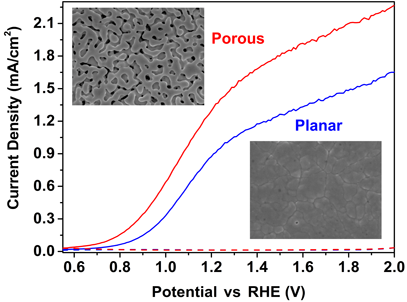
- calculated from the electrochemical impedance measured in the dark. The carrier densities of W-doped BiVO4 with planar (0-water) and nanoporous (1-EG) structure were found to be 3.7·1020 cm−3 and 3.3·1020 cm−3, respectively. This indicates that the structure difference has little effect on the carrier
- photocurrents with hole scavenger was measured in a 0.5 M Na2SO4 aqueous solution with 0.1 M Na2SO3. Electrochemical impedance spectroscopy (EIS) measurements were carried out under illumination of an AM 1.5G solar simulator in a 0.5 M Na2SO4 electrolyte at the applied potential of 1.23 V vs RHE using a PCI4
- frequency of 1 kHz in 0.5 M Na2SO4 aqueous solution. (b) Electrochemical impedance spectra of W-doped BiVO4 with planar (0-water) and nanoporous (1-EG) structure at the applied potential of 1.23 V vs RHE under simulated solar illumination in 0.5 M Na2SO4 electrolyte. Inset is the equivalent circuit employed


Systematic control of α-Fe2O3 crystal growth direction for improved electrochemical performance of lithium-ion battery anodes
Beilstein J. Nanotechnol. 2017, 8, 2032–2044, doi:10.3762/bjnano.8.204
- 0.1 C and discharge current varying from 0.1 to 3 C. Cycling voltammetry (CV) was performed in the range of 0.05 to 3.00 V with a sweep rate of 0.1 mV s−1 on a Solartron electrochemical workstation (1470E and SI 1255B impedance/gain-phase analyzer coupled with a potentiostat). Results and Discussion


Bi-layer sandwich film for antibacterial catheters
Beilstein J. Nanotechnol. 2017, 8, 1982–2001, doi:10.3762/bjnano.8.199
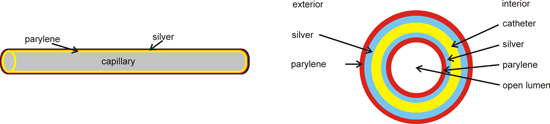
- involve measurement of the impedance of an incompletely isolating layer on top of an electrode. Applying AFM, the small areas of the surface can be scanned and evaluated regarding parameters like roughness and porosity. While the first parameter is the standard output of AFM and is displayed as 3D
- is called electrical impedance spectroscopy (EIS) and is a widespread technique to evaluate the quality of coatings quantitatively. In contrast to the first method, larger areas can be easily tested, and a quantitative result is yielded, under the expense of spatial resolution. A simple
- capacitance of the electrochemical double layer, Cdl. RΩ is the ohmic resistance of the solution of the electrolyte (Figure 11). To measure the impedance of the system the electrodes are connected to a HP 4192A Impedance Analyzer, which measures the impedance Z and the phase angle φ between test voltage and


Freestanding graphene/MnO2 cathodes for Li-ion batteries
Beilstein J. Nanotechnol. 2017, 8, 1932–1938, doi:10.3762/bjnano.8.193
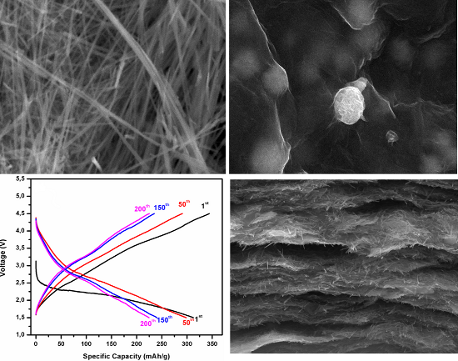
- specific capacity of the freestanding graphene/MnO2 cathodes was calculated depending on the active mass of the graphene/MnO2 composite (about 20 mg) on Al foil. The resistance of the electrodes was evaluated via electrochemical impedance spectroscopy (EIS) using a Nyquist curve in the frequency range 1000
- the cell, electrochemical impedance spectroscopy (EIS) measurements were performed and results are shown in Figure 5. The width of the Nyquist curves indicates the charge transfer resistance (Rct) of the graphene/α-MnO2, graphene/β-MnO2 and graphene/γ-MnO2 cathodes [30]. As seen from Figure 5, the


Optical techniques for cervical neoplasia detection
Beilstein J. Nanotechnol. 2017, 8, 1844–1862, doi:10.3762/bjnano.8.186




Oxidative stabilization of polyacrylonitrile nanofibers and carbon nanofibers containing graphene oxide (GO): a spectroscopic and electrochemical study
Beilstein J. Nanotechnol. 2017, 8, 1616–1628, doi:10.3762/bjnano.8.161
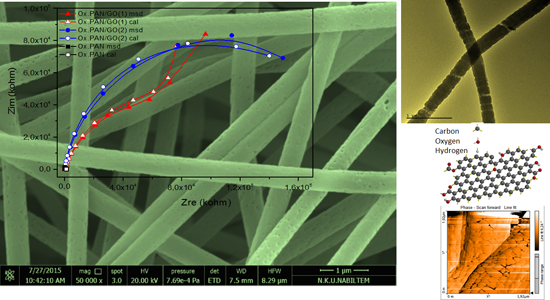
- analyzer, and thermal studies are conducted by using thermogravimetric analysis. Electrochemical impedance spectroscopy, and cyclic voltammetry are used to investigate capacitive behavior of the products. The proposed equivalent circuit model was consistent with charge-transfer processes taking place at
- (CV) and electrochemical impedance spectroscopy (EIS). Electrochemical measurements were performed by using potentiostat 2263 Electrochemical Analyser (Princeton Applied Research, Tennessee, USA). EIS data were simulated with the electrical equivalent circuit by ZSimpWin V.3.10 analysis program
- the low-temperature carbonization process with increasing elimination of other elements (N,H,O) [38][48]. Electrochemical impedance measurements of oxidized PAN nanofibers Electrochemical properties of oxidized PAN nanofibers were analyzed by using electrochemical impedance spectroscopy (EIS). EIS


Parylene C as a versatile dielectric material for organic field-effect transistors
Beilstein J. Nanotechnol. 2017, 8, 1532–1545, doi:10.3762/bjnano.8.155
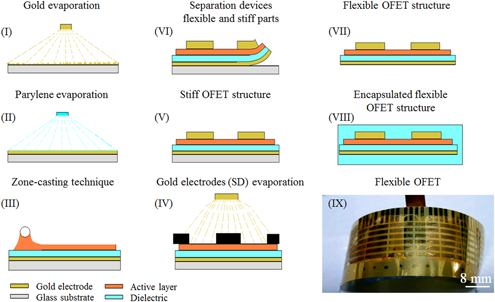
- of organic electronics. One of the early applications of Parylene C encapsulation layer in an electronic structure was that of a microelectrode insulator [65]. The Parylene C-covered iridium and tungsten microelectrodes were investigated by means of in vivo and in vitro impedance tests. In vitro
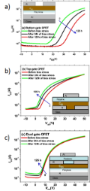
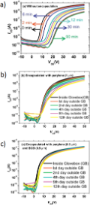
- unchanged impedance of the microelectrodes protected by Parylene C layers has been recorded for over four months [66]. As another positive result, no destructive influence of the encapsulation material was observed when Parylene C had been employed to protect a pentacene OFET device, where no remarkable




Fabrication of hierarchically porous TiO2 nanofibers by microemulsion electrospinning and their application as anode material for lithium-ion batteries
Beilstein J. Nanotechnol. 2017, 8, 1297–1306, doi:10.3762/bjnano.8.131
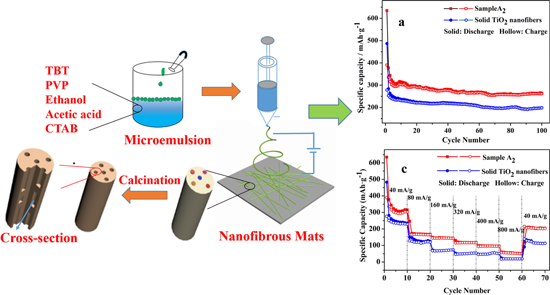
- capability, which stemmed mostly from the hierarchically porous structure and the large specific surface area. Electrochemical impedance spectroscopy (EIS) was carried out on the electrode of sample A2 and solid TiO2 nanofibers. Nyquist impedance plots obtained for sample A2 and solid TiO2 nanofibers in a
- presents CV curves and Nyquist impedance plots. Supporting Information File 76: Additional experimental data. Acknowledgements This research was financially supported by the Priority Academic Program Development of Jiangsu Higher Education Institutions, 111 Project (B17021), Six Talent Peaks Project in




High photocatalytic activity of Fe2O3/TiO2 nanocomposites prepared by photodeposition for degradation of 2,4-dichlorophenoxyacetic acid
Beilstein J. Nanotechnol. 2017, 8, 915–926, doi:10.3762/bjnano.8.93
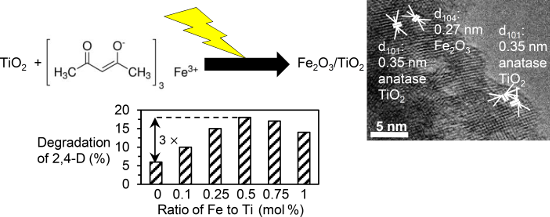
- clarified using electrochemical impedance spectroscopy (EIS). Figure 5 shows the Nyquist plots of the unmodified TiO2 (NT) and Fe2O3(0.5)/TiO2 (PD) samples. The arc radius of the Nyquist plot reflects the impedance of the interface layer arising at the electrode surface. The smaller the arc radius the
- better the charge transfer [37]. It is worth noting here that the Fe2O3(0.5)/TiO2 (PD) material has a smaller arc radius than unmodified TiO2. These results clearly suggest that the Fe2O3(0.5)/TiO2 (PD) material has a lower impedance than unmodified TiO2, indicating enhanced conductivity of TiO2 after
- constant, A is the electrode area (cm2), Rct is the charge transfer resistance that can be obtained from the fitted Nyquist plot, and C° is the concentration of the redox couple in the bulk solution (ferricyanide/ferrocyanide) [38]. From the fitted impedance data shown in Figure 5, the Fe2O3(0.5)/TiO2 (PD


First examples of organosilica-based ionogels: synthesis and electrochemical behavior
Beilstein J. Nanotechnol. 2017, 8, 736–751, doi:10.3762/bjnano.8.77
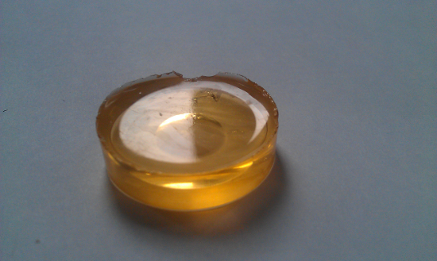
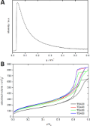
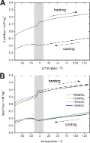
- -act X-ray detector. Prior to measurements the samples were coated with a 100 nm carbon layer using a POLARON CC7650 Carbon Coater. Electrochemical impedance spectroscopy (EIS). For EIS the dry IGs were contacted with a graphite paper layer and sandwiched between platinum electrodes. The graphite paper
- of the samples, i.e., the conductivity and the dielectric behavior as given by the intercept of the curve with the x-axis and in the high frequency domain, respectively. Conductivity measurements were performed by the complex impedance method carried out with a Solartron 1174 frequency analyzer. The
- frequency range was from 1 to 106 Hz and the temperature cycle was between 258 and 473 K as a cooling/heating/cooling sequence. The customary model using constant phase elements was applied to simulate the impedance spectra. After removal of the geometric capacitance of the cell, the impedance plots were








Carbon nanotube-wrapped Fe2O3 anode with improved performance for lithium-ion batteries
Beilstein J. Nanotechnol. 2017, 8, 649–656, doi:10.3762/bjnano.8.69
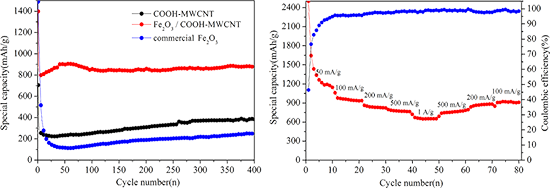
- oxygen levels of less than 0.1 ppm. The assembled cells were kept at room temperature for 12 h before electrochemical performance test Electrochemical performance of the assembled cells were then tested by galvanostatic charge/discharge measurements, cyclic voltammetry (CV) and electrochemical impedance
- rate of 0.05 mV·s−1. Electrochemical impedance spectroscopy was carried out at a frequency range 10 mHz to 1 MHz with an AC amplitude of 10 mV. Both CV and EIS measurements were carried out on an electrochemical workstation (Ametek 1470E) Results and Discussion Figure 1a shows XRD spectra of Fe2O3/COOH


Computing the T-matrix of a scattering object with multiple plane wave illuminations
Beilstein J. Nanotechnol. 2017, 8, 614–626, doi:10.3762/bjnano.8.66
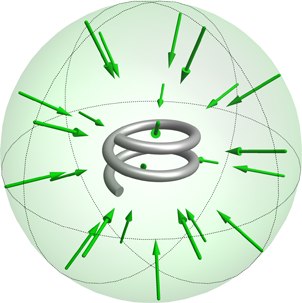
- -handed circularly polarized light. For the following considerations it is beneficial to introduce shortly the concept of duality symmetry. In free space, Maxwell’s equations are invariant under the transformation [47] where E is the electric field, H is the magnetic field, Z is the impedance and θ is an


Phosphorus-doped silicon nanorod anodes for high power lithium-ion batteries
Beilstein J. Nanotechnol. 2017, 8, 222–228, doi:10.3762/bjnano.8.24
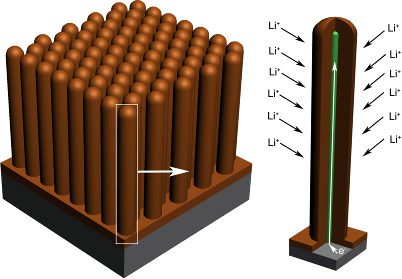
- electrochemical impedance spectra (EIS) was measured at the voltages of 2.6 V and 0.7 V and the Nyquist plots are shown in Figure 3b. At a voltage of 2.7 V, both CuO and Si were not lithiated and CuO could be totally lithiated at 0.7 V. The reduction in the semicircular nature in the Nyquist plot characteristics
- (DEC) (1:1 in volume). Galvanostatic cycling was carried out on a multichannel cell test instrument (Neware BTS-610). Cyclic voltammogramms (CV) and electrochemical impedance spectra (EIS) were measured using an electrochemical workstation (Metrohm, Autolab302N). The voltage cut-off window for


Nanocrystalline TiO2/SnO2 heterostructures for gas sensing
Beilstein J. Nanotechnol. 2017, 8, 108–122, doi:10.3762/bjnano.8.12
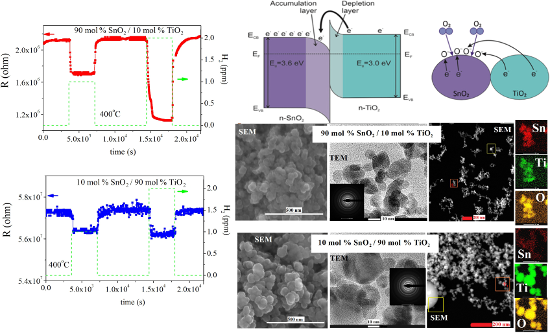
- heterojunctions for hydrogen sensing. Nanopowders of pure SnO2, 90 mol % SnO2/10 mol % TiO2, 10 mol % SnO2/90 mol % TiO2 and pure TiO2 have been obtained using flame spray synthesis (FSS). The samples have been characterized by BET, XRD, SEM, HR-TEM, Mössbauer effect and impedance spectroscopy. Gas-sensing
- investigated by impedance spectroscopy (IS) in the temperature range from 20 to 550 °C in air. The impedance spectroscopy measurements were performed with a Solatron system (Fra 1260 + dielectric interface 1294). Experimental parameters and data acquisitions were controlled with the FRA software. A frequency
- range from 1 to 106 Hz was covered, with 10 mV amplitude. The impedance spectra were analyzed using the ZView software. An equivalent circuit containing one resistor and a constant phase element (CPE) was used for fitting. In order to perform gas sensing measurements, the nanosensors were prepared in




Sub-nanosecond light-pulse generation with waveguide-coupled carbon nanotube transducers
Beilstein J. Nanotechnol. 2017, 8, 38–44, doi:10.3762/bjnano.8.5
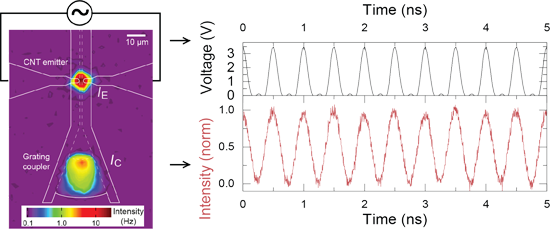
- transducers follows the electrical signal for a pulse width ranging from 5 to 200 ns, albeit deviations are clearly visible. The dips at the relative times of 25 and 75 ns, after the electrical bias was switched on, might originate from the impedance mismatch between the pulse generator output and the RF
- signal along with a small bump at 0.4 ns occurs because of impedance mismatch. Funding R.K. and F.P. acknowledge funding by the Volkswagen Foundation. W.P. acknowledges support by the Deutsche Forschungsgemeinschaft (DFG) grants PE 1832/1-1 & PE 1832/2-1 and the Helmholtz Association through grant HIRG


A novel electrochemical nanobiosensor for the ultrasensitive and specific detection of femtomolar-level gastric cancer biomarker miRNA-106a
Beilstein J. Nanotechnol. 2016, 7, 2023–2036, doi:10.3762/bjnano.7.193
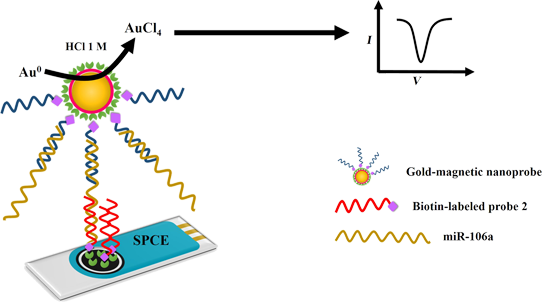
- miRNA were confirmed by electrochemical impedance spectroscopy (EIS) and cyclic voltammetry (CV) methods. Differential pulse voltammetry (DPV) was used for quantitative evaluation of miR-106a via recording the reduction peak current of gold nanoparticles. The electrochemical signal had a linear
- attractive targets for the construction of electrochemical nanobiosensors [8][21][28]. There are numerous studies on fabricating electrochemical nanobiosensors for the detection of label-free or labeled miRNA. Although biosensors based on electrochemical impedance spectroscopy (EIS) offered a label-free


Effect of nanostructured carbon coatings on the electrochemical performance of Li1.4Ni0.5Mn0.5O2+x-based cathode materials
Beilstein J. Nanotechnol. 2016, 7, 1960–1970, doi:10.3762/bjnano.7.187
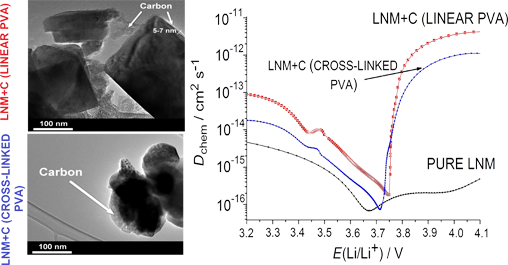
- oxidation of the electrolyte upon cycling. Electrochemical impedance (EI) measurements were performed to investigate the details of the lithium insertion-extraction processes in LNM/C nanocomposite cathodes (Figure 5A–D). All the plots are mainly composed of a small intercept at high frequencies, a
- semicircle at high to medium frequencies and a linear part in the low-frequency region. The real and complex EI parts are normalized to the real surface area of each electrode calculated according to the procedure described earlier [31]. The impedance spectra are fitted using the equivalent circuit model
- resistance and the double-layer capacitance, respectively. Zw represents the diffusion-controlled Warburg impedance in the low-frequency region [34][35]. Concerning the 1st cycle, the values of Rct are almost identical for pure Li1.4Ni0.5Mn0.5O2+x and LMN/C nanocomposites (Figure 5А,С). However, after



Layered composites of PEDOT/PSS/nanoparticles and PEDOT/PSS/phthalocyanines as electron mediators for sensors and biosensors
Beilstein J. Nanotechnol. 2016, 7, 1948–1959, doi:10.3762/bjnano.7.186
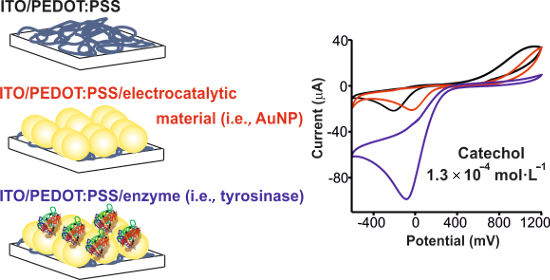
- with PEDOT/PSS/LuPc2 electrodes where a strong decrease in the oxidation peak voltage was not observed [33]. The electrocatalytic properties of the layered composite PEDOT/PSS/EM electrodes were further investigated using electrochemical impedance spectroscopy (EIS). At −0.5 V, a RMS sine wave was
- processes, and the diameter is equivalent to the electron transfer resistance (Rct). The impedance parameters were derived using a Randels equivalent circuit. The whole interface impedance was modelled by a constant phase element (CPE) (Equation 1 and Table 2): where CCPE and αCPE are the capacitance and
- the electron transfer due to the high electrical conductivity demonstrated in the impedance experiments. In the case of PEDOT/PSS/EM enzymatic biosensors, the main amplification occurred in the cathodic wave. For this reason, the study of the LD was carried out only in the cathodic reduction peak


Generalized Hertz model for bimodal nanomechanical mapping
Beilstein J. Nanotechnol. 2016, 7, 970–982, doi:10.3762/bjnano.7.89
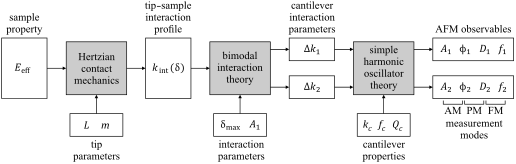
- complex-valued cantilever impedance [70] where the angular frequency is defined as ω = 2πf. The subscript “c” reminds that kc, mc, bc are properties of the cantilever (prior to the tip–sample interaction) that do not change throughout the experiment. A “reference” measurement of this cantilever impedance
- imaginary components of both equations and solving for the driving force: In the presence of some interaction, the cantilever impedance is subject to a time-averaged change in stiffness Δk and a time-averaged change in damping Δb, such that the interaction impedance The interaction impedance is inferred


![[Graphic 4]](/bjnano/content/inline/2190-4286-7-89-i40.png?max-width=637&scale=1.18182) approximation applied to Equation 6 i...
approximation applied to Equation 6 i...


Reconstitution of the membrane protein OmpF into biomimetic block copolymer–phospholipid hybrid membranes
Beilstein J. Nanotechnol. 2016, 7, 881–892, doi:10.3762/bjnano.7.80
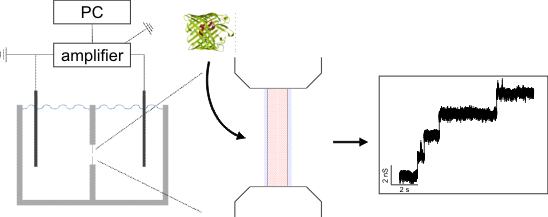
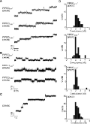
- molecular weight of the block copolymers. At low voltages, the channel conductance of OmpF in 1 M KCl was around 2.3 nS. In line with these experiments, integration of OmpF was also revealed by impedance spectroscopy. Our results indicate that blending synthetic polymer membranes with phospholipids allows
- to retain the polymeric character of the membranes, the amount of lipid used was limited to 10 mol %. Eventually, membranes were analyzed using confocal laser scanning microscopy, voltage clamp measurements and impedance spectroscopy. Results and Discussion Block copolymer synthesis Poly(1,4-isoprene
- ). Pure DPhPC vesicles prepared under similar conditions were significantly smaller than those composed of PIPEO and DPhPC (Figure 2B). They revealed completely different morphologies than the lipopolymersomes. Using impedance spectroscopy, we attempted to gain insight into the electrical properties of