


Search results
Search for "manipulation" in Full Text gives 230 result(s) in Beilstein Journal of Nanotechnology. Showing first 200.
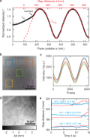
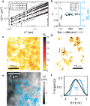
Automated image segmentation-assisted flattening of atomic force microscopy images
Beilstein J. Nanotechnol. 2018, 9, 975–985, doi:10.3762/bjnano.9.91
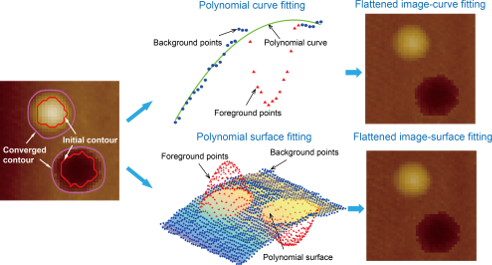
- force microscopy (AFM) has become an important device in the fields of nanoscale imaging [1][2][3][4][5][6], nanoscale manipulation [7][8], and material property characterization [9][10][11][12][13] because of its ultra-sensitivity in force and displacement measurement. Among the different applications


Valley-selective directional emission from a transition-metal dichalcogenide monolayer mediated by a plasmonic nanoantenna
Beilstein J. Nanotechnol. 2018, 9, 780–788, doi:10.3762/bjnano.9.71
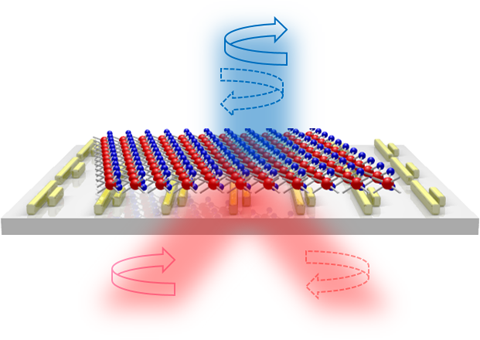
- nanostructures, referred to as plasmonic nanoantenna, have shown great flexibility and capability for manipulation of the radiation of closely placed emitters [1][3][28]. Plasmonic nanoantenna could significantly modify the emission rate, the radiation pattern and the polarization of emission when their


Mechanistic insights into plasmonic photocatalysts in utilizing visible light
Beilstein J. Nanotechnol. 2018, 9, 628–648, doi:10.3762/bjnano.9.59
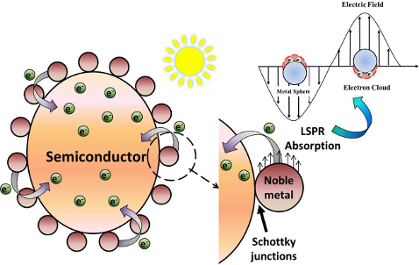
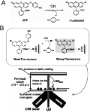
- , tungsten oxide (WO3–δ) nanocrystals showed intense NIR absorption with an LSPR peak at ≈900 nm [138]. The plasmonic resonance of semiconductors could be manipulated by tuning the stoichiometric composition, dopant concentration, or phase transitions [139][140]. The manipulation of the stoichiometric ratio


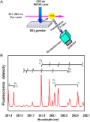



High-contrast and reversible scattering switching via hybrid metal-dielectric metasurfaces
Beilstein J. Nanotechnol. 2018, 9, 460–467, doi:10.3762/bjnano.9.44
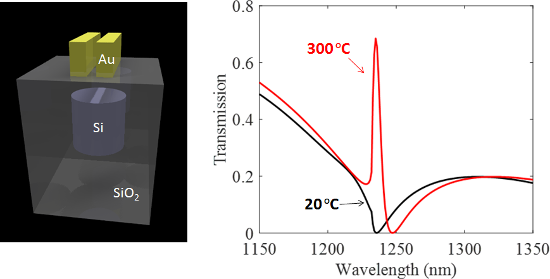
- properties can be adapted to a diverse set of applications along the electromagnetic spectrum [3] including dispersion engineering [4], polarization manipulation [5][6], pulse shaping [7], sensing [8][9] and tuning [10]. The first generation of metasurfaces mostly consisted of plasmonic nanostructures [11


Wafer-scale bioactive substrate patterning by chemical lift-off lithography
Beilstein J. Nanotechnol. 2018, 9, 311–320, doi:10.3762/bjnano.9.31
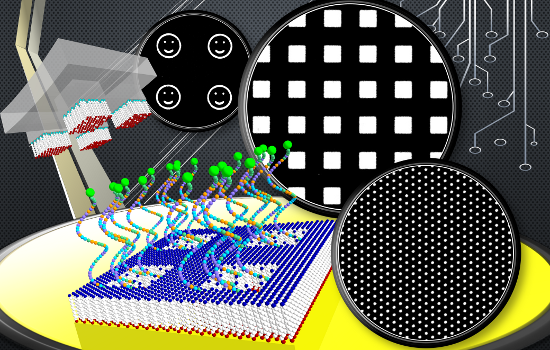
- interaction, but also lower non-specific binding of objects. A highly controllable molecular manipulation over large area surfaces is consequently highly sought after in bioactive substrate fabrication. The recently developed chemical lift-off lithography (CLL) technique is a straightforward approach to


The nanofluidic confinement apparatus: studying confinement-dependent nanoparticle behavior and diffusion
Beilstein J. Nanotechnol. 2018, 9, 301–310, doi:10.3762/bjnano.9.30
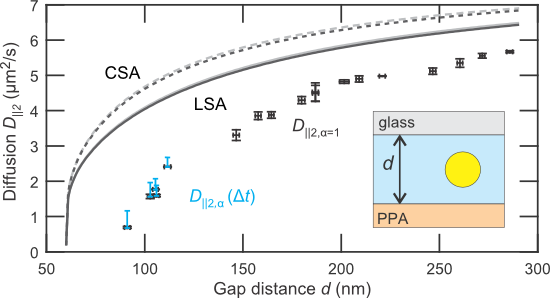
- have been performed using static surfaces and fixed geometries, which do not allow the degree of confinement to be varied in situ. Recently it was demonstrated that the gap-distance-dependent electrostatic forces can be exploited to achieve geometry-induced trapping and manipulation of charged



Synthesis and characterization of electrospun molybdenum dioxide–carbon nanofibers as sulfur matrix additives for rechargeable lithium–sulfur battery applications
Beilstein J. Nanotechnol. 2018, 9, 262–270, doi:10.3762/bjnano.9.28
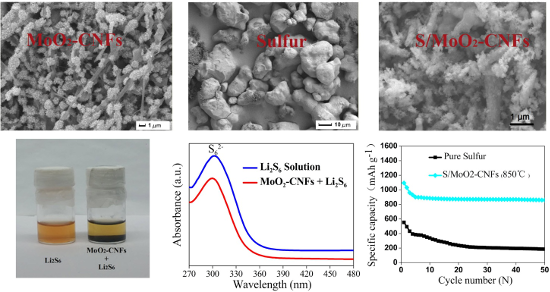
- , supercapacitors and as an anode material in lithium ion batteries due to its relatively large theoretical capacity [19][20][21]. Although numerous synthetic approaches have been reported for preparing MoO2 nanostructures with diverse morphologies, the fabrication, manipulation, and engineering of one-dimensional


Nematic topological defects positionally controlled by geometry and external fields
Beilstein J. Nanotechnol. 2018, 9, 109–118, doi:10.3762/bjnano.9.13
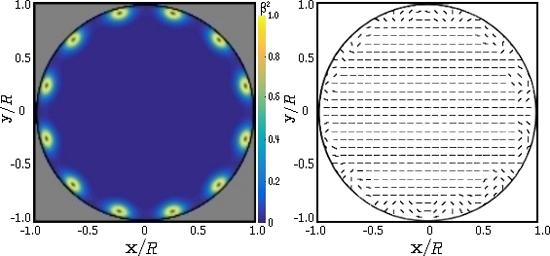
- for LCs exhibiting negative external field anisotropy. These mechanisms could be exploited for indirect positional manipulation [7][8][9][11][12] of certain NPs via positionally controlled TDs. Namely, appropriately surface-decorated NPs could be efficiently trapped within cores of TDs through the


![[Graphic 25]](/bjnano/content/inline/2190-4286-9-13-i36.svg?max-width=637&scale=1.18182) with the largest positive eigenvalue, corresponding to the 2D biaxi...
with the largest positive eigenvalue, corresponding to the 2D biaxi...


Review on optofluidic microreactors for artificial photosynthesis
Beilstein J. Nanotechnol. 2018, 9, 30–41, doi:10.3762/bjnano.9.5
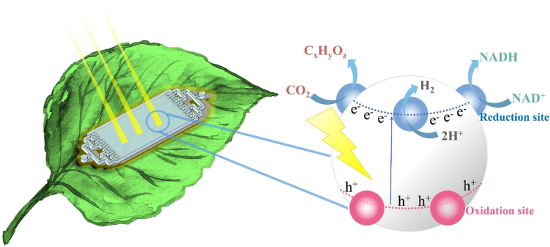
- organisms (chloroplasts) filled with fluids (see Figure 1), inferring the feasibility to be mimicked by man-made optofluidic structures. Optofluidics can promote the reaction efficiencies due to its advantages such as large surface-area-to-volume ratio [40], fast reaction rate, high-precision manipulation


Comparing postdeposition reactions of electrons and radicals with Pt nanostructures created by focused electron beam induced deposition
Beilstein J. Nanotechnol. 2017, 8, 2410–2424, doi:10.3762/bjnano.8.240
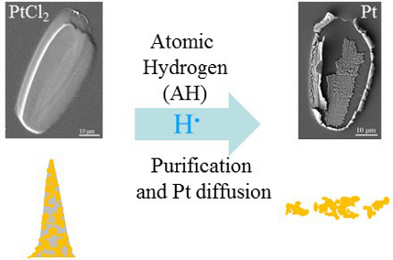
- electron beam irradiation, with non-volatile product species being incorporated into the growing deposit. The size and shape of the nanostructure are controlled by manipulation of the electron beam (focusing ability and patterning capabilities), which allows an almost unlimited array of three-dimensional




Robust procedure for creating and characterizing the atomic structure of scanning tunneling microscope tips
Beilstein J. Nanotechnol. 2017, 8, 2389–2395, doi:10.3762/bjnano.8.238
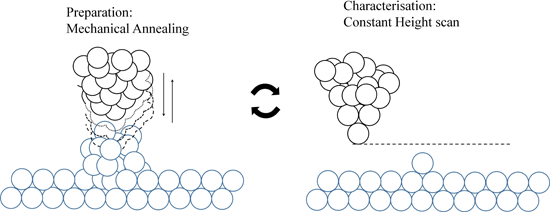
- shape [15]. Controlled manipulation by STM of adatoms and molecules on metal surfaces depends also on the precise knowledge and reproducibility of the atomic tip structure. In the field of molecular electronics, where researchers are now trying to connect single molecules between an STM tip and a flat


Surfactant-induced enhancement of droplet adhesion in superhydrophobic soybean (Glycine max L.) leaves
Beilstein J. Nanotechnol. 2017, 8, 2345–2356, doi:10.3762/bjnano.8.234
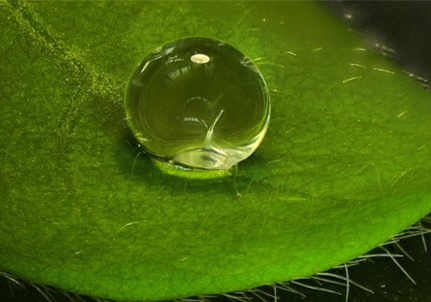
- epidermal cell surface could be investigated. The side view on the basis of an applied droplet in contact with the leaf surface is shown in Figure 6D. The cryo-technique allows mechanical manipulation of the frozen specimen so that parts of the leaf can be removed mechanically and the droplet contact area


Material property analytical relations for the case of an AFM probe tapping a viscoelastic surface containing multiple characteristic times
Beilstein J. Nanotechnol. 2017, 8, 2230–2244, doi:10.3762/bjnano.8.223
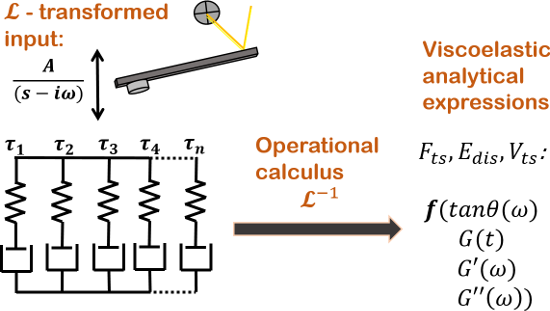
- . This strategy has led us to expressions for the tip–sample force in time, in terms of meaningful viscoelastic parameters. Additionally, further manipulation has allowed us to obtain expressions for the energy quantities measurable in a normal tapping-mode AFM experiment, in terms of viscoelastic
- part of the solution. Implementing the above observations and combining with Equation 21 we obtain: After retransformation of Equation 24, manipulation of the complex algebra, and keeping in mind that only the imaginary portion is meaningful because Im(ejωt) was used in the excitation (Equation 18), we
- by implementing Cheng’s solution in operator equation form for the flat-punch case [28]: The constants qm and un can be found by algebraic manipulation of the relaxance of the material (Equation S2 or Equation S3 in Supporting Information File 1), which is a ratio of polynomials where the numerator


Advances and challenges in the field of plasma polymer nanoparticles
Beilstein J. Nanotechnol. 2017, 8, 2002–2014, doi:10.3762/bjnano.8.200
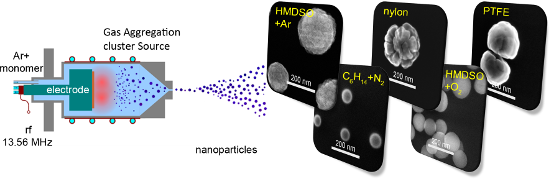
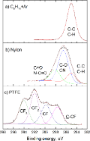
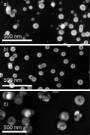
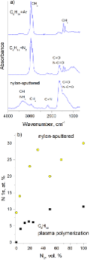
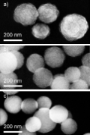
- 11c shows the dual-scale surface obtained as a result of the combined deposition when a layer of 220 nm NPs was prepared with the longer aggregation zone and it was subsequently over coated by another layer of 40 nm NPs prepared with the shorter aggregation zone. Manipulation of the discharge power






(Metallo)porphyrins for potential materials science applications
Beilstein J. Nanotechnol. 2017, 8, 1786–1800, doi:10.3762/bjnano.8.180
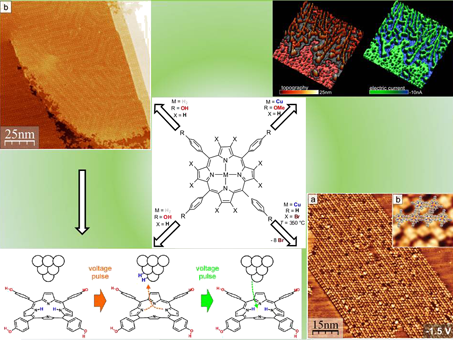
- to match certain device requirements. For example, after proper manipulation and lithography procedures single molecular nanowires or dendrites might be realized. This certainly opens possibilities for application in materials science, for example, the integration into molecular-based devices. In
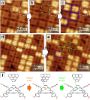
- (111). Manipulation of the electronic structure of H2TPP(OH)4 on Au(111) [45]: Molecules with two possible states, e.g., of conductivity, can be used as single-molecule switches. This functionality could be applied in nano-scaled molecular-based memory devices or logic gates [64], However, one must be
- from [44], copyright 2014 Elsevier. (a–e) Manipulation of the electronic structure by applying a voltage pulse with the STM tip at the position marked with a white circle. Converted molecules are marked with green (1→2) or blue (2→1) rectangles. (a–c) 1→2→1 conversion with 2 V pulses for 3 s (feedback






Near-infrared-responsive, superparamagnetic Au@Co nanochains
Beilstein J. Nanotechnol. 2017, 8, 1680–1687, doi:10.3762/bjnano.8.168
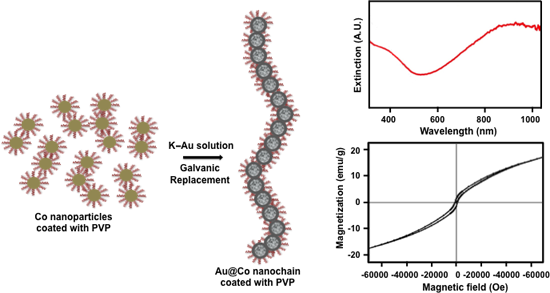
- (superparamagnetism) and provide a potentially useful new nanoarchitecture for biomedical or catalytic applications that can benefit from both activation by light and manipulation using an external magnetic field. Keywords: Au@Co; magneto-optical; nanochains; near-IR-active; superparamagnetic; Introduction The
- -thermal cancer therapy. In addition, these nanochains are superparamagnetic at room temperature, which offers the capacity for manipulation under an external magnetic field. Because of their dual magneto-optical properties, our Au@Co nanochains can be used for both delivery and treatment, making them a


Spin-chemistry concepts for spintronics scientists
Beilstein J. Nanotechnol. 2017, 8, 1427–1445, doi:10.3762/bjnano.8.143
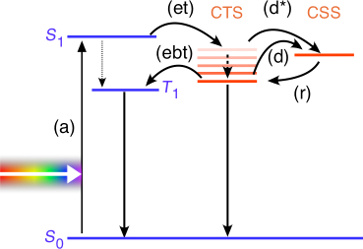
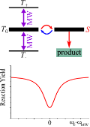
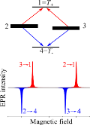
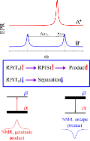
- producing the triplet state. For similar reasons magnetic and spin effects are of importance for physicists working in the spintronics field. The corresponding devices allow the manipulation or detection of spins [22][23]. The most prominent type of organic spintronics device is the spin valve, in which a
- metal/organic semiconductor/nonmagnetic metal, in which the first interface induces spin pumping [25]. Other devices do not rely on spin manipulation by ferromagnetic layers, but on the intrinsic properties of the organic semiconductor to show, for instance, organic magnetoresistance [26]. These devices
- also allow spin detection by electrical means. Organic light emitting diodes also rely on spin manipulation of radical pairs created from injected charge carriers in order to increase their electroluminescence quantum efficiency. Another molecular system in which spins play a major role are organic



Micro- and nano-surface structures based on vapor-deposited polymers
Beilstein J. Nanotechnol. 2017, 8, 1366–1374, doi:10.3762/bjnano.8.138
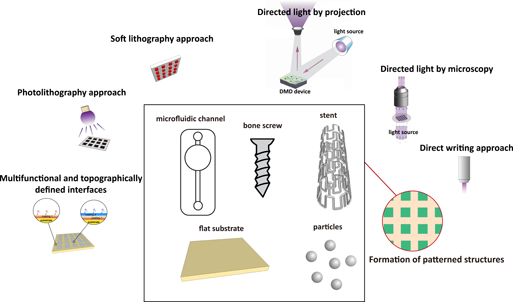
- to the opinion of the author. Structuring of conventional 2D surfaces Over the past decades, extensive effort has been made and successes have been achieved to create topological surface patterns based on light [10], electrons [11], ion beams [12], X-rays [13], or manipulation of atomic beams [14


Characterization of ferrite nanoparticles for preparation of biocomposites
Beilstein J. Nanotechnol. 2017, 8, 1257–1265, doi:10.3762/bjnano.8.127
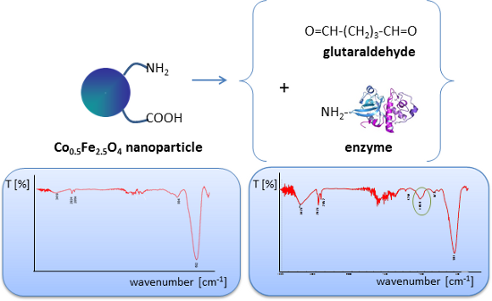
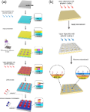
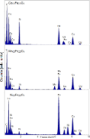
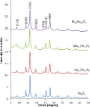
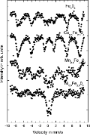
- advantage over nonmagnetic nanopartices due to the synergy of magnetic properties of the core particles with surface bioactivity or biomolecule recognition. The described hybrid system possesses very useful magnetic properties, which can be tunable and used as manipulation tools and, at the same time



Formation and shape-control of hierarchical cobalt nanostructures using quaternary ammonium salts in aqueous media
Beilstein J. Nanotechnol. 2017, 8, 494–505, doi:10.3762/bjnano.8.53
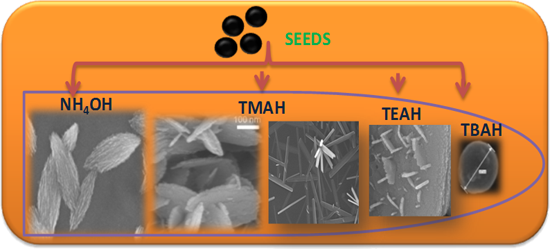
- ; (e) high-resolution FEGTEM micrograph of a spindle. Manipulation of morphologies by TEAH and TBAH. (a,b) FEGSEM micrographs show cobalt-TEAH captured after 45 min. Micrographs show that small nanoplates of 70 nm diameter are formed on a bigger hexagonal base plate with typical 1000 nm edge length; (c


Selective photodissociation of tailored molecular tags as a tool for quantum optics
Beilstein J. Nanotechnol. 2017, 8, 325–333, doi:10.3762/bjnano.8.35
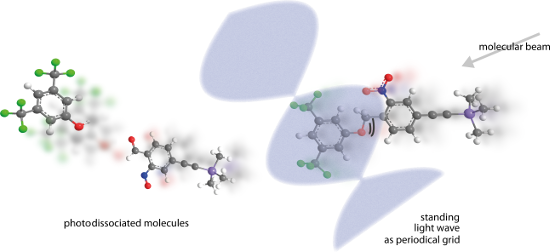
- synthetic chemistry and molecular quantum optics has enabled demonstrations of the quantum mechanical wave–particle duality for complex particles, with masses exceeding 10 kDa. Future experiments with even larger objects will require new optical preparation and manipulation methods that shall profit from
- depletion cross section of the photoactive monomer. Bond-selective dissociation and photoinduced beam depletion shall enable novel absorptive optical gratings for complex nanobiological materials, which cannot be handled by established optical manipulation techniques based on photoionization. The idea is


Grazing-incidence optical magnetic recording with super-resolution
Beilstein J. Nanotechnol. 2017, 8, 28–37, doi:10.3762/bjnano.8.4
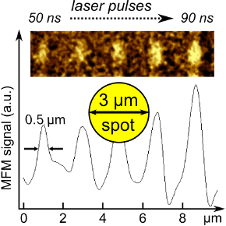
- grazing angle, the absorption efficiency is near 100% simply by choosing the right polarization – making oblique illumination an even more efficient heating method than those geometries featuring normal illumination [13]. Conclusion The manipulation of the local magnetization of PMR media via a SPR-free


Nanostructured SnO2–ZnO composite gas sensors for selective detection of carbon monoxide
Beilstein J. Nanotechnol. 2016, 7, 2045–2056, doi:10.3762/bjnano.7.195
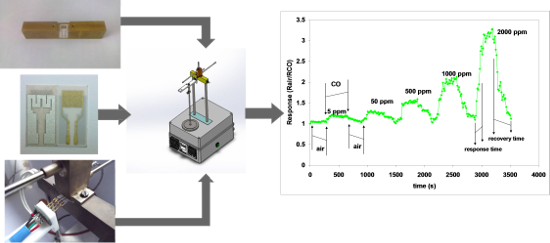
- [6][7], the addition of a noble metal [8] or oxide catalysts [9], surface modification [10][11], manipulation of the nanostructure [12], the use of multicomponent (or composite) sensing films [13][14][15][16][17][18][19][20][21][22], electronic noses, advanced signal processing techniques




Facile fabrication of luminescent organic dots by thermolysis of citric acid in urea melt, and their use for cell staining and polyelectrolyte microcapsule labelling
Beilstein J. Nanotechnol. 2016, 7, 1905–1917, doi:10.3762/bjnano.7.182
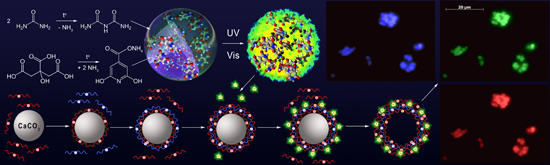
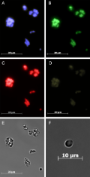
- greater sensitivity to oxidative stress. For comparison, a similar staining manipulation was carried out for the same ST cells treated with hydrogen peroxide, but without subsequent fixation (Supporting Information File 1, Figure S20). The micrographs obtained demonstrate that only some of the cells were




Active and fast charge-state switching of single NV centres in diamond by in-plane Al-Schottky junctions
Beilstein J. Nanotechnol. 2016, 7, 1727–1735, doi:10.3762/bjnano.7.165
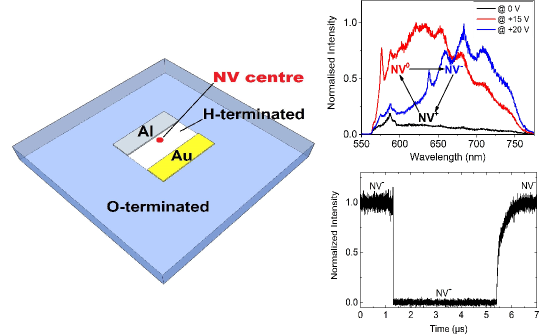
- state and hence of the optical and electronic properties of single and near-surface nitrogen-vacancy centres (NV centres) in diamond. This active manipulation is achieved by using a two-dimensional Schottky-diode structure from diamond, i.e., by using aluminium as Schottky contact on a hydrogen
- stable device operation and NV manipulation. One passivation method was suggested by Hiraiwa et al. by covering the surface with an Al2O3 film using an atomic-layer-deposition (ALD) method with an H2O oxidant at 450 °C [29]. They could show that this film does not destroy the C–H bonds as well as the
- the thermal decomposition of C–H bonds and the reaction between C–H bonds and H2O in the Al2O3 layer are endothermic processes. This passivation method for preserving the properties of the two-dimensional hole channel and thus of the two-dimensional Al-Schottky diode for active manipulation of single





