


Search results
Search for "migration" in Full Text gives 209 result(s) in Beilstein Journal of Nanotechnology. Showing first 200.
Au nanostructure fabrication by pulsed laser deposition in open air: Influence of the deposition geometry
Beilstein J. Nanotechnol. 2017, 8, 2438–2445, doi:10.3762/bjnano.8.242
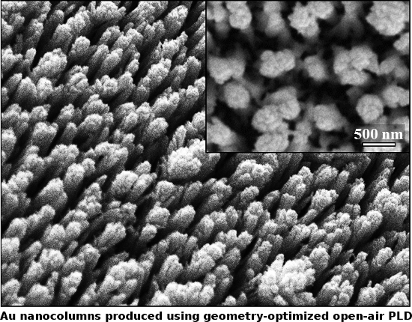
- using the same processing conditions but performed in vacuum led to the deposition of a flat film. Furthermore, the room substrate temperature does not support an efficient atom migration. All these factors suggest that the nanoparticles, as well as the nanoparticle aggregates, are predominantly formed


Changes of the absorption cross section of Si nanocrystals with temperature and distance
Beilstein J. Nanotechnol. 2017, 8, 2315–2323, doi:10.3762/bjnano.8.231
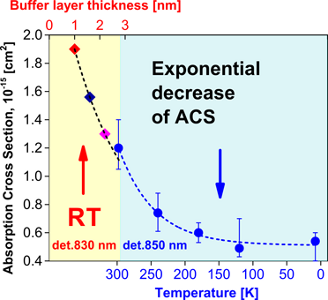
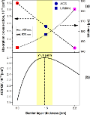
- (Figure 4a). On the other hand, in presence of exciton migration some neighboring NCs can work as antenna, because a NC can be excited either directly through photon absorption or indirectly through an energy transfer from a nearby NC. Therefore, an ACS enhancement is expected for the system of


Hydrothermal synthesis of ZnO quantum dot/KNb3O8 nanosheet photocatalysts for reducing carbon dioxide to methanol
Beilstein J. Nanotechnol. 2017, 8, 2264–2270, doi:10.3762/bjnano.8.226
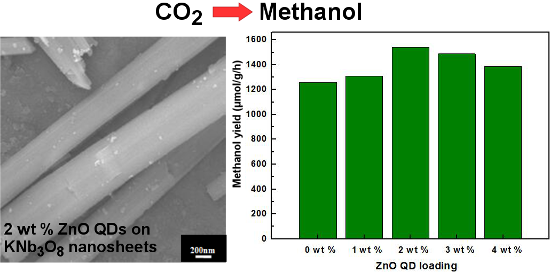
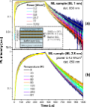
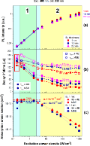
- nanosheets were recycled three times. This shows that the activity of the materials slowly declines but the formation rate of methanol was maintained at around 1500 μmol/g/h. Photoluminescence (PL) spectroscopy was used to trace the migration and capture of photogenerated electrons and holes from the as




Effect of the fluorination technique on the surface-fluorination patterning of double-walled carbon nanotubes
Beilstein J. Nanotechnol. 2017, 8, 1688–1698, doi:10.3762/bjnano.8.169
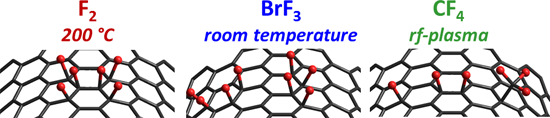
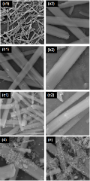
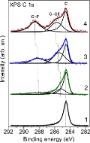
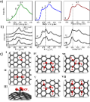
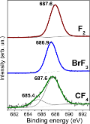
- spin-averaged LDA for large C128 graphene cells (8 × 8 supercells). Migration barriers were determined using the nudged elastic band method. Raman spectra of pristine DWCNTs (1) and DWCNTs fluorinated with CF4 plasma (2), BrF3 (3), and F2 (4). TEM images of pristine purified DWCNTs (a) and DWCNTs



Process-specific mechanisms of vertically oriented graphene growth in plasmas
Beilstein J. Nanotechnol. 2017, 8, 1658–1670, doi:10.3762/bjnano.8.166
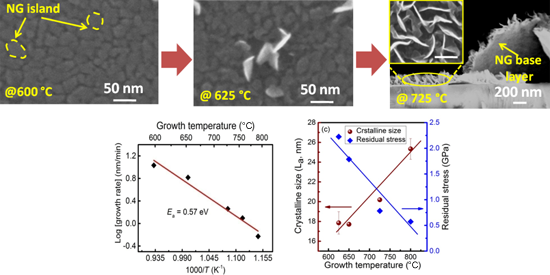
- observed (e.g., through electron microscopy) reduction in thickness of the NG layer is related to the change in adsorption–desorption balance and the longer surface residence time for the species at lower temperatures [58]. Higher growth temperatures promote the migration of the plasma-generated species


Uptake and intracellular accumulation of diamond nanoparticles – a metabolic and cytotoxic study
Beilstein J. Nanotechnol. 2017, 8, 1649–1657, doi:10.3762/bjnano.8.165
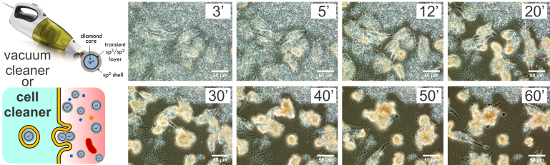
- viability and the cell number to decrease by 80–85%. The oxidation of the NDs hindered the decrease, but on day 7, a further decrease was observed. While the O-terminated NDs showed mechanical obstruction of cells by agglomerates preventing cell adhesion, migration and division, the H-terminated detonation
- restrain their spreading and migration [38]. Unlike NR-5, the air-annealed DND aggregates (NA-5, see Supporting Information File 2) are not taken up by the cells as rapidly as their non-annealed counterparts. The video starts with a similar number of living cells as described above. The cells undergo 14
- adhesion, migration and division. In comparison with the results of our previous studies, the air annealing of as-received DNDs reduced bands mainly corresponding to CH2 and CH3 stretching vibrations, and gave rise to C═O, CO and C–O–C stretch bands [41][42]. The zeta potential was also reversed from


Two-dimensional carbon-based nanocomposites for photocatalytic energy generation and environmental remediation applications
Beilstein J. Nanotechnol. 2017, 8, 1571–1600, doi:10.3762/bjnano.8.159
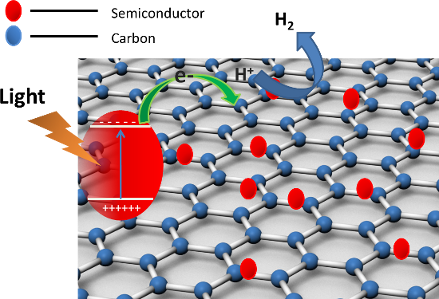
- separation and migration of charge carriers to the surface. Higher crystallinity and smaller size of particles play a significant role in enhancing the photocatalytic activity by decreasing the recombination probability of photogenerated charge carriers [4]. It is well known that higher crystallinity leads


A nanocomplex of C60 fullerene with cisplatin: design, characterization and toxicity
Beilstein J. Nanotechnol. 2017, 8, 1494–1501, doi:10.3762/bjnano.8.149
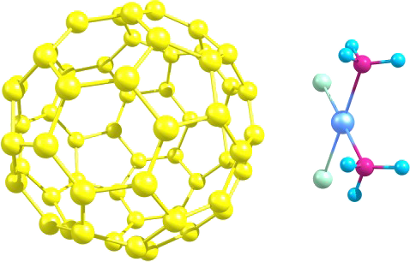
- nucleoids, which hamper DNA migration in the comet tail under electrophoretic conditions, i.e., the lower the fraction of DNA in the tail, the stronger the mutagenic action of Cis. Thus, lymphoblasts appear to be more sensitive to Cis action than lymphocytes. During cultivation with IL-2α (when lymphocytes



Spin-chemistry concepts for spintronics scientists
Beilstein J. Nanotechnol. 2017, 8, 1427–1445, doi:10.3762/bjnano.8.143



Bright fluorescent silica-nanoparticle probes for high-resolution STED and confocal microscopy
Beilstein J. Nanotechnol. 2017, 8, 1283–1296, doi:10.3762/bjnano.8.130
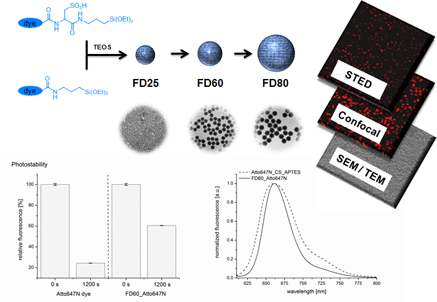
- suitable for biological nanoparticle uptake experiments and have been used to determine the intracellular migration and nuclear penetration after uptake into Caco-2 cells [44]. They have also been used to analyse their intracellular agglomeration and their association with intracellular vesicles in living


Nano-engineered skin mesenchymal stem cells: potential vehicles for tumour-targeted quantum-dot delivery
Beilstein J. Nanotechnol. 2017, 8, 1218–1230, doi:10.3762/bjnano.8.123
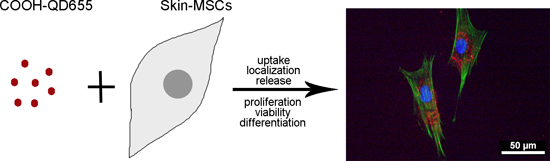
- endosomes and lysosomes. Discussion Human MSCs have been widely investigated for their potential use in various therapeutic applications, due to their plasticity and migration ability. It has been proposed that MSC migration towards injury and inflammation sites could be used to deliver diagnostic and
- ]. Lourenco et al. showed that MSC migration towards cancer cells is induced by MIF–CXCR4 chemotaxis [29]. Moreover, in close proximity of the tumour, cancer-associated fibroblast formation is induced by the release of vesicles containing miRNA from cancer cells. This leads to melanoma growth and invasion [30





The integration of graphene into microelectronic devices
Beilstein J. Nanotechnol. 2017, 8, 1056–1064, doi:10.3762/bjnano.8.107
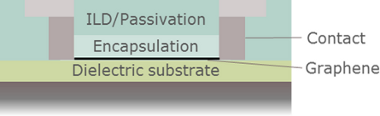
- stress migration during CVD growth. As already mentioned above the long underetch time causes problems. 1.3 Direct deposition The ideal procedure includes the direct deposition of graphene on the dielectric device substrate without a catalytic metal layer in between. Two concepts can be characterized by


First examples of organosilica-based ionogels: synthesis and electrochemical behavior
Beilstein J. Nanotechnol. 2017, 8, 736–751, doi:10.3762/bjnano.8.77
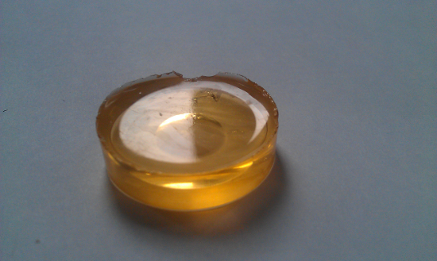
- energy of dielectric relaxation is probably due to the inner structure with the migration in the vicinity of silicate walls compared to the porous structure, as already observed in other composites [55]. The relative ion conductivity considering the physical versus chemical contributions was recently








Silicon microgrooves for contact guidance of human aortic endothelial cells
Beilstein J. Nanotechnol. 2017, 8, 675–681, doi:10.3762/bjnano.8.72
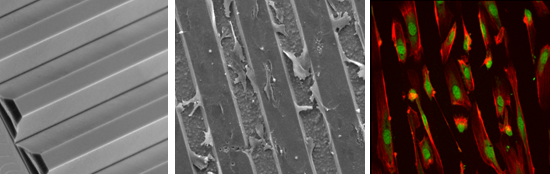
- chemistry influence cellular behaviour such as adhesion, migration and proliferation [1][2][3][4][5][6]. It is important to understand and control cell behaviour by topography in order to modulate the functions of the cells. Cells react to topographic stimuli through a process known as mechanotransduction
- . Reactions of cells to topography are different in the nanometre and micrometre range. Different patterns cause differences in migration or adhesion. Moreover, morphology and orientation of the cells are also influenced by the contact guidance, also known as topographic guidance [7]. This concept refers to


Carbon nanotube-wrapped Fe2O3 anode with improved performance for lithium-ion batteries
Beilstein J. Nanotechnol. 2017, 8, 649–656, doi:10.3762/bjnano.8.69
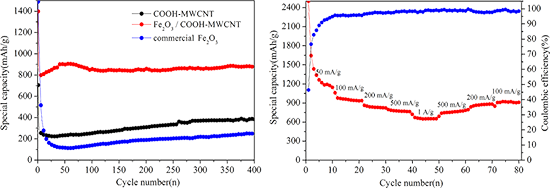
- advantageous for ionic migration. Figure 1c,1d shows the energy dispersive X-ray analysis (EDX) of the Fe2O3/MWCNT composite. Three distinct elements (C, O and Fe) can be observed. All the elements were uniformly distributed. The aforementioned results demonstrated that Fe2O3 nanoparticles were evenly


Gas sensing properties of MWCNT layers electrochemically decorated with Au and Pd nanoparticles
Beilstein J. Nanotechnol. 2017, 8, 592–603, doi:10.3762/bjnano.8.64
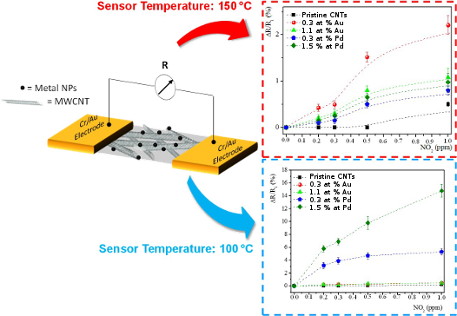
- . The electrophoretic deposition was a cathodic process in which the applied working potential was a little bit more negative than the open circuit potential (η = −200 mV), in order to induce the migration of the positively charged colloidal NPs towards the MWCNT-based device, used as cathode. This mild


Uptake of the proteins HTRA1 and HTRA2 by cells mediated by calcium phosphate nanoparticles
Beilstein J. Nanotechnol. 2017, 8, 381–393, doi:10.3762/bjnano.8.40
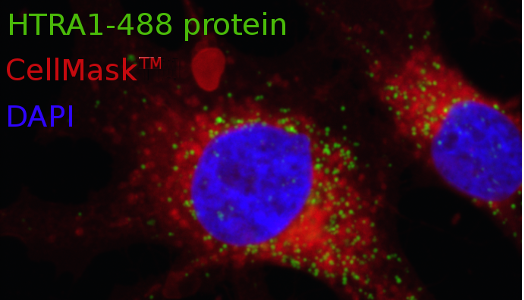
- this protein family in humans are HTRA1 and HTRA2 that are both involved in tumour suppression and in the control of proliferation, migration, and neurodegeneration [31]. The HTRA1 gene (previously termed PRSS11) was initially identified in human fibroblasts [32]. Numerous experimental findings suggest
- a tumour suppressor function for HTRA1. In various cancer types, an epigenetic silencing of HTRA1 has been observed. Moreover, a decreased HTRA1 expression is correlated both with a reduced response to chemotherapeutics and an augmented cell migration. Additionally, a reduced proliferation of tumour


Ordering of Zn-centered porphyrin and phthalocyanine on TiO2(011): STM studies
Beilstein J. Nanotechnol. 2017, 8, 99–107, doi:10.3762/bjnano.8.11
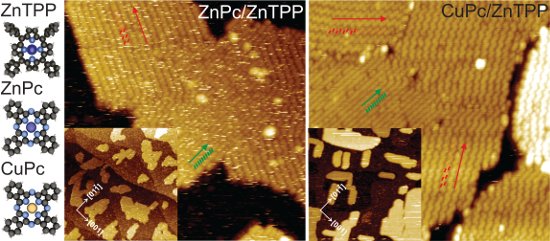
- groups [13]. Those common surface defects are known to have an important effect on the molecule migration and surface diffusion barriers for Pd atoms [14][15], and as demonstrated by Kolmer et al., on the TiO2(011)-(2×1) surface, they play a very significant role in on-surface synthesis of polymers [16


Sensitive detection of hydrocarbon gases using electrochemically Pd-modified ZnO chemiresistors
Beilstein J. Nanotechnol. 2017, 8, 82–90, doi:10.3762/bjnano.8.9
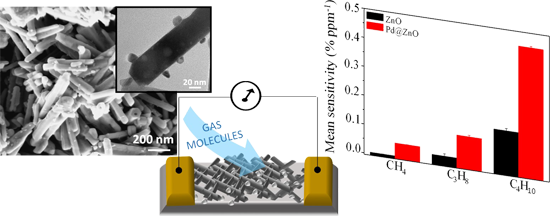
- molecules quickly dissociates producing oxygen atoms that migrate along the surface of ZnO grains. This migration, catalyzed by Pd atoms is well known as spillover of the gas ions. In this way, the oxygen atoms capture electrons from the surface of ZnO and, at the same time, acceptor surface states are


Effect of nanostructured carbon coatings on the electrochemical performance of Li1.4Ni0.5Mn0.5O2+x-based cathode materials
Beilstein J. Nanotechnol. 2016, 7, 1960–1970, doi:10.3762/bjnano.7.187
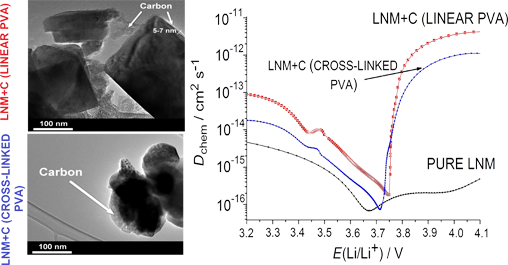
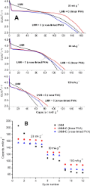
- (Figure 5E) [34][35]. The small intercept is almost the same for the electrodes and corresponds to the solution resistance of the cell (Re). Rf and CPEf stand for the Li+ migration resistance and the capacity of the surface layer, respectively. Rct and CPEct stand for the related charge-transfer



A new approach to grain boundary engineering for nanocrystalline materials
Beilstein J. Nanotechnol. 2016, 7, 1829–1849, doi:10.3762/bjnano.7.176
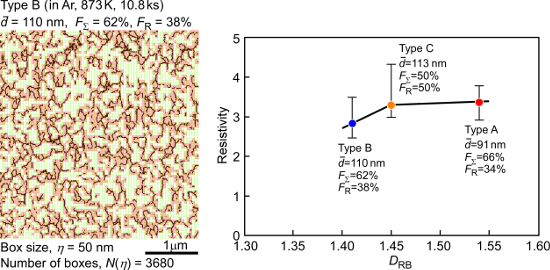
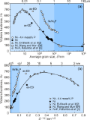
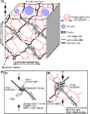
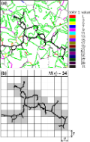
- high-cycle fatigue may result from a rapid migration of low-angle boundaries involving some dislocation mechanisms and enhanced by segregated P atoms at finally resultant random boundaries along shear bands. The operating mechanism will be explained later in some detail. Figure 7 shows the







Surface-enhanced infrared absorption studies towards a new optical biosensor
Beilstein J. Nanotechnol. 2016, 7, 1736–1742, doi:10.3762/bjnano.7.166
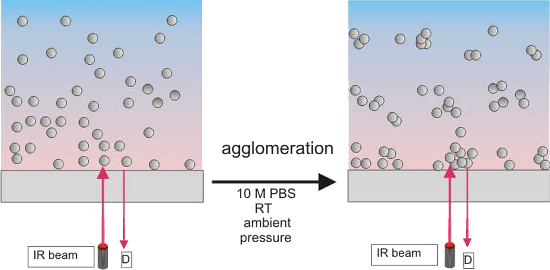
- spectrum could also benefit from migration to the mid-infrared spectrum. In a feature article Sieger and Mizaikoff [22], the potential for chemical and biological label-free sensing applications is emphasized. A toolbox containing tunable quantum cascade lasers (QCLs) and interband cascade lasers (ICLs) as


Nanostructured TiO2-based gas sensors with enhanced sensitivity to reducing gases
Beilstein J. Nanotechnol. 2016, 7, 1718–1726, doi:10.3762/bjnano.7.164
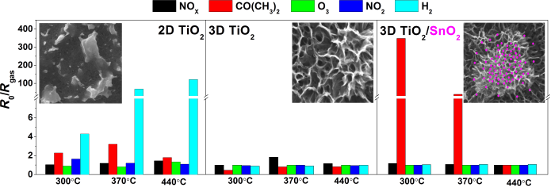
- electronic structure by improving electron migration from titanium dioxide to tin dioxide and promotes oxygen molecule adsorption at the surface [34]. The as-formed heterojunction (n–n type) affects the response due to the formation of the accumulation/depletion layer and increases the potential barrier at


Nano- and microstructured materials for in vitro studies of the physiology of vascular cells
Beilstein J. Nanotechnol. 2016, 7, 1620–1641, doi:10.3762/bjnano.7.155
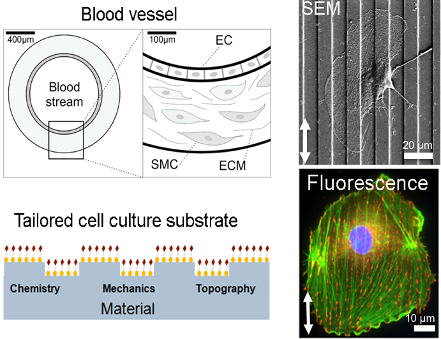
- migration is normally rigidly regulated by the endothelium formed by ECs [180]. Some important biological processes in vivo are mediated by signals that the features of the surface provide to adhering cells. For example, neuronal axons are guided by aligned Schwann cells, which at the same time are thought
- , many studies have been carried out in vitro in order to elucidate the role of material properties in complex biological processes. It is known that micro- and nanoscale topographies of a substrate can influence cell adhesion, morphology, proliferation rate, migration velocity and directionality, gene
- increase of boundaries and surface energy on the surface [10][36]. Many cells show directed migration and a polarized morphology on nano- and microstructured substrates. The process by which cells orient and migrate along the longest axis of a surface feature is called contact guidance [186][216]. Many



False positives and false negatives measure less than 0.001% in labeling ssDNA with osmium tetroxide 2,2’-bipyridine
Beilstein J. Nanotechnol. 2016, 7, 1434–1446, doi:10.3762/bjnano.7.135
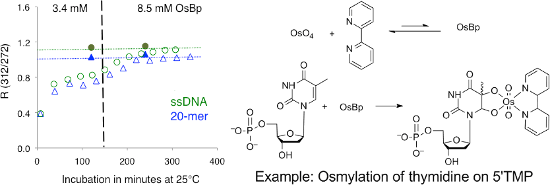
- extensively used to study the osmylation kinetics with nucleic acids [30][31]. The characteristic of CZE is that the reagent, OsBp, migrates early with a migration time (mt) that corresponds to neutral molecules, whereas the nucleic acid migrates late and the osmylated nucleic acid migrates in between, when
- and the number of reacting bases. With the longer DNA, a shift of the peak to earlier migration is detected as a function of the reaction progress. In CE profiles, the more abundant topoisomer migrates first ([30] and Figure 11), whereas in HPLC profiles, the most abundant topoisomer elutes last





