Search results
Search for "molecular dynamics" in Full Text gives 184 result(s) in Beilstein Journal of Nanotechnology.
In situ observation of deformation processes in nanocrystalline face-centered cubic metals
Beilstein J. Nanotechnol. 2016, 7, 572–580, doi:10.3762/bjnano.7.50
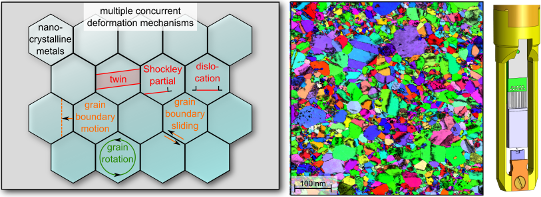
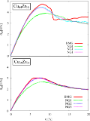
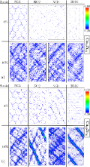
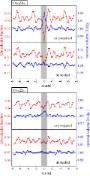
- investigated here. No significantly different behavior (within the statistical limitations) was observed for the different alloy systems, although molecular dynamics simulations suggest different dislocation and stacking fault densities with increasing strain as well as different grain boundary migration


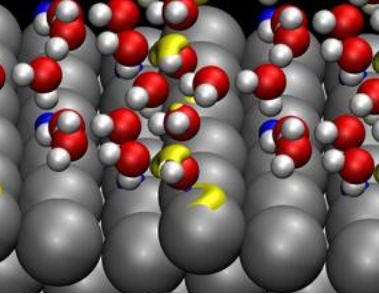
First-principles study of the structure of water layers on flat and stepped Pb electrodes
Beilstein J. Nanotechnol. 2016, 7, 533–543, doi:10.3762/bjnano.7.47
- temperatures were addressed using ab initio molecular dynamics (AIMD) simulations [16] yielding good agreement with the experiment [17], and the influence of the presence of ions in aqueous electrolytes on the transport properties of atomic junctions was assessed [18] taking into account an appropriate
- terrace atoms, as confirmed by an analysis of the charge density difference upon water adsorption. The thermal stability of the water layers has been addressed by performing ab initio molecular dynamics simulations at a temperature of 140 K. The minimum-energy structure of the water layers on Pb(111) and
- structure at a coverage of 1 due to the larger lattice constant of Pb. At stepped Pb surfaces, the water layers are pinned at the step edge and form a complex network consisting of rectangles, pentagons and hexagons. The thermal stability of the water layers has been studied by using ab initio molecular


Free vibration of functionally graded carbon-nanotube-reinforced composite plates with cutout
Beilstein J. Nanotechnol. 2016, 7, 511–523, doi:10.3762/bjnano.7.45
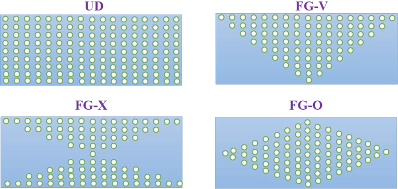
- parameters. These parameters compensate for the errors generated due to the conventional rule of mixtures approach for a CNTRC. The values of these constants are obtained by matching the data obtained according to the above formula with those obtained based on the molecular dynamics simulation. It is worth
- present modified rule of mixtures approach and the molecular dynamics simulations of other researchers. A molecular dynamics simulation was performed by Han and Elliott [41]; however, since the condition of maximum thickness for CNTs was not satisfied in this research, their simulations were re-examined
- by Shen [28]. In the simulations of Han and Elliott [41], the effective thickness of the CNTs is set equal to at least 0.34 nm, which is open to criticism since it violates the criteria proposed by Wang and Zhang [42]. The molecular dynamics simulations of Shen [28] result in the following efficiency


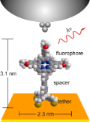
Rigid multipodal platforms for metal surfaces
Beilstein J. Nanotechnol. 2016, 7, 374–405, doi:10.3762/bjnano.7.34












Molecular machines operating on the nanoscale: from classical to quantum
Beilstein J. Nanotechnol. 2016, 7, 328–350, doi:10.3762/bjnano.7.31
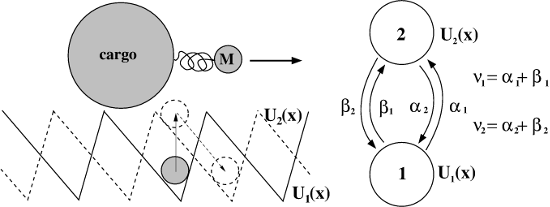
- , friction and noise are intimately related in the microworld, which is nicely seen from a mechanistic derivation of (generalized) Langevin dynamics. It results from hyper-dimensional Hamiltonian dynamics with random initial conditions like in a molecular dynamics approach. For this reason, the thermodynamic
- classical dynamics approach first, we choose initial qi(0) and pi(0) from a canonical, hyper-dimensional, Gaussian distribution, ρ(qi(0),pi(0)), zero-centered in pi(0) subspace and centered around x(0) in qi(0) subspace, and characterized by the thermal bath temperature T, like in a typical molecular
- dynamics setup. Then, each ξ(t) presents a realization of a stationary, zero-mean, Gaussian stochastic process, which can be completely characterized by its autocorrelation function, . Here, denotes statistical averaging done with ρ(qi(0),pi(0)). An elementary calculation yields the fluctuation

![[Graphic 40]](/bjnano/content/inline/2190-4286-7-31-i86.png?max-width=637&scale=1.18182) with depth ε. Bias Δμ < 0 per one rotation tur...
with depth ε. Bias Δμ < 0 per one rotation tur...

![[Graphic 48]](/bjnano/content/inline/2190-4286-7-31-i94.png?max-width=637&scale=1.18182) , for the most asymmetric sawtooth mod...
, for the most asymmetric sawtooth mod...


Influence of calcium on ceramide-1-phosphate monolayers
Beilstein J. Nanotechnol. 2016, 7, 236–245, doi:10.3762/bjnano.7.22
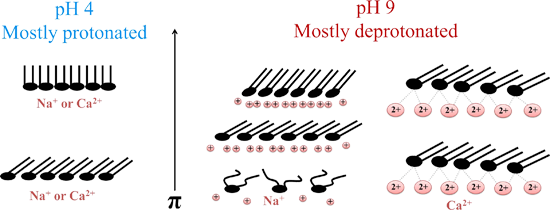
- between the charged oxygen ions of the phosphomonoester head group. Interestingly, molecular dynamics simulations of dimyristoylphosphatidate (DMPA−) monolayer in water environment (and therefore one-fold deprotonated) reported no difference between the effect of Ca2+ or Na+ ions on the properties of a


Plasticity-mediated collapse and recrystallization in hollow copper nanowires: a molecular dynamics simulation
Beilstein J. Nanotechnol. 2016, 7, 228–235, doi:10.3762/bjnano.7.21
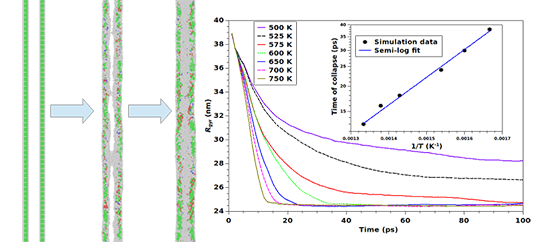
- copper nanowires using molecular dynamics simulation. We find that the plasticity-mediated structural evolution leads to transformation of the initial hollow structure to a solid wire. The process involves three distinct stages, namely, collapse, recrystallization and slow recovery. We calculate the time
- , which would involve much longer time scales as compared to the plasticity-based mechanism. Keywords: dislocations; molecular dynamics; nanowire; thermal stability; Introduction Nanomaterials, as compared to bulk, are associated with large surfaces and interfaces with respect to their volume. The
- still needs to be probed through rigorous atomistic simulation without relying on the preconceived notion of diffusive transport of vacancies. In this article, we study the above-mentioned issue by performing molecular dynamics (MD) simulation of ultra-thin single crystalline copper nanowire (NW) with


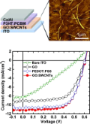
Synthesis and applications of carbon nanomaterials for energy generation and storage
Beilstein J. Nanotechnol. 2016, 7, 149–196, doi:10.3762/bjnano.7.17


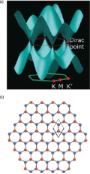


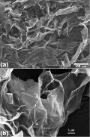


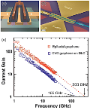




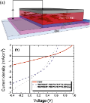






Surface-site reactivity in small-molecule adsorption: A theoretical study of thiol binding on multi-coordinated gold clusters
Beilstein J. Nanotechnol. 2016, 7, 53–61, doi:10.3762/bjnano.7.6
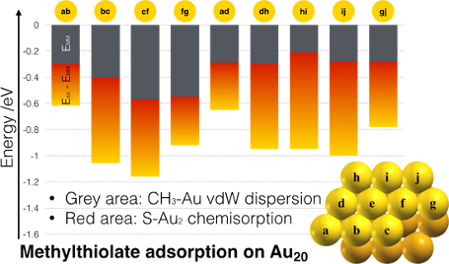
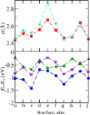
- molecular dynamics methodology, but this is computationally unfeasible except for small systems. Our group has chosen to provide a broad set of input geometries, often selected via a separate set of classical calculations [23]. Here, we perform a systematic scan of possible initial structures by sampling


Electroviscous effect on fluid drag in a microchannel with large zeta potential
Beilstein J. Nanotechnol. 2015, 6, 2207–2216, doi:10.3762/bjnano.6.226
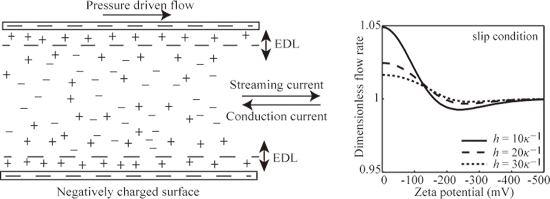
- molecular dynamics (MD) simulations. They found that a large surface charge density results in a smaller slip. Jing and Bhushan [13] experimentally studied the coupling relationship between the surface charge and the slip of a smooth and hydrophobic octadecyltrichlorosilane (OTS) sample immersed in


Nonconservative current-driven dynamics: beyond the nanoscale
Beilstein J. Nanotechnol. 2015, 6, 2140–2147, doi:10.3762/bjnano.6.219
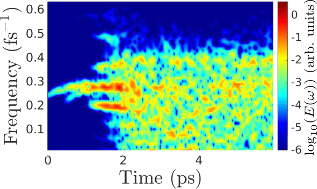
- refer to it generically as the waterwheel effect. Here the connection between the waterwheel effect and the stimulated directional emission of phonons propagating along the electron flow is discussed in an intuitive manner. Nonadiabatic molecular dynamics show that waterwheel modes self-regulate by
- current due to deviations from ideal steady-state behaviour are not too large [13]. Dynamical simulations To simulate departures from the above ideal conditions, we use the nonequilibrium nonadiabatic molecular dynamics method of [17]. Now the leads are finite and embedded in external electron bath




Simulation of thermal stress and buckling instability in Si/Ge and Ge/Si core/shell nanowires
Beilstein J. Nanotechnol. 2015, 6, 1970–1977, doi:10.3762/bjnano.6.201
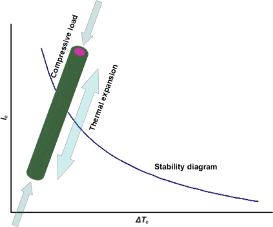
- stress for elastic instability of the nanowire, which furnishes the safe limits of designing and operating parameters of these nanowire devices. Results and Discussion Simulation scheme The present study involves a series of molecular statics (MS) and molecular dynamics (MD) simulations of core/shell
- underlying method involves the computation of the Young's modulus of the nanostructures through molecular statics simulations. This is followed by molecular dynamics computations, which yield the coefficient of thermal expansion of the materials. Based upon these two physical parameters, the thermal stress


Metal hydrides: an innovative and challenging conversion reaction anode for lithium-ion batteries
Beilstein J. Nanotechnol. 2015, 6, 1821–1839, doi:10.3762/bjnano.6.186
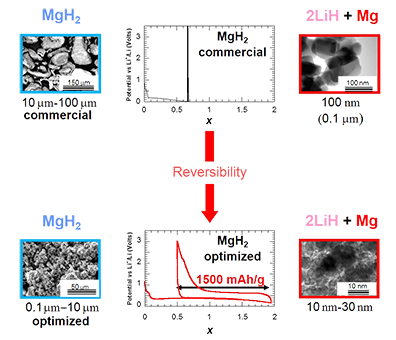
- interesting alternatives to help the search and development of materials for hydrogen storage and batteries. The idea is, for instance, to look for materials having high volume capacity, minimal expansion volume and high lithium mobility. A recent study by molecular dynamics simulations has revealed that the










Atomic scale interface design and characterisation
Beilstein J. Nanotechnol. 2015, 6, 1708–1711, doi:10.3762/bjnano.6.174

- density-functional theory (DFT) approaches. In addition, using DFT-based molecular dynamics, the manipulation of nanostructures by SPM tools and the changes made to the system by the characterization tools, e.g., the production of defects under electron irradiation and their evolution over time, can be
Possibilities and limitations of advanced transmission electron microscopy for carbon-based nanomaterials
Beilstein J. Nanotechnol. 2015, 6, 1541–1557, doi:10.3762/bjnano.6.158
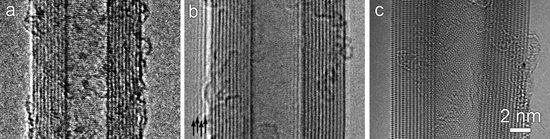
- Figure 3a [33]. More recent studies using molecular dynamics simulations based on tight-binding density functional theory [32] and first principle calculations [34] have agreed on a Td of 23 eV and 22 eV, respectively, corresponding to an accelerating voltage of about 110 kV using Equation 2. However
- thus provide a HRTEM image with an acceptable signal to noise ratio with only limited damage to the sample. The introduction of a high-speed detector may also have an impact on increasing the time resolution. In a molecular dynamics simulations on the reconstruction of vacancies, the time scale is


Multiscale modeling of lithium ion batteries: thermal aspects
Beilstein J. Nanotechnol. 2015, 6, 987–1007, doi:10.3762/bjnano.6.102
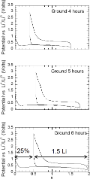
- energy barriers caused by the local environment of the Li ions. They may depend in solids on vacancy distributions as well as on the local lithium-ion concentration itself [9][11][12][13]. The diffusion coefficients for liquid electrolytes might more easily obtained from molecular dynamics (MD


Entropy effects in the collective dynamic behavior of alkyl monolayers tethered to Si(111)
Beilstein J. Nanotechnol. 2015, 6, 583–594, doi:10.3762/bjnano.6.60
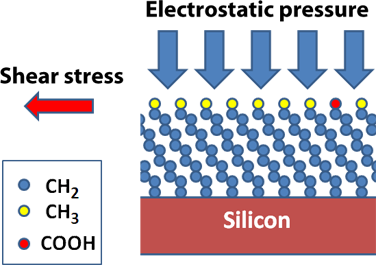
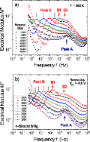
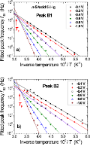
- -alkanes (44 meV) [57]. However, an accurate quantification of the number of gauche defects would require an estimate of the dipole moments for all non-centrosymmetric methylene conformations, which will depend on details of the trans–gauche sequences. Vibrational spectroscopy and molecular dynamics
- (226 cm−1) with our results. Some molecular dynamics studies of tethered n-alkanes also reveal similar vibrational energies in the velocity autocorrelation function [63]. In summary, the dynamics of the Si/acid 5 junction reveal a cooperative coupling of thermal excitations to dipolar relaxation of the




Influence of grain size and composition, topology and excess free volume on the deformation behavior of Cu–Zr nanoglasses
Beilstein J. Nanotechnol. 2015, 6, 537–545, doi:10.3762/bjnano.6.56
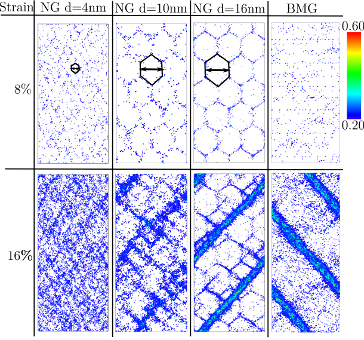
- properties of Cu–Zr nanoglasses (NGs) is investigated by molecular dynamics simulations using two model glasses of different alloy composition, namely Cu64Zr36 (Cu-rich) and Cu36Zr64 (Zr-rich). When the grain size is increased, or the fraction of interfaces in these NGs is decreased, we find a transition
- annihilation spectroscopy [9], while molecular dynamics studies showed that glass–glass interfaces exhibit an excess free volume and a modified local order [10][11]. If plastically deformed, the soft glass in the interfaces promotes shear band nucleation similar to the effect of residual shear bands in pre
- on the situation in bulk NGs. In this work, we study the influence of grain size and chemical composition on mechanical properties of Cu–Zr NGs by means of molecular dynamics simulations. First, we investigate whether by varying the grain size the plastic deformation of NGs changes. Second, we



Multifunctional layered magnetic composites
Beilstein J. Nanotechnol. 2015, 6, 134–148, doi:10.3762/bjnano.6.13
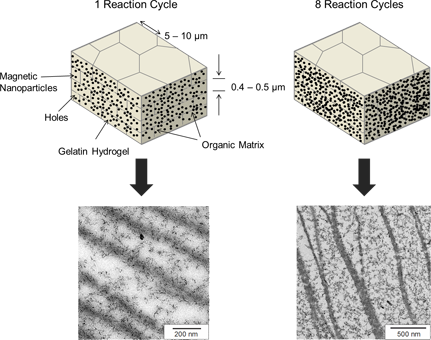
- illustrates the association of the two ion cluster types to collagen and typical configurations as obtained from relaxation in aqueous solution based on 100 ps molecular dynamics simulation runs. While the FeIII(OH)3 ion clusters bind as stable moieties to the biomolecule, the association of FeII(OH)2 to
- clusters initially docked to collagen/chitin in absence of water. Such putative association complexes are then immersed in aqueous solution (periodic simulation cell comprising more than 15000 water molecules) and subjected to relaxation from 100 ps molecular dynamics runs at room temperature and ambient





Synthesis of boron nitride nanotubes and their applications
Beilstein J. Nanotechnol. 2015, 6, 84–102, doi:10.3762/bjnano.6.9
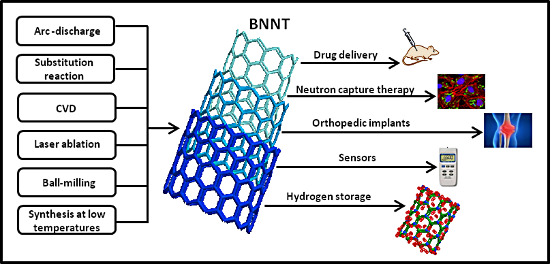
- techniques that can generate an abundant amount of hydrogen, its storage and transportation is an obstacle for its widespread use. In this respect, BNNTs were also investigated for their hydrogen adsorption capacity. Molecular dynamics simulations indicated that the collision and adsorption behavior of




Nanometer-resolved mechanical properties around GaN crystal surface steps
Beilstein J. Nanotechnol. 2014, 5, 2164–2170, doi:10.3762/bjnano.5.225
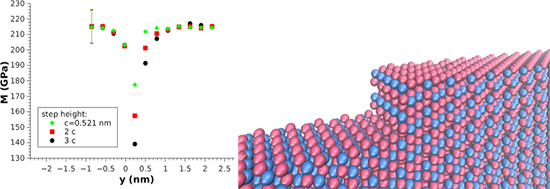
- these effects, while avoiding artifacts caused by the measurement technique itself. We performed a molecular dynamics study to investigate the mechanical properties of a GaN step of only a few lattice constants step height and scrutinized its applicability to indentation experiments using a finite
- with experiments. Keywords: finite elements; gallium nitride; indentation; mechanical properties; molecular dynamics; nanostructures; Introduction Recently developed scanning probe-based techniques, such as contact resonance atomic force microscopy (CR-AFM) [1][2], allow for the assessment of
- more advanced surface features, including steps, are unclear at this point. The present work addresses the mechanical behavior around a gallium nitride (GaN) step employing a combination of classical molecular dynamics (MD) simulations with a finite element (FEM) approach and CR-AFM experiments. GaN is


![[Graphic 3]](/bjnano/content/inline/2190-4286-5-225-i13.png?max-width=637&scale=1.18182) along the y-axis of the upper Ga atom...
along the y-axis of the upper Ga atom...


Sequence-dependent electrical response of ssDNA-decorated carbon nanotube, field-effect transistors to dopamine
Beilstein J. Nanotechnol. 2014, 5, 2113–2121, doi:10.3762/bjnano.5.220
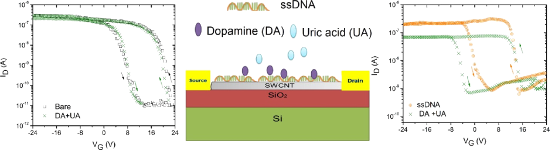
- devices, suggesting carrier scattering by molecular coating [16]. There were no major changes observed for gmp or H. According to molecular dynamics (MD) simulations [28][29], ssDNA interacts with the SWCNT sidewall through its DNA bases [30][31], with a significant number of the bases being desorbed [32


Dissipation signals due to lateral tip oscillations in FM-AFM
Beilstein J. Nanotechnol. 2014, 5, 2048–2057, doi:10.3762/bjnano.5.213
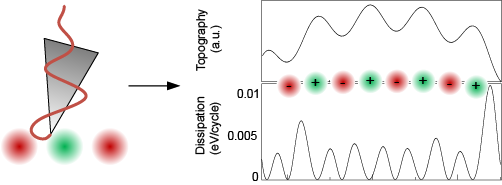
- coupling between normal and lateral tip oscillations. Later on we use more realistic potential energy landscapes from molecular dynamics calculations. The simulations show, under which circumstances the coupling of normal and lateral modes is strong enough to compete with dissipation rates due to adhesion
- of a more realistic model, where tip and substrate consist of many atoms. The interaction is given by the summation over pair potentials as they are used in molecular dynamics. In classical molecular dynamics, atomic bonding is described by empirical potentials. We used the potential of Fumi and Tosi


Quasi-1D physics in metal-organic frameworks: MIL-47(V) from first principles
Beilstein J. Nanotechnol. 2014, 5, 1738–1748, doi:10.3762/bjnano.5.184
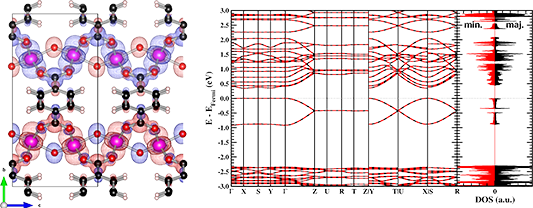
- based molecular dynamics simulations, which found Pt = 137 MPa [45]. In contrast to these simulations, experimental Hg-intrusion measurements did not give a transition at one specific pressure. Instead, the transition spanned a broader range of pressures: Pt = 85–125 MPa [45]. This is in perfect


Non-covalent and reversible functionalization of carbon nanotubes
Beilstein J. Nanotechnol. 2014, 5, 1675–1690, doi:10.3762/bjnano.5.178
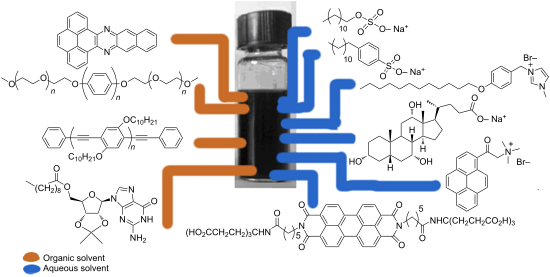
- ] through molecular dynamics simulations run for 0.4 ns. The nanotube represented the core of a SDS cylindrical micelles were the hydrophobic tails of SDS molecules could adopt a wide range of orientations with respect to the tube (see Figure 3, arrangement B). As no water density was observed in the