Search results
Search for "nanotube" in Full Text gives 210 result(s) in Beilstein Journal of Nanotechnology. Showing first 200.
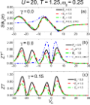
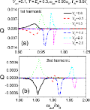
Charge and heat transport in soft nanosystems in the presence of time-dependent perturbations
Beilstein J. Nanotechnol. 2016, 7, 439–464, doi:10.3762/bjnano.7.39
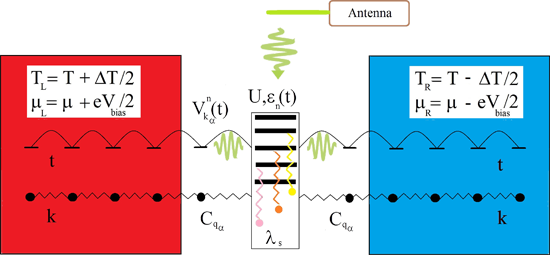
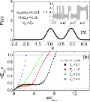
- results on carbon nanotube electromechanical devices working in the semiclassical regime (resonator frequencies in the megahertz range compared to an electronic hopping frequency of the order of tens of gigahertz) with extremely high quality factors. The nonlinear vibrational regime induced by the
- mechanical resonance making single-parameter adiabatic charge pumping feasible in carbon nanotube resonators. The pumping mechanism that we observe is different from that acting in the two parameter pumping and, instead, it is based on an important dynamic adjustment of the mechanical motion of the nanotube
- electronic and vibrational degrees of freedom. Nanoelectromechanical systems (NEMS) are devices similar to molecular junctions. Typically, they consist of a nanobeam resonator that is coupled to an electronic quantum dot junction. Famous examples of NEMS are suspended carbon nanotube (CNT) resonators, which






Synthesis and applications of carbon nanomaterials for energy generation and storage
Beilstein J. Nanotechnol. 2016, 7, 149–196, doi:10.3762/bjnano.7.17
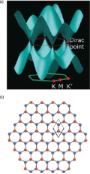
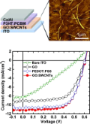
- because it strongly affects the electronic properties of the SWNTs. For a given (n, m) nanotube, if n = m, the nanotube is metallic; in all other cases, the nanotube is semiconducting with the remarkable situation that when (n − m) is a multiple of 3, the nanotube has a very small band gap [45]. It was
















Plasma fluorination of vertically aligned carbon nanotubes: functionalization and thermal stability
Beilstein J. Nanotechnol. 2015, 6, 2263–2271, doi:10.3762/bjnano.6.232
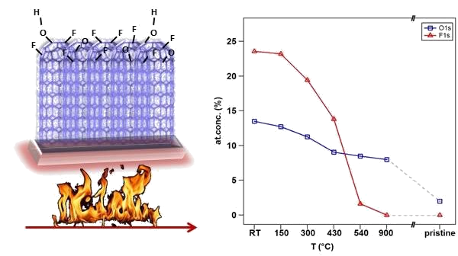
- performed using plasma treatment in a magnetron sputtering chamber with fluorine diluted in an argon atmosphere with an Ar/F2 ratio of 95:5. The effect of heavily diluted fluorine in the precursor gas mixture is investigated by evaluating the modifications in the nanotube structure and the electronic
- native SiO2, next, a 6 nm Fe layer was then added on top of the Al2O3 buffer layer to form (after annealing) nanoparticles which catalyze the nanotube growth. For the vCNTs growth, the catalyst was placed inside the reactor, heated to 750 °C at atmospheric pressure under Ar flow (120 sccm), then an
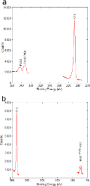
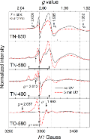
- are reported in Supporting Information File 1, Table S1). The grafting of fluorine species on the carbon nanotube surface induces modifications in the C 1s lineshape (Figure 1a). We observe that, compared to the pristine spectrum, the spectrum recorded after fluorination shows new structures at


Influence of wide band gap oxide substrates on the photoelectrochemical properties and structural disorder of CdS nanoparticles grown by the successive ionic layer adsorption and reaction (SILAR) method
Beilstein J. Nanotechnol. 2015, 6, 2252–2262, doi:10.3762/bjnano.6.231
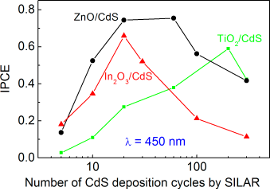
- 105 ± 12 m2/g for ZnO. The specific surface area estimated from SEM images for the TiO2 nanotube array is about 20 m2/g. X-ray diffraction (XRD) analysis demonstrates that In2O3, ZnO, and TiO2 crystallize in the cubic, hexagonal, and anatase modifications, respectively, after the heat treatment
- for the different WBGOs (Figure 2d). Particularly, for TiO2/CdS, the maximum is shifted towards larger N, and the IPCE values obtained are smaller as compared with the ZnO/CdS and In2O3/CdS heterostructures. This result can be attributed to the fact that the specific area of the TiO2 nanotube array is
- . The synthesis of the titanium dioxide nanotube arrays was carried out in a two-electrode electrochemical cell by anodization of metallic titanium with a graphite counter electrode in an aqueous electrolyte containing 1 mol/L (NH4)2SO4, 0.1 mol/L NH4F and 0.2 mol/L H2C2O4 with pH 2.8 (corrected with


Development of a novel nanoindentation technique by utilizing a dual-probe AFM system
Beilstein J. Nanotechnol. 2015, 6, 2015–2027, doi:10.3762/bjnano.6.205
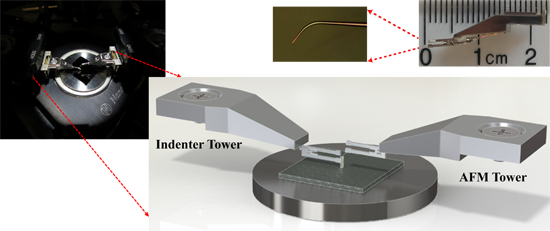
- sensor owing to the very high quality factors of tuning forks. They perform in situ nanoindentation experiments on multi-walled carbon nanotube bundles, however, the displacement data is only obtained from the SEM images limiting the high accuracy of displacement reading and the true depth sensing during


How decision analysis can further nanoinformatics
Beilstein J. Nanotechnol. 2015, 6, 1594–1600, doi:10.3762/bjnano.6.162

- , where the marginal returns to additional information diminish to less than the marginal cost of obtaining that information [19]. In a case study from Linkov et al., an MCDA framework evaluates four alternative technologies for single wall carbon nanotube synthesis and a VOI model prioritizes further
Possibilities and limitations of advanced transmission electron microscopy for carbon-based nanomaterials
Beilstein J. Nanotechnol. 2015, 6, 1541–1557, doi:10.3762/bjnano.6.158
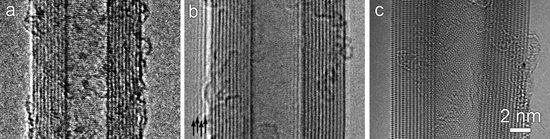
- reduction of the resolving power. Using a multi-walled carbon nanotube (MWCNT) for demonstration, a high resolution TEM (HRTEM) image acquired at 200 kV using a conventional FEI Tecnai G2 microscope is shown in Figure 2a, where the spatial resolution is about 1.5 Å. When the accelerating voltage is lowered
- anisotropy of the atomic displacement threshold [32][41][42]. The scattering geometry naturally contributes to the variation of the knock-on threshold depending on the nanotube diameter [33]. As shown in Figure 3a, CNTs invariably have a lower knock-on threshold than graphene, whereas the CNTs of smaller
- chirality (Figure 5a), a displacement map can be obtained (Figure 5c–d) at picometer precision, which further reveals the strain distribution. Strain induced by bending can be mapped in two dimensions, and further proposed to be a dominant non-uniform shear strain. The strain in the nanotube is associated


Using natural language processing techniques to inform research on nanotechnology
Beilstein J. Nanotechnol. 2015, 6, 1439–1449, doi:10.3762/bjnano.6.149
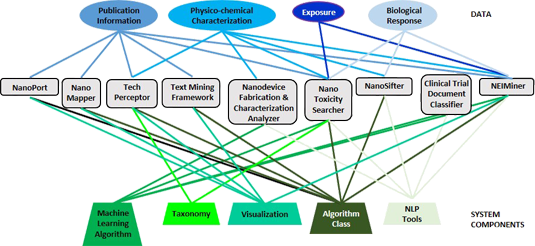
- available online. TechPerceptor TechPerceptor is a text mining tool to conduct patent analysis and generate a patent map based on a subject–action–object (SAO) approach [26][27][28]. Their training corpus consisted of 136 patents and was initially analyzed for trends in carbon nanotube synthesis methods [26
Peptide-equipped tobacco mosaic virus templates for selective and controllable biomineral deposition
Beilstein J. Nanotechnol. 2015, 6, 1399–1412, doi:10.3762/bjnano.6.145
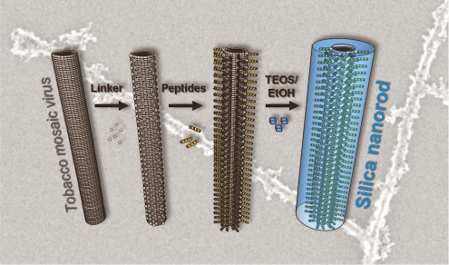
- average diameters of about 29 ± 2 nm, which did not further increase upon extended incubation. At the same time, granular SiO2 deposits began to differentiate on the nanotube surfaces, rendering them less smooth than during earlier stages. The overall diameter, that is, the height of TMV–KD10-templated




The Kirkendall effect and nanoscience: hollow nanospheres and nanotubes
Beilstein J. Nanotechnol. 2015, 6, 1348–1361, doi:10.3762/bjnano.6.139
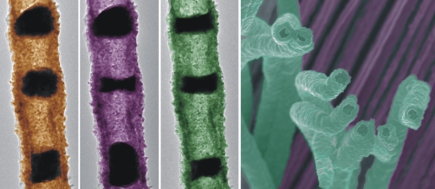
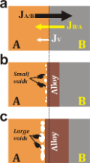
- a solid state reaction, occurring upon thermal annealing of core–shell ZnO/Al2O3 nanowires [23][62]. In such a process, the material forming the nanotube is defined by the two initial compounds constituting the core and the shell. As it can be seen in Figure 8, the formation of voids occurs at the
- nanoparticles are formed, the Ni ions will diffuse laterally toward the outside of the nanotube. As this event occurs during oxidation, the segmented-like nanostructure transforms into a bamboo-like one. The presence of very high strain generated during oxidation due to the lattice mismatch between the metal



Heterometal nanoparticles from Ru-based molecular clusters covalently anchored onto functionalized carbon nanotubes and nanofibers
Beilstein J. Nanotechnol. 2015, 6, 1287–1297, doi:10.3762/bjnano.6.133
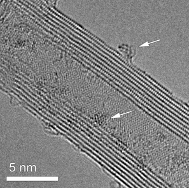
- , (b) an amorphous layer can be seen around the nanoparticles at higher magnification. HAADF-STEM image of Ru–Pt/MWNT derived from Ru5PtC(CO)14(COD) (4). STEM-EDX of individual nanoclusters. (a) HAADF-STEM image of a nanotube with metal clusters. The spectra were collected from point 1 (larger
- particles ≈2–3 nm diameter particles) and point 2 (smaller particles <1nm). The corresponding spectra are shown as (c) point 1 and (d) point 2. (b) HAADF-STEM image of the same nanotube after spectra acquisition. The smaller particles where the spectrum in (d) is collected has been destroyed, see circled




Tattoo ink nanoparticles in skin tissue and fibroblasts
Beilstein J. Nanotechnol. 2015, 6, 1183–1191, doi:10.3762/bjnano.6.120

- cytotoxicity potential [12], although carbon nanotube toxicity differs according to the production method used [13]. Moreover, the carbon black nanoparticles found in tattoo ink have safety profiles comparable to multi-walled carbon nanotubes [14]. Thus, there is a need to more accurately assess how tattoo ink


Electronic interaction in composites of a conjugated polymer and carbon nanotubes: first-principles calculation and photophysical approaches
Beilstein J. Nanotechnol. 2015, 6, 1138–1144, doi:10.3762/bjnano.6.115
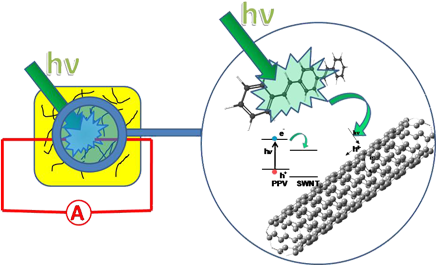
- this assumption, and show that it is not valid; the semiconducting tubes are in fact rendered semi-metallic due to interaction with nearby PPV. Figure 1c shows that the ratio Ipc/Idark drops dramatically at very low nanotube concentrations, typically between 1 and 2% indicating that the dark current
- dominates the photocurrent above this threshold with conduction paths provided solely by highly conductive carbon nanotubes. In consequence PC data demonstrates an increasing density of charge carriers on SWNTs when x increases. In order to understand the nature of PPV–nanotube interactions further we
- performed density functional (DFT) calculations under the local density approximation as implemented in the AIMPRO code [21][22], on a triphenyl PPV section (C22H18) oriented parallel to the axis of a metallic (4,4) and semiconducting (7,0) nanotube chosen due to their similar diameters. PPV is arranged


From lithium to sodium: cell chemistry of room temperature sodium–air and sodium–sulfur batteries
Beilstein J. Nanotechnol. 2015, 6, 1016–1055, doi:10.3762/bjnano.6.105


Pt- and Pd-decorated MWCNTs for vapour and gas detection at room temperature
Beilstein J. Nanotechnol. 2015, 6, 919–927, doi:10.3762/bjnano.6.95
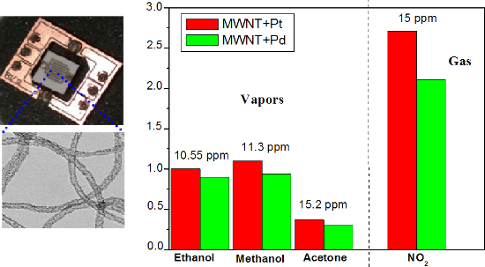
- temperatures [18]) thus enabling the development of low-power sensors [13][19]. This is essential for achieving long-life, battery-operated, wearable detectors. Furthermore, carbon nanotube sensors can be easily miniaturised, which is not the case for electrochemical sensors [20]. Pristine carbon nanotubes are
- known to weakly interact with VOCs in general and with aromatic VOCs in particular. Therefore, a functionalisation of the carbon nanotube sidewalls is essential to promote sensitivity. In previous works, we used oxygen-plasma-treated multiwalled carbon nanotubes for detecting nitrogen dioxide, ammonia
- affects the sensitivity and selectivity of the hybrid carbon nanotube material. The idea is to use nanoparticles that donate or accept charge upon adsorption of vapours or gas molecules, which eventually alters the electron transport in the carbon nanotube [26]. Kumar et al. published the first



Transformation of hydrogen titanate nanoribbons to TiO2 nanoribbons and the influence of the transformation strategies on the photocatalytic performance
Beilstein J. Nanotechnol. 2015, 6, 831–844, doi:10.3762/bjnano.6.86
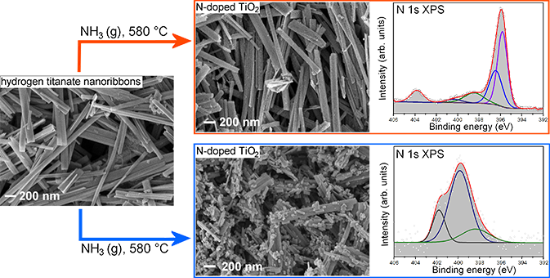
- ][15] and due to the structural similarities between these three structures, the morphology is preserved during these transformations. In general, the nanotube morphology is more desirable because of its high specific surface area. However, due to their denser structure, nanoribbons and nanowires are




Applications of three-dimensional carbon nanotube networks
Beilstein J. Nanotechnol. 2015, 6, 792–798, doi:10.3762/bjnano.6.82

- respond to incident light in the visible and near-ultraviolet region and to generate a photocurrent. Keywords: carbon nanotube sponge; electrochemical; hydrophobicity; lipophilicity; Introduction In the last years, there has been growing interest in developing natural and synthetic three-dimensional


Observation of a photoinduced, resonant tunneling effect in a carbon nanotube–silicon heterojunction
Beilstein J. Nanotechnol. 2015, 6, 704–710, doi:10.3762/bjnano.6.71
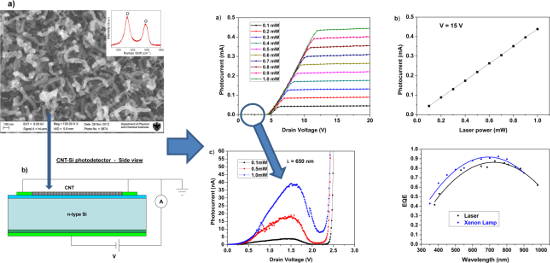
- , Sezione di Bari and Dipartimento di Fisica, Università degli Studi di Bari, Via Amendola 173, 70126 Bari, Italy 10.3762/bjnano.6.71 Abstract A significant resonant tunneling effect has been observed under the 2.4 V junction threshold in a large area, carbon nanotube–silicon (CNT–Si) heterojunction
- -based devices have been attributed to the photon-induced generation of charge carriers in single-wall CNTs and the subsequent charge separation across the carbon nanotube–metal contact interface [11]. To the best of our knowledge, there is a lack of measurements in the UV region [8], and moreover, there
- –2.4 eV that is a convolution of the several electronic transitions occurring in each nanotube. The contacts among the nanotubes ensure the charge transfer between the nanotubes and the observation in the I–V curve. The bell shape of the absorption band detected in the I–V spectra mimics that observed


Overview of nanoscale NEXAFS performed with soft X-ray microscopes
Beilstein J. Nanotechnol. 2015, 6, 595–604, doi:10.3762/bjnano.6.61
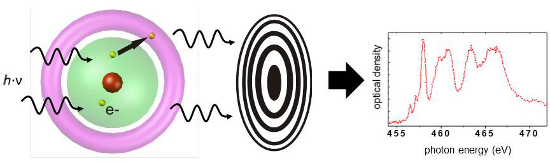
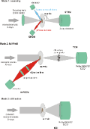
- nanoscale structures are becoming more and more important. Not only for the further miniaturization of semiconductor devices like carbon nanotube based transistors, but also for newly developed efficient energy storage devices, gas sensors or catalytic systems nanoscale and functionalized materials have to


Chains of carbon atoms: A vision or a new nanomaterial?
Beilstein J. Nanotechnol. 2015, 6, 559–569, doi:10.3762/bjnano.6.58
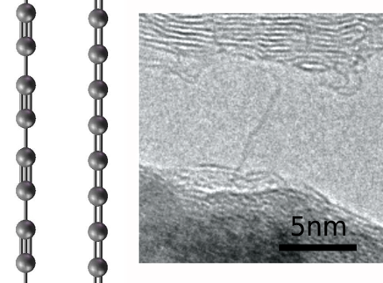
- of states in the contacting material at low energy is small. Another aspect is the local hybridization of the carbon atoms at the contact. A sp3-hybridized carbon atom (e.g., when the chain is connected to the middle of a graphenic sheet or the wall of a carbon nanotube as shown in Figure 5) leads to
- -wall carbon nanotube [61]. The smallest experimentally identified carbon nanotube is the (3,3) nanotube with a diameter of 4 Å. The instability of extremely thin nanotubes is due to the increasing pyramidalization angle in small sp2 structures, leading to an increasing sp3 character of the bonds. The
- is shown in the inset. Different hybridization states of the end atoms of carbon chains when they are connected to a graphitic contact. The contact atoms are marked in red. As an example, chains are attached to the closed end of a carbon nanotube (left), leading to local sp3-hybridization, and to an


Filling of carbon nanotubes and nanofibres
Beilstein J. Nanotechnol. 2015, 6, 508–516, doi:10.3762/bjnano.6.53
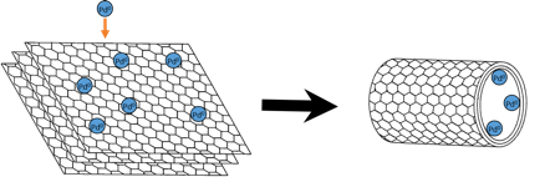
- MWCNT, the metals acted as a catalyst to create a nanotube with a single wall. Similar to MWCNTs, the physical properties (inside diameter, length, degree of graphitization) of SWCNTs vary with the production method [12]. For example, during the synthesis of SWCNTs using pulsed laser vaporization (PLV


Hollow plasmonic antennas for broadband SERS spectroscopy
Beilstein J. Nanotechnol. 2015, 6, 492–498, doi:10.3762/bjnano.6.50
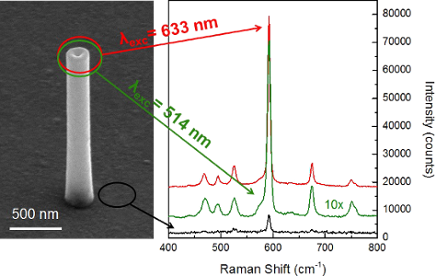
- electromagnetic hotspot at the tip of the antenna leads to the assumption that the plasmonic properties of the antennas will present a specific distribution along the nanotube height. To confirm such a hypothesis, measurements of Raman scattering intensities of a monolayer of cresyl violet dye have been performed
- simulations of a silver nanotube with 1.4 µm height, 160 nm width, surface roughness of 4 nm and illuminated by TM polarized light impinging at 5°. The blue line represents the electric field enhancement calculated 1 nm above the upper antenna edge and normalized with respect to the impinging wave amplitude


Raman spectroscopy as a tool to investigate the structure and electronic properties of carbon-atom wires
Beilstein J. Nanotechnol. 2015, 6, 480–491, doi:10.3762/bjnano.6.49
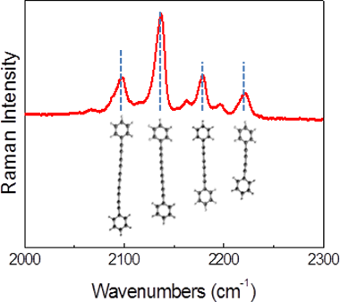
- technological applications [1]. For instance, single wall carbon nanotubes represent quasi-1D systems whose electronic properties are strongly related to the nanotube structure (i.e., chirality), while graphene is a 2D system with appealing electronic and optical properties [2][3][4]. In addition to structures
- information on their structure, hybridization state, defects, presence of functionalization and/or doping, and can even quantify the nanotube chirality, the number of layers and the edge structure in graphene [22][23]. In this review we discuss how Raman spectroscopy can be utilized to obtain a wealth of


Exploiting the hierarchical morphology of single-walled and multi-walled carbon nanotube films for highly hydrophobic coatings
Beilstein J. Nanotechnol. 2015, 6, 353–360, doi:10.3762/bjnano.6.34
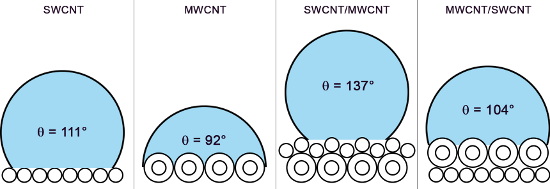
- surfaces. Here, we report single-walled (SWCNT) and multi-walled carbon nanotube (MWCNT) thin films realized by a simple, rapid, reproducible, and inexpensive filtration process from an aqueous dispersion, that was deposited at room temperature by a dry-transfer printing method on glass. Furthermore, the
- investigation of carbon nanotube films through scanning electron microscopy (SEM) reveals the multi-scale hierarchical morphology of the self-assembled carbon nanotube random networks. Moreover, contact angle measurements show that hierarchical SWCNT/MWCNT composite surfaces exhibit a higher hydrophobicity
- (contact angles of up to 137°) than bare SWCNT (110°) and MWCNT (97°) coatings, thereby confirming the enhancement produced by the surface hierarchical morphology. Keywords: hierarchical structures; hydrophobic surfaces; multi-walled carbon nanotube; single-walled carbon nanotube; wetting transitions


Release behaviour and toxicity evaluation of levodopa from carboxylated single-walled carbon nanotubes
Beilstein J. Nanotechnol. 2015, 6, 243–253, doi:10.3762/bjnano.6.23
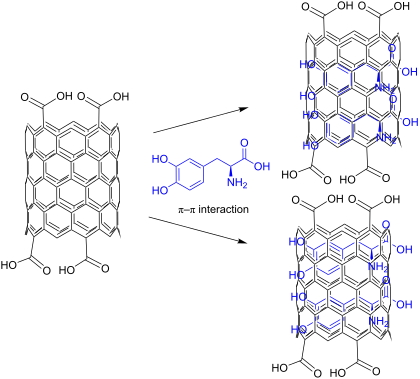
- starting material shown in Figure 3A (whereby the nanotube surface is relatively clean and smooth). The FESEM images were consistent with the images obtained by transmission electron microscope (TEM), as presented in Figure 4. The internal structure of SWCNT–COOH appeared to be free from metallic
- slides and detailed scans were performed in the 100–2000 cm−1 range. The nanotube product was first ultrasonicated in ethanol using a PowerSonic 420 (Hwashin Technology Co., Korea) device. Several droplets of the nanotube suspension were deposited onto a glass slide and then air dried at room temperature