


Search results
Search for "optimization" in Full Text gives 453 result(s) in Beilstein Journal of Nanotechnology. Showing first 200.
Single-step extraction of small-diameter single-walled carbon nanotubes in the presence of riboflavin
Beilstein J. Nanotechnol. 2022, 13, 1564–1571, doi:10.3762/bjnano.13.130
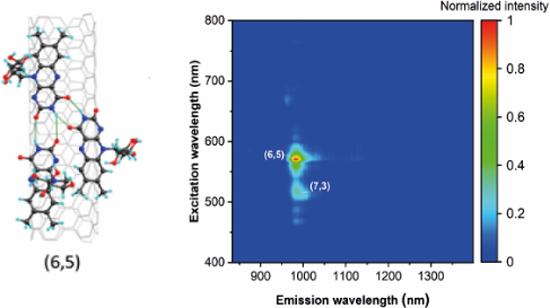
- . Such optimization of the extraction procedure promotes biomedical applications of (6,5)-SWCNTs since final dispersions do not contain surfactants or organic solvents incompatible with living systems. Experimental Materials CoMoCat (SG65i, ≥95% semiconducting SWCNTs) and Tuball (≥80% SWCNTs) SWCNTs were


Recent trends in Bi-based nanomaterials: challenges, fabrication, enhancement techniques, and environmental applications
Beilstein J. Nanotechnol. 2022, 13, 1316–1336, doi:10.3762/bjnano.13.109
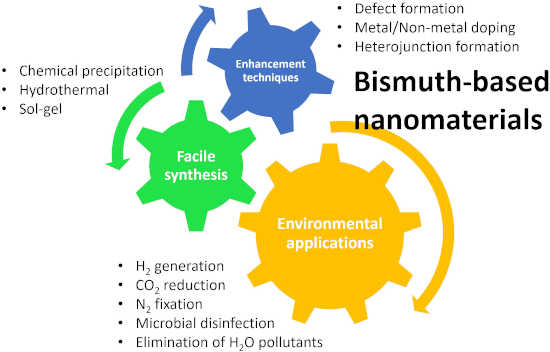
- considerations [52]. Bi-based photocatalysts may currently be synthesized using various methods, the most common of which are hydrothermal synthesis, solid-state reaction, and design and optimization. Today, NaBiO3·2H2O, Bi2O3, Bi(NO3)3·5H2O, BiCl3, and Bi are the most common Bi-based semiconductor




Laser-processed antiadhesive bionic combs for handling nanofibers inspired by nanostructures on the legs of cribellate spiders
Beilstein J. Nanotechnol. 2022, 13, 1268–1283, doi:10.3762/bjnano.13.105
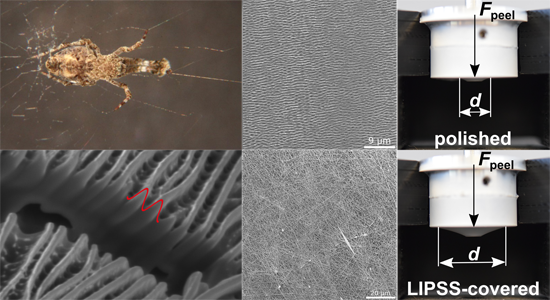
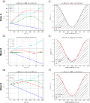
- the system, leading to more deflection and, thus, to more contact of the fiber with the surface. In contrast, the elastic energies E1 and E2 increase the total energy, In order to find the fiber detachment point x0 in equilibrium, one needs to solve the optimization problem A general analytical
- solution to this optimization problem for any surface, that is, for any f(x), cannot be found. However, numerical solutions are easily possible and, for some cases, even approximate analytical solutions are available. Let us assume the surface to be described by a cosine function (that is obviuosly







Roll-to-roll fabrication of superhydrophobic pads covered with nanofur for the efficient clean-up of oil spills
Beilstein J. Nanotechnol. 2022, 13, 1228–1239, doi:10.3762/bjnano.13.102
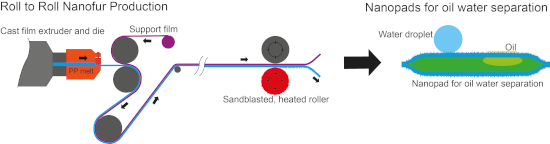
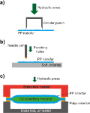
- possible to obtain large, continuous films covered in polymeric nanofur. In a further optimization step, it is concievable that the polymer film used as a sacrificial layer, COC in our case, could be reused or recycled. This could be realized either directly, if the surface of the film is not damaged




A super-oscillatory step-zoom metalens for visible light
Beilstein J. Nanotechnol. 2022, 13, 1220–1227, doi:10.3762/bjnano.13.101
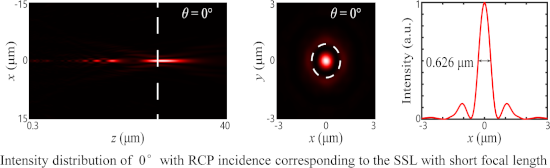
- orders of the Binary 2 surface type so that the step-zoom focusing can be achieved. The RMS spot of the focal plane for various configurations and FOVs were used as the evaluation criterion. The optimization process was as follows: First, the system parameters, including entrance diameter, FOV, and
- working wavelength were set. The effective focal length and working F-number operands were added in the merit function as constraints. Then, we set the back focal length and phase coefficients as optimization variables. Two metasurfaces corresponding to the previously calculated focal lengths were
- optimization efficiency referring to the previous work. Second, the two designed metasurfaces are cemented with the fused silica substrate. In turn, the back focal length, phase coefficients, and substrate thickness were added as optimization variables in order to minimize the RMS focal spot size for different


Microneedle-based ocular drug delivery systems – recent advances and challenges
Beilstein J. Nanotechnol. 2022, 13, 1167–1184, doi:10.3762/bjnano.13.98
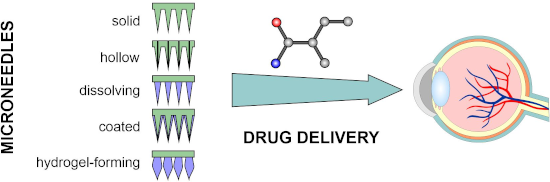
- al. employed a computer-aided design for the optimization of microneedle systems based on hyaluronic acid and a copolymer of methyl vinyl ether and maleic anhydride (Gantrez®S-97) produced by micromolding (Figure 7). Fluorescein sodium (FS) was used as a model compound with hydrophilic properties
- polyhexamethylene biguanide, an antimicrobial agent, for in vivo assessment of therapeutic efficiency. The drug-containing tip after optimization was delivered to the mouse cornea and efficiently reduced the progression of keratitis [183]. The same group developed another rapidly detachable MN. The new idea was to
- modify the previously described concept by adding an additional fast dissolving layer separating the drug tip from the microneedle base. The layer consisted of a porous blend of PVA/PVP. Optimization of the composition and manufacturing process enabled almost immediate release of the tip upon contact


Numerical modeling of a multi-frequency receiving system based on an array of dipole antennas for LSPE-SWIPE
Beilstein J. Nanotechnol. 2022, 13, 865–872, doi:10.3762/bjnano.13.77
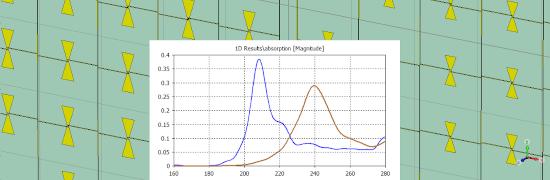
- NEP level for photon-noise limited operations, we have performed a very important optimization for cold-electron bolometer design. We changed one of two SIN tunnel junctions to the SN contact, so it became a SINS structure. This change allowed us to increase current responsivity twice and to improve


Optimizing PMMA solutions to suppress contamination in the transfer of CVD graphene for batch production
Beilstein J. Nanotechnol. 2022, 13, 796–806, doi:10.3762/bjnano.13.70
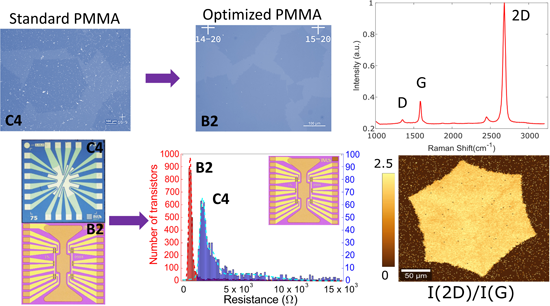
- graphene processing appears to lie in the optimization of the PMMA-assisted transfer. In this context, we propose an optimized approach for a clean mass transfer of graphene samples over wafer-scale areas. A PMMA mixture was developed by balancing the AMW and weight percentage in anisole to guarantee a




A nonenzymatic reduced graphene oxide-based nanosensor for parathion
Beilstein J. Nanotechnol. 2022, 13, 730–744, doi:10.3762/bjnano.13.65
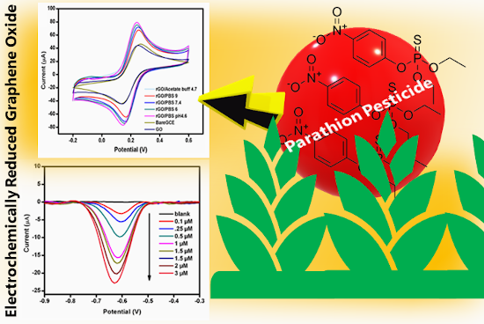
- ., hydrazine) as reductants or rapid heat treatment at high temperatures are required for the synthesis of electrochemically reduced GO (ERGO), controlled synthesis of ERGO films could be possible via optimization of electrochemical parameters. These parameters are the range of the applied voltage, numbers of
- . Results and Discussion Optimization and characterization of electrochemically reduced graphene oxide formation Figure 1A shows the UV spectra of GO and its change following the electrochemical reduction of GO. It is observed that the absorption peak of GO at 223 nm due to the π–π* transition of the C=C
- oxidation peak (Epa) potential of PT as a function of pH is near −59 mV, which suggests that the same number of e− and H+ is involved in the reaction [38][39]. Optimization of square-wave voltammetry parameters Square-wave voltammetry analysis is more accurate compared to an electrochemical method such as


Modeling a multiple-chain emeraldine gas sensor for NH3 and NO2 detection
Beilstein J. Nanotechnol. 2022, 13, 721–729, doi:10.3762/bjnano.13.64
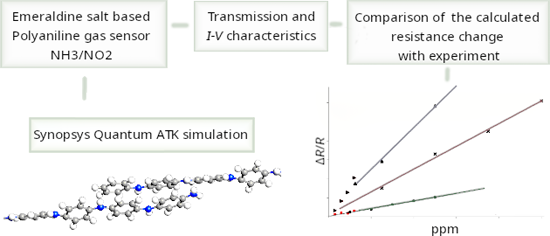
- several chains were modeled, between two chains (Figure 3 and Figure 4). Also, the orientation of the gas molecule was varied. Apart from these variations, one position and one orientation of the gas molecule was determined utilizing energy minimizing optimization. For all these situations, computation of
- up to four molecules were placed near the chain according to the optimization, either next to the doped nitrogen atom (D) or next to the undoped one (U). For ammonia, the nitrogen of NH3 was 2.09 Å away from the doped/undoped nitrogen of the PANI chain, while the bond length between N and H was
- as well. The I–V characteristics were computed for several molecule positions near the doped and near the undoped nitrogen atoms, see above. The molecule orientation was estimated through molecular dynamics optimization. The resistance from the linear part of the I–V characteristics was used to


Nanoarchitectonics of the cathode to improve the reversibility of Li–O2 batteries
Beilstein J. Nanotechnol. 2022, 13, 689–698, doi:10.3762/bjnano.13.61
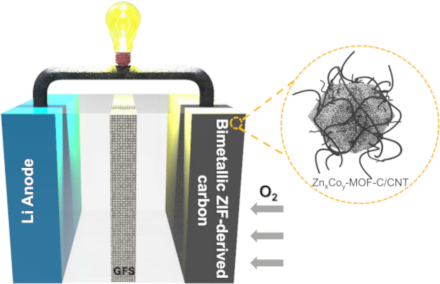
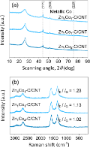
- optimization of ZnxCoy particles, we demonstrated an extremely high discharge capacity of ≈16,000 mAh·g−1 for the Zn4Co1–C/CNT composite cathode and stable cycling performance up to 137 cycles at a current density of 200 mA·g−1. We believe that our findings could offer useful design principles for advanced


Fabrication and testing of polymer microneedles for transdermal drug delivery
Beilstein J. Nanotechnol. 2022, 13, 629–640, doi:10.3762/bjnano.13.55
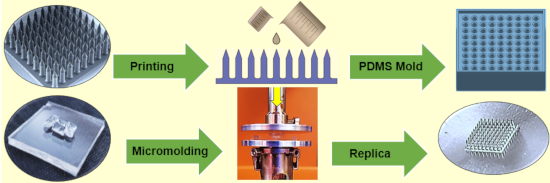
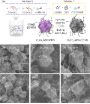
- characteristics such as operating temperature, axial force range, and embossing time depend on material properties, geometrical size, and complexity, requiring multiple optimization studies. MN arrays must be capable of being handled without risk of damage and must penetrate the skin with low force to the
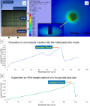
- power of 100 mW were selected after process optimization to reduce MN fabrication time and delamination from the substrate. GWL files are then imported to NanoWrite software (Nanoscribe GmbH, Karlsruhe, Germany), which is synced with NanoScribe to initiate the polymerization. The IP-S negative-tone



Stimuli-responsive polypeptide nanogels for trypsin inhibition
Beilstein J. Nanotechnol. 2022, 13, 538–548, doi:10.3762/bjnano.13.45
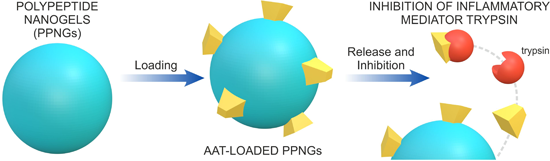
- substituents compared to PHEG-Tyr nanogel [25]. This assumption is also supported by the DH dependence (Figure 3a) showing a DH maximum at pH 7.4. Adsorption and release of BSA and AAT Next, optimization studies of in vitro loading of 125I-radiolabeled BSA as a model protein and its release from PHEG-Tyr and
- itself and AAT loaded onto PHEG-Tyr nanogel. This pilot in vitro study was crucial for the development of functional, fully biocompatible, and biodegradable nanogel carriers. The study will serve for subsequent optimization of the inhibition effect of PHEG-Tyr nanogel loaded with AAT at varying trypsin
- trypsin and, possibly, for the treatment of pancreatitis. Further studies will serve for future optimization of the new nanogel systems. The optimum ratio between trypsin and AAT-loaded nanogels and the inhibition activity of the delivery system in the pH range from 7 and 7.2, which is also relevant for


Ethosomal (−)-epigallocatechin-3-gallate as a novel approach to enhance antioxidant, anti-collagenase and anti-elastase effects
Beilstein J. Nanotechnol. 2022, 13, 491–502, doi:10.3762/bjnano.13.41
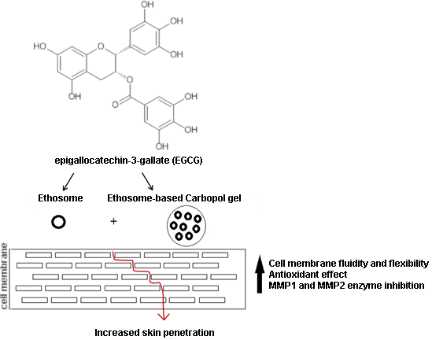
- characterized in vitro. Optimization of ETHs composed of 2–4% (w/v) of soya phosphatidylcholine (SPC) and 15–45% (v/v) of ethanol was performed based on characterization parameters (Table 1). The F3 formulation was chosen as the optimum one. A sample of F3 was examined by scanning electron microscopy (SEM
- systems, and the effects of changes in the composition of the formulations on their characterization were examined. It was emphasized that appropriate optimization of vesicular systems is necessary to yield their therapeutic efficacy in topical applications [32]. In another study, an ethosomal formulation
- control group (Figure 5). Here, it was thought that the very strong antioxidant capacity of BHT was dominant. Studies of ethosomal formulations developed with EGCG are scarce. To the best of our knowledge, there is only one study that shows the optimization conditions to encapsulate green tea extract into



Electrostatic pull-in application in flexible devices: A review
Beilstein J. Nanotechnol. 2022, 13, 390–403, doi:10.3762/bjnano.13.32
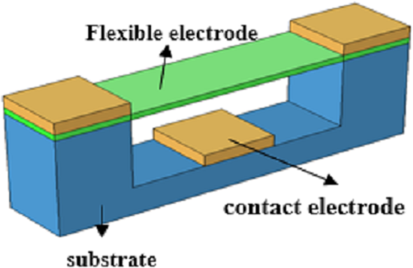
- . NEM switches with low voltage and a high number of switching cycles are the main direction of research. Structure optimization: The design of NEM switches with low voltage mainly considers the number of electrodes, mechanical structure, and driving mode. According to the number of electrodes, NEM


Engineered titania nanomaterials in advanced clinical applications
Beilstein J. Nanotechnol. 2022, 13, 201–218, doi:10.3762/bjnano.13.15
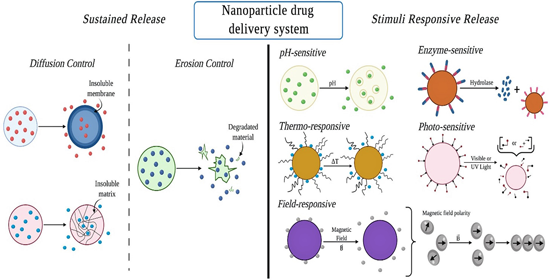
- rigorous investigation of fundamental properties of TiO2 is essential regarding risk assessment and subsequent performance optimization in vivo. Additionally, since significant investment is required for pre-clinical and clinical studies, the majority of current research products fails in clinical


Theoretical understanding of electronic and mechanical properties of 1T′ transition metal dichalcogenide crystals
Beilstein J. Nanotechnol. 2022, 13, 160–171, doi:10.3762/bjnano.13.11
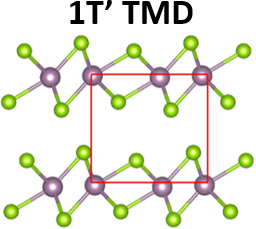
- electronic optimization loop is set to 1 × 10⁻⁵ eV. To investigate the elastic constants of the TMDs according to the generalized Hooke’s law, the energies as a function of strain (ε) in the strain range −2.5% ≤ ε ≤ 2.5% with an increment of 0.5% are calculated. The elastic constants Cij are obtained by



Design aspects of Bi2Sr2CaCu2O8+δ THz sources: optimization of thermal and radiative properties
Beilstein J. Nanotechnol. 2021, 12, 1392–1403, doi:10.3762/bjnano.12.103
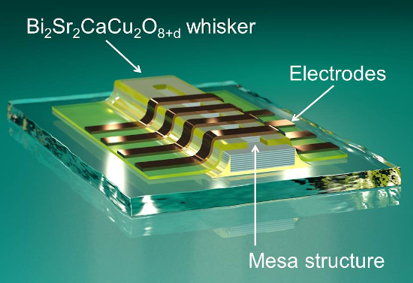
- μm. Consequently, epoxy is not the major problem for crystal devices (unless it is very thick de > 50 μm). For a real device self-heating will depend on the actual geometry, thicknesses, and material parameters. However, our analysis indicates that the optimization is much more important and
- general, our analysis indicated that self-heating optimization is much more important and efficient for whisker devices due to the low intrinsic c-axis heat resistance (caused by the small thickness of the whisker). Furthermore, the cross-like geometry prevents an overlap between the whisker and the


Electrical, electrochemical and structural studies of a chlorine-derived ionic liquid-based polymer gel electrolyte
Beilstein J. Nanotechnol. 2021, 12, 1252–1261, doi:10.3762/bjnano.12.92
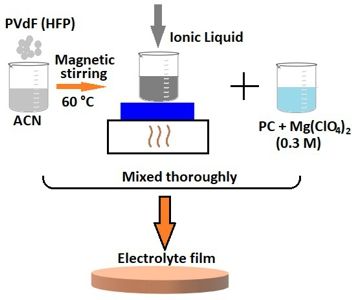
- %)} was chosen as the optimized blend. After the optimization of polymer and ionic liquid blends, a liquid electrolyte was introduced in the system. Accordingly, different weight percentages of the polymer/ionic liquid blend, {(PVdF-HFP)-[BDiMIM][Cl]} (4:6), in the solution of an optimized liquid
- electrolyte PC-Mg(ClO4)2 (0.3 M) system were tested and the optimization curve is shown in Figure 4. As it can be seen from Figure 4, the maximum conductivity of the liquid electrolyte PC-Mg(ClO4)2 at room temperature is found to be ≈3.36 × 10⁻³ S·cm−1. Upon the addition of different weight percentages of a



A review on slip boundary conditions at the nanoscale: recent development and applications
Beilstein J. Nanotechnol. 2021, 12, 1237–1251, doi:10.3762/bjnano.12.91
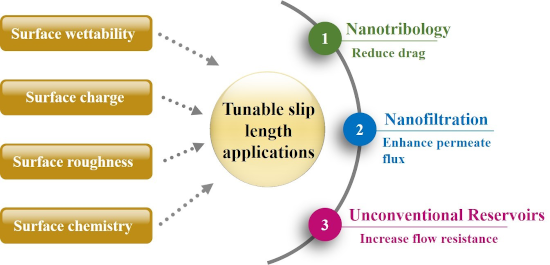
- . Investigating the effect of gas bubbles on the effective slip length is also of great value especially in the design and optimization of superhydrophobic surfaces, which have lots of applications due to their superlubricating potential [112][113][114]. The liquid flow behavior on such surfaces can be described


Two dynamic modes to streamline challenging atomic force microscopy measurements
Beilstein J. Nanotechnol. 2021, 12, 1226–1236, doi:10.3762/bjnano.12.90
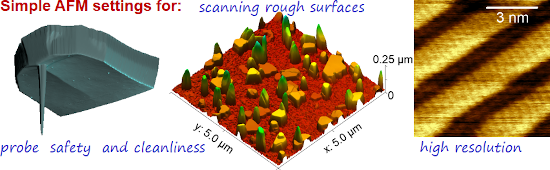
- that errors in choosing this parameter can lead to image distortion and noise, as well as damage to the probe. It can be seen from the foregoing that the choice of scanning parameters depends on both the characteristics of the sample and the sharpness of the probe. Optimization, as a rule, requires a
- , can have fixed values. For example, we can use p1 = 70–80%, p2 = p1 + 4%, Tline = 1 s, Tdir = 0.8 s, Vup = 5 µm/s, Vdown = 2 µm/s. Such a set will provide high-quality images of various samples. Further optimization of the parameters may be needed to address specific goals, for example, to reduce the


First-principles study of the structural, optoelectronic and thermophysical properties of the π-SnSe for thermoelectric applications
Beilstein J. Nanotechnol. 2021, 12, 1101–1114, doi:10.3762/bjnano.12.82
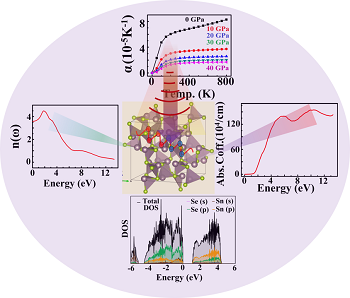
- ) volumes, respectively, and Bo and represent the bulk modulus and its first-order pressure derivative, respectively [9][56][57]. The volume–energy optimization curve of the π-SnSe is shown in Figure 2. The computed ground-state structural parameters are presented in Table 1. For the π-SnSe system, our DFT
- . Each Sn atoms sits on the apex of the trigonal pyramidal surrounded by three Se atoms at the trigonal base with a Sn–Se bond distance of 2.6 Å. Volume–energy optimization curve of the π-SnSe fitted to the Murnaghan’s equation of state. The relaxed lattice constant is ab = 12.108 Å and the optimized


Assessment of the optical and electrical properties of light-emitting diodes containing carbon-based nanostructures and plasmonic nanoparticles: a review
Beilstein J. Nanotechnol. 2021, 12, 1078–1092, doi:10.3762/bjnano.12.80
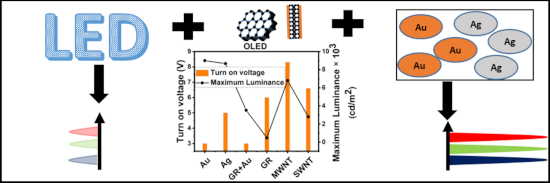
- determined. Enhancing hole mobility: hole injection and transport layers The optimization of charge carrier injection also consists of reducing the driving voltage of the LED. For achieving this, holes should be readily injected from the high-work-function anode surface (e.g., ITO, SWNT), while the electrons


A new method for obtaining model-free viscoelastic material properties from atomic force microscopy experiments using discrete integral transform techniques
Beilstein J. Nanotechnol. 2021, 12, 1063–1077, doi:10.3762/bjnano.12.79
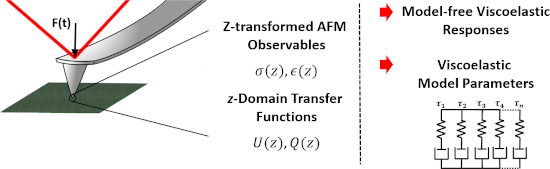
- in the time convolution of Equation 11 and simplifying, we obtain the equation we have previously used as the basis for extracting the viscoelastic model parameters and corresponding properties using non-linear least-squares optimization in our previous work: An alternate strategy is to turn to the


Uniform arrays of gold nanoelectrodes with tuneable recess depth
Beilstein J. Nanotechnol. 2021, 12, 957–964, doi:10.3762/bjnano.12.72
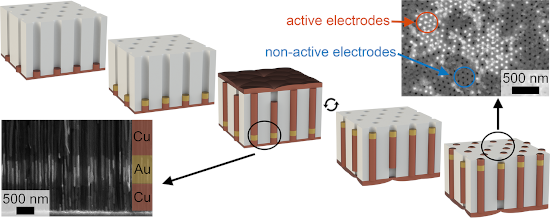
- segment were selectively etched away after turning the AAO template upside down (Figure 1d). Segment 1 – copper Optimization of the deposition potential (Ed) for the formation of the first Cu segment was performed in the range from −0.1 to −0.5 V. In the case of more negative potentials, an intensive
- AAO top surface. As a consequence, a narrower Ed range from −0.3 to −0.1 V was chosen for an optimization of the electrodeposition conditions for the third segment of Cu. The current density as a function of the time, recorded at different Ed, is demonstrated in Figure 2a. At stage I, a sharp drop in
- the commercial electrolyte Ecomet MB-16 [41]. Optimization of the deposition potential (Ed) in the range from −0.1 to −0.5 V was performed. The current efficiency was determined using gravimetric analysis of Cu layers on the plain Au electrodes. Au was electrodeposited from the commercial electrolyte





