Search results
Search for "orientation" in Full Text gives 646 result(s) in Beilstein Journal of Nanotechnology. Showing first 200.
Heating ability of elongated magnetic nanoparticles
Beilstein J. Nanotechnol. 2021, 12, 1404–1412, doi:10.3762/bjnano.12.104
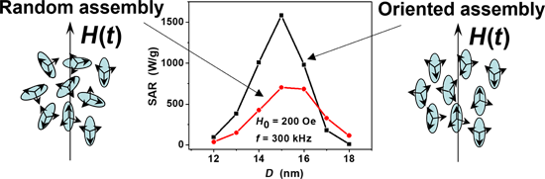
- sizes. However, the orientation of a dilute assembly of elongated nanoparticles in a magnetic field leads to an almost twofold increase in SAR at the same frequency and amplitude of the alternating magnetic field, the range of optimal particle diameters remaining unchanged. The effect of the magneto
- nanoparticles showed increased SAR [37][38] when the ac magnetic field was applied parallel to the assembly orientation axis. It is worth mentioning that, in nature, some strains of magnetotactic bacteria can synthesize elongated magnetic nanoparticles [39][40][41]. Biogenic magnetic nanoparticles have a
- was shown experimentally [37][38] that the SAR of an assembly can be significantly increased if the assembly is oriented in a strong magnetic field and an ac magnetic field is applied along the assembly orientation axis. Recent study shows [17] that, under certain conditions, the orientation of the


Polarity in cuticular ridge development and insect attachment on leaf surfaces of Schismatoglottis calyptrata (Araceae)
Beilstein J. Nanotechnol. 2021, 12, 1326–1338, doi:10.3762/bjnano.12.98
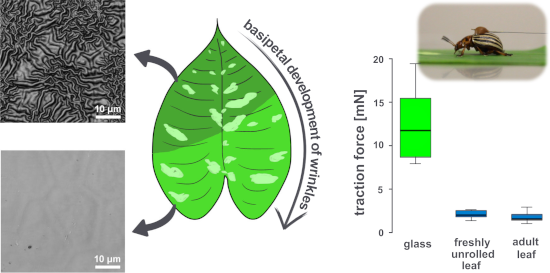
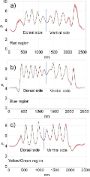
- replica corresponded to that of smooth unstructured cells, whereas the surface of the opaque region was covered with dense cuticular ridges. Analysis of individual epidermal cells demonstrated the change of size and orientation of the cells and the ridge islands during the ontogeny (Figure 5). Figure 5a
- progression and growth. Figure 5c shows the frequency distribution of the orientation of the long axes of cells and ridge islands with respect to the midrib of the leaf at all growth stages. Typical examples of data on the orientation of ridges in the ridge islands and the periphery regions for the different
- orientation during stage 2A. Similarly, during stage 3, the ridges were mostly oriented in a zig-zag manner, although on some cells longitudinal alignment of the ridges along the long axes of the cells was observed. During stage 4, the ridge orientation was mostly longitudinally oriented along the long axes




Enhancement of the piezoelectric coefficient in PVDF-TrFe/CoFe2O4 nanocomposites through DC magnetic poling
Beilstein J. Nanotechnol. 2021, 12, 1262–1270, doi:10.3762/bjnano.12.93
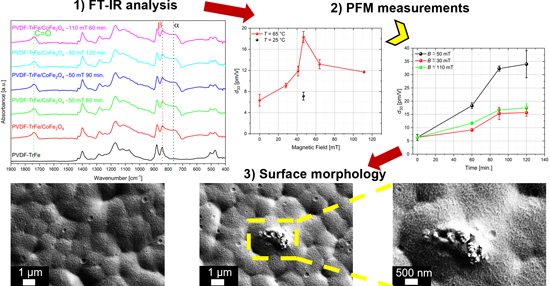
- , the dipoles in PVDF/PVDF-TrFe must be oriented along a preferential direction. The dipole orientation is generally obtained by electrical poling, that is, the application of a strong DC electric field (ca. 106 V·cm−1) at elevated temperature (ca. 120 °C) through top and bottom electrodes [18]. However
- presence of these aggregates will be investigated in the following part dealing with the morphological analysis. Also, temperature plays a relevant role in the orientation of the β phase. As shown in Figure 3, when the DC magnetic poling is performed at RT the value of d33 does not increase as much as in
- the case in which the temperature is kept at 65 °C. Increasing the temperature makes the polymeric nanocomposite softer, thus facilitating the orientation of β phase domains along the magnetic field direction. We have also investigated the effect of the application time of the DC magnetic field on d33


A review on slip boundary conditions at the nanoscale: recent development and applications
Beilstein J. Nanotechnol. 2021, 12, 1237–1251, doi:10.3762/bjnano.12.91
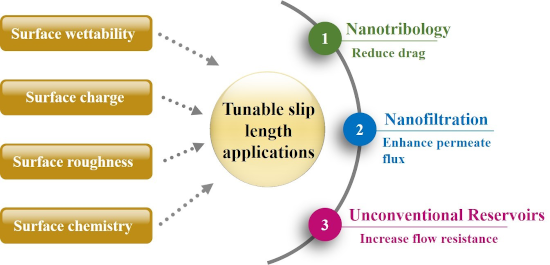
- limiting cases have been proposed. For periodic alternating stripes with different wettability, it was shown that the maximal and minimal effective slip length can be attained when the stripe orientation is parallel or perpendicular to the streaming flow direction, respectively. Especially, when the stripe
- widths for two-component textures are equal and smaller than the channel height, the variation of the effective slip length with the flow direction is given as follows [111]: where θ indicates the streaming flow direction relative to the stripe orientation, b1 and b2 are the effective slip lengths when
- the liquid flows perpendicularly (θ = 0) and parallelly (θ = π/2) to the stripe orientation, respectively. As it can be seen from Figure 8, MD simulation results show good agreement with Equation 4 and the effective slip length monotonically increases with an increase in θ. 2.4.3 Gas bubbles


Open-loop amplitude-modulation Kelvin probe force microscopy operated in single-pass PeakForce tapping mode
Beilstein J. Nanotechnol. 2021, 12, 1115–1126, doi:10.3762/bjnano.12.83
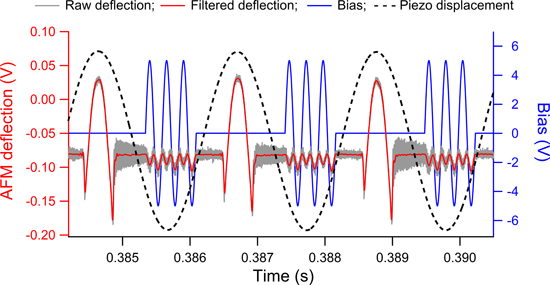
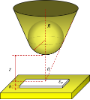
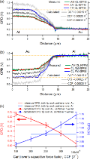
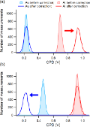
- FM-KPFM are insensitive to the selected tip–sample orientation. Thus, when the cantilever is over the Au region (Figure 1b), the CPD measured over Au is the same in both AM-KPFM (left part of Figure 1d) and FM-KPFM (left part of Figure 1e) but significantly lower over the Al region in the AM-KPFM map
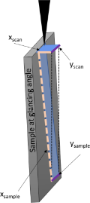
- . The value determined for CPDnon-local becomes less accurate when the region underneath the cantilever has large variations in surface potential. By adjusting the relative orientation of the cantilever with respect to the scanned area (i.e., sample rotation or scanning at a different angle), an average





Is the Ne operation of the helium ion microscope suitable for electron backscatter diffraction sample preparation?
Beilstein J. Nanotechnol. 2021, 12, 965–983, doi:10.3762/bjnano.12.73
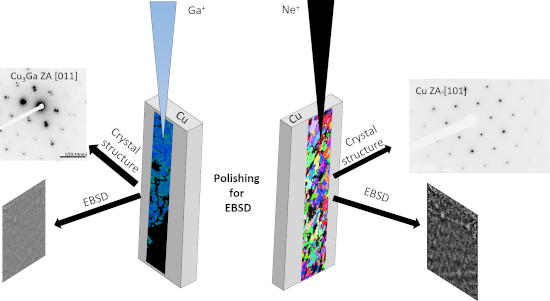
- study of microstructure, grain size, and orientation as well as strain of a crystallographic sample. In addition, the technique can be used for phase analysis. A mirror-flat sample surface is required for this analysis technique and different polishing approaches have been used over the years. A
- spectroscopy (WDS). The sample surface is conventionally tilted to 70° for the measurement and the backscatter diffraction of the SEM beam electrons leads to the formation of Kikuchi patterns on the EBSD phosphor screen which are characteristic of the crystal structure and orientation of the sample at the scan
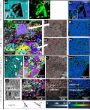
- to create TEM grids has induced this strain and the result is not unexpected. An EBSD orientation map of the non-irradiated copper sample was recorded over a 39 µm field of view using a 39 nm step size on a sufficiently flat sample area for 14.5 h. 20% zero solutions we returned for that specific



Self-assembly of Eucalyptus gunnii wax tubules and pure ß-diketone on HOPG and glass
Beilstein J. Nanotechnol. 2021, 12, 939–949, doi:10.3762/bjnano.12.70
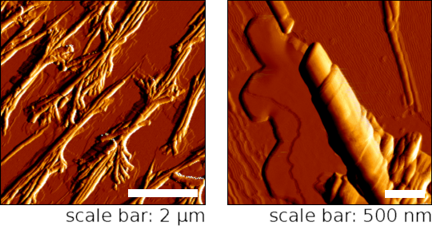
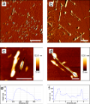
- mass deposition, also known as “coffee ring effect” [36], was visible in low magnification. In areas of very high mass accumulation, both substances assembled into plates with a random orientation and into tubules on both substrates. On areas with lower mass accumulation, different structures were
- where platelets were denser, they were connected with each other and formed a structured network (comparable to Figure 2b). ß-Diketone also formed platelets that were similar in form and orientation to those formed from plant wax. However, entire platelets rather than irregular ones were formed. The
- platelets were longer (0.5–6 µm) and either stood vertically in a parallel orientation or formed acute angles with each other (Figure 3b). Their upper edges were grooved and thicker on their endings (Figure 3b,d,f). Recrystallization on glass Similar to SEM micrographs, AFM images also showed that a high




In situ transport characterization of magnetic states in Nb/Co superconductor/ferromagnet heterostructures
Beilstein J. Nanotechnol. 2021, 12, 913–923, doi:10.3762/bjnano.12.68
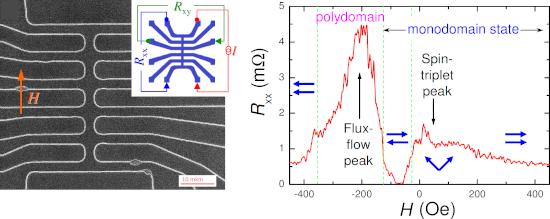
- unconventional odd-frequency spin-triplet order parameter should appear. The non-hysteretic nature of this state allows for reversible tuning of the magnetic orientation. Thus, we identify the range of parameters and the procedure for in situ control of devices based on S/F heterostructures. Keywords: cryogenic
- relative orientation of magnetizations in several F-layers [18][19][22][23][25][26][27][28][29][30][31][32][33][34][35]. However, the practical realization of such devices is complicated because neither ways of controlling many degrees of freedom in S/F multilayers, nor methods for monitoring magnetic
- magnetic state implies a possibility of variation of a relative magnetization orientation in neighbor F-layers, which requires different coercive fields. To facilitate this, we use dissimilar Co layers with thicknesses of 1.5 and 2.5 nm. Nb/Co MLs with similar Co thicknesses have been studied earlier and


The role of convolutional neural networks in scanning probe microscopy: a review
Beilstein J. Nanotechnol. 2021, 12, 878–901, doi:10.3762/bjnano.12.66
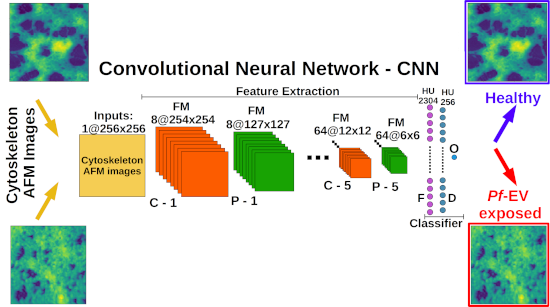
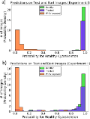
- , and image classification is one of the most basic tasks. “Classifying” means assigning the image to a specific category [7], such as dog/cat for kind of animal, healthy/diseased for cells, particular orientation/configuration for an adsorbed molecule. There could be many different classes in a data
- analogy of neural networks to the physiological ones was furthered in the 1962 work of Hubel and Wiesel, which showed that a set of neurons arranged in a column extending inwards from the brain surface all respond to stimuli of a specific orientation and location [27]. For instance, a particular column







Recent progress in actuation technologies of micro/nanorobots
Beilstein J. Nanotechnol. 2021, 12, 756–765, doi:10.3762/bjnano.12.59
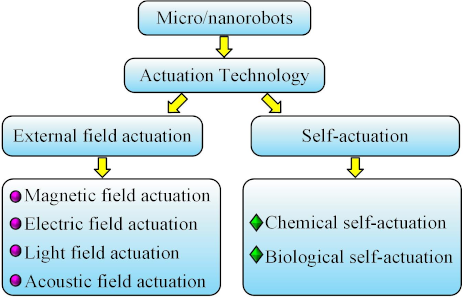
- freestyle swimming mode. The speed and orientation of the robot can be adjusted remotely by adjusting the magnetic field. The maximum speed is 59.6 μm/s, which is equivalent to a relative speed of about twelve body lengths per second. For the first time, oscillating magnetic fields were used to generate a


Physical constraints lead to parallel evolution of micro- and nanostructures of animal adhesive pads: a review
Beilstein J. Nanotechnol. 2021, 12, 725–743, doi:10.3762/bjnano.12.57
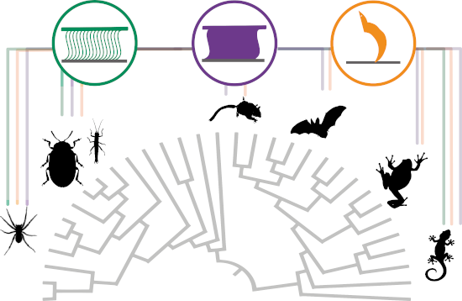
- under compression but strong under tension, (4) anisotropy in fibre orientation, and (5) presence of fluid in the contact area. Adaptation to fractal substrate surfaces due to hierarchical organization Hairs with high aspect ratios in the hairy systems and internal fibres/filaments of smooth systems
- represents their main structure/functional similarity to hairy pads. Anisotropy in fibre orientation Since fibres are normally not oriented perpendicularly to the pad surface (Figure 7), but rather at some angle (45–60°) and sloped into the distal direction, they do not buckle but rather bend under load


A review of defect engineering, ion implantation, and nanofabrication using the helium ion microscope
Beilstein J. Nanotechnol. 2021, 12, 633–664, doi:10.3762/bjnano.12.52

- properties of helium ion-irradiated silicon nanopillars have since been investigated as well, observing a softening behavior upon amorphization and swelling [89]. Helium ion irradiation of single-crystal diamond nanopillars has revealed an orientation dependence of the irradiation damage and associated


Impact of GaAs(100) surface preparation on EQE of AZO/Al2O3/p-GaAs photovoltaic structures
Beilstein J. Nanotechnol. 2021, 12, 578–592, doi:10.3762/bjnano.12.48
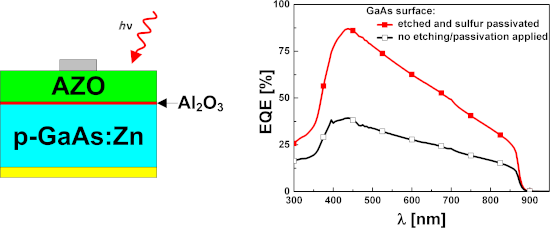
- ][18][19]. Many protocols for etching solutions are known. Depending on the requirements (e.g., etched compound – oxide or semiconductor, etching profiles, etching rate, ability to remove contaminants – heavy metals, and crystallographic orientation of the substrate) one can use a suitable solution [20




Influence of electrospray deposition on C60 molecular assemblies
Beilstein J. Nanotechnol. 2021, 12, 552–558, doi:10.3762/bjnano.12.45
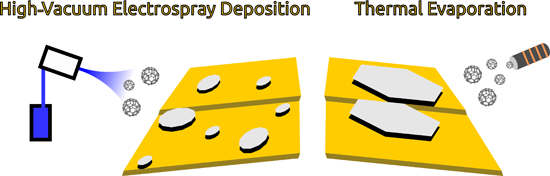
- reactivity of the surface, the presence of defects, already reported [37] and visible as small holes, should be noted. C60 on the surface can easily be identified as large bright areas corresponding to monolayer islands. These islands show irregular contour paths without preferential orientation as well as
- = 1.079 MHz, A2 = 800 pm, Δf2 = −30 Hz; (c, e) f1 = 152 kHz, A1 = 8 nm, Δf1 = −8 Hz. The crystal lattice orientation is shown in (b). Scale bar: (a–c) 100 nm, (d) 2 nm, (e) 10 nm. C60 on a NiO(001) surface. (a) Large scale topography nc-AFM image after TE; inset: zoom on an island with molecular


Determining amplitude and tilt of a lateral force microscopy sensor
Beilstein J. Nanotechnol. 2021, 12, 517–524, doi:10.3762/bjnano.12.42
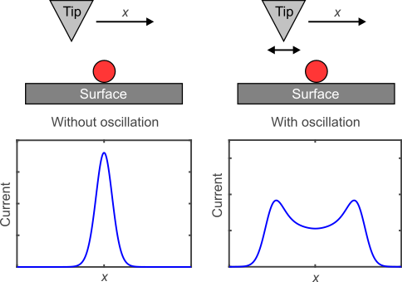
- Supporting Information File 1. (a) Sketch of the qPlus sensor in LFM orientation with amplitude A and the sensor tilt θ. (b) Photograph of a qPlus sensor glued perpendicularly on a sensor holder shown by the white substrate. Simulated Morse potential interaction for a LFM setup and comparison to normal AFM


Surface-enhanced Raman scattering of water in aqueous dispersions of silver nanoparticles
Beilstein J. Nanotechnol. 2021, 12, 497–506, doi:10.3762/bjnano.12.40
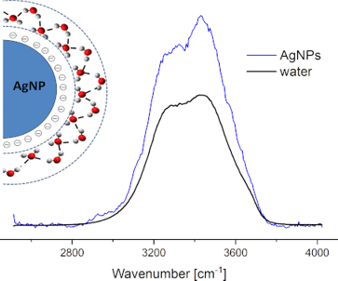
- selective enhancement of Raman signals from the samples. Previous studies showed that the RRE in liquid water directly corresponds to its supramolecular structure. It was also reported that the electric-field-induced orientation of water molecules on the electrode surface results in the surface-enhanced
- only a result of the specific orientation of water molecules on a silver surface, one should expect that this effect is visible for all AgNPs and is stronger for samples with a higher total metal surface. Taking into account the smaller average size of the AgNPs in the AgNPs yellow sample (higher total


A review on nanostructured silver as a basic ingredient in medicine: physicochemical parameters and characterization
Beilstein J. Nanotechnol. 2021, 12, 440–461, doi:10.3762/bjnano.12.36
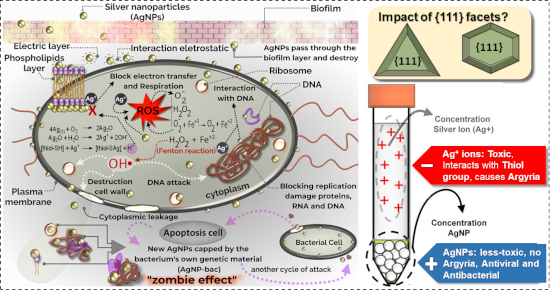
- determined not only by the large part of the surface atoms, but also by the crystallographic orientation on their surface. The number of atoms on the surface is influenced by the size of the nanoparticle, while the crystallographic orientation depends on the shape of the particles. The surfaces with {111


Reconstruction of a 2D layer of KBr on Ir(111) and electromechanical alteration by graphene
Beilstein J. Nanotechnol. 2021, 12, 432–439, doi:10.3762/bjnano.12.35
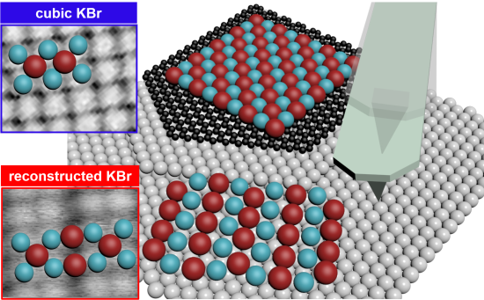
- long diagonal of the iridium unit cell ( = 470 pm) [41]. This observation already corresponds well with the three directions observed for the line structures and the main crystallographic directions of the Ir(111) surface. However, in the orthogonal direction (i.e., [011] orientation), the lattice
- answer, density functional theory (DFT) calculations have been performed to conclude on the observed structure. As a fundamental consideration, the lattice match for the orientation of KBr to fit the direction of Ir(111) due to was used and several possible periodicities have been considered as


Spontaneous shape transition of MnxGe1−x islands to long nanowires
Beilstein J. Nanotechnol. 2021, 12, 366–374, doi:10.3762/bjnano.12.30
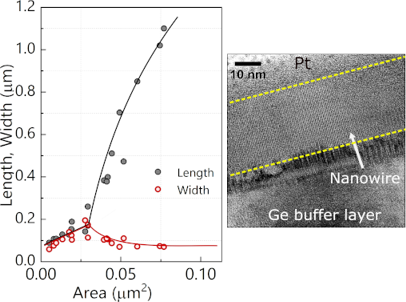
- characteristic peaks of Mn5Ge3 and Mn11Ge8 can be due to the perfect iso-orientation of all the NPs present on the film surface (Figure 1c). Similar results have been observed on thinner samples, even if the detected signal has been less intense due to the reduced thickness of the Mn layer. The results of SEM


Structural and optical characteristics determined by the sputtering deposition conditions of oxide thin films
Beilstein J. Nanotechnol. 2021, 12, 354–365, doi:10.3762/bjnano.12.29
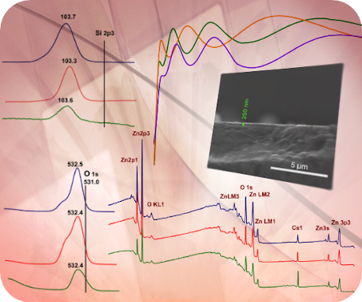
- dioxide (SiO2) and zinc oxide (ZnO) thin films deposited by radio frequency magnetron sputtering on quartz substrates was investigated. The deposition conditions were optimized to achieve stoichiometric thin films. The orientation of crystallites, structure, and composition were investigated by X-ray
- was done to determine the type of structure (e.g., polycrystalline or amorphous) and orientation of the thin films. Figure 1 shows typical XRD patterns of ZnO thin films with increasing thickness and prepared via rfMS. Following the effect of the deposition parameters of the oxide films we found that
- diffractograms [38]. These diffractograms indicate good crystalline quality and the analyzed films show two diffraction peaks, characteristic of the ZnO hexagonal structure (wurtzite). The studied thin films have a crystalline structure with a strong orientation of the planes (002) parallel to the surface of the


The nanomorphology of cell surfaces of adhered osteoblasts
Beilstein J. Nanotechnol. 2021, 12, 242–256, doi:10.3762/bjnano.12.20
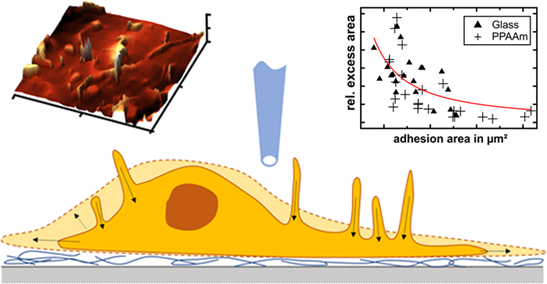
- orange for better visibility. The areas marked in red were measured with the SICM. (a) Sheet-like protrusions (ruffles) that mostly orient to the cell edge (right side in the image) are visible. The streaky appearance corresponds to the fast scan direction and the orientation of the ruffles is stable
- the cell nucleus. These tail-like features are characterized by heights of less than 100 nm and seem to show no flapping, which results in almost orthogonal orientation with respect to the cell membrane. (b) Depressions or holes in the cell membrane of ca. 500 nm depth. Similar features in literature


Extended iron phthalocyanine islands self-assembled on a Ge(001):H surface
Beilstein J. Nanotechnol. 2021, 12, 232–241, doi:10.3762/bjnano.12.19
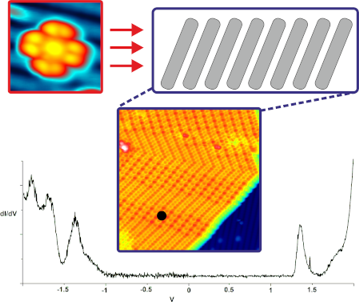
- single-layer islands extending surprisingly far over distances reaching hundreds of nanometers. Within these islands FePc molecules adopt an upright orientation, which is characteristic for substrates weekly interacting with metal phthalocyanines. Our combined scanning tunneling microscopy (STM) and
- between the island and the surface and also a low barrier for island displacement. Further, from the analysis of the apparent height of the molecular island, an upright orientation of the molecules can be inferred. Such a behavior has been frequently reported for substrates on which the interaction
- between the molecules and the surface is weak. This leads to a dominant role of molecule–molecule interactions and the formation of molecular crystals. In case of phthalocyanines, the upright orientation has been reported, for example, for CuPc on a layer of C60 [66] and for CuPc on top of the CuPc
TiOx/Pt3Ti(111) surface-directed formation of electronically responsive supramolecular assemblies of tungsten oxide clusters
Beilstein J. Nanotechnol. 2021, 12, 203–212, doi:10.3762/bjnano.12.16
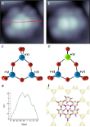
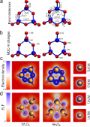
- obtained from the atomic charge analysis, corresponding to +IV and +VI in W3O8. Electron density and electron localization function show a slight increase for the WIV atom compared to the W3O9 cluster. In addition, the orientation of one of the W3O9 clusters in the layer below has obviously changed
- partial reduction of one of the tungsten atoms resulting in W3O8. Panels (c) and (d) illustrate the proposed structures before and after the procedure. The graph in (e) shows the corresponding height profile of the W3O9 stack in (a) marked by the red line. Panel (f) illustrates the proposed orientation on



Paper-based triboelectric nanogenerators and their applications: a review
Beilstein J. Nanotechnol. 2021, 12, 151–171, doi:10.3762/bjnano.12.12
- layers. The adjustable parameters of the crease patterns, such as shape, size, and orientation, are key to the aesthetics and functionality of the SPIN energy-harvesting units. There are four types of folding structures for an efficient energy harvesting: the stripe fold, the Miura fold, the Yoshimura






Mapping the local dielectric constant of a biological nanostructured system
Beilstein J. Nanotechnol. 2021, 12, 139–150, doi:10.3762/bjnano.12.11
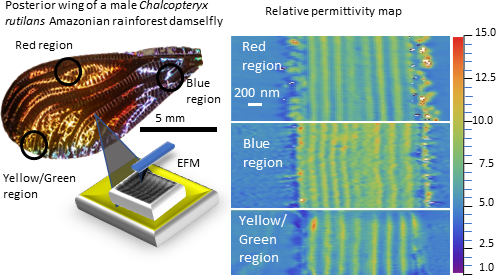
- , resulting in an orientation of the wing fragment perpendicular to the cutting plane. Sections 40 nm thick of the apex wedge were cut using a diamond knife and placed on 10 mm × 10 mm Au/Cr (60 nm/20 nm)-coated silicon wafer pieces. A conductive substrate surface is necessary for the proposed εr