


Search results
Search for "permeability" in Full Text gives 187 result(s) in Beilstein Journal of Nanotechnology.
Cytotoxicity of doxorubicin-conjugated poly[N-(2-hydroxypropyl)methacrylamide]-modified γ-Fe2O3 nanoparticles towards human tumor cells
Beilstein J. Nanotechnol. 2018, 9, 2533–2545, doi:10.3762/bjnano.9.236
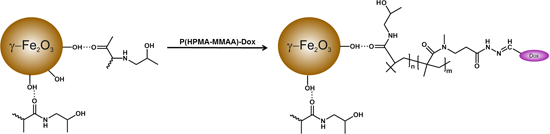
- , biocompatibility, absence of toxicity, minimal immunogenicity, and enhanced permeability and retention to cancer cells [18]. Moreover, PHPMA, which has a long history of biomedical applications as a drug-delivery vehicle, enables the control of biodistribution and accumulation via molecular weight limitations [19
- strategy for enhancing the long-term colloidal stability and the permeability of cells to nanoparticles. In this report, the surface of the γ-Fe2O3 nanoparticles was modified with PHPMA (Mn = 177 kDa) by a post-synthesis method. It is supposed that carbonyl groups of PHPMA bind to γ-Fe2O3 and interact with


Enhanced antineoplastic/therapeutic efficacy using 5-fluorouracil-loaded calcium phosphate nanoparticles
Beilstein J. Nanotechnol. 2018, 9, 2499–2515, doi:10.3762/bjnano.9.233
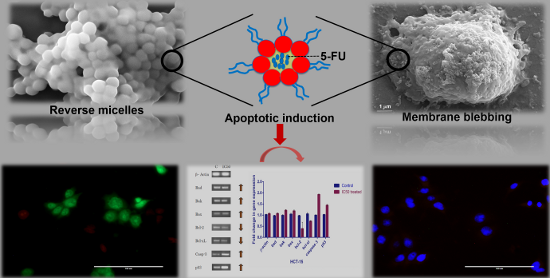
- /bjnano.9.233 Abstract In the past few decades, the successful theranostic application of nanomaterials in drug delivery systems has significantly improved the antineoplastic potency of conventional anticancer therapy. Several mechanistic advantages of nanomaterials, such as enhanced permeability


Nanocellulose: Recent advances and its prospects in environmental remediation
Beilstein J. Nanotechnol. 2018, 9, 2479–2498, doi:10.3762/bjnano.9.232
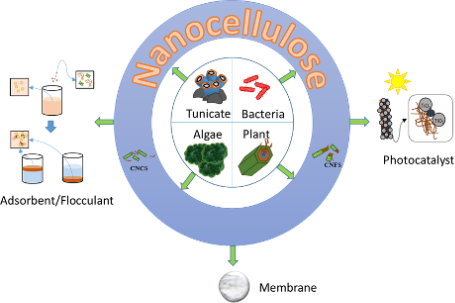
- of the photogenerated carriers decreased during the photochemical reaction. It was reported that electrospun cellulose acetate nanofibrous membranes with large specific surface area, high porosity, and high permeability could be an effective support for photocatalysts [122]. This could create a


Block copolymers for designing nanostructured porous coatings
Beilstein J. Nanotechnol. 2018, 9, 2332–2344, doi:10.3762/bjnano.9.218
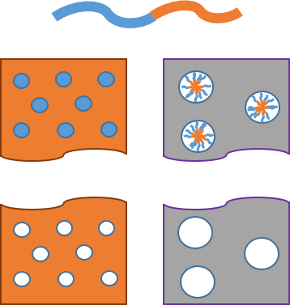
- their high selectivity, permeability, fouling resistance and mechanical strength. Eventually, further functionalizing can enhance the BC selectivity/affinity toward a particular target probe. Unfortunately, these advantages are partially annulled by a few drawbacks related to the production of these


Nanoconjugates of a calixresorcinarene derivative with methoxy poly(ethylene glycol) fragments for drug encapsulation
Beilstein J. Nanotechnol. 2018, 9, 2057–2070, doi:10.3762/bjnano.9.195
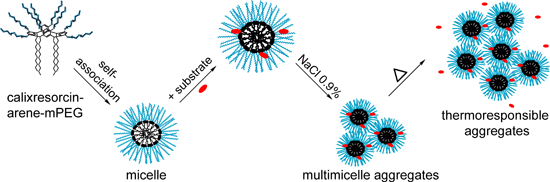
- than those of Dox, which can be explained by a lower permeability of the micelles of 3 for the more bulky Dox molecule. In conclusion, the incorporation of hydrophobic substrates into the micelles of 3 depends on the substrate structure and includes the interaction with both hydrophobic and hydrophilic


The inhibition effect of water on the purification of natural gas with nanoporous graphene membranes
Beilstein J. Nanotechnol. 2018, 9, 1906–1916, doi:10.3762/bjnano.9.182
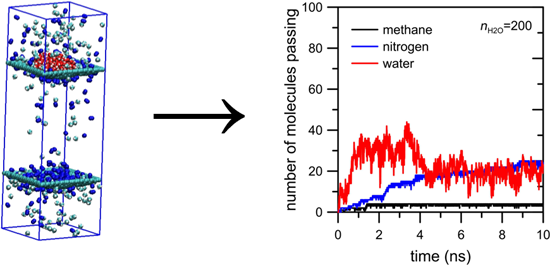
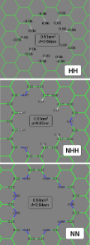
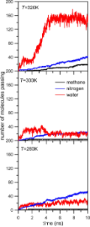
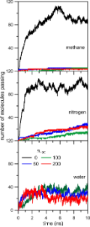
- permeation rate due to hydrogen-bonding with the nanopore rim. In this paper, by means of classical molecular dynamics, we discuss such an inhibiting effect of water on the gas permeability. Employing different nanopores functionalized by hydrogen and nitrogen atoms, we conduct theoretical studies on the
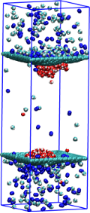
- , the presence of water in the separation system can decrease the membrane permeability. Due to the presence of hydrogen-bond acceptors in the nanopore, water molecules gather in the surroundings of the permeation path. As a result, the nanopore may be blocked by a water drop and the rate of permeation






Tailoring polarization and magnetization of absorbing terahertz metamaterials using a cut-wire sandwich structure
Beilstein J. Nanotechnol. 2018, 9, 1437–1447, doi:10.3762/bjnano.9.136
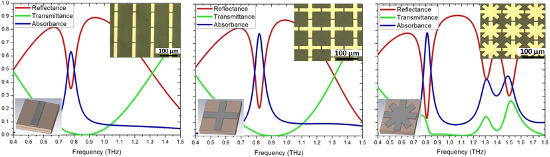
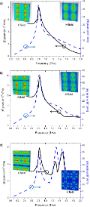
- (SZU), Shenzhen 518060, China Mechanical Engineering Program, Institut Teknologi Sumatera (ITERA), Lampung 35365, Indonesia, State Key Laboratory of Milimeter Waves, Southeast University, Nanjing 210096, China 10.3762/bjnano.9.136 Abstract The permittivity and permeability of a cut-wire sandwich
- structure can be controlled by laterally shifting the upper and lower layers. The use of this process for designing specific application-oriented devices may lack clear-cut guidelines because the lateral misalignment will significantly change the permittivity and permeability simultaneously. Therefore, in
- smaller than the wavelength of the terahertz electromagnetic (EM) wave. Thus, such structures can be considered a homogeneous medium from the perspective of the EM wave. The existence of multiple metallic structures in a device may affect the EM properties, such as permittivity and permeability. Several






Preparation and morphology-dependent wettability of porous alumina membranes
Beilstein J. Nanotechnol. 2018, 9, 1423–1436, doi:10.3762/bjnano.9.135
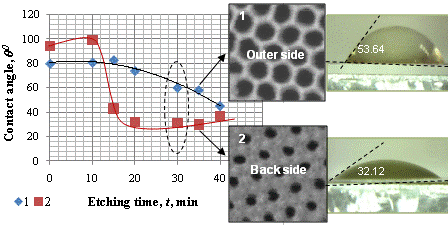
- -monodisperse cylindrical pores [23][24]. Membranes obtained by traditional methods have a three-dimensional pore structure that has a large pore size distribution, which does not allow high permeability values to be obtained [9][25][26]. Therefore, the optimization of parameters such as the diameter and length


Nanoporous silicon nitride-based membranes of controlled pore size, shape and areal density: Fabrication as well as electrophoretic and molecular filtering characterization
Beilstein J. Nanotechnol. 2018, 9, 1390–1398, doi:10.3762/bjnano.9.131
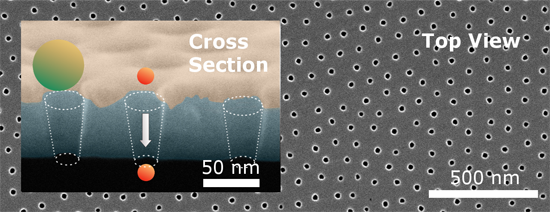
- start of 10.9 ± 0.8 nm results in uniform pore diameters at the top and bottom face of 19.1 ± 1.2 nm and 13.6 ± 1.5 nm, respectively. Electrophoretic characterization After the fabrication of nanometer-sized pores the permeability of the resulting membranes was tested. For this purpose, membranes with
- of the resulting membranes, may deteriorate their permeability. It turned out, however, that fluorocarbon surface contaminations could be removed by annealing in ultra-high vacuum (10−8 mbar) at 500 °C for 120 min (details are given in Supporting Information File 1). For membrane C with the smallest
- varying pore diameters are expected to be smaller than the measurement uncertainties. In accordance with these considerations, the ion transport measurements show a very high overall permeability of the nanopores. As a consequence, a small fraction of possibly blocked pores could not be resolved by the


Review on nanoparticles and nanostructured materials: history, sources, toxicity and regulations
Beilstein J. Nanotechnol. 2018, 9, 1050–1074, doi:10.3762/bjnano.9.98

- . Nanosize, monodispersity, distinct shapes, selective permeability to smaller molecules, composition controllability by genome manipulation, self-assembly and polyvalence, rapid growth, and stability towards pH and temperature [125][126], are properties that make viruses a unique category among NMs [127


Single-crystalline FeCo nanoparticle-filled carbon nanotubes: synthesis, structural characterization and magnetic properties
Beilstein J. Nanotechnol. 2018, 9, 1024–1034, doi:10.3762/bjnano.9.95
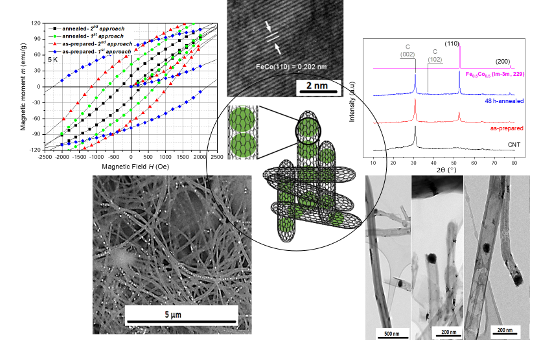
- magnetic storage [6][7], fuel cells [8], electromagnetic wave absorption [9], sensors for magnetic force microscopy [10] and human tumor therapy [11][12][13]. Fe–Co binary alloys are of particular interest due to their high saturation magnetization, large permeability and high magnetophoretic mobility [14


Noble metal-modified titania with visible-light activity for the decomposition of microorganisms
Beilstein J. Nanotechnol. 2018, 9, 829–841, doi:10.3762/bjnano.9.77
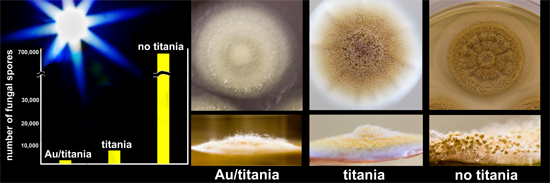
- deactivated through interfering with cell activity (e.g., changes in cell permeability, enzyme activity and cell division). It is believed that in the history of humanity, disinfection is one of the most important achievements in the health protection [2]. Improvements in sanitation facilities and water


Fabrication and photoactivity of ionic liquid–TiO2 structures for efficient visible-light-induced photocatalytic decomposition of organic pollutants in aqueous phase
Beilstein J. Nanotechnol. 2018, 9, 580–590, doi:10.3762/bjnano.9.54
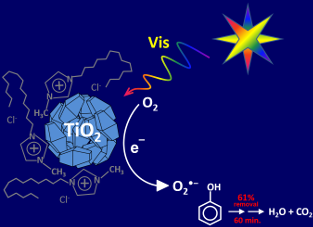
- permeability [54][55][56]. Thus, it could be expected that the higher photocatalytic activity could be achieved by using TiO2 microspheres with uniform and spherical shape. According to the DRS UV–vis spectra shown in Figure 4, the incorporation of ILs into TiO2 microspheres significantly extended the




Nanoparticle delivery to metastatic breast cancer cells by nanoengineered mesenchymal stem cells
Beilstein J. Nanotechnol. 2018, 9, 321–332, doi:10.3762/bjnano.9.32
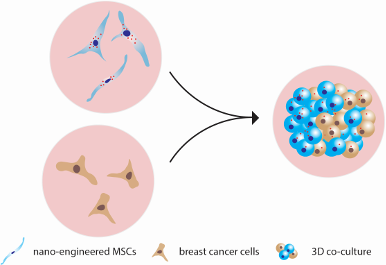
- permeability glycoprotein (P-glycoprotein)-mediated excretion of QDs from stem cells has been reported in other studies [30][31][32]. In our co-culture model, QDs are likely lost from MSCs via P-glycoprotein excretion. In 3D co-culture, MSCs and cancer cells are in close spatial proximity (Figure 6A,B), thus



BN/Ag hybrid nanomaterials with petal-like surfaces as catalysts and antibacterial agents
Beilstein J. Nanotechnol. 2018, 9, 250–261, doi:10.3762/bjnano.9.27
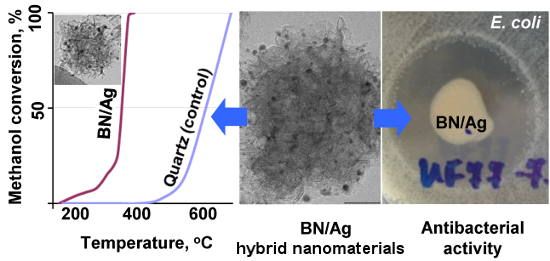
- and gas permeability. IR spectroscopy In order to trace the chemical state of the BN/Ag NH surfaces, the samples before and after catalytic activity tests were characterized by IR spectroscopy. The results are presented in Figure 6. Both types of the pristine BN/Ag HNMs are characterized by the two





Magnetic field induced orientational transitions in liquid crystals doped with carbon nanotubes
Beilstein J. Nanotechnol. 2017, 8, 2807–2817, doi:10.3762/bjnano.8.280
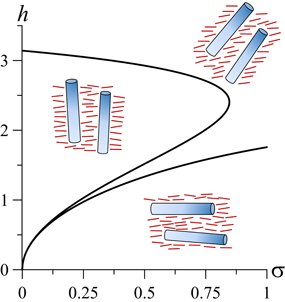
- to the minimum of free energy Here, K11, K22 and K33 are the Frank elastic moduli; χa and are the diamagnetic susceptibility anisotropies of LC and CNTs, respectively; μ0 is the permeability of vacuum; f is the volume fraction of CNTs in the suspension; Wp is the surface density of the coupling


![[Graphic 43]](/bjnano/content/inline/2190-4286-8-280-i72.svg?max-width=637&scale=1.18182) for the Fréedericksz transition as a function of the couplin...
for the Fréedericksz transition as a function of the couplin...

![[Graphic 58]](/bjnano/content/inline/2190-4286-8-280-i87.svg?max-width=637&scale=1.18182) and (b)
and (b) ![[Graphic 59]](/bjnano/content/inline/2190-4286-8-280-i88.svg?max-width=637&scale=1.18182) on the coupling energy of CNTs w...
on the coupling energy of CNTs w...
High-stress study of bioinspired multifunctional PEDOT:PSS/nanoclay nanocomposites using AFM, SEM and numerical simulation
Beilstein J. Nanotechnol. 2017, 8, 2069–2082, doi:10.3762/bjnano.8.207
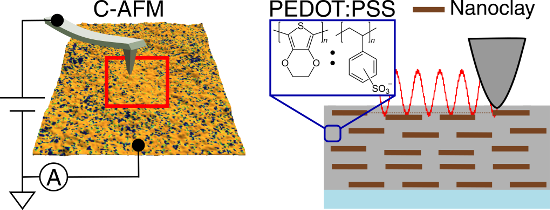
- structure [9][10]. Although the mechanical properties of the nanoclay/polymer nanocomposites have not matched those of nacre [8], other interesting properties have been reported besides being lightweight and potentially transparent [11]. Gas permeability experiments have shown that the brick-and-mortar
- structure significantly reduces diffusion of gases across it [12][13][14]. The suggested mechanism for the decreased permeability is an increased-tortuosity path for the gas, due to the presence of the nanoclay particles [14][15]. Since the nanoclay prevents oxygen from diffusing into the organic phase, it
- permeability, fire retardancy, and excellent mechanical properties and flexibility. Conclusion We have designed an optically transparent and electron conductive nanocomposite coating based on the polymer PEDOT:PSS and the nanoclays Laponite RD and Cloisite Na+, which exhibits a brick and mortar structure. We


Development of an advanced diagnostic concept for intestinal inflammation: molecular visualisation of nitric oxide in macrophages by functional poly(lactic-co-glycolic acid) microspheres
Beilstein J. Nanotechnol. 2017, 8, 1637–1641, doi:10.3762/bjnano.8.163
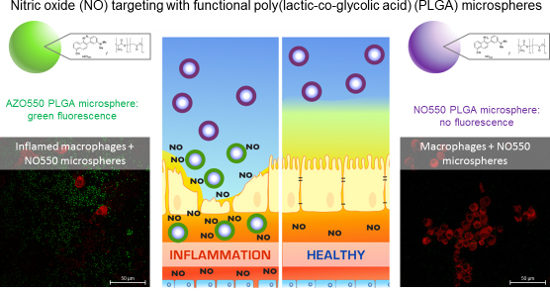
- approach is based on the epithelial barrier dysfunction of the intestine during intestinal inflammation. The intestinal barrier shows an increased permeability by disabled tight junction proteins, alterations in the thickness and composition of the mucus. Thus, particles penetrate and accumulate only into


Parylene C as a versatile dielectric material for organic field-effect transistors
Beilstein J. Nanotechnol. 2017, 8, 1532–1545, doi:10.3762/bjnano.8.155
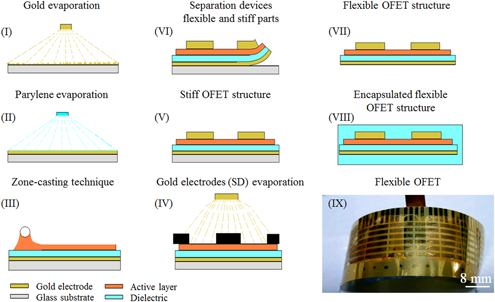
- described as “dangling bonds”) are quenched with oxygen, forming oxide-type moieties [26]. However, because the gas permeability of parylene coatings is low and the degree of polymerization is very high [26], the concentration of these structures and, therefore, their effect on electrical conduction of the
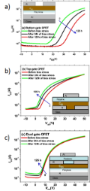
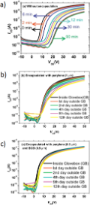
- degradation of IDS, measured in the OFET encapsulated with Parylene C (1 μm) may be attributed to the slow penetration of water vapor and oxygen through the encapsulation layer. The decrease in the permeability of water vapor and oxygen through the bilayer encapsulation film has been attributed to the sealing




Cationic PEGylated polycaprolactone nanoparticles carrying post-operation docetaxel for glioma treatment
Beilstein J. Nanotechnol. 2017, 8, 1446–1456, doi:10.3762/bjnano.8.144
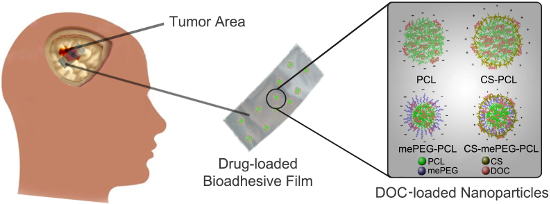
- benefit from enhanced permeability and retention (EPR) effect thanks to their smaller size. They can also encapsulate hydrophobic drugs as their cargo to improve solubility at the target site. Consequently, nanoparticle-based drug delivery systems can protect drug activities in biological systems and




Carbon nanomaterials sensitize prostate cancer cells to docetaxel and mitomycin C via induction of apoptosis and inhibition of proliferation
Beilstein J. Nanotechnol. 2017, 8, 1307–1317, doi:10.3762/bjnano.8.132
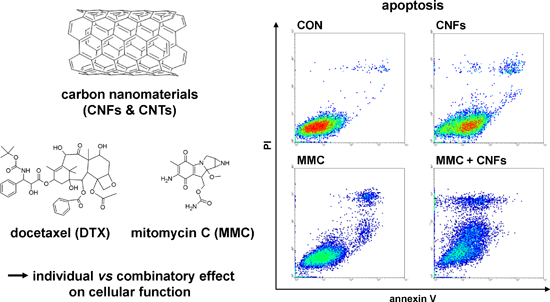
- the tumor site is hindered by the high interstitial fluid pressure of solid tumors [9]. In contrast, macromolecular compounds such as CNFs and CNTs can accumulate into solid tumors much easier by taking advantage of the enhanced permeability and retention effect, which is caused by the inconsistent
- the present study the concentration of CNFs and CNTs in the combinatory treatments was rather high (50 µg/mL), but well within the range of in vitro analyses. However, due to the aforementioned enhanced permeability and retention effect of solid tumor tissue, the concentration of carbon nanomaterials


A top-down approach for fabricating three-dimensional closed hollow nanostructures with permeable thin metal walls
Beilstein J. Nanotechnol. 2017, 8, 1231–1237, doi:10.3762/bjnano.8.124
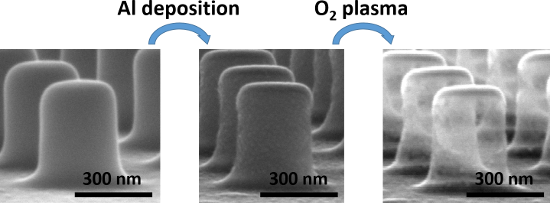
- on conventional microelectronic fabrication processes and exploits the permeability of thin metal films to hollow-out polymer-filled metal nanocages through an oxygen-plasma process. The technique is used for fabricating arrays of cylindrical nanocages made of thin Al shells on silicon substrates
- reactivity with the environment [1]. For most applications, wall permeability is desirable in order to facilitate material interchange with the surroundings and/or increase the active surface of these nano-objects. Thus, permeable-wall nanocontainers can be used for a variety of appealing applications, such
- –gel chemical reactions [1][2][3][4][5]. These procedures allow the synthesis of disperse, hollow nanostructures with precise control of their physical and chemical properties, such as size, shape, material composition and structural characteristics of the shell (thickness, permeability and surface


Computing the T-matrix of a scattering object with multiple plane wave illuminations
Beilstein J. Nanotechnol. 2017, 8, 614–626, doi:10.3762/bjnano.8.66
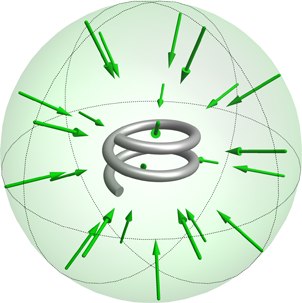
- , which is characterized by the permittivity ε(ω) and the permeability μ(ω). The complex expansion coefficients anm(ω) and bnm(ω) are called scattering coefficients and the coefficients pnm(ω) and qnm(ω) are called incident coefficients. Together they contain all relevant information about the interaction


Liquid permeation and chemical stability of anodic alumina membranes
Beilstein J. Nanotechnol. 2017, 8, 561–570, doi:10.3762/bjnano.8.60
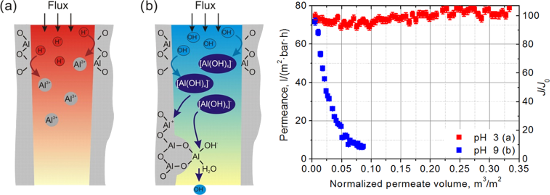
- and exceptional transport characteristics. A very narrow pore size distribution, low pore tortuosity and controllable membrane porosity make AAO one of the top performers given its permeability/pore diameter ratio [1]. The synthetic procedure of AAO membranes enables significant tunability of the
- , the water permeability of a 100 µm thick AAO membrane with a pore diameters of 170 nm attains 220 L/(m2·bar·h), which substantially exceeds that of most porous filters having the pore same size and is nearly equal to the permeability of track-etched membranes [16]. However, pure water flux through the
- AAO membrane was found to decrease with time, indicating degradation of the membrane material, which persuaded us to conduct long-term permeability experiments. The long-term flux stability was studied for both protonic and aprotonic solvents with different viscosity. The dependence of membrane


Innovations from the “ivory tower”: Wilhelm Barthlott and the paradigm shift in surface science
Beilstein J. Nanotechnol. 2017, 8, 394–402, doi:10.3762/bjnano.8.41

- ideas off the mainstream. The available space for opportunities may be explored but does not necessarily need to be. The selective permeability is another main function of borders. Fundamentals of self-cleaning in plants: a rough, hydrophobic surface (left) causes water to form spheres not adhering to
- criteria and, as a result, the permeability of the border may change . Differences in motivation to solve problems in industry and the scientific world.





