


Search results
Search for "plasmon resonance" in Full Text gives 226 result(s) in Beilstein Journal of Nanotechnology. Showing first 200.
Synthesis and characterization of noble metal–titania core–shell nanostructures with tunable shell thickness
Beilstein J. Nanotechnol. 2017, 8, 2083–2093, doi:10.3762/bjnano.8.208
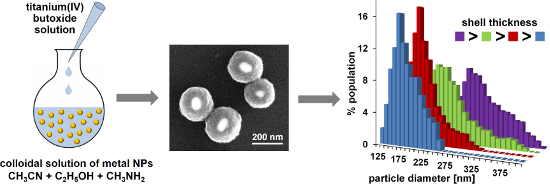
- , Kaliskiego 2 Str. 00-908 Warsaw, Poland 10.3762/bjnano.8.208 Abstract Core–shell nanostructures have found applications in many fields, including surface enhanced spectroscopy, catalysis and solar cells. Titania-coated noble metal nanoparticles, which combine the surface plasmon resonance properties of the
- great potential for use in these applications [18][19]. Surface plasmon resonance properties of gold and silver NPs can increase the optical absorption of titania and extend its absorption band to the visible light region. Such CSNs could allow one of the most important limitations in broader use of
- for AgNPs and λmax = 528 nm vs λmax = 540 nm for AuNPs) were observed (Figure 3). This effect is related to the fact that the spectral location of plasmon resonance of single noble metal nanoparticles is dependent on the refractive index (n) of the surrounding medium [28][56]. Coating metal NPs with


Near-infrared-responsive, superparamagnetic Au@Co nanochains
Beilstein J. Nanotechnol. 2017, 8, 1680–1687, doi:10.3762/bjnano.8.168
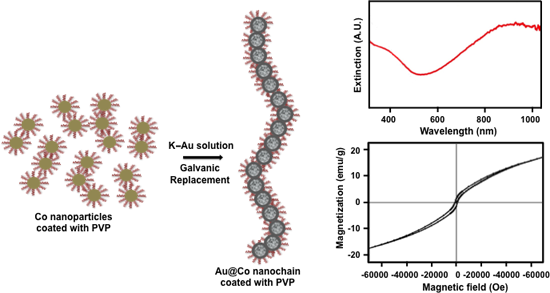
- nanoparticles not only renders the nanoparticles biocompatible but also gives rise to distinct optical properties [18][19]. Noble metal nanoparticles, such as gold and silver, possess the unique property of surface plasmon resonance (SPR); the latter exhibit a strong extinction band in the visible region [19
- arising from the difference between their reduction potentials. Cobalt cores were oxidized by H+ from aqueous HAuCl4 solution until Co nanoparticles were completely consumed, which led to the formation of the hollow gold nanostructures. The surface plasmon resonance of these particles appeared at 628 nm
- related nanostructures [28][29][30]. This considerable increase can be attributed to the formation of both the hollow interior and the chain structure in the present materials. Previous research on Au and Ag nanochains demonstrated that the plasmon resonance of two interacting particles undergoes a red


Two-dimensional carbon-based nanocomposites for photocatalytic energy generation and environmental remediation applications
Beilstein J. Nanotechnol. 2017, 8, 1571–1600, doi:10.3762/bjnano.8.159


Fixation mechanisms of nanoparticles on substrates by electron beam irradiation
Beilstein J. Nanotechnol. 2017, 8, 1523–1529, doi:10.3762/bjnano.8.153
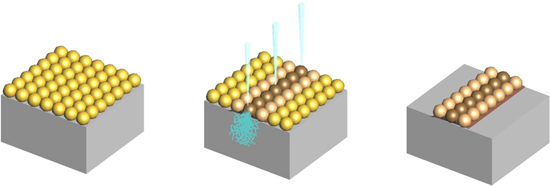
- been attracting attention because these arrays and patterns offer unique electrical and optical properties. One of the applications of such nanostructure arrays is plasmonic waveguides, in which the energy of light propagates because of the localized surface plasmon resonance (LSPR) effect [1][2]. In



A top-down approach for fabricating three-dimensional closed hollow nanostructures with permeable thin metal walls
Beilstein J. Nanotechnol. 2017, 8, 1231–1237, doi:10.3762/bjnano.8.124
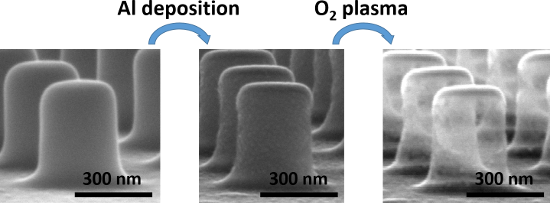
- field (Ex) and y-component of the magnetic field (Hy) at the reflectance peak (λ = 700 nm) are shown in Figure 4. Ex and Hy are enhanced and localized at the edges and on top of the metal disk, respectively, suggesting the excitation of a localized surface plasmon resonance (LSPR). On another hand, the


Surface-enhanced Raman spectroscopy of cell lysates mixed with silver nanoparticles for tumor classification
Beilstein J. Nanotechnol. 2017, 8, 1183–1190, doi:10.3762/bjnano.8.120

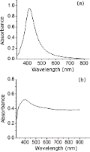
- absorption band of silver (Ag) nanoparticles corresponds to the maximum of the plasmon resonance which is near 415 nm (Figure 1a). Shifting the plasmon resonance of our nanoparticles to the near-IR spectral region was achieved by aggregation using potassium chloride (KCl). When nanoparticles aggregate, they
- become electronically coupled, which results in a change of the surface plasmon resonance compared to individual particles. Figure 1b shows the effect of adding KCl to Ag nanoparticles on the optical absorption characteristics. The aggregated nanoparticles have a broad absorption band that allowed for



Optical response of heterogeneous polymer layers containing silver nanostructures
Beilstein J. Nanotechnol. 2017, 8, 1065–1072, doi:10.3762/bjnano.8.108
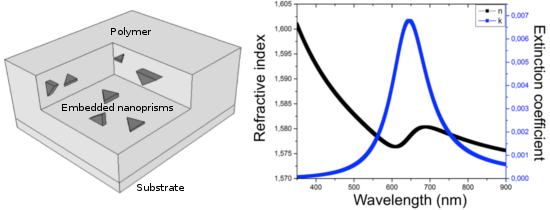
- wavelength range. The optical properties of these metallic NPs are induced by localized surface plasmon resonances, which are size, shape, material and environment dependent [7]. At the localized surface plasmon resonance wavelengths, the conduction electrons of the NPs oscillate coherently, which induces an
- control the absorption of thin film layers by embedding different NPs. When included in polymer thin film layers (such as poly(vinylpyrrolidone) (PVP)), the plasmon resonance wavelengths of the NPs are red-shifted with respect to the resonance wavelengths in water. This environment dependence can easily
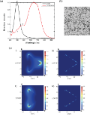


Nanoantenna-assisted plasmonic enhancement of IR absorption of vibrational modes of organic molecules
Beilstein J. Nanotechnol. 2017, 8, 975–981, doi:10.3762/bjnano.8.99
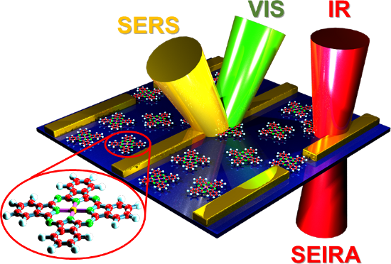
- . Keywords: cobalt phthalocyanine; cortisol; localized surface plasmon resonance; metal nanoantennas; Raman scattering; surface-enhanced infrared absorption (SEIRA); Introduction Organic semiconductors have been extensively investigated during the past few decades due to their wide range of applications in
- can be explained by the resonant SERS effect, as the energy of the local surface plasmon resonance (LSPR) of nanoclusters is located in the red spectral region, which is in resonance with the excitation energy. In the case of nanoantennas, the energy of longitudinal LSPR modes polarized along the
- predominantly performed in clinical practice [37]. Other methods, such as chromatography [38][39][40] and surface plasmon resonance [41], are used in fundamental research. Each of these methods of cortisol detection has advantages and drawbacks. Conventional Raman scattering, which is widely used for the

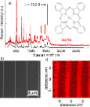


Near-field surface plasmon field enhancement induced by rippled surfaces
Beilstein J. Nanotechnol. 2017, 8, 956–967, doi:10.3762/bjnano.8.97
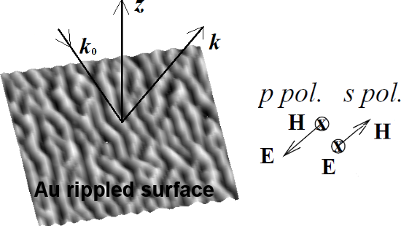
- scanning near-field optical microscopy. Keywords: aperture scanning near-field optical microscopy; gold rippled surface; localized hot spots; metal–dielectric−metal nanogaps; surface plasmon resonance; Introduction Metal nanostructures capable of producing localized surface plasmon polaritons (SPPs) are
- the optical excitation of SPPs, which are ultimately collective optical electromagnetic modes strongly connected to the nanostructure geometry and size [12]. This is because at a metal–dielectric interface, large electric field fluctuations can occur for a plasmon resonance frequency, ωr, that in a
- eigenmodes drive the plasmon resonance and the field enhancements. In fact, the pole accounts for all of the contribution to Green’s functions from the rough surface. Only under small-roughness conditions G0 ≈ Gf, while in general Gf >> G0. Now, we must define the ripple surfaces providing us the profile h(x


Thin SnOx films for surface plasmon resonance enhanced ellipsometric gas sensing (SPREE)
Beilstein J. Nanotechnol. 2017, 8, 522–529, doi:10.3762/bjnano.8.56
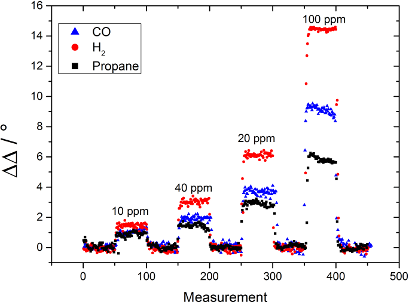
- the problems of cross sensitivity of the MOS concept. Results: Undoped tin oxide (SnOx) and iron doped tin oxide (Fe:SnOx) thin add-on films were prepared by magnetron sputtering on the top of the actual surface plasmon resonance (SPR) sensing gold layer. The films were tested for their sensitivity to
- several gas species in the surface plasmon resonance enhanced (SPREE) gas measurement. It was found that the undoped tin oxide (SnOx) shows higher sensitivities to propane (C3H8) then to carbon monoxide (CO). By using Fe:SnOx, this relation is inverted. This behavior was explained by a change of the
- sensing devices with different coated SPREE sensors. Keywords: doped tin oxide; ellipsometry; gas sensing; surface plasmon resonance; thin films; transparent conductive oxides; Introduction Gas sensors are an important tool for example in the fields of process monitoring, workplace safety or


Comparison of four methods for the biofunctionalization of gold nanorods by the introduction of sulfhydryl groups to antibodies
Beilstein J. Nanotechnol. 2017, 8, 372–380, doi:10.3762/bjnano.8.39
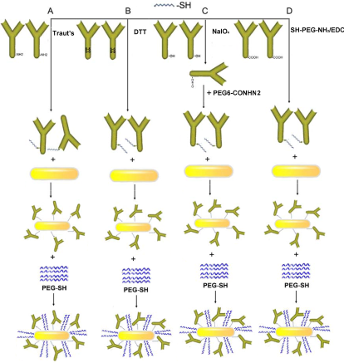
- containing 1% BSA (pH 7.4) as described previously in our work [17], to eliminate non-specific binding and adsorption. GNRs exhibit a unique optical transduction because of their localized surface plasmon resonance (LSPR). The particular sensitivity of the longitudinal plasmon band could induce a significant


Colorimetric gas detection by the varying thickness of a thin film of ultrasmall PTSA-coated TiO2 nanoparticles on a Si substrate
Beilstein J. Nanotechnol. 2017, 8, 229–236, doi:10.3762/bjnano.8.25
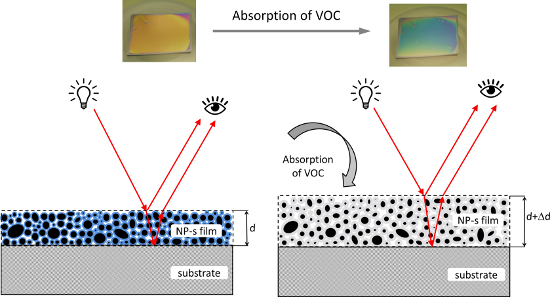
- was previously utilized both in localized surface plasmon resonance (LSPR) devices and porous Bragg stacks [17]. As mentioned before, the NPs in our samples are covered with PTSA. This functional coating ensures selectivity and different responses to different VOCs. Figure 6 shows that the proposed NP


Influence of hydrofluoric acid treatment on electroless deposition of Au clusters
Beilstein J. Nanotechnol. 2017, 8, 183–189, doi:10.3762/bjnano.8.19
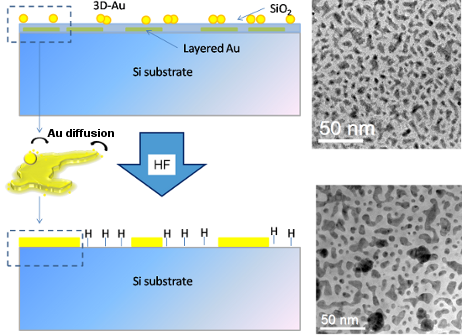
- shown quite interesting applications in the fields of Si nanowire (SiNW) catalysis [1][2][3], metal-assisted etching (MAE) [4] or even as electrical contacts in standard miniaturized devices [5]. Their ability to display enhanced surface plasmon resonance (SPR) at optical frequencies makes them


Tunable plasmons in regular planar arrays of graphene nanoribbons with armchair and zigzag-shaped edges
Beilstein J. Nanotechnol. 2017, 8, 172–182, doi:10.3762/bjnano.8.18
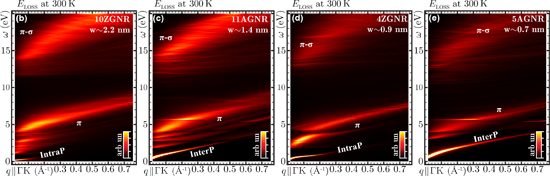
- correction in mind, we can introduce the inverse dielectric matrix: The zeros in the real part of the macroscopic dielectric function (permittivity) provide the condition for a plasmon resonance to occur, stated as: The imaginary part of the inverse permittivity is proportional to so-called energy loss (EL
- plasmon resonance being blue-shifted by increasing the GNR width (Figure 3a,c). In 11AGNR and 5AGNR, not only the peak position but also the interplay of the interband and intraband plasmon is strongly dictated by the doping level and the GNR width (Figure 3b,d). In 5AGNR, the two modes are well resolved


![[Graphic 8]](/bjnano/content/inline/2190-4286-8-18-i16.png?max-width=637&scale=1.18182) , Equation 6) and EL function (ELOSS, Equation 8) at room temperature for the GNR arrays of Figure 1 ...
, Equation 6) and EL function (ELOSS, Equation 8) at room temperature for the GNR arrays of Figure 1 ...


Streptavidin-coated gold nanoparticles: critical role of oligonucleotides on stability and fractal aggregation
Beilstein J. Nanotechnol. 2017, 8, 1–11, doi:10.3762/bjnano.8.1
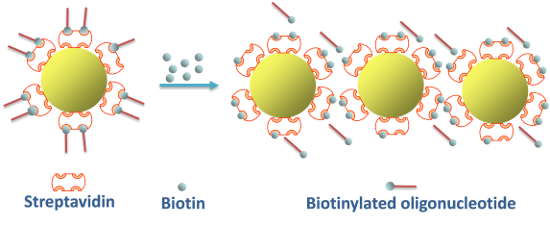
- relevant ligands has led to dramatic progresses in both living cells as well as biomolecular diagnostic assays [3][4][5]. In particular, optical sensing exploiting the surface plasmon resonance (SPR) effect has been widely investigated and plays a significant role in biomolecular detection [6][7]. In this




Effect of Anderson localization on light emission from gold nanoparticle aggregates
Beilstein J. Nanotechnol. 2016, 7, 2013–2022, doi:10.3762/bjnano.7.192
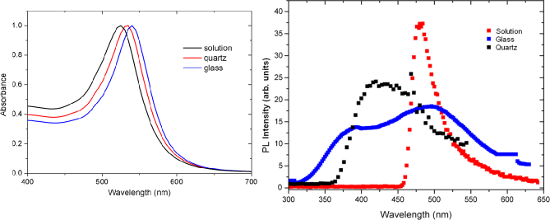
- constant of the medium. Keywords: Anderson localization; gold nanoparticle aggregates; photoluminescence; plasmons; surface plasmon resonance; Introduction The process of localization of waves has been observed in several physical phenomena, such as for excitons in semiconductor nanostructures [1] and
- revealed a primary particle size of ≈14 nm. For spherical nanoparticles, the condition of plasmon resonance excitation is satisfied when εreal = −2εm, where εreal is the real part of the dielectric constant of the particle material and εm is the dielectric constant of the medium. For nonspherical
- to the change in plasmon resonance upon aggregation can be similarly described [5][6], along with the resulting modifications in the optical properties [26]. Figure 2a,b shows the SEM images of AuNPs deposited on glass and quartz substrates, respectively. The AuNPs on the glass substrate wet the


Low temperature co-fired ceramic packaging of CMOS capacitive sensor chip towards cell viability monitoring
Beilstein J. Nanotechnol. 2016, 7, 1871–1877, doi:10.3762/bjnano.7.179
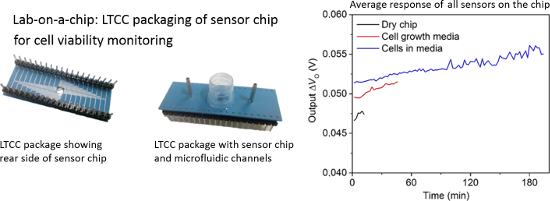
- viability screening are lethal to the cells. Hence there is a growing interest in noninvasive, label-free, real-time, data-rich biosensing systems that measure electrical, optical, magnetic, or mass related properties of the biological sample. Such sensing techniques include surface plasmon resonance


Functionalized platinum nanoparticles with surface charge trigged by pH: synthesis, characterization and stability studies
Beilstein J. Nanotechnol. 2016, 7, 1822–1828, doi:10.3762/bjnano.7.175
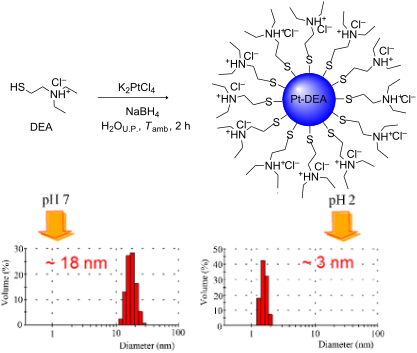
- interest for many technological applications [1][2]. For example PtNPs are of interest due to their catalytic activity [3][4], electrochemical applications [5], chemical sensing [6][7][8][9] and optical features related to surface plasmon resonance (SPR) that occurs in the ultraviolet range of


Hydrophilic silver nanoparticles with tunable optical properties: application for the detection of heavy metals in water
Beilstein J. Nanotechnol. 2016, 7, 1654–1661, doi:10.3762/bjnano.7.157
- , University of Rome Sapienza, Rome, P.le A. Moro 5, 00187, Italy 10.3762/bjnano.7.157 Abstract Due their excellent chemo-physical properties and ability to exhibit surface plasmon resonance, silver nanoparticles (AgNPs) have become a material of choice in various applications, such as nanosensors, electronic
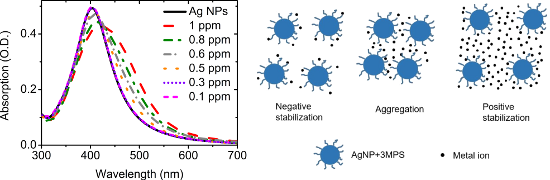
- nitrate as precursor molecules, hydrophilic thiol (3-mercapto-1-propanesulfonic acid sodium salt, 3MPS) and sodium borohydride as capping and reducing agents, respectively. The AgNPs were characterized using techniques such as surface plasmon resonance (SPR) spectroscopy, dynamic light scattering (DLS
- the field of sensors for specific analytes [7][8][9][10]. In particular, given their flexible and easy preparation, large specific surface area, and surface plasmon resonance (SPR) properties, metal nanoparticles are excellent candidates for a wide variety of applications ranging from catalysis [11


Graphene-enhanced plasmonic nanohole arrays for environmental sensing in aqueous samples
Beilstein J. Nanotechnol. 2016, 7, 1564–1573, doi:10.3762/bjnano.7.150
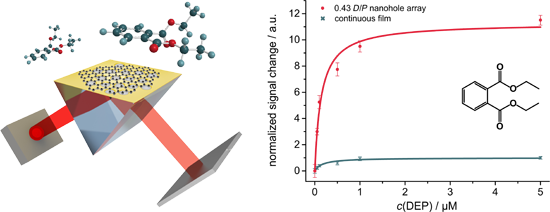
- 10.3762/bjnano.7.150 Abstract The label-free nature of surface plasmon resonance techniques (SPR) enables a fast, specific, and sensitive analysis of molecular interactions. However, detection of highly diluted concentrations and small molecules is still challenging. It is shown here that in contrast to
- lithography; surface plasmon resonance; Introduction Plasticizers are additives used in plastic industry, personal care products and especially in polyvinyl chloride (PVC) products. The most common plasticizers are phthalate acid esters (PAEs) [1]. Since PAEs are not chemically bound to the polymeric matrix
- detection limits in the environmental interesting concentration is important for water safety and direly needed. Surface plasmon resonance spectroscopy (SPR) is a widely-used technique for quantifying and characterizing biomolecular interactions in biosensors for medical diagnostics, food safety and




Localized surface plasmons in structures with linear Au nanoantennas on a SiO2/Si surface
Beilstein J. Nanotechnol. 2016, 7, 1519–1526, doi:10.3762/bjnano.7.145
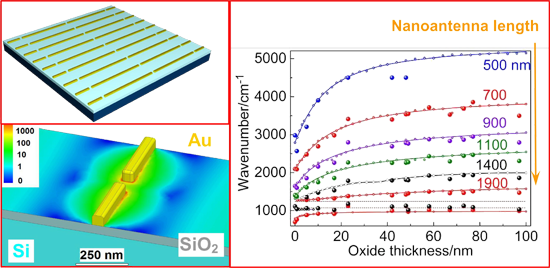
- between plasmonic excitations of gold nanoantennas and optical phonons in SiO2 leads to the appearance of new plasmon–phonon modes observed in the infrared transmission spectra the frequencies of which are well predicted by the simulations. Keywords: nanoantenna array; localised surface plasmon resonance
- to a few micrometers, while having a width of about 100 nm that is defined by conventional nanolithography used for nanoantenna fabrication. Such nanoantennas exhibit the effect of the localized surface plasmon resonance (LSPR), which is observed when the eigenfrequency of electron oscillations in
- fabricated on a 3 nm thick natural silicon oxide layer. This phenomenon is interpreted in terms of the coupling between the antenna's, plasmon resonance and surface phonon–polariton excitations [26]. Similar results were obtained for a thermal SiO2 layer having the thickness of 106 nm, for which the SO


Photothermal effect of gold nanostar patterns inkjet-printed on coated paper substrates with different permeability
Beilstein J. Nanotechnol. 2016, 7, 1480–1485, doi:10.3762/bjnano.7.140
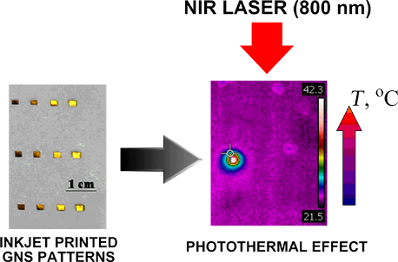
- fabrication of analytical and diagnostics tools. These methods could be extended to non-spherical gold nanoparticles that can efficiently release heat locally when irradiated in the near infrared (NIR) wavelength region, due to localized surface plasmon resonance (LSPR). However, this promising application
- number of printed layers, and, critically, on the permeability of the coated paper substrates. These results will promote the development of GNS-based printed platforms for local photothermal therapy. Keywords: gold nanostars; inkjet printing; localized surface plasmon resonance (LSPR); photothermal
- localized surface plasmon resonance (LSPR). Highly localized and controlled hyperthermal effects can be obtained under excitation in resonance with the LSPR and applied for local hyperthermic treatments in life sciences [16][17]. In this study, we used well-characterized pentatwinned branched GNS with an


Electric field induced structural colour tuning of a silver/titanium dioxide nanoparticle one-dimensional photonic crystal
Beilstein J. Nanotechnol. 2016, 7, 1404–1410, doi:10.3762/bjnano.7.131
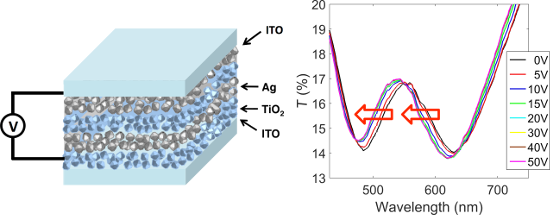
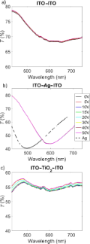
- plasmon resonance of the silver nanoparticles. The shift of the photonic band gap is about 10 nm for an applied potential of only 10 V. In Figure S7 of Supporting Information File 1 we show that at voltages above 15 V the shift saturates up to a value of about 16–17 nm. Notably, the observed shifts of
- the alternating silver and titanium dioxide nanoparticle layers. In the following we provide an interpretation for the observed blue shift of the photonic band gap as well as the silver plasmon resonance by applying an electric field and making a simple assumption. We consider the plasma frequency ωp
- as given in [28] and two artificially increased carrier densities. Similar to the experimental results, the calculated transmission spectra show an intense band in the UV/blue region ascribed to the plasmon resonance of the silver layer and a second band corresponding to the photonic bandgap. Note




Tunable longitudinal modes in extended silver nanoparticle assemblies
Beilstein J. Nanotechnol. 2016, 7, 1219–1228, doi:10.3762/bjnano.7.113
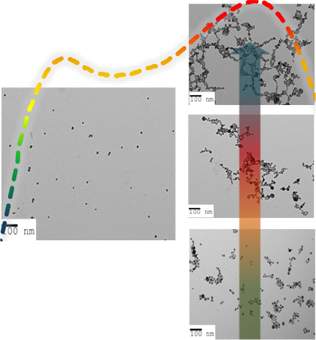
- triggered or directed by solution conditions such as temperature, illumination, pH and metal ion concentration [21]. Amongst the various self-assembled nanostructures, silver nanoparticles (AgNPs) are of great significance due to their sharp plasmon resonance, the antimicrobial function and a distinguished
- valence electrons. For example, localized plasmon resonance arises from the restoring force exerted on electrons driven by an external field, which results in field amplification in the near-field zone at the particle surface. Alterations in particle size and shape cause a frequency shift in the localized
- surface plasmon resonance away from the Fröhlich frequency, which defines the dipole surface plasmon of an isolated nanoparticle. Additional frequency shifts arise in particle ensembles due to electromagnetic interactions and coupling between the localized modes. Subsequent highly confined fields, also


Photocurrent generation in carbon nanotube/cubic-phase HfO2 nanoparticle hybrid nanocomposites
Beilstein J. Nanotechnol. 2016, 7, 1075–1085, doi:10.3762/bjnano.7.101
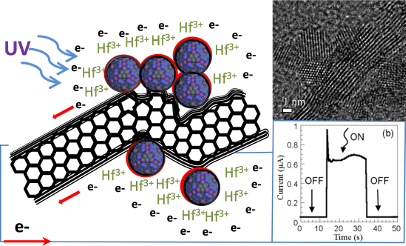
- MWCNTs do not emit light but instead expose their discrete electronic structure in the absorption spectra. The hybrid material manifests characteristic absorption features with a gradual merger of the MWCNT π-plasmon resonance band with the intrinsic defect band and fundamental edge of HfO2. The
- typically the vHS-related bandgap transitions are observed in CNTs, such as E22 from the semiconducting SWCNT and E11 from the metallic SWCNT [39]. At higher photon energies, a broad absorption band emerging at around 4.5 eV is likely due to the π-plasmon resonance [40][41]. This feature gradually merges





