


Search results
Search for "radicals" in Full Text gives 232 result(s) in Beilstein Journal of Nanotechnology. Showing first 200.
Single-step process to improve the mechanical properties of carbon nanotube yarn
Beilstein J. Nanotechnol. 2018, 9, 545–554, doi:10.3762/bjnano.9.52
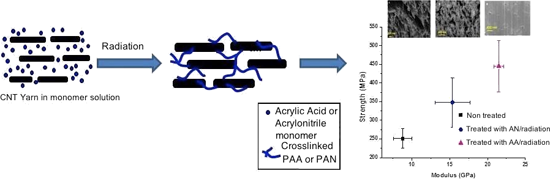
- ]. Ionizing radiation has a sufficiently high energy to break bonds and create free radicals that chemically react in several ways over a short period of time. The large penetrating power of high-energy radiation provides an opportunity to carry out grafting at different depths of the substrate and, also
- polyacrylonitrile (PAN) from the literature (Figure 1c). This process relies on the fundamentals of radiation grafting polymerization. The advantage of the process is that an initiator is not required, avoiding the formation of free radicals on the substrate backbone/monomer, contamination and problems with local
- heating of the initiator. Basically, the e-beam is absorbed by all elements of the system, while water usually absorbs most of this energy [30][31][32]. The irradiation of water produces hydrogen atoms, solvated electrons, hydroxyl radicals, H2, H2O2, H3O+ and OH− [33]. The hydroxyl radicals can be




Influence of the preparation method on the photocatalytic activity of Nd-modified TiO2
Beilstein J. Nanotechnol. 2018, 9, 447–459, doi:10.3762/bjnano.9.43
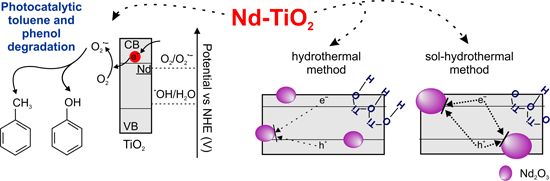
- photocatalytic efficiency of phenol and toluene degradation under vis irradiation in the presence of 0.25% Nd-TiO2(HT) reached 0.62 and 3.36 μmol·dm−1·min−1, respectively. Photocatalytic activity tests in the presence of Nd-TiO2 and scavenger confirm that superoxide radicals were responsible for the visible
- photogenerated lifetime of the carriers, and finally increasing the formation of highly reactive and oxidative radicals during the photocatalytic degradation [15]. The Nd-TiO2 NPs showed intense emission of Nd3+ ions under excitation by laser radiation with λex = 350 nm (Figure 5). The characteristic transition
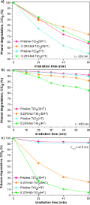
- influenced by surface hydroxyl groups helping to generate reactive oxygen species, such as hydroxyl radicals. The photocatalytic degradation of toluene was carried out under LED irradiation (λmax = 415 nm). A high photocatalytic activity was exhibited by all the neodymium-modified photocatalysts (Figure 6c




Facile synthesis of ZnFe2O4 photocatalysts for decolourization of organic dyes under solar irradiation
Beilstein J. Nanotechnol. 2018, 9, 436–446, doi:10.3762/bjnano.9.42
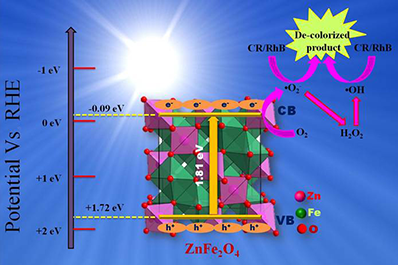
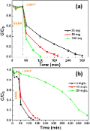
- 1. Scavenger test for the radicals involved in the process In order to analyse the mechanism of degradation, the most active species formed during the decomposition of Congo red were examined by scavenging experiments. The active species responsible for the decolourization of Congo red can be
- detected by using trapping reagents such as dimethyl sulfoxide, isopropyl alcohol, ethylenediaminetetraacetic acid, p-benzoquinone for electrons, hydroxyl radicals (•OH), holes (h+), and superoxide (•O2−) radicals, respectively [35]. Figure 11b,c clearly shows that hydroxyl and superoxide radicals play a
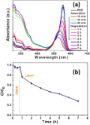
- species in the decolourization process. The confirmation of the active species is studied in next section. Confirmatory test for •OH radical In order to confirm the major role of •OH radicals, terephthalic acid (TA) was utilised as a probe reagent because it does not react with other radicals and


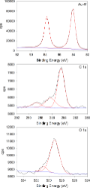
Electron interaction with copper(II) carboxylate compounds
Beilstein J. Nanotechnol. 2018, 9, 384–398, doi:10.3762/bjnano.9.38
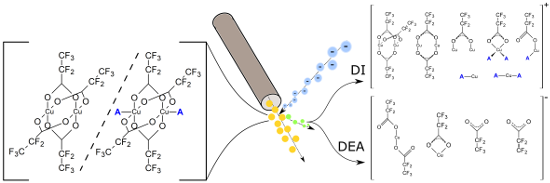
- latter, reactive chemical species (radicals) and electrons lead to activation of molecules and this process can be controlled well on large scales. One of the most innovative techniques, known as EBID or FEBID (Focused Electron Beam Induced Deposition) [2][3], uses a high energy electron beam that can be
- metal complex. In this work, acetylacetone was studied under electron impact and it was concluded from gas phase experiments that radicals released by electron-induced fragmentation react with intact molecules to produce a non-volatile residue that was detected using XPS. These results emphasize that


Sugarcane juice derived carbon dot–graphitic carbon nitride composites for bisphenol A degradation under sunlight irradiation
Beilstein J. Nanotechnol. 2018, 9, 353–363, doi:10.3762/bjnano.9.35
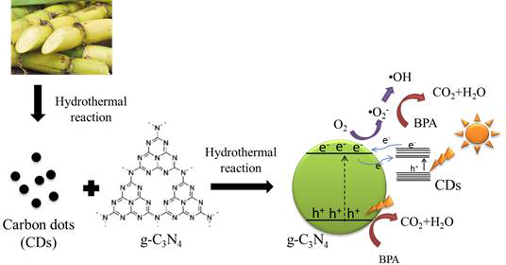
- radicals involved in the photoreaction. The influence order of the active radical species on the degradation of BPA was O2•− > h+ > hydroxyl radical (•OH) > e−. It is obvious that O2•− was the main radical species generated since the photodegradation of BPA was significantly inhibited after the addition of
- benzoquinone (BQ). The addition of ethylenediaminetetraacetic acid disodium salt dihydrate (EDTA-2Na+) in BPA solution slightly suppressed the degradation rate, showing that h+ was also one of the active radicals involved in the photoreaction. In contrast, neither •OH nor e− are the main reactive species
- the CB of g-C3N4 to adsorbed oxygen (O2), generating O2•. Meanwhile, O2•− radicals also reacted with the hydrogen (H+) ion to further produce a minor portion of •OH radicals. Thus, the O2•− and •OH could oxidize the BPA simultaneously to enhance the photocatalytic performance. Although the CDs did not


Electron-driven and thermal chemistry during water-assisted purification of platinum nanomaterials generated by electron beam induced deposition
Beilstein J. Nanotechnol. 2018, 9, 77–90, doi:10.3762/bjnano.9.10
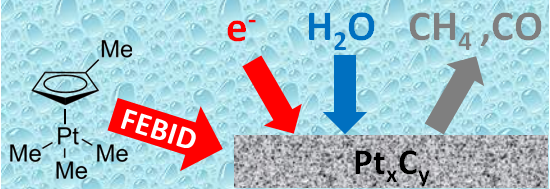
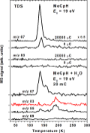
- exclusively in form of CH4 molecules. This is obvious from the intensity ratio of 1:0.9 of the MS signals recorded at m/z 16 and 15 which is characteristic of CH4 thus excluding noticeable contributions of CH3 radicals that would lead to additional intensity of the m/z 15 signal. It was proposed previously
- that the exclusive observation of CH4 can be explained by reaction of desorbing CH3 radicals with hydrogen from the walls of the UHV chamber that occur before CH3 can reach the mass spectrometer [11]. Based on previous results from our setup, we can exclude such an artifact. In fact, ESD of CH3 was
- of CH4 which is supported by the very small amount of C2H6 production as also observed here. The latter would be expected to result from recombination of CH3 radicals that have dissociated from the precursor. When electron irradiation is performed at E0 well above the ionization threshold, as in the



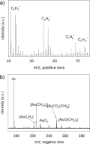
Response under low-energy electron irradiation of a thin film of a potential copper precursor for focused electron beam induced deposition (FEBID)
Beilstein J. Nanotechnol. 2018, 9, 57–65, doi:10.3762/bjnano.9.8
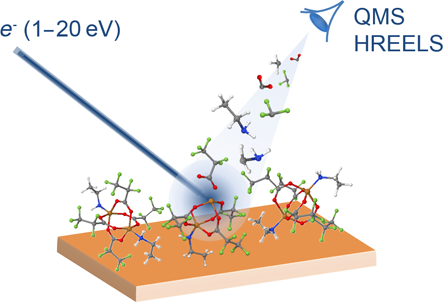
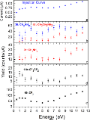
- CH3NH2 radicals, shows that the electron impact fragmentation of ethylamine on the surface has an onset at 8–9 eV, which is in agreement with the typical onset (8 eV) observed for carbon chain fragmentation in hydrocarbon films [28][29]. The fragmentation yield increases then with the electron energy, as
- detection of mass 119 and mass 69, which are attributed to CF3CF2 and CF3 radicals, respectively (Figure 3, curves d and e). The detection of the entire C3F7COO ligand and C3F7 fragments was not possible due to the low sensitivity of the mass spectrometer to high-mass fragments. Fluorocarbon desorption



Facile synthesis of silver/silver thiocyanate (Ag@AgSCN) plasmonic nanostructures with enhanced photocatalytic performance
Beilstein J. Nanotechnol. 2017, 8, 2781–2789, doi:10.3762/bjnano.8.277
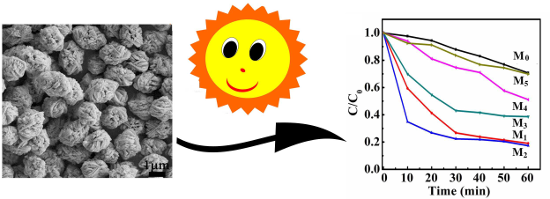
- , then captured by dissolved O2, resulting in the formation of •O2− radicals, which can decompose oxytetracycline. The photogenerated holes can oxidize H2O into •OH, which could also oxidize oxytetracycline. To investigate the effect of •O2− radicals, 1, 4-benzoquinone (BQ), which was an efficient


The rational design of a Au(I) precursor for focused electron beam induced deposition
Beilstein J. Nanotechnol. 2017, 8, 2753–2765, doi:10.3762/bjnano.8.274
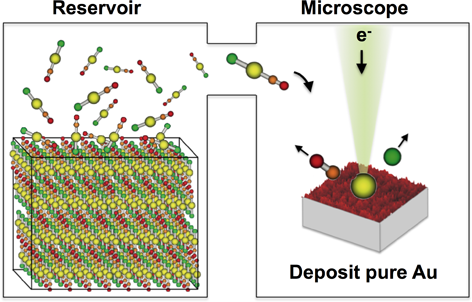
- to dissociate in a single step to pure Au. The reaction fragments, CO and Me radicals, are not aggressive and do not damage either sample or microscope. Very recently, the related complex CF3AuCO has been isolated [77]. The target complex MeAuCO is likely less stable but may exist. Provided the


CdSe nanorod/TiO2 nanoparticle heterojunctions with enhanced solar- and visible-light photocatalytic activity
Beilstein J. Nanotechnol. 2017, 8, 2741–2752, doi:10.3762/bjnano.8.273
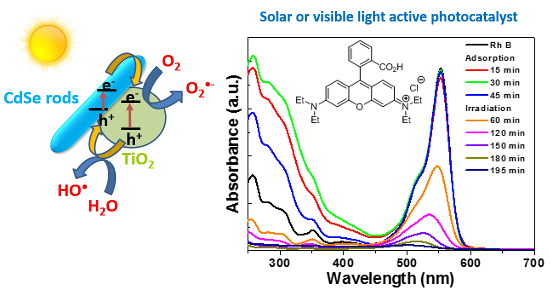
- accumulated in TiO2 can be trapped by dissolved oxygen molecules and generate superoxide O2•− radicals which are strong oxidants able to decompose organic substances. These O2•− radicals may also react with an electron and protons to form hydrogen peroxide which is further decomposed into hydroxyl •OH
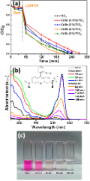
- radicals able to oxidize RhB. To estimate which of these reactive oxygen species plays a key role in the photodegradation of RhB under visible light irradiation, experiments were carried out by adding t-BuOH and p-benzoquinone, used as •OH and O2•− radicals scavengers, respectively (Figure 11c). As can be
- seen, RhB could not be photodegraded in the presence of p-benzoquinone, even when used at a low concentration (1 mM), indicating that O2•− radicals play a key role in the photodegradation. In the presence of t-BuOH (10 mM), the reaction rate was markedly decreased (k = 0.004 min−1 vs 0.012 min−1 in the






Direct writing of gold nanostructures with an electron beam: On the way to pure nanostructures by combining optimized deposition with oxygen-plasma treatment
Beilstein J. Nanotechnol. 2017, 8, 2530–2543, doi:10.3762/bjnano.8.253
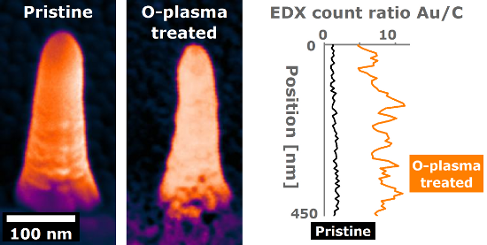
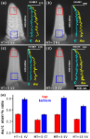
- reactive enough, oxygen radicals were used. The oxidation was performed in a plasma reactor that is common equipment in most clean rooms. This second purification approach can quickly improve the gold purity of a number of FEBID structures, including larger ones. In this work we developed a process that

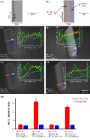
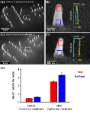
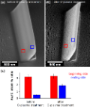
Comparing postdeposition reactions of electrons and radicals with Pt nanostructures created by focused electron beam induced deposition
Beilstein J. Nanotechnol. 2017, 8, 2410–2424, doi:10.3762/bjnano.8.240
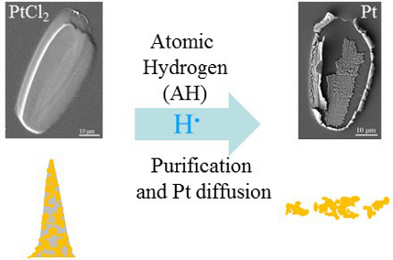
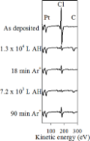
- [29]. Consequently, all EDS data are reported in terms of the Pt and Cl signals, ignoring small contributions from substrate peaks (e.g., Mo and Si). Generation of atomic hydrogen radicals (high pressure) The majority of AH purification was conducted ex situ using a custom-built AH cleaning system
- located at the National Institute of Standards and Technology (NIST). This source passed H2 over a heated tungsten filament to produce a constant flux of AH radicals. The purification system at NIST permitted high-pressure H2 gas to be admitted ( ≈ 1 Torr), resulting in a correspondingly large flux of AH
- radicals. During purification the sample surface was perpendicular to the AH source at a working distance of ≈3.8 cm. Generation of atomic hydrogen radicals (low pressure) A much lower flux of AH radicals ( ≈ 5 × 10⁻⁷ Torr) was produced in situ in the Auger spectrometer with a thermal gas cracker (Oxford




Angstrom-scale flatness using selective nanoscale etching
Beilstein J. Nanotechnol. 2017, 8, 2181–2185, doi:10.3762/bjnano.8.217
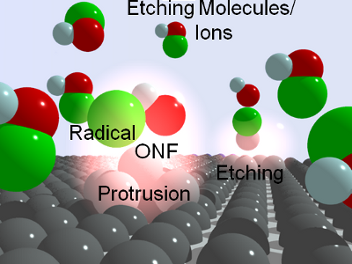
- . Subsequently, the molecules are dissociated by the ONF, and the dissociated radicals selectively etch the protrusions. Finally, the ONF disappears and the etching process stops automatically. Near-field etching is performed using Cl2 gas for glass, GaN [9], and plastic surfaces, and O2 gas for diamond and
- protrusions only. In the solution, a light source with a photon energy of 4.66 eV (higher than the dissociation energy) dissociated the hypochlorous acid and consequently produced Cl radicals [13]. This process is expected to be similar to the etching of glass when Cl2 gas is used. The laser light was



Evaluating the toxicity of TiO2-based nanoparticles to Chinese hamster ovary cells and Escherichia coli: a complementary experimental and computational approach
Beilstein J. Nanotechnol. 2017, 8, 2171–2180, doi:10.3762/bjnano.8.216

- nanoparticles, electron/hole (e−/h+) pairs can be generated under UV light. Under such conditions, free radicals are produced, which is one of the major pathways of the antibacterial activity of TiO2-based NPs. In the absence of UV light, photoactive TiO2 nanomaterials demonstrate little or no bacteria


Advances and challenges in the field of plasma polymer nanoparticles
Beilstein J. Nanotechnol. 2017, 8, 2002–2014, doi:10.3762/bjnano.8.200
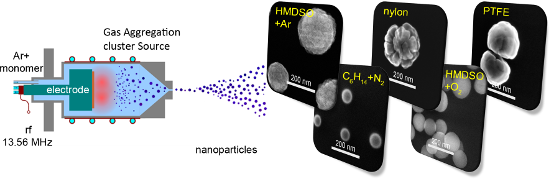
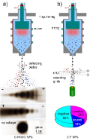
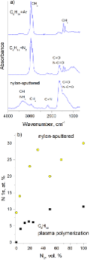
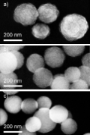
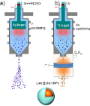
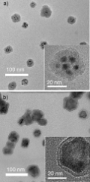
- coagulation is therefore suppressed by Coulomb repulsion, and further NP growth proceeds by accretion via the accumulation of polymer-forming neutral species (radicals) and positive ions from the gas phase. The resultant plasma polymer NPs have a spherical symmetry but can exhibit different morphology
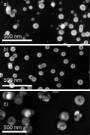
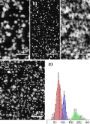
- GAS. The opposite trend of decreasing NP diameter with the discharge power is readily explained by stronger fragmentation of precursor molecules. The fragmentation results in a larger amount of free radicals that serve as nucleation centres and, under constant supply of the precursor (constant gas
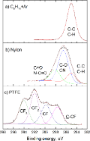
- target and their subsequent transport through the GAS volume saturated with low sticking probability CF2 bi-radicals were suggested as possible explanations of the phenomenon. It can be concluded that, although the opposing influence of the residence time and the discharge power on the NP diameter is






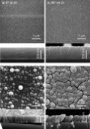
Bi-layer sandwich film for antibacterial catheters
Beilstein J. Nanotechnol. 2017, 8, 1982–2001, doi:10.3762/bjnano.8.199
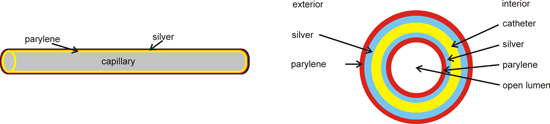
- (approx. 100 mTorr) [33]. It should be noted that the reaction is not diffusion-controlled [59]. The rate at which the radicals strike the surface was estimated to exceed that at which a radical is effectively absorbed by the growing chain by approximately three orders of magnitude [57]. This low sticking


Spin-dependent transport and functional design in organic ferromagnetic devices
Beilstein J. Nanotechnol. 2017, 8, 1919–1931, doi:10.3762/bjnano.8.192
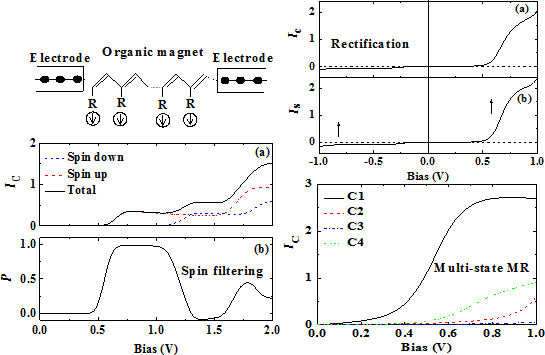
- interaction and spin–spin correlation between π-electrons and radicals, are highlighted. Several interesting functional designs of organic ferromagnetic devices are discussed, specifically the concepts of a spin filter, multi-state magnetoresistance, and spin-current rectification. The mechanism of each
- artificially, such as by doping transition-metal ions into organic materials or using spin radicals [9][10][11][12][13]. The latter method may generate pure OFs. For example, poly((1,4-bis(2,2,6,6-tetramethyl-4-hydroxy-4-piperidyl-1-oxyl)butadiyne) (poly-BIPO) is a representative of π-conjugated pure OFs with
- quasi-one-dimensional structure, which can be synthesized from polyacetylene by replacing every other H atom by a spin radical. The radicals are usually heterocycles containing an unpaired electron. The spins of the radicals are coupled to the spins of π-electrons in the main carbon chain. Theoretical


Application of visible-light photosensitization to form alkyl-radical-derived thin films on gold
Beilstein J. Nanotechnol. 2017, 8, 1863–1877, doi:10.3762/bjnano.8.187
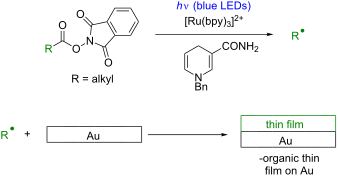
- the stoichiometric reducing agent benzyl nicotinamide results in the formation of alkyl radicals under mild conditions. This approach to radical generation has proven useful for the synthesis of small organic molecules. Herein, we demonstrate for the first time the visible-light photosensitized
- ][24][25][26][27][28]. Carbon-centered radicals have proven to be versatile grafting species that can covalently bond to a number of surfaces including precious, coinage and industrial metals [1][2][3][4][5][6], hydrogen-terminated silicon [7][8], and indium tin oxide [9][10]. The resulting aryl- and
- arenediazonium ion can accept a single electron from a cathode to generate aryl radical and N2 at relatively high potentials. Rapid covalent bonding [11][12][13][14] of aryl radical to surfaces followed by further attachment of radicals to already-grafted arenes results in polymerization and generates dense



(Metallo)porphyrins for potential materials science applications
Beilstein J. Nanotechnol. 2017, 8, 1786–1800, doi:10.3762/bjnano.8.180
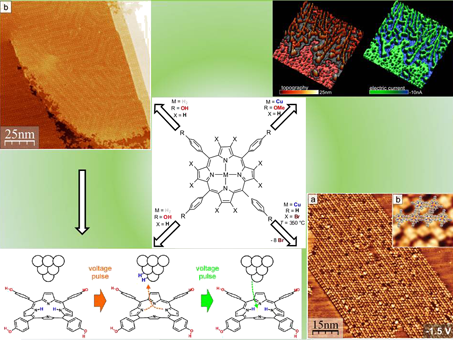
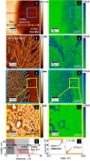
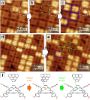
- temperature the presence of surface-bound Br/Br2 only. Interestingly, these surface-stabilized radicals of CuTPP are seemingly long-term stable. The result obtained after heating this sample to 350 °C for one hour is displayed in Figure 11. It resulted in the formation of nano-ribbons (Figure 12) and is






Fluorination of vertically aligned carbon nanotubes: from CF4 plasma chemistry to surface functionalization
Beilstein J. Nanotechnol. 2017, 8, 1723–1733, doi:10.3762/bjnano.8.173
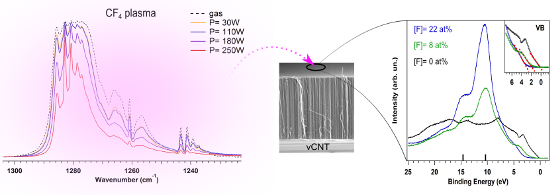
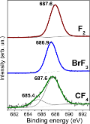
- chemistry; surface chemistry; Introduction Tetrafluoromethane (CF4) plasma emerged as a strategic tool when exploiting the ability of CFx radicals to promote etching of a variety of substrates frequently used in the manufacturing of microelectronic devices [1]. In the CF4 plasma, CFx radicals are primarily
- ][26][27]. However, a combined study including the effect of the plasma treatment at the carbon nanotubes surface and the fundamental processes involving the production of CFx radicals and ions is lacking. Additionally, molecules as water or residual oxygen in the background pressure of the
- smaller and lighter radicals and ions are produced. These ions cause less damage compared to the larger ones produced in low power plasmas. Comparing the effect of the treatment duration, an increased production of defective sites is observed for short plasma treatment: under this condition a lower




Effect of the fluorination technique on the surface-fluorination patterning of double-walled carbon nanotubes
Beilstein J. Nanotechnol. 2017, 8, 1688–1698, doi:10.3762/bjnano.8.169
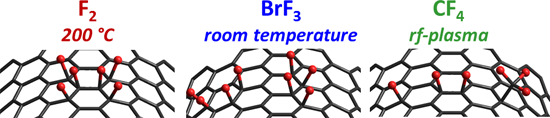
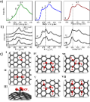
- produces CF3 radicals, which may bind to the carbon surface [31]. Four F atoms formed an armchair (model IV) or zigzag (model V) chain or were in (1,2) position (model VI) or (1,4) position relative to each other. We also constructed a pattern with the alternation of C=C and CF–CF bonds and a CF region of



Process-specific mechanisms of vertically oriented graphene growth in plasmas
Beilstein J. Nanotechnol. 2017, 8, 1658–1670, doi:10.3762/bjnano.8.166
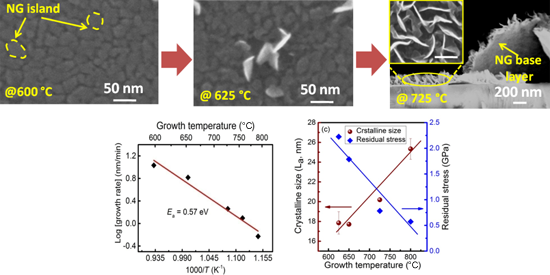
- dissociates under plasma and forms reactive radicals/ions. Transport mechanism of these plasma species and growth kinetics of carbon nanomaterials in PECVD has been extensively explained by Munoz and co-workers [26]. The density and energy of these plasma species depend on the plasma power, position of the
- this study, NG structures were not observed below 600 °C and this is explained by adverse etching of graphene by hydrogen radicals in the plasma, which dominates over the graphene growth at lower temperatures [46]. Figure 1c shows the vertical sheets nucleated from the grain boundaries. This is
- the plasma is high and plasma-generated carbon species attach to the reactive edges of the vertical sheets through chemisorption and diffusion, thus promoting the growth of crystalline sheets. In contrast, hydrogen species, mostly radicals, chemically etch the small flakes and amorphous carbon, which


Surface functionalization of 3D-printed plastics via initiated chemical vapor deposition
Beilstein J. Nanotechnol. 2017, 8, 1629–1636, doi:10.3762/bjnano.8.162
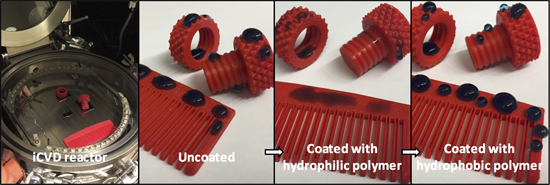
- used to deposit functional polymer coatings [21][22]. In the iCVD process, monomer and tert-butyl peroxide (TBPO) initiator are introduced in the vapor phase to a reactor chamber under vacuum, whereupon the initiator is thermally cleaved by a heated filament array. Monomer and initiator radicals adsorb




Charge transfer from and to manganese phthalocyanine: bulk materials and interfaces
Beilstein J. Nanotechnol. 2017, 8, 1601–1615, doi:10.3762/bjnano.8.160
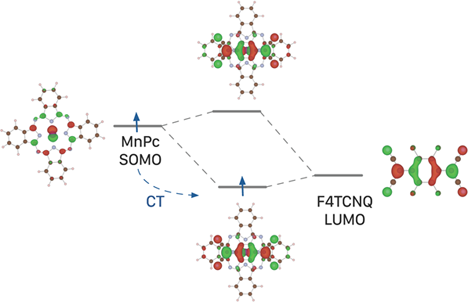
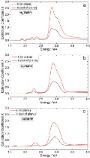
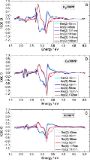
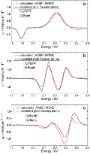
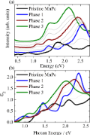
- quite clear since potassium ions do not contribute in the relevant energy region. For MnPc/F4TCNQ the situation is more complex. Based on a purely ionic picture, also excitations from the negatively charged F4TCNQ should show up. In solution, an excitation for F4TCNQ− radicals at about 1.65 eV was
- , K1MnPc and MnPc/F4TCNQ as measured using EELS. In the lower two panels, we compare these data to the optical absorption energies (denoted by vertical bars) as observed for (b) MnPc+ [117] and (c) MnPc− [118] in solution. In panel (b) we additionally show the optical absorption energy of F4TCNQ− radicals


Two-dimensional carbon-based nanocomposites for photocatalytic energy generation and environmental remediation applications
Beilstein J. Nanotechnol. 2017, 8, 1571–1600, doi:10.3762/bjnano.8.159
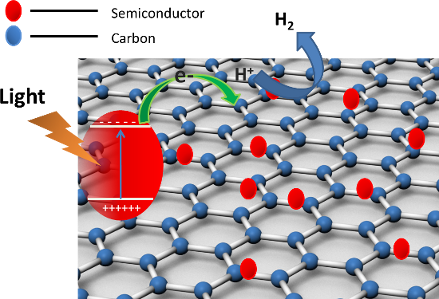
- produces the catalytic activity using energy from light without undergoing any change in itself [104]. The photocatalytic activity depends on the generation of electron–hole pairs in the catalyst under the influence of light energy [105]. These photogenerated charge carriers then generate free radicals





