Search results
Search for "resonance" in Full Text gives 843 result(s) in Beilstein Journal of Nanotechnology. Showing first 200.
Quercetin- and caffeic acid-functionalized chitosan-capped colloidal silver nanoparticles: one-pot synthesis, characterization, and anticancer and antibacterial activities
Beilstein J. Nanotechnol. 2023, 14, 362–376, doi:10.3762/bjnano.14.31
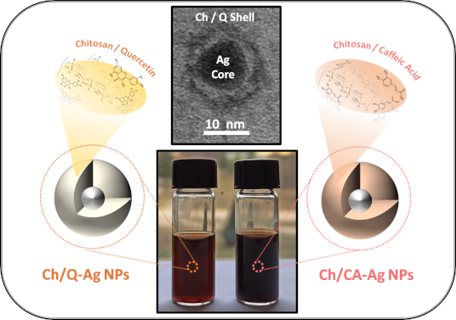
- infrared (FTIR) spectroscopy, and transmission electron microscopy (TEM). The characteristic surface plasmon resonance (SPR) absorption band has been found at 417 and 424 nm for Ch/Q- and Ch/CA-Ag NPs, respectively. The formation of a chitosan shell comprising quercetin and caffeic acid, which surround the
- characteristic surface plasmon resonance (SPR) absorption peak, which is due to the collective oscillation of free surface electrons in resonance with the electric field component of incoming photons, is located at 404 nm. However, the evolution of the absorption curve exhibits changes after the introduction of
- /CA-Ag NPs) was successfully performed. The characterization of Ch/Q- and Ch/CA-Ag NPs was done by using UV–vis, FTIR, and TEM measurements. The characteristic surface plasmon resonance (SPR) absorption bands at 404 nm for Ch-Ag NPs (with chitosan), shifted to 417 and 424 nm for Ch/Q- (with quercetin


Quasi-guided modes resulting from the band folding effect in a photonic crystal slab for enhanced interactions of matters with free-space radiations
Beilstein J. Nanotechnol. 2023, 14, 322–328, doi:10.3762/bjnano.14.27
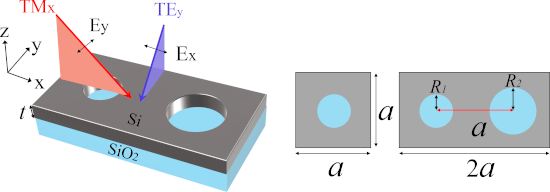
- lead to an in-plane wave number-dependent resonance characteristic in both directions. Our numerical results demonstrate a local enhancement of the electric field magnitude by the order of 102, which is even more significant than those in most plasmonic structures. These quasi-guided modes with
- . The GMs have typical continuous and one-dimensional dispersion curves below the light line over a large bandwidth. This leaky resonance is generated through band folding, which occurs when a perturbation is introduced into a regular periodic structure to have its period increased and the first
- ), will inherit the spatial dispersion of the original GMs, with Q-factors significantly dependent on the level of perturbation. As a result, they feature ultrahigh Q-factors while the resonance can be tuned by the lateral wave vector. The QGMs outperform QBIC resonances, which can only operate within a


Bismuth-based nanostructured photocatalysts for the remediation of antibiotics and organic dyes
Beilstein J. Nanotechnol. 2023, 14, 291–321, doi:10.3762/bjnano.14.26
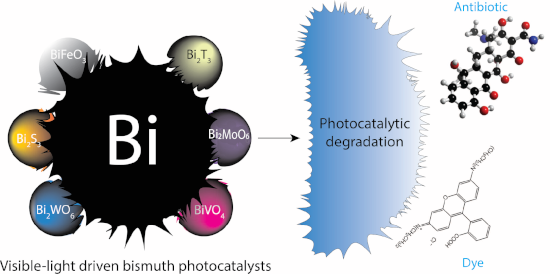
- light absorption, weaker charge separation, and poor charge carrier mobility. Researchers are concentrating on several strategies, such as doping, heterojunction formation, induction of the surface plasmon resonance effect, and the formation of Z-schemes, Schottky junctions, and engineered composites
- ]. The increased performance was caused by the following factors: (a) surface plasmon resonance caused by the Ag dopant; (b) a decrease in the rate at which photoinduced carriers recombined; (c) high Schottky barriers between the Ag dopant and the host material; and (d) an increase in the visible-light
- trapping [72]. Other modifications, such as heterojunctions, Schottky junctions, p–n junctions, Z-schemes, and homojunctions, have been used to overcome these problems and boost the effectiveness of photocatalysts. Heterojunctions, Schottky junctions, Z-schemes and surface plasmon resonance effect


Recent progress in cancer cell membrane-based nanoparticles for biomedical applications
Beilstein J. Nanotechnol. 2023, 14, 262–279, doi:10.3762/bjnano.14.24
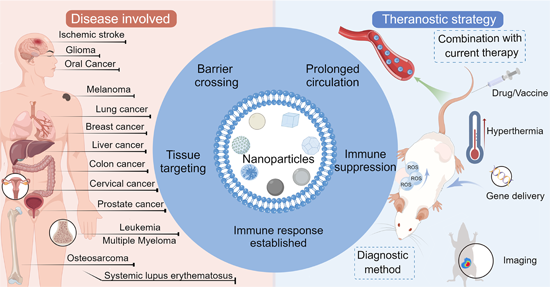
- ., magnetic resonance imaging, heat production, magnetic manipulation, and enzyme mimics) [99]. Tumor ablation based on magnetothermy is safe for humans as the energy of the magnetic field is only absorbed by magnetic NPs and not by normal tissue [79]. However, magnetic NPs are prone to aggregation and
- patients and has shown promise for medical prospects. Some of the applications related to biomimetic cancer cell membrane-coated agents are listed and described below. 5.1 Magnetic resonance imaging Magnetic nanoparticles are widely used in magnetic resonance imaging (MRI) because they can improve imaging


Spin dynamics in superconductor/ferromagnetic insulator hybrid structures with precessing magnetization
Beilstein J. Nanotechnol. 2023, 14, 233–239, doi:10.3762/bjnano.14.22
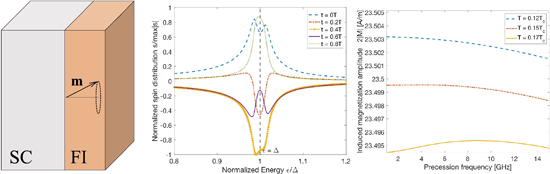
- magnetization with a maximum appearing at high temperatures. It is also shown that the increase of the magnetization precession frequency can drastically change the spin distribution of quasiparticles at the S/FI interface. Keywords: ferromagnetic resonance; proximity effect; superconducting spintronics
- ways of spin current injection into a superconductor, for example, the spin Hall effect [5], the spin Seebek effect [6], and ferromagnetic resonance spin pumping [7][8]. The spin pumping technique in hybrid structures consisting of a ferromagnetic insulator and a superconductor is considered to be the
- , the amplitude of the spin current strongly depends on the frequency of the magnetization precession. This effect is similar to ferromagnetic resonance spin pumping in normal metal/ferromagnetic insulator structures. In the last case (normal metal), the decay of the spin current is a consequence of


Concentration-dependent photothermal conversion efficiency of gold nanoparticles under near-infrared laser and broadband irradiation
Beilstein J. Nanotechnol. 2023, 14, 205–217, doi:10.3762/bjnano.14.20
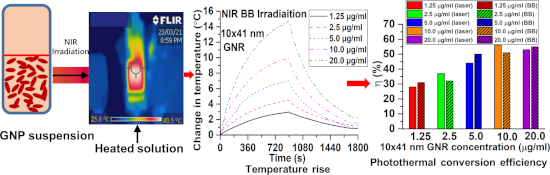
- , therapeutics, and diagnostics [1][2][3][4][5]. The interaction of free electrons of gold nanoparticles with electromagnetic fields leads to oscillations of the electrons at plasmonic resonance frequencies. Nonradioactive decay of these oscillations causes the conversion of electromagnetic energy into heat [6
- is an important parameter to assess the amount of heat generated through GNPs under NIR irradiation [21][22]. Temperature rise and photothermal conversion efficiency of different shapes of GNPs under laser irradiation have been reported [15][23][24][25]. The plasmonic resonance wavelength of
- localized surface plasmon resonance (LSPR) reported for these batches by the suppliers (Table S1, Supporting Information File 1). Figure 4a shows that the LSPR of GNSs is at 530 nm. Figure 4b–d shows that the GNRs show two resonance peaks, that is, a first peak at 520–525 nm (transverse mode) for all GNRs




High–low Kelvin probe force spectroscopy for measuring the interface state density
Beilstein J. Nanotechnol. 2023, 14, 175–189, doi:10.3762/bjnano.14.18
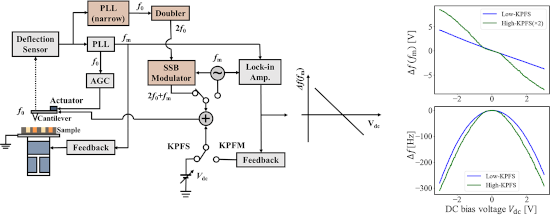
- advantages, namely high sensitivity to the electrostatic force gradient, high detection sensitivity using a cantilever with a weak spring constant at the first resonance, ease of implementation in adding FM-AFM, and no need to enhance the bandwidth of the cantilever deflection sensor. FM-KPFM is used to
- concentrations of the n, p, and n+ regions are 1 × 1015 cm−3, 2 × 1016 cm−3, and 5 × 1019 cm−3, respectively. As a force sensor, a PtIr-coated conductive cantilever (NanoWorld: NCHPt) was used. The resonance frequency f0, force constant k, and Q of the PtIr-coated cantilever were 292.68 kHz, 42 N/m, and 8406
- of twice the resonance frequency synchronized with the cantilever oscillation is generated by the PLL and the doubler, and a signal Vac·cos 2π(2f0 + fm)t is generated by mixing the signal cos 2π(2f0)t and the signal cos 2πfmt in the SSB modulator. The figure was adapted from [20] (© 2020 Y. Sugawara



Structural, optical, and bioimaging characterization of carbon quantum dots solvothermally synthesized from o-phenylenediamine
Beilstein J. Nanotechnol. 2023, 14, 165–174, doi:10.3762/bjnano.14.17
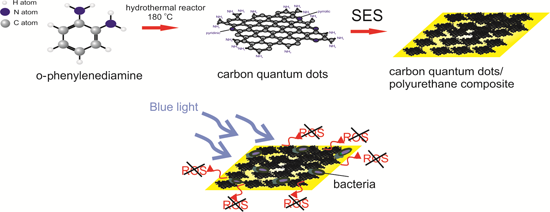
- -transformed infrared spectroscopy (FTIR), UV–vis spectrophotometry, photoluminescence spectroscopy (PL), and electron paramagnetic resonance (EPR). CQDs/PU composite samples were characterized by UV–vis, AFM, FTIR, PL, EPR, and luminescence measurements. For TEM imaging (JEOL JEM-1400 operated at 120 kV


A distributed active patch antenna model of a Josephson oscillator
Beilstein J. Nanotechnol. 2023, 14, 151–164, doi:10.3762/bjnano.14.16
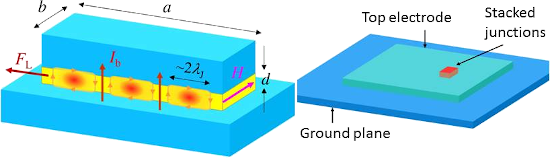
- radiative impedance, Zrad. For a patch with a very thin insulator (as is the case for a tunnel JJ), the radiative admittance of one slot, 1/Zrad1 = G1 + iB1, contains a large imaginary part B1, caused by the large capacitance. However, at the cavity mode resonance the imaginary contributions from the two
- slots cancel out [34][36][39] and the radiative impedance becomes real. Therefore, at the resonance the radiation power from one slot is where |v(0,a)| is the amplitude of voltage oscillations at the slot (x = 0,a) and G1 is the radiative conductance of the single slot. Low-Tc JJs are operating at sub
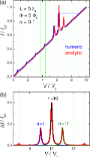
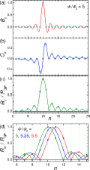
- series of Fiske steps appear in the I–V. Vertical grid lines mark positions of cavity mode resonances, ω/c0 = kn. Fiske steps appear at this condition because of the vanishing of term in the denominator of gn, Equation 19. The main step occurs at the double resonance condition, ω/c0 = kn = k. It happens


Formation of nanoflowers: Au and Ni silicide cores surrounded by SiOx branches
Beilstein J. Nanotechnol. 2023, 14, 133–140, doi:10.3762/bjnano.14.14
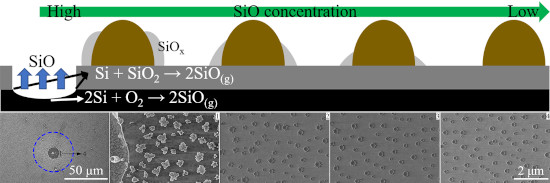
- and surrounding SiOx nanowires (NWs) show a significant enhancement of the photoluminescence (PL) emission compared with pure SiOx NWs due to the coupling effect between the local surface plasmon resonance (LSPR) of Au nanoparticles and the PL emission of SiOx [2]. Similar Au–SiOx nanoflowers have


Intermodal coupling spectroscopy of mechanical modes in microcantilevers
Beilstein J. Nanotechnol. 2023, 14, 123–132, doi:10.3762/bjnano.14.13
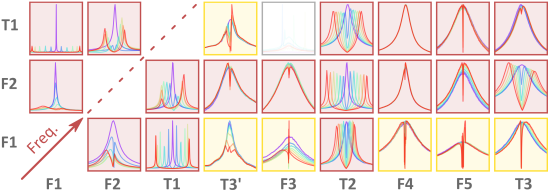
- multifrequency AFM has improved both imaging contrast and the amount of extracted information from AFM experiments by exploiting the nonlinearity of the tip–surface interaction [32][33][34][35][36]. The methods applied excel in both their creativity and engineering prowess. A first example is on-resonance
- multitonal responses, from which the force is reconstructed. In this paper, we are building towards a hybrid multifrequency approach different from the ones described above. The on-resonance measurement would follow frequency-modulated AFM or bimodal AFM while being assisted by a new off-resonance excitation
- -in measurement. An AFM microcantilever (Bruker RFESP-75) is glued to a piezoshaker and placed in a vacuum chamber (between 1.2 × 10⁻⁶ and 5 × 10⁻⁷ mbar) under a laser Doppler vibrometer (LDV) (Polytech MSA 500) to measure the cantilever’s resonance frequencies and mode shapes (Figure 1). A lock-in


Characterisation of a micrometer-scale active plasmonic element by means of complementary computational and experimental methods
Beilstein J. Nanotechnol. 2023, 14, 110–122, doi:10.3762/bjnano.14.12
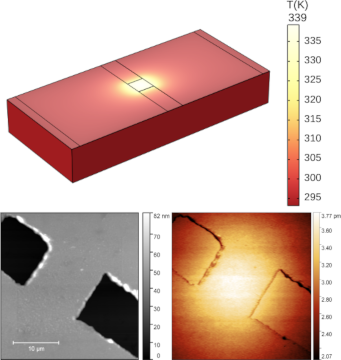
- computational methods to characterise the response of this system. First, an enhanced surface plasmon resonance experiment in a classical Kretschmann configuration is used to measure the changes in the reflectivity induced by an alternating electric current. A lock-in amplifier is used to extract the dynamic
- ) investigating the changes in the reflectivity induced by a modulated electric current. The acquisition of a surface plasmon resonance (SPR) curve is a common method to characterise a plasmonic far-field response [31] which is highly sensitive to small changes in the refractive index of the metal and dielectric
- setup used to perform such measurements. An Adama NM-RC probe (spring constant: 290.3 N/m, nominal resonance frequency: 814 kHz) has been used in contact mode to scan the topography of an electrically modulated sample with a loading force of 1.9 μN. This particular probe is intended for use in


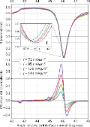


Antimicrobial and mechanical properties of functionalized textile by nanoarchitectured photoinduced Ag@polymer coating
Beilstein J. Nanotechnol. 2023, 14, 95–109, doi:10.3762/bjnano.14.11
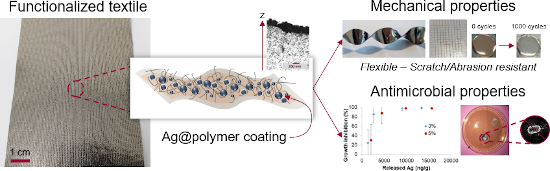
- samples, in order to follow the AgNP synthesis for different exposure times. The obtained spectra are presented in Figure 2, as well as images of the coatings taken for different exposure times. The characteristic surface plasmon resonance band of AgNPs for both coatings is observed around 430 nm and
- reflectance, mainly diffuse. The underlying metallic layer appears brown and exhibits an absorption band at 430 nm, linked to the plasmon resonance of AgNPs (Figure 8c), trapped inside the polymer matrix. To better understand this sudden decrease in reflectance, the surface was characterized by SEM (Figure 8c



Combining physical vapor deposition structuration with dealloying for the creation of a highly efficient SERS platform
Beilstein J. Nanotechnol. 2023, 14, 83–94, doi:10.3762/bjnano.14.10
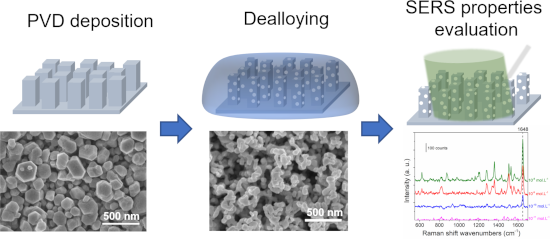
- detection properties are mostly observed in noble metal nanoparticles [2][9][10]. Allowed by their localized surface plasmon resonance (LSPR) in the visible region, silver and gold are the most used materials for the preparation of SERS substrates [11][12]. Although Ag has a higher surface plasmon




Two-step single-reactor synthesis of oleic acid- or undecylenic acid-stabilized magnetic nanoparticles by thermal decomposition
Beilstein J. Nanotechnol. 2023, 14, 11–22, doi:10.3762/bjnano.14.2
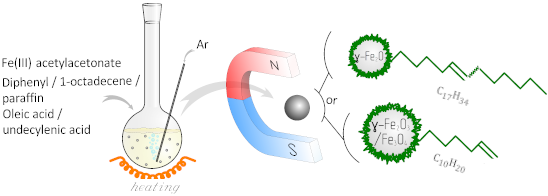
- nanoparticles have been proposed as contrast agents for magnetic resonance imaging, high-precision biosensors, and carriers in magnetic-assisted drug delivery systems. Furthermore, they are used for tumor treatment via the hyperthermia method and in bone tissue regenerative medicine [5][6]. However, using iron


Observation of collective excitation of surface plasmon resonances in large Josephson junction arrays
Beilstein J. Nanotechnol. 2022, 13, 1578–1588, doi:10.3762/bjnano.13.132
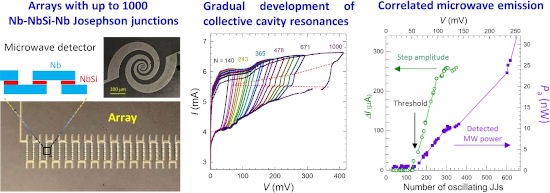
- lines indicate edges of the main resonance step. They reveal a quasi-linear increase of the step amplitude with increasing N, for N > Nth ≃ 150. Figure 4 shows similar data for the linear array. Figure 4a shows the integrating oscillogram of the I–V obtained at H ≃ 7 Oe. Figure 4b shows a close-up of
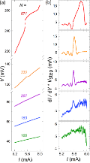
- on the meander array. In Figure 5a, we show portions of the I–V curves for the meander array with different number of active JJs in the bias range corresponding to the main resonance. The resonant step is large for N = 671 (red), distinct for N = 330 (orange), barely visible for N = 207 (violet), and
- . Figure 7c shows the I–Vs (single sweeps at the returning branch) for fields from 0 to 20 Oe at an angle of 45° with respect to the normal of the JJs. It is seen that the magnetic field strongly affects the emission. For example, at H = 8 Oe in Figure 7a, the main resonance is dominating, but, at H = 15




From a free electron gas to confined states: A mixed island of PTCDA and copper phthalocyanine on Ag(111)
Beilstein J. Nanotechnol. 2022, 13, 1572–1577, doi:10.3762/bjnano.13.131
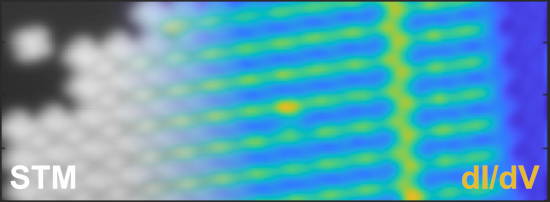
- oscillation amplitude of 50 pm. The resonance frequency of the sensor is 38819 Hz, which is much higher than the modulation voltage used for spectroscopy data. Results and Discussion Figure 1a is an AFM image of an island showing both PC and P2C phases. The internal structure of the molecules appears similar


Utilizing the surface potential of a solid electrolyte region as the potential reference in Kelvin probe force microscopy
Beilstein J. Nanotechnol. 2022, 13, 1558–1563, doi:10.3762/bjnano.13.129
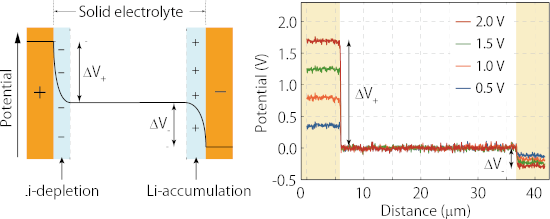
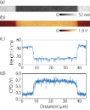
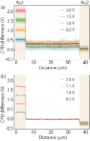
- measurement The KPFM measurements were performed at room temperature using a commercial atomic force microscope (Park Systems, NX10) placed in an Ar flow glove box (O2: <1 ppm, H2O: <1 ppm). We used Cr/Pt-coated Si cantilevers (Budget Sensors, Multi75E-G) with a nominal resonance frequency of 75 kHz and a




Structural studies and selected physical investigations of LiCoO2 obtained by combustion synthesis
Beilstein J. Nanotechnol. 2022, 13, 1473–1482, doi:10.3762/bjnano.13.121
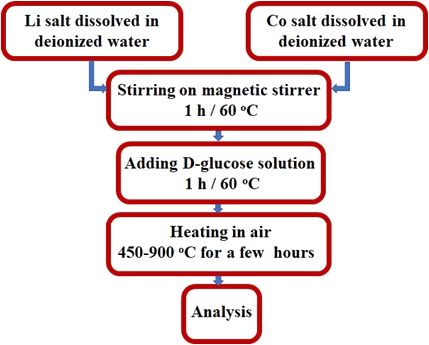
- analysis, (ii) morphology (size and distribution of grains) by using SEM, (iii) specific surface area (SSA) by carrying out Brunauer–Emmett–Teller (BET) measurements, (iv) oxidation states of metals by measuring electron paramagnetic resonance (EPR), and (v) electrical parameters (thermal dependencies of
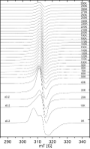
- resonance (EPR) experiments were performed using an X-band ELEXSYS E500 (Bruker, Germany) spectrometer. The samples were placed in a Super High Sensitivity Probehead (Bruker, Germany) cavity and in a cryostat where the temperature was determined and stabilized using an Oxford temperature controller ITC503S




Coherent amplification of radiation from two phase-locked Josephson junction arrays
Beilstein J. Nanotechnol. 2022, 13, 1445–1457, doi:10.3762/bjnano.13.119
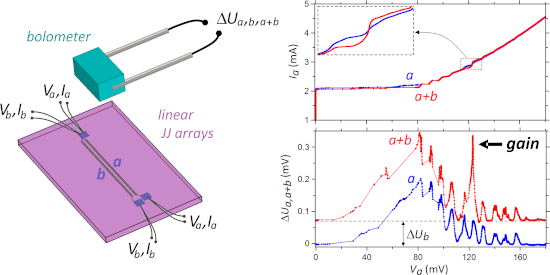
- mutual coupling between the arrays both on the same chip and on different chips and at different separations between the arrays. We reported significant coherent amplification of radiation emission when both arrays are brought to the same cavity mode resonance. A coherent gain factor, that is, the ratio


Facile preparation of Au- and BODIPY-grafted lipid nanoparticles for synergized photothermal therapy
Beilstein J. Nanotechnol. 2022, 13, 1432–1444, doi:10.3762/bjnano.13.118
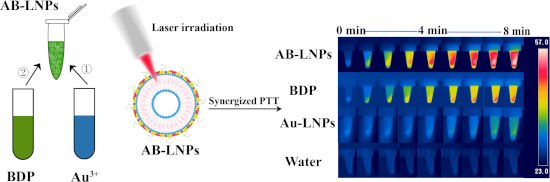
- specificity and minimal invasiveness, it has attracted a great deal of attention as complementary modality for conventional cancer therapy options [1]. Gold nanoparticles (AuNPs) can absorb light and generate heat from light absorption because of the surface plasmon resonance (SPR) phenomenon and the tunable
- etherate (BF3·OEt2) and 2,4-dimethylpyrrole were freshly purified by distillation under reduced pressure. Synthesis and characterization of BDP All chemical reagents were obtained from commercial suppliers and used without further purification. 1H nuclear magnetic resonance (NMR) and 13C NMR spectra were




Double-layer symmetric gratings with bound states in the continuum for dual-band high-Q optical sensing
Beilstein J. Nanotechnol. 2022, 13, 1408–1417, doi:10.3762/bjnano.13.116
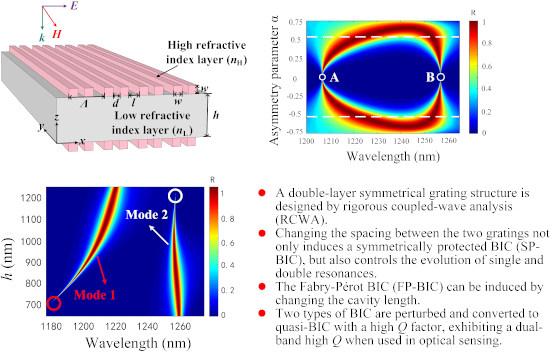
- resonance. We find that the artificial bound states in the continuum (BIC) and Fabry–Pérot BIC (FP-BIC) can be induced by optimizing structural parameters of DLSG. Interestingly, the artificial BIC is governed by the spacing between the two rectangular dielectric gratings, while the FP-BIC is achieved by
- optical field; nonlinear optics; optical sensing; Introduction High quality (Q) factor resonance in nanophotonics has attracted considerable attention in the past decades due to its wide applications in narrow-band filters [1], nonlinear optics [2], optical sensors [3] and lasers [4]. To date, most
- researchers have focused their interests on the single high-Q resonance of various structures and proposed different types of structures to achieve high-Q-factors, such as metallic structures based on surface plasmon resonances [5][6], Mie resonance-based dielectric structures [7][8], and high-contrast


LED-light-activated photocatalytic performance of metal-free carbon-modified hexagonal boron nitride towards degradation of methylene blue and phenol
Beilstein J. Nanotechnol. 2022, 13, 1380–1392, doi:10.3762/bjnano.13.114
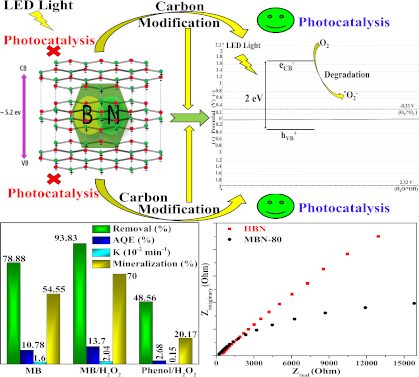
- a Shimadzu TOC-L CSH analyser. The surface area and pore characteristics were characterized by a Micromeritics (3FLEX 3500) gas sorption analyser. The surface charge was analysed through a Zeta-Meter 4.0 (Zeta-Meter, Inc, USA). The electron paramagnetic resonance (EPR) experiments were performed by



Supramolecular assembly of pentamidine and polymeric cyclodextrin bimetallic core–shell nanoarchitectures
Beilstein J. Nanotechnol. 2022, 13, 1361–1369, doi:10.3762/bjnano.13.112
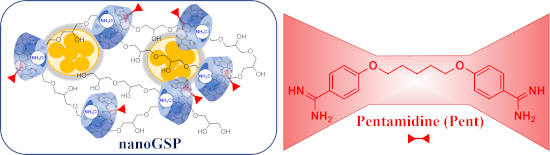
- classifying them in plasmonic NPs (size > 5 nm) and nanoclusters (size < 5 nm). When dimensions exceed 5 nm, NPs exhibit a unique optical phenomenon called localized surface plasmon resonance (LSPR) which represents the collective oscillation of conduction band electrons after interaction between NPs and an
- metallic Au NPs, the new diagnostic resonance at 8.30 ppm was detected in 1H NMR spectra of nanoG (Figure 3A, green trace). According to the literature, this signal suggests the formation of formic acid as a decomposition product during the gold reduction process in the carbohydrate/Au(III) system [25]. To


Studies of probe tip materials by atomic force microscopy: a review
Beilstein J. Nanotechnol. 2022, 13, 1256–1267, doi:10.3762/bjnano.13.104
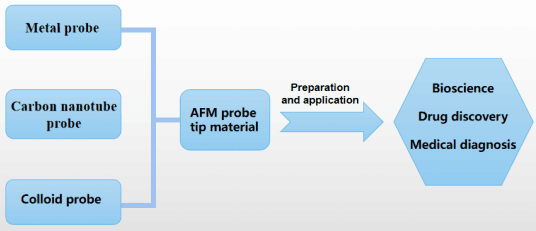
- nanoclusters while their fluorescence quantum yields and stability are improved to a larger extent. Gold-silver bimetallic nanoclusters (AuAgNCs) exhibit enhanced luminescence efficiency and photostability due to Förster resonance energy transfer (FRET) and synergistic effects. Zhang et al. [27] synthesized
- chloramphenicol based on a vesicular quantum dot-gold colloid composite probe. They successfully developed a fluorescence resonance energy transfer (FRET) based on chloramphenicol (CAP) detection in food. Vesicular nano tracers were prepared by labeling single-stranded DNA-binding proteins on single-stranded