Search results
Search for "skin" in Full Text gives 191 result(s) in Beilstein Journal of Nanotechnology.
Preparation of micro/nanopatterned gelatins crosslinked with genipin for biocompatible dental implants
Beilstein J. Nanotechnol. 2018, 9, 1735–1754, doi:10.3762/bjnano.9.165
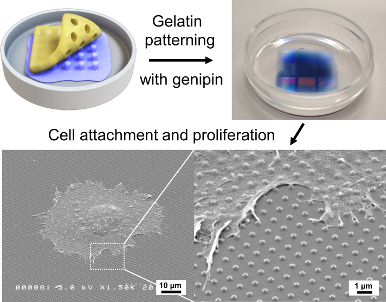
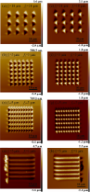
- days. Upon peeling off the cured polymer, a PDMS replica mold with a 0.5 mm thickness was obtained. Figure 11 shows the procedure for the fabrication of gelatin-containing micro/nanopatterns using genipin crosslinking. The gelatin powder was obtained from porcine skin (G1890, type A, gel strength: ≈300








Cr(VI) remediation from aqueous environment through modified-TiO2-mediated photocatalytic reduction
Beilstein J. Nanotechnol. 2018, 9, 1448–1470, doi:10.3762/bjnano.9.137
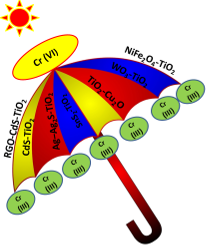
- damage to liver and kidney, lung carcinoma, nausea, skin dermatitis, nasal membrane inflammation, ulceration, irritation of the gastro-intestinal tract and renal damage, when consumed above the permissible limit. The US Environment Protection Agency (USEPA) has placed it on the priority list of toxic


Room-temperature single-photon emitters in titanium dioxide optical defects
Beilstein J. Nanotechnol. 2018, 9, 1085–1094, doi:10.3762/bjnano.9.100
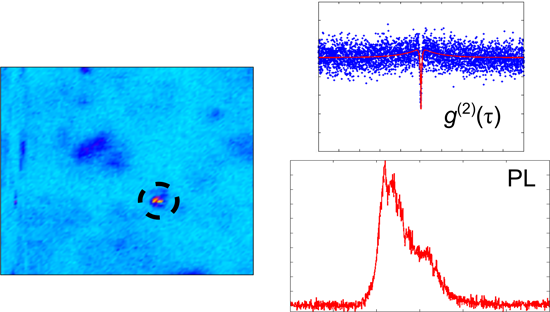
- emission. ZnO is the only metal oxide reported to host single-photon emitting defects at room temperature and was recently shown to exhibit stable fluorescence when uptaken into skin cells, making it a viable biomarker [11]. Titanium dioxide (TiO2) is a well-studied wide-bandgap semiconductor, its


Review on nanoparticles and nanostructured materials: history, sources, toxicity and regulations
Beilstein J. Nanotechnol. 2018, 9, 1050–1074, doi:10.3762/bjnano.9.98

- objects are also a potential source of incidental nanoparticles in the environment. Incidental nanomaterials Photochemical reactions, volcanic eruptions, and forest fires are some of the natural processes that lead to the production of natural NPs as mentioned. In addition, skin and hair shedding of
- human, animal, and plant activities by blocking and scattering the sunlight. The volcanically erupted particles may possess heavy metals that are toxic to humans [69]. The short-term effects of particles from volcanic eruptions include nose, throat, eye and skin irritations and bronchial symptoms, while
- the long-term effects include diseases such as podocinids [70][71][72] and Kaposi’s sarcoma [73][74]. Podoconiosis is caused by the micro- or nanoparticle absorption from the soil through the feet’s skin, leading to localized fluid retention in the lower limbs [75]. Kaposi’s sarcoma is similar to


Bioinspired self-healing materials: lessons from nature
Beilstein J. Nanotechnol. 2018, 9, 907–935, doi:10.3762/bjnano.9.85
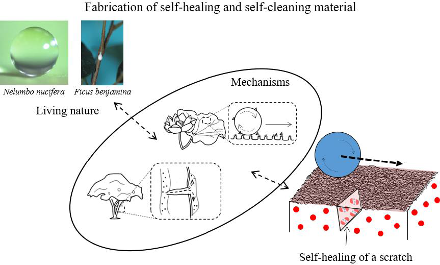
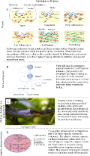
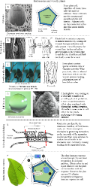
- change the way light reflects off of its skin. Skin contains chromatophores, or pigment-containing cells, which can change in two ways. First, the chromatophores can change chemically with season, diet, etc. to a new color. In a more direct second method, some animals control their skin coloration
- through muscle control. Figure 2B shows an example of a chameleon that, by stretching its skin, can change the spacing and conformation of guanine nanocrystal lattices embedded in its skin [15]. In a similar fashion, some animals can use muscle control to disperse or aggregate chromatophores in the dermal
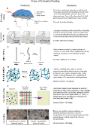
- example of an innate immune system in a human, with external defenses such as hair, skin, and mucus and internal defenses such as mast cells, natural killer cells, and phagocytes [40]. The internal response in all animals has both humoral and cellular components [47]. Humoral components refer to those








Mechanistic insights into plasmonic photocatalysts in utilizing visible light
Beilstein J. Nanotechnol. 2018, 9, 628–648, doi:10.3762/bjnano.9.59
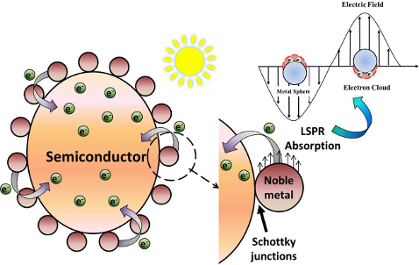
- [147][148]. Bio-inspired plasmonic nanostructures/architectures The pioneering works of several research groups have revealed that by mimicing biological systems, such as butterfly wings [149] and snake skin [150], systems can be designed that are cable of absorbing NIR light due to their distinctive





Green synthesis of fluorescent carbon dots from spices for in vitro imaging and tumour cell growth inhibition
Beilstein J. Nanotechnol. 2018, 9, 530–544, doi:10.3762/bjnano.9.51
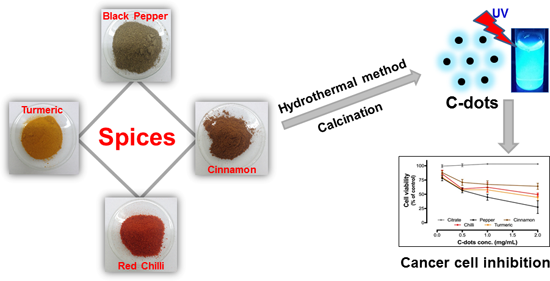
- literature since it has shown to be capable to suppress carcinogenesis of the skin, colon, lung, tongue, and prostate [23][24][25]. Another spice that has shown promise in preventing and treating cancer is cinnamon [26]. Major constituents in cinnamon include cinnamaldehyde and eugenol [27]. The ability of


Nanoparticle delivery to metastatic breast cancer cells by nanoengineered mesenchymal stem cells
Beilstein J. Nanotechnol. 2018, 9, 321–332, doi:10.3762/bjnano.9.32
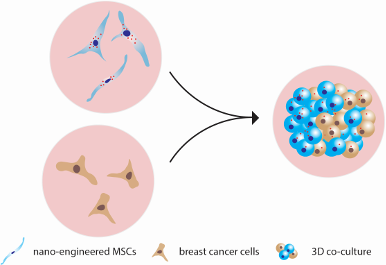
- , thymus, skin, adipose tissue, umbilical cord and placenta [5]. MSCs express CD105 (SH2 or endoglin), CD73 (SH3 and SH4), CD106 (VCAM-1), CD44 (hyaluronic acid receptor), CD90 (Thy 1.1), CD29, CD146 and CD166 surface markers and can be induced to differentiate in vitro into diverse lineages of mesodermal
- nanoparticle delivery vehicles to specifically target metastatic breast cancer cells. Experimental Cell culture Primary human skin mesenchymal stem cells (MSCs) from frozen primary cell stock were used in accordance with authorised approval from the Institute of Experimental and Clinical Medicine Ethics



Liquid-crystalline nanoarchitectures for tissue engineering
Beilstein J. Nanotechnol. 2018, 9, 205–215, doi:10.3762/bjnano.9.22
- in the plywood structure of corneal collagen fibrils may affect the biomechanical behavior of the cornea, which is in close relation to the physical maintenance of intraocular pressure [68]. Skin, nerve, and muscle cells and subcellular structures Cell membranes are well-defined LC lamellae [69]. The
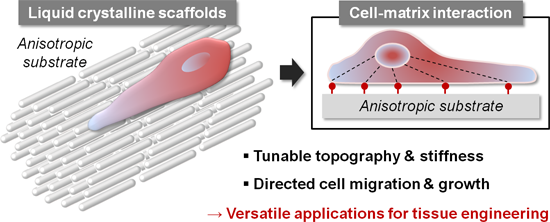
- composites and materials [84]. As shown in Table 1, the potential clinical applications of LC biomaterials include the regeneration of (1) acellular tissue such as bones, teeth (dentine and enamel), and cornea, (2) cell-ECM complexes such as spinal cords, tendons, and skin layers, and (3) cellular tissue
- , lamellar lipid membranes can be used as a synthetic model system of stratum corneum, the outermost layer of epidermis, for evaluating the transdermal permeation efficiency of drug molecules in vitro [110], which has an implication in skin disease study [111]. Moreover, topical formulations of LC


Fabrication of gold-coated PDMS surfaces with arrayed triangular micro/nanopyramids for use as SERS substrates
Beilstein J. Nanotechnol. 2017, 8, 2271–2282, doi:10.3762/bjnano.8.227
- nanoparticles on a poly(methyl methacrylate) (PMMA) template, and malachite green on fish skin [27] was successfully detected. A flexible and transparent substrate consisting of silver nanoparticles on polyethylene terephthalate (PET) sheets was fabricated for in situ detection of R6G and thiram residues with a
- concentration of 10−4 mol on the skin of an apple and a cherry tomato, respectively [28]. The major limitations of these methods are in the complexity of the fabrication processes for obtaining the templates. Additionally, more complex micro/nanostructures are difficult to achieve using the existing methods
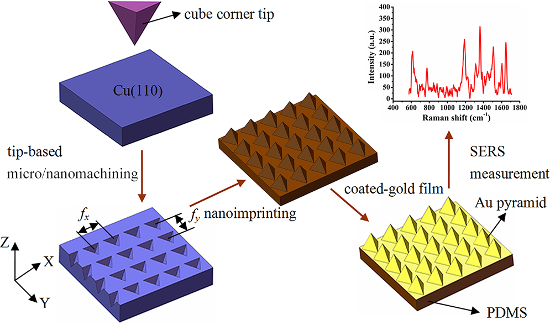
- this method were compared to a commercial substrate (Q-SERS). This method was verified to be a high-resolution, highly reproducible, and low cost approach to the fabrication of high-performance SERS substrates that could be used as sensors to detect pesticide residues on the skin of fruit or fish





High-stress study of bioinspired multifunctional PEDOT:PSS/nanoclay nanocomposites using AFM, SEM and numerical simulation
Beilstein J. Nanotechnol. 2017, 8, 2069–2082, doi:10.3762/bjnano.8.207
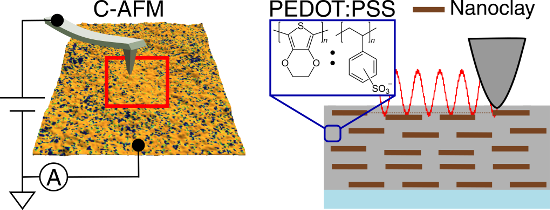
- produce a skin layer [11], which is a heterogeneous surface layer that forms during the evaporation of the dispersion. Given the size difference of the nanoclays used, this layer is expected to have a more appreciable effect in MTM than in LAP. With regards to stiffness, the MTM nanocomposite showed an
- unexpected behavior given its platelet size. One would expect the larger platelet size to lead to a higher stiffness, but instead MTM showed lower stiffness compared to LAP. These incongruences can be explained in terms of the skin layer formation, which in MTM is more heterogeneous and less organized than
- in LAP (hence also more loosely packed), as a result of the larger particle size. Recall also that the cantilever tip interacts with the outermost volume of the coating, which is the heterogeneous skin. The average quality factor shows a different behavior compared to the average frequency. For the


Bi-layer sandwich film for antibacterial catheters
Beilstein J. Nanotechnol. 2017, 8, 1982–2001, doi:10.3762/bjnano.8.199
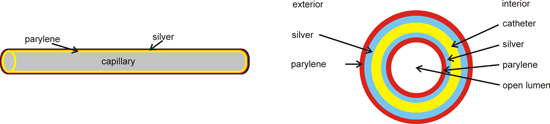
- applications were possible. Therefore, the inorganic alternative silver was proposed again, but now as silver coating [7][15]. This deposit dissolves with a lower time constant, thereby reducing the toxic potential combined with longer lifetime. However, the catheters were coated only on their external skin
- the polymer is larger by orders of magnitude than that of the coating. Therefore, a special design has to be applied to avoid cracks and exfoliation (Figure 5). Our designs are called “zebra stripe pattern” and “leopard skin”. In both cases, only fractions of the total area are coated. Here, we


Optical techniques for cervical neoplasia detection
Beilstein J. Nanotechnol. 2017, 8, 1844–1862, doi:10.3762/bjnano.8.186
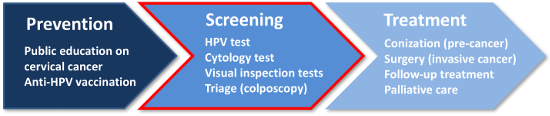
- light that has been diffused deeply within tissue and keeps the contribution of the superficial layer at which epithelial cancer starts. The studies of spectra or images of OSC polarimetric measurements for the detection of colon cancerous polyps [94], skin cancer [95], and cervical precancerous lesions



Low uptake of silica nanoparticles in Caco-2 intestinal epithelial barriers
Beilstein J. Nanotechnol. 2017, 8, 1396–1406, doi:10.3762/bjnano.8.141
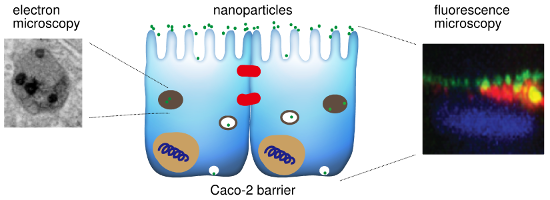
- Deusinglaan 1, 9713 AV Groningen, The Netherlands 10.3762/bjnano.8.141 Abstract Cellular barriers, such as the skin, the lung epithelium or the intestinal epithelium, constitute one of the first obstacles facing nanomedicines or other nanoparticles entering organisms. It is thus important to assess the
- exposure routes, cellular barriers, such as the skin, the lung epithelium, the intestinal epithelium or the endothelium (including the blood-brain barrier), constitute one of the first sites of interactions of nanoparticles, whether intended as nanomedicines or not, with organisms. Thus in addressing the



Nano-engineered skin mesenchymal stem cells: potential vehicles for tumour-targeted quantum-dot delivery
Beilstein J. Nanotechnol. 2017, 8, 1218–1230, doi:10.3762/bjnano.8.123
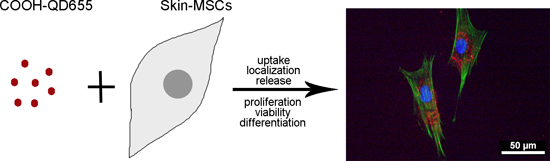
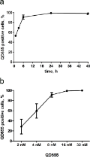
- quantum dots QD655 were studied in human skin MSCs. The effect of QD on MSCs was examined using a cell viability assay, Ki67 expression analysis, and tri-lineage differentiation assay. The optimal conditions for QD uptake in MSCs were determined using flow cytometry. The QD uptake route in MSCs was
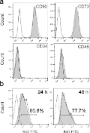
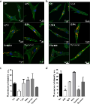
- in skin MSCs was clathrin-mediated endocytosis. QDs were mainly localized in early endosomes after 6 h as well as in late endosomes and lysosomes after 24 h. QDs in concentrations ranging from 0.5 to 64 nM had no effect on cell viability and proliferation. The expression of MSC markers, CD73 and CD90
- drug carriers [3]. Recent studies have shown that nano-engineered mesenchymal stem cells (MSCs) could be used as tumour-targeted therapeutic carriers, reflecting their tumour-homing capabilities [4][5][6]. MSCs are present in many tissues of the human body, including bone marrow, adipose tissues, skin





Needs and challenges for assessing the environmental impacts of engineered nanomaterials (ENMs)
Beilstein J. Nanotechnol. 2017, 8, 989–1014, doi:10.3762/bjnano.8.101
- inhalation of some ENMs may cause additional adverse outcomes, such as damage to the respiratory tract, inflammation, and activation of signaling pathways. For additional routes of exposure, such as dermal absorption, existing evidence suggests that certain ENMs may penetrate the skin (e.g., cobalt
- nanoparticles in human volunteers and quantum dots ‘QDs’ in rat skin) and cause irritation (e.g., nano ZnO in zebrafish models) [10]. Oral exposure to ENMs can result in subsequent absorption in the GI tract and organ damage (e.g., nano Cu in mice via oral gavage damaged liver, spleen and kidneys, and nano ZnO

Near-field surface plasmon field enhancement induced by rippled surfaces
Beilstein J. Nanotechnol. 2017, 8, 956–967, doi:10.3762/bjnano.8.97
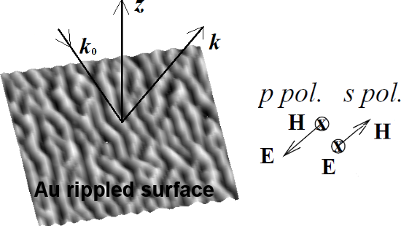
- empirical parameters [43][44]. The resolution (N = 2048) is such that the minimum size is nearly 1 nm and the groove–groove distance (an equivalent of periodicity for more regular surfaces) is of approximately 100–200 nm (the autocorrelation length a in Equation 9) and height of 10–30 nm. The Au skin depth


Liquid permeation and chemical stability of anodic alumina membranes
Beilstein J. Nanotechnol. 2017, 8, 561–570, doi:10.3762/bjnano.8.60
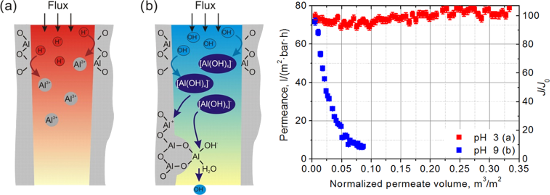
- ) merges into the microporous selective skin layer [5]. All these issues make AAO extremely attractive for baromembrane processes, including micro- and ultrafiltration, pervaporation, emulsification and membrane catalysis. AAO membranes are abundantly used as solid porous supports for asymmetric gas


When the going gets rough – studying the effect of surface roughness on the adhesive abilities of tree frogs
Beilstein J. Nanotechnol. 2016, 7, 2116–2131, doi:10.3762/bjnano.7.201
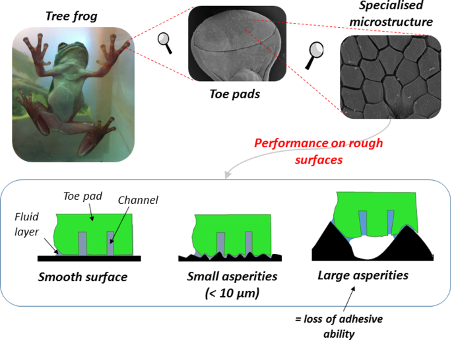
- twigs [50]. We are thus building up a good understanding of both the underlying mechanisms and the ecology of tree frog adhesive mechanisms. But this study goes further: comparable to the drag reduction mechanisms of snake skin [51], the superhydrophobicity and self-cleaning mechanisms of lotus leaves
- ). Before experimentation, the frogs were rinsed in chlorine-free water to remove any dirt or loose dead skin, and carefully blotted dry to prevent the excess water from affecting the frogs’ performance. Rough surfaces Two different kinds of rough surfaces were used in this study, which displayed different




Graphene-enhanced plasmonic nanohole arrays for environmental sensing in aqueous samples
Beilstein J. Nanotechnol. 2016, 7, 1564–1573, doi:10.3762/bjnano.7.150
- readily absorbed through the skin. They can cause feminization of male infants, impact genital development and testes maturation. Metabolic products are also potential thyroid hormone disruptors [4][5][6]. Because of their carcinogenic and toxic characteristics determination of PAEs in environmental water




Ammonia gas sensors based on In2O3/PANI hetero-nanofibers operating at room temperature
Beilstein J. Nanotechnol. 2016, 7, 1312–1321, doi:10.3762/bjnano.7.122
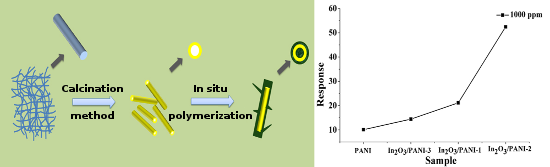
- pollution. Ammonia (NH3), as a highly toxic gas, can be emitted by natural and industrial sources and threaten human health [2][3][4]. NH3 at concentrations of 50 ppm may irritate the human respiratory system, skin and eyes [4]. Higher concentrations of NH3 will cause blindness, seizures, lung disease and


A terahertz-vibration to terahertz-radiation converter based on gold nanoobjects: a feasibility study
Beilstein J. Nanotechnol. 2016, 7, 983–989, doi:10.3762/bjnano.7.90
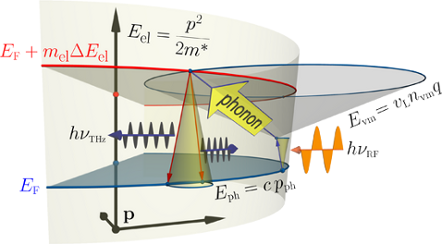
- expected to be shifted from the peak of the phonon density of modes, i.e., around 4.2 THz (see below). The sizes of GNBs and GNRs have to be much smaller than the skin depth in gold at 2.45 GHz, amounting to approx. 1.5 μm. This justifies considering the Fermi electrons in the following as free ones



Tight junction between endothelial cells: the interaction between nanoparticles and blood vessels
Beilstein J. Nanotechnol. 2016, 7, 675–684, doi:10.3762/bjnano.7.60
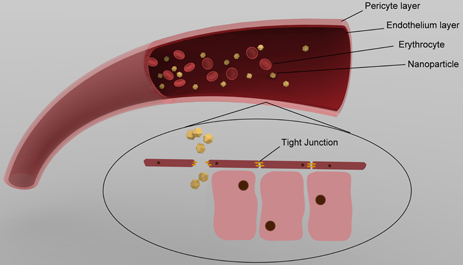
- several pathways (oral administration [11], skin exposure [12], breathing [13], intravenous injection [14]). No matter which way, the NPs will finally reunite in the blood vascular system. Blood vessels function as a transportation pipe for blood, which carries nutrients and other necessary substances
- into photo-damaged skin through follicles and intercellular spaces [28]. Also, zinc oxide, which is widely used in sunscreen, penetrates into the stratum granulosum of the epidermis [29], which leads us to the assumption that once NPs penetrate through the epidermis, there is a huge possibility to get
- arteriovenous plexus under the epidermis of the skin. Since the circulatory system may be the main way of transporting the NPs, we shed light on the distribution of NPs in the circulatory system, and found several studies about NPs side effects on organs such as spleen, liver and kidney. AuNPs distributed

Nanotechnology in the real world: Redeveloping the nanomaterial consumer products inventory
Beilstein J. Nanotechnol. 2015, 6, 1769–1780, doi:10.3762/bjnano.6.181
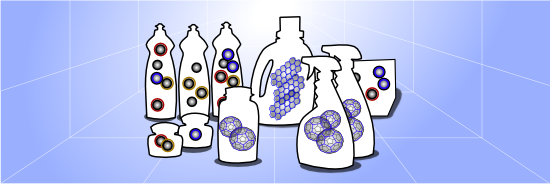
- consumer products in the CPI (528 products) contain nanomaterials suspended in a variety of fluids (e.g., water, skin lotion, oil, car lubricant). The second largest group in this category – with 307 products – comprises solid products with surface-bound nanoparticles (e.g., hair curling and flat irons
- 770 products from the CPI to determine their most likely route(s) of exposure (Figure 7). We identified the skin as the primary route of exposure for nanomaterials from the use of consumer products (58% of products evaluated). This is because many entries in the CPI consist of (1) solid products that
- contain nanomaterials on their surfaces and are meant to be touched or (2) liquid products containing nanomaterial suspensions which are meant to be applied on the skin or hair. Of the products evaluated, 25% present nanomaterials that can possibly be inhaled during normal use (e.g., sprays and hair



The Kirkendall effect and nanoscience: hollow nanospheres and nanotubes
Beilstein J. Nanotechnol. 2015, 6, 1348–1361, doi:10.3762/bjnano.6.139
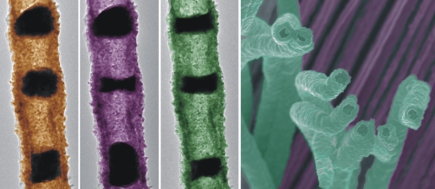
- mechanism is the pioneering work of Yin et al. on the selenization of cobalt nanoparticles [7]. They have shown that the conversion reaction starts by the formation of a very thin cobalt selenide shell on the outer skin of the Co nanoparticle (Figure 3). As the reaction proceeds in time, the Co atoms tend
- , the oxidation process started with the formation of a thin layer of bismuth oxide on the outer skin of the bismuth nanoparticle (Figure 7a). An off-centered, single void was then formed at the bismuth/bismuth oxide core/shell interface. As the oxidation process proceeds in time, the void was found to
- on the outer skin of the metal nanowire resulting in the formation of a thin layer of metal oxide (Figure 9a). After the formation of a metal/metal oxide core/shell nanowire, the metal ions diffuse outward through the oxide layer until reaching the outer surface. Simultaneously, the oxygen adsorbed